

About the Author
Gary Krist was born in Jersey City, New Jersey in 1957. He graduated from Princeton University and studied literature at the Universitaet Konstanz on a Fulbright Scholarship. He is an author and journalist. His first collection of short stories, The Garden State, was published in 1988 and won the show more Sue Kaufman Prize for First Fiction. His other works of fiction include Bone by Bone, Bad Chemistry, Chaos Theory, and Extravagance. His non-fiction works include The White Cascade: The Great Northern Railway Disaster and America's Deadliest Avalanche and City of Scoundrels: The 12 Days of Disaster that Gave Birth to Modern Chicago. He is a regular book reviewer for the New York Times Book Review, Salon, and the Washington Post Book World. He has won numerous awards including the Stephen Crane Award and a Lowell Thomas Gold Medal for Travel Journalism. (Bowker Author Biography) show less
Image credit: reading at 2018 Gaithersburg Book Festival By Slowking4 - Own work, GFDL 1.2, https://commons.wikimedia.org/w/index.php?curid=69292089
Works by Gary Krist
Empire of Sin: A Story of Sex, Jazz, Murder, and the Battle for Modern New Orleans (2014) 603 copies, 71 reviews
City of Scoundrels: The Twelve Days of Disaster That Gave Birth to Modern Chicago (2012) 410 copies, 18 reviews
The White Cascade: The Great Northern Railway Disaster and America's Deadliest Avalanche (2007) 359 copies, 15 reviews
The Mirage Factory: Illusion, Imagination, and the Invention of Los Angeles (2018) 275 copies, 11 reviews
Trespassers at the Golden Gate: A True Account of Love, Murder, and Madness in Gilded-Age San Francisco (2025) 45 copies, 2 reviews
Associated Works
Tagged
Common Knowledge
- Birthdate
- 1957-05-23
- Gender
- male
- Education
- Princeton University (graduate)
- Awards and honors
- Fulbright Fellowship
Lowell Thomas Gold Medal for Travel Journalism
National Endowment for the Arts Fellowship
Stephen Crane Award - Nationality
- USA
- Birthplace
- Jersey City, New Jersey, USA
- Places of residence
- Jersey City, New Jersey, USA (birthplace)
- Associated Place (for map)
- Jersey City, New Jersey, USA
Members
Reviews
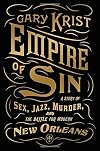
Back in the early 90's, I was in New Orleans and spent an evening on a restaurant balcony overlooking Bourbon Street in the French Quarter. There were strip joints and live music venues all around, and watching the goings-on was absolutely fascinating. We saw at least two drug deals, a couple making a deal for sex, and a near fist fight between the barkers for a live sex show featuring women and a place with female impersonators. I couldn't help but think that Storyville in the late 1890s show more and early 1900s must have been just like this.
See, New Orleans has always been a pretty loose place, vice-wise. And about 1890, the city leaders - the morality crowd, anyway - decided that something needed to be done to clean up the city, if nothing else than to make it easier to get Northern investment money. Of course, there were people profiting pretty well from the vice going on all over town, and they weren't going to let the gravy train just stop. So a section of the city was set aside where prostitution, drinking and gambling were legal, or at least tolerated. Gary Krist's The Empire of Sin gives the history of Storyville's rise and fall, and the decades long fight between the forces of morality and those who ran the "dens of iniquity". Along the way we get to touch on organized crime through the Italian Black Hand kidnapping rings and the beginnings of the Mafia in the city, the birth of jazz in the bordellos and dance halls, and even an axe murderer serial killer (or maybe not)!
It's an interesting time, and sounds a whole like some of the culture wars today. Krist is pretty good at tying all the various strings together into a coherent history. Makes me want to go back for a visit! show less
See, New Orleans has always been a pretty loose place, vice-wise. And about 1890, the city leaders - the morality crowd, anyway - decided that something needed to be done to clean up the city, if nothing else than to make it easier to get Northern investment money. Of course, there were people profiting pretty well from the vice going on all over town, and they weren't going to let the gravy train just stop. So a section of the city was set aside where prostitution, drinking and gambling were legal, or at least tolerated. Gary Krist's The Empire of Sin gives the history of Storyville's rise and fall, and the decades long fight between the forces of morality and those who ran the "dens of iniquity". Along the way we get to touch on organized crime through the Italian Black Hand kidnapping rings and the beginnings of the Mafia in the city, the birth of jazz in the bordellos and dance halls, and even an axe murderer serial killer (or maybe not)!
It's an interesting time, and sounds a whole like some of the culture wars today. Krist is pretty good at tying all the various strings together into a coherent history. Makes me want to go back for a visit! show less
 This review was written for LibraryThing Early Reviewers.
The White Cascade: The Great Northern Railway Disaster and America's Deadliest Avalanche by Gary Krist
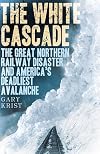
My reading patterns have become somewhat eclectic -- I don't even remember where I heard about this book, and nonfiction is not my typical genre, but what a read! Bringing to life the Wellington train tragedy of 1910 (which I didn't even know had occurred) Krist paints with broad strokes to show the political climate of the time (progressive) as well as the financial boom of the Railroad Era, in particular the rise of the Great Northern Line under James J. Hill from MN. Lesser known than the show more era's other Robber Barons, Hill forged a railroad with sheer grit and now-embarrassingly cheap labor through the formidable Rockies and even more daunting Cascades to reach Seattle. Jim O'Neill, the superintendent of this particular tough stretch of mountain passage through the Cascades began work on the railroad at age 13: "What fetched [boys who went to work on the railroad] were the sights and sounds of moving trains, and above all the whistle of a locomotive. I've heard of the call of the wild, the call of the law, the call of the church. There is also the call of the railroad." (9) Quoting Miles C. Moore, an early governor of the Washington territory he notes: "Railroads are not a mere convenience. They are the true alchemy of the age, which transmutes the otherwise worthless resources of a country into gold." (15) Krist captures well the romance of the Iron Horse and the immense growth and progress in the country at this time. " the final victory of man's machinery over nature's is the next step in evolution" (5) and "It was ... a time when mankind's technological reach had profoundly exceeded its grasp, when safety regulations and innovations in fail-safe communication and operations technologies had not yet caught up with the ambitious new standards of speed and efficiency...." Think of the Titanic 2 years later. So the stage is set for a tragedy: a monstrous late-winter storm that started with temps in the single digits that progressed to thunderstorms and rain within days. More than 12 FEET of snow fell and the mountain wind whipped some drifts even higher and 2 trains: The Seattle Express and the Fast Mail Train (an innovation of its day) became stranded when they were sidelined in Wellington to wait out the storm and wait for the tracks to be cleared. Here, Krist skillfully fills in the details for the trip from boarding to disaster, with fascinating information about many of the passengers, the workers and the "town" of Wellington -- a handful of buildings on a single street. He is very sympathetic to James O'Neill, the man in charge of the entire situation, and rightfully so, for he was out there in the storm on the tracks, personally running some of the rotary snowplows and shoveling to try to get passage through for his passengers and cargo. He is a man of action and a leader by example. In general, the hardiness of people at this time was amazing -- some passengers chose to hike out the 5+ miles through the storm and fallen snow to a lower station. Slide after slide blocked the throughway in one direction then the other as men worked round the clock to try to fee the line and get the trains moving again. Meanwhile, avalanche conditions worsened in the area where the trains were parked, culminating in the final fall that wiped out the trains, track and killed 96 people. Though I knew the outcome, this was still a page-turner -- I became so invested in the people and the action. Krist seamlessly wove together facts from exhaustive research and good storytelling that followed through to the subsequent inquest and civil trials. If you like Jon Krakauer or Erik Larson, this is on par! Also includes authentic photos from the time period, which are fascinating. show less
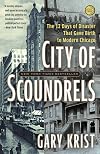
The subtitle of City of Scoundrels is rather misleading: while several of the figures involved in the "12 Days of Disaster" that took place in Chicago in the summer of 1919 certainly helped to shape that city in profound ways, Gary Krist doesn't really prove that those twelve days in particular were some sort of formative moment or systemic break. Really, the events described here are a kind of microcosm that bring together several different aspects of the history of early twentieth-century show more America. From blimp crashes in the Loop to race riots, child abductions to bare-faced political corruption, Krist documents moments that reveal a lot about the history of power, race, and technology in Chicago that stood on the verge of the Roaring Twenties. Read City of Scoundrels for that "snapshot in time" feel, but not for something bigger than that. show less
The White Cascade: The Great Northern Railway Disaster and America's Deadliest Avalanche by Gary Krist
Uniformly enjoyable, but never great.(But enjoyable!) Krist obviously has a crush on O'Neill, the train superintendent, who apparently worked tirelessly, even obsessively, to guard his trains from harm and keep 'em running on time. But even the great O'Neill was unable to stop AN AVALANCHE.
The storm had raged for days, trapping the passenger train on the edge of a mountain. Meanwhile, the passengers sat in the cars (and occasionally wandered out to have lunch at the local greasy spoon), show more writing letters that grew more and more cranky as the week passed. (Man to daughter: "You're crippled inside your head where you can't use crutches." Ouch.)
Meanwhile, worker crews (composed of itinerants, immigrants, and anyone else desperate enough to do filthy, dangerous, backbreaking work for 10c. an hour) dug out the tracks.
Meanwhile, the blizzard dumped another four feet of snow. The crews dug out the tracks. The passengers grew irate. The mountain sent down a little avalanche over the nearly-clear tracks - just to rub it in.
Wash. Rinse. Repeat. Until the mountain sent down a massive wave of snow directly on top of the train, knocking it off a cliff and killing a hundred (or so) passengers and crew and untold numbers of workers, most of whom were not documented ...
I have a great deal of admiration for how Krist handled this story. It may be unduly sympathetic to O'Neill - but the passengers are treated both as individuals and as a group, with letter and journal extracts, personal recounting, photographs. The background information on weather, life in 1910, sufferings of train crews, life of O'Neill and his wife - well, there were some graceless transitions, but the information was relevant and interesting.
And there are PICTURES. And CONVERSATIONS. (What is the use of a book without pictures or conversations?)
And! the author's brief preface of 'I was scrupulous in my research and included no speculation, except where noted within the text' made my little black heart beat fast. This, ah, this is what non-fiction should be.
Best part: the commission tries to lambaste O'Neill for not, you know, preventing an avalanche by sheer force of will. Paraphrasing of cross-examination:
(Commission): Didn't you know there was a possibility of avalanches?
(O'Neill): There had been six avalanches just that week, on other parts of the mountain. So, yeah. It had crossed my mind.
(Commission): Why didn't you try to do something?
(O'Neill): I'm not going to dignify that with a response. (aside: ... you silly ass.)
Ahh. Disaster non-fiction. So good for making you grateful to be - you know - alive, and not slowly suffering under ten feet of hard-packed snow. show less
The storm had raged for days, trapping the passenger train on the edge of a mountain. Meanwhile, the passengers sat in the cars (and occasionally wandered out to have lunch at the local greasy spoon), show more writing letters that grew more and more cranky as the week passed. (Man to daughter: "You're crippled inside your head where you can't use crutches." Ouch.)
Meanwhile, worker crews (composed of itinerants, immigrants, and anyone else desperate enough to do filthy, dangerous, backbreaking work for 10c. an hour) dug out the tracks.
Meanwhile, the blizzard dumped another four feet of snow. The crews dug out the tracks. The passengers grew irate. The mountain sent down a little avalanche over the nearly-clear tracks - just to rub it in.
Wash. Rinse. Repeat. Until the mountain sent down a massive wave of snow directly on top of the train, knocking it off a cliff and killing a hundred (or so) passengers and crew and untold numbers of workers, most of whom were not documented ...
I have a great deal of admiration for how Krist handled this story. It may be unduly sympathetic to O'Neill - but the passengers are treated both as individuals and as a group, with letter and journal extracts, personal recounting, photographs. The background information on weather, life in 1910, sufferings of train crews, life of O'Neill and his wife - well, there were some graceless transitions, but the information was relevant and interesting.
And there are PICTURES. And CONVERSATIONS. (What is the use of a book without pictures or conversations?)
And! the author's brief preface of 'I was scrupulous in my research and included no speculation, except where noted within the text' made my little black heart beat fast. This, ah, this is what non-fiction should be.
Best part: the commission tries to lambaste O'Neill for not, you know, preventing an avalanche by sheer force of will. Paraphrasing of cross-examination:
(Commission): Didn't you know there was a possibility of avalanches?
(O'Neill): There had been six avalanches just that week, on other parts of the mountain. So, yeah. It had crossed my mind.
(Commission): Why didn't you try to do something?
(O'Neill): I'm not going to dignify that with a response. (aside: ... you silly ass.)
Ahh. Disaster non-fiction. So good for making you grateful to be - you know - alive, and not slowly suffering under ten feet of hard-packed snow. show less
Lists
Chicago Books (1)
Disaster Books (1)
Awards


You May Also Like


Associated Authors
Statistics
- Works
- 12
- Also by
- 2
- Members
- 2,091
- Popularity
- #12,305
- Rating
- 3.8
- Reviews
- 124
- ISBNs
- 54
- Languages
- 2
- Favorited
- 2

