
Works by Crystal R. Sanders
Tagged
Common Knowledge
There is no Common Knowledge data for this author yet. You can help.
Members
Reviews
A Forgotten Migration: Black Southerners, Segregation Scholarships, and the Debt Owed to Public HBCUs (The John Hope Franklin Series in African American History and Culture) by Crystal R. Sanders
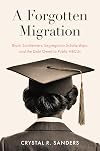
"A Forgotten Migration" is a strong example of intellectual warfare—how Black students, lawyers, and advocates used education, credentials, and legal pressure to dismantle Jim Crow in higher education.
Sanders’ explanation of segregation scholarships (in the form of tuition assistance) is the highlight. Instead of integrating white public universities or fully funding HBCUs, Southern states paid to send Black students out of state for graduate and professional education. It’s a clever show more but deeply cynical workaround, and the book does an excellent job showing how it both opened doors for individuals and quietly weakened public HBCUs.
I also appreciated how Sanders balances triumphs and tragedies. The successes are impressive, but the human cost and pyrrhic victories are never far from view—especially in cases like Lloyd Gaines, whose disappearance after challenging segregation in graduate education lingers as a reminder of how dangerous this fight could be.
Where I struggled was structure. The research is strong, but the storytelling can feel loose and repetitive. Clearer milestones—major court cases, NAACP strategy shifts, and a stronger sense of forward momentum—would have made an already important book even better.
This history felt personal. I hold multiple degrees from PWIs and grew up in Hampton Roads around former HBCU faculty, including a “hidden figure” who worked as a human computer at Langley. Reading about earlier generations using intellect and persistence to force change made the story feel immediate.
Bottom line: important history, excellent research, and a compelling look at intellectual warfare against Jim Crow. A tighter structure would have elevated it, but it’s still very much worth reading. show less
Sanders’ explanation of segregation scholarships (in the form of tuition assistance) is the highlight. Instead of integrating white public universities or fully funding HBCUs, Southern states paid to send Black students out of state for graduate and professional education. It’s a clever show more but deeply cynical workaround, and the book does an excellent job showing how it both opened doors for individuals and quietly weakened public HBCUs.
I also appreciated how Sanders balances triumphs and tragedies. The successes are impressive, but the human cost and pyrrhic victories are never far from view—especially in cases like Lloyd Gaines, whose disappearance after challenging segregation in graduate education lingers as a reminder of how dangerous this fight could be.
Where I struggled was structure. The research is strong, but the storytelling can feel loose and repetitive. Clearer milestones—major court cases, NAACP strategy shifts, and a stronger sense of forward momentum—would have made an already important book even better.
This history felt personal. I hold multiple degrees from PWIs and grew up in Hampton Roads around former HBCU faculty, including a “hidden figure” who worked as a human computer at Langley. Reading about earlier generations using intellect and persistence to force change made the story feel immediate.
Bottom line: important history, excellent research, and a compelling look at intellectual warfare against Jim Crow. A tighter structure would have elevated it, but it’s still very much worth reading. show less
Lists
Awards


Statistics
- Works
- 3
- Members
- 19
- Popularity
- #609,293
- Rating
- 3.0
- Reviews
- 1
- ISBNs
- 7