
Christopher James Blythe
Author of Terrible Revolution: Latter-day Saints and the American Apocalypse
About the Author
Works by Christopher James Blythe
The Joseph Smith Papers Documents, Volume 9: December 1841-April 1842 (2019) — Editor — 14 copies, 1 review
The Joseph Smith Papers Documents, Volume 7: September 1839-January 1841 (2018) — Editor — 13 copies
Associated Works
The Council of Fifty: What the Records Reveal about Mormon History (2017) — Contributor — 25 copies, 1 review
Producing Ancient Scripture: Joseph Smith's Translation Projects in the Development of Mormon Christianity (2020) — Contributor — 14 copies
The Persistence of Polygamy: From Joseph Smith's Martyrdom to the First Manifesto, 1844-1890 (2013) — Contributor — 8 copies
The Persistence of Polygamy, Vol. 3: Fundamentalist Mormon Polygamy from 1890 to the Present (2015) — Contributor — 7 copies
Yet to be Revealed: Open Questions in Latter-day Saint Theology (BYU Studies Quarterly, Vol. 60, No. 3, 2021) (2021) — Contributor — 3 copies
Dialogue: A Journal of Mormon Thought - Volume 46, Number 2 (Summer 2013) (2013) — Contributor — 1 copy
Restoration Studies XI: Theology and Culture in the Community of Christ and the Latter Day Saint Movement (2010) — Contributor — 1 copy
Tagged
Common Knowledge
- Gender
- male
- Education
- Florida State University (PhD|Religion|2015)
Utah State University (MA|History|2010)
Utah State University (BA|Religious Studies|2009)
Texas A&M University (BA|Anthropology|2004) - Occupations
- documentary editor
historian
university instructor
journal editor
researcher
folklore professor (show all 7)
English professor - Organizations
- The Church of Jesus Christ of Latter-day Saints
LDS Church History Department
Joseph Smith Papers Project
John Whitmer Historical Association (board member)
Utah State University (Predoctoral Teaching Fellow)
Intermountain West Journal of Religious Studies (editor-in-chief) (show all 15)
Salt Lake Community College
Florida State University
Brigham Young University
Tallahassee Community College
Utah State University
Church Educational System
Communal Studies Association (program committee)
Neal A. Maxwell Institute (Research Associate)
Folklore Society of Utah (co-president) - Awards and honors
- Predoctoral Teaching Fellow, Utah State University
- Relationships
- Blythe, Christine Elyse (wife)
Members
Reviews
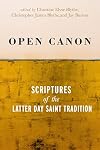
Won this on Early Reviewers.
I was interested in this book because I am a member of a church that adheres to some of these beliefs. This was an ebook and I had a struggle with getting it in a readable format after I won it, but once I finally got to the point I could read it, I found it interesting. The LDS church believes that God still gives revelations unto men today. Joseph Smith was the first prophet of this church, after his death the church splintered into many groups and factions as show more men struggled to gain control of the church. Everyone wanted to be in charge. This book is a collection of essays edited together that discusses the several of the different splinter groups and what they believe and how they canonize their scriptures following the idea that the canon od scripture is open and God is still adding to it.
Some of the essays were more interesting than others of course but this was an interesting knowledgeable read. show less
I was interested in this book because I am a member of a church that adheres to some of these beliefs. This was an ebook and I had a struggle with getting it in a readable format after I won it, but once I finally got to the point I could read it, I found it interesting. The LDS church believes that God still gives revelations unto men today. Joseph Smith was the first prophet of this church, after his death the church splintered into many groups and factions as show more men struggled to gain control of the church. Everyone wanted to be in charge. This book is a collection of essays edited together that discusses the several of the different splinter groups and what they believe and how they canonize their scriptures following the idea that the canon od scripture is open and God is still adding to it.
Some of the essays were more interesting than others of course but this was an interesting knowledgeable read. show less
 This review was written for LibraryThing Early Reviewers.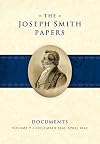
As we reach the last few years of Joseph Smith’s life, the Documents series volumes cover decreasing amounts of time while still requiring a significant number of pages. This volume covers five months in 595 pages. I’ve been told volume 15 will cover a mere five weeks.
Volume 9 takes place between December 1841 and April 1842. During this time, Joseph Smith opened a store, became vice mayor of Nauvoo, took over as editor of the Times and Seasons, joined the Freemasons, and helped start show more the Female Relief Society of Nauvoo, all while continuing to sell land to incoming Saints, lead the church, and command the Nauvoo Legion. An estimated 70 percent of the documents in this volume were not published prior to the Joseph Smith Papers Project. The documents consist of letters, revelations (many of them personal, so not canonized), discourses, legal and business documents, minutes from meetings, and selections from the Times and Seasons.
As with all volumes in the project, all of the documents were produced, received, or owned by Joseph Smith or his staff under his direction. This volume also contains an item in the appendix that has an uncertain status. It includes a saying commonly attributed to Joseph Smith: “Happiness is the object and design of our existence, and will be the end thereof if we pursue the path that leads to it; and this path is virtue, uprightness, faithfulness, holiness, and keeping ALL the commandments of God” (page 416). This item is a letter that John C. Bennett claims Joseph Smith wrote to Nancy Rigdon in an attempt to court her as a plural wife. The letter was sent by Bennett to a newspaper after he was excommunicated as part of a campaign to discredit Joseph Smith. No known copies of the actual letter exist, and historians are not in agreement over its authenticity.
Wilford Woodruff took notes of some of Joseph Smith’s sermons during this time and there are a couple that I thought were particularly interesting. On December 19, 1841, Joseph spoke at his home in response to concerns “of some church members that he was a fallen prophet either because he delivered revelation less frequently than in times past or because he provided revelation containing direction that differed from earlier revealed instruction” (page 33). Woodruff wrote that “On Revelation He said ‘A man would command his son to dig potatoes, saddle his horse but before he had done either tell him to do something els, this is all consider[ed] right ‘But as soon as the Lord gives a commandment & revokes that decree & commands something els then the prophet is considered fallen &c’” (page 34).
On January 30, 1842, Wilford Woodruff wrote in his “Book of Revelations” notebook about a sermon Joseph Smith gave on deification that contains ideas that are typically associated with the later King Follett Discourse, although as the editors note, “Some ideas related to deification expressed here do not appear again in any later discourses” (page 128).
A footnote here also states that “JS made similar statements regarding Jesus Christ and the Holy Ghost in 1843 and 1844 but did not repeat in extant documents this teaching about ‘all the Saints’” (page 129, footnote 358).
The March 1, 1842 edition of the Times and Seasons contained a document called “Church History,” which has since become known as the “Wentworth Letter.” It is not actually a letter, but is a history of the Church including Joseph Smith’s early visions, the organization and growth of the Church and the accompanying persecution, as well as a list of beliefs which we now know as “The Articles of Faith.” This is also where “The Standard of Truth” originated that many missionaries have memorized. This document is given in its entirety, along with historical information and many helpful explanatory footnotes.
On March 15, 1842, Abraham 2:19-5:21 was featured in the Times and Seasons, along with Facsimile 2. These are reproduced in this volume along with a discussion from the editors explaining when they believe different portions of the Book of Abraham were translated, based on journal entries, correspondence, and an unpublished editorial that is contained in this volume (there is disagreement among scholars about when the translation occurred - see, for example, John Gee, An Introduction to the Book of Abraham). The hypocephalus represented by Facsimile 2 is not among the papyri fragments still in existence today.
A letter from Joseph Smith to Emma and the Female Relief Society of Nauvoo on March 31, 1842 warned of men attempting to take advantage of some of the women sexually based on claims of teachings by Joseph Smith and others. “The letter to Emma Smith and the Relief Society appears to be an early response to the actions of [John C.] Bennett and others who were seducing women in Nauvoo by misrepresenting the not yet publicly announced doctrine of plural marriage…. The featured text is the earliest extant version of the letter and may have been either an early draft of the letter or the actual correspondence delivered to Emma Smith and the Relief Society” (page 307). The footnotes point out differences between this and the version that appears in the Relief Society minutes. Here are a couple interesting paragraphs:
There are also items that give us deeper insight into Joseph Smith’s personality. Here is an excerpt of a letter he wrote to Edward Hunter on January 5, 1842, about the opening of his new general store (today commonly referred to as the “red brick store”):
And there are items that show what others thought of Joseph Smith. A mysterious letter dated December 28, 1841 received from a B.F. Withers offers to combine the Nauvoo Legion with an unnamed secret society which promised to “secure to all engaged honor & wealth, and whose united strength we believe cannot fail of success” (page 50). If a reply was written, it is not extant.
As with all the volumes of the Joseph Smith Papers Project, this book should be considered for anyone interested in the history of the Church or the life of Joseph Smith. The documents selected for inclusion give greater insight into life in Nauvoo during this time period and help provide a better understanding of what Joseph Smith was like and what he taught. The documents are available online at the Joseph Smith Papers website, but the thorough footnotes and historical information and explanations that are currently only available in the book make it well worth having. show less
Volume 9 takes place between December 1841 and April 1842. During this time, Joseph Smith opened a store, became vice mayor of Nauvoo, took over as editor of the Times and Seasons, joined the Freemasons, and helped start show more the Female Relief Society of Nauvoo, all while continuing to sell land to incoming Saints, lead the church, and command the Nauvoo Legion. An estimated 70 percent of the documents in this volume were not published prior to the Joseph Smith Papers Project. The documents consist of letters, revelations (many of them personal, so not canonized), discourses, legal and business documents, minutes from meetings, and selections from the Times and Seasons.
As with all volumes in the project, all of the documents were produced, received, or owned by Joseph Smith or his staff under his direction. This volume also contains an item in the appendix that has an uncertain status. It includes a saying commonly attributed to Joseph Smith: “Happiness is the object and design of our existence, and will be the end thereof if we pursue the path that leads to it; and this path is virtue, uprightness, faithfulness, holiness, and keeping ALL the commandments of God” (page 416). This item is a letter that John C. Bennett claims Joseph Smith wrote to Nancy Rigdon in an attempt to court her as a plural wife. The letter was sent by Bennett to a newspaper after he was excommunicated as part of a campaign to discredit Joseph Smith. No known copies of the actual letter exist, and historians are not in agreement over its authenticity.
Wilford Woodruff took notes of some of Joseph Smith’s sermons during this time and there are a couple that I thought were particularly interesting. On December 19, 1841, Joseph spoke at his home in response to concerns “of some church members that he was a fallen prophet either because he delivered revelation less frequently than in times past or because he provided revelation containing direction that differed from earlier revealed instruction” (page 33). Woodruff wrote that “On Revelation He said ‘A man would command his son to dig potatoes, saddle his horse but before he had done either tell him to do something els, this is all consider[ed] right ‘But as soon as the Lord gives a commandment & revokes that decree & commands something els then the prophet is considered fallen &c’” (page 34).
On January 30, 1842, Wilford Woodruff wrote in his “Book of Revelations” notebook about a sermon Joseph Smith gave on deification that contains ideas that are typically associated with the later King Follett Discourse, although as the editors note, “Some ideas related to deification expressed here do not appear again in any later discourses” (page 128).
Jan 30[th] [1842] Joseph the Seer taught the following principles that the God & father of our Lord Jesus Christ was once the same as the Son or Holy Ghost bothaving [both having] redeemed a world became the eternal God of that world he had a son Jesus Christ who redeemed this earth the same as his father had a world which made them equal & the Holy Ghost would do the same in his turn & so would all the Saints [p. [3]] who inherited a Celestial glory so their would be Gods many & Lords many their were many mansions even 12 from the abode of Devils to the Celestial glory All Spirits that have bodies have power over those that have not hence men have power over Devils &c (page 129)
A footnote here also states that “JS made similar statements regarding Jesus Christ and the Holy Ghost in 1843 and 1844 but did not repeat in extant documents this teaching about ‘all the Saints’” (page 129, footnote 358).
The March 1, 1842 edition of the Times and Seasons contained a document called “Church History,” which has since become known as the “Wentworth Letter.” It is not actually a letter, but is a history of the Church including Joseph Smith’s early visions, the organization and growth of the Church and the accompanying persecution, as well as a list of beliefs which we now know as “The Articles of Faith.” This is also where “The Standard of Truth” originated that many missionaries have memorized. This document is given in its entirety, along with historical information and many helpful explanatory footnotes.
On March 15, 1842, Abraham 2:19-5:21 was featured in the Times and Seasons, along with Facsimile 2. These are reproduced in this volume along with a discussion from the editors explaining when they believe different portions of the Book of Abraham were translated, based on journal entries, correspondence, and an unpublished editorial that is contained in this volume (there is disagreement among scholars about when the translation occurred - see, for example, John Gee, An Introduction to the Book of Abraham). The hypocephalus represented by Facsimile 2 is not among the papyri fragments still in existence today.
A letter from Joseph Smith to Emma and the Female Relief Society of Nauvoo on March 31, 1842 warned of men attempting to take advantage of some of the women sexually based on claims of teachings by Joseph Smith and others. “The letter to Emma Smith and the Relief Society appears to be an early response to the actions of [John C.] Bennett and others who were seducing women in Nauvoo by misrepresenting the not yet publicly announced doctrine of plural marriage…. The featured text is the earliest extant version of the letter and may have been either an early draft of the letter or the actual correspondence delivered to Emma Smith and the Relief Society” (page 307). The footnotes point out differences between this and the version that appears in the Relief Society minutes. Here are a couple interesting paragraphs:
We have been informed that some unprincipled men whose names we will not mention at present have been guilty of such crimes: we do not mention their names, not knowing but what there may be some among you who are not sufficiently skilled in Masonry as to keep a secret, therefore suffice it to say there are those & we therefore warn you & forewarn you in the name of the Lord to check and destroy any faith that any innocent person may have in any such character for we don’t want any body to believe any thing as coming from us contrary to the old established morals & virtues & scriptural laws regulating the habits customs & conduct of Society [p. [2]] unless it be by message del[iv]ered to you by our own mouth, by actual revelation & commandment. and all persons pretending to be authorized by us or having any permit or sanction from us are & will be liars & base imposters & you are authorized on the very first intimation of the kind to denounce them as such & fly from them as the fiery flying serpents, whether they are prophets, seers, or Revelators, patriarchs, Twelve apostles, Elders, Priests. or what not, Mayors, Generals, or what not, city council alderman, Marshall, Police, Lord Mayor or the Devil, are alike culpable. & shall be damned for such evil practices; & if you yourself yourselves hear adhere to any thing of the kind you, also shall be damned.
Now beloved Sisters do not believe for a moment that we wish to impose upon you, we actualy do know that such things have existed in the church & sorry that we are obliged to make mention of any such thing & we want a stop put to them, & we want you to do your part & we will do ours part for we wish to to keep the commandments of God in all things given to us from heaven, living by every word that proceedeth out of the mouth of the Lord.— (pages 308-309)
There are also items that give us deeper insight into Joseph Smith’s personality. Here is an excerpt of a letter he wrote to Edward Hunter on January 5, 1842, about the opening of his new general store (today commonly referred to as the “red brick store”):
The Lord has blessed our exertions in a wonderful manner, and although some individuals have succeded in detain[in]g goods. to a considerable amount for the time being, yet we have been enabled to s[e]cure goods in the building Sufficient to fill all the shelves. & have some in reserve, both in loft. & cellar. Our assortment, is tolerably good— very good considering the different purchases made by different individuals,— at different times, and under circumstances which controuled their choice to some extent, but, I rejoice [p. [2]] that we have been enabled to do as well as we have, for the hearts of many of the poor brethren & sisters will be made glad, with those comforts which are now within their reach. The store has been filled to overflowing all day, & I have stood behind the counter dealing out goods as steady as any clerk you ever Saw to oblige those who were compelled to go without their christmas & New year, dinners. for the want of a little Sugar, Molasses, Rasions &c. &c,— & to please myself also for I love to wait upon the Saints, and be a servant to all hoping that I may be exalted in the due time of the Lord (pages 86-87).
And there are items that show what others thought of Joseph Smith. A mysterious letter dated December 28, 1841 received from a B.F. Withers offers to combine the Nauvoo Legion with an unnamed secret society which promised to “secure to all engaged honor & wealth, and whose united strength we believe cannot fail of success” (page 50). If a reply was written, it is not extant.
As with all the volumes of the Joseph Smith Papers Project, this book should be considered for anyone interested in the history of the Church or the life of Joseph Smith. The documents selected for inclusion give greater insight into life in Nauvoo during this time period and help provide a better understanding of what Joseph Smith was like and what he taught. The documents are available online at the Joseph Smith Papers website, but the thorough footnotes and historical information and explanations that are currently only available in the book make it well worth having. show less
Awards


You May Also Like
Associated Authors
Statistics
- Works
- 13
- Also by
- 18
- Members
- 67
- Popularity
- #256,178
- Rating
- 4.4
- Reviews
- 2
- ISBNs
- 13
