Some stories are better than others. I was already tired of Holly Gibney and didn't need another story with her, much less a rehash of The Outsider. But I really liked The Rat. And The Life of Chuck was interesting. But once again Stephen King shows that he doesn't really get modern technology with Mr. Harrigan's Phone.
We are the nerds : the birth and tumultuous life of Reddit, the internet's culture laboratory by Christine Lagorio-Chafkin
Interesting plod through the history of one of the most popular web sites today.
Typical Garton, as far as content goes. It was an interesting twist on the werewolf theme, and ended differently than I expected.

This was a different kind of audiobook in that instead of being read, it was acted out. I enjoyed the format, except for when it was difficult to differentiate between voices. The story was just getting really interesting when it abruptly stopped. I assume there will be a new installment at some point? Then again, I'm still waiting for the Alvin Wandering series to conclude...
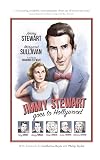
I don’t usually read play scripts – the last time was when I did my one performance as an adult, playing the part of the reverend in “The Best Christmas Pageant Ever” alongside my daughter about 10 years ago. But I have been a fan of Jimmy Stewart since I was a kid, when “It’s a Wonderful Life” became one of my favorite movies and “Mr. Krueger’s Christmas”[1] became part of my Christmas tradition. I admit I’ve seen just a fraction of his movies – I count at least seven – but my other favorites so far are “Mr. Smith Goes to Washington” and “The Shop Around the Corner.”
This play is a brief biography of James Stewart from the premise that his friend Margaret Sullavan is the person that got him involved in movies. It also features his interactions with Cary Grant, Henry Fonda, Ginger Rogers, Katherine Hepburn, and Louis B. Mayer (the boss at MGM). The book also includes two forewords, by Guillermo Reyes and Philip Taylor, and an afterward by the author. It has many photographs throughout of the actors who performed the play at the Covey Center for the Arts in 2014.
The author, Mahonri Stewart, has written plays, screenplays, graphic novels, poetry, and novels, and has degrees from Arizona State University and Utah Valley University. In the afterword, he explains why he wrote the play. He talks about movies like “Mr. Smith Goes to Washington” and how they portray “the Honest Man [who] is at first intimidated and awed by the city’s show more glamour and power, even seduced by its pleasures, but as the story continues, he discovers the compromised underbelly of the machine, the city’s corruption, selfishness, and vice that keeps its elites in their charmed circles, wealth, and seats of power….The City turns on the good man and nearly succeeds in destroying this hayseed threat in it midst. Yet, he has been underestimated, and the Honest Man then rises up after near defeat and takes on the Monolith again, this time in a dearly bought and painful victory” (page 141).
In this play, Jimmy Stewart is the “Honest Man” and the “City” is Hollywood. We see glimpses of his early career, as he is reluctantly cast in his first play, finds he enjoys acting, and then eventually is helped by friends to be reluctantly cast in his first movie and hired by MGM. He ends up standing up to the MGM boss and Hollywood corruption, and successfully going independent while keeping much of his original values.
The author successfully shows that Stewart’s life story has many similarities to several of the movies he’s most famous for. I also found it interesting that he had bigger dreams than to run the family business, as his father wanted, but instead of ending up staying in his hometown, as in “It’s A Wonderful Life,” he followed his dreams and eventually earned his father’s respect for it.
Since it is a biography, the play does deal with the realities of Stewart’s life experiences and those of his associates in Hollywood, but it is kept to a PG-13 level. We learn of his relationships with several actresses, including Margaret Sullivan (who he apparently loved but never had more than a friendship with), Ginger Rogers, and Gloria McLean, who became his wife. He also has to deal with some suspicions that people such as Louis Mayer have based on his living arrangements and association with Henry Fonda and Josh Logan.
This was a quick (it is a play, after all) but very enjoyable read. It made me want to watch more of Stewart’s movies and learn more about his life. I would definitely be interested in seeing this play performed.
[1] See https://www.deseret.com/2003/12/9/19800296/jimmy-stewart-brought-life-to-mr-krue... for a very interesting story of how Jimmy Stewart became involved in “Mr. Krueger’s Christmas.” show less
This play is a brief biography of James Stewart from the premise that his friend Margaret Sullavan is the person that got him involved in movies. It also features his interactions with Cary Grant, Henry Fonda, Ginger Rogers, Katherine Hepburn, and Louis B. Mayer (the boss at MGM). The book also includes two forewords, by Guillermo Reyes and Philip Taylor, and an afterward by the author. It has many photographs throughout of the actors who performed the play at the Covey Center for the Arts in 2014.
The author, Mahonri Stewart, has written plays, screenplays, graphic novels, poetry, and novels, and has degrees from Arizona State University and Utah Valley University. In the afterword, he explains why he wrote the play. He talks about movies like “Mr. Smith Goes to Washington” and how they portray “the Honest Man [who] is at first intimidated and awed by the city’s show more glamour and power, even seduced by its pleasures, but as the story continues, he discovers the compromised underbelly of the machine, the city’s corruption, selfishness, and vice that keeps its elites in their charmed circles, wealth, and seats of power….The City turns on the good man and nearly succeeds in destroying this hayseed threat in it midst. Yet, he has been underestimated, and the Honest Man then rises up after near defeat and takes on the Monolith again, this time in a dearly bought and painful victory” (page 141).
In this play, Jimmy Stewart is the “Honest Man” and the “City” is Hollywood. We see glimpses of his early career, as he is reluctantly cast in his first play, finds he enjoys acting, and then eventually is helped by friends to be reluctantly cast in his first movie and hired by MGM. He ends up standing up to the MGM boss and Hollywood corruption, and successfully going independent while keeping much of his original values.
The author successfully shows that Stewart’s life story has many similarities to several of the movies he’s most famous for. I also found it interesting that he had bigger dreams than to run the family business, as his father wanted, but instead of ending up staying in his hometown, as in “It’s A Wonderful Life,” he followed his dreams and eventually earned his father’s respect for it.
Since it is a biography, the play does deal with the realities of Stewart’s life experiences and those of his associates in Hollywood, but it is kept to a PG-13 level. We learn of his relationships with several actresses, including Margaret Sullivan (who he apparently loved but never had more than a friendship with), Ginger Rogers, and Gloria McLean, who became his wife. He also has to deal with some suspicions that people such as Louis Mayer have based on his living arrangements and association with Henry Fonda and Josh Logan.
This was a quick (it is a play, after all) but very enjoyable read. It made me want to watch more of Stewart’s movies and learn more about his life. I would definitely be interested in seeing this play performed.
[1] See https://www.deseret.com/2003/12/9/19800296/jimmy-stewart-brought-life-to-mr-krue... for a very interesting story of how Jimmy Stewart became involved in “Mr. Krueger’s Christmas.” show less
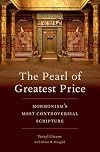
Most members of The Church of Jesus Christ of Latter-day Saints have probably never thought of the Pearl of Great Price as controversial. The Book of Mormon, yes—it has been under attack practically since the night Moroni appeared to Joseph Smith. Yet, Givens and Hauglid [1] use this book to argue that the Pearl of Great Price is even more so. Unfortunately, the majority of the effort goes into attempting to prove the point, and it leaves the book less than faith-promoting. It does have some bright spots, however.
The book begins with the assertion that “without the Book of Mormon, the Church of Jesus Christ would lose its principal evangelizing tool and its most conspicuous sign of Smith’s prophetic vocation but relatively little of its doctrine.… With the Doctrine and Covenants, the church would lose a good bit of its ecclesiology—organization templates and guidelines for church government and its offices—but would not suffer a devastating loss of the deeper theological underpinnings of its faith.” [2] I found these statements to be very surprising. The Book of Mormon has enough unique doctrine in it for Tad Callister to devote an entire chapter of his recent book to it, and in several places Givens admits that doctrine found in places like the Book of Moses was first taught in the Book of Mormon. In addition, the Doctrine and Covenants contains a great deal of unique doctrine, in spite of the removal of the Lectures on Faith (which the book points out is show more commonly thought to have been the Doctrine of the Doctrine and Covenants). A comparison of our edition with that of the Community of Christ shows some of what would be missing without it.
The book goes on to make its point: “Mormonism, in other words, is absolutely inconceivable apart from this collection of scriptural texts that provided the faith’s theological core from the beginning but only received canonical recognition in 1880. At the present moment, controversies regarding multiple accounts of Smith’s ‘First Vision,’ as well as the origins of the text of the Book of Abraham, have brought unprecedented attention to this hitherto largely neglected work. The consequence is that the Pearl of Great Price represents at one and the same time the greatest vulnerabilities and the greatest strengths of the Church of Jesus Christ.” [3] As I argue below, this is quite an overstatement.
The claim is also made that the “Pearl of Great Price is studied in conjunction with the Old Testament, on a four-year rotation… as a virtual afterthought in the LDS curriculum.” [4] On the contrary, the Book of Moses and Book of Abraham are studied with the Old Testament, Joseph Smith-Matthew is studied with the New Testament, and Joseph Smith—History and the Articles of Faith are studied along with the Doctrine and Covenants. This means that the Pearl of Great Price is studied three out of the four years of the curriculum cycle. It is simply studied in context, rather than having a year specifically devoted to it on its own.
The idea that the Book of Mormon was not used very much by early church members, other than as proof of Joseph Smith being a prophet, is repeated in this book. This has never quite made sense to me, based on my study of church history and the lives of my ancestors. At the 2019 Joseph Smith Papers Conference, Janiece Johnson gave a presentation that demonstrated many examples of Book of Mormon intertextuality throughout the Joseph Smith Papers and elsewhere that show extensive knowledge of its content by Joseph Smith and many others.
The first section of the book is on the Joseph Smith Translation. A history is given, and it is said to be “arguably the most theologically significant endeavor in a productive prophet’s career.” This is due to what is revealed in the Book of Moses (“page for page… the richest doctrinal fount of the gospel Smith developed”), as well as a “harmonization of the Bible with his own revelations,” and the seeking of answers to questions which led to the receipt of many revelations that went into the Doctrine and Covenants. This seems contradictory to the statement made that removal of the D&C wouldn’t have much effect on the Church—especially when statements like this are made: “[Section 132] dramatically reshaped the church and became the most controversial and inflammatory revelation he ever produced.” [5]
One bright spot in the discussion of the Book of Moses is about Enoch, and of “a God of body and parts” and a “God who weeps,” as well as man’s ability to become like God. After pitting D. Michael Quinn against Richard Bushman for opinions on whether Joseph likely knew of 1 Enoch, Givens points out that a “weeping God” is in 2 Enoch, which wasn’t translated into English until 1896. Critics have claimed that Joseph’s ideas about the nature of God evolved over time, with supposed trinitarian references in the Book of Mormon and the late commitment of the First Vision to writing. Givens points out that the Book of Moses shows otherwise: “It is sometimes alleged that he came late to the idea of an embodied God. The historical record is fairly clear in attesting the contrary, however.” [6]
Lately, the word “translation” as Joseph used it has been much discussed. Givens states that “it might be better defined in Smith’s case as the ongoing task of transmitting and assembling an earthly counterpart to an original, heavenly urtext, prompted by whatever oracular devices and textual fragments were at hand to catalyze, inspire, or trigger his prophetic imagination.” [7] He applies that to the translation of the gold plates, the Bible, and the Egyptian papyri. I doubt that Joseph Smith would have completely agreed with that, since he believed he was literally translating ancient texts in his possession, except in the case of the Bible.
Next comes the section on the Book of Abraham. I found this to be the most problematic. Speaking of the timing of the translation, the authors state that “a small school of LDS scholars believe that these 1842 references to translation were actually revisions of 1835 work, and that all his translation was completed in that year. …Much of his Nauvoo translation (i.e., Abraham 3-5) bears the clear imprint of his Hebrew studies, which took place after his initial 1835 work on Abraham.” [8] In a footnote, the three names mentioned to be in this “small school” are John Gee, Kerry Muhlestein, and Megan Hansen. [9] In reality, it has essentially been the consensus that most of the translation took place in Kirtland—which is why the collection of documents have been called the Kirtland Egyptian Papers. The three scholars mentioned are simply the ones that have published evidence to back up the argument. Hauglid and Givens, as well as some of the Joseph Smith Papers editors, are actually the recent exceptions to this thought, based on a different reading of some of Joseph Smith’s journal entries and some letters, along with the theory that his Hebrew studies influenced Abraham 3-5.
The book includes discussion of the responses to an anti-Mormon pamphlet by an Episcopal bishop, Franklin S. Spalding, published during 1913 in the Improvement Era magazine. “Most striking in all these responses was the openness of so many of the LDS writers to the criticisms leveled by the experts.” [10] On the contrary, on reading them, I found that not to be the case at all. The points where they appeared to be in agreement were just for the sake of argument, and they tried to make that clear. One such case is actually pointed out in the book just a couple paragraphs earlier: “Not that he was conceding the failure of Smith as translator, he insisted.” [11] Instead they pointed out that the experts were not even in agreement among themselves (again, pointed out in the book) and put forth arguments in favor of Joseph Smith’s translations.
B. H. Roberts, in the conclusion to his response to the pamphlet, said, “I believe that in the translations Joseph Smith has given to the world—confessedly not by scholarship but by inspiration, by his own spirit being quickened by contact with God’s spirit—that in those translations are truths that are parts of a mighty system of truth, the like of which is not found elsewhere among men. And that system of truth, now being worked out in the experiences of both individual men and nations of men, will receive, ere the end, a splendid vindication both as a system and all its parts.” [12]
The facsimiles are discussed, with an overview of what has been published about them by critics, as well as defenses from scholars such as John Gee and Hugh Nibley. An imbalance toward criticism means that the defenses tend to sound weak, and at the end of the section, the authors claim that “the majority of scholarly opinion, in sum, is dismissive of Smith as an ‘explainer’ of the three facsimiles.” [13] A footnote then explains that John Gee is the exception. In reality, such “scholarly opinion” is from critics, and several Latter-day Saint Egyptologists (including John Gee) have produced very good arguments showing them to be wrong – and also explaining why the critics generally are not even qualified to be making claims about the facsimiles.
Next the history and controversy of the extant papyri fragments are discussed. Again, arguments are given from both sides. This time faithful defenses are emphasized more. For example, the authors point out that “Latter-day Saint scholar Stephen Smoot argues that ‘by the hand [of Abraham],’ at least as a Hebraic expression, is generally translated to mean simple authorship. Nibley and Gee make similar observations.” [14] In addition, the section finishes by explaining that “Gee concludes that ‘these fragments are specifically not the source of the Book of Abraham.’ Hence, while non-LDS Egyptologists discount the Book of Abraham as a fraudulent translation from Smith’s Book of Breathing papyri, not all LDS Egyptologists are convinced that their church even possesses the source document with which to make an evaluation.” [15]
The next aspect discussed is the actual contents of the Book of Abraham. Hugh Nibley and others have written about the relationship between the Book of the Dead and the endowment. The authors discuss other ancient texts that support the story that is given of Abraham’s life, most of which were not available in Joseph Smith’s time.
One of the more controversial parts is about the Kirtland Egyptian Papers [16] and the translation process. The authors state that the use of “the Urim and Thummim, or seer stone, is entirely likely,” but that “the process by which he produced the Book of Abraham was of a different category altogether from that of his 1829 production of the Book of Mormon. …He wrestled with the Book of Abraham, using seer stones or not, on and off for seven years, attacking the task as an amateur linguist and working cooperatively with colleagues, and as far as we know he never declared the work complete or imputed to it the status of scripture.” [17] Scholars are not in complete agreement over whether a seer stone was used, but most think it unlikely. His methods and degree of cooperation with others are also contested.
The question of the relationship between the grammar and alphabet and the translation is discussed: “While we have no direct proof that Smith referred to this grammar and alphabet while translating the Book of Abraham, there are indications that he did, and we do know that he was working on both projects simultaneously.” [18] John Gee has stated that “almost every aspect of these documents is disputed: their authorship, their date, their purpose, their relationship with the Book of Abraham, their relationship with the Joseph Smith Papyri, their relationship with each other, what the documents are or were intended to be, and even whether the documents form a discrete or coherent group. With so many questionable or problematic facets of the documents in dispute, theories about the Book of Abraham built on this material run the risk of following a potentially incorrect assumption to its logically flawed conclusion.” [19] Indeed, that is what may have happened here.
The book mentions a couple of times that the Book of Abraham has caused some to lose their faith when they encounter critical information about its production. It clumsily attempts to smooth things over but actually inflicts more damage: “The Church now acknowledges on its website that prophetic misunderstanding and prophetic inspiration may coexist in the same person at the same moment. Smith certainly believed that he was successfully rendering the actual Egyptian symbols into their English counterparts. In the case of the facsimiles he was apparently wrong, and in the case of the Book of Abraham narrative he may have been wrong as well. Yet the church website—in a striking return to the position first articulated in the church’s 1912 responses to the Egyptologists—proposes the possibility that ‘even if that revelation did not directly correlate to the characters on the papyri… they catalyzed a process whereby God gave to Joseph Smith a revelation about the life of Abraham.’” [20] This is not only a bad interpretation of the 1913 responses (not 1912), but a misrepresentation of the Church’s essay on the topic, which favors the missing scroll theory (giving what’s quoted above as an alternate), and is very supportive of Joseph’s interpretation of the facsimiles, as were the 1913 responses. As for the part about what the Church supposedly “acknowledges on its website,” I’m not sure what is being referring to, as there is no reference given, and the essay does not say that.
The remainder of the Book of Abraham section discusses the actual translation. It was different than the Book of Mormon translation in that there is clear evidence of reworking, revising, and editing (which is what John Gee and others think was going on in the 1840s when Joseph Smith said he was working on translating in preparation for publication). The authors state that he did not say that he was called of God to do the translation, as he had been with other translations, nor did he claim that it was scripture. These things may be true, but because he wanted the translation published and he was teaching the things contained in it, this makes those things clear without explicitly stating them. This statement is also not helpful: “His system has no basis in linguistics and does not pass muster with any Egyptologist; but the considerable labor and sheer inventiveness evident in the project provide a remarkable window into his methodology and imagination.” [21] Nobody is even quite sure what “his system” was, or what parts of the “considerable labor” Joseph participated in or was in agreement with.
(Out of space here. The entire review is available at https://www.fairmormon.org/blog/2019/12/19/book-review-the-pearl-of-greatest-pri... ) show less
The book begins with the assertion that “without the Book of Mormon, the Church of Jesus Christ would lose its principal evangelizing tool and its most conspicuous sign of Smith’s prophetic vocation but relatively little of its doctrine.… With the Doctrine and Covenants, the church would lose a good bit of its ecclesiology—organization templates and guidelines for church government and its offices—but would not suffer a devastating loss of the deeper theological underpinnings of its faith.” [2] I found these statements to be very surprising. The Book of Mormon has enough unique doctrine in it for Tad Callister to devote an entire chapter of his recent book to it, and in several places Givens admits that doctrine found in places like the Book of Moses was first taught in the Book of Mormon. In addition, the Doctrine and Covenants contains a great deal of unique doctrine, in spite of the removal of the Lectures on Faith (which the book points out is show more commonly thought to have been the Doctrine of the Doctrine and Covenants). A comparison of our edition with that of the Community of Christ shows some of what would be missing without it.
The book goes on to make its point: “Mormonism, in other words, is absolutely inconceivable apart from this collection of scriptural texts that provided the faith’s theological core from the beginning but only received canonical recognition in 1880. At the present moment, controversies regarding multiple accounts of Smith’s ‘First Vision,’ as well as the origins of the text of the Book of Abraham, have brought unprecedented attention to this hitherto largely neglected work. The consequence is that the Pearl of Great Price represents at one and the same time the greatest vulnerabilities and the greatest strengths of the Church of Jesus Christ.” [3] As I argue below, this is quite an overstatement.
The claim is also made that the “Pearl of Great Price is studied in conjunction with the Old Testament, on a four-year rotation… as a virtual afterthought in the LDS curriculum.” [4] On the contrary, the Book of Moses and Book of Abraham are studied with the Old Testament, Joseph Smith-Matthew is studied with the New Testament, and Joseph Smith—History and the Articles of Faith are studied along with the Doctrine and Covenants. This means that the Pearl of Great Price is studied three out of the four years of the curriculum cycle. It is simply studied in context, rather than having a year specifically devoted to it on its own.
The idea that the Book of Mormon was not used very much by early church members, other than as proof of Joseph Smith being a prophet, is repeated in this book. This has never quite made sense to me, based on my study of church history and the lives of my ancestors. At the 2019 Joseph Smith Papers Conference, Janiece Johnson gave a presentation that demonstrated many examples of Book of Mormon intertextuality throughout the Joseph Smith Papers and elsewhere that show extensive knowledge of its content by Joseph Smith and many others.
The first section of the book is on the Joseph Smith Translation. A history is given, and it is said to be “arguably the most theologically significant endeavor in a productive prophet’s career.” This is due to what is revealed in the Book of Moses (“page for page… the richest doctrinal fount of the gospel Smith developed”), as well as a “harmonization of the Bible with his own revelations,” and the seeking of answers to questions which led to the receipt of many revelations that went into the Doctrine and Covenants. This seems contradictory to the statement made that removal of the D&C wouldn’t have much effect on the Church—especially when statements like this are made: “[Section 132] dramatically reshaped the church and became the most controversial and inflammatory revelation he ever produced.” [5]
One bright spot in the discussion of the Book of Moses is about Enoch, and of “a God of body and parts” and a “God who weeps,” as well as man’s ability to become like God. After pitting D. Michael Quinn against Richard Bushman for opinions on whether Joseph likely knew of 1 Enoch, Givens points out that a “weeping God” is in 2 Enoch, which wasn’t translated into English until 1896. Critics have claimed that Joseph’s ideas about the nature of God evolved over time, with supposed trinitarian references in the Book of Mormon and the late commitment of the First Vision to writing. Givens points out that the Book of Moses shows otherwise: “It is sometimes alleged that he came late to the idea of an embodied God. The historical record is fairly clear in attesting the contrary, however.” [6]
Lately, the word “translation” as Joseph used it has been much discussed. Givens states that “it might be better defined in Smith’s case as the ongoing task of transmitting and assembling an earthly counterpart to an original, heavenly urtext, prompted by whatever oracular devices and textual fragments were at hand to catalyze, inspire, or trigger his prophetic imagination.” [7] He applies that to the translation of the gold plates, the Bible, and the Egyptian papyri. I doubt that Joseph Smith would have completely agreed with that, since he believed he was literally translating ancient texts in his possession, except in the case of the Bible.
Next comes the section on the Book of Abraham. I found this to be the most problematic. Speaking of the timing of the translation, the authors state that “a small school of LDS scholars believe that these 1842 references to translation were actually revisions of 1835 work, and that all his translation was completed in that year. …Much of his Nauvoo translation (i.e., Abraham 3-5) bears the clear imprint of his Hebrew studies, which took place after his initial 1835 work on Abraham.” [8] In a footnote, the three names mentioned to be in this “small school” are John Gee, Kerry Muhlestein, and Megan Hansen. [9] In reality, it has essentially been the consensus that most of the translation took place in Kirtland—which is why the collection of documents have been called the Kirtland Egyptian Papers. The three scholars mentioned are simply the ones that have published evidence to back up the argument. Hauglid and Givens, as well as some of the Joseph Smith Papers editors, are actually the recent exceptions to this thought, based on a different reading of some of Joseph Smith’s journal entries and some letters, along with the theory that his Hebrew studies influenced Abraham 3-5.
The book includes discussion of the responses to an anti-Mormon pamphlet by an Episcopal bishop, Franklin S. Spalding, published during 1913 in the Improvement Era magazine. “Most striking in all these responses was the openness of so many of the LDS writers to the criticisms leveled by the experts.” [10] On the contrary, on reading them, I found that not to be the case at all. The points where they appeared to be in agreement were just for the sake of argument, and they tried to make that clear. One such case is actually pointed out in the book just a couple paragraphs earlier: “Not that he was conceding the failure of Smith as translator, he insisted.” [11] Instead they pointed out that the experts were not even in agreement among themselves (again, pointed out in the book) and put forth arguments in favor of Joseph Smith’s translations.
B. H. Roberts, in the conclusion to his response to the pamphlet, said, “I believe that in the translations Joseph Smith has given to the world—confessedly not by scholarship but by inspiration, by his own spirit being quickened by contact with God’s spirit—that in those translations are truths that are parts of a mighty system of truth, the like of which is not found elsewhere among men. And that system of truth, now being worked out in the experiences of both individual men and nations of men, will receive, ere the end, a splendid vindication both as a system and all its parts.” [12]
The facsimiles are discussed, with an overview of what has been published about them by critics, as well as defenses from scholars such as John Gee and Hugh Nibley. An imbalance toward criticism means that the defenses tend to sound weak, and at the end of the section, the authors claim that “the majority of scholarly opinion, in sum, is dismissive of Smith as an ‘explainer’ of the three facsimiles.” [13] A footnote then explains that John Gee is the exception. In reality, such “scholarly opinion” is from critics, and several Latter-day Saint Egyptologists (including John Gee) have produced very good arguments showing them to be wrong – and also explaining why the critics generally are not even qualified to be making claims about the facsimiles.
Next the history and controversy of the extant papyri fragments are discussed. Again, arguments are given from both sides. This time faithful defenses are emphasized more. For example, the authors point out that “Latter-day Saint scholar Stephen Smoot argues that ‘by the hand [of Abraham],’ at least as a Hebraic expression, is generally translated to mean simple authorship. Nibley and Gee make similar observations.” [14] In addition, the section finishes by explaining that “Gee concludes that ‘these fragments are specifically not the source of the Book of Abraham.’ Hence, while non-LDS Egyptologists discount the Book of Abraham as a fraudulent translation from Smith’s Book of Breathing papyri, not all LDS Egyptologists are convinced that their church even possesses the source document with which to make an evaluation.” [15]
The next aspect discussed is the actual contents of the Book of Abraham. Hugh Nibley and others have written about the relationship between the Book of the Dead and the endowment. The authors discuss other ancient texts that support the story that is given of Abraham’s life, most of which were not available in Joseph Smith’s time.
One of the more controversial parts is about the Kirtland Egyptian Papers [16] and the translation process. The authors state that the use of “the Urim and Thummim, or seer stone, is entirely likely,” but that “the process by which he produced the Book of Abraham was of a different category altogether from that of his 1829 production of the Book of Mormon. …He wrestled with the Book of Abraham, using seer stones or not, on and off for seven years, attacking the task as an amateur linguist and working cooperatively with colleagues, and as far as we know he never declared the work complete or imputed to it the status of scripture.” [17] Scholars are not in complete agreement over whether a seer stone was used, but most think it unlikely. His methods and degree of cooperation with others are also contested.
The question of the relationship between the grammar and alphabet and the translation is discussed: “While we have no direct proof that Smith referred to this grammar and alphabet while translating the Book of Abraham, there are indications that he did, and we do know that he was working on both projects simultaneously.” [18] John Gee has stated that “almost every aspect of these documents is disputed: their authorship, their date, their purpose, their relationship with the Book of Abraham, their relationship with the Joseph Smith Papyri, their relationship with each other, what the documents are or were intended to be, and even whether the documents form a discrete or coherent group. With so many questionable or problematic facets of the documents in dispute, theories about the Book of Abraham built on this material run the risk of following a potentially incorrect assumption to its logically flawed conclusion.” [19] Indeed, that is what may have happened here.
The book mentions a couple of times that the Book of Abraham has caused some to lose their faith when they encounter critical information about its production. It clumsily attempts to smooth things over but actually inflicts more damage: “The Church now acknowledges on its website that prophetic misunderstanding and prophetic inspiration may coexist in the same person at the same moment. Smith certainly believed that he was successfully rendering the actual Egyptian symbols into their English counterparts. In the case of the facsimiles he was apparently wrong, and in the case of the Book of Abraham narrative he may have been wrong as well. Yet the church website—in a striking return to the position first articulated in the church’s 1912 responses to the Egyptologists—proposes the possibility that ‘even if that revelation did not directly correlate to the characters on the papyri… they catalyzed a process whereby God gave to Joseph Smith a revelation about the life of Abraham.’” [20] This is not only a bad interpretation of the 1913 responses (not 1912), but a misrepresentation of the Church’s essay on the topic, which favors the missing scroll theory (giving what’s quoted above as an alternate), and is very supportive of Joseph’s interpretation of the facsimiles, as were the 1913 responses. As for the part about what the Church supposedly “acknowledges on its website,” I’m not sure what is being referring to, as there is no reference given, and the essay does not say that.
The remainder of the Book of Abraham section discusses the actual translation. It was different than the Book of Mormon translation in that there is clear evidence of reworking, revising, and editing (which is what John Gee and others think was going on in the 1840s when Joseph Smith said he was working on translating in preparation for publication). The authors state that he did not say that he was called of God to do the translation, as he had been with other translations, nor did he claim that it was scripture. These things may be true, but because he wanted the translation published and he was teaching the things contained in it, this makes those things clear without explicitly stating them. This statement is also not helpful: “His system has no basis in linguistics and does not pass muster with any Egyptologist; but the considerable labor and sheer inventiveness evident in the project provide a remarkable window into his methodology and imagination.” [21] Nobody is even quite sure what “his system” was, or what parts of the “considerable labor” Joseph participated in or was in agreement with.
(Out of space here. The entire review is available at https://www.fairmormon.org/blog/2019/12/19/book-review-the-pearl-of-greatest-pri... ) show less
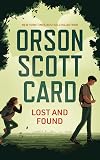
Another contemporary fantasy book by Card (my favorite genre from him), except this one has some rather dark undertones. It is a very good story, although it does get a little tiresome with all the characters having similar personalities (with the same witty sarcastic humor as many of his other books, which is something I used to enjoy more). I would definitely be interested in reading a sequel.
The Book of Mormon: Another Testament of Jesus Christ, Maxwell Institute Study Edition by Grant Hardy
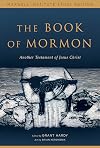
I’ve been reading and collecting the Book of Mormon my entire life in one form or another, from the illustrated “Book of Mormon for Beginning Readers” (or whatever it was called in the 1970s) to the official blue copy I handed out as a missionary, to Royal Skousen’s “Earliest Text.” I’ve also collected books written about the Book of Mormon, including much of Skousen’s Critical Text Project. I’ve appreciated being able to learn about the book and read it in these various formats particularly because I don’t usually like reading the same book more than once. This book edited by Grant Hardy gives a fresh new way to read it again, taking the official 2013 text and reformatting it to make for easier reading as well as to more easily identify various aspects, and also adding footnotes and other markers to point out changes gleaned from Skousen’s work, internal consistencies, and other interesting tidbits.
The book begins with the introduction from the 1981 edition “with minor modifications in 2013 (and the substitution of people for men in the third and next-to-last paragraphs),” (page vii) and then has the usual testimonies of three and eight witnesses, but then it also has the testimony of Emma Smith, taken from an interview by Joseph Smith III in 1879. In this, she mentions that Joseph did not have any manuscripts or books, what the plates felt like, that he did it “sitting with his face buried in his hat, with the [seer] stone in it,” (page ix) show more and that she did not believe her husband capable of composing it by himself.
This is followed by the Testimony of the Prophet Joseph Smith and Brief Explanation about the Book of Mormon, as you would find in a regular edition, although the Brief Explanation has an explanatory phrase inserted about the Plates of Ether. Then there is a Brief History of the Text, which is used as the editor’s introduction. In this, Hardy recounts the translation, printing, and subsequent editing and printing of the second edition.
He explains the work of Royal Skousen (“a professor of linguistics and English language at Brigham Young University, is the central figure in the academic analysis of the Book of Mormon text, including its origins, transmission, variants, and grammar”). He then describes what he has done in the book. “The footnotes here highlight instances in which earlier readings of the original and printer’s manuscripts may be more accurate, clearer, or more felicitous…. The notes here, however, are simplified, dispensing with Skousen’s indications of variants with a source, original and corrected readings in the manuscripts, spelling anomalies, and types of manuscript changes.” The original chapter divisions are indicated (“since these were apparently on the gold plates and thus were intended by ancient authors”), but the modern chapter and verse indicators are still included as well (page xvi).
His introduction ends with a statement that I believe sums up the purpose of the entire work: “The narrative complexity and coherence of the Book of Mormon — highlighted in this edition — offer some of the strongest evidences of its historicity and miraculous translation. As we learn to read the sacred text as carefully as possible, with detailed attention to language, structure, and historical context, its message of salvation through Jesus Christ will become more compelling and its lessons for life more clear” (page xvii). There is also a note that his royalties will be donated to the Humanitarian Aid Fund.
As examples of helpful explanations given in footnotes, footnote ‘a’ on the title page says, “Joseph Smith in 1838 said that the title page of the Book of Mormon is ‘not by any means a modern composition, either of mine, or of any other man who has lived or does live in this generation.’ For the 1840 edition, he added the name Moroni below the last line of the text as an indication of the original author, though the name was deleted in 1879.” Footnote ‘c’ says, “On the 1830 title page, Joseph Smith was identified as ‘author and proprietor’ in order to comply with copyright regulations. The preface to that same edition included Joseph’s assertion that he had translated ‘by the gift and power of God’ and that ‘the plates of which hath been spoken, were found in the township of Manchester, Ontario county, New York.’ The inscription ‘Translated by Joseph Smith, Junior’ has been on the title page of every edition since 1837” (page 1).
There is a lot of information packed into a typical page, and it is a little confusing at first. The section called “Using the Study Edition” will definitely come in handy until the reader becomes thoroughly familiar with the conventions used. It is at least much easier to decode than Skousen’s “Critical Text” volumes.
There are woodcuts by Brian Kershisnik at the beginning of each book, representing something from it. I particularly liked the one for Alma, with a seedling representing the lecture on faith growing from a seed. Third Nephi has two hands taking the resurrected Christ’s hand, showing the nail marks, while First Nephi has the Liahona.
At the back of the volume there is a collection of very helpful maps and charts, such as “Record Keepers in the Book of Mormon,” “Key Families in the Book of Mormon,” “Time Line of Nephite History,” and “Chronology of the Translation.” There are five pages of “Joseph Smith’s Statements on the Book of Mormon” followed by three and a half pages of “Stories of the Translation.” These provide insights into how Joseph Smith felt about the book, and how it was translated, some well known, and others not as much.
There is a section titled “General Notes” that talks about apparent anachronisms, the consistent internal chronology and coherence of the text, demographics, geography, language, the translation, and witnesses. These notes are very interesting, with the latest scholarship, as well as faith-promoting commentary: “This sacred record bears testimony of Jesus Christ from beginning to end, with an invitation to come unto Him and to see his Hand at work throughout history as He answers prayers, keeps covenants, and prepares a people for his coming” (page 623). A list of good books for further reading is also provided, with authors such as Brant Gardner, Terryl Givens, John Sorenson, and John Welch, among many others.
A section on “Literary Parallelism” is over eight pages long. It compares different types of parallelisms in the Bible with examples found in the Book of Mormon. “The writings of the prophets are much easier to understand when the English renditions of poetic passages are arranged so that they reflect the underlying poetic structure. Indeed, most modern translations of the Bible do this. It is easier to follow the prophets’ thoughts and arguments if we know where to expect repetition and where to look for new ideas. In this edition of the Book of Mormon, the lengthy excerpts from Isaiah that appear in 1 and 2 Nephi are presented in poetic form, but there are other sections of the Book of Mormon that also exhibit Hebrew-style parallelism, and these have similarly been arranged into lines and stanzas. While there are still many uncertainties about the Nephite language, reformed Egyptian (Mormon 9.32), and the nature of the translation, it is not surprising that when the Book of Mormon prophets wished to give particular emphasis to their message, they often employed the techniques of Hebrew poetry. In fact, characteristic biblical patterns of parallelism can be illustrated with examples from the Book of Mormon” (pages 625-626).
There is a helpful “Index of Names” based on the index in the 1981 Book of Mormon edition, with some differences, including variant spellings from the manuscripts. Finally, the “Reference Guide to the Book of Mormon” from the Doubleday edition is included, which also has some additions.
I have been enjoying reading this edition of the Book of Mormon. It gathers together many different resources to help bring out new insights, as well as pointing to things that are in the standard edition that may have been overlooked before. It has given me new appreciation for the internal consistency of the Book of Mormon, as well as a better understanding of its message. For someone who has read it many times already, it helps in seeing it with fresh eyes again. show less
The book begins with the introduction from the 1981 edition “with minor modifications in 2013 (and the substitution of people for men in the third and next-to-last paragraphs),” (page vii) and then has the usual testimonies of three and eight witnesses, but then it also has the testimony of Emma Smith, taken from an interview by Joseph Smith III in 1879. In this, she mentions that Joseph did not have any manuscripts or books, what the plates felt like, that he did it “sitting with his face buried in his hat, with the [seer] stone in it,” (page ix) show more and that she did not believe her husband capable of composing it by himself.
This is followed by the Testimony of the Prophet Joseph Smith and Brief Explanation about the Book of Mormon, as you would find in a regular edition, although the Brief Explanation has an explanatory phrase inserted about the Plates of Ether. Then there is a Brief History of the Text, which is used as the editor’s introduction. In this, Hardy recounts the translation, printing, and subsequent editing and printing of the second edition.
He explains the work of Royal Skousen (“a professor of linguistics and English language at Brigham Young University, is the central figure in the academic analysis of the Book of Mormon text, including its origins, transmission, variants, and grammar”). He then describes what he has done in the book. “The footnotes here highlight instances in which earlier readings of the original and printer’s manuscripts may be more accurate, clearer, or more felicitous…. The notes here, however, are simplified, dispensing with Skousen’s indications of variants with a source, original and corrected readings in the manuscripts, spelling anomalies, and types of manuscript changes.” The original chapter divisions are indicated (“since these were apparently on the gold plates and thus were intended by ancient authors”), but the modern chapter and verse indicators are still included as well (page xvi).
His introduction ends with a statement that I believe sums up the purpose of the entire work: “The narrative complexity and coherence of the Book of Mormon — highlighted in this edition — offer some of the strongest evidences of its historicity and miraculous translation. As we learn to read the sacred text as carefully as possible, with detailed attention to language, structure, and historical context, its message of salvation through Jesus Christ will become more compelling and its lessons for life more clear” (page xvii). There is also a note that his royalties will be donated to the Humanitarian Aid Fund.
As examples of helpful explanations given in footnotes, footnote ‘a’ on the title page says, “Joseph Smith in 1838 said that the title page of the Book of Mormon is ‘not by any means a modern composition, either of mine, or of any other man who has lived or does live in this generation.’ For the 1840 edition, he added the name Moroni below the last line of the text as an indication of the original author, though the name was deleted in 1879.” Footnote ‘c’ says, “On the 1830 title page, Joseph Smith was identified as ‘author and proprietor’ in order to comply with copyright regulations. The preface to that same edition included Joseph’s assertion that he had translated ‘by the gift and power of God’ and that ‘the plates of which hath been spoken, were found in the township of Manchester, Ontario county, New York.’ The inscription ‘Translated by Joseph Smith, Junior’ has been on the title page of every edition since 1837” (page 1).
There is a lot of information packed into a typical page, and it is a little confusing at first. The section called “Using the Study Edition” will definitely come in handy until the reader becomes thoroughly familiar with the conventions used. It is at least much easier to decode than Skousen’s “Critical Text” volumes.
There are woodcuts by Brian Kershisnik at the beginning of each book, representing something from it. I particularly liked the one for Alma, with a seedling representing the lecture on faith growing from a seed. Third Nephi has two hands taking the resurrected Christ’s hand, showing the nail marks, while First Nephi has the Liahona.
At the back of the volume there is a collection of very helpful maps and charts, such as “Record Keepers in the Book of Mormon,” “Key Families in the Book of Mormon,” “Time Line of Nephite History,” and “Chronology of the Translation.” There are five pages of “Joseph Smith’s Statements on the Book of Mormon” followed by three and a half pages of “Stories of the Translation.” These provide insights into how Joseph Smith felt about the book, and how it was translated, some well known, and others not as much.
There is a section titled “General Notes” that talks about apparent anachronisms, the consistent internal chronology and coherence of the text, demographics, geography, language, the translation, and witnesses. These notes are very interesting, with the latest scholarship, as well as faith-promoting commentary: “This sacred record bears testimony of Jesus Christ from beginning to end, with an invitation to come unto Him and to see his Hand at work throughout history as He answers prayers, keeps covenants, and prepares a people for his coming” (page 623). A list of good books for further reading is also provided, with authors such as Brant Gardner, Terryl Givens, John Sorenson, and John Welch, among many others.
A section on “Literary Parallelism” is over eight pages long. It compares different types of parallelisms in the Bible with examples found in the Book of Mormon. “The writings of the prophets are much easier to understand when the English renditions of poetic passages are arranged so that they reflect the underlying poetic structure. Indeed, most modern translations of the Bible do this. It is easier to follow the prophets’ thoughts and arguments if we know where to expect repetition and where to look for new ideas. In this edition of the Book of Mormon, the lengthy excerpts from Isaiah that appear in 1 and 2 Nephi are presented in poetic form, but there are other sections of the Book of Mormon that also exhibit Hebrew-style parallelism, and these have similarly been arranged into lines and stanzas. While there are still many uncertainties about the Nephite language, reformed Egyptian (Mormon 9.32), and the nature of the translation, it is not surprising that when the Book of Mormon prophets wished to give particular emphasis to their message, they often employed the techniques of Hebrew poetry. In fact, characteristic biblical patterns of parallelism can be illustrated with examples from the Book of Mormon” (pages 625-626).
There is a helpful “Index of Names” based on the index in the 1981 Book of Mormon edition, with some differences, including variant spellings from the manuscripts. Finally, the “Reference Guide to the Book of Mormon” from the Doubleday edition is included, which also has some additions.
I have been enjoying reading this edition of the Book of Mormon. It gathers together many different resources to help bring out new insights, as well as pointing to things that are in the standard edition that may have been overlooked before. It has given me new appreciation for the internal consistency of the Book of Mormon, as well as a better understanding of its message. For someone who has read it many times already, it helps in seeing it with fresh eyes again. show less
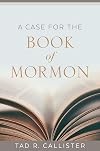
Tad Callister is an emeritus member of the Seventy and was the Sunday School General President until his release in the recent April General Conference. He has previously written books on the atonement and the apostasy. He has degrees in accounting and tax law and was a lawyer professionally. He is scheduled to speak at the 2019 FairMormon Conference in August.
This book presents both a spiritual and intellectual case for the Book of Mormon, drawing on previously published and unpublished books and talks by the author. In fact, the last chapter (which is a summary of the book) is a slightly modified version of his October, 2017 General Conference talk, “God’s Compelling Witness: The Book of Mormon,” and chapter two is from a talk he gave at a BYU Devotional on November 1, 2016, “The Book of Mormon: Man-Made or God-Given?” Much of the research cited is from FairMormon, Book of Mormon Central, and FARMS (now the Neal A. Maxwell Institute), along with classic scholarship from B. H. Roberts, Richard Lloyd Anderson, and Hugh Nibley.
The book has five parts, starting with an introduction stating that the Book of Mormon must be either true or false, a divine work or a fraud, and explaining why. And we are reminded why all this is important, with a quote from Anglican theologian, Austin Farrer: “Though argument does not create conviction, lack of it destroys belief. What seems to be proved may not be embraced; but what no one shows the ability to defend is quickly show more abandoned. Rational argument does not create belief, but it maintains a climate in which belief may flourish” (page 9).
Part two discusses common criticisms of the Book of Mormon and responds to them. There is a chapter that talks about different authorship theories (including plagiarism) and knocks them all down. Then Hugh Nibley’s challenge to write a comparable book is outlined to show that no mortal man could have done such a feat.
The next chapter is on anachronisms, comparing them to the striking clocks in Shakespeare’s Julius Caesar that did not yet exist in that context. These include large populations, the existence of writing on metal plates, cement, barley, Alma as a male name, Jesus being born “at Jerusalem,” and the phrase “and it came to pass,” all of which have been vindicated since being pointed out by critics. He then goes on to talk about chiasmus and advances being made in archaeology, and then reminds us that even with all the physical evidences it is the spirit that will give us a sure witness.
The following chapter focuses on half-truths that are meant to deceive. Some examples used are comparisons of View of the Hebrews and The Late War with the Book of Mormon. The way parallels between them are presented by the critics, it appears at first glance that there are striking similarities that may not be coincidental. On close comparison, however, they just don’t hold up. Other topics covered where critics distort the facts are coinage and DNA.
In part three, Callister explains that he is transitioning “from defense to offense” (page 91) and begins giving evidences for the authenticity of the Book of Mormon. He devotes a chapter to the unique doctrines that are taught, which do not appear in the Bible. Another chapter lists many of life’s questions and how they are answered by the Book of Mormon. For example:
Chapter seven talks about the Three Witnesses. Much has been said by critics to discount their testimonies, but the evidence shows that they literally saw the plates and were true to the end. “The question was occasionally asked if the plates were real or an intangible object comprising part of a ‘spiritual vision.’ Critics point to a statement by Martin Harris that he saw the plates with ‘the eyes of faith and not with the natural eyes’ and similar statements suggesting the plates were not a real and tangible object. That has never seemed like much of an argument to me. Of course Martin Harris needed faith to see the angel and the plates, and no doubt he was spiritually transfigured in some way to behold the divine messenger who showed him the plates (see Moses 1:14). Thus, he saw the angel and the plates, both as real as can be, with an eye of faith. David Whitmer…wrote: ‘Of course we were in the spirit when we had the view, for no man can behold the face of an angel, except in a spiritual view, but we were in the body also, and everything was as natural to us, as it is at any time.’ …Martin Harris declared: ‘Well, just as plain as you see that chopping block, I saw the plates; and sooner than I would deny it I would lay my head upon that chopping block and let you chop it off’” (pages 148-149). Callister continues with several other quotes from Martin Harris affirming his testimony.
The next chapter continues in this vein with testimonies from each of the eight witnesses. Then to summarize, Richard Lloyd Anderson, whose life work was on the witnesses of the Book of Mormon, is quoted: “I’ve got about two hundred times [documented statements] when one of the witnesses said, ‘I did sign the statement.’ ‘The statement means what it says.’ ‘I saw the angel.’ ‘I saw the plates.’ Or in the case of the eight witnesses, ‘I handled the plates.’ So, two hundred very positive and specific statements in many cases and I’m dealing today with about eight or ten documents [with negative comments allegedly from or about the Book of Mormon witnesses], in other words, five percent. And the question is ‘Do you believe the 95 percent or do you believe the five?’” (pages 161-162) Callister points out that in a court of law, a judge would ignore the aberrant testimony.
The following chapter discusses the Book of Mormon’s teachings about Christ, focusing on the atonement and resurrection, and that the purpose of the book is to bring us to Christ. “I believe that individuals who honestly read the Book of Mormon can learn by the Spirit ‘that Jesus is the Christ, the Eternal God, manifesting himself unto all nations,’ exactly as declared on the book’s title page. The book is indeed a witness, a divine witness, even the crowning witness of Jesus Christ, His Atonement, and His divinity” (page 184).
The tenth chapter goes through the Bible in search of prophecies of the coming forth of the Book of Mormon. They are found mostly in the Old Testament, which describes the inheritance that would be received by the descendants of Joseph. Isaiah alludes to some Book of Mormon events and about the book itself. Ezekiel talks about the sticks of Judah and Joseph. And, of course, Jesus himself referred to his other sheep in the New Testament.
The fifth part of the book is about gaining a testimony of the Book of Mormon, with a chapter on the need for a spiritual witness in spite of the physical evidence available. When relying solely on the evidence, “that testimony will be prone to crack or collapse with every tremor of intellectual concern…. One cannot discover a spiritual truth by intellectual means alone” (page 198). We can gain our own spiritual witness by accepting Moroni’s invitation, but this is often hard won. When we have paid the price, “it will become our personal iron rod…to keep us on the straight and narrow path that leads to eternal life” (page 206). This is then followed by a chapter about recognizing the spirit.
The final part consists of a single chapter, which is a summary of the book. As mentioned earlier, it is basically the author’s talk from the October 2017 General Conference. It contains this powerful paragraph near the end: “This book focuses on a case for the Book of Mormon, but in one sense the Book of Mormon does not need a case presented on its behalf. It is its own best witness – its own best evidence. It is the unmitigated word of God from beginning to end; it teaches the doctrine of Christ in purity; it bears witness of the Savior with precision and power; and it invites the Spirit in unrestrained proportions. Every aspect of the Book of Mormon bears witness of its divine origin because, in fact, it is divinely inspired” (page 237).
This is a great book for anyone that wants to learn more about evidences for the Book of Mormon, or defenses against common criticisms used today (particularly those in the so-called “CES Letter”). It contains in one place the accumulated scholarship in support of the book, as well as material focusing on the spiritual aspects. It is a little repetitious in places, but that is because each chapter could be self-contained (and at least some originally were), which can actually be advantageous to the casual reader who might be interested in one particular aspect at a time. The information contained in it could be helpful to those wanting to gain or regain a testimony, or to familiarize oneself with the critical arguments and defenses in a faith-promoting context. show less
This book presents both a spiritual and intellectual case for the Book of Mormon, drawing on previously published and unpublished books and talks by the author. In fact, the last chapter (which is a summary of the book) is a slightly modified version of his October, 2017 General Conference talk, “God’s Compelling Witness: The Book of Mormon,” and chapter two is from a talk he gave at a BYU Devotional on November 1, 2016, “The Book of Mormon: Man-Made or God-Given?” Much of the research cited is from FairMormon, Book of Mormon Central, and FARMS (now the Neal A. Maxwell Institute), along with classic scholarship from B. H. Roberts, Richard Lloyd Anderson, and Hugh Nibley.
The book has five parts, starting with an introduction stating that the Book of Mormon must be either true or false, a divine work or a fraud, and explaining why. And we are reminded why all this is important, with a quote from Anglican theologian, Austin Farrer: “Though argument does not create conviction, lack of it destroys belief. What seems to be proved may not be embraced; but what no one shows the ability to defend is quickly show more abandoned. Rational argument does not create belief, but it maintains a climate in which belief may flourish” (page 9).
Part two discusses common criticisms of the Book of Mormon and responds to them. There is a chapter that talks about different authorship theories (including plagiarism) and knocks them all down. Then Hugh Nibley’s challenge to write a comparable book is outlined to show that no mortal man could have done such a feat.
The next chapter is on anachronisms, comparing them to the striking clocks in Shakespeare’s Julius Caesar that did not yet exist in that context. These include large populations, the existence of writing on metal plates, cement, barley, Alma as a male name, Jesus being born “at Jerusalem,” and the phrase “and it came to pass,” all of which have been vindicated since being pointed out by critics. He then goes on to talk about chiasmus and advances being made in archaeology, and then reminds us that even with all the physical evidences it is the spirit that will give us a sure witness.
The following chapter focuses on half-truths that are meant to deceive. Some examples used are comparisons of View of the Hebrews and The Late War with the Book of Mormon. The way parallels between them are presented by the critics, it appears at first glance that there are striking similarities that may not be coincidental. On close comparison, however, they just don’t hold up. Other topics covered where critics distort the facts are coinage and DNA.
In part three, Callister explains that he is transitioning “from defense to offense” (page 91) and begins giving evidences for the authenticity of the Book of Mormon. He devotes a chapter to the unique doctrines that are taught, which do not appear in the Bible. Another chapter lists many of life’s questions and how they are answered by the Book of Mormon. For example:
How can I know if I have truly repented?
“And behold, he preached the word unto your fathers, and a mighty change was also wrought in their hearts, and they humbled themselves and put their trust in the true and living God. And behold, they were faithful until the end; therefore they were saved.
“And now behold, I ask of you, my brethren of the church, have ye spiritually been born of God? Have ye received his image in your countenances? Have ye experienced this mighty change in your hearts?” (Alma 5:13-14). (page 126)
Chapter seven talks about the Three Witnesses. Much has been said by critics to discount their testimonies, but the evidence shows that they literally saw the plates and were true to the end. “The question was occasionally asked if the plates were real or an intangible object comprising part of a ‘spiritual vision.’ Critics point to a statement by Martin Harris that he saw the plates with ‘the eyes of faith and not with the natural eyes’ and similar statements suggesting the plates were not a real and tangible object. That has never seemed like much of an argument to me. Of course Martin Harris needed faith to see the angel and the plates, and no doubt he was spiritually transfigured in some way to behold the divine messenger who showed him the plates (see Moses 1:14). Thus, he saw the angel and the plates, both as real as can be, with an eye of faith. David Whitmer…wrote: ‘Of course we were in the spirit when we had the view, for no man can behold the face of an angel, except in a spiritual view, but we were in the body also, and everything was as natural to us, as it is at any time.’ …Martin Harris declared: ‘Well, just as plain as you see that chopping block, I saw the plates; and sooner than I would deny it I would lay my head upon that chopping block and let you chop it off’” (pages 148-149). Callister continues with several other quotes from Martin Harris affirming his testimony.
The next chapter continues in this vein with testimonies from each of the eight witnesses. Then to summarize, Richard Lloyd Anderson, whose life work was on the witnesses of the Book of Mormon, is quoted: “I’ve got about two hundred times [documented statements] when one of the witnesses said, ‘I did sign the statement.’ ‘The statement means what it says.’ ‘I saw the angel.’ ‘I saw the plates.’ Or in the case of the eight witnesses, ‘I handled the plates.’ So, two hundred very positive and specific statements in many cases and I’m dealing today with about eight or ten documents [with negative comments allegedly from or about the Book of Mormon witnesses], in other words, five percent. And the question is ‘Do you believe the 95 percent or do you believe the five?’” (pages 161-162) Callister points out that in a court of law, a judge would ignore the aberrant testimony.
The following chapter discusses the Book of Mormon’s teachings about Christ, focusing on the atonement and resurrection, and that the purpose of the book is to bring us to Christ. “I believe that individuals who honestly read the Book of Mormon can learn by the Spirit ‘that Jesus is the Christ, the Eternal God, manifesting himself unto all nations,’ exactly as declared on the book’s title page. The book is indeed a witness, a divine witness, even the crowning witness of Jesus Christ, His Atonement, and His divinity” (page 184).
The tenth chapter goes through the Bible in search of prophecies of the coming forth of the Book of Mormon. They are found mostly in the Old Testament, which describes the inheritance that would be received by the descendants of Joseph. Isaiah alludes to some Book of Mormon events and about the book itself. Ezekiel talks about the sticks of Judah and Joseph. And, of course, Jesus himself referred to his other sheep in the New Testament.
The fifth part of the book is about gaining a testimony of the Book of Mormon, with a chapter on the need for a spiritual witness in spite of the physical evidence available. When relying solely on the evidence, “that testimony will be prone to crack or collapse with every tremor of intellectual concern…. One cannot discover a spiritual truth by intellectual means alone” (page 198). We can gain our own spiritual witness by accepting Moroni’s invitation, but this is often hard won. When we have paid the price, “it will become our personal iron rod…to keep us on the straight and narrow path that leads to eternal life” (page 206). This is then followed by a chapter about recognizing the spirit.
The final part consists of a single chapter, which is a summary of the book. As mentioned earlier, it is basically the author’s talk from the October 2017 General Conference. It contains this powerful paragraph near the end: “This book focuses on a case for the Book of Mormon, but in one sense the Book of Mormon does not need a case presented on its behalf. It is its own best witness – its own best evidence. It is the unmitigated word of God from beginning to end; it teaches the doctrine of Christ in purity; it bears witness of the Savior with precision and power; and it invites the Spirit in unrestrained proportions. Every aspect of the Book of Mormon bears witness of its divine origin because, in fact, it is divinely inspired” (page 237).
This is a great book for anyone that wants to learn more about evidences for the Book of Mormon, or defenses against common criticisms used today (particularly those in the so-called “CES Letter”). It contains in one place the accumulated scholarship in support of the book, as well as material focusing on the spiritual aspects. It is a little repetitious in places, but that is because each chapter could be self-contained (and at least some originally were), which can actually be advantageous to the casual reader who might be interested in one particular aspect at a time. The information contained in it could be helpful to those wanting to gain or regain a testimony, or to familiarize oneself with the critical arguments and defenses in a faith-promoting context. show less
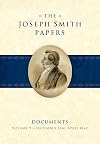
As we reach the last few years of Joseph Smith’s life, the Documents series volumes cover decreasing amounts of time while still requiring a significant number of pages. This volume covers five months in 595 pages. I’ve been told volume 15 will cover a mere five weeks.
Volume 9 takes place between December 1841 and April 1842. During this time, Joseph Smith opened a store, became vice mayor of Nauvoo, took over as editor of the Times and Seasons, joined the Freemasons, and helped start the Female Relief Society of Nauvoo, all while continuing to sell land to incoming Saints, lead the church, and command the Nauvoo Legion. An estimated 70 percent of the documents in this volume were not published prior to the Joseph Smith Papers Project. The documents consist of letters, revelations (many of them personal, so not canonized), discourses, legal and business documents, minutes from meetings, and selections from the Times and Seasons.
As with all volumes in the project, all of the documents were produced, received, or owned by Joseph Smith or his staff under his direction. This volume also contains an item in the appendix that has an uncertain status. It includes a saying commonly attributed to Joseph Smith: “Happiness is the object and design of our existence, and will be the end thereof if we pursue the path that leads to it; and this path is virtue, uprightness, faithfulness, holiness, and keeping ALL the commandments of God” (page 416). This item is a letter that show more John C. Bennett claims Joseph Smith wrote to Nancy Rigdon in an attempt to court her as a plural wife. The letter was sent by Bennett to a newspaper after he was excommunicated as part of a campaign to discredit Joseph Smith. No known copies of the actual letter exist, and historians are not in agreement over its authenticity.
Wilford Woodruff took notes of some of Joseph Smith’s sermons during this time and there are a couple that I thought were particularly interesting. On December 19, 1841, Joseph spoke at his home in response to concerns “of some church members that he was a fallen prophet either because he delivered revelation less frequently than in times past or because he provided revelation containing direction that differed from earlier revealed instruction” (page 33). Woodruff wrote that “On Revelation He said ‘A man would command his son to dig potatoes, saddle his horse but before he had done either tell him to do something els, this is all consider[ed] right ‘But as soon as the Lord gives a commandment & revokes that decree & commands something els then the prophet is considered fallen &c’” (page 34).
On January 30, 1842, Wilford Woodruff wrote in his “Book of Revelations” notebook about a sermon Joseph Smith gave on deification that contains ideas that are typically associated with the later King Follett Discourse, although as the editors note, “Some ideas related to deification expressed here do not appear again in any later discourses” (page 128).
A footnote here also states that “JS made similar statements regarding Jesus Christ and the Holy Ghost in 1843 and 1844 but did not repeat in extant documents this teaching about ‘all the Saints’” (page 129, footnote 358).
The March 1, 1842 edition of the Times and Seasons contained a document called “Church History,” which has since become known as the “Wentworth Letter.” It is not actually a letter, but is a history of the Church including Joseph Smith’s early visions, the organization and growth of the Church and the accompanying persecution, as well as a list of beliefs which we now know as “The Articles of Faith.” This is also where “The Standard of Truth” originated that many missionaries have memorized. This document is given in its entirety, along with historical information and many helpful explanatory footnotes.
On March 15, 1842, Abraham 2:19-5:21 was featured in the Times and Seasons, along with Facsimile 2. These are reproduced in this volume along with a discussion from the editors explaining when they believe different portions of the Book of Abraham were translated, based on journal entries, correspondence, and an unpublished editorial that is contained in this volume (there is disagreement among scholars about when the translation occurred - see, for example, John Gee, An Introduction to the Book of Abraham). The hypocephalus represented by Facsimile 2 is not among the papyri fragments still in existence today.
A letter from Joseph Smith to Emma and the Female Relief Society of Nauvoo on March 31, 1842 warned of men attempting to take advantage of some of the women sexually based on claims of teachings by Joseph Smith and others. “The letter to Emma Smith and the Relief Society appears to be an early response to the actions of [John C.] Bennett and others who were seducing women in Nauvoo by misrepresenting the not yet publicly announced doctrine of plural marriage…. The featured text is the earliest extant version of the letter and may have been either an early draft of the letter or the actual correspondence delivered to Emma Smith and the Relief Society” (page 307). The footnotes point out differences between this and the version that appears in the Relief Society minutes. Here are a couple interesting paragraphs:
There are also items that give us deeper insight into Joseph Smith’s personality. Here is an excerpt of a letter he wrote to Edward Hunter on January 5, 1842, about the opening of his new general store (today commonly referred to as the “red brick store”):
And there are items that show what others thought of Joseph Smith. A mysterious letter dated December 28, 1841 received from a B.F. Withers offers to combine the Nauvoo Legion with an unnamed secret society which promised to “secure to all engaged honor & wealth, and whose united strength we believe cannot fail of success” (page 50). If a reply was written, it is not extant.
As with all the volumes of the Joseph Smith Papers Project, this book should be considered for anyone interested in the history of the Church or the life of Joseph Smith. The documents selected for inclusion give greater insight into life in Nauvoo during this time period and help provide a better understanding of what Joseph Smith was like and what he taught. The documents are available online at the Joseph Smith Papers website, but the thorough footnotes and historical information and explanations that are currently only available in the book make it well worth having. show less
Volume 9 takes place between December 1841 and April 1842. During this time, Joseph Smith opened a store, became vice mayor of Nauvoo, took over as editor of the Times and Seasons, joined the Freemasons, and helped start the Female Relief Society of Nauvoo, all while continuing to sell land to incoming Saints, lead the church, and command the Nauvoo Legion. An estimated 70 percent of the documents in this volume were not published prior to the Joseph Smith Papers Project. The documents consist of letters, revelations (many of them personal, so not canonized), discourses, legal and business documents, minutes from meetings, and selections from the Times and Seasons.
As with all volumes in the project, all of the documents were produced, received, or owned by Joseph Smith or his staff under his direction. This volume also contains an item in the appendix that has an uncertain status. It includes a saying commonly attributed to Joseph Smith: “Happiness is the object and design of our existence, and will be the end thereof if we pursue the path that leads to it; and this path is virtue, uprightness, faithfulness, holiness, and keeping ALL the commandments of God” (page 416). This item is a letter that show more John C. Bennett claims Joseph Smith wrote to Nancy Rigdon in an attempt to court her as a plural wife. The letter was sent by Bennett to a newspaper after he was excommunicated as part of a campaign to discredit Joseph Smith. No known copies of the actual letter exist, and historians are not in agreement over its authenticity.
Wilford Woodruff took notes of some of Joseph Smith’s sermons during this time and there are a couple that I thought were particularly interesting. On December 19, 1841, Joseph spoke at his home in response to concerns “of some church members that he was a fallen prophet either because he delivered revelation less frequently than in times past or because he provided revelation containing direction that differed from earlier revealed instruction” (page 33). Woodruff wrote that “On Revelation He said ‘A man would command his son to dig potatoes, saddle his horse but before he had done either tell him to do something els, this is all consider[ed] right ‘But as soon as the Lord gives a commandment & revokes that decree & commands something els then the prophet is considered fallen &c’” (page 34).
On January 30, 1842, Wilford Woodruff wrote in his “Book of Revelations” notebook about a sermon Joseph Smith gave on deification that contains ideas that are typically associated with the later King Follett Discourse, although as the editors note, “Some ideas related to deification expressed here do not appear again in any later discourses” (page 128).
Jan 30[th] [1842] Joseph the Seer taught the following principles that the God & father of our Lord Jesus Christ was once the same as the Son or Holy Ghost bothaving [both having] redeemed a world became the eternal God of that world he had a son Jesus Christ who redeemed this earth the same as his father had a world which made them equal & the Holy Ghost would do the same in his turn & so would all the Saints [p. [3]] who inherited a Celestial glory so their would be Gods many & Lords many their were many mansions even 12 from the abode of Devils to the Celestial glory All Spirits that have bodies have power over those that have not hence men have power over Devils &c (page 129)
A footnote here also states that “JS made similar statements regarding Jesus Christ and the Holy Ghost in 1843 and 1844 but did not repeat in extant documents this teaching about ‘all the Saints’” (page 129, footnote 358).
The March 1, 1842 edition of the Times and Seasons contained a document called “Church History,” which has since become known as the “Wentworth Letter.” It is not actually a letter, but is a history of the Church including Joseph Smith’s early visions, the organization and growth of the Church and the accompanying persecution, as well as a list of beliefs which we now know as “The Articles of Faith.” This is also where “The Standard of Truth” originated that many missionaries have memorized. This document is given in its entirety, along with historical information and many helpful explanatory footnotes.
On March 15, 1842, Abraham 2:19-5:21 was featured in the Times and Seasons, along with Facsimile 2. These are reproduced in this volume along with a discussion from the editors explaining when they believe different portions of the Book of Abraham were translated, based on journal entries, correspondence, and an unpublished editorial that is contained in this volume (there is disagreement among scholars about when the translation occurred - see, for example, John Gee, An Introduction to the Book of Abraham). The hypocephalus represented by Facsimile 2 is not among the papyri fragments still in existence today.
A letter from Joseph Smith to Emma and the Female Relief Society of Nauvoo on March 31, 1842 warned of men attempting to take advantage of some of the women sexually based on claims of teachings by Joseph Smith and others. “The letter to Emma Smith and the Relief Society appears to be an early response to the actions of [John C.] Bennett and others who were seducing women in Nauvoo by misrepresenting the not yet publicly announced doctrine of plural marriage…. The featured text is the earliest extant version of the letter and may have been either an early draft of the letter or the actual correspondence delivered to Emma Smith and the Relief Society” (page 307). The footnotes point out differences between this and the version that appears in the Relief Society minutes. Here are a couple interesting paragraphs:
We have been informed that some unprincipled men whose names we will not mention at present have been guilty of such crimes: we do not mention their names, not knowing but what there may be some among you who are not sufficiently skilled in Masonry as to keep a secret, therefore suffice it to say there are those & we therefore warn you & forewarn you in the name of the Lord to check and destroy any faith that any innocent person may have in any such character for we don’t want any body to believe any thing as coming from us contrary to the old established morals & virtues & scriptural laws regulating the habits customs & conduct of Society [p. [2]] unless it be by message del[iv]ered to you by our own mouth, by actual revelation & commandment. and all persons pretending to be authorized by us or having any permit or sanction from us are & will be liars & base imposters & you are authorized on the very first intimation of the kind to denounce them as such & fly from them as the fiery flying serpents, whether they are prophets, seers, or Revelators, patriarchs, Twelve apostles, Elders, Priests. or what not, Mayors, Generals, or what not, city council alderman, Marshall, Police, Lord Mayor or the Devil, are alike culpable. & shall be damned for such evil practices; & if you yourself yourselves hear adhere to any thing of the kind you, also shall be damned.
Now beloved Sisters do not believe for a moment that we wish to impose upon you, we actualy do know that such things have existed in the church & sorry that we are obliged to make mention of any such thing & we want a stop put to them, & we want you to do your part & we will do ours part for we wish to to keep the commandments of God in all things given to us from heaven, living by every word that proceedeth out of the mouth of the Lord.— (pages 308-309)
There are also items that give us deeper insight into Joseph Smith’s personality. Here is an excerpt of a letter he wrote to Edward Hunter on January 5, 1842, about the opening of his new general store (today commonly referred to as the “red brick store”):
The Lord has blessed our exertions in a wonderful manner, and although some individuals have succeded in detain[in]g goods. to a considerable amount for the time being, yet we have been enabled to s[e]cure goods in the building Sufficient to fill all the shelves. & have some in reserve, both in loft. & cellar. Our assortment, is tolerably good— very good considering the different purchases made by different individuals,— at different times, and under circumstances which controuled their choice to some extent, but, I rejoice [p. [2]] that we have been enabled to do as well as we have, for the hearts of many of the poor brethren & sisters will be made glad, with those comforts which are now within their reach. The store has been filled to overflowing all day, & I have stood behind the counter dealing out goods as steady as any clerk you ever Saw to oblige those who were compelled to go without their christmas & New year, dinners. for the want of a little Sugar, Molasses, Rasions &c. &c,— & to please myself also for I love to wait upon the Saints, and be a servant to all hoping that I may be exalted in the due time of the Lord (pages 86-87).
And there are items that show what others thought of Joseph Smith. A mysterious letter dated December 28, 1841 received from a B.F. Withers offers to combine the Nauvoo Legion with an unnamed secret society which promised to “secure to all engaged honor & wealth, and whose united strength we believe cannot fail of success” (page 50). If a reply was written, it is not extant.
As with all the volumes of the Joseph Smith Papers Project, this book should be considered for anyone interested in the history of the Church or the life of Joseph Smith. The documents selected for inclusion give greater insight into life in Nauvoo during this time period and help provide a better understanding of what Joseph Smith was like and what he taught. The documents are available online at the Joseph Smith Papers website, but the thorough footnotes and historical information and explanations that are currently only available in the book make it well worth having. show less
Jesus said, “I am the way, the truth, and the life” (John 14:6). We take this literally for the words “way” and “life,” but what if we also took it literally for the word “truth”? In their book Who What is Truth? Reframing Our Questions for a Richer Faith, that is exactly what authors Jeffrey L. Thayne and Edwin E. Gantt encourage us to do, changing our way of thinking from truth as an idea (this turns out to be rooted in Greek philosophy) to truth as a person (Hebrew thought).
The chapter headings give a good summary of what is covered: “What if truth is a person?,” “The ancient roots of person-truth,” “Faith in ideas, or faithfulness to a Person?,” “Knowing God vs. believing ideas about Him,” “Person-truth does not give us control,” “Knowing person-truth through covenant,” “Our on-and-off relationship with person-truth,” “What it means to be an authority on truth,” “The archnemesis of person-truth,” “What is sin, if truth is a person?,” “Rethinking the atonement of Christ,” and “Person-truth in a world of science and reason.” There is also a conclusion chapter, a list of further readings, and appendixes with more on Greek and Hebrew thought and questions and answers.
I was initially skeptical when offered this book to review. But it claimed to offer help for those having a faith crisis, and to strengthen faith in Jesus Christ and the Restoration, so I thought it would be worth a look. I was pleasantly show more surprised, and found myself agreeing with the conclusions (the good fruit being brought forth), even as I am still processing the explanations that led up to them. The authors anticipated skepticism, and they addressed all the potential red flags that came up in my mind as I read.
For instance, “God guides His children within their contexts. What was prudent for one generation may no longer be prudent for another. His instructions are not the sort of universal, unchangeable abstractions that we privilege in the modern world” (page 47). This is followed up with a warning that “Some Latter-day Saints have used these very ideas to rationalize a wholesale rejection of prophetic teaching and warning…. They rightly point out that prophets are fallible and can make mistakes; they wrongly assert that this means we should reject their current teachings” (page 49).
The book is full of gems that address topics related to a crisis of faith, such as “some Latter-day Saints argue that faith cannot exist without doubt. They reject the certainty with which many Latter-day Saints express their testimonies of the restored gospel…. Some Latter-day thinkers have begun to use similar logic to valorize doubt and skepticism as a prerequisite to genuine faith…. In contrast, the person view of truth shifts our understanding of doubt. If we use marriage as our example, spouses are always and ever knowing each other better every day. But it would make little sense to say that each must question or doubt the existence or faithfulness of the other in order to have faith in him or her or to be truly faithful…. Similarly, our fidelity to God is not justified by rational inference or empirical evidence either” (page 56). It also covers topics such as so-called “bishop roulette,” how it’s OK that prophets sometimes seem to contradict each other or even themselves, why bad things happen even though we live the gospel but we should trust God anyway, and what is wrong with the idea of “being on the wrong side of history.”
There is a chapter on the temple that reframes the question, “If the sacred truths of the Holy Temple are really so important, why do we keep them a secret, rather than sharing them with everyone?” into “What must I do to prepare myself for the ritual communion with God that takes place in the Holy Temple, and how can I invite others to do the same.” It further explains, “The first question assumes that all truth should be verified in light of public scrutiny, whereas the second question assumes that our relationship with God can involve levels of familiarity and intimacy that are guarded by covenants” (page 77).
One observation I have made with those that lose their faith is that early in the process they can be helped, but they eventually reach a point where they have lost their trust and nothing can be said to help them. At this point, it seems that only God can turn them around, in His own time. This is explained: “[T]here may really be intellectual snares and traps that, once sprung, we cannot think our way out of. It is possible, from this view to be held captive by a lie or possessed by a false view of the world…. From a person view of truth, rational arguments may be insufficient. Divine rescue is often needed” (page 102). The question, “How can we convince someone who has been led astray by false ideas of the error of their beliefs and doctrinal understandings?” becomes “How can we invite someone who has been (or is being) led astray to obtain spiritual and intellectual confirmations through personal experiences with God?” (page 105).
At 185 pages, this would be a quick read, except that much of it is a completely different way of looking at things, which I am still digesting. I did enjoy reading it – it was actually hard to put down. I plan to read it again, and refer to it in the future as I discuss matters of faith with others and try to help those that are struggling. As the authors point out in a note in the beginning, others have written about these ideas, but Thayne and Gantt did a great job expressing them in a way that makes them accessible to the general reader. show less
The chapter headings give a good summary of what is covered: “What if truth is a person?,” “The ancient roots of person-truth,” “Faith in ideas, or faithfulness to a Person?,” “Knowing God vs. believing ideas about Him,” “Person-truth does not give us control,” “Knowing person-truth through covenant,” “Our on-and-off relationship with person-truth,” “What it means to be an authority on truth,” “The archnemesis of person-truth,” “What is sin, if truth is a person?,” “Rethinking the atonement of Christ,” and “Person-truth in a world of science and reason.” There is also a conclusion chapter, a list of further readings, and appendixes with more on Greek and Hebrew thought and questions and answers.
I was initially skeptical when offered this book to review. But it claimed to offer help for those having a faith crisis, and to strengthen faith in Jesus Christ and the Restoration, so I thought it would be worth a look. I was pleasantly show more surprised, and found myself agreeing with the conclusions (the good fruit being brought forth), even as I am still processing the explanations that led up to them. The authors anticipated skepticism, and they addressed all the potential red flags that came up in my mind as I read.
For instance, “God guides His children within their contexts. What was prudent for one generation may no longer be prudent for another. His instructions are not the sort of universal, unchangeable abstractions that we privilege in the modern world” (page 47). This is followed up with a warning that “Some Latter-day Saints have used these very ideas to rationalize a wholesale rejection of prophetic teaching and warning…. They rightly point out that prophets are fallible and can make mistakes; they wrongly assert that this means we should reject their current teachings” (page 49).
The book is full of gems that address topics related to a crisis of faith, such as “some Latter-day Saints argue that faith cannot exist without doubt. They reject the certainty with which many Latter-day Saints express their testimonies of the restored gospel…. Some Latter-day thinkers have begun to use similar logic to valorize doubt and skepticism as a prerequisite to genuine faith…. In contrast, the person view of truth shifts our understanding of doubt. If we use marriage as our example, spouses are always and ever knowing each other better every day. But it would make little sense to say that each must question or doubt the existence or faithfulness of the other in order to have faith in him or her or to be truly faithful…. Similarly, our fidelity to God is not justified by rational inference or empirical evidence either” (page 56). It also covers topics such as so-called “bishop roulette,” how it’s OK that prophets sometimes seem to contradict each other or even themselves, why bad things happen even though we live the gospel but we should trust God anyway, and what is wrong with the idea of “being on the wrong side of history.”
There is a chapter on the temple that reframes the question, “If the sacred truths of the Holy Temple are really so important, why do we keep them a secret, rather than sharing them with everyone?” into “What must I do to prepare myself for the ritual communion with God that takes place in the Holy Temple, and how can I invite others to do the same.” It further explains, “The first question assumes that all truth should be verified in light of public scrutiny, whereas the second question assumes that our relationship with God can involve levels of familiarity and intimacy that are guarded by covenants” (page 77).
One observation I have made with those that lose their faith is that early in the process they can be helped, but they eventually reach a point where they have lost their trust and nothing can be said to help them. At this point, it seems that only God can turn them around, in His own time. This is explained: “[T]here may really be intellectual snares and traps that, once sprung, we cannot think our way out of. It is possible, from this view to be held captive by a lie or possessed by a false view of the world…. From a person view of truth, rational arguments may be insufficient. Divine rescue is often needed” (page 102). The question, “How can we convince someone who has been led astray by false ideas of the error of their beliefs and doctrinal understandings?” becomes “How can we invite someone who has been (or is being) led astray to obtain spiritual and intellectual confirmations through personal experiences with God?” (page 105).
At 185 pages, this would be a quick read, except that much of it is a completely different way of looking at things, which I am still digesting. I did enjoy reading it – it was actually hard to put down. I plan to read it again, and refer to it in the future as I discuss matters of faith with others and try to help those that are struggling. As the authors point out in a note in the beginning, others have written about these ideas, but Thayne and Gantt did a great job expressing them in a way that makes them accessible to the general reader. show less
William Wines Phelps (usually known as W. W. Phelps) is probably most often thought of in conjunction with some of the most beloved hymns of The Church of Jesus Christ of Latter-day Saints. “Praise to the Man,” “The Spirit of God,” “Gently Raise the Sacred Strain,” and “If You Could Hie to Kolob” are just a few of the fifteen hymns that he wrote that appear in the current hymnal. But there was so much more to his life, and Bruce Van Orden, an emeritus professor of church history and doctrine at Brigham Young University, has been researching it for decades. This research was recently given a boost by the Joseph Smith Papers Project, which gave greater access to materials that Phelps was involved with.
There is little known about Phelps’s early life, or where and how he was educated, but he grew into a very intelligent and articulate man. He joined the Church in 1831 at age 39, and his talents were immediately put to use. He served in church leadership councils, including the Council of Fifty (it was he that coined the term “theodemocracy”); he was a writer, poet, and printer, and actually did more ghostwriting for Joseph Smith than was previously realized. He was also very much a family man, as well as a close friend of Joseph (again, moreso than has previously been understood). This book concentrates on these facets of his life.
Reading this book is essentially reading the history of the church, up through the early 1850s (when his mental state began show more to deteriorate), as he was very much involved. He was excommunicated three times, but always rebaptized (the third time was for taking on plural wives without specific permission and the rebaptism was a mere two days later). Phelps was with Joseph Smith in over 100 meetings and was involved in events occurring in Jackson County, Clay County, Kirtland, Far West, Adam-ondi-Ahman, and Nauvoo. He also accompanied Brigham Young’s party to the Salt Lake Valley, explored Utah Valley (giving Mount Nebo its name), and was involved with the Deseret Alphabet.
Some of Phelps’s biggest contributions to the church were through writing and printing. He assisted Emma in creating the first hymn book, which contained 25 (out of 90) hymns that he authored. He adapted (Joseph Smith called it “correcting” rather than “adapting”) 37 Protestant hymns that were included. He was the editor of The Evening and Morning Star (probably writing all the editorials), as well as Times and Seasons (ghostwriting more than 25 articles for Joseph), The Wasp, and the Nauvoo Neighbor. He is also thought to have had a hand in the Wentworth Letter, along with Orson Pratt.
In Kirtland, Phelps was a scribe for the Book of Abraham at the same time he was working on the Doctrine and Covenants and hymnbook. He was also heavily involved in studying the papyri. The Grammar and Alphabet of the Egyptian Language was mostly written in his hand. Acting as de facto editor of the Times and Seasons, he published the Book of Abraham and wrote the preface indicating it to be “the writings of Abraham, while he was in Egypt, called the Book of Abraham, written by his own hand upon Papyrus.” (Van Orden points out that this statement is not actually part of the scriptural text.)
There is an entire chapter devoted to this topic, with Van Orden noting that his “personal conclusion is that Phelps added many of his own concepts to the Egyptian alphabet and grammar after Joseph Smith started the process. I feel that as Joseph Smith got further along with the translation of the Book of Abraham, especially during the Nauvoo period, he no longer used the Egyptian alphabet and grammar for any purpose. In any event, it is not canonized and in no way represents doctrine of the LDS Church” (page 197).
Phelps’s hymn “If You Could Hie to Kolob” draws from the Book of Abraham, but goes beyond it. It is thought that the further information it contains may have come from private conversations between him and Joseph. He also could have come up with them on his own, or been influenced by Orson Pratt. Regardless, “Phelps himself helped instill among the Latter-day Saints a love for the esoteric and uplifting doctrines found in the Book of Abraham” (page 199).
In the parts about Phelps’s relationship with his wife and children, Van Orden points out his sexism (by today’s standards) and his strict, puritanical nature. I felt that he was engaging in presentism, and indeed on page 184 he discusses this: “But that is a manifestation of ‘presentism,’ which is defined as ‘uncritical adherence to present-day attitudes, especially the tendency to interpret past events in terms of modern values and concepts.’ Phelps’s attitudes are extreme according to present-day values, but he was closer to the mainstream for his day” (page 184).
Under Joseph Smith’s direction, Phelps wrote a 12-page pamphlet that outlined the platform upon which Joseph ran for president. This included the well-known statement that “Slavery should be abolished; federal funds from the sale of public lands or by reducing the salary of congressmen should be used to pay a reasonable fee for slaveholders to free their slaves” (page 352). He also wrote editorials promoting Joseph’s campaign that ran in the Times and Seasons and the Nauvoo Neighbor. In addition, he wrote or ghostwrote 24 articles for other venues.
The chapter titled “Martyrdom and Succession” outlines what are thought to be the various circumstances leading up to the martyrdom, including the trouble with the Law brothers and plural marriage, the Nauvoo Expositor, political problems, and anti-Masonry and anti-Mormon influences. After the martyrdom, Phelps temporarily took one of the leading rules in both ecclesiastical and political affairs, urging the Saints to be faithful and peaceful and corresponding with Governor Ford, as well as being the speaker at the funeral. At this time he wrote a poem called “Joseph Smith” that ended up being the hymn known as “Praise to the Man.”
Phelps played an interesting role in the meeting of August 8, 1844, where Brigham Young spoke in response to Sidney Rigdon’s attempt to become guardian of the church, and “a miracle that reportedly took place in the eyes of hundreds present indicated that the prophetic mantle had passed from Joseph Smith to Brigham Young.” Rigdon wanted to make a rebuttal but was unable to speak, so he asked Phelps to speak for him, expecting his full support. “Phelps’s address ended up being the second most important speech of that day because his opinions meant much to those who knew how close he’d been to Joseph Smith. Phelps rejected Rigdon outright and sustained the Twelve as having the keys to proceed forward” (page 386).
For several possible reasons, Phelps was convinced that Joseph Smith had promised that neither he nor his wife Sally would ever taste of death. Oliver Huntington told how this was fulfilled: “Before Brother Phelps died he lost his judgment, lost all his mind, reason, consciousness and all sense. He knew nothing, not even his name, nor how to eat, thus being unable to taste of anything; not even death. His mind gradually dwindled, withered and dried up” (page 485). And Sally seems to have had the promise fulfilled as well, again according to Huntington: “His [Phelps’s] wife was killed instantly, so quickly that she had no time to taste of death. She was killed as she was dipping up a bucket of water from the ditch, a gust of wind hurled a board from a house and it struck her on the neck breaking it instantly. She never tasted of death nor even felt the blow” (page 491, footnote 108).
This review would not be complete without including a sample of Phelps’s lesser-known poetry. Here are some verses from “The Answer” about Joseph Smith’s vision of 1832 that became Doctrine and Covenants 76 (there are 78 in total, 16 of them are in the book; the verses were numbered by Phelps):
11. I, Joseph, the prophet, in spirit beheld,
And the eyes of the inner man truly did see
Eternity sketch’d in a vision from God,
Of what was, and now is, and yet is to be.
12. Those things which the Father ordained of old,
Before the world was, or a system had run,-
Through Jesus the Maker and Savior of all;
The only begotten, (Messiah) his son.
13. Of whom I bear record, as all prophets have,
And the record I bear is the fullness, -yea even
The truth of the gospel of Jesus – the Christ,
With whom I covers’d, in the vision of heav’n
32. The myst’ry of Godliness truly is great;-
The past, and the present, and what is to be;
And this is the gospel – glad tidings to all,
Which the voice from the heavens bore record to me:
33. That he came to the world in the middle of time,
To lay down his life for his friends and his foes,
And bear away sin as a mission of love;
And sanctify earth for a blessed repose.
34. ‘Tis decreed, that he’ll save all the work of his hands,
And sanctify them by his own precious blood
And purify earth for the Sabbath of rest
By the agent of fire, as it was by the flood.
43. For these overcome, by their faith and their works,
Being tried in their life-time, as purified gold,
And seal’d by the spirit of promise, to life,
By men called of God, as was Aaron of old.
44. They are they, of the church of the first born of God,-
And unto whose hands he committeth all things;
For they hold the keys of the kingdom of heav’n,
And reign with the Savior, as priests, and as kings.
45. They’re priests of the order of Melchisedek,
Like Jesus, (from whom is this highest reward,)
Receiving a fulness of glory and light;
As written: They’re Gods; even sons of the Lord.
46. So all things are theirs; yea, of life, or of death;
Yea, whether things now, or to come, all are theirs,
And they are the Savior’s, and he is the Lord’s,
Having overcome all, as eternity’s heirs.
77. But the great things of God, which he show’d unto me,
Unlawful to utter, I dare not declare;
They surpass all the wisdom and greatness of men,
And only are seen, as has Paul, where they are.
78. I will go, I will go, while the secret of life,
Is blooming in heaven, and blasting in hell;
Is leaving on earth, and a budding in space:-
I will go, I will go, with you, brother, farewell.
(pages 395-396)
The author’s stated intent was to “place Phelps back into his appropriate standing in the early church” as much more than a hymn writer (page 508). I believe this objective has been met. I learned many new things about him, and developed a more profound respect for the man I had really only known before as the writer of one of my favorite hymns, “If You Could Hie to Kolob.” Anyone interested in learning more about church history or the development of church doctrine should enjoy reading this book. show less
There is little known about Phelps’s early life, or where and how he was educated, but he grew into a very intelligent and articulate man. He joined the Church in 1831 at age 39, and his talents were immediately put to use. He served in church leadership councils, including the Council of Fifty (it was he that coined the term “theodemocracy”); he was a writer, poet, and printer, and actually did more ghostwriting for Joseph Smith than was previously realized. He was also very much a family man, as well as a close friend of Joseph (again, moreso than has previously been understood). This book concentrates on these facets of his life.
Reading this book is essentially reading the history of the church, up through the early 1850s (when his mental state began show more to deteriorate), as he was very much involved. He was excommunicated three times, but always rebaptized (the third time was for taking on plural wives without specific permission and the rebaptism was a mere two days later). Phelps was with Joseph Smith in over 100 meetings and was involved in events occurring in Jackson County, Clay County, Kirtland, Far West, Adam-ondi-Ahman, and Nauvoo. He also accompanied Brigham Young’s party to the Salt Lake Valley, explored Utah Valley (giving Mount Nebo its name), and was involved with the Deseret Alphabet.
Some of Phelps’s biggest contributions to the church were through writing and printing. He assisted Emma in creating the first hymn book, which contained 25 (out of 90) hymns that he authored. He adapted (Joseph Smith called it “correcting” rather than “adapting”) 37 Protestant hymns that were included. He was the editor of The Evening and Morning Star (probably writing all the editorials), as well as Times and Seasons (ghostwriting more than 25 articles for Joseph), The Wasp, and the Nauvoo Neighbor. He is also thought to have had a hand in the Wentworth Letter, along with Orson Pratt.
In Kirtland, Phelps was a scribe for the Book of Abraham at the same time he was working on the Doctrine and Covenants and hymnbook. He was also heavily involved in studying the papyri. The Grammar and Alphabet of the Egyptian Language was mostly written in his hand. Acting as de facto editor of the Times and Seasons, he published the Book of Abraham and wrote the preface indicating it to be “the writings of Abraham, while he was in Egypt, called the Book of Abraham, written by his own hand upon Papyrus.” (Van Orden points out that this statement is not actually part of the scriptural text.)
There is an entire chapter devoted to this topic, with Van Orden noting that his “personal conclusion is that Phelps added many of his own concepts to the Egyptian alphabet and grammar after Joseph Smith started the process. I feel that as Joseph Smith got further along with the translation of the Book of Abraham, especially during the Nauvoo period, he no longer used the Egyptian alphabet and grammar for any purpose. In any event, it is not canonized and in no way represents doctrine of the LDS Church” (page 197).
Phelps’s hymn “If You Could Hie to Kolob” draws from the Book of Abraham, but goes beyond it. It is thought that the further information it contains may have come from private conversations between him and Joseph. He also could have come up with them on his own, or been influenced by Orson Pratt. Regardless, “Phelps himself helped instill among the Latter-day Saints a love for the esoteric and uplifting doctrines found in the Book of Abraham” (page 199).
In the parts about Phelps’s relationship with his wife and children, Van Orden points out his sexism (by today’s standards) and his strict, puritanical nature. I felt that he was engaging in presentism, and indeed on page 184 he discusses this: “But that is a manifestation of ‘presentism,’ which is defined as ‘uncritical adherence to present-day attitudes, especially the tendency to interpret past events in terms of modern values and concepts.’ Phelps’s attitudes are extreme according to present-day values, but he was closer to the mainstream for his day” (page 184).
Under Joseph Smith’s direction, Phelps wrote a 12-page pamphlet that outlined the platform upon which Joseph ran for president. This included the well-known statement that “Slavery should be abolished; federal funds from the sale of public lands or by reducing the salary of congressmen should be used to pay a reasonable fee for slaveholders to free their slaves” (page 352). He also wrote editorials promoting Joseph’s campaign that ran in the Times and Seasons and the Nauvoo Neighbor. In addition, he wrote or ghostwrote 24 articles for other venues.
The chapter titled “Martyrdom and Succession” outlines what are thought to be the various circumstances leading up to the martyrdom, including the trouble with the Law brothers and plural marriage, the Nauvoo Expositor, political problems, and anti-Masonry and anti-Mormon influences. After the martyrdom, Phelps temporarily took one of the leading rules in both ecclesiastical and political affairs, urging the Saints to be faithful and peaceful and corresponding with Governor Ford, as well as being the speaker at the funeral. At this time he wrote a poem called “Joseph Smith” that ended up being the hymn known as “Praise to the Man.”
Phelps played an interesting role in the meeting of August 8, 1844, where Brigham Young spoke in response to Sidney Rigdon’s attempt to become guardian of the church, and “a miracle that reportedly took place in the eyes of hundreds present indicated that the prophetic mantle had passed from Joseph Smith to Brigham Young.” Rigdon wanted to make a rebuttal but was unable to speak, so he asked Phelps to speak for him, expecting his full support. “Phelps’s address ended up being the second most important speech of that day because his opinions meant much to those who knew how close he’d been to Joseph Smith. Phelps rejected Rigdon outright and sustained the Twelve as having the keys to proceed forward” (page 386).
For several possible reasons, Phelps was convinced that Joseph Smith had promised that neither he nor his wife Sally would ever taste of death. Oliver Huntington told how this was fulfilled: “Before Brother Phelps died he lost his judgment, lost all his mind, reason, consciousness and all sense. He knew nothing, not even his name, nor how to eat, thus being unable to taste of anything; not even death. His mind gradually dwindled, withered and dried up” (page 485). And Sally seems to have had the promise fulfilled as well, again according to Huntington: “His [Phelps’s] wife was killed instantly, so quickly that she had no time to taste of death. She was killed as she was dipping up a bucket of water from the ditch, a gust of wind hurled a board from a house and it struck her on the neck breaking it instantly. She never tasted of death nor even felt the blow” (page 491, footnote 108).
This review would not be complete without including a sample of Phelps’s lesser-known poetry. Here are some verses from “The Answer” about Joseph Smith’s vision of 1832 that became Doctrine and Covenants 76 (there are 78 in total, 16 of them are in the book; the verses were numbered by Phelps):
11. I, Joseph, the prophet, in spirit beheld,
And the eyes of the inner man truly did see
Eternity sketch’d in a vision from God,
Of what was, and now is, and yet is to be.
12. Those things which the Father ordained of old,
Before the world was, or a system had run,-
Through Jesus the Maker and Savior of all;
The only begotten, (Messiah) his son.
13. Of whom I bear record, as all prophets have,
And the record I bear is the fullness, -yea even
The truth of the gospel of Jesus – the Christ,
With whom I covers’d, in the vision of heav’n
32. The myst’ry of Godliness truly is great;-
The past, and the present, and what is to be;
And this is the gospel – glad tidings to all,
Which the voice from the heavens bore record to me:
33. That he came to the world in the middle of time,
To lay down his life for his friends and his foes,
And bear away sin as a mission of love;
And sanctify earth for a blessed repose.
34. ‘Tis decreed, that he’ll save all the work of his hands,
And sanctify them by his own precious blood
And purify earth for the Sabbath of rest
By the agent of fire, as it was by the flood.
43. For these overcome, by their faith and their works,
Being tried in their life-time, as purified gold,
And seal’d by the spirit of promise, to life,
By men called of God, as was Aaron of old.
44. They are they, of the church of the first born of God,-
And unto whose hands he committeth all things;
For they hold the keys of the kingdom of heav’n,
And reign with the Savior, as priests, and as kings.
45. They’re priests of the order of Melchisedek,
Like Jesus, (from whom is this highest reward,)
Receiving a fulness of glory and light;
As written: They’re Gods; even sons of the Lord.
46. So all things are theirs; yea, of life, or of death;
Yea, whether things now, or to come, all are theirs,
And they are the Savior’s, and he is the Lord’s,
Having overcome all, as eternity’s heirs.
77. But the great things of God, which he show’d unto me,
Unlawful to utter, I dare not declare;
They surpass all the wisdom and greatness of men,
And only are seen, as has Paul, where they are.
78. I will go, I will go, while the secret of life,
Is blooming in heaven, and blasting in hell;
Is leaving on earth, and a budding in space:-
I will go, I will go, with you, brother, farewell.
(pages 395-396)
The author’s stated intent was to “place Phelps back into his appropriate standing in the early church” as much more than a hymn writer (page 508). I believe this objective has been met. I learned many new things about him, and developed a more profound respect for the man I had really only known before as the writer of one of my favorite hymns, “If You Could Hie to Kolob.” Anyone interested in learning more about church history or the development of church doctrine should enjoy reading this book. show less
Stephen King preaches that married lesbians are not scary, but alligators definitely are.
Larry E. Morris has written books on the exploration of the American West as well as several papers on Oliver Cowdery and the other witnesses of the Book of Mormon. He also served as an editor of the Joseph Smith Papers Project. He gave a presentation at the 2007 FAIR Conference and he will be speaking at the upcoming FairMormon Conference on August 8.
In this book, Morris brings together for the first time a single volume collection of primary source documents pertaining to the production of the Book of Mormon. The documents are annotated and introductory essays are included that give us the context. He draws on the work of authors such as Richard Bushman, Terryl Givens, D. Michael Quinn, Fawn Brodie, Dan Vogel, Richard Van Wagoner, Grant Palmer, and Dale Morgan, where applicable, while not hesitating to also provide critiques on their work as necessary.
The book is divided into eleven sections, with each section covering specific events, such as the appearance of Moroni, the receipt of the plates, various phases of the translation, the witnesses, and the publication of the Book of Mormon. A very useful chronology is given from September 21, 1823, when Moroni first appeared to Joseph Smith, up to April 6, 1830, when the church was officially organized.
As an example of what is included in the section introductions, here are some details that are not well known about the translation, from chapter 4:
There are separate sections covering the three witnesses and the eight witnesses. Regarding what has been said about Martin Harris, it is pointed out that “The ironic thing is, most critics – both nineteenth-century and modern – who interpret Harris’s mention of ‘spiritual eyes’ to mean he likely imagined the plates are the same people who do not believe in heavenly visions or visitations in the first place and are unfazed by Whitmer’s unequivocal account of seeing the plates with physical eyes.” [page 371] In the section on the eight witnesses, he spends several pages discussing problems with the work of Brodie, Morgan, Van Wagoner, and Palmer.
One of the documents gives an interesting second-hand description of the breastplate, from a letter:
This book is important not just because it’s a one-volume collection of documents pertaining to the Book of Mormon, but also because it points out the strengths and weaknesses of published interpretations of the documents. Morris writes with an engaging style that makes it a pleasure to read. And he has selected a very interesting collection of documents. Anyone wanting to learn more about the history of the Book of Mormon should definitely consider this book. show less
In this book, Morris brings together for the first time a single volume collection of primary source documents pertaining to the production of the Book of Mormon. The documents are annotated and introductory essays are included that give us the context. He draws on the work of authors such as Richard Bushman, Terryl Givens, D. Michael Quinn, Fawn Brodie, Dan Vogel, Richard Van Wagoner, Grant Palmer, and Dale Morgan, where applicable, while not hesitating to also provide critiques on their work as necessary.
The book is divided into eleven sections, with each section covering specific events, such as the appearance of Moroni, the receipt of the plates, various phases of the translation, the witnesses, and the publication of the Book of Mormon. A very useful chronology is given from September 21, 1823, when Moroni first appeared to Joseph Smith, up to April 6, 1830, when the church was officially organized.
As an example of what is included in the section introductions, here are some details that are not well known about the translation, from chapter 4:
In 1828, when Harris acted as Joseph’s scribe, the commandment was still inshow more
force that no one beside Joseph be allowed to see the plates, Urim and Thummim, or other objects preserved in Moroni’s cache. A curtain or screen was therefore used to separate the two men, a detail first mentioned in The Reflector, a Palmyra newspaper, on March 29, 1831. …Once Joseph switched from the spectacles to the seer stone, a screen was no longer necessary, which Harris made quite evident in his recollection of how he once tested the translation process by replacing Joseph’s stone with another. [page 251]
There are separate sections covering the three witnesses and the eight witnesses. Regarding what has been said about Martin Harris, it is pointed out that “The ironic thing is, most critics – both nineteenth-century and modern – who interpret Harris’s mention of ‘spiritual eyes’ to mean he likely imagined the plates are the same people who do not believe in heavenly visions or visitations in the first place and are unfazed by Whitmer’s unequivocal account of seeing the plates with physical eyes.” [page 371] In the section on the eight witnesses, he spends several pages discussing problems with the work of Brodie, Morgan, Van Wagoner, and Palmer.
One of the documents gives an interesting second-hand description of the breastplate, from a letter:
I have not heard but one sermon since we have been in this place and that by Hyrum Smith. As he was moving to Missouri he tarried with us a little while. His discourse was beautiful. We were talking about the Book of Mormon, [of] which he is one of the witnesses. He said he had but two hands and two eyes. he said he had seen the plates with his eyes and handled them with his hands and he saw a breast plate and he told how it was made. It was fixed for the breast of a man with a hole in [the] stomach and two pieces upon each side with a hole through them to put in a string to tie it on, but that was not so good gold as the plates for that was pure. Why I write this is because they dispute the Book so much. [page 443]
This book is important not just because it’s a one-volume collection of documents pertaining to the Book of Mormon, but also because it points out the strengths and weaknesses of published interpretations of the documents. Morris writes with an engaging style that makes it a pleasure to read. And he has selected a very interesting collection of documents. Anyone wanting to learn more about the history of the Book of Mormon should definitely consider this book. show less
There were some things about it that were annoying, but it did a good job of illustrating all the things that are likely to happen if such a disaster were to occur. Hopefully if something like this does happen, we can be better prepared than these people were, but it's going to take some effort.
I didn't enjoy it as much as Clines' other books I've read. It was an interesting take on the Robinson Crusoe story, but "in a word," it eventually became tedious.
Bruce C. Hafen was a member of the First Quorum of the Seventy until 2010 when he was given Emeritus status. Prior to that, he was a president of BYU-Idaho and dean of the BYU Law School. He also was recently the president of the St. George Temple. Marie K. Hafen, his wife, taught at BYU-Idaho, BYU, and the University of Utah, as well as serving on the Young Women General Board and on the Deseret News board of directors.
This book is an expansion of a talk they gave together at a BYU-Hawaii devotional on January 24, 2017, which was an updated version of a talk called “Love Is Not Blind: Some Thoughts for College Students on Faith and Ambiguity” at a BYU devotional on January 9, 1979. Since 1979, the internet has of course come about as a new avenue for people to stumble across things that would destroy their faith, and much of the book focuses on that.
The Hafens suggest a three part model for understanding stages of belief that people might go through. First is what they call “simplicity.” This is when people have an innocent faith and “tend to think in terms of black or white - there is very little gray in [their] perspective. And many youth and young single adults have a childlike optimism and loyalty that make them wonderfully teachable. They typically trust their teachers, believe what they read, and respond eagerly to invitations for Church service. New adult converts often have similar attitudes” (page 8).
The next stage is “complexity,” which might be show more entered when we “run across information we haven’t heard before about Joseph Smith or Brigham Young. Or maybe we encounter something posted on the Internet that raises religious questions we don’t know how to answer. Such experiences can produce an unsettling sense of uncertainty, and we might understandably yearn for simpler, easier times. We might find ourselves becoming a little skeptical, or we may begin to ask questions that haven’t occurred to us before” (page 9).
Stage three is “the simplicity beyond complexity, a settled and informed perspective that has been tempered and tested by time and experience” (page 11). This is where we must all arrive if we are to be able to grow in faith and get out of the skepticism or unbelief of stage two. Unfortunately, many stay in stage two and even enjoy spreading the skepticism. Stage three is “a knowing and trusting kind of obedience. Instead of asking us to put aside the tools of an educated, critical mind, this attitude invites us to use those tools, coupling them with confidence in the ideal, so we can improve the status quo, not just criticize it. Call it informed faith” (page 15).
The Hafens explain why many today are blindsided with things they didn’t know about the Church or its history when they stumble across them online: “During the recent decades of international growth, the Church has needed to simplify its curriculum, magazines, and other materials so that inexperienced Church members in many cultures can understand them.” This approach limited “the availability of more advanced information” (page 20). Corrections have recently been made, beginning with the publishing of the Encyclopedia of Mormonism, and continuing with the
Gospel Topics Essays and the Joseph Smith Papers project.
Suggestions are given for getting from stage two to stage three. First, is to ask faithful questions and be curious. “However, it’s good to remember that being a doubting Thomas is not the end goal of discipleship. Being realistic is better than not seeing reality, but...a myopic preoccupation with complexity can easily become a rigid pessimism that also blocks the search for truth” (page 22).
The next suggestion is to be cautious about information found online. The Internet gives unfiltered access to everyone’s ideas and treats them all equally. This lets anyone appear as an authority, and it may be difficult to distinguish truth from fiction. Readers of critical websites may not realize that the claims being made have already been discredited.
Another suggestion is to look at the big picture, and focus on the doctrine rather than the details of how it was received. And the fourth suggestion is to be humble. Meekness helps us keep an open mind and keep our faith alive.
After these introductory chapters, there are chapters devoted to further discussion of the Internet, choosing to believe, how to deal with apparent contradictions, balancing our head and our heart, and why God doesn’t just show himself to us when we think that is exactly what would really help.
The Hafens also talk about working their way through questions they had, using the former priesthood restriction as an example, and whether it was a mistake. They say that “this issue matters. Concluding that the priesthood restriction itself was wrong makes it more likely that we would hold back from giving the Lord and His prophets the benefit of the doubt about other important questions” (page 118). After walking us through the process, they come to the conclusion that this is something we have to decide for ourselves. There are often no better answers available, and we eventually have to accept that. As Richard Bushman said, “I know the arguments against the [Book of Mormon’s] historicity, but I can’t help feeling that the words are true and the events happened. I believe it in the face of many questions….Unanswerable as some questions are, we need not lament the questions they bring. The strain of believing in unbelieving times is not a handicap or a burden. It is a stimulus and a prod….And...we are in this together” (page 124).
For anyone who is currently in stage two, or knows someone who is, this book could be very helpful. It is a pretty quick read, but it has a lot of useful insights, and is definitely relevant to our time. I plan to return to its pages again. show less
This book is an expansion of a talk they gave together at a BYU-Hawaii devotional on January 24, 2017, which was an updated version of a talk called “Love Is Not Blind: Some Thoughts for College Students on Faith and Ambiguity” at a BYU devotional on January 9, 1979. Since 1979, the internet has of course come about as a new avenue for people to stumble across things that would destroy their faith, and much of the book focuses on that.
The Hafens suggest a three part model for understanding stages of belief that people might go through. First is what they call “simplicity.” This is when people have an innocent faith and “tend to think in terms of black or white - there is very little gray in [their] perspective. And many youth and young single adults have a childlike optimism and loyalty that make them wonderfully teachable. They typically trust their teachers, believe what they read, and respond eagerly to invitations for Church service. New adult converts often have similar attitudes” (page 8).
The next stage is “complexity,” which might be show more entered when we “run across information we haven’t heard before about Joseph Smith or Brigham Young. Or maybe we encounter something posted on the Internet that raises religious questions we don’t know how to answer. Such experiences can produce an unsettling sense of uncertainty, and we might understandably yearn for simpler, easier times. We might find ourselves becoming a little skeptical, or we may begin to ask questions that haven’t occurred to us before” (page 9).
Stage three is “the simplicity beyond complexity, a settled and informed perspective that has been tempered and tested by time and experience” (page 11). This is where we must all arrive if we are to be able to grow in faith and get out of the skepticism or unbelief of stage two. Unfortunately, many stay in stage two and even enjoy spreading the skepticism. Stage three is “a knowing and trusting kind of obedience. Instead of asking us to put aside the tools of an educated, critical mind, this attitude invites us to use those tools, coupling them with confidence in the ideal, so we can improve the status quo, not just criticize it. Call it informed faith” (page 15).
The Hafens explain why many today are blindsided with things they didn’t know about the Church or its history when they stumble across them online: “During the recent decades of international growth, the Church has needed to simplify its curriculum, magazines, and other materials so that inexperienced Church members in many cultures can understand them.” This approach limited “the availability of more advanced information” (page 20). Corrections have recently been made, beginning with the publishing of the Encyclopedia of Mormonism, and continuing with the
Gospel Topics Essays and the Joseph Smith Papers project.
Suggestions are given for getting from stage two to stage three. First, is to ask faithful questions and be curious. “However, it’s good to remember that being a doubting Thomas is not the end goal of discipleship. Being realistic is better than not seeing reality, but...a myopic preoccupation with complexity can easily become a rigid pessimism that also blocks the search for truth” (page 22).
The next suggestion is to be cautious about information found online. The Internet gives unfiltered access to everyone’s ideas and treats them all equally. This lets anyone appear as an authority, and it may be difficult to distinguish truth from fiction. Readers of critical websites may not realize that the claims being made have already been discredited.
Another suggestion is to look at the big picture, and focus on the doctrine rather than the details of how it was received. And the fourth suggestion is to be humble. Meekness helps us keep an open mind and keep our faith alive.
After these introductory chapters, there are chapters devoted to further discussion of the Internet, choosing to believe, how to deal with apparent contradictions, balancing our head and our heart, and why God doesn’t just show himself to us when we think that is exactly what would really help.
The Hafens also talk about working their way through questions they had, using the former priesthood restriction as an example, and whether it was a mistake. They say that “this issue matters. Concluding that the priesthood restriction itself was wrong makes it more likely that we would hold back from giving the Lord and His prophets the benefit of the doubt about other important questions” (page 118). After walking us through the process, they come to the conclusion that this is something we have to decide for ourselves. There are often no better answers available, and we eventually have to accept that. As Richard Bushman said, “I know the arguments against the [Book of Mormon’s] historicity, but I can’t help feeling that the words are true and the events happened. I believe it in the face of many questions….Unanswerable as some questions are, we need not lament the questions they bring. The strain of believing in unbelieving times is not a handicap or a burden. It is a stimulus and a prod….And...we are in this together” (page 124).
For anyone who is currently in stage two, or knows someone who is, this book could be very helpful. It is a pretty quick read, but it has a lot of useful insights, and is definitely relevant to our time. I plan to return to its pages again. show less
I've had mixed feelings about Little's books. Some seem formulaic and almost as if they were written by someone else. Others have been better written and very good. After reading 2 in a row that were stinkers, I was put off on any more for a while. But I was bored of another book I was listening to and decided to give this one a try. It's good enough that I'm not ready to completely quit reading Little's stuff after all.
The book is in 3 parts. The first part starts the main story, the second part is basically a collection of short stories about the villain and (apparently) the effects of the bad things he has done, and then part 3 continues and finishes the main story. This was a little confusing, but it was also a refreshing departure from the formulaic style of some of the author's other books.
I'm certainly going to have different things come to mind when I hear the name "Frank" from now on.
The book is in 3 parts. The first part starts the main story, the second part is basically a collection of short stories about the villain and (apparently) the effects of the bad things he has done, and then part 3 continues and finishes the main story. This was a little confusing, but it was also a refreshing departure from the formulaic style of some of the author's other books.
I'm certainly going to have different things come to mind when I hear the name "Frank" from now on.

This book was actually first published in 1939. It has D&C section 76, the King Follett sermon, and many other talks (and the circumstances under which they were given) regarding what happens after death.
Joseph Smith Papers, Revelations and Translations, V. 4: Book of Abraham and Related Manuscripts by Robin Scott Jensen;Brian M. Hauglid
This new volume of the Joseph Smith Papers is another Facsimile Edition, which means it is an oversized volume (approx. 12 1/4 x 9 1/2 inches, matching the other Facsimile Editions in the series) with all of the items related to the Book of Abraham available to the public for the first time in full color. It contains photos of the extant papyri, the collection of documents commonly known as the Kirtland Egyptian Papers, and the Book of Abraham as first published in the Times and Seasons, along with the printing plates that were used.
As with all the books in the JSP series, there is a great volume introduction that gives the historical background and an overview of what the volume contains. It explains how the mummies and papyri came into the possession of Joseph Smith, what the various sets of documents are and how they might relate, and how revelation and translation were understood at the time by Joseph and the Saints. This is important since it has been known since the extant fragments were recovered in the 1960s that they actually contain common funerary texts (see https://archive.org/stream/improvementera7101unse#page/n13/mode/2up). There are two theories that explain this discrepancy – either the scriptural text was on the much larger portion of papyri that was lost, or it was revealed without regard to what the papyri actually contain (see https://www.lds.org/topics/translation-and-historicity-of-the-book-of-abraham?la... – the introduction focuses on the show more latter.
There is also a brief introduction to each section, explaining what it contains and the related history, along with a physical description of the items, including measurements (this is particularly important because the photos are not to scale, although there are 2 pages that do show fragments of the Book of Breathing and the Book of the Dead in relationship with each other). At the end is a reference material section, which contains a “Book of Abraham Chronology for the Years 1835 and 184s,” “Works Cited,” and “Comparison of Characters.” This last item is a chart spanning 30 pages which “allows readers to compare the instances of a character and its associated information across all the documents in which that character appears” (page 350.) This chart is likely to be a helpful resource used in future research.
The documents are available online now, but the “Comparison of Characters,” volume introduction, and the notes are currently only available in the book. And, as always, the notes contain very helpful and interesting information. It is evident that a lot of time was spent in careful studying of the documents to produce the notes.
The first part of the book, with the Egyptian papyri, speaks of them as an Egyptologist would view and translate them today. The remainder of the book speaks of the documents produced by Joseph Smith and his associates as they saw them, and tries to make sense of what they might have been doing, as they appear to have either been “study[ing] it out in [their] mind[s]” (see D&C 9:7-8) before and during the translation, which is the approach this book takes, or trying to reverse engineer the translation after it was done (another common theory).
This volume does have a number of flaws, such as the image on page 47 being upside down, and there is already an errata page online that lists some of them. But it was quite an ambitious endeavor that many of us never expected to see in print. For anyone interested in the study of the Book of Abraham beyond the scriptural text, this volume is a must have. show less
As with all the books in the JSP series, there is a great volume introduction that gives the historical background and an overview of what the volume contains. It explains how the mummies and papyri came into the possession of Joseph Smith, what the various sets of documents are and how they might relate, and how revelation and translation were understood at the time by Joseph and the Saints. This is important since it has been known since the extant fragments were recovered in the 1960s that they actually contain common funerary texts (see https://archive.org/stream/improvementera7101unse#page/n13/mode/2up). There are two theories that explain this discrepancy – either the scriptural text was on the much larger portion of papyri that was lost, or it was revealed without regard to what the papyri actually contain (see https://www.lds.org/topics/translation-and-historicity-of-the-book-of-abraham?la... – the introduction focuses on the show more latter.
There is also a brief introduction to each section, explaining what it contains and the related history, along with a physical description of the items, including measurements (this is particularly important because the photos are not to scale, although there are 2 pages that do show fragments of the Book of Breathing and the Book of the Dead in relationship with each other). At the end is a reference material section, which contains a “Book of Abraham Chronology for the Years 1835 and 184s,” “Works Cited,” and “Comparison of Characters.” This last item is a chart spanning 30 pages which “allows readers to compare the instances of a character and its associated information across all the documents in which that character appears” (page 350.) This chart is likely to be a helpful resource used in future research.
The documents are available online now, but the “Comparison of Characters,” volume introduction, and the notes are currently only available in the book. And, as always, the notes contain very helpful and interesting information. It is evident that a lot of time was spent in careful studying of the documents to produce the notes.
The first part of the book, with the Egyptian papyri, speaks of them as an Egyptologist would view and translate them today. The remainder of the book speaks of the documents produced by Joseph Smith and his associates as they saw them, and tries to make sense of what they might have been doing, as they appear to have either been “study[ing] it out in [their] mind[s]” (see D&C 9:7-8) before and during the translation, which is the approach this book takes, or trying to reverse engineer the translation after it was done (another common theory).
This volume does have a number of flaws, such as the image on page 47 being upside down, and there is already an errata page online that lists some of them. But it was quite an ambitious endeavor that many of us never expected to see in print. For anyone interested in the study of the Book of Abraham beyond the scriptural text, this volume is a must have. show less
In The Virtual Missionary: The Power of Your Digital Testimony, Trimble talks about how he started his blog and grew its online presence, and gives encouragement and directions for creating your own blog to share your testimony with the world. He speaks from the experience of not only creating his own personal blog, but also his professional experience in the online world as the creator of a digital marketing company.
He starts off by explaining that the Church has encouraged us to share the gospel online. “In July of 2008, Elder Ballard asked members of the Church to ‘join the conversation by participating on the Internet to share the gospel and to explain in simple and clear terms the message of the Restoration.’ …Elder Perry followed up a few years later requesting us to join with him, ‘In this exciting new work by becoming Facebook friends with the missionaries in your area on your own computers and sharing their gospel messages online.’ And most recently, Elder Bednar asked us very clearly to sweep the earth with messages of goodness using various social media outlets” (pages 19-20).
He then addresses the problem of “Internet transparency:”
He talks about the problem of investigators turning to the Internet after the missionaries leave, to find out more about the church, and having antagonistic information come up in the first results, which makes them no longer interested in having the missionaries return. He explains how to help combat that problem by writing a blog post to address the very things that people search for, such as “Is the Book of Mormon true?” “Is the Book of Mormon false?” “Was Joseph Smith a true prophet?” “What is the purpose of temples?” etc. He tells how to use keywords in the title and meta information for the post, to help when Google indexes it, so it will come up higher in the results.
There are chapters about overcoming your fear of sharing, not waiting until something is perfect before posting (or else it may never be posted), adopting a conversational writing style, and how to format your blog posts so that it will be read by both people and Google. He talks about how much easier it is to share things where people will see them than to approach them individually to talk about the gospel, and that what you say may plant seeds that you never know about.
One chapter talks about “Staying Positive with the Critics.” “It will be tempting to respond to critics, to call people names, to be sarcastic, or to demean and belittle because of a comment here and a biting remark there. …If you stay positive, others will take notice and be drawn to the things that you’re writing. If you become negative, then people will be turned off to your message” (pages 120-121). It warns that “If you are willing to begin creating content that is favorable to the Church and you are defending the truth online, there is a good chance people will begin creating content to discredit you as well. It is something that you’ll need to be ready for if you’d like to become a virtual missionary for Zion” (pages 122-123).
Other chapters cover practical things like how to set up a blog and how to create an online strategy for your stake. The book ends with warnings to remain humble and not to expect to get rich from blogging, followed by one last chapter encouraging online missionary work. There are also appendixes with available tools and a list of ideas for topics to write about. Finally, there is a “bonus chapter” about writing a book and getting it published. show less
He starts off by explaining that the Church has encouraged us to share the gospel online. “In July of 2008, Elder Ballard asked members of the Church to ‘join the conversation by participating on the Internet to share the gospel and to explain in simple and clear terms the message of the Restoration.’ …Elder Perry followed up a few years later requesting us to join with him, ‘In this exciting new work by becoming Facebook friends with the missionaries in your area on your own computers and sharing their gospel messages online.’ And most recently, Elder Bednar asked us very clearly to sweep the earth with messages of goodness using various social media outlets” (pages 19-20).
He then addresses the problem of “Internet transparency:”
Because of the transparency of the Internet, each of us have been forced to dig deeper into our testimonies. Many of us have been blindsided by some of the historical aspects of the Church that have come forth, and it can be hard to swallow new ideas that contradict the things we’ve been taught for so long. In noshow more
way does it mean the Church is being dishonest with the information that it has, just because new things have come forth. For me personally, I love the transparency that the Internet provides. It helps us get to the bottom of things that have remained a mystery for years. But just hearing cursory descriptions of new information shouldn’t cause us to make rash decisions against the Church. We should look at it as an opportunity to learn more about topics that have been obscure in the past.
He talks about the problem of investigators turning to the Internet after the missionaries leave, to find out more about the church, and having antagonistic information come up in the first results, which makes them no longer interested in having the missionaries return. He explains how to help combat that problem by writing a blog post to address the very things that people search for, such as “Is the Book of Mormon true?” “Is the Book of Mormon false?” “Was Joseph Smith a true prophet?” “What is the purpose of temples?” etc. He tells how to use keywords in the title and meta information for the post, to help when Google indexes it, so it will come up higher in the results.
There are chapters about overcoming your fear of sharing, not waiting until something is perfect before posting (or else it may never be posted), adopting a conversational writing style, and how to format your blog posts so that it will be read by both people and Google. He talks about how much easier it is to share things where people will see them than to approach them individually to talk about the gospel, and that what you say may plant seeds that you never know about.
One chapter talks about “Staying Positive with the Critics.” “It will be tempting to respond to critics, to call people names, to be sarcastic, or to demean and belittle because of a comment here and a biting remark there. …If you stay positive, others will take notice and be drawn to the things that you’re writing. If you become negative, then people will be turned off to your message” (pages 120-121). It warns that “If you are willing to begin creating content that is favorable to the Church and you are defending the truth online, there is a good chance people will begin creating content to discredit you as well. It is something that you’ll need to be ready for if you’d like to become a virtual missionary for Zion” (pages 122-123).
Other chapters cover practical things like how to set up a blog and how to create an online strategy for your stake. The book ends with warnings to remain humble and not to expect to get rich from blogging, followed by one last chapter encouraging online missionary work. There are also appendixes with available tools and a list of ideas for topics to write about. Finally, there is a “bonus chapter” about writing a book and getting it published. show less
This book was actually pretty horrible. I'm glad it wasn't my first book by this author or it would have put me off of him entirely. The story was totally unbelievable, full of plot lines that went nowhere. And it had totally gratuitous sexual content that sounded like it was written by a 14 year old. Also, we never did find out what BFG stood for.
This volume of the Joseph Smith Papers was edited by Mark Ashurst-Mcgee, David W. Grua, Elizabeth A. Kuehn (who spoke at the FairMormon Conference last year about the Kirtland Crisis of 1837), Brenden W. Rensink, and Alexander L. Baugh. It covers the aftermath of the Kirtland Crisis of 1837 and the move to Far West, the identification of Adam-ondi-Ahman, the formation of the Danites, Hawn’s Mill, the Extermination Order, the stay at Liberty Jail, and the beginning of the building of Nauvoo.
As with all of the volumes, it contains an explanation of the Joseph Smith Papers Project and its methodologies, a volume introduction that gives the general history of the time covered by the volume, section introductions with more detailed history and context of the documents contained in each section, the documents themselves, and reference material such as source notes, timelines, maps, biographical information, organizational charts, and works cited. Each document is introduced by a source note and historical introduction. The document transcripts then contain extensive footnotes with sources and explanations. In some cases, the footnotes are multiple levels deep.
The editors did a good job of explaining controversial events and putting them in context, but also freely admitted when things are unclear. In the first document, the source note discusses Joseph Smith’s plural marriage with Fanny Alger, including Oliver Cowdery’s allegations of adultery. It is explained that “A show more few individuals who knew JS well recounted later that he had received a revelation about the doctrine of plural marriage as early as 1831, possibly in connection with his work on the revision, or new ‘translation’ of the Bible” (page 12). “After his separation from Alger and the controversy arising from Cowdery’s accusations, JS set aside the practice of plural marriage for several years” (page 13). A later footnote explains “It is unclear precisely what information JS entrusted to Cowdery regarding JS’s relationship with Fanny Alger. Later accounts variously claim that Cowdery performed a marriage ceremony between JS and Alger, was called upon by JS to mediate between JS and Emma Smith after the relationship with Alger was discovered, or had been taught the doctrine of plural marriage privately and took a plural wife contrary to JS’s instructions” (page 91, footnote 454).
The Society of the Daughter of Zion, more commonly known as the Danites, was a controversial organization that comes up many times in this volume. It is introduced in the volume introduction: “several men organized as a private militia known as the Society of the Daughter of Zion – later called the Danites – to defend the church from any remaining internal and external opposition. The intent of the organization was to support the members of the First Presidency and their policies, as well as to defend the church against any future aggression” (page xxiv). Sampson Avard was an early general who “reportedly advocated unquestioned obedience to the First Presidency, lying, stealing, killing, and resistance to the law” (page 306) and has been the source of many anti-Mormon criticisms. Joseph Smith removed him from leadership. “Perhaps embittered by his demotion, Avard was the key witness for the state in the November 1838 hearing” (page 306). There is more information about the Danites and their known leadership in the Organizational Charts section in the back.
Joseph Smith wrote many letters while in jail, but also included here is a letter to him from Emma describing what she is going through: “…No one but God, knows the reflections of my mind and the feelings of my heart when I left our house and home, and allmost all of every thing that we possessed excepting our little Children, and took my journey out of the State of Missouri, leaving you shut up in jail that lonesome prison. But the reflection recollection is more than human nature ought to bear, and if God does not record our sufferings and avenge our wrongs on them that are guilty, I shall be sadly mistaken… The people in this state are very kind indeed, they are doing much more than we ever anticipated they would… But I hope there is better days to come to us yet. Give my respects to all in that place that you respect, and am ever your’s affectionately” (page 340).
Although it is nice to read the actual documents, what is really nice about these volumes are the historical essays and source notes that put them in context, and the annotations that explain each detail of what is encountered in the documents. I can only imagine the hours of research that must have gone into them. Although they are ostensibly intended mainly as a reference for historians, an interested reader can learn an extensive amount of church history from them. show less
As with all of the volumes, it contains an explanation of the Joseph Smith Papers Project and its methodologies, a volume introduction that gives the general history of the time covered by the volume, section introductions with more detailed history and context of the documents contained in each section, the documents themselves, and reference material such as source notes, timelines, maps, biographical information, organizational charts, and works cited. Each document is introduced by a source note and historical introduction. The document transcripts then contain extensive footnotes with sources and explanations. In some cases, the footnotes are multiple levels deep.
The editors did a good job of explaining controversial events and putting them in context, but also freely admitted when things are unclear. In the first document, the source note discusses Joseph Smith’s plural marriage with Fanny Alger, including Oliver Cowdery’s allegations of adultery. It is explained that “A show more few individuals who knew JS well recounted later that he had received a revelation about the doctrine of plural marriage as early as 1831, possibly in connection with his work on the revision, or new ‘translation’ of the Bible” (page 12). “After his separation from Alger and the controversy arising from Cowdery’s accusations, JS set aside the practice of plural marriage for several years” (page 13). A later footnote explains “It is unclear precisely what information JS entrusted to Cowdery regarding JS’s relationship with Fanny Alger. Later accounts variously claim that Cowdery performed a marriage ceremony between JS and Alger, was called upon by JS to mediate between JS and Emma Smith after the relationship with Alger was discovered, or had been taught the doctrine of plural marriage privately and took a plural wife contrary to JS’s instructions” (page 91, footnote 454).
The Society of the Daughter of Zion, more commonly known as the Danites, was a controversial organization that comes up many times in this volume. It is introduced in the volume introduction: “several men organized as a private militia known as the Society of the Daughter of Zion – later called the Danites – to defend the church from any remaining internal and external opposition. The intent of the organization was to support the members of the First Presidency and their policies, as well as to defend the church against any future aggression” (page xxiv). Sampson Avard was an early general who “reportedly advocated unquestioned obedience to the First Presidency, lying, stealing, killing, and resistance to the law” (page 306) and has been the source of many anti-Mormon criticisms. Joseph Smith removed him from leadership. “Perhaps embittered by his demotion, Avard was the key witness for the state in the November 1838 hearing” (page 306). There is more information about the Danites and their known leadership in the Organizational Charts section in the back.
Joseph Smith wrote many letters while in jail, but also included here is a letter to him from Emma describing what she is going through: “…No one but God, knows the reflections of my mind and the feelings of my heart when I left our house and home, and allmost all of every thing that we possessed excepting our little Children, and took my journey out of the State of Missouri, leaving you shut up in jail that lonesome prison. But the reflection recollection is more than human nature ought to bear, and if God does not record our sufferings and avenge our wrongs on them that are guilty, I shall be sadly mistaken… The people in this state are very kind indeed, they are doing much more than we ever anticipated they would… But I hope there is better days to come to us yet. Give my respects to all in that place that you respect, and am ever your’s affectionately” (page 340).
Although it is nice to read the actual documents, what is really nice about these volumes are the historical essays and source notes that put them in context, and the annotations that explain each detail of what is encountered in the documents. I can only imagine the hours of research that must have gone into them. Although they are ostensibly intended mainly as a reference for historians, an interested reader can learn an extensive amount of church history from them. show less
Peter Clines is the author of 14, which I loved, and The Fold, which I loved almost as much. This is at least as good as 14. Without giving too much away, this is about history travel (not time travel) and trying to set something right, while escaping from a group of "faceless men" who are quite dangerous. It is a great mixture of horror, sci-fi, fantasy, history, and adventure. It does have some R-rated language and a few things that some may find disturbing.

A lot of the chapters could have used fewer stories and more concrete examples. But there were some really good ones that made the whole thing worthwhile, in particular the ones on marriage, technology, and protecting your family from worldly influences.
The Book of Abraham is my favorite book of scripture. Mostly it is because of chapter 3, which contains information that is not found anywhere else in LDS scripture. I also remember discovering the facsimiles as a child and thinking that they were really neat. Unfortunately, the Book of Abraham has also become a favorite for critics to attack, as it is the only book of scripture that Joseph Smith translated for which there appears to be any extant source material, and that material does not seem to match what is in the Book of Abraham. But it’s really much more complicated than that.
This book explains what is currently known about the Book of Abraham and its associated artifacts and documents, and why the critics are wrong. It is written by John Gee, who is a professor of Egyptology at BYU. He got his PhD in Egyptology at Yale and has written many research publications for professional journals as well as writing for LDS audiences. The book is written to be understandable by any reader (although an LDS background is very helpful) in a straightforward manner that actually makes for a fairly quick read.
The book contains 17 chapters, most of them fairly short, that build on each other. At the end is a series of questions and answers that basically provides a summary of the book. It also has photos of the extant papyri, maps, charts, diagrams, and other helpful or interesting illustrations scattered throughout. At the end of most chapters is a list of “Further Reading” show more with notes about each item. Unfortunately, there are not many footnotes in the book; they only exist to provide sources for quotes. So you have to refer to the notes in the “Further Reading” section to deduce where some of the information came from. This did lead me to find one inconsistency - on page 97, it says “The Book of Abraham begins much like other autobiographies from Abraham’s time and place.” However, on page 103 in “Further Reading,” there is an entry that says, “This essay is a comparison of the Book of Abraham with the only other autobiographical inscription to survive from the approximate time and place of Abraham.”
After the introduction, the book begins with a historical overview which explains how Joseph Smith got the papyri and then what happened to them after his death, with the church finally receiving surviving fragments in 1967 (most of what Joseph had in his possession ended up burning in the Chicago Fire of 1871). “To the disappointment of many, although these remaining fragments contained the illustration that served as the basis for Facsimile 1, they were not the portion of the papyri that contained the text of the Book of Abraham” (page 9).
The next chapter is about the translation. Some have thought that Joseph may have used a seer stone, but Gee says that “Some thirdhand accounts claim he did, but those accounts do not come from anyone who actually observed the translation” and that “By the time that Joseph finished translating the Book of Mormon in 1829, he no longer needed to use the Urim and Thummim to receive revelation” (page 20.) What is known is that much more was translated than what ended up being published (the rest has been lost), and that it was done without using a dictionary or grammar as a conventional translation normally would. It does appear that W. W. Phelps attempted to compile an Egyptian grammar after the translation, but the extent of Joseph’s involvement in that is unknown.
Chapter 6 is about what is actually on the surviving fragments. It has been identified as the earliest known manuscript of the Document of Breathings Made by Isis, but is an abbreviated version. In fact, the translations that have been made of it and published as purported translations of the Joseph Smith Papyri have generally been a translation of the fuller versions available and “are not actually translations of the Joseph Smith Papyri” (page 76). It is noted in the Further Reading that Facsimile 1, which is included in the surviving fragments, is not used in any other copy of the Document of Breathings Made by Isis, which means it may not actually belong with it.
The next chapter covers the question of what the papyri have to do with the Book of Abraham if their content does not actually match it. There are three theories - that it came from the surviving fragments, that it came from the larger portion that no longer exists, or that it didn’t actually come from the papyri. Critics tend to go with the first theory, as mentioned at the start, which does not match historical eyewitness accounts. “The current fragments of the Joseph Smith Papyri...were all mounted on heavy paper and placed in glass frames in 1837. None of them can be the long roll described in the 1840s and 1850s.” The second theory “accounts for that evidence but is frustrating to many people. Because the papyri are no longer extant, there is no possible way to check Joseph Smith’s translation of the Book of Abraham” (page 85). The third theory does have some validity. Doctrine & Covenants Section 7 is a translation of ancient writing that Joseph only saw in vision, so it’s possible the Book of Abraham was produced in similar manner. However, Joseph at least thought that he was translating the papyrus in his possession.
He then talks about the historicity of the Book of Abraham, discussing four different positions: it is modern fiction and a fraud, it is inspired fiction, it is ancient pseudepigrapha, or it is an ancient autobiography. “While each of the four positions on the historical authenticity of the Book of Abraham is logically coherent, not all of them are intellectually stable….[O]nly the positions of ancient autobiography or modern fiction have proven intellectually stable and transmissible to the next generation” (pages 89-90). Those who think it is modern fiction tend to be more familiar with nineteenth century history than ancient history. “To recognize nineteenth century BC parallels, one would have to know something about the world in the nineteenth century BC, which is very different than that of the nineteenth century AD… Those who look at the text only through a nineteenth-century AD background will thus see only nineteenth-century parallels and will tend to conclude that the text is from the nineteenth century, and thus modern by default… Those who wish to understand the Abraham who wrote the Book of Abraham need to learn about the world in which he lived” (pages 93-94).
The next few chapters go on to talk about the ancient world (where the Egyptian word for sister means both sister and wife), the Abrahamic covenant, Abrahamic astronomy, the preexistence, and the creation. Some time is spent discussing source criticism, which is a theory that the five books of Moses in the Old Testament were separate accounts that were put together. “This theory has gained wide acceptance in certain quarters even though no manuscript evidence supports it…. Actual tests of source criticism - where scholars have used source criticism to predict sources for a text and then the actual sources have been discovered - have usually failed. Therefore, source criticism is less a scientific theory than a scholarly dogma…. If one accepts the historicity of the Book of Abraham, then one cannot accept the validity of source criticism…. The textual presentation of what might appear as two different creation narratives is actually standard in early Mesopotamian accounts of primeval times” (pages 137-138).
Chapter 14 talks about the facsimiles. It is noted that the style of the pictures would not have matched the style of Abraham’s day, and Abraham may not have actually included any in his original account. “The references to the facsimiles within the text of the Book of Abraham seem to have been nineteenth-century editorial insertions” (page 143). Also, only Facsimile 1 matches the text that we have - the rest refer to the part that was not published. Facsimile 1 was next to the Document of Breathings Made by Isis, but does not actually belong to it, because the text makes no reference to the picture, and no other copies of the text have this illustration. There are various opinions among Egyptologists regarding what it represents. Gee explains that the scene depicted would be connected to both human sacrifice and Abraham, based on similar scenes that have been found. Not much is known about Facsimile 2 or 3, but connections are made between them and ancient Egypt regarding astronomy and Abraham.
The next chapter discusses stories about Abraham from the ancient world that have details found in the Book of Abraham but not the Bible. Most of these were not available to Joseph Smith. “The ancient world was cosmopolitan, and Jews, Christians, and Muslims interacted with each other’s traditions about Abraham, not only with their own” (page 158).
Chapter 16 talks about the role of the Book of Abraham as scripture. “To Latter-day Saints, the contents of the Book of Abraham are far more important than the contents of the remaining fragments of the Joseph Smith Papyri. What we read in the book is more important than how we got it” (page 163). It is noted that “racist interpretations were not originally applied to the Book of Abraham… Racist interpretations...first appeared in the Church in 1895, but were officially discontinued in 1978” (page 164). However, early Saints saw a connection to the temple, and the part of the book that we have was published just before the endowment was introduced. “The Book of Abraham thus serves, in a way, as an introduction to the ordinances of the temple and the covenants made there” (page 166). But the main contributions to LDS doctrine have been the details provided of the pre-earth life and the purpose of life, given in Abraham 3. Joseph seems to have been teaching these concepts from the Book of Abraham in the King Follett Discourse and other sermons. In fact, “the Book of Abraham was published in 1842, but most Church leaders gained their understanding of its core teachings from the Prophet’s sermons. These they took west with them, and it was not until after the Book of Abraham became part of the Latter-day Saint canon that the teaching about the preexistence was again tied to the Book of Abraham. The secondhand impact had nevertheless been profound, and thus there were no doctrinal shifts when it was canonized. The Book of Abraham had simply come home” (page 172).
When I first heard about this book, it sounded as if it were exactly the kind of book that has been needed for years on this topic. I was excited to get the opportunity to review it, and I was not disappointed. This will be the go-to book for those that are struggling with criticisms targeted at the Book of Abraham, as well as for those that would just like to learn more about it. show less
This book explains what is currently known about the Book of Abraham and its associated artifacts and documents, and why the critics are wrong. It is written by John Gee, who is a professor of Egyptology at BYU. He got his PhD in Egyptology at Yale and has written many research publications for professional journals as well as writing for LDS audiences. The book is written to be understandable by any reader (although an LDS background is very helpful) in a straightforward manner that actually makes for a fairly quick read.
The book contains 17 chapters, most of them fairly short, that build on each other. At the end is a series of questions and answers that basically provides a summary of the book. It also has photos of the extant papyri, maps, charts, diagrams, and other helpful or interesting illustrations scattered throughout. At the end of most chapters is a list of “Further Reading” show more with notes about each item. Unfortunately, there are not many footnotes in the book; they only exist to provide sources for quotes. So you have to refer to the notes in the “Further Reading” section to deduce where some of the information came from. This did lead me to find one inconsistency - on page 97, it says “The Book of Abraham begins much like other autobiographies from Abraham’s time and place.” However, on page 103 in “Further Reading,” there is an entry that says, “This essay is a comparison of the Book of Abraham with the only other autobiographical inscription to survive from the approximate time and place of Abraham.”
After the introduction, the book begins with a historical overview which explains how Joseph Smith got the papyri and then what happened to them after his death, with the church finally receiving surviving fragments in 1967 (most of what Joseph had in his possession ended up burning in the Chicago Fire of 1871). “To the disappointment of many, although these remaining fragments contained the illustration that served as the basis for Facsimile 1, they were not the portion of the papyri that contained the text of the Book of Abraham” (page 9).
The next chapter is about the translation. Some have thought that Joseph may have used a seer stone, but Gee says that “Some thirdhand accounts claim he did, but those accounts do not come from anyone who actually observed the translation” and that “By the time that Joseph finished translating the Book of Mormon in 1829, he no longer needed to use the Urim and Thummim to receive revelation” (page 20.) What is known is that much more was translated than what ended up being published (the rest has been lost), and that it was done without using a dictionary or grammar as a conventional translation normally would. It does appear that W. W. Phelps attempted to compile an Egyptian grammar after the translation, but the extent of Joseph’s involvement in that is unknown.
Chapter 6 is about what is actually on the surviving fragments. It has been identified as the earliest known manuscript of the Document of Breathings Made by Isis, but is an abbreviated version. In fact, the translations that have been made of it and published as purported translations of the Joseph Smith Papyri have generally been a translation of the fuller versions available and “are not actually translations of the Joseph Smith Papyri” (page 76). It is noted in the Further Reading that Facsimile 1, which is included in the surviving fragments, is not used in any other copy of the Document of Breathings Made by Isis, which means it may not actually belong with it.
The next chapter covers the question of what the papyri have to do with the Book of Abraham if their content does not actually match it. There are three theories - that it came from the surviving fragments, that it came from the larger portion that no longer exists, or that it didn’t actually come from the papyri. Critics tend to go with the first theory, as mentioned at the start, which does not match historical eyewitness accounts. “The current fragments of the Joseph Smith Papyri...were all mounted on heavy paper and placed in glass frames in 1837. None of them can be the long roll described in the 1840s and 1850s.” The second theory “accounts for that evidence but is frustrating to many people. Because the papyri are no longer extant, there is no possible way to check Joseph Smith’s translation of the Book of Abraham” (page 85). The third theory does have some validity. Doctrine & Covenants Section 7 is a translation of ancient writing that Joseph only saw in vision, so it’s possible the Book of Abraham was produced in similar manner. However, Joseph at least thought that he was translating the papyrus in his possession.
He then talks about the historicity of the Book of Abraham, discussing four different positions: it is modern fiction and a fraud, it is inspired fiction, it is ancient pseudepigrapha, or it is an ancient autobiography. “While each of the four positions on the historical authenticity of the Book of Abraham is logically coherent, not all of them are intellectually stable….[O]nly the positions of ancient autobiography or modern fiction have proven intellectually stable and transmissible to the next generation” (pages 89-90). Those who think it is modern fiction tend to be more familiar with nineteenth century history than ancient history. “To recognize nineteenth century BC parallels, one would have to know something about the world in the nineteenth century BC, which is very different than that of the nineteenth century AD… Those who look at the text only through a nineteenth-century AD background will thus see only nineteenth-century parallels and will tend to conclude that the text is from the nineteenth century, and thus modern by default… Those who wish to understand the Abraham who wrote the Book of Abraham need to learn about the world in which he lived” (pages 93-94).
The next few chapters go on to talk about the ancient world (where the Egyptian word for sister means both sister and wife), the Abrahamic covenant, Abrahamic astronomy, the preexistence, and the creation. Some time is spent discussing source criticism, which is a theory that the five books of Moses in the Old Testament were separate accounts that were put together. “This theory has gained wide acceptance in certain quarters even though no manuscript evidence supports it…. Actual tests of source criticism - where scholars have used source criticism to predict sources for a text and then the actual sources have been discovered - have usually failed. Therefore, source criticism is less a scientific theory than a scholarly dogma…. If one accepts the historicity of the Book of Abraham, then one cannot accept the validity of source criticism…. The textual presentation of what might appear as two different creation narratives is actually standard in early Mesopotamian accounts of primeval times” (pages 137-138).
Chapter 14 talks about the facsimiles. It is noted that the style of the pictures would not have matched the style of Abraham’s day, and Abraham may not have actually included any in his original account. “The references to the facsimiles within the text of the Book of Abraham seem to have been nineteenth-century editorial insertions” (page 143). Also, only Facsimile 1 matches the text that we have - the rest refer to the part that was not published. Facsimile 1 was next to the Document of Breathings Made by Isis, but does not actually belong to it, because the text makes no reference to the picture, and no other copies of the text have this illustration. There are various opinions among Egyptologists regarding what it represents. Gee explains that the scene depicted would be connected to both human sacrifice and Abraham, based on similar scenes that have been found. Not much is known about Facsimile 2 or 3, but connections are made between them and ancient Egypt regarding astronomy and Abraham.
The next chapter discusses stories about Abraham from the ancient world that have details found in the Book of Abraham but not the Bible. Most of these were not available to Joseph Smith. “The ancient world was cosmopolitan, and Jews, Christians, and Muslims interacted with each other’s traditions about Abraham, not only with their own” (page 158).
Chapter 16 talks about the role of the Book of Abraham as scripture. “To Latter-day Saints, the contents of the Book of Abraham are far more important than the contents of the remaining fragments of the Joseph Smith Papyri. What we read in the book is more important than how we got it” (page 163). It is noted that “racist interpretations were not originally applied to the Book of Abraham… Racist interpretations...first appeared in the Church in 1895, but were officially discontinued in 1978” (page 164). However, early Saints saw a connection to the temple, and the part of the book that we have was published just before the endowment was introduced. “The Book of Abraham thus serves, in a way, as an introduction to the ordinances of the temple and the covenants made there” (page 166). But the main contributions to LDS doctrine have been the details provided of the pre-earth life and the purpose of life, given in Abraham 3. Joseph seems to have been teaching these concepts from the Book of Abraham in the King Follett Discourse and other sermons. In fact, “the Book of Abraham was published in 1842, but most Church leaders gained their understanding of its core teachings from the Prophet’s sermons. These they took west with them, and it was not until after the Book of Abraham became part of the Latter-day Saint canon that the teaching about the preexistence was again tied to the Book of Abraham. The secondhand impact had nevertheless been profound, and thus there were no doctrinal shifts when it was canonized. The Book of Abraham had simply come home” (page 172).
When I first heard about this book, it sounded as if it were exactly the kind of book that has been needed for years on this topic. I was excited to get the opportunity to review it, and I was not disappointed. This will be the go-to book for those that are struggling with criticisms targeted at the Book of Abraham, as well as for those that would just like to learn more about it. show less
I finally made it through this. I originally started reading (listening) as soon as it came out, but was not enthralled with it as I was with the first book, and finally gave up. I started over after the third book was released because I wanted to give it another shot, but couldn't remember what I had already read very well. It did turn out to be better than I remembered, but still not as good as the first. And it felt way too long. I'm hoping the third book will be worth slogging through this one to get to it.
I've been wanting to read this one for a long time (it's almost as old as I am). I was glad when it finally became available on Audible. It's an entertaining story, with lots of hints of other books to come (such as an encounter with a dog). Unfortunately, this is one of many books where King seemed to have a hard time coming up with a good ending.
This volume covers an interesting period of Joseph Smith’s life that includes the finishing and dedication of the Kirtland Temple and the associated visions, work on the Book of Abraham, the Kirtland Safety Society, and persecution and apostasy. Some of the documents included are from Joseph Smith’s journals, and so have already been published in Journals, Volume 1:1832-1839. Others are from Minute Book 1, archival collections, periodicals, other peoples’ diaries, legal records, etc. There are no journals available covering April 1836 to January 1838, so some of the best contemporary sources were chosen to try to fill things in.
The book starts with the usual material for this series, including a timeline of Joseph Smith’s life, maps, an explanation of the Joseph Smith Papers Project, a volume introduction, and an explanation of the editorial method. The book is then divided into seven parts, based on time periods. There is an appendix with blessings to Don Carlos Smith, Oliver Cowdery, Frederick G. Williams, and Sidney Rigdon. And then there is the usual reference material with source notes, a chronology, geographical directory and maps, pedigree chart, biographical directory, organizational charts, essay on sources, works cited, a cross-reference with the Doctrine and Covenants, index, etc. At the very back is a note about resources available on the Joseph Smith Papers website that relate to the series as well as this particular book.
Most of the first and second show more chapters of the Book of Abraham are included as “Book of Abraham Manuscript, circa Early June - circa November 1835-A [Abraham 1:4-2:6].” There is a historical introduction that explains how the papyri were obtained and what is known about the translation, as well as the publication in Times and Seasons. A footnote points out that “Though a notice printed in the 1 February 1843 issue of the Times and Seasons suggested that JS would publish ‘further extracts’ from the Book of Abraham, there is no documentary evidence that other extracts were produced. All extant manuscripts generated by JS and his associates during their study of the Egyptian papyri, dated circa 1835 to circa 1842, are available at the Joseph Smith Papers website, josephsmithpapers.org.” (page 77)
This is followed up by “Egyptian Alphabet, circa Early July - circa November 1835-A.” This is explained as “the only extant document among the larger collection of Egyptian-related materials that contains JS’s handwriting; portions of the text are also in the handwriting of Cowdery and Parrish. Five pages in length, the manuscript contains various characters, some of which are followed by their pronunciation and interpretation…. That the characters in the Egyptian alphabet presented here were copied from more than one source suggests that what is termed as ‘Egyptian alphabet’ may have been part of a comprehensive project that synthesized characters from various source texts” (page 82.) It is unknown how the document was produced, but the interpretations do not match modern translations. It “may have been an effort by JS and his associates to decode characters that they assumed stood for larger concepts.” (page 83)
There are many documents related to the Kirtland Temple, including minutes of the dedication with all the words to the hymns sung and the dedicatory prayer. There is a diagram of the temple and a photo of the interior. “The spiritual outpouring that occurred in Kirtland, Ohio, when the House of the Lord was dedicated on 27 March 1836 continued in the days following that special event. Three days after the dedication, participants reported, the promised endowment of power occurred at a solemn assembly. This event marked the culmination of a series of instruction from JS and other church leaders, the organizing of the church’s priesthood structure, and the administration of rituals. JS’s journal records that another significant event took place on the afternoon of 3 April: JS and Oliver Cowdery experienced a vision of Jesus Christ and visitations from Moses, Elias, and Elijah…. FInally, 6 April 1836, the sixth anniversary of the church’s organization, was ‘set apart as a day of prayer to end the feast of the Passover and in honor of the jubilee of the church.’ That day men ordained to the priesthood met to observe and participate in sacred ordinances. According to Heber C. Kimball, as the meeting continued, ‘the spirit of prophecy was poured out upon the Assembly,’ and this ‘marvellous spirit’ continued for several days.” (page 213)
Part 5 contains documents associated with the Kirtland Safety Society. The volume introduction and the section introduction give the history of the institution in the broader context of the financial troubles of the time, which were both the motivation for its creation and the cause of its downfall. The documents include the Constitution of the Kirtland Safety Society Bank, Articles of Agreement for the Kirtland Safety Society Anti-Banking Company, pictures of the notes that were produced, and associated agreements and correspondence. “Extant sources offer little credible documentation of monetary losses caused by the Kirtland Safety Society’s closure, but it is clear that only a few individuals invested sizable funds in the institution. Joseph Smith invested the most money, several thousand dollars, and no one lost more in the collapse of the Safety Society than he did. The devaluation of society notes and the unwillingness of other banks to accept the notes as payment contributed to the financial hardships in Kirtland, but most individuals there were more adversely affected by the broader Panic of 1837, which caused the price of goods to increase and land values to decrease drastically.” (page xxxii)
As with the other volumes from the Joseph Smith Papers Project, there is much of interest between the covers of this book. Many hours can be spent perusing its contents by anyone interested in the Kirtland period of church history or in the life of Joseph Smith in general. I found that my reading of the material about the Kirtland Temple enhanced my experience covering the same topic in Sunday School today. show less
The book starts with the usual material for this series, including a timeline of Joseph Smith’s life, maps, an explanation of the Joseph Smith Papers Project, a volume introduction, and an explanation of the editorial method. The book is then divided into seven parts, based on time periods. There is an appendix with blessings to Don Carlos Smith, Oliver Cowdery, Frederick G. Williams, and Sidney Rigdon. And then there is the usual reference material with source notes, a chronology, geographical directory and maps, pedigree chart, biographical directory, organizational charts, essay on sources, works cited, a cross-reference with the Doctrine and Covenants, index, etc. At the very back is a note about resources available on the Joseph Smith Papers website that relate to the series as well as this particular book.
Most of the first and second show more chapters of the Book of Abraham are included as “Book of Abraham Manuscript, circa Early June - circa November 1835-A [Abraham 1:4-2:6].” There is a historical introduction that explains how the papyri were obtained and what is known about the translation, as well as the publication in Times and Seasons. A footnote points out that “Though a notice printed in the 1 February 1843 issue of the Times and Seasons suggested that JS would publish ‘further extracts’ from the Book of Abraham, there is no documentary evidence that other extracts were produced. All extant manuscripts generated by JS and his associates during their study of the Egyptian papyri, dated circa 1835 to circa 1842, are available at the Joseph Smith Papers website, josephsmithpapers.org.” (page 77)
This is followed up by “Egyptian Alphabet, circa Early July - circa November 1835-A.” This is explained as “the only extant document among the larger collection of Egyptian-related materials that contains JS’s handwriting; portions of the text are also in the handwriting of Cowdery and Parrish. Five pages in length, the manuscript contains various characters, some of which are followed by their pronunciation and interpretation…. That the characters in the Egyptian alphabet presented here were copied from more than one source suggests that what is termed as ‘Egyptian alphabet’ may have been part of a comprehensive project that synthesized characters from various source texts” (page 82.) It is unknown how the document was produced, but the interpretations do not match modern translations. It “may have been an effort by JS and his associates to decode characters that they assumed stood for larger concepts.” (page 83)
There are many documents related to the Kirtland Temple, including minutes of the dedication with all the words to the hymns sung and the dedicatory prayer. There is a diagram of the temple and a photo of the interior. “The spiritual outpouring that occurred in Kirtland, Ohio, when the House of the Lord was dedicated on 27 March 1836 continued in the days following that special event. Three days after the dedication, participants reported, the promised endowment of power occurred at a solemn assembly. This event marked the culmination of a series of instruction from JS and other church leaders, the organizing of the church’s priesthood structure, and the administration of rituals. JS’s journal records that another significant event took place on the afternoon of 3 April: JS and Oliver Cowdery experienced a vision of Jesus Christ and visitations from Moses, Elias, and Elijah…. FInally, 6 April 1836, the sixth anniversary of the church’s organization, was ‘set apart as a day of prayer to end the feast of the Passover and in honor of the jubilee of the church.’ That day men ordained to the priesthood met to observe and participate in sacred ordinances. According to Heber C. Kimball, as the meeting continued, ‘the spirit of prophecy was poured out upon the Assembly,’ and this ‘marvellous spirit’ continued for several days.” (page 213)
Part 5 contains documents associated with the Kirtland Safety Society. The volume introduction and the section introduction give the history of the institution in the broader context of the financial troubles of the time, which were both the motivation for its creation and the cause of its downfall. The documents include the Constitution of the Kirtland Safety Society Bank, Articles of Agreement for the Kirtland Safety Society Anti-Banking Company, pictures of the notes that were produced, and associated agreements and correspondence. “Extant sources offer little credible documentation of monetary losses caused by the Kirtland Safety Society’s closure, but it is clear that only a few individuals invested sizable funds in the institution. Joseph Smith invested the most money, several thousand dollars, and no one lost more in the collapse of the Safety Society than he did. The devaluation of society notes and the unwillingness of other banks to accept the notes as payment contributed to the financial hardships in Kirtland, but most individuals there were more adversely affected by the broader Panic of 1837, which caused the price of goods to increase and land values to decrease drastically.” (page xxxii)
As with the other volumes from the Joseph Smith Papers Project, there is much of interest between the covers of this book. Many hours can be spent perusing its contents by anyone interested in the Kirtland period of church history or in the life of Joseph Smith in general. I found that my reading of the material about the Kirtland Temple enhanced my experience covering the same topic in Sunday School today. show less
The First Fifty Years of Relief Society: Key Documents in Latter-day Saint Women's History by Jill Mulvay Derr
This is the first publication from The Church Historian’s Press other than the Joseph Smith Papers. It is a collection of documents brought together for the first time that cover the first fifty years of the Relief Society, starting in Nauvoo, restarting in Utah, and then spreading throughout LDS settlements as far away as Canada. The book format and production procedures (transcription, verification, etc.) are very similar to how the Joseph Smith Papers are being done, and at least some of the staff (including editor Matthew J. Grow) are involved in both. And as with the JSP project, much of the book is available for free online. It is accessible at https://www.churchhistorianspress.org/the-first-fifty-years-of-relief-society
The book contains a general table of contents, then a Detailed Contents listing each document, followed by a list of illustrations, a general introduction, and a description of the editorial method. The main section is split into four parts, covering the time periods of 1830 and 1942 to 1845, then 1854 to 1866, 1867 to 1879, and finally 1880 to 1892. The end matter contains reference material including lists of the different Relief Society, Young Ladies’ Mutual Improvement Association, and Primary Association presidencies from 1842 to 1892, a biographical directory, works cited, acknowledgments, and then a pretty thorough index spanning 50 pages.
The main feature of this book is the Nauvoo Relief Society Minute Book, which was kept by Eliza R. show more Snow and then brought to Utah by her, where it was used in getting the Relief Society going again. This is the first time it has appeared in print, although it was included in the Selected Collections DVD set published in 2002, and more recently has been included in the online documents for the JSP project. Among other things, it has the only sermons given by Joseph Smith to the women of the church.
In one of these sermons, on April 28, 1842, Joseph Smith addressed speaking in tongues and administering to the sick:
“…Prest. Smith continued the subject by adverting to the commission given to the ancient apostles ‘Go ye into all the world” &c.— no matter who believeth; these signs, such as healing the sick, casting out devils &c. should follow all that believe whether male or female. He ask’d the Society if they could not see by this sweeping stroke, that wherein they are ordaind, it is the privilege of those set apart to administer in that authority which is confer’d on them—and if the sisters should have faith to heal the sick, let all hold their tongues, and let every thing roll on.
“…Respecting the female laying on hands, he further remark’d, there could be no devil in it if God gave his sanction by healing— that there could be no more sin in any female laying hands on the sick than in wetting the face with water— that it is no sin for any body to do it that has faith, or if the sick has faith to be heal’d by the administration.”
“…If any have a matter to reveal, let it be in your own tongue. Do not indulge too much in the gift of tongues, or the devil will take advantage of the innocent. You may speak in tongues for your comfort but I lay this down for a rule that if any thing is [p. [40]] is taught by the gift of tongues, it is not to be received for doctrine.
“Prest. S. then offered instruction respecting the propriety of females administering to the sick by the laying on of hands— said it was according to revelation &c. said he never was plac’d in similar circumstances, and never had given the same instruction.”
The introduction explains that many of the converts came from evangelical congregations where speaking in tongues and faith healing by women were practiced. Joseph Smith’s sermon was prompted by their initial disagreement about whether they should engage in these practices. Healing blessings were performed by both women and men, in the name of Jesus Christ. It wasn’t until later that men began invoking the priesthood. Eliza R. Snow stated that “Women can administer in the name of Jesus but not by virtue of the Priesthood the promise which Jesus made was to all not to either sex.” Healing by women stopped by the 1940s as church leaders clarified that the appropriate method is for men ordained to the priesthood to give blessings, as James 5:14 says to “call for the elders of the church.” (page xxv)
There is an interesting debate between the women and the men in the first Relief Society meeting about what to call it. “Counsellor Cleveland” and “Counsellor Whitney” suggested the name “The Nauvoo Female Relief Society.” Elder Taylor thought “The Nauvoo Female Benevolent Society” would be more appropriate, which “Prest. Smith” (Emma) objected to. Joseph Smith then talked about the difference between “relief” and “benevolent,” and how “relief” could have a negative connotation. The women then pointed out that there were other societies in the world that used the word “benevolent,” but were corrupt. They preferred not to follow the world, but that “as daughters of Zion, we should set an example for all the world.” It was eventually agreed that “relief” was the right word, and then Eliza Snow suggested that it actually should be called “The Female Relief Society of Nauvoo,” which everyone then agreed to. (pages 34-45)
The Nauvoo Relief Society only allowed members that had been vetted. They also checked up on rumors slandering Joseph Smith and other leaders with charges of immorality. Since polygamy was being taught and practiced secretly, there was much confusion among those that had not been taught about it. The women guarded their reputations and W. W. Phelps drew up a document for them called “The Voice of Innocence from Nauvoo” which gave them “a means for responding to insulting rumors and…allegations” (page 152.) This document may have actually made things worse for Joseph Smith who said he “never had any fuss with these men until that Female Relief Society brought out the paper against adulterers and adulteresses” (page 153.)
The book includes a couple of poems by Eliza Snow. One of which is in our current hymnbook as “O My Father.” The original name was “My Father in Heaven.” Another poem, “The Female Relief Society of Nauvoo – What is it?” explains her feelings about the organization:
It is an Institution form’d to bless
The poor, the widow, and the fatherless—
To clothe the naked and the hungry feed,
And in the holy paths of virtue, lead.
To seek out sorrow, grief and mute despair,
And light the lamp of hope eternal there—
To try the strength of consolation’s art
By breathing comfort to the mourning heart.
To chase the clouds that shade the aspect, where
Distress presides; and wake up pleasures there—
With open heart extend the friendly hand
To hail the stranger, from a distant land.
To stamp a vetoing impress on each move
That Virtue’s present dictates disapprove—
To put the tattler’s coinage, scandal, down,
And make corruption feel its with’ring frown.
To give instruction, where instruction’s voice
Will guide the feet and make the heart rejoice—
To turn the wayward from their recklessness,
And lead them in the ways of happiness.
It is an Order, fitted and design’d
To meet the wants of body, and of mind—
To seek the wretched, in their long abode—
Supply their wants, and raise their hearts to God.
(page 135)
After the death of Joseph Smith, the Relief Society was disbanded for some time. Brigham Young went as far as to say it “relieved us of Joseph and Hyrum” (page 171). But it was eventually started up again in Utah, initially as a way to provide aid to the Indians. It then was organized on a ward level for the first time.
Most of the remainder of the book consists of minutes from various wards, reminiscences from journals, letters, and discourses given on various topics. It also includes excerpts from the “‘Mormon’ Women’s Protest” and “Minutes of ‘Great Indignation Meeting’” which defended polygamy and protested against actions being taken by the federal government.
I was pleased to find references to some of my ancestors. One was a document from the San Juan Stake, which was made up of people who had gone through the “hole in the rock” near Bluff, Utah. Another was Margaret Curtis Shipp Roberts, who was first married as a plural wife, divorced, then eventually became a plural wife of B. H. Roberts. She practiced medicine in Salt Lake City and helped create Relief Society nursing classes and a school.
This book is a very large collection of documents that many people would find interesting, whether their interests are church history in general, the history of women in the church, or the Relief Society. And if you collect books from the Joseph Smith Papers project, it fits right in with them and is a must have. show less
The book contains a general table of contents, then a Detailed Contents listing each document, followed by a list of illustrations, a general introduction, and a description of the editorial method. The main section is split into four parts, covering the time periods of 1830 and 1942 to 1845, then 1854 to 1866, 1867 to 1879, and finally 1880 to 1892. The end matter contains reference material including lists of the different Relief Society, Young Ladies’ Mutual Improvement Association, and Primary Association presidencies from 1842 to 1892, a biographical directory, works cited, acknowledgments, and then a pretty thorough index spanning 50 pages.
The main feature of this book is the Nauvoo Relief Society Minute Book, which was kept by Eliza R. show more Snow and then brought to Utah by her, where it was used in getting the Relief Society going again. This is the first time it has appeared in print, although it was included in the Selected Collections DVD set published in 2002, and more recently has been included in the online documents for the JSP project. Among other things, it has the only sermons given by Joseph Smith to the women of the church.
In one of these sermons, on April 28, 1842, Joseph Smith addressed speaking in tongues and administering to the sick:
“…Prest. Smith continued the subject by adverting to the commission given to the ancient apostles ‘Go ye into all the world” &c.— no matter who believeth; these signs, such as healing the sick, casting out devils &c. should follow all that believe whether male or female. He ask’d the Society if they could not see by this sweeping stroke, that wherein they are ordaind, it is the privilege of those set apart to administer in that authority which is confer’d on them—and if the sisters should have faith to heal the sick, let all hold their tongues, and let every thing roll on.
“…Respecting the female laying on hands, he further remark’d, there could be no devil in it if God gave his sanction by healing— that there could be no more sin in any female laying hands on the sick than in wetting the face with water— that it is no sin for any body to do it that has faith, or if the sick has faith to be heal’d by the administration.”
“…If any have a matter to reveal, let it be in your own tongue. Do not indulge too much in the gift of tongues, or the devil will take advantage of the innocent. You may speak in tongues for your comfort but I lay this down for a rule that if any thing is [p. [40]] is taught by the gift of tongues, it is not to be received for doctrine.
“Prest. S. then offered instruction respecting the propriety of females administering to the sick by the laying on of hands— said it was according to revelation &c. said he never was plac’d in similar circumstances, and never had given the same instruction.”
The introduction explains that many of the converts came from evangelical congregations where speaking in tongues and faith healing by women were practiced. Joseph Smith’s sermon was prompted by their initial disagreement about whether they should engage in these practices. Healing blessings were performed by both women and men, in the name of Jesus Christ. It wasn’t until later that men began invoking the priesthood. Eliza R. Snow stated that “Women can administer in the name of Jesus but not by virtue of the Priesthood the promise which Jesus made was to all not to either sex.” Healing by women stopped by the 1940s as church leaders clarified that the appropriate method is for men ordained to the priesthood to give blessings, as James 5:14 says to “call for the elders of the church.” (page xxv)
There is an interesting debate between the women and the men in the first Relief Society meeting about what to call it. “Counsellor Cleveland” and “Counsellor Whitney” suggested the name “The Nauvoo Female Relief Society.” Elder Taylor thought “The Nauvoo Female Benevolent Society” would be more appropriate, which “Prest. Smith” (Emma) objected to. Joseph Smith then talked about the difference between “relief” and “benevolent,” and how “relief” could have a negative connotation. The women then pointed out that there were other societies in the world that used the word “benevolent,” but were corrupt. They preferred not to follow the world, but that “as daughters of Zion, we should set an example for all the world.” It was eventually agreed that “relief” was the right word, and then Eliza Snow suggested that it actually should be called “The Female Relief Society of Nauvoo,” which everyone then agreed to. (pages 34-45)
The Nauvoo Relief Society only allowed members that had been vetted. They also checked up on rumors slandering Joseph Smith and other leaders with charges of immorality. Since polygamy was being taught and practiced secretly, there was much confusion among those that had not been taught about it. The women guarded their reputations and W. W. Phelps drew up a document for them called “The Voice of Innocence from Nauvoo” which gave them “a means for responding to insulting rumors and…allegations” (page 152.) This document may have actually made things worse for Joseph Smith who said he “never had any fuss with these men until that Female Relief Society brought out the paper against adulterers and adulteresses” (page 153.)
The book includes a couple of poems by Eliza Snow. One of which is in our current hymnbook as “O My Father.” The original name was “My Father in Heaven.” Another poem, “The Female Relief Society of Nauvoo – What is it?” explains her feelings about the organization:
It is an Institution form’d to bless
The poor, the widow, and the fatherless—
To clothe the naked and the hungry feed,
And in the holy paths of virtue, lead.
To seek out sorrow, grief and mute despair,
And light the lamp of hope eternal there—
To try the strength of consolation’s art
By breathing comfort to the mourning heart.
To chase the clouds that shade the aspect, where
Distress presides; and wake up pleasures there—
With open heart extend the friendly hand
To hail the stranger, from a distant land.
To stamp a vetoing impress on each move
That Virtue’s present dictates disapprove—
To put the tattler’s coinage, scandal, down,
And make corruption feel its with’ring frown.
To give instruction, where instruction’s voice
Will guide the feet and make the heart rejoice—
To turn the wayward from their recklessness,
And lead them in the ways of happiness.
It is an Order, fitted and design’d
To meet the wants of body, and of mind—
To seek the wretched, in their long abode—
Supply their wants, and raise their hearts to God.
(page 135)
After the death of Joseph Smith, the Relief Society was disbanded for some time. Brigham Young went as far as to say it “relieved us of Joseph and Hyrum” (page 171). But it was eventually started up again in Utah, initially as a way to provide aid to the Indians. It then was organized on a ward level for the first time.
Most of the remainder of the book consists of minutes from various wards, reminiscences from journals, letters, and discourses given on various topics. It also includes excerpts from the “‘Mormon’ Women’s Protest” and “Minutes of ‘Great Indignation Meeting’” which defended polygamy and protested against actions being taken by the federal government.
I was pleased to find references to some of my ancestors. One was a document from the San Juan Stake, which was made up of people who had gone through the “hole in the rock” near Bluff, Utah. Another was Margaret Curtis Shipp Roberts, who was first married as a plural wife, divorced, then eventually became a plural wife of B. H. Roberts. She practiced medicine in Salt Lake City and helped create Relief Society nursing classes and a school.
This book is a very large collection of documents that many people would find interesting, whether their interests are church history in general, the history of women in the church, or the Relief Society. And if you collect books from the Joseph Smith Papers project, it fits right in with them and is a must have. show less