
Sarah Everett
Author of Everyone We've Been
Works by Sarah Everett
Tagged
Common Knowledge
- Short biography
- Sarah Everett is the author of several books for teens. Charlotte's Web was the first book that ever made her cry, and while she despises spiders, she still has an abiding love of stories that move her. When she is not reading or writing, she is dreaming about summer, gearing up for her next travel adventure, perfecting her tree pose, or yodeling with her dog. She lives in western Canada.
Members
Reviews
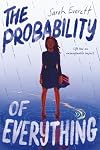
This is an amazing book, and I am wrecked. In part a kids' response to the unimaginable end of the world, and then, a twist, and it becomes the all too imaginable and literal end of family's life together when gun violence and racism collide. Probably the most powerful book I've read on the subject for young readers, and the most empathetic. It sets the reader up perfectly to experience the shocked grief at a moment of ending that should never happen. It is heartbreaking. It is And show more effective. May we live in a future where Black and Brown people are not murdered. May we live in a better world for reading books like this. show less
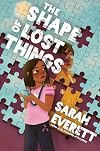
Skye's brother Finn was kidnapped by their father four years ago, and now, miraculously, he has returned home. But Skye suspects that Finn isn't Finn at all - he's not at all like she remembered, and she starts gathering evidence against Not-Finn. At the same time, Skye ("Skye the sloth") feels pressure to do Things, worries that her longtime best friendship with Jax and Reece is fracturing as Reece befriends popular girl Emery ("Enemy"), and denies a crush on neighborhood and school friend show more Nico. Therapy helps a little bit, giving Skye a chance to talk about some of her stressors, but when Skye and Finn explode at each other, she worries she's caused him to leave them again - for good. Throughout, the main characters use physics to understand their world (both Mom and Dad are physicists; Mom's boyfriend/fiance Roger is an artist), referencing Newton's laws and quantum entanglement.
Quotes
The thing about pictures is that they catch things we can't see in the moment. (20)
...normally everybody's happiness makes me tired. But not Nico's. (23)
I don't understand what a true self is, or if it really even exists. (80)
...this idea that there could be countless universes, different in a million ways from ours. When you make a big decision, there could be another universe where you made a different choice. (186)
People talk about the right thing like it's bright and obvious...but every time I have to make a big choice, the right thing looks like everything else: murky and blurry and confusing. (219)
And it occurs to me that's another problem with just relying on pictures: you can't ever really see yourself. (223)
But I understand that some questions you never get the answers to. (228)
When things change, most of the time, they don't go back to the way they were. They become a new normal. (245)
We never really see all of anyone. We see some of them, whatever they allow us to see, and sometimes that feels like hardly anything. And other times, it feels like everything. (254) show less
Quotes
The thing about pictures is that they catch things we can't see in the moment. (20)
...normally everybody's happiness makes me tired. But not Nico's. (23)
I don't understand what a true self is, or if it really even exists. (80)
...this idea that there could be countless universes, different in a million ways from ours. When you make a big decision, there could be another universe where you made a different choice. (186)
People talk about the right thing like it's bright and obvious...but every time I have to make a big choice, the right thing looks like everything else: murky and blurry and confusing. (219)
And it occurs to me that's another problem with just relying on pictures: you can't ever really see yourself. (223)
But I understand that some questions you never get the answers to. (228)
When things change, most of the time, they don't go back to the way they were. They become a new normal. (245)
We never really see all of anyone. We see some of them, whatever they allow us to see, and sometimes that feels like hardly anything. And other times, it feels like everything. (254) show less
I loved another of this author’s books, The Probability of Everything, so I expected that there might be a sort of twist at some point in the story, and there was sort of one but not exactly like in the last book. This book’s story is told in a more upfront and straightforward way. It was just as compellingly told.
This is a book about change and changes. It’s about memory.
It’s a book about loneliness, and about connection, and about the taking care of others and the lack of care show more given.
It has themes of abandonment and loss. As I read, I cried and I also laughed a lot.
It’s an incredibly sad book but one with a lot of hope.
The family and friends groups and some of the individual characters happen to be knowledgeable about and talented in science/physics and in art.
The close friendships of middle school students are depicted perfectly.
I cared deeply about the characters. This author is skilled at writing from the point-of-view of tween girls. It’s clear that she remembers what it is to be that age and at that stage of life.
The author has a lot of empathy for all the characters, and so the reader finds it easy to empathize with all the characters, all of them eventually. For some of them it takes getting though a lot of the novel to see things from their point-of-view.
I appreciate how getting psychotherapy is included as something that was called for given the circumstances of the characters’ lives.
I appreciate that while there is a sort of romantic interest that it stayed at an appropriate level for 12-year-olds.
I am grateful that the adults as well as the children & teens are well-rounded and developed characters.
Only a few of the quotes that stuck out for me:
“It’s just places,” he says. “It doesn’t matter if the ocean is so clear you can see the fish between your toes or if it’s cold enough that your breath turns into icicles. You can be lonely anywhere in the world, in any place.”
“The bigness of everything, the infinity of possibilities. How do we end up as one thing, one person, one family, one planet, when there are so many things, people, families, planets, we could be instead?”
“Most things change.
Everything will change, and most of the time, you’ll only see the changes after.
But some things stay the same for a while, and sometimes you catch them at exactly the right time and freeze them for always." show less
This is a book about change and changes. It’s about memory.
It’s a book about loneliness, and about connection, and about the taking care of others and the lack of care show more given.
It has themes of abandonment and loss. As I read, I cried and I also laughed a lot.
It’s an incredibly sad book but one with a lot of hope.
The family and friends groups and some of the individual characters happen to be knowledgeable about and talented in science/physics and in art.
The close friendships of middle school students are depicted perfectly.
I cared deeply about the characters. This author is skilled at writing from the point-of-view of tween girls. It’s clear that she remembers what it is to be that age and at that stage of life.
The author has a lot of empathy for all the characters, and so the reader finds it easy to empathize with all the characters, all of them eventually. For some of them it takes getting though a lot of the novel to see things from their point-of-view.
I appreciate how getting psychotherapy is included as something that was called for given the circumstances of the characters’ lives.
I appreciate that while there is a sort of romantic interest that it stayed at an appropriate level for 12-year-olds.
I am grateful that the adults as well as the children & teens are well-rounded and developed characters.
Only a few of the quotes that stuck out for me:
“It’s just places,” he says. “It doesn’t matter if the ocean is so clear you can see the fish between your toes or if it’s cold enough that your breath turns into icicles. You can be lonely anywhere in the world, in any place.”
“The bigness of everything, the infinity of possibilities. How do we end up as one thing, one person, one family, one planet, when there are so many things, people, families, planets, we could be instead?”
“Most things change.
Everything will change, and most of the time, you’ll only see the changes after.
But some things stay the same for a while, and sometimes you catch them at exactly the right time and freeze them for always." show less
First sentence: We first noticed the asteroid because my little sister, Lo, kept trying to eat it. It was a Sunday morning in April, and the three of us--me, Mom, and Dad--were sitting at the dining table, discussing a news story Dad was reading on his tablet.
My thoughts (preview): This book has mostly five and four star reviews on GoodReads. Clearly many people have read it and enjoyed it. BUT. I was not one of those. One of the reasons why I personally did not enjoy this one--not even a show more little bit--is that it is all switch and bait. In other words, Kemi Carter, the protagonist, is a completely unreliable narrator. Readers can take nothing--absolutely nothing--at face value. I don't like being gaslighted for 80 to 90% of the novel. Some readers may be like WOW the author really fooled us, how clever! Not me. I'm like, where's the book that was promised?!?!
Premise/plot: The framework of the book is that this "book" is a letter written to be found in the future--either by humans who survived the asteroid OR aliens? OR another species that evolves out of the atoms? Something like that. It is written directly to the reader.
From the prologue, "Dear Reader, If you are reading this, then chances are that our world has ended. I don't know what that makes you? . . . All that matters is that you've found this. All that matters is that you now know we existed."
Kemi Carter loves, loves, loves science and math. She's supposedly, supposedly all about the facts. (Except for when she isn't, apparently).
Most of the novel is her "preparing" for the end of the world by creating a time capsule to be buried before the asteroid strikes earth.
My thoughts (conclusion): Perhaps some readers don't mind being tricked. But other readers may. Or at the very, very least I mind. Every reader has his/her own way of choosing what to read next. They make decisions based on jacket copy, descriptions, book cover, sample excerpt (like from Amazon), or even other reviews. When most--if not all--lead the reader to certain conclusions, it seems tricky to have the actual-actual book be about something completely different. Not only are you not getting what you wanted to read, you're getting something that you may very well NOT want to read. In fact, for those that tend to overthink (hint: me again): perhaps that's why the trickery exists in the first place. To get more people to read your book than otherwise would have because of the subject matter being what it is.
As I said at the start, I am definitely in the minority here. Most people seem to think this one is wonderful, brilliant, clever, etc. show less
My thoughts (preview): This book has mostly five and four star reviews on GoodReads. Clearly many people have read it and enjoyed it. BUT. I was not one of those. One of the reasons why I personally did not enjoy this one--not even a show more little bit--is that it is all switch and bait. In other words, Kemi Carter, the protagonist, is a completely unreliable narrator. Readers can take nothing--absolutely nothing--at face value. I don't like being gaslighted for 80 to 90% of the novel. Some readers may be like WOW the author really fooled us, how clever! Not me. I'm like, where's the book that was promised?!?!
Premise/plot: The framework of the book is that this "book" is a letter written to be found in the future--either by humans who survived the asteroid OR aliens? OR another species that evolves out of the atoms? Something like that. It is written directly to the reader.
From the prologue, "Dear Reader, If you are reading this, then chances are that our world has ended. I don't know what that makes you? . . . All that matters is that you've found this. All that matters is that you now know we existed."
Kemi Carter loves, loves, loves science and math. She's supposedly, supposedly all about the facts. (Except for when she isn't, apparently).
Most of the novel is her "preparing" for the end of the world by creating a time capsule to be buried before the asteroid strikes earth.
My thoughts (conclusion): Perhaps some readers don't mind being tricked. But other readers may. Or at the very, very least I mind. Every reader has his/her own way of choosing what to read next. They make decisions based on jacket copy, descriptions, book cover, sample excerpt (like from Amazon), or even other reviews. When most--if not all--lead the reader to certain conclusions, it seems tricky to have the actual-actual book be about something completely different. Not only are you not getting what you wanted to read, you're getting something that you may very well NOT want to read. In fact, for those that tend to overthink (hint: me again): perhaps that's why the trickery exists in the first place. To get more people to read your book than otherwise would have because of the subject matter being what it is.
As I said at the start, I am definitely in the minority here. Most people seem to think this one is wonderful, brilliant, clever, etc. show less
Awards


You May Also Like


Associated Authors
Statistics
- Works
- 13
- Members
- 536
- Popularity
- #46,471
- Rating
- 3.8
- Reviews
- 31
- ISBNs
- 44
- Languages
- 4