

Libby Purves
Author of How Not To Be a Perfect Mother
About the Author
Works by Libby Purves
Associated Works
Do You Think You're Clever? The Oxford and Cambridge Questions (2009) — Introduction, some editions — 170 copies, 4 reviews
Jibbooms and bobstays : [a miscellany for readers of the twelve children's books of Arthur Ransome] (2003) — Contributor — 5 copies
The Arthur Ransome Society : transcripts from the literary weekends (1993) — Contributor, some editions — 1 copy
Tagged
Common Knowledge
- Legal name
- Purves, Elizabeth Mary
- Birthdate
- 1950-02-02
- Gender
- female
- Education
- University of Oxford (St Anne's College)
Beechwood Sacred Heart School, Tunbridge Wells, England, UK - Occupations
- radio presenter
journalist
author - Organizations
- BBC
The Times
The Arthur Ransome Society (president|2019) - Awards and honors
- Order of the British Empire (Officer, 1999)
- Relationships
- Heiney, Paul (husband)
Heiney, Rose (daughter)
Heiney, Nicholas (son) - Nationality
- UK
- Birthplace
- London, England, UK
- Places of residence
- Westleton, Suffolk, England, UK
- Associated Place (for map)
- England, UK
Members
Reviews
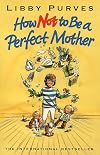
I’ve admitted before that I like to read books about babies / children / parenting. After all, the perfect way to spend my child-free time is to read about how to parent children, right? As you can tell from the rather fluorescent cover image depicting a ‘busy’ mum, this is quite an old book (first published in 1986), but I thought the basics of childcare can’t have changed that much in thirty odd years..can they?
== What’s it about? ==
The title is pretty clear, but the introduction show more elaborates on journalist and author Libby Purves’ central principle: ‘Any mother would lay down her life for her child…but I see no reason to do it every single day’. To that end, she advocates cutting corners where reasonable and practicable, and finding ways to meet mother and baby’s needs at the same time, explaining how she powered through the early pain of breast-feeding by convincing herself that ‘the more breast milk I get down the baby, the less chance there is of having to nurse him through frightening baby illnesses.’
The book covers pregnancy, birth, newborns, bigger babies (lovingly referred to in the chapter title as ‘vandals’!), returning to work, childcare, siblings and holidays, concluding with the words of experienced mothers giving some final bon mots.
== What’s it like? ==
Irreverent in tone, often entertaining and very practical. (Why not let children play with (safe) items that aren’t ‘toys’? Personally I didn’t need any convincing on this score; one trick I relied upon to complete the washing up when my two were small enough to bounce in a chair at my feet was to issue them with a new, extremely exciting item from the pantry to shake about every few minutes.)
Purves advocates hiding items you don’t want to be touched rather than engaging in power struggles and sweeping up the inevitable breakages. She takes a robust attitude towards children who don’t seem to eat enough, recalling that she would ‘just top hunger-strikers up with a warm mug of milk at bedtime and issue vitamin drops, hoping for the best’. It is impossible to argue with the common sense behind these suggestions, and my own experience (both of following and of not following her advice) confirms that the ‘easy option’ is actually the most effective in many respects. (Sitting a small child in front of a plate of peas they’ve already rejected and insisting that they eat every one is time-consuming, stressful and counter-productive.)
Generally, the attitudes and advice are still relevant, but, unsurprisingly, a few aspects feel very dated. These are basically the stay in hospital (now more likely to last hours than days), attitudes around returning to work and the childcare arrangements (one chapter is completely focused on the use of nannies and no sustained reference is made to any other option). Overall, this isn’t an issue, and it is an interesting insight into how attitudes have changed since the early 80s.
== Final thoughts ==
This is an entertaining and practical, albeit slightly dated, guide to several key aspects of parenting the under 5’s. This is absolutely not an instruction manual or a how-to guide, but could make quite a relaxing and reassuring read for a woman expecting her first baby.
It’s worth looking out a copy purely for the suggestions Purves gives on entertaining bigger babies. My favourites? ‘It is actually worth packing a small suitcase specifically so that the baby can unpack it all over the floor’, and ‘Mummy lying down…just lie down on the floor on your stomach (with a paperback if you like) and allow the infant to crawl all over you’. I can confirm that both are highly effective as forms of entertainment, though God forbid you ever actually try to *pack* a suitcase with small children present…
Well worth a read if you spot a copy and have a very small / impending baby. show less
== What’s it about? ==
The title is pretty clear, but the introduction show more elaborates on journalist and author Libby Purves’ central principle: ‘Any mother would lay down her life for her child…but I see no reason to do it every single day’. To that end, she advocates cutting corners where reasonable and practicable, and finding ways to meet mother and baby’s needs at the same time, explaining how she powered through the early pain of breast-feeding by convincing herself that ‘the more breast milk I get down the baby, the less chance there is of having to nurse him through frightening baby illnesses.’
The book covers pregnancy, birth, newborns, bigger babies (lovingly referred to in the chapter title as ‘vandals’!), returning to work, childcare, siblings and holidays, concluding with the words of experienced mothers giving some final bon mots.
== What’s it like? ==
Irreverent in tone, often entertaining and very practical. (Why not let children play with (safe) items that aren’t ‘toys’? Personally I didn’t need any convincing on this score; one trick I relied upon to complete the washing up when my two were small enough to bounce in a chair at my feet was to issue them with a new, extremely exciting item from the pantry to shake about every few minutes.)
Purves advocates hiding items you don’t want to be touched rather than engaging in power struggles and sweeping up the inevitable breakages. She takes a robust attitude towards children who don’t seem to eat enough, recalling that she would ‘just top hunger-strikers up with a warm mug of milk at bedtime and issue vitamin drops, hoping for the best’. It is impossible to argue with the common sense behind these suggestions, and my own experience (both of following and of not following her advice) confirms that the ‘easy option’ is actually the most effective in many respects. (Sitting a small child in front of a plate of peas they’ve already rejected and insisting that they eat every one is time-consuming, stressful and counter-productive.)
Generally, the attitudes and advice are still relevant, but, unsurprisingly, a few aspects feel very dated. These are basically the stay in hospital (now more likely to last hours than days), attitudes around returning to work and the childcare arrangements (one chapter is completely focused on the use of nannies and no sustained reference is made to any other option). Overall, this isn’t an issue, and it is an interesting insight into how attitudes have changed since the early 80s.
== Final thoughts ==
This is an entertaining and practical, albeit slightly dated, guide to several key aspects of parenting the under 5’s. This is absolutely not an instruction manual or a how-to guide, but could make quite a relaxing and reassuring read for a woman expecting her first baby.
It’s worth looking out a copy purely for the suggestions Purves gives on entertaining bigger babies. My favourites? ‘It is actually worth packing a small suitcase specifically so that the baby can unpack it all over the floor’, and ‘Mummy lying down…just lie down on the floor on your stomach (with a paperback if you like) and allow the infant to crawl all over you’. I can confirm that both are highly effective as forms of entertainment, though God forbid you ever actually try to *pack* a suitcase with small children present…
Well worth a read if you spot a copy and have a very small / impending baby. show less
‘Write about what you know’ is a popular maxim (not to be confused with the popular Maxi, which was a popular family car produced and sold in Britain in the 1970s. Because this was the 1970s, the roomy interior featured plenty of imitation Formica in the dashboard, and leatherette seats. The effect, combined as it was with the popular habit of smoking in the car for adults and passive smoking in the car for the kids, and less than draconian drink-driving laws, led to the interior of your show more average Maxi being not unlike that of a working mens’ club of that time. Of course in these enlightened times the only insalubrious feature one is likely to encounter in a family car is a sticky carpet, courtesy of children being careless with snacks, drinks or bladders) the idea being that in order to write convincingly and with authority about something, you need to know the subject. This is especially true when it comes to medical textbooks, but is also applied to fiction.
The author is ‘Casting Off’, Libby Purves, is a radio presenter for Radio 4. As a radio presenter one might expect that if she were to follow the popular maxim, she would decide that her first novel should be about a woman journalist moving into radio broadcasting.
Possibly picking up on public sentiment that journalists are about as popular with the reading public as IBS on the ISS, she has decided to go down a different route. One might reasonably expect that women broadcasters present programmes about cookery, the menopause and other domestic matters, and maybe they do. Our author has decided to ignore those topics completely, almost. One might also consider that ‘Casting Off’ is going to be a novel about knitting, or at least a knitting circle in a sleepy but picturesque village, untroubled by event until one night one of the circle is found murdered, with a knitting needle sticking out of her back. This is the time for armature sleuth and star baker Izzy Cotswold to step in, step up and solve the crime in time to have her Victoria sponge on the judging table for the village fete. Actually, I’d read that.
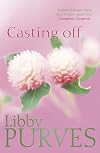
As it turns out, our author is also a keen sailor and, as the picture of the boat on the front cover might indicate, this is a story that features sailing. The only time radio plays a part is the shipping forecast, and the news, which is actually a major plot point now I come to think of it.
‘Casting Off’ has a memorable opening, with a set of keys thrown with force and accuracy by a woman (I know, a lady, throwing with force and accuracy, the sexism in the observation comes from the unwitting recipient of the keys who, despite being unexpectedly hit by them, can appreciate a bloody good throw from a moving boat when he sees, and indeed feels, one) from boat to shore.
In fairness this sexism is described as the residual ‘schoolboy’ in the chap who gets the keys in the shoulder, from a woman described as ‘just his type’. A typical Hollywood cute meet were it not for the fact that the woman in question is sailing away.
The woman on the boat has cast off her ropes and her responsibilities and is sailing out of port when all the other weekend sailors are making their return. Her husband is ashore, but adrift.
And so begins our protagonist’s journey. Essentially a domestic drama set afloat, it’s a frothy and charming enough tale of a middle aged woman deciding enough is enough and sailing, if not quite into the sunset, then at least away from the things that irritate her. Things are rarely so simple though and irritants follow, including in the form of a media that the author skewers with delight.
The author obviously knows here stuff about sailing, and those same readers who delight in details of life aboard Royal Navy warships during the Napoleonic wars might also delight in the descriptions of sailing a small craft here.
In all, a salty saga of a domestic dispute given something extra with a nautical escape. show less
The author is ‘Casting Off’, Libby Purves, is a radio presenter for Radio 4. As a radio presenter one might expect that if she were to follow the popular maxim, she would decide that her first novel should be about a woman journalist moving into radio broadcasting.
Possibly picking up on public sentiment that journalists are about as popular with the reading public as IBS on the ISS, she has decided to go down a different route. One might reasonably expect that women broadcasters present programmes about cookery, the menopause and other domestic matters, and maybe they do. Our author has decided to ignore those topics completely, almost. One might also consider that ‘Casting Off’ is going to be a novel about knitting, or at least a knitting circle in a sleepy but picturesque village, untroubled by event until one night one of the circle is found murdered, with a knitting needle sticking out of her back. This is the time for armature sleuth and star baker Izzy Cotswold to step in, step up and solve the crime in time to have her Victoria sponge on the judging table for the village fete. Actually, I’d read that.
As it turns out, our author is also a keen sailor and, as the picture of the boat on the front cover might indicate, this is a story that features sailing. The only time radio plays a part is the shipping forecast, and the news, which is actually a major plot point now I come to think of it.
‘Casting Off’ has a memorable opening, with a set of keys thrown with force and accuracy by a woman (I know, a lady, throwing with force and accuracy, the sexism in the observation comes from the unwitting recipient of the keys who, despite being unexpectedly hit by them, can appreciate a bloody good throw from a moving boat when he sees, and indeed feels, one) from boat to shore.
In fairness this sexism is described as the residual ‘schoolboy’ in the chap who gets the keys in the shoulder, from a woman described as ‘just his type’. A typical Hollywood cute meet were it not for the fact that the woman in question is sailing away.
The woman on the boat has cast off her ropes and her responsibilities and is sailing out of port when all the other weekend sailors are making their return. Her husband is ashore, but adrift.
And so begins our protagonist’s journey. Essentially a domestic drama set afloat, it’s a frothy and charming enough tale of a middle aged woman deciding enough is enough and sailing, if not quite into the sunset, then at least away from the things that irritate her. Things are rarely so simple though and irritants follow, including in the form of a media that the author skewers with delight.
The author obviously knows here stuff about sailing, and those same readers who delight in details of life aboard Royal Navy warships during the Napoleonic wars might also delight in the descriptions of sailing a small craft here.
In all, a salty saga of a domestic dispute given something extra with a nautical escape. show less
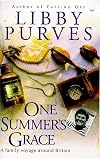
Libby Purves likes doing things. Long walks, sailing boats, travel, adventure. She also likes her five year old and three year old child. So as it would clearly be harsh to expect them to cope without Mummy for two months, she decides to sail a yacht round the British Isles with her husband and both kids.
It's a lovely book for the geography of the British Isles. I recommend reading it with a good map, and savouring their epic long sails and their pottering from loch to loch. It's also a good show more book for remembering to live life with the weather. There are weeks they can go nowhere. There are days they sail 100 miles in a single bound.
It's also a good book for a pragmatic approach to challenges. They snip off a tiny corner with the Crinan canal. They do a lot of it motoring under engine. But they clearly have sailed round Britain.
I wonder if it would work nowadays? That whimmish ability to just moor up in remote corners of Scotland. I hope it still works like that, I fear it probably doesn't. It was a bit of an eye opener when I realised I was born at the same time as the kids.
Libby is very keen to tell us all how middle class she is, but it is the sort of middle class with a nanny and horses and a yacht, and there are many things they worry about on their trip, but never whether they can afford mooring fees, or the taxi to casually go inland.
It charts the family moods fairly frankly as well, they all hit the odd pockets of 'why are we doing this, it's a bad idea', and then all brush themselves down and get on with it. And are all pleased to have done it at the end. show less
It's a lovely book for the geography of the British Isles. I recommend reading it with a good map, and savouring their epic long sails and their pottering from loch to loch. It's also a good show more book for remembering to live life with the weather. There are weeks they can go nowhere. There are days they sail 100 miles in a single bound.
It's also a good book for a pragmatic approach to challenges. They snip off a tiny corner with the Crinan canal. They do a lot of it motoring under engine. But they clearly have sailed round Britain.
I wonder if it would work nowadays? That whimmish ability to just moor up in remote corners of Scotland. I hope it still works like that, I fear it probably doesn't. It was a bit of an eye opener when I realised I was born at the same time as the kids.
Libby is very keen to tell us all how middle class she is, but it is the sort of middle class with a nanny and horses and a yacht, and there are many things they worry about on their trip, but never whether they can afford mooring fees, or the taxi to casually go inland.
It charts the family moods fairly frankly as well, they all hit the odd pockets of 'why are we doing this, it's a bad idea', and then all brush themselves down and get on with it. And are all pleased to have done it at the end. show less
Sarah is a home-loving mother, her sister Maggie is a free spirit who arrives to stay. This is the catalyst for something of a shake-up in the family. And Maggie has some dark secrets from her past.
The characters are three-dimensional and likeable, and the book itself is quite thought-provoking, with some controversial issues discussed. The writing is excellent, just the right pace for my tastes. By the time I was half-way through I could hardly put it down.
Highly recommended to anyone who show more enjoys contemporary women's fiction with a bit of a bite.
Full review here: https://suesbookreviews.blogspot.com/2019/07/a-free-woman-by-libby-purves.html show less
The characters are three-dimensional and likeable, and the book itself is quite thought-provoking, with some controversial issues discussed. The writing is excellent, just the right pace for my tastes. By the time I was half-way through I could hardly put it down.
Highly recommended to anyone who show more enjoys contemporary women's fiction with a bit of a bite.
Full review here: https://suesbookreviews.blogspot.com/2019/07/a-free-woman-by-libby-purves.html show less
You May Also Like


Associated Authors
Statistics
- Works
- 34
- Also by
- 12
- Members
- 868
- Popularity
- #29,486
- Rating
- 3.7
- Reviews
- 28
- ISBNs
- 140
- Languages
- 11
- Favorited
- 1