
Harry Parker (2) (1983–)
Author of Anatomy of a Soldier
For other authors named Harry Parker, see the disambiguation page.
Works by Harry Parker
Tagged
Common Knowledge
Members
Reviews
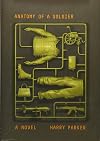
This novel relates the story of Tom Barnes, a British soldier who served in Afghanistan. We follow his war experiences, and after he is severely wounded his recovery and rehabilitation back in Great Britain. We also get bits and pieces of the stories of two Afghans--Latif, a young man who has joined and is fighting with an insurgent/terrorist group, primarily manufacturing and setting IEDs, and his childhood friend Fariden, whose father is a village elder who must walk a tightrope to avoid show more punishment by either the insurgents or the foreign soldiers for collaborating with the enemy.
What makes this book unique is the manner of its narration. Each of its 45 chapters is narrated from the point of view of an inanimate object associated with one or more of the characters. Thus, the first chapter is narrated by an emergency tourniquet carried into combat by Tom; the second chapter is narrated by a bag of fertilizer purchased by Fariden; the third by Tom's combat boots, and so on. We read chapters narrated by batteries and bullets, night vision goggles and a catheter, by a drone and by an aerial photo. There is even a chapter narrated by Tom's mother's purse. I found this method of narration to be very effective, highlighting as it does what one reviewer called the "countless cogs in the machine of war." And it also highlights how, in the end, the body of the soldier is also just another instrument of war.
The author is a wonderful writer. For the most part the narrations are neutral and objective, emotionless even as they are describing the most graphic and horrific scenes. It made for a very moving book. It becomes even more moving when I read that the book is based on the author's own experiences in Afghanistan show less
What makes this book unique is the manner of its narration. Each of its 45 chapters is narrated from the point of view of an inanimate object associated with one or more of the characters. Thus, the first chapter is narrated by an emergency tourniquet carried into combat by Tom; the second chapter is narrated by a bag of fertilizer purchased by Fariden; the third by Tom's combat boots, and so on. We read chapters narrated by batteries and bullets, night vision goggles and a catheter, by a drone and by an aerial photo. There is even a chapter narrated by Tom's mother's purse. I found this method of narration to be very effective, highlighting as it does what one reviewer called the "countless cogs in the machine of war." And it also highlights how, in the end, the body of the soldier is also just another instrument of war.
The author is a wonderful writer. For the most part the narrations are neutral and objective, emotionless even as they are describing the most graphic and horrific scenes. It made for a very moving book. It becomes even more moving when I read that the book is based on the author's own experiences in Afghanistan show less
Harry Parker's debut novel, ANATOMY OF A SOLDIER, is something of an oddity among the scores of books coming out of today's wars in Iraq and Afghanistan in that it is told from multiple points of view. That in itself is not unusual. The oddness comes from the fact that the narrator in each of the forty-five short chapters here is an inanimate object. All of these inanimate narrators are somehow connected, either directly or indirectly, to the novel's main character, British Army Captain Tom show more Barnes, aka BA5799 (whose own voice is heard only peripherally). These inanimate voices range variously from uniform parts (body armor, day sack, ID tag chain, two-way radio, helmet, combat boot) to medical equipment and prosthetics (plasma, catheter, hospital call button, a mirror, a wheelchair, prosthetics and orthotics) to more mundane everyday items (a bed, a beer glass, paper currency, a woman's purse).
Obviously, we learn early on that Barnes is horrifically injured by an IED explosion while on patrol in Afghanistan, hence the chapters narrated by hospital equipment and artificial limbs. But it is not just Barnes's story that is told here. We also follow the stories of two young Afghan men: Latif, who has been recruited by the insurgents, and Faridun, who has resisted, but still wants to maintain their boyhood friendship. Their stories are told, variously, by an automatic rifle, a bicycle, a sack of fertilizer, a wheelbarrow, etc.
Parker's unusual choice of narrative device works reasonably well, but only up to a point. The story is not told chronologically either, which presents another minor difficulty. While I can understand that Parker wanted his story to be different from other war novels, I still found his method occasionally confusing and even mildly annoying. I began to wish he'd just TOLD THE STORY, either from an omniscient point of view, or using Captain Barnes's own voice. Nevertheless, if you can stay with it, the trip is worth the trouble. Tom Barnes comes through, finally, as an ordinary young man who wanted to prove himself and to serve his country, and pays dearly for it, as does his family. The two young Afghans featured are not quite so clearly drawn, but their roles are woven cleverly into the narrative, adding depth to the story and giving a wrenchingly human face to that "other side," so often missing from war novels.
Despite the inanimate object viewpoints, there are scenes in ANATOMY OF A SOLDIER that may bring you close to tears or cause you to wince in horror. In one, Barnes, still recovering, is back home with his family again, where he breaks down, weeping -
"I've got no legs. That will never get better ... It's all wrong. I feel like I've been chosen for a main part I never wanted to play and everyone's come to watch. They're all watching me, looking to see what's happened, what's gone wrong. Half of them I don't even know. I don't want them to see ... I'll never run again, or dance, or do anything normal ..."
Or, in another scene, narrated by the shock wave of the explosion that maimed Barnes -
"I ripped up his leg, flapping his calf off in my wind. I stripped his trousers away and his penis fluttered in my storm. I pulled open his testicle. I dragged bone deep into his thigh, pushing through pink flesh and vessels, bursting open grey globules of fat. I went through him, shocking his nerves and muscles and jarring his spine, crushing him in his armor ..."
There are similarly shocking scenes which follow the fates of the two young Afghans, one of the worst narrated by a wheelbarrow bearing a disfigured and broken body, driven by a grief-stricken father resolved to confront the British soldiers with what they have done. His approach to their outpost with its armed watchtowers was reminiscent of scenes from another novel from the same war, Joydeep Roy-Bhattacharya's THE WATCH. Likewise, another scene, narrated by a medal, a decoration being awarded to Barnes, made me suddenly remember Dalton Trumbo's 1939 novel, JOHNNY GOT HIS GUN, a classic of anti-war literature with it limbless, faceless protagonist. Barnes, in pain, and struggling to stay upright on his new artificial legs, looks out at the soldiers in attendance at the ceremony and thinks -
"He was a maimed relic that everyone wanted to forget. None of the men in those ranks wanted to be reminded of the truth - of what might happen. I am that truth he thought."
Narrative methods or devices aside, Harry Parker, a veteran of both Iraq and Afghanistan, has written a powerful story of war and its consequences that will certainly be talked about and much-discussed, perhaps for years to come. I will recommend it highly.
- Tim Bazzett, author of the Cold War memoir, SOLDIER BOY: AT PLAY IN THE ASA show less
Obviously, we learn early on that Barnes is horrifically injured by an IED explosion while on patrol in Afghanistan, hence the chapters narrated by hospital equipment and artificial limbs. But it is not just Barnes's story that is told here. We also follow the stories of two young Afghan men: Latif, who has been recruited by the insurgents, and Faridun, who has resisted, but still wants to maintain their boyhood friendship. Their stories are told, variously, by an automatic rifle, a bicycle, a sack of fertilizer, a wheelbarrow, etc.
Parker's unusual choice of narrative device works reasonably well, but only up to a point. The story is not told chronologically either, which presents another minor difficulty. While I can understand that Parker wanted his story to be different from other war novels, I still found his method occasionally confusing and even mildly annoying. I began to wish he'd just TOLD THE STORY, either from an omniscient point of view, or using Captain Barnes's own voice. Nevertheless, if you can stay with it, the trip is worth the trouble. Tom Barnes comes through, finally, as an ordinary young man who wanted to prove himself and to serve his country, and pays dearly for it, as does his family. The two young Afghans featured are not quite so clearly drawn, but their roles are woven cleverly into the narrative, adding depth to the story and giving a wrenchingly human face to that "other side," so often missing from war novels.
Despite the inanimate object viewpoints, there are scenes in ANATOMY OF A SOLDIER that may bring you close to tears or cause you to wince in horror. In one, Barnes, still recovering, is back home with his family again, where he breaks down, weeping -
"I've got no legs. That will never get better ... It's all wrong. I feel like I've been chosen for a main part I never wanted to play and everyone's come to watch. They're all watching me, looking to see what's happened, what's gone wrong. Half of them I don't even know. I don't want them to see ... I'll never run again, or dance, or do anything normal ..."
Or, in another scene, narrated by the shock wave of the explosion that maimed Barnes -
"I ripped up his leg, flapping his calf off in my wind. I stripped his trousers away and his penis fluttered in my storm. I pulled open his testicle. I dragged bone deep into his thigh, pushing through pink flesh and vessels, bursting open grey globules of fat. I went through him, shocking his nerves and muscles and jarring his spine, crushing him in his armor ..."
There are similarly shocking scenes which follow the fates of the two young Afghans, one of the worst narrated by a wheelbarrow bearing a disfigured and broken body, driven by a grief-stricken father resolved to confront the British soldiers with what they have done. His approach to their outpost with its armed watchtowers was reminiscent of scenes from another novel from the same war, Joydeep Roy-Bhattacharya's THE WATCH. Likewise, another scene, narrated by a medal, a decoration being awarded to Barnes, made me suddenly remember Dalton Trumbo's 1939 novel, JOHNNY GOT HIS GUN, a classic of anti-war literature with it limbless, faceless protagonist. Barnes, in pain, and struggling to stay upright on his new artificial legs, looks out at the soldiers in attendance at the ceremony and thinks -
"He was a maimed relic that everyone wanted to forget. None of the men in those ranks wanted to be reminded of the truth - of what might happen. I am that truth he thought."
Narrative methods or devices aside, Harry Parker, a veteran of both Iraq and Afghanistan, has written a powerful story of war and its consequences that will certainly be talked about and much-discussed, perhaps for years to come. I will recommend it highly.
- Tim Bazzett, author of the Cold War memoir, SOLDIER BOY: AT PLAY IN THE ASA show less
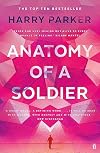
Uncomfortably graphic in some parts and movingly tender in others, this is a really good book about war at the micro-level. It's been compared unfavourably to recent classics like Redeployment and The Yellow Birds, neither of which I've read, but I can see that our protagonist seems a little too vanilla - very stiff upper lip, faultless leader of men, would shake his enemy's hand etc etc. That being said, the narrative device of having each chapter focus on an object allows us to flick back show more and forth in time and see events slowly unfold in a teasingly enjoyable manner. Sure, the fertiliser and tourniquet have exactly the same voice, and a mysterious ability to read the surrounding humans' thoughts, but I thought it worked well. show less

Tom Barnes, matricule BA5799, capitaine dans une guerre contemporaine, peut-être l’Afghanistan, saute sur une bombe artisanale. L’histoire d’une vie qui bascule, des événements qui y ont mené, d’une convalescence et d’une reconstruction est ici racontée par 45 objets qui l’entourent : sac, casque, jumelles, lit, sonde, prothèse, médaille... Objets de l’avant et de l’après, d’ici et de là-bas, du camp britannique ou opposé qui se répondent et font avancer la show more narration. Un tour de force et un coup de cœur littéraires pour une auto-fiction brutale, violente, mais aussi pudique et pleine d’humanité. show less
Awards


Statistics
- Works
- 1
- Members
- 151
- Popularity
- #137,934
- Rating
- 3.9
- Reviews
- 5
- ISBNs
- 70
- Languages
- 5