
Rachel Ignotofsky
Author of Women in Science: 50 Fearless Pioneers Who Changed the World
About the Author
Image credit: Photos by Thomas Mason IV
Series
Works by Rachel Ignotofsky
The Wondrous Workings of Planet Earth: Understanding Our World and Its Ecosystems (2018) 396 copies, 4 reviews
What's Inside a Caterpillar Cocoon?: And Other Questions About Moths & Butterflies (2023) 127 copies, 3 reviews
The History of the Computer: People, Inventions, and Technology that Changed Our World (2022) 94 copies
What's Inside A Bird's Nest?: And Other Questions About Nature & Life Cycles (2024) 86 copies, 2 reviews
The Wondrous Workings of Science and Nature Coloring Book: 40 Line Drawings to Color (2020) 25 copies
The Women Who Make History Collection [3-Book Boxed Set]: Women in Science, Women in Sports, Women in Art (2022) 3 copies
Women in Science Puzzle: Fearless Pioneers Who Changed the World 500-Piece Jigsaw Puzzle & Poster (2018) 2 copies
Tagged
Common Knowledge
- Gender
- female
- Education
- Tyler School of Art
- Occupations
- illustrator
author - Agent
- Monica Odom
- Nationality
- USA
- Places of residence
- Kansas City, Missouri, USA
New Jersey, USA
Los Angeles, California, USA - Associated Place (for map)
- USA
Members
Reviews

From Ada Lovelace to Wang Zhenyi: A Celebration of Women Scientists
(Full disclosure: I received a free book for review through Blogging for Books.)
It's made to believe
Women are the same as men;
Are you not convinced
Daughters can also be heroic?
- Wang Zhenyi
"Nothing says trouble like a woman in pants."
If there's a girl in your life who's into science - be it astronomy, psychology, or paleontology; even just a little! we're talking the teeniest, tiniest bit! - you need to introduce her to the show more work of Rachel Ignotofsky. A graphic artist/illustrator, Ignotofsky uses her art to "make learning exciting." Her first book, Women in Science: 50 Fearless Pioneers Who Changed the World, is a mashup of her many passions: art, history, science, and feminism - namely, celebrating the many contributions (many of them overlooked by and even erased from history) women have made to their respective scientific fields. The result is a smart, inspirational book that's both informative and lovely.
Ada Lovelace. Elizabeth Blackwell. Marie Curie. Rachel Carson. Jane Goodall. Some of the women profiled here have managed, against all odds, to claim their rightful places as household names. But have you heard of Wang Zhenyi, 18th century astronomer, mathematician, and poet? How about Mamie Pipps Clark, a psychologist and civil rights activist who, along with her husband, conducted the infamous (and devastating) Doll Experiment, thus helping to end segregation in public schools? Or Jocelyn Bell Burnell, the Irish astrophysicist who discovered pulsars at the age of 24?
As if these achievements aren't impressive enough on their own, consider that many of these women did so even when they were barred from higher education, prohibited from publishing papers, or even expected to obey their fathers and husbands, no matter the cost. (Prior to 1974, women couldn't apply for a line of credit; abortion was not legalized until 1973, and even today it can be difficult for low-income women to access; and marital rape wasn't recognized as a crime federally until 1993.)
Of course, women of color face(d) even more barriers than their white counterparts: slavery, segregation, Jim Crow, and voter disenfranchisement, to name a few that are discussed here. Just as the fight for women's rights factors heavily into the histories included here, in her profiles of African-American scientists - Mamie Pipps Clark, Katherine Johnson, Jane Cooke Wright, Annie Easley, Patricia Bath, and Mae Jemison - abolition, civil rights, and anti-racism play a large role as well. In addition to being a computer programmer, mathematician, and honest-to-goodness rocket scientist, Annie Easley taught her fellow black Alabamians how to ace Jim Crow voting tests - and also tutored under-privileged city kids in her spare time. In 1992, Mae Jemison became the first African-American woman in space; she famously credits Star Trek's Lieutenant Uhura as a role model, thus illustrating the importance of representation in pop culture. (Enter: Women in Science! How meta!)
While there's definitely an American bent to Women in Science, Ignotofsky includes women scientists from all over the world: Australia, Austria, China, Egypt, England, France, Germany, Iran, Ireland, Italy, Norway, Poland, Prague, and Russia. There's a fair amount of ethnic and racial diversity, which is awesome, and I also love that Jane Goodall, primatologist and animal rights activist, gets a nod.
Each profile is short - just a single page opposite a page of artwork - yet Ignotofsky manages to pack a ton of information in there, including in cute little scribbles and doodles in the margins. The art is whimsical and rendered in rich, vibrant colors; it's so gorgeous I could all but eat it with my eyeballs. The sheer eye-catchiness makes this book great for kids, but adults are also sure to love it: it's astute, stirring, and all but guaranteed to hit you right in the feels. (Three words: Wang Zhenyi's poetry.)
I'm really looking forward to her next book, a guided journal called I Love Science: A Journal for Self-Discovery and Big Ideas, due out in March 2017. Ignotofsky's artwork is perfectly suited for the journal format, and I've never heard of a journal quite like it. Probably these two together would make a really shiny gift for science-curious geek girls.
http://www.easyvegan.info/2016/08/24/women-in-science-by-rachel-ignotofsky/ show less
(Full disclosure: I received a free book for review through Blogging for Books.)
It's made to believe
Women are the same as men;
Are you not convinced
Daughters can also be heroic?
- Wang Zhenyi
"Nothing says trouble like a woman in pants."
If there's a girl in your life who's into science - be it astronomy, psychology, or paleontology; even just a little! we're talking the teeniest, tiniest bit! - you need to introduce her to the show more work of Rachel Ignotofsky. A graphic artist/illustrator, Ignotofsky uses her art to "make learning exciting." Her first book, Women in Science: 50 Fearless Pioneers Who Changed the World, is a mashup of her many passions: art, history, science, and feminism - namely, celebrating the many contributions (many of them overlooked by and even erased from history) women have made to their respective scientific fields. The result is a smart, inspirational book that's both informative and lovely.
Ada Lovelace. Elizabeth Blackwell. Marie Curie. Rachel Carson. Jane Goodall. Some of the women profiled here have managed, against all odds, to claim their rightful places as household names. But have you heard of Wang Zhenyi, 18th century astronomer, mathematician, and poet? How about Mamie Pipps Clark, a psychologist and civil rights activist who, along with her husband, conducted the infamous (and devastating) Doll Experiment, thus helping to end segregation in public schools? Or Jocelyn Bell Burnell, the Irish astrophysicist who discovered pulsars at the age of 24?
As if these achievements aren't impressive enough on their own, consider that many of these women did so even when they were barred from higher education, prohibited from publishing papers, or even expected to obey their fathers and husbands, no matter the cost. (Prior to 1974, women couldn't apply for a line of credit; abortion was not legalized until 1973, and even today it can be difficult for low-income women to access; and marital rape wasn't recognized as a crime federally until 1993.)
Of course, women of color face(d) even more barriers than their white counterparts: slavery, segregation, Jim Crow, and voter disenfranchisement, to name a few that are discussed here. Just as the fight for women's rights factors heavily into the histories included here, in her profiles of African-American scientists - Mamie Pipps Clark, Katherine Johnson, Jane Cooke Wright, Annie Easley, Patricia Bath, and Mae Jemison - abolition, civil rights, and anti-racism play a large role as well. In addition to being a computer programmer, mathematician, and honest-to-goodness rocket scientist, Annie Easley taught her fellow black Alabamians how to ace Jim Crow voting tests - and also tutored under-privileged city kids in her spare time. In 1992, Mae Jemison became the first African-American woman in space; she famously credits Star Trek's Lieutenant Uhura as a role model, thus illustrating the importance of representation in pop culture. (Enter: Women in Science! How meta!)
While there's definitely an American bent to Women in Science, Ignotofsky includes women scientists from all over the world: Australia, Austria, China, Egypt, England, France, Germany, Iran, Ireland, Italy, Norway, Poland, Prague, and Russia. There's a fair amount of ethnic and racial diversity, which is awesome, and I also love that Jane Goodall, primatologist and animal rights activist, gets a nod.
Each profile is short - just a single page opposite a page of artwork - yet Ignotofsky manages to pack a ton of information in there, including in cute little scribbles and doodles in the margins. The art is whimsical and rendered in rich, vibrant colors; it's so gorgeous I could all but eat it with my eyeballs. The sheer eye-catchiness makes this book great for kids, but adults are also sure to love it: it's astute, stirring, and all but guaranteed to hit you right in the feels. (Three words: Wang Zhenyi's poetry.)
I'm really looking forward to her next book, a guided journal called I Love Science: A Journal for Self-Discovery and Big Ideas, due out in March 2017. Ignotofsky's artwork is perfectly suited for the journal format, and I've never heard of a journal quite like it. Probably these two together would make a really shiny gift for science-curious geek girls.
http://www.easyvegan.info/2016/08/24/women-in-science-by-rachel-ignotofsky/ show less
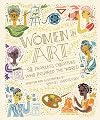
What a treasure this book is! Chock full of illuminating biographies of women and their art, intricate illustrations and fascinating facts, this book brings these artists' masterworks into light, where they deserve to be studied and respected. Women in Art: 50 Fearless Creatives Who Inspired the World features both well-known artists (Georgia O'Keeffe, Frida Kahlo, Maya Lin) and lesser-known artists who deserve more recognition, which would be all of the artists featured in this book. It show more would make a great gift for girls 12+; I can't wait to gift this book to my niece when she turns 12!
As photographer and film director Shirin Neshat says, "Artists are there to inspire, to provoke, to mobilize, to bring hope to our people. We are the reporters of our people, and are communicators to the outside world. Art is our weapon. Culture is a form of resistance." show less
As photographer and film director Shirin Neshat says, "Artists are there to inspire, to provoke, to mobilize, to bring hope to our people. We are the reporters of our people, and are communicators to the outside world. Art is our weapon. Culture is a form of resistance." show less
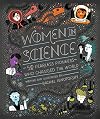
This book about great women scientists is also very much about great overlooked women scientists. Some of the telling sentences you will see in this book are: “Rosalind [Franklin] is remembered as a woman who should have won a Nobel prize.” And, “Despite Cecilia’s accomplishments [Cecilia Payne-Gaposchkin discovered the sun is made mostly of hydrogen and helium gas], being a woman meant she was only recognized as a technical assistant at Harvard.” And “Unfortunately, [Nettie show more Stevens, who discovered XX and XY chromosomes] [was] largely overlooked and forgotten.”
In fact, you will probably not recognize the names of most of these women, even though they made great discoveries. Rather, the men who worked with them or came after them got the credit. Fortunately, as the book moves forward in time, that trend changed, but not hugely; we are still more familiar with male scientists than females. This book seeks to change that pattern.
Fifty women get double-page spreads in this book, with clever illustrations by the author accompanying each profile. (At the end of the book there is an “addendum” with short blurbs on “More Women In Science.”) They are arranged chronologically by date of birth, beginning with the ancient astronomer, mathematician, and philosopher Hypatia in the fourth century and ending with Iranian mathematician Maryam Mirzakhani, born in 1977. Each history includes background, achievements, quotes, reputation at the time, and legacy.
For example, in the sketch on Maria Goeppert-Mayer, Theoretical Physicist, we learn:
“[She] worked most of her life for little or no pay. Despite this, she solved one of the great mysteries of the universe.”
Born in Germany, Goeppert-Mayer was one of the “physics superstars” at the University of Göttingen, but when she and her husband immigrated to the U.S., only he was offered a position. Johns Hopkins did, however, let her set up a lab in an abandoned attic, where she worked for nine years without pay and did research resulting in ten publications on physics, quantum mechanics, and chemistry.
Because of the need for her intellectual skills during the race to create an atomic bomb, she finally got a job. She went on to prove the nuclear shell model explaining how isotopes behave that is now taught to every student. In 1963 she was awarded the Nobel prize in physics. But does anyone outside of physics know her name?
There are side graphics by each story also, featuring interesting facts and trivia about each person. To return to Goeppert-Mayer, she love smoking so much she often smoked two cigarettes at once! Grace Hopper, Navy Admiral and computer scientist, had a Jolly Roger pirate flag on her desk, we learn, because she was relentless in getting what her team needed. She also appeared on the David Letterman show. Gertrude Elion, a pharmacologist who created drugs for gout, singles, and herpes, started out as chemist testing pickles for grocery stores.
The women profiled represent a wide range of interests and accomplishments, and come from a variety of nationalities.
The book is enhanced by not only the marvelous illustrations by Ignotofsky, but a timeline, statistics in STEM (acronym for the fields of science, technology, engineering, and mathematics), a glossary of scientific terms, and a list of additional sources.
Evaluation: This terrific book will provide inspiration and enlightenment for all ages. show less
In fact, you will probably not recognize the names of most of these women, even though they made great discoveries. Rather, the men who worked with them or came after them got the credit. Fortunately, as the book moves forward in time, that trend changed, but not hugely; we are still more familiar with male scientists than females. This book seeks to change that pattern.
Fifty women get double-page spreads in this book, with clever illustrations by the author accompanying each profile. (At the end of the book there is an “addendum” with short blurbs on “More Women In Science.”) They are arranged chronologically by date of birth, beginning with the ancient astronomer, mathematician, and philosopher Hypatia in the fourth century and ending with Iranian mathematician Maryam Mirzakhani, born in 1977. Each history includes background, achievements, quotes, reputation at the time, and legacy.
For example, in the sketch on Maria Goeppert-Mayer, Theoretical Physicist, we learn:
“[She] worked most of her life for little or no pay. Despite this, she solved one of the great mysteries of the universe.”
Born in Germany, Goeppert-Mayer was one of the “physics superstars” at the University of Göttingen, but when she and her husband immigrated to the U.S., only he was offered a position. Johns Hopkins did, however, let her set up a lab in an abandoned attic, where she worked for nine years without pay and did research resulting in ten publications on physics, quantum mechanics, and chemistry.
Because of the need for her intellectual skills during the race to create an atomic bomb, she finally got a job. She went on to prove the nuclear shell model explaining how isotopes behave that is now taught to every student. In 1963 she was awarded the Nobel prize in physics. But does anyone outside of physics know her name?
There are side graphics by each story also, featuring interesting facts and trivia about each person. To return to Goeppert-Mayer, she love smoking so much she often smoked two cigarettes at once! Grace Hopper, Navy Admiral and computer scientist, had a Jolly Roger pirate flag on her desk, we learn, because she was relentless in getting what her team needed. She also appeared on the David Letterman show. Gertrude Elion, a pharmacologist who created drugs for gout, singles, and herpes, started out as chemist testing pickles for grocery stores.
The women profiled represent a wide range of interests and accomplishments, and come from a variety of nationalities.
The book is enhanced by not only the marvelous illustrations by Ignotofsky, but a timeline, statistics in STEM (acronym for the fields of science, technology, engineering, and mathematics), a glossary of scientific terms, and a list of additional sources.
Evaluation: This terrific book will provide inspiration and enlightenment for all ages. show less
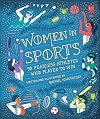
Sports have always played a big role in my life. Whether I was playing them or watching them with my friends and family, I have loved them always. Growing up, I did gymnastics, ballet, roller bladed, biked, swam, played softball and skated like a fiend. I skiied, played basketball, and was nearly recruited to Brown University as an ice hockey goalie. My sister played soccer and tennis, my dad was a gymnast and sailor, my mom was a three sport athlete and my grandfather played four sports and show more for the Philadelphia Eagles. To say sports are in my blood is an understatement. The first book I ever finished writing was about a teenage hockey star.
Downside, I wasn't really great at any sport, not a one. The jokes about ice hockey goalies were true for me - I was not a great skater. Upside, I loved it, so I worked hard and I practiced. When I found out that the author of Women in Science was writing about women in sports, I started begging our rep to send me an ARC (advanced reader copy) or finished copy of the book. Nine months ago. I knew I had to have this book.
I love this book - of all the compendium books of great women, this is by far one of my favorites. The art style is perfect for the style of book - think infographics, but with a bit more text. The decisions for which wonderful women to include must have been a challenging one, but it is definitely a worthy list - variety of sports and backgrounds of each of the women is diverse. If you are looking for inspiration for yourself, your daughter, your niece, your student, your granddaughter AND (or) your son, nephew, grandson, this is a fabulous book to encourage them to be their best and to never stop trying to excel. show less
Downside, I wasn't really great at any sport, not a one. The jokes about ice hockey goalies were true for me - I was not a great skater. Upside, I loved it, so I worked hard and I practiced. When I found out that the author of Women in Science was writing about women in sports, I started begging our rep to send me an ARC (advanced reader copy) or finished copy of the book. Nine months ago. I knew I had to have this book.
I love this book - of all the compendium books of great women, this is by far one of my favorites. The art style is perfect for the style of book - think infographics, but with a bit more text. The decisions for which wonderful women to include must have been a challenging one, but it is definitely a worthy list - variety of sports and backgrounds of each of the women is diverse. If you are looking for inspiration for yourself, your daughter, your niece, your student, your granddaughter AND (or) your son, nephew, grandson, this is a fabulous book to encourage them to be their best and to never stop trying to excel. show less
Lists
Awards


You May Also Like


Statistics
- Works
- 32
- Members
- 3,497
- Popularity
- #7,272
- Rating
- 4.4
- Reviews
- 61
- ISBNs
- 117
- Languages
- 9