
Jeannine Atkins
Author of Girls Who Looked Under Rocks: The Lives of Six Pioneering Naturalists
About the Author
Works by Jeannine Atkins
Borrowed Names: Poems About Laura Ingalls Wilder, Madam C.J. Walker, Marie Curie, and Their Daughters (2010) 120 copies, 5 reviews
Associated Works
Tagged
Common Knowledge
- Legal name
- Atkins, Jeannine Catherine
- Birthdate
- 1953-07-14
- Gender
- female
- Education
- University of New Hampshire (MS)
University of Massachusetts, Amherst (BA) - Occupations
- children's book author
biographer
high school teacher (English)
university instructor - Organizations
- Simmons University
University of Massachusetts, Amherst - Nationality
- USA
- Birthplace
- Montclair, New Jersey, USA
- Places of residence
- Whately, Massachusetts, USA
- Associated Place (for map)
- USA
Members
Reviews
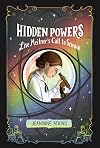
Thoroughly researched and intimately imagined, this is a novel in verse about Lise Meitner, the Austrian physicist who discovered nuclear fission, a discovery that was used to create the atomic bomb during WWII. After a 30-year career in Berlin, Lise left under false papers in 1938, making her way to Sweden, and later, Cambridge, England.
Back matter: Author's note, timeline, biographical notes on friends and colleagues, selected bibliography
Quotes
What happens if you try to split the show more invisible?
...
Being almost invisible doesn't keep someone safe. (10)
...somebody has to go first to make things fair. (29)
Science is beautifully built on facts,
but some shift as knowledge grows....
What's hidden may have more power
than what we see. (55)
Someone else can decide how to use what she finds. (66)
She doesn't want to complain.
She was taught that a woman must appear
not to need money, food, or anger,
which can be part of ambition. (70)
It's foolish to try to blend in, to believe
one can swap hiding one's history for safety. (93)
I just wish people wouldn't make up things
and call them fact. (102)
Dictators hate science...
facts get in the way of their lies. (138)
Is there a difference between hate and fear? (171)
There's no point in calling ourselves scientists
if we don't tell the truth. (172)
Now that it seems almost impossible to get out, Lise knows she must. (184)
This land [Sweden] caught her from a fall,
but gratitude is a pulse, not solid ground. (201)
Once one person names something, it can be simple for others to see too. (216)
What use is the past if we don't let it teach us? (252) show less
Back matter: Author's note, timeline, biographical notes on friends and colleagues, selected bibliography
Quotes
What happens if you try to split the show more invisible?
...
Being almost invisible doesn't keep someone safe. (10)
...somebody has to go first to make things fair. (29)
Science is beautifully built on facts,
but some shift as knowledge grows....
What's hidden may have more power
than what we see. (55)
Someone else can decide how to use what she finds. (66)
She doesn't want to complain.
She was taught that a woman must appear
not to need money, food, or anger,
which can be part of ambition. (70)
It's foolish to try to blend in, to believe
one can swap hiding one's history for safety. (93)
I just wish people wouldn't make up things
and call them fact. (102)
Dictators hate science...
facts get in the way of their lies. (138)
Is there a difference between hate and fear? (171)
There's no point in calling ourselves scientists
if we don't tell the truth. (172)
Now that it seems almost impossible to get out, Lise knows she must. (184)
This land [Sweden] caught her from a fall,
but gratitude is a pulse, not solid ground. (201)
Once one person names something, it can be simple for others to see too. (216)
What use is the past if we don't let it teach us? (252) show less
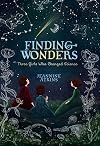
First of all, look at this wonderful cover. Three girls, faces hidden, as these unfamous/unknown women would become. The white sketches around the edges represent the science that each studied.
Weirdly, I liked this even though it is written in blank verse. This is the first book I've read like this and it would never be my first choice, but it seems to work here. It might be that using blank verse to tell a science story employs both parts of my brain. I like literature and science and to show more get both at the same time is pretty cool.
The three girls are Maria Sibylla Merian from the late 1600s in Germany; Mary Anning from the early 1800s, in England; and Maria Mitchell from 1800s America. Nice balance of eras and countries, and subjects - creatures, earth and sky.
Maria Sibylla Merian was the Painter's Daughter who studied caterpillars and moths and butterflies. Recognized that caterpillars were born from eggs, and documented the life cycle of insects. With her painting background, she also painted the life cycles. Merian travelled to Suriname with her eldest daughter to study bugs in other countries. Nobody in those days just travelled like that.
Mary Anning was the Carpenter's Daughter who became expert at finding fossils in the rocks along the shore in southern England. Desperately poor, Mary sold her fossils but then was the first to find a full body dinosaur fossil. Uneducated, she never got any respect and just 'found' the fossils, but she knew as much as anybody about the creatures she found. I knew quite a bit about Anning because I read Remarkable Creatures by Tracy Chevalier. (I highly recommend!)
Maria Mitchell was the Mapmaker's Daughter who loved to study the night sky and discovered a comet. She broke away from her Quaker background eventually, and became a teacher of astronomy at Vassar.
They all had father's who encouraged their daughter's search for knowledge. They all followed their passion for knowledge. They all were remarkable.
Once again, she takes her time sweeping her telescope,
slowly as a painter shifting the tip of her brush,
or a girl scanning stones. Beauty rambles more than it rushes.
There's always more than what's first seen.
This is a sample of the blank verse - not so hard to read. It made me even more impressed with the author and how she managed to tell these three stories in such a unique way, short but thorough. (Each biography is only about 60 pages) show less
Weirdly, I liked this even though it is written in blank verse. This is the first book I've read like this and it would never be my first choice, but it seems to work here. It might be that using blank verse to tell a science story employs both parts of my brain. I like literature and science and to show more get both at the same time is pretty cool.
The three girls are Maria Sibylla Merian from the late 1600s in Germany; Mary Anning from the early 1800s, in England; and Maria Mitchell from 1800s America. Nice balance of eras and countries, and subjects - creatures, earth and sky.
Maria Sibylla Merian was the Painter's Daughter who studied caterpillars and moths and butterflies. Recognized that caterpillars were born from eggs, and documented the life cycle of insects. With her painting background, she also painted the life cycles. Merian travelled to Suriname with her eldest daughter to study bugs in other countries. Nobody in those days just travelled like that.
Mary Anning was the Carpenter's Daughter who became expert at finding fossils in the rocks along the shore in southern England. Desperately poor, Mary sold her fossils but then was the first to find a full body dinosaur fossil. Uneducated, she never got any respect and just 'found' the fossils, but she knew as much as anybody about the creatures she found. I knew quite a bit about Anning because I read Remarkable Creatures by Tracy Chevalier. (I highly recommend!)
Maria Mitchell was the Mapmaker's Daughter who loved to study the night sky and discovered a comet. She broke away from her Quaker background eventually, and became a teacher of astronomy at Vassar.
They all had father's who encouraged their daughter's search for knowledge. They all followed their passion for knowledge. They all were remarkable.
Once again, she takes her time sweeping her telescope,
slowly as a painter shifting the tip of her brush,
or a girl scanning stones. Beauty rambles more than it rushes.
There's always more than what's first seen.
This is a sample of the blank verse - not so hard to read. It made me even more impressed with the author and how she managed to tell these three stories in such a unique way, short but thorough. (Each biography is only about 60 pages) show less

When Aani, resting underneath her favorite tree - a peaceful spot to which she would withdraw, in order to find peace and quiet, and temporarily escape from the tumult of her crowded home - hears the roar of trucks in the forest, the young girl runs to find her mother, and the other village women. It is from Kalawati, the village elder, that she and the other women learn that men from the city have come to cut down their forest, irrespective of the fact that their community relies upon it show more for survival. Determined not to let them destroy the trees, Aani leaps into action, placing herself between the loggers and her arboreal friend, and inspiring the women to similar action...
An engaging tale that highlights both the importance of the forests for human welfare, and the importance of human activism for forest welfare, Aani and the Tree Huggers is based on a true story which, according to the author's afterword, occurred in the 1970s, and launched the Chipko Andolan (the "Hug the Tree Movement") in India. I appreciated this afterword, although I wish the author had given more historical background, and mentioned the much earlier movement and story - the tale of Amrita Devi and the Bishnois people who sacrificed themselves to save the Khejri trees of India's Jodhpur District in the early 1700s - that inspired these more recent events. I couldn't help but wonder whether Atkins took that earlier story, which does involve a young girl as catalyst, and used it in a more contemporary context, to make the modern Chipko Andolan movement more accessible to young readers. Whatever the case may be, I would recommend reading this title in conjunction with a story about that earlier movement, such as The People Who Hugged the Trees: An Environmental Folk Tale. show less
An engaging tale that highlights both the importance of the forests for human welfare, and the importance of human activism for forest welfare, Aani and the Tree Huggers is based on a true story which, according to the author's afterword, occurred in the 1970s, and launched the Chipko Andolan (the "Hug the Tree Movement") in India. I appreciated this afterword, although I wish the author had given more historical background, and mentioned the much earlier movement and story - the tale of Amrita Devi and the Bishnois people who sacrificed themselves to save the Khejri trees of India's Jodhpur District in the early 1700s - that inspired these more recent events. I couldn't help but wonder whether Atkins took that earlier story, which does involve a young girl as catalyst, and used it in a more contemporary context, to make the modern Chipko Andolan movement more accessible to young readers. Whatever the case may be, I would recommend reading this title in conjunction with a story about that earlier movement, such as The People Who Hugged the Trees: An Environmental Folk Tale. show less
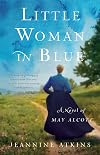
Like just about every other young bookish girl, I read Little Women growing up. In fact, I read Little Men and Jo's Boys as well. And like the majority who read it, I desperately wanted to grow up and be Jo March. She was the be all and end all of heroines. (Well, I'm still disappointed that she didn't marry Laurie but I suppose I might eventually get over it.) I never gave much thought to little Amy, the family pet who came across as a little bit of a spoiled, vain, flibberty gibbet. So I show more was completely intrigued to find that Amy was modeled to some extent on Louisa May Alcott's youngest sister, May. What was even more surprising was the way in which May was so much more interesting than the paragon of motherhood that Amy grew up to be. Jeannine Atkins' new novel, Little Woman in Blue, fictionalizes May's life, bringing to light her accomplishments, her humanness, and her desires, bringing an oft overlooked, yet talented in her own right, Alcott into the light.
May Alcott found her passion for painting at the age of ten. But she was born into a world that made it very difficult for women to be artists, expecting them to give up their artistic passion and ambitions to marry and raise a family, a world that often believed that women were incapable of being artists of the same caliber as men. May was determined to prove the world wrong. Even as she helped her mother tend to their home, to cook, clean, and sew, she needed creative time too, time spent with her paintbrush in hand, capturing what she saw before her. As the younger sister of Louisa May Alcott, she wrestles with the desire to be good and helpful but to also achieve the success, acclaim, and professional respect that her older sister has found. Her relationship with her sister is a complicated one tinged with both respect and envy and once May sees how Louisa has portrayed her in the character of Amy in the famous Little Women, she is even more determined to live life on her own terms.
Atkins has taken what is known about May Alcott and expanded on it, giving voice to a vibrant, intelligent, and determined woman. She details the myriad of stumbling blocks May faced and the ways she did eventually find and fulfill her desires. May is very definitely a woman of her time and she is torn between what she wants and what society expects of her. Her passion for her art drives her and shines through the narrative, making the life she chooses and which ultimately takes her so very far from home and family the only choice that she can make. Many famous characters in the arts and literary worlds cross May's path through the course of the book, some pointing to the budding promise of positive change for women and others still hidebound in their attitudes and each of these characters has an impact on May. May as a character is by turns confident and uncertain. She knows what she wants, both art and a family, but she doesn't know how to find and maintain both, having to forge her own way if she does intend to have them. Her doubts and insecurities make her real, her desire for her sister's support and pride in her makes her human. Atkins has drawn a fascinating, artistically talented young woman emerging first from the shadow of her family's impoverished situation and then from the long shadow cast by a beloved sister, struggling for recognition and respect in her own right. Fans of Little Women will certainly enjoy this imagined look at the woman who was much more complex than little Amy March. show less
May Alcott found her passion for painting at the age of ten. But she was born into a world that made it very difficult for women to be artists, expecting them to give up their artistic passion and ambitions to marry and raise a family, a world that often believed that women were incapable of being artists of the same caliber as men. May was determined to prove the world wrong. Even as she helped her mother tend to their home, to cook, clean, and sew, she needed creative time too, time spent with her paintbrush in hand, capturing what she saw before her. As the younger sister of Louisa May Alcott, she wrestles with the desire to be good and helpful but to also achieve the success, acclaim, and professional respect that her older sister has found. Her relationship with her sister is a complicated one tinged with both respect and envy and once May sees how Louisa has portrayed her in the character of Amy in the famous Little Women, she is even more determined to live life on her own terms.
Atkins has taken what is known about May Alcott and expanded on it, giving voice to a vibrant, intelligent, and determined woman. She details the myriad of stumbling blocks May faced and the ways she did eventually find and fulfill her desires. May is very definitely a woman of her time and she is torn between what she wants and what society expects of her. Her passion for her art drives her and shines through the narrative, making the life she chooses and which ultimately takes her so very far from home and family the only choice that she can make. Many famous characters in the arts and literary worlds cross May's path through the course of the book, some pointing to the budding promise of positive change for women and others still hidebound in their attitudes and each of these characters has an impact on May. May as a character is by turns confident and uncertain. She knows what she wants, both art and a family, but she doesn't know how to find and maintain both, having to forge her own way if she does intend to have them. Her doubts and insecurities make her real, her desire for her sister's support and pride in her makes her human. Atkins has drawn a fascinating, artistically talented young woman emerging first from the shadow of her family's impoverished situation and then from the long shadow cast by a beloved sister, struggling for recognition and respect in her own right. Fans of Little Women will certainly enjoy this imagined look at the woman who was much more complex than little Amy March. show less
Lists
Awards


You May Also Like


Associated Authors
Statistics
- Works
- 19
- Also by
- 1
- Members
- 1,582
- Popularity
- #16,313
- Rating
- 4.0
- Reviews
- 66
- ISBNs
- 59
- Languages
- 2
- Favorited
- 1