

Avi
Author of The True Confessions of Charlotte Doyle
About the Author
Avi was born in 1937, in the city of New York and raised in Brooklyn. He began his writing career as a playwright, and didn't start writing childrens books until he had kids of his own. (Bowker Author Biography)
Series
Works by Avi
The End of the Beginning: Being the Adventures of a Small Snail (and an Even Smaller Ant) (2004) 527 copies, 34 reviews
Best Shorts: Favorite Stories for Sharing (2006) — Editor; Contributor; Introduction — 97 copies, 6 reviews
The Unexpected Life of Oliver Cromwell Pitts: Being an Absolutely Accurate Autobiographical Account of My Follies, Fortune, and Fate (2017) 85 copies
The History of Helpless Harry: To Which Is Added a Variety of Amusing and Entertaining Adventures (1980) 55 copies, 1 review
Murder At Midnight 22 copies
The Escape from Home: The Escape from Home, Lord Kirkle's Money (Beyond the Western Sea) (1996) 4 copies
The World of Plants 2 copies
Secrets of Shadows 2 copies
Set of 5 Avi Paperback Books - Ragweed - Poppy - Poppy & Rye - Ereth's Birthday - Poppy's Return 1 copy
Priarie School 1 copy
Crispin - The Cross of Lead 1 copy
Rift White oak 1 copy
Skyfire 1 copy
Lion Of Jordan 1 copy
Gates of Light 1 copy
The grow home 1 copy
The Hunting Ground 1 copy
Associated Works
When I Was Your Age, Volume One: Original Stories About Growing Up (1996) — Contributor — 279 copies, 2 reviews
From One Experience to Another: Award-Winning Authors Sharing Real-Life Experiences Through Fiction (1997) — Contributor — 47 copies
Scholastic Book Clubs Chapters - A Special Sampling of Novels By Newbery Authors (2001) — Contributor — 17 copies, 1 review
Tagged
Common Knowledge
- Legal name
- Wortis, Edward Irving
- Other names
- Wortis, Avi
- Birthdate
- 1937-12-23
- Gender
- male
- Education
- Stuyvesant High School (did not graduate)
Elizabeth Irwin High School - Occupations
- librarian
children's book author - Relationships
- Leider, Emily Wortis (sister)
Wright, Linda Cruise (wife)
Arkin, Alan (cousin) - Nationality
- USA
- Birthplace
- New York, New York, USA
- Places of residence
- New York, New York, USA
Providence, Rhode Island, USA
Denver, Colorado, USA - Associated Place (for map)
- USA
Members
Discussions
Book about sailing/pirates in Name that Book (December 2015)
Reviews
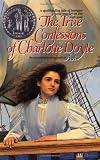
This was required reading for me in seventh grade (more on that in a sec), and I remember enjoying it but didn't remember a blessed thing about it except "girl in some peril with ship shit." (I did then, and I do still, love me some ship shit.) It's 1830 something or other, and Charlotte Doyle is twelvish and has been living at a boarding school in England where she was sent by her wealthy American parents to get girl-educated for the last six or so years. (And I thought sending your kiddo show more away at the age of six to the posh school the next county over was a horror. Imagine sending them ACROSS THE ATLANTIC at a time when getting them back would take two months on a floating death trap.) She gets dropped off by her father's man of business at the ship to find that the other families who were meant to take passage on it and look after her have not shown up. So she's gonna be the most unaccompanied of unaccompanied minors on a tall ship--and the only person with lady parts! Do not mistake my facetiousness for dismissiveness--this would have been terrifying. And it is. And then things really start to get scary.
Turns out the captain may be a sadistic mad bastard (he is), and there might be a mutiny brewing (there is), and Charlotte may end up a pawn in the captain's and the crew's shenanigans (she does). Eventually the right people (mostly) are okay, and the awful people (mostly) get comeuppanced. Along the way, Charlotte has to question things she's been taught about who to trust and why, honor, and gender roles. She eventually joins the crew (and therein lies a lot of the ship shit, and it is awesome. There's a bit where she climbs the rigging to the tippy tippy top, and oh my god, the descriptions. Amazing.), gets accused of murder, and solves a mystery. The very, very end (once Charlotte is home) feels juuuust a little stuck on, but it also feels kind of right and (the good kind) of inevitable, especially for a book aimed at middle schoolers. (My adult self wanted some further grappling with the implications of What Went Down on Dad's Ship, but I think that may have lost a young audience that surely was already a little taxed by this story.)
Speaking of which. SEVENTH GRADE?! I was reading on a twelfth-grade level in seventh grade (I know this because that was a year we were tested and our teacher confidentially gave all of us our results and she was very proud and kind to me when she gave me mine.), so I was probably fine. I think the content here is the sort some adults might think their precious twelve-year-olds shouldn't be exposed to, but they're wrong. Kids love this stuff and they want to know. (I'll note that while Charlotte is aware that it's not proper for a girl to be alone on a ship with no female (or at least related-to-her male) companion, there is no threat of or even veiled reference to the fear of rape--which is surely unrealistic, but I'll allow it for the sake of the target audience.) I lapped up anything I could get about honor and right-and-wrong and but-how-do-you-know at that age. But the prose! It's lovely but a little dense, I think, for middle grade. I applaud (with a bit of a raised eyebrow) my seventh-grade teacher's fortitude at walking a general population class (not honors or gifted or anything else that might suggest we were all reading above our grade level) of twelve-year-olds through this text. Some of us probably weren't interested in the content, and I'm sure many of us struggled with the text itself. Hats off to you, Mrs. Voz. If there are angels, I hope you are with them. show less
Turns out the captain may be a sadistic mad bastard (he is), and there might be a mutiny brewing (there is), and Charlotte may end up a pawn in the captain's and the crew's shenanigans (she does). Eventually the right people (mostly) are okay, and the awful people (mostly) get comeuppanced. Along the way, Charlotte has to question things she's been taught about who to trust and why, honor, and gender roles. She eventually joins the crew (and therein lies a lot of the ship shit, and it is awesome. There's a bit where she climbs the rigging to the tippy tippy top, and oh my god, the descriptions. Amazing.), gets accused of murder, and solves a mystery. The very, very end (once Charlotte is home) feels juuuust a little stuck on, but it also feels kind of right and (the good kind) of inevitable, especially for a book aimed at middle schoolers. (My adult self wanted some further grappling with the implications of What Went Down on Dad's Ship, but I think that may have lost a young audience that surely was already a little taxed by this story.)
Speaking of which. SEVENTH GRADE?! I was reading on a twelfth-grade level in seventh grade (I know this because that was a year we were tested and our teacher confidentially gave all of us our results and she was very proud and kind to me when she gave me mine.), so I was probably fine. I think the content here is the sort some adults might think their precious twelve-year-olds shouldn't be exposed to, but they're wrong. Kids love this stuff and they want to know. (I'll note that while Charlotte is aware that it's not proper for a girl to be alone on a ship with no female (or at least related-to-her male) companion, there is no threat of or even veiled reference to the fear of rape--which is surely unrealistic, but I'll allow it for the sake of the target audience.) I lapped up anything I could get about honor and right-and-wrong and but-how-do-you-know at that age. But the prose! It's lovely but a little dense, I think, for middle grade. I applaud (with a bit of a raised eyebrow) my seventh-grade teacher's fortitude at walking a general population class (not honors or gifted or anything else that might suggest we were all reading above our grade level) of twelve-year-olds through this text. Some of us probably weren't interested in the content, and I'm sure many of us struggled with the text itself. Hats off to you, Mrs. Voz. If there are angels, I hope you are with them. show less
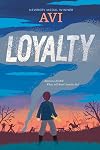
This is an upper middle grade (or even middle school) story that has a complex take on the Revolutionary War. The book begins in 1774 in fictional Tullbury, Massachusetts, near Concord, where 13 year-old Noah Cope's family had lived for over 100 years. In 1774, tensions between loyalists (to the British) and rebels are running high, and Noah's father, the town pastor, is beaten and murdered for saying a prayer that ends with "Bless and defend, and save the king and all the royal family." In show more the harrowing aftermath, the family must abandon their home and flee to Boston, hoping for the safety of loyalists there, and to be taken in by an elderly uncle of Noah's mother. Noah attempts to join the British army, but is turned away for his youth. Instead, a family connection leads to Captain Brown, who pays Noah to be a spy while working at the Green Dragon Tavern, a favorite rebel gathering place. There, Noah meets Jolla, a freed slave a few years older than himself. While Noah is a passionate loyalist, Jolla is loyal only to liberty, and is rightly suspicious of and disappointed in both sides. Noah passes along information and goes on scouting and observation excursions, but grows increasingly uneasy about his loyalties. What he sees are acts of cruelty and savagery, as well as rampant misinformation on both sides. Jolla serves as something of a moral compass who prods Noah to think for himself, question everything, and know his OWN mind.
Highly recommended. Prolific Colorado children's author Avi's book is a gift, really, for its nuanced immersion in such a storied American historical event, completely avoiding the "this side was good, this side was bad" lens so often used. No heroes here, not even Jolla, one of the best children's book characters I've met recently. show less
Highly recommended. Prolific Colorado children's author Avi's book is a gift, really, for its nuanced immersion in such a storied American historical event, completely avoiding the "this side was good, this side was bad" lens so often used. No heroes here, not even Jolla, one of the best children's book characters I've met recently. show less
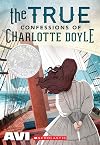
An ocean voyage of unimaginable consequences... Not every thirteen-year-old girl is accused of murder, brought to trial, and found guilty. But I was just such a girl, and my story is worth relating even if it did happen years ago. Be warned, however: If strong ideas and action offend you, read no more. Find another companion to share your idle hours. For my part I intend to tell the truth as I lived it.
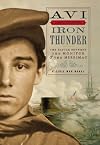
I picked this one up because I have a whole slew of third grade boys who want to read about battles, including a few who are excellent readers. If we’re not careful, they’ll end up finding and reading accounts that they’re not emotionally ready for.
Considering how much of the book is spent watching the ship get built, it’s surprisingly exciting. I found myself really thinking about the extraordinary idea that we can get enormous amounts of iron to float. [author: Avi] does a great show more job of capturing the cultural moment of innovation and the response to an idea that will change everything. I also really liked the bits of historical information and diagrams throughout the book. They were good reminders that what I was reading had really happened without pulling me out of the story, and the afterward did a nice job of distilling the fiction from the fact.
This is the first in Hyperion’s “I Witness” series, which seems like it will be worth keeping an eye on. show less
Considering how much of the book is spent watching the ship get built, it’s surprisingly exciting. I found myself really thinking about the extraordinary idea that we can get enormous amounts of iron to float. [author: Avi] does a great show more job of capturing the cultural moment of innovation and the response to an idea that will change everything. I also really liked the bits of historical information and diagrams throughout the book. They were good reminders that what I was reading had really happened without pulling me out of the story, and the afterward did a nice job of distilling the fiction from the fact.
This is the first in Hyperion’s “I Witness” series, which seems like it will be worth keeping an eye on. show less
Lists
Princess Tales (1)
1800s: America (1)
Swashbucklers (1)
B-B to Get (1)
6th Grade (1)
Newbery Adjacent (1)
Teachers (1)
Wishlist (5)
Sonlight Books (2)
Ghosts (2)
Books About Boys (2)
4th Grade Books (3)
Tagged Runaways (1)
Gateway Horror (1)
Awards


You May Also Like


Associated Authors
Statistics
- Works
- 131
- Also by
- 13
- Members
- 59,766
- Popularity
- #242
- Rating
- 3.7
- Reviews
- 1,075
- ISBNs
- 1,260
- Languages
- 15
- Favorited
- 39


