
Karen Cushman
Author of Catherine, Called Birdy
About the Author
Karen Cushman was born on October 4, 1941 and grew up in a working-class family in Chicago, but never put much thought into becoming a writer. Though she wrote poetry and plays as a child, Cushman didn't begin writing professionally for young adults until she was fifty. She holds an MA in both show more Human Behavior and Museum Studies. Cushman has always been interested in history. It was this interest that led her to her research into medieval England and its culture, which led to both Catherine, Called Birdy, a Newbery Honor Book, and The Midwife's Apprentice, her second book and winner of the prestigious Newbery Award in 1996. Both Catherine, Called Birdy and The Midwife's Apprentice have earned many awards and honors including the Gold Kite Award for Fiction from the Society for Children's Book Writers and Illustrators, and was chosen as one of School Library Journal's Best Books of the Year. Cushman's work has also been recognized for excellence by Horn Book, Parenting Magazine, Hungry Mind Review, and the American Library Association. (Bowker Author Biography) show less
Image credit: Author Karen Cushman at the 2016 Texas Book Festival. By Larry D. Moore, CC BY-SA 4.0, https://commons.wikimedia.org/w/index.php?curid=53330002
Works by Karen Cushman
Associated Works
Totally Middle School: Tales of Friends, Family, and Fitting In (2018) — Contributor — 22 copies, 1 review
Tagged
Common Knowledge
- Birthdate
- 1941-10-04
- Gender
- female
- Education
- Stanford University (MA - Human Behavior, MA - Museum Studies)
- Occupations
- novelist
adjunct professor - Organizations
- John F. Kennedy University (Assistant Director - Museum Studies Department)
- Relationships
- Cushman, Philip (husband)
- Short biography
- According to Karen Cushman's web site: When I was little, my Polish grandpa took me for walks through the alleys of Chicago. I would collect treasures — rubber bands and marbles, perfectly good pencils, maple leaves and robins’ eggs — and take them home to put in a box under my bed. I think that’s what being a writer is like. The treasures I collect now are bits of information fantasies memories, and imaginings, and I take them and put them in a story.
I write historical fiction, novels that may be about made up characters and events but take place in a real time or place. - Nationality
- USA
- Birthplace
- Chicago, Illinois, USA
- Places of residence
- Vashon Island, Washington, USA
- Associated Place (for map)
- USA
Members
Discussions
Found: Help find a book in Name that Book (March 2022)
Reviews
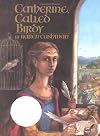
God’s thumbs! This book was a riot. Highly recommend for 13 readers who complain about books being too “boring,” because they will not be bored reading this one. Set in 1290 and written in diary entry form, this book follows a year in the life of 13 year old Catherine. Catherine’s father is doing everything he can to marry her off, and she is doing everything she can to resist his efforts. As soon as I read the first diary entry, I knew that I would love this book:
12th Day of show more September
“I am commanded to write an account of my days: I am bit by fleas and plagued by family. That is all there is to say.”
You can’t help but root for Catherine’s snarky, irreverent teenage self to find a way out of her predicament! I loved that Karen Cushman keeps things super realistic in regards to the historical time period. This could totally be an assigned book for a history class; there’s a lot of historical info to glean here for readers. I was also dying at the way Cushman includes what feast day it is at the beginning of the diary entries, and what saint each one is connected to, and the bizarre, insane things they are known for doing. Making it my mission in life to get every teen to read this! show less
12th Day of show more September
“I am commanded to write an account of my days: I am bit by fleas and plagued by family. That is all there is to say.”
You can’t help but root for Catherine’s snarky, irreverent teenage self to find a way out of her predicament! I loved that Karen Cushman keeps things super realistic in regards to the historical time period. This could totally be an assigned book for a history class; there’s a lot of historical info to glean here for readers. I was also dying at the way Cushman includes what feast day it is at the beginning of the diary entries, and what saint each one is connected to, and the bizarre, insane things they are known for doing. Making it my mission in life to get every teen to read this! show less
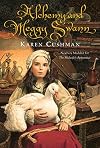
Ye toads and vipers, it takes a certain kind of nerd to appreciate a book like this. For example: Shakespeare lovers, language geeks, Renaissance Faire attenders, history buffs, etc. I enjoyed it, but I am your classic Society of Creative Anachronism apologist.
Here we have young Meggy Swann who is transplanted from a country village to the middle of teeming London in the year 1573. Meggy was born with crooked legs, so she walks with the aid of sticks and endures a lot of insults and show more prejudice. But Meggy is no wilting flower. She has a sharp tongue and dishes out counter insults like a pro ("A pox on you, moldwart, and a plague and an ague, and the pukes!"). Inside, though, poor Meggy does feel like no one wants her. Her mother sent her away. Her father is obsessed with his alchemical pursuits. Her only friend is a goose.
But can Meggy make friends? Aye, belike she can. This is basically the story of a lonely person finding a community to belong to. In the pursuit, Meggy learns about players and plays, printing presses, murder plots, poetry, and alchemy. If the language doesn't completely scare you off, this is a great little book. show less
Here we have young Meggy Swann who is transplanted from a country village to the middle of teeming London in the year 1573. Meggy was born with crooked legs, so she walks with the aid of sticks and endures a lot of insults and show more prejudice. But Meggy is no wilting flower. She has a sharp tongue and dishes out counter insults like a pro ("A pox on you, moldwart, and a plague and an ague, and the pukes!"). Inside, though, poor Meggy does feel like no one wants her. Her mother sent her away. Her father is obsessed with his alchemical pursuits. Her only friend is a goose.
But can Meggy make friends? Aye, belike she can. This is basically the story of a lonely person finding a community to belong to. In the pursuit, Meggy learns about players and plays, printing presses, murder plots, poetry, and alchemy. If the language doesn't completely scare you off, this is a great little book. show less
I had very fond childhood memories of Catherine, Called Birdy and The Midwife's Apprentice by the same author, so I jumped on the chance to read an e-galley of this one, and I wasn't disappointed.
I really enjoyed this book. Meggy Swann was raised by her beloved grandmother in a village outside of London during the reign of Elizabeth I. Her mother has no interest in her, so following her grandmother's death she's sent to live with her alchemist father. But when her father finds out that she's show more both female and crippled, he says that he has no use for her either. This is the story of Meggy's struggle to find a place for herself in an uncaring world, where people spit on her in the street and call her names because of her disability. She has understandably developed a prickly temperament to shield herself from the insults of others, and has difficulty opening up. I have to admit that I found her personality a bit obnoxious at first, but I did come to love her in the end.
On the other hand, I loved the writing from the very beginning. Cushman has a way of making Elizabethan England come to life, so that I was gripped from the very first chapter. Given that I was reading in less-than-ideal conditions on a computer, it would have been easy to put the book down, but I found that the story kept me absorbed throughout.
Because I hadn't read any of Cushman's work since I was maybe 11, I was a bit concerned that the story wouldn't have enough depth to hold my interest as an adult. That fear turned out to be entirely unfounded. I do wish the story had been longer only because I enjoyed it so much, but everything was developed and resolved satisfactorily in the short space there was. I'll definitely go back and read Cushman's other books that I missed between The Midwife's Apprentice and here, and I may even buy myself a physical copy of this one when it comes out in paperback.
So I was personally completely satisfied with this book, and I think that other adults would like it as well. On the other hand, I've seen some other reviews saying that the language is too difficult for children, but since I read Cushman's other works as a child myself, I'm not convinced that this would be a problem. In fact, I often see people asking for books for children with high reading levels: there's a need for books that aren't too easy, but are still age-appropriate in terms of content. This book fits perfectly in that niche. Plus, it has a positive message that doesn't feel too in-your-face, and there's a section at the end explaining the historical setting, so it has good educational potential.
In short, I really think Cushman has a winner here. This is a great book for children and adults. show less
I really enjoyed this book. Meggy Swann was raised by her beloved grandmother in a village outside of London during the reign of Elizabeth I. Her mother has no interest in her, so following her grandmother's death she's sent to live with her alchemist father. But when her father finds out that she's show more both female and crippled, he says that he has no use for her either. This is the story of Meggy's struggle to find a place for herself in an uncaring world, where people spit on her in the street and call her names because of her disability. She has understandably developed a prickly temperament to shield herself from the insults of others, and has difficulty opening up. I have to admit that I found her personality a bit obnoxious at first, but I did come to love her in the end.
On the other hand, I loved the writing from the very beginning. Cushman has a way of making Elizabethan England come to life, so that I was gripped from the very first chapter. Given that I was reading in less-than-ideal conditions on a computer, it would have been easy to put the book down, but I found that the story kept me absorbed throughout.
Because I hadn't read any of Cushman's work since I was maybe 11, I was a bit concerned that the story wouldn't have enough depth to hold my interest as an adult. That fear turned out to be entirely unfounded. I do wish the story had been longer only because I enjoyed it so much, but everything was developed and resolved satisfactorily in the short space there was. I'll definitely go back and read Cushman's other books that I missed between The Midwife's Apprentice and here, and I may even buy myself a physical copy of this one when it comes out in paperback.
So I was personally completely satisfied with this book, and I think that other adults would like it as well. On the other hand, I've seen some other reviews saying that the language is too difficult for children, but since I read Cushman's other works as a child myself, I'm not convinced that this would be a problem. In fact, I often see people asking for books for children with high reading levels: there's a need for books that aren't too easy, but are still age-appropriate in terms of content. This book fits perfectly in that niche. Plus, it has a positive message that doesn't feel too in-your-face, and there's a section at the end explaining the historical setting, so it has good educational potential.
In short, I really think Cushman has a winner here. This is a great book for children and adults. show less
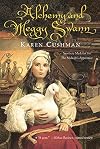
I've been reading Cushman's books since I was nine or ten and received Catherine, Called Birdy as my Scholastic book of the month. She's not a hugely prolific author, so I just check every few years for new books. However much I love Cushman's books I might have hesitated if I'd read the description of this one and realized it was about a physically disabled girl, as disability is often handled very poorly, particularly in historical settings. (I'm disabled myself.)
Cushman soon erased all of show more my doubts. She was so smart in how she went about writing this. First, she chose a real condition and researched it - hip dysplasia, which can be corrected without too much trouble, but if left means the legs don't develop in the usual way and the person is left crippled and in pain. This often results from a certain type of breech birth, and of course couldn't be corrected in the early Elizabethan period when this book is set. Cushman's choice to allow Meggy to be angry, at other people, not at herself or necessarily because of her disability, was equally wondrous. In fiction, there are two prominent disabled tropes - the Pollyanna and the bitter cripple. We are rarely allowed to be outspoken and angry and grouchy and be a protagonist. Meggy's disability impacts how she goes about things but it has little to nothing to do with the main plot of the book. Third, Cushman lets Meggy sometimes use typical historical perceptions of disability as a result of curses or demonic possession to her own advantage when trying to get people to leave her alone (I say historical, but the Catholic church still wasn't accepting men with epilepsy into the priesthood in the 1960s due to the old 'demonic possession' explanation).
After Meggy's grandmother dies, her mother sends her to London to live with her father, who she doesn't know. He's an alchemist and takes little notice of her, never even using her name. As she learns the streets and makes herself useful running errands, she befriends a variety of people. Soon she overhears men buying poison from her father with the intent of killing an Earl. She's shocked and tries to talk her father out of it, but soon must find a way to foil the plot herself.
I really loved this book, and I'm so relieved and pleased that Cushman took this representation seriously. My love for her remains undiminished. show less
Cushman soon erased all of show more my doubts. She was so smart in how she went about writing this. First, she chose a real condition and researched it - hip dysplasia, which can be corrected without too much trouble, but if left means the legs don't develop in the usual way and the person is left crippled and in pain. This often results from a certain type of breech birth, and of course couldn't be corrected in the early Elizabethan period when this book is set. Cushman's choice to allow Meggy to be angry, at other people, not at herself or necessarily because of her disability, was equally wondrous. In fiction, there are two prominent disabled tropes - the Pollyanna and the bitter cripple. We are rarely allowed to be outspoken and angry and grouchy and be a protagonist. Meggy's disability impacts how she goes about things but it has little to nothing to do with the main plot of the book. Third, Cushman lets Meggy sometimes use typical historical perceptions of disability as a result of curses or demonic possession to her own advantage when trying to get people to leave her alone (I say historical, but the Catholic church still wasn't accepting men with epilepsy into the priesthood in the 1960s due to the old 'demonic possession' explanation).
After Meggy's grandmother dies, her mother sends her to London to live with her father, who she doesn't know. He's an alchemist and takes little notice of her, never even using her name. As she learns the streets and makes herself useful running errands, she befriends a variety of people. Soon she overhears men buying poison from her father with the intent of killing an Earl. She's shocked and tries to talk her father out of it, but soon must find a way to foil the plot herself.
I really loved this book, and I'm so relieved and pleased that Cushman took this representation seriously. My love for her remains undiminished. show less
Lists
Awards


You May Also Like


Associated Authors
Statistics
- Works
- 14
- Also by
- 2
- Members
- 15,870
- Popularity
- #1,429
- Rating
- 3.8
- Reviews
- 363
- ISBNs
- 264
- Languages
- 12
- Favorited
- 15

