
Isaac Bashevis Singer (1902–1991)
Author of The Collected Stories
About the Author
Isaac Bashevis Singer (1904-91) was the author of many novels, stories, children's books, and memoirs. He received the Nobel Prize in Literature in 1978. (Publisher Provided) Isaac Bashevis Singer was born in Radzymin, Poland on July 14, 1904. He received a traditional Jewish education, including show more training at the rabbinical seminary in Warsaw. He began writing in Hebrew while he worked for 10 years as a proofreader and translator in Warsaw. In 1935, he immigrated to New York, where he became a journalist for the Daily Forward, America's largest Yiddish newspaper. Most of his stories were originally published in this newspaper in serial form. His first novel, The Family Moskat, was published in 1950. His other works include The Magician of Lublin, The Spinoza of Market Street, The Slave, and A Friend of Kafka. A Day of Pleasure: Stories of a Boy Growing Up in Warsaw won the National Book Award for children's literature. He received numerous awards during his lifetime including the Nobel Prize for Literature in 1978 and the Gold Medal for Fiction in 1989. He died after suffering a series of strokes on July 24, 1991. (Bowker Author Biography) show less
Series
Works by Isaac Bashevis Singer
Isaac Bashevis Singer: Collected Stories V. 1 Gimpel the Fool to The Letter Writer (Library of America, 149) (2004) 294 copies, 2 reviews
Isaac Bashevis Singer Collected Stories V. 2 : A Friend of Kafka to Passions (Library of America) (Vol 2) (2004) 223 copies
A Friend of Kafka {story} 21 copies
The Certificate: A Novel 15 copies
The Safe Deposit and Other Stories About Grandparents, Old Lovers, and Crazy Old Men (1989) 14 copies
Yentl the Yeshiva Boy and Other Stories: including Short Friday (Isaac Bashevis Singer: Classic Editions) (2021) 10 copies, 1 review
Kaksi maailmaa. 1 : Nousee päivä, laskee päivä / suomentanut Liisa Ryömä: Isaac Bashevis Singer (1996) 5 copies
The Key: Stories 3 copies
Surnud moosekant : [novellid] 3 copies
Ást og útlegð 3 copies
TALE OF THREE WISHES 2 copies
מלך השדות 2 copies
Autograph, Folk Tale Writer, Nobel Prise Winner, Signed (on the back) Collector Card (Mine) 2 copies
Der shpigl : un andere dertseylungen 2 copies
Yachid and Yechida [short story] 2 copies
The Parrot 2 copies
The manuscript 2 copies
Późna miłość 2 copies
The Mirror 2 copies
Big and Little [short story] 1 copy
O Mago de Dublin 1 copy
Joy [short story] 1 copy
The Mirror and other stories 1 copy
Der König der Felder 1 copy
La luna e la follia 1 copy
IL CERTIFICATO 1 copy
Crvena kejla 1 copy
Tajne kabale 1 copy
A Letter to Mama and Other Uncollected Stories (Isaac Bashevis Singer: Classic Editions) (2024) 1 copy
Ole i Trufa 1 copy
The Fast [short story] 1 copy
Vecchio amore. 1 copy
Opowiadania 1 copy
Blood [short story] 1 copy
La imagen 1 copy
Escoria 1 copy
The King of the Fields 1 copy
Alone [short story] 1 copy
Old Truths and New Cliches 1 copy
Kruna od perja 1 copy
Old Love 1 copy
The estate 1 copy
The magician of Lublin 1 copy
The seance and other stories 1 copy
The parakeet named Dreidel 1 copy
בית קרנובסקי 1 copy
משוגע 1 copy
חכמי חלם ותולדותיהם 1 copy
Anime perdute 1 copy
בית הדין של אבא 1 copy
The Slave 1 copy
Setrið 1 copy
Schiuma e Racconti scelti 1 copy
Kal 1 copy
Letter re: Nadine Gordimer 1 copy
שושה 1 copy
Satan in Goray 1 copy
מסעות בשביס בארץ ישראל 1 copy
משפחת מושקאט 1 copy
הסרטיפיקט 1 copy
בית-הדין של אבא 1 copy
דער קנעכט 1 copy
עושה-הנפלאות מלובלין 1 copy
המפתח 1 copy
משוגע 1 copy
Three Tales 1 copy
Hanka 1 copy
Izgubljen u Americi 1 copy
Varjoja Hudsonin yllä 1 copy
The Witch {short story} 1 copy
O Escravo 1 copy
Little Boy in Search of God 1 copy
Der bal-tshuve 1 copy
Die Familie Moschkat 1 copy
Taibele and Her Demon 1 copy
Neprijatelji, ljubavna priča 1 copy
Obsessões e Outras Histórias 1 copy
The Courtship 1 copy
The Lecture 1 copy
Commentary (46:05) 1 copy
Singer Isaac Bashevis 1 copy
Ori 1 copy
Of a world that is no more 1 copy
O Solar 1 copy
Ništarija 1 copy
The Colony (short story) 1 copy
Short Friday [short story] 1 copy
Í föðurgarði 1 copy
Cunegonde [short story] 1 copy
Satán en Goray 1 copy
තැවුල් සිත 1 copy
Jöfur sléttunnar 1 copy
Sautján sögur 1 copy
Why NoahChose te Dove 1 copy
Histórias para Crianças 1 copy
Incendio (in I due bugiardi) 1 copy
Sjene nad Hudsonom 1 copy
#Error 1 copy
Satan in Gora 1 copy
One Day of Happiness 1 copy
[Title missing] 1 copy
The Fearsome Inn 1 copy
Associated Works
Literature: An Introduction to Fiction, Poetry, and Drama (1995) — Contributor, some editions — 1,011 copies, 7 reviews
Perrine's Literature: Structure, Sound, and Sense (1970) — Contributor, some editions — 891 copies, 4 reviews
The World of the Short Story: A 20th Century Collection (1986) — Contributor — 510 copies, 4 reviews
A Treasury of Yiddish Stories: Revised and Updated Edition (1958) — Contributor — 387 copies, 1 review
The Art of the Tale: An International Anthology of Short Stories (1986) — Contributor — 381 copies, 3 reviews
Wandering Stars: An Anthology of Jewish Fantasy and Science Fiction (1974) — Contributor — 337 copies, 6 reviews
American Fantastic Tales : Terror and the Uncanny from the 1940's to Now (2009) — Contributor — 299 copies, 5 reviews
Devils & Demons: A Treasury of Fiendish Tales Old & New (1991) — Contributor — 288 copies, 2 reviews
Aesop's Fables Translated by George Fyler Townsend (1871) — Foreword, some editions — 213 copies, 6 reviews
First Fiction: An Anthology of the First Published Stories by Famous Writers (1994) — Contributor — 194 copies, 1 review
In Another Part of the Forest: An Anthology of Gay Short Fiction (1994) — Contributor — 191 copies, 2 reviews
The Children's Treasury: Best Loved Stories and Poems from Around the World (1987) — Contributor — 164 copies, 2 reviews
The Jewish caravan : great stories of twenty-five centuries (1965) — Contributor, some editions — 139 copies
More Wandering Stars: Outstanding Stories of Jewish Fantasy and Science Fiction (1981) — Contributor — 105 copies
Writing New York: A Literary Anthology (Expanded 10th-Anniversary Edition) (2008) — Contributor — 101 copies, 1 review
No Star Too Beautiful: An Anthology of Yiddish Stories 1382 to the Present (2002) — Contributor — 65 copies
Beautiful as the Moon, Radiant as the Stars: Jewish Women in Yiddish Stories - An Anthology (2003) — Contributor — 59 copies, 1 review
Have I Got a Story for You: More Than a Century of Fiction from the Forward (2016) — Contributor — 44 copies, 2 reviews
Fotspår : noveller ur Sveriges radio P1:s serie Författarskap på fötter (2003) — Contributor — 5 copies
Cricket Magazine, Vol. 3, No. 4, December 1975 — Contributor — 5 copies
Cricket Magazine, Vol. 4, No. 6, February 1977 — Contributor — 3 copies
Cricket Magazine, Vol. 8, No. 4, December 1980 — Contributor — 2 copies
Livros Condensados: A Chave de Rebeca | O Safari de Mrs. Pollifax | Um Dia Feliz | Malevil (1982) — Contributor — 2 copies
Tagged
Common Knowledge
- Canonical name
- Singer, Isaac Bashevis
- Legal name
- Zynger, Icek-Hersz (birth)
- Other names
- Bashevis
Warszawski
Segal, D. - Birthdate
- 1902-11-21
- Date of death
- 1991-07-24
- Gender
- male
- Education
- Warsaw Rabbinical Seminary
- Occupations
- journalist
novelist
short story writer
playwright
translator - Organizations
- The Jewish Daily Forward
- Awards and honors
- Nobel Prize (Literature, 1978)
Gold Medal, American Academy of Arts and Letters (1989)
American Academy of Arts and Letters Academy Award (1959)
American Academy of Arts and Letters (1965)
National Book Award (1970, 1974)
Itzik Manger Prize (1973) - Agent
- Lescher & Lescher Ltd.
- Relationships
- Singer, Israel Joshua (brother)
Kreitman, Esther (sister)
Singer, Joseph (nephew)
Kreitman, Morris (nephew)
Zamir, Israel (son) - Cause of death
- stroke
- Nationality
- Poland
USA (naturalized 1943) - Birthplace
- Leoncin, Congress Poland, Russian Empire
- Places of residence
- Radzymin, Poland, Russian Empire
Warsaw, Poland
New York, New York, USA
Miami, Florida, USA - Place of death
- Surfside, Florida, USA
- Burial location
- Beth-El Cemetery, Paramus, New Jersey, USA
- Associated Place (for map)
- USA
Members
Discussions
GROUP READ I.B.SINGERS [THE FAMILY MOSKAT] in Monthly Author Reads (November 2024)
October 2024: Isaac Bashevis Singer in Monthly Author Reads (October 2024)
THE DEEP ONES: "The Enemy" by Isaac Bashevis Singer in The Weird Tradition (March 2022)
Group Read, September 2020: The Magician of Lublin in 1001 Books to read before you die (October 2020)
Group tags in YIVO Encyclopedia (March 2012)
testcases - links with VIAF numbers in anchors in YIVO Encyclopedia (March 2012)
Welcome to this group! in YIVO Encyclopedia (March 2012)
Reviews

We are in Poland, this time in the later decades of the 19th century. The novel begins just after an 1863 uprising by the Polish nobility against what had become ongoing Russian rule has ended in humiliating disaster. With this nationalist movement quashed, Poland instead turns to business, and the modern world begins seeping into Poland: mines, factories, railroads begin appearing. For Poland's Jews, the period is one of liberalism. In the town of Jampol, one of the insurrectionists, Count show more Wladislaw Jampolski, has been banished to Siberia, and a Jew, Calman Jacoby, has managed to win the right to lease the count's large landholding and manor house. He judiciously allows the count's family to continue living in the manor house, in order to avoid offending the local Poles, and he begins making money growing and selling crops on the land and, in particular, selling timber to be used as railroad ties. So begins our tale, with Calman at the center of what becomes a whirlwind of cultural and religious change and the personal crises and moral choices, both good and bad, of an expanding group of characters.
Calman himself is an observant Jew. He expects his children to stay within that community and some do. But the Jewish community as a whole does not stand apart from the modernism taking hold in Poland, and Calman, to his woe, has lived to see a growing divide among Poland's Jews: those who demand adherence to the old ways, and those who look westward with approval at the assimilation of the Jews of France, Germany and elsewhere. To them, the exotic, "Asiatic" dress, the standing apart from Polish society as a whole, is a self-defeating lifestyle of superstition, destined to bring down further antisemitism on all of their heads. To the traditionalists, antisemitism is a constant, sure to come in future waves however they're dressed and however they worship. Faith in God and loyalty to the commandments is the only path. Calman's children, as they grow to adulthood, more or less split down the middle of this divide. One of his daughters goes so far as to run off with the count's son. But the world of the Polish nobility is on no more solid ground than the world of the Hassids. In the meantime, socialism, Zionism, nihilism, anarchism and more are debated and sometimes adopted. The roles of women in this world are changing as well. Although this topic is not made specific, the limitations faced by The Manor's female characters, and the extremely unsatisfactory choices they're forced into, become an undeniable theme of the novel.
I don't want to give the idea that Singer's presentation here is devoid of sympathy and even love for the ways and tribulations of the observant Jews. Indeed, his portrayal is laced strongly with affection and understanding. The storyline is a tapestry, or perhaps labyrinth is a better description, of interrelationships between members of the old world and the new, the Jewish society and the Polish Christians, interwoven amongst and strengthened by family, marriage, business and religion. The old world's concerns are offered with as much detail as those more modern leaning. This is a vivid picture of a complex society at a tipping point, full of memorable characters. And of course Singer was writing, and we are reading, within the context of hindsight. In the end, modernization did not save the Jews of Europe.
Here is a good example of the issues Singer is dealing with. Ezriel, Calman's son-in-law, has mostly left the old ways and is studying at university to become a doctor:
"Ezriel had had great hopes that progress could be achieved through education. Yet knowledge itself turned out to be extremely precarious. The entities which were said to constitute matter seemed to have almost magical properties. Moreover, the various materialistic theories, and Darwinism in particular, had put almost all values in jeopardy: the soul, ethics, the family. Might was right everywhere. Man's ancient beliefs had been bartered for the telegraph. But what could Ezriel do about it? For him the old traditions were already destroyed. He was left with nothing but examinations and dread. He had forsaken God but he was dependent upon all kinds of bureaucrats. He had made a mistake, Ezriel felt. But what exactly had been his error? How could it be rectified? As he lay in the darkness, it occurred to him that the young man who had been found hanging in an attic room in the Old City and whose dissection Ezriel had witnessed must have had much the same thoughts as he was having now."
Here's one more quote I like a lot, one that shows more accurately the range of human emotion and reverence for the natural world that Singer displays through the novel, as Calman, about a third of the way through the story, contemplates his situation:
"Calman sighed. He heard his grandson, Shaindel's Uri-Joseph-Yosele, awake and cry. Burek, the dog, barked. The cows in the stall rubbed their horns against the door. The spring was a warm one, and after two years of drought there were signs that the coming harvest would be fruitful. The winter crops had sprouted early, rain and sunshine had been plentiful: the life of the soil was as unpredictable as the life of man. Scarcity followed plenty. When the earth seemed to have grown barren, the juices of life flowed through her again and she blossomed once more. Who could tell? Perhaps God would still grant Calman some comfort."
When I first began reading The Manor, I wasn't particularly enamored. But the more I read, and the more the branches of Singer's story reached outward, the more absorbed I became, and in the end I can say it's a book I recommend highly. show less
Calman himself is an observant Jew. He expects his children to stay within that community and some do. But the Jewish community as a whole does not stand apart from the modernism taking hold in Poland, and Calman, to his woe, has lived to see a growing divide among Poland's Jews: those who demand adherence to the old ways, and those who look westward with approval at the assimilation of the Jews of France, Germany and elsewhere. To them, the exotic, "Asiatic" dress, the standing apart from Polish society as a whole, is a self-defeating lifestyle of superstition, destined to bring down further antisemitism on all of their heads. To the traditionalists, antisemitism is a constant, sure to come in future waves however they're dressed and however they worship. Faith in God and loyalty to the commandments is the only path. Calman's children, as they grow to adulthood, more or less split down the middle of this divide. One of his daughters goes so far as to run off with the count's son. But the world of the Polish nobility is on no more solid ground than the world of the Hassids. In the meantime, socialism, Zionism, nihilism, anarchism and more are debated and sometimes adopted. The roles of women in this world are changing as well. Although this topic is not made specific, the limitations faced by The Manor's female characters, and the extremely unsatisfactory choices they're forced into, become an undeniable theme of the novel.
I don't want to give the idea that Singer's presentation here is devoid of sympathy and even love for the ways and tribulations of the observant Jews. Indeed, his portrayal is laced strongly with affection and understanding. The storyline is a tapestry, or perhaps labyrinth is a better description, of interrelationships between members of the old world and the new, the Jewish society and the Polish Christians, interwoven amongst and strengthened by family, marriage, business and religion. The old world's concerns are offered with as much detail as those more modern leaning. This is a vivid picture of a complex society at a tipping point, full of memorable characters. And of course Singer was writing, and we are reading, within the context of hindsight. In the end, modernization did not save the Jews of Europe.
Here is a good example of the issues Singer is dealing with. Ezriel, Calman's son-in-law, has mostly left the old ways and is studying at university to become a doctor:
"Ezriel had had great hopes that progress could be achieved through education. Yet knowledge itself turned out to be extremely precarious. The entities which were said to constitute matter seemed to have almost magical properties. Moreover, the various materialistic theories, and Darwinism in particular, had put almost all values in jeopardy: the soul, ethics, the family. Might was right everywhere. Man's ancient beliefs had been bartered for the telegraph. But what could Ezriel do about it? For him the old traditions were already destroyed. He was left with nothing but examinations and dread. He had forsaken God but he was dependent upon all kinds of bureaucrats. He had made a mistake, Ezriel felt. But what exactly had been his error? How could it be rectified? As he lay in the darkness, it occurred to him that the young man who had been found hanging in an attic room in the Old City and whose dissection Ezriel had witnessed must have had much the same thoughts as he was having now."
Here's one more quote I like a lot, one that shows more accurately the range of human emotion and reverence for the natural world that Singer displays through the novel, as Calman, about a third of the way through the story, contemplates his situation:
"Calman sighed. He heard his grandson, Shaindel's Uri-Joseph-Yosele, awake and cry. Burek, the dog, barked. The cows in the stall rubbed their horns against the door. The spring was a warm one, and after two years of drought there were signs that the coming harvest would be fruitful. The winter crops had sprouted early, rain and sunshine had been plentiful: the life of the soil was as unpredictable as the life of man. Scarcity followed plenty. When the earth seemed to have grown barren, the juices of life flowed through her again and she blossomed once more. Who could tell? Perhaps God would still grant Calman some comfort."
When I first began reading The Manor, I wasn't particularly enamored. But the more I read, and the more the branches of Singer's story reached outward, the more absorbed I became, and in the end I can say it's a book I recommend highly. show less
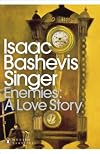
From the moment I started this novel I was drawn in by the beauty of the writing. For a few pages I was worried that the plot was solely going to be the aftermath of the Holocaust (not that that's not a valid plot, but it wasn't what I was in the mood for reading), but I needn't have worried as wham! - Singer hits us between the eyes with an early plot twist. The fallout and impact of the Holocaust on the various characters is definitely central as a backdrop to this novel, but Singer still show more has fun with the plot, and we're never quite sure how it's going to play out.
It's a wonderfully paced book, that manages to somehow balance humour with the dark shadow the Holocaust has cast on the lives of the characters. Like the best of protagonists, Herman Broder is desperately flawed; inherently he's a decent man who lacks the strength to make difficult decisions, and in doing so and trying to people please ends up getting himself deeper and deeper into a ridiculous domestic mess and web of lies.
I expect that Jewish readers get an additional layer of enjoyment from this novel that non-Jewish readers will miss - I was conscious that there were references and phrases that had no context for me which I expect bring another level of familiarity and amusement to Jewish readers (such as conflict over holiday rituals), but I would say that's an additional enhancement for some readers and it certainly didn't detract from the enjoyment of the novel as a non-Jewish reader.
4.5 stars - a wonderful, crazy story. I thoroughly enjoyed this. show less
It's a wonderfully paced book, that manages to somehow balance humour with the dark shadow the Holocaust has cast on the lives of the characters. Like the best of protagonists, Herman Broder is desperately flawed; inherently he's a decent man who lacks the strength to make difficult decisions, and in doing so and trying to people please ends up getting himself deeper and deeper into a ridiculous domestic mess and web of lies.
I expect that Jewish readers get an additional layer of enjoyment from this novel that non-Jewish readers will miss - I was conscious that there were references and phrases that had no context for me which I expect bring another level of familiarity and amusement to Jewish readers (such as conflict over holiday rituals), but I would say that's an additional enhancement for some readers and it certainly didn't detract from the enjoyment of the novel as a non-Jewish reader.
4.5 stars - a wonderful, crazy story. I thoroughly enjoyed this. show less
The Wondering Jew
Narrated by Ray Hagen
Length: ~7 hours
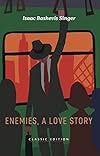
Written in 1966 in Yiddish and published in 1977 in English, Enemies, a Love Story tells of the lives of Jewish refugees in New York in the aftermath of WWII. The main characters are Herman and his three wives.
Herman Broder, a non-observant Jew and Talmudic scholar has settled in Coney Island. He has lost his family including his wife and two children to the Holocaust. He survived by hiding in a hayloft, aided by Yadwiga, a Polish show more peasant, a gentile who had served in his father’s house in Poland prior to the Nazi invasion.
Herman is a man who contemplates the meaning of life, constantly wondering and in wonder. When he looks at the moon, he wonders how did it get there? He tries to imagine a god who has given man free will without choice. He wonders how a god could create such a world where Nazis killed whole families. Was god a sadist? And who was the devil and why didn’t god kill him.
I was intrigued by the character of Herman. He’s a man of intelligence, humor, compassion and is an unapologetic liar. At times as he contemplates life, it’s as if he’s a child, seeing the world for the first time. There’s an endearing quality in this complex man.
The plot is a bit of fun. If being hidden in a hayloft in fear of the SS can be described as humorous, then Isaac B Singer is the one to do it.
Before the war Herman was married and had two children. After the war, believing his Jewish wife dead, he brings Yadwiga the Polish peasant who sheltered him, to the U.S. on his visa and sets up house with her. She’s ignorant, superstitious, follows the old ways and is at first ignored by the other apartment dwellers, all Jewish immigrants who mainly speak Yiddish. Yadwiga cant speak English or Yiddish and her rough peasant Polish is barely understandable even by Herman. But he marries her. After all his wife is dead and what else is he to do with her. She can’t survive in New York alone.
Herman lies to Yadwiga and, pretending to be a traveling salesman to cover up his long absences from their Coney Island home. He has an affair with a Jewish woman who lives in the Bronx. Masha also a Holocaust survivor spent the war years in an extermination camp. She’s a drama queen, volatile and sexual. She’s always complaining about the Bronx apartment that Herman has rented for her - “In the camp, at least we had hope”.
Yadwiga has meanwhile learned how to cook Jewish foods such as matzo balls with borscht, and is converting to Judaism. She loves Herman with all her heart. For his part he feels some responsibility and gratitude for her, but not love. At times she annoys him and he mocks her, calling her a peasant. They share no interests and only occasionally, a bed.
As Herman juggles his life between the two women, traveling between Coney Island and the Bronx on the subway, he also has to earn a quid, which he does by ghost-writing speeches for a fraud of a rabbi who he also lies to. While Yadwiga is busy learning Jewish rites, Herman marries Masha, both civilly and under Jewish law.
And suddenly out of the blue, Herman’s Jewish wife, Tamara turns up. She’s found him by advertising in the New York Yiddish newspaper. There was so much dislocation in the immediate post-war years and whole families had been separated by the war, and the paper’s classifieds were full of people looking for family members.
Herman’s life is full of lies. He can’t go on living like this. He owes Yadwiga now pregnant, loves Masha, and is committed to Tamara who probably knows him best.
He can have no rest. He spends his nights imagining bombing Nazis, and staring at the moon. Who put it there? Who is this god? In the days he moves around New York to his various commitments on the subways, a nightmare to this day for any New Yorker.
He lies to the rabbi as to when he’ll complete his speeches. He lies to each of his three wives, and tries to spend time with each one.
The situation cannot go on and how it pans out cannot be told here. But it’s a great book. The characters are impeccably described. There’s humor, some of it gallows. There’s the plot intricacies. There’s the description of post-war New York with its immigrants, humor, decay and the Yiddish culture.
I didn’t read any reviews till I’d finished reading and was astounded at the lack of understanding of a couple of the LT reviewers.
“Herman is a cowardly little Jew who hid out in a haystack while his people were gassed in the Holocaust” one wrote.
Singer is even described as sexist: “Her calves were muscular, hard as stone. . . . Her breasts were full and white; her hips were round” Singer wrote of Herman’s thoughts on meeting Masha. Cannot a man find a woman sexy any more?
“I found his portrayal of survivors offensive”. wrote another reviewer. Obviously he was offended but no offense was intended. Humor is a coping mechanism. But perhaps it was Herman’s denial of god offended him.
Enemies, a Love Story is a moving intelligent and very funny book. It is indeed a love story. Highly recommended. show less
Narrated by Ray Hagen
Length: ~7 hours
Written in 1966 in Yiddish and published in 1977 in English, Enemies, a Love Story tells of the lives of Jewish refugees in New York in the aftermath of WWII. The main characters are Herman and his three wives.
Herman Broder, a non-observant Jew and Talmudic scholar has settled in Coney Island. He has lost his family including his wife and two children to the Holocaust. He survived by hiding in a hayloft, aided by Yadwiga, a Polish show more peasant, a gentile who had served in his father’s house in Poland prior to the Nazi invasion.
Herman is a man who contemplates the meaning of life, constantly wondering and in wonder. When he looks at the moon, he wonders how did it get there? He tries to imagine a god who has given man free will without choice. He wonders how a god could create such a world where Nazis killed whole families. Was god a sadist? And who was the devil and why didn’t god kill him.
I was intrigued by the character of Herman. He’s a man of intelligence, humor, compassion and is an unapologetic liar. At times as he contemplates life, it’s as if he’s a child, seeing the world for the first time. There’s an endearing quality in this complex man.
The plot is a bit of fun. If being hidden in a hayloft in fear of the SS can be described as humorous, then Isaac B Singer is the one to do it.
Before the war Herman was married and had two children. After the war, believing his Jewish wife dead, he brings Yadwiga the Polish peasant who sheltered him, to the U.S. on his visa and sets up house with her. She’s ignorant, superstitious, follows the old ways and is at first ignored by the other apartment dwellers, all Jewish immigrants who mainly speak Yiddish. Yadwiga cant speak English or Yiddish and her rough peasant Polish is barely understandable even by Herman. But he marries her. After all his wife is dead and what else is he to do with her. She can’t survive in New York alone.
Herman lies to Yadwiga and, pretending to be a traveling salesman to cover up his long absences from their Coney Island home. He has an affair with a Jewish woman who lives in the Bronx. Masha also a Holocaust survivor spent the war years in an extermination camp. She’s a drama queen, volatile and sexual. She’s always complaining about the Bronx apartment that Herman has rented for her - “In the camp, at least we had hope”.
Yadwiga has meanwhile learned how to cook Jewish foods such as matzo balls with borscht, and is converting to Judaism. She loves Herman with all her heart. For his part he feels some responsibility and gratitude for her, but not love. At times she annoys him and he mocks her, calling her a peasant. They share no interests and only occasionally, a bed.
As Herman juggles his life between the two women, traveling between Coney Island and the Bronx on the subway, he also has to earn a quid, which he does by ghost-writing speeches for a fraud of a rabbi who he also lies to. While Yadwiga is busy learning Jewish rites, Herman marries Masha, both civilly and under Jewish law.
And suddenly out of the blue, Herman’s Jewish wife, Tamara turns up. She’s found him by advertising in the New York Yiddish newspaper. There was so much dislocation in the immediate post-war years and whole families had been separated by the war, and the paper’s classifieds were full of people looking for family members.
Herman’s life is full of lies. He can’t go on living like this. He owes Yadwiga now pregnant, loves Masha, and is committed to Tamara who probably knows him best.
He can have no rest. He spends his nights imagining bombing Nazis, and staring at the moon. Who put it there? Who is this god? In the days he moves around New York to his various commitments on the subways, a nightmare to this day for any New Yorker.
He lies to the rabbi as to when he’ll complete his speeches. He lies to each of his three wives, and tries to spend time with each one.
The situation cannot go on and how it pans out cannot be told here. But it’s a great book. The characters are impeccably described. There’s humor, some of it gallows. There’s the plot intricacies. There’s the description of post-war New York with its immigrants, humor, decay and the Yiddish culture.
I didn’t read any reviews till I’d finished reading and was astounded at the lack of understanding of a couple of the LT reviewers.
“Herman is a cowardly little Jew who hid out in a haystack while his people were gassed in the Holocaust” one wrote.
Singer is even described as sexist: “Her calves were muscular, hard as stone. . . . Her breasts were full and white; her hips were round” Singer wrote of Herman’s thoughts on meeting Masha. Cannot a man find a woman sexy any more?
“I found his portrayal of survivors offensive”. wrote another reviewer. Obviously he was offended but no offense was intended. Humor is a coping mechanism. But perhaps it was Herman’s denial of god offended him.
Enemies, a Love Story is a moving intelligent and very funny book. It is indeed a love story. Highly recommended. show less
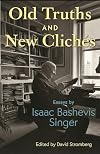
I picked up this collection of Isaac B. Singer's essays, published in 2022, as an adjunct to my current project of reading through all of Singer's novels in order of their publication in English at a rate of two novels per year, and also because I was very interested in seeing what Singer had to say about writing, literature and religion, the topics these essays generally cover. What we learn in the collection's first section is that Singer, when it came to literature, was mostly a show more traditionalist. Published in English in the 1960s & 70s, Singer calls on writers of fiction to focus on plot and character, scorning avant garde, self-referential writing of the "new school" of authors. He's quite erudite in these opinions, of course, but a modern reader may begin to feel Singer overly prescriptive in his opinions and demands. It is when the subject matter of the essays opens up into Singer's writings about the role that religious faith--his ideas of Judaism, the Yiddish tradition, God and mysticism in particular--plays in his writing, and in writing and the creative process in general, that the essays became, for me, quite beautiful and fascinating.
For example, here, from the essay "Literature for Children and Adults," may be the best, most passionate plea for "show don't tell" that I've ever read:
Singer always wrote in Yiddish first, and then had his work translated into English. Many of the essays in this collection were first published in Yiddish in the American Yiddish language newspaper, The Forward. Both Yiddish and Judaism, separately and in wholistic conjunction with each other, are the themes of the section of essays entitled "Yiddish and Jewish Life." Here is an excerpt from the essay "Yiddish and Jewishness."
Although today, sixty years or so on from the writing of this essay, the idea of a Yiddish literature that might "awaken and bind together the Jews of the world" seems wholly illusory, as a Jew I find Singer's impassioned and articulate longing for such a development to be moving in and of itself.
Singer describes in one of the essays here his belief that modern writers of fiction are handicapped by their lack of religious faith, a lack which, for Singer, drains depth and dimension out of one's understanding of the world, human kind, and especially the dilemmas and perplexities baked into the concept of free will. One doesn't {or maybe here I should only speak for myself} need to agree with the specifics of Singer's philosophy to appreciate his conception and his way of describing it. The essay, "Why I Write as I Do: The Philosophy and Definition of a Jewish Writer," is a particular tour de force, as Singer provides a roadmap of his philosophical evolution from a young Jewish religious school student in 1910s Warsaw, balancing the impressions of his parents' deep Jewish religious faith and his older brother's (the author I.J. Singer) growingly strident rationalism, through his disenchantment with the ideas of rationalism in the face of the horrors of World War I and the pogroms throughout Eastern Europe. He reads the great philosophers but can't gain any traction there, either.
In this essay, Singer goes on to describe the philosophy he eventually built ("strictly" he says) for himself. God exists but is unknowable. He writes,
I feel here that I have at once committed two transgressions as a reviewer. I have relied too heavily on quotes, and at far too much length, while at the same time failed to express adequately the reasons why I found so many of these essays, especially in the book's latter half, to be so moving. Anyway, I highly recommend this collection to folks with an interest in the creative process, particularly in the creative writing process, whether or not one has an especial interest in considering these questions within a Jewish context. I think the points Singer makes here are certainly of general enough interest to be thought provoking, though at least a modicum intellectual curiosity about the intersections of Jewish philosophy and history, the Yiddish language and the writing of modern fiction would be a help. Of course, an interest in Isaac B. Singer himself wouldn't go amiss, but I don't think it's crucial to enjoying this collection. show less
For example, here, from the essay "Literature for Children and Adults," may be the best, most passionate plea for "show don't tell" that I've ever read:
"It's remarkable how poor language is, particularly in words able to convey emotions. Even the restricted number of such words that do exist--such as joy, anxiety, happiness, satisfaction, peace of mind, unrest, ambition, love, hate, and so on--are so vague, ambiguous, and unspecific that they are practically meaningless. When we say about people that they are chopping wood, drinking water, eating bread, studying geometry, or that they are letter carriers, tailors, or farmers, we know much more about them than if we were to say that they are pleased, happy, unhappy, in love, astounded, insulted, impatient, loyal, proud, cheerful, or sad. We have to use many words--often hundreds or thousands--to describe a state of mind, and this often requires artistic talent.
Those that take an interest in literature and its methods know that the greatest masters refrained from calling emotions by name and instead described the circumstances that evoked these emotions in their countless variations. What's more, no words grow so stale and cliche-ridden with time as those that express emotions. 'I regret,' 'I am pleased,' 'I am happy,' . . . When we say a certain man is suffering, he might as easily have cancer as have not received enough votes to become the president of a synagogue. . . .
Why aren't there more words to convey our emotions? . . . The reason is that the emotions are so specific--so dependent upon the individual character, personality, time, place and circumstance--that no generalization can describe them, and words are generalizations. Emotion is a phantom that doesn't let itself be weighed, measured, counted or photographed. . . . Emotions, like the molecules of a protoplasm, come in complete sets, chains, or clusters. Most of them aren't expressed but suppressed.
Anyone who wants to write for children must remember that children are frequently no poorer in emotions than adults. Often, a child's emotions are stronger and even more complex, but the child is less inclined to let itself be duped by imprecise words and abstractions. You can speak to grownups about love in general and they will form the illusion that they know what you're talking about, but the child insists on immediately knowing who loves whom. Children want to hear stories because they instinctively know that life is made up of stories. Children know that every love is different and that each encounter between people represents a kind of truth that has never occurred before, nor will ever occur again."
Singer always wrote in Yiddish first, and then had his work translated into English. Many of the essays in this collection were first published in Yiddish in the American Yiddish language newspaper, The Forward. Both Yiddish and Judaism, separately and in wholistic conjunction with each other, are the themes of the section of essays entitled "Yiddish and Jewish Life." Here is an excerpt from the essay "Yiddish and Jewishness."
"Instead of mourning our fate and brooding about who reads our books, we should concentrate all our energies upon the spiritual value of our writing. First let there be a book, and then we can search for a reader. Yiddish must orient itself in two directions, both of which it has avoided until now. Yiddish must orient itself in two directions, both of which it has avoided until now. First, it must become what it was intended to be, an instrument of Jewishness. Second, it must, in the name of Jewishness, encounter the world and all its vanities, illusions, temptations, and adventures. The prophet who wanted to save Nineveh could not remain in the bowels of the whale. He had to come to Nineveh and face it and its inhabitants. A literature that aspires nowadays to awaken and bind together the Jews of the world should not remain restricted to little towns and should not cultivate a primitivist attitude. If a revitalized Jewishness is destine to come into existence with meaning for modern Jews, it must be I'm the form of a great spiritual vision and awakening.
We do not have to be anxious about our voice being heard. Our worry should be whether our voice deserves to be heard. Do we really have something to say and to reveal? We do not have to doubt that there will be ears. The question is rather whether there will be music." (Emphasis mine)
Although today, sixty years or so on from the writing of this essay, the idea of a Yiddish literature that might "awaken and bind together the Jews of the world" seems wholly illusory, as a Jew I find Singer's impassioned and articulate longing for such a development to be moving in and of itself.
Singer describes in one of the essays here his belief that modern writers of fiction are handicapped by their lack of religious faith, a lack which, for Singer, drains depth and dimension out of one's understanding of the world, human kind, and especially the dilemmas and perplexities baked into the concept of free will. One doesn't {or maybe here I should only speak for myself} need to agree with the specifics of Singer's philosophy to appreciate his conception and his way of describing it. The essay, "Why I Write as I Do: The Philosophy and Definition of a Jewish Writer," is a particular tour de force, as Singer provides a roadmap of his philosophical evolution from a young Jewish religious school student in 1910s Warsaw, balancing the impressions of his parents' deep Jewish religious faith and his older brother's (the author I.J. Singer) growingly strident rationalism, through his disenchantment with the ideas of rationalism in the face of the horrors of World War I and the pogroms throughout Eastern Europe. He reads the great philosophers but can't gain any traction there, either.
"Finally my conclusion was that the power of philosophy lay in its attack upon reason, not in the building of systems. None of the systems could be taken seriously. They did not help one manage one's life. The human intellect confronted existence, and existence stubbornly refused to be systematized."
In this essay, Singer goes on to describe the philosophy he eventually built ("strictly" he says) for himself. God exists but is unknowable. He writes,
"God was for me an eternal belle-lettrist. His main attribute was creativity. God was creativity and what he created was made of the same stuff as he. It shared his desire: to create again. I quoted to myself that passage from the Midrash which says that God created and destroyed many worlds before creating this one. Like my brother and myself, God threw his unsuccessful works into the waste basket. . . . Yes, God was a creator, and that which he created had a passion to create. Each atom, each molecule had creative needs and possibilities. The sun, the planets, the fixed stars, the whole cosmos seethed with creativity and creative fantasies. I could feel this turmoil within myself."
I feel here that I have at once committed two transgressions as a reviewer. I have relied too heavily on quotes, and at far too much length, while at the same time failed to express adequately the reasons why I found so many of these essays, especially in the book's latter half, to be so moving. Anyway, I highly recommend this collection to folks with an interest in the creative process, particularly in the creative writing process, whether or not one has an especial interest in considering these questions within a Jewish context. I think the points Singer makes here are certainly of general enough interest to be thought provoking, though at least a modicum intellectual curiosity about the intersections of Jewish philosophy and history, the Yiddish language and the writing of modern fiction would be a help. Of course, an interest in Isaac B. Singer himself wouldn't go amiss, but I don't think it's crucial to enjoying this collection. show less
Lists
Awards


You May Also Like


Associated Authors
Statistics
- Works
- 380
- Also by
- 95
- Members
- 23,870
- Popularity
- #880
- Rating
- 3.9
- Reviews
- 299
- ISBNs
- 1,313
- Languages
- 31
- Favorited
- 78


