
Skila Brown
Author of Caminar
About the Author
Image credit: via Amazon.com
Works by Skila Brown
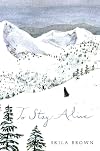
To Stay Alive: Mary Ann Graves and the Tragic Journey of the Donner Party (2016) 108 copies, 7 reviews
Tagged
Common Knowledge
- Nationality
- USA
- Associated Place (for map)
- USA
Members
Reviews
"The men think they’re following a trail ... But I know."
(Full disclosure: I received a free electronic ARC for review through NetGalley. Trigger warning for cannibalism and domestic violence.)
There’s only a little gap between rain and snow,
an open window of sunshine to go,
it all must be timed just right
or it will go all wrong,
like a cup of tea that slips
from too hot to too cold
without leaving enough time
in between to drink it.
###
Imagine.
He almost shot Charles,
thinking he was show more food.
###
When you picture the Donner Party, of course cannibalism is the first thing to come to mind. OF COURSE. After all, it's THE reason this ill-fated expedition made it into the history books: the gruesome lengths that many of the surviving members had to go to to stay alive. And yet murder and cannibalism isn't where their stories begin, or end. There's also romance, adventure, and optimism. A can-do spirit and the pursuit of the American Dream. Even if this dream is built on the backs of those who lived here before us.
(Several times, the caravan's livestock is freed/stolen by "Indians" - who I couldn't help but root for - and Brown briefly mentions the indigenous populations in the Author's Note. When the killing starts, it's the group's Native American guides who are the first to go.)
In To Stay Alive, Skila Brown reconstructs these events through the eyes of Mary Ann Graves, who was nineteen when she and her family set out from their home in Lacon, Illinois to make a new life California. The already-arduous journey turned deadly when the Donner-Reed Party, as it came to be known, found themselves snowbound in the Sierra Nevada mountains during the winter of 1846-47, just a hundred-odd miles shy of their destination. While the majority of the party made camp next to Truckee Lake in anticipation of the spring thaw, supplies quickly dwindled, and so a small group set out on foot to find help. When they ran out food, they were forced to eat the dead to survive - first those felled by starvation and hypothermia, and then those murdered for food. (I'm not sure how closely To Stay Alive reflects reality, but the whole murdering-people-for-food thing seems a little more controversial IRL.)
To Stay Alive is particularly noteworthy for two reasons: 1) it's a novel written in verse and 2) its intended audience, which is middle grade readers.
I'm generally a fan of stories told in verse, and I think it works quite nicely here. This is a harrowing and gory tale, yet the narrative structure - and the simple, sparse language it demands - kind of prevents us from dwelling too heavily on the more sensational details. And this also mirrors the narrator's own experience: think too hard on the fact that you're devouring your former traveling mate's right thigh, and your stomach is apt to reject the nourishment you so need.
Some readers will no doubt consider this subject matter completely inappropriate for younger readers. Yet Brown handles the cannibalism with sensitivity and nuance. On a more personal note, I'd like to say that I hated history in middle and high school. It was easily one of my least favorite subjects, maybe only after geology. As an adult, though, I love it - a renaissance sparked by James Loewen's Lies My Teacher Told Me. History - the real, raw, unsanitized, morally complex history that real people really lived through - is damn fascinating. I would've loved this book as a kid - and, perhaps more importantly, it might have inspired me to do some additional research on my own.
The Graveses were just one of many families that joined the Donner-Reed caravan traveling west that season; but theirs isn't the first (or even the second) name to pop into your head when thinking back on the Donner Party. So Brown's choice to focus on Miss Graves is an interesting one. Described as "the belle of the Donner Party," Mary Anne was linked to several of the eligible bachelors who accompanied her, including John Snyder and Charles Stanton. While this is all conjecture, Brown uses it as an opportunity to inject a little romance (and female empowerment) into the story.
The book begins in spring, with rebirth and excitement and optimism in the air; as exhaustion sets in, summer ushers in tedium: clothes stiff with sweat and grime, feet laid bare by worn shoes, and a sense of doom as supplies run low and the livestock falls away. Yet even this is a source of nostalgic musings when Mary Ann faces the horrors of that winter. Brown expertly captures the shifting moods of the Graves family, and the caravan as whole. I especially loved the unexpected moments of humor between Mary Ann, her sister Sarah, and her newfound friend Amanda.
The landscape is captivating AF; you could almost say that the Great Plains and western deserts are their own characters. I especially loved watching the caravan pass through Missouri; I relocated to the area after I graduated college (and have lived here longer than I care to admit!). I actually adopted dogs six and seven, Mags and her son Finnick, from the St. Joe pound. So the name drop gave me a kick.
I was lucky enough to read an early copy of To Stay Alive, but the formatting threw me off a bit: some of the line breaks were wonky, others questionable; some of the verse even appeared as a block of text, as in a paragraph. I'm certain that this will be cleaned up for the final version, but it did interrupt the flow. I enjoyed the verse, but think it will positively sing when it appears as intended.
http://www.easyvegan.info/2016/10/19/to-stay-alive-by-skila-brown/ show less
(Full disclosure: I received a free electronic ARC for review through NetGalley. Trigger warning for cannibalism and domestic violence.)
There’s only a little gap between rain and snow,
an open window of sunshine to go,
it all must be timed just right
or it will go all wrong,
like a cup of tea that slips
from too hot to too cold
without leaving enough time
in between to drink it.
###
Imagine.
He almost shot Charles,
thinking he was show more food.
###
When you picture the Donner Party, of course cannibalism is the first thing to come to mind. OF COURSE. After all, it's THE reason this ill-fated expedition made it into the history books: the gruesome lengths that many of the surviving members had to go to to stay alive. And yet murder and cannibalism isn't where their stories begin, or end. There's also romance, adventure, and optimism. A can-do spirit and the pursuit of the American Dream. Even if this dream is built on the backs of those who lived here before us.
(Several times, the caravan's livestock is freed/stolen by "Indians" - who I couldn't help but root for - and Brown briefly mentions the indigenous populations in the Author's Note. When the killing starts, it's the group's Native American guides who are the first to go.)
In To Stay Alive, Skila Brown reconstructs these events through the eyes of Mary Ann Graves, who was nineteen when she and her family set out from their home in Lacon, Illinois to make a new life California. The already-arduous journey turned deadly when the Donner-Reed Party, as it came to be known, found themselves snowbound in the Sierra Nevada mountains during the winter of 1846-47, just a hundred-odd miles shy of their destination. While the majority of the party made camp next to Truckee Lake in anticipation of the spring thaw, supplies quickly dwindled, and so a small group set out on foot to find help. When they ran out food, they were forced to eat the dead to survive - first those felled by starvation and hypothermia, and then those murdered for food. (I'm not sure how closely To Stay Alive reflects reality, but the whole murdering-people-for-food thing seems a little more controversial IRL.)
To Stay Alive is particularly noteworthy for two reasons: 1) it's a novel written in verse and 2) its intended audience, which is middle grade readers.
I'm generally a fan of stories told in verse, and I think it works quite nicely here. This is a harrowing and gory tale, yet the narrative structure - and the simple, sparse language it demands - kind of prevents us from dwelling too heavily on the more sensational details. And this also mirrors the narrator's own experience: think too hard on the fact that you're devouring your former traveling mate's right thigh, and your stomach is apt to reject the nourishment you so need.
Some readers will no doubt consider this subject matter completely inappropriate for younger readers. Yet Brown handles the cannibalism with sensitivity and nuance. On a more personal note, I'd like to say that I hated history in middle and high school. It was easily one of my least favorite subjects, maybe only after geology. As an adult, though, I love it - a renaissance sparked by James Loewen's Lies My Teacher Told Me. History - the real, raw, unsanitized, morally complex history that real people really lived through - is damn fascinating. I would've loved this book as a kid - and, perhaps more importantly, it might have inspired me to do some additional research on my own.
The Graveses were just one of many families that joined the Donner-Reed caravan traveling west that season; but theirs isn't the first (or even the second) name to pop into your head when thinking back on the Donner Party. So Brown's choice to focus on Miss Graves is an interesting one. Described as "the belle of the Donner Party," Mary Anne was linked to several of the eligible bachelors who accompanied her, including John Snyder and Charles Stanton. While this is all conjecture, Brown uses it as an opportunity to inject a little romance (and female empowerment) into the story.
The book begins in spring, with rebirth and excitement and optimism in the air; as exhaustion sets in, summer ushers in tedium: clothes stiff with sweat and grime, feet laid bare by worn shoes, and a sense of doom as supplies run low and the livestock falls away. Yet even this is a source of nostalgic musings when Mary Ann faces the horrors of that winter. Brown expertly captures the shifting moods of the Graves family, and the caravan as whole. I especially loved the unexpected moments of humor between Mary Ann, her sister Sarah, and her newfound friend Amanda.
The landscape is captivating AF; you could almost say that the Great Plains and western deserts are their own characters. I especially loved watching the caravan pass through Missouri; I relocated to the area after I graduated college (and have lived here longer than I care to admit!). I actually adopted dogs six and seven, Mags and her son Finnick, from the St. Joe pound. So the name drop gave me a kick.
I was lucky enough to read an early copy of To Stay Alive, but the formatting threw me off a bit: some of the line breaks were wonky, others questionable; some of the verse even appeared as a block of text, as in a paragraph. I'm certain that this will be cleaned up for the final version, but it did interrupt the flow. I enjoyed the verse, but think it will positively sing when it appears as intended.
http://www.easyvegan.info/2016/10/19/to-stay-alive-by-skila-brown/ show less
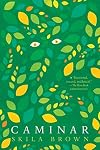
In my opinion this is a great book. First, I liked the style. Caminar is a poetic historical fiction book that took place in the 1980’s during the war in Guatemala. Carlos is a young village boy who enjoys playing like other children his age, but as war is nearing his village, he wonders about the army. His mother doesn’t want him to join any side, but instead she tells him to run, hide, go to his grandmother’s village and then look for her. Carlos obeys his mother but doubts his show more decision. The way the words are organized, are written in ways where the words speak to you. For example,
“the thuds
Stopped
The hisses
Gone
The sound of blades
Faded
I blinked my eyes
Looked around
Smoke thick
Trees thick
I saw
No one”
The spaces in between give enough time for the words to be processed and one can imagine and feel exactly what was happening. Second, I liked the theme. I’ve read many books that have strong Hispanic origins, but never had I read a book about a war from a Hispanic country. Not many people are aware of the different wars from other countries. The main purpose of this book was to shine light on to the people from Guatemala who survived the war in the 1980’s. Many people died, but their voices and stories still linger. show less
“the thuds
Stopped
The hisses
Gone
The sound of blades
Faded
I blinked my eyes
Looked around
Smoke thick
Trees thick
I saw
No one”
The spaces in between give enough time for the words to be processed and one can imagine and feel exactly what was happening. Second, I liked the theme. I’ve read many books that have strong Hispanic origins, but never had I read a book about a war from a Hispanic country. Not many people are aware of the different wars from other countries. The main purpose of this book was to shine light on to the people from Guatemala who survived the war in the 1980’s. Many people died, but their voices and stories still linger. show less
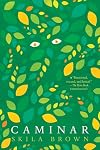
I have honestly never read a book like "Caminar" before. I've read a good bit of poetry in my life, though I don't think that I've ever read a book of narrative poetry. For some reason, the idea that a collection of poetry could even have an ongoing narrative never occurred to me. But, after reading "Caminar," I now have a new-found love for narrative poetry. The book mostly takes place in Guatemala in the 1980's, following a young boy named Carlos who lives in the small town of Chopán. show more Carlos desperately wants to be a man during a time when brave men are needed; the army sets up camp in Chopán, claiming that they are hunting "communists," which ignites fear in the townspeople. When the army leaves, rebels come, sending the town into even more panic. The rebels eventually leave as well, and life seems to be normal again. One day, when Carlos' mother sends him out to fetch something for him, Chopán is raided and its people are massacred, leaving Carlos scared and alone in the nearby forest. Despite wanting to go back into town to see if anyone survived, he heads up the mountain near Chopán, remembering when his mother told him to run up that mountain. As the story progresses, Carlos eventually comes upon the group of rebels that had been in Chopán earlier, and he begins travelling with them. They head towards the town of Patrichál, where Carlos' abuela lives. When they get there, army helicopters bomb the village, but not before Carlos manages to save all of the townspeople and his rebel companions. Carlos makes the decision to part with the rebels even though he wants to fight against the army, since he knows he would be able to help Patrichál with his skills. This marks the point where I believe that Carlos fully grows into a man. One aspect of "Caminar" that really stuck out to me was its formatting. Since poems can be formatted much more freely than regular novels, each poem has distinct structure, spacing, and shape. Certain poems are structured in such a way that they increase tension and drama, since the words are spaced in such a way that your eyes have to move at a certain pace to read them. This greatly increased my enjoyment of the book, and I really wish more narrative books were able to do things like this! I also enjoyed learning about a certain time in Guatemala's history that I knew nothing about. Because I feel that this subject isn't widely known about (at least in America), I would definitely share this book with kids and adults, so they would be aware of this part of history. I think people of all ages would enjoy the book not only because it's educational, but also because it's simply a great book. I feel like "Caminar" really opened my eyes to the world of narrative poetry. There's so many emotions that I experienced while reading, but I feel that fear and hope were the two I felt the most while reading "Caminar." This book sucked me in with tension and fear that I never thought I could feel while reading poetry, and I am so happy that I read it. show less
Going into this book, I knew absolutely nothing about this war; I did not even know it existed. I found that Skila Brown did an excellent job combining fiction, history, Spanish, and poetry all in one book in such a beautiful way. The story being from Carlos' point of view gives the reader a good perspective of the events and hardships through a struggling child's eyes. The way Carlos so obviously becomes a man so independently was amazing to see. I loved the composure of the book which show more included a preface of the historical information in the beginning, and the Spanish glossary in the back. If I were to teach this book to a middle school class I would acknowledge the glossary before the class began the book. Brown made the subject in the book very palatable to a young audience. She did not reveal too much gruesome detail that it becomes inappropriate for the audience, but she did not reveal too little to where it was sugarcoating real historical information. The fear of Carlos losing his mother and his town while being in danger was engrained in me the entire time I was reading. The way that the poems were constructed with space and lines emphasized the mood and the way things were said. I marked some powerful quotes that really stuck out to me in this book. One of these quotes was on page 117 and it is titled "The View". "From the high that I saw / Xuba, the volcano ---- / used to be the thing / our village feared the most." The second quote being on page 113 titled "Helicopter Clouds"; It reads, "I remember / asking Santiago why / they would waste / their bullets, shoot / when they see / nothing. / He said, / 'A man who throws / a thousand stones / into the lake is not / trying to hit / a fish, just / make all the fish / afraid enough to / swim away.'" These two quotes amazed me because of the innocence and corruption that Carlos is experiencing. Next semester I am taking "Reading Poetry" as an elective, and this book made me very excited about the course. I have never read a full novel of poetry, and I am very glad that this was the first. show less
Awards


You May Also Like


Statistics
- Works
- 4
- Members
- 429
- Popularity
- #56,933
- Rating
- 4.2
- Reviews
- 78
- ISBNs
- 22