
Marilyn Nelson
Author of Carver: A Life in Poems
About the Author
Marilyn Nelson is the author of numerous books, including The Cachoeira Tales and Other Poems, The Fields of Praise, and Magnificat. Her honors include three National Book Award Finalist medals, the Frost Medal, the Poets' Prize, and the Boston Globe/Hornbook Award. Nelson is an emeritus professor show more at the University of Connecticut, the former poet laureate of Connecticut, and founder and director of Soul Mountain Retreat. show less
Works by Marilyn Nelson
The Freedom Business: Including a Narrative of the Life & Adventures of Venture, a Native of Africa (2008) — Poems — 50 copies, 1 review
Associated Works
African American Poetry: 250 Years of Struggle and Song (2020) — Contributor — 235 copies, 4 reviews
Poetry Speaks Expanded: Hear Poets Read Their Own Work from Tennyson to Plath (2007) — Contributor — 158 copies, 2 reviews
In Search of Color Everywhere: A Collection of African-American Poetry (1994) — Contributor — 107 copies
Every Shut Eye Ain't Asleep: An Anthology of Poetry by African Americans Since 1945 (1994) — Contributor — 99 copies
This Is the Honey: An Anthology of Contemporary Black Poets (2024) — Contributor — 69 copies, 1 review
Angles of Ascent: A Norton Anthology of Contemporary African American Poetry (2013) — Contributor — 49 copies
Gathering Ground: A Reader Celebrating Cave Canem's First Decade (2006) — Contributor — 30 copies, 1 review
So Much Things to Say: 100 Poets from the First Ten Years of the Calabash International Literary Festival (2010) — Contributor — 26 copies, 1 review
When She Named Fire: An Anthology of Contemporary Poetry by American Women (2008) — Contributor — 15 copies
Tagged
Common Knowledge
- Canonical name
- Nelson, Marilyn
- Other names
- Waniek, Marilyn Nelson
- Birthdate
- 1946-04-26
- Gender
- female
- Education
- University of California, Davis (B.A.)
University of Pennsylvania (M. A.|1970)
University of Minnesota (PhD|1979) - Occupations
- poet
translator
author
professor - Organizations
- Soul Mountain Retreat
University of Connecticut (Proessor Emeritus in English) - Awards and honors
- Kent fellowship (1976)
National Endowment for the Arts fellowships (1981, 1990)
Connecticut Arts Award (1990)
Annisfield-Wolf Award (1992)
Fulbright teaching fellowship (1995)
Contemplative Practices fellowship, American Council of Learned Societies (2000) (show all 13)
J.S. Guggenheim Memorial Foundation fellowship (2001)
Poet Laureate of Connecticut (2001-2006)
Lifetime Achievement honor, Connecticut Book Award (2006)
Frost Medal (2012)
Ruth Lilly Poetry Prize (2017)
Wallace Stevens Award (2022)
NCTE Award for Excellence in Poetry for Children (2017) - Nationality
- USA
- Birthplace
- Cleveland, Ohio, USA
- Associated Place (for map)
- Ohio, USA
Members
Reviews

I don’t know if Nelson invented the format but for me it was a revelation.
Arranged chronologically as signposts in Carver's life, nevertheless each of Nelson's poems stands alone. The opening verses, for example, relay the musings of a mercenary hunting a missing woman, Mary, and Mary’s infant son. The mercenary finds the boy, but not Mary, and is rewarded. That boy is Carver, and the mercenary’s tale of triumph and reward serves as Carver’s “origin story”. (We never hear from show more the mercenary again.) Nelson builds up a picture of Carver from many such poems: singular, isolated, viewed over distance. Carver is revealed to be amiable, curious, generous, and accomplished, but always a person apart.
Nelson in her verse observes Carver's personal qualities, evoking images and tones, avoiding Biblical inventory of ancestral history, Homeric tallies of the dead and their deeds. Seemingly recognizing that most readers will be almost wholly unfamiliar with Carver's biography, however, she appends relevant documentary detail in occasional footnotes: bulleted almanac entries with the necessary detail for a fuller appreciation of a given poem. Not all poems need them; in one instance, a photograph explains an obscure reference. It was not wholly clear to me, in that first poem, what tale the mercenary was telling, or the significance of his hiring, until the poem’s footnote was read, but the story was in the poem, not the footnote.
Typically Nelson's poems assume the perspective of someone not among Carver’s intimates. In this way the poems mimic the position of the book’s readers: outside looking in on a life, telling a story from what little can be known without having participated. There are several exceptions: perhaps three (of almost 60 poems). One is narrated by Carver, "My beloved friend", reading as though we've opened a letter intended for someone else. Another appears to quote from a different letter, then proceeds to observe the letterwriter without comment. "Last Talk with Jim Hardwick" is subtitled “a found poem”; whether wholly invented or taken from a diary, however, is unclear.
I opened this book knowing no more than I learned in primary school: Carver was a black scientist who found countless uses for the humble peanut. Having read it, somehow I know Carver as a person brimming over with talent and insight, a man of science and of spiritual visions, all of this tempered by his gentle demeanor. I am all the better for meeting him. show less
Arranged chronologically as signposts in Carver's life, nevertheless each of Nelson's poems stands alone. The opening verses, for example, relay the musings of a mercenary hunting a missing woman, Mary, and Mary’s infant son. The mercenary finds the boy, but not Mary, and is rewarded. That boy is Carver, and the mercenary’s tale of triumph and reward serves as Carver’s “origin story”. (We never hear from show more the mercenary again.) Nelson builds up a picture of Carver from many such poems: singular, isolated, viewed over distance. Carver is revealed to be amiable, curious, generous, and accomplished, but always a person apart.
Nelson in her verse observes Carver's personal qualities, evoking images and tones, avoiding Biblical inventory of ancestral history, Homeric tallies of the dead and their deeds. Seemingly recognizing that most readers will be almost wholly unfamiliar with Carver's biography, however, she appends relevant documentary detail in occasional footnotes: bulleted almanac entries with the necessary detail for a fuller appreciation of a given poem. Not all poems need them; in one instance, a photograph explains an obscure reference. It was not wholly clear to me, in that first poem, what tale the mercenary was telling, or the significance of his hiring, until the poem’s footnote was read, but the story was in the poem, not the footnote.
Typically Nelson's poems assume the perspective of someone not among Carver’s intimates. In this way the poems mimic the position of the book’s readers: outside looking in on a life, telling a story from what little can be known without having participated. There are several exceptions: perhaps three (of almost 60 poems). One is narrated by Carver, "My beloved friend", reading as though we've opened a letter intended for someone else. Another appears to quote from a different letter, then proceeds to observe the letterwriter without comment. "Last Talk with Jim Hardwick" is subtitled “a found poem”; whether wholly invented or taken from a diary, however, is unclear.
I opened this book knowing no more than I learned in primary school: Carver was a black scientist who found countless uses for the humble peanut. Having read it, somehow I know Carver as a person brimming over with talent and insight, a man of science and of spiritual visions, all of this tempered by his gentle demeanor. I am all the better for meeting him. show less
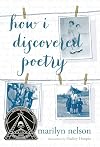
How I Discovered Poetry by Marilyn Nelson is a delightful book of poetry that offers a glimpse into 1950s America through the life of Nelson and her family. Nelson's poetry tells a story that engaged me, made me think, and touched my heart so much I often found myself looking forward to my nightly poetry reading, thinking about the poems throughout the day, and reading more than my allotted number of poems per day. Nelson pulls words together into poetry that weaves world events, American show more society, interracial relations, and family together with finesse and honesty. How I Discovered Poetry is as much about discovering life as it is about discovering poetry. show less
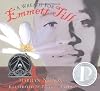
Only Marilyn Nelson can take one of the most hideous events of the 20th century and make of it something glorious: An intricate cycle of 15 sonnets—an Heroic Crown, in which the last sonnet is made up of the first lines of the previous 14. As she considers the lynching of Emmett Till, she uses the traditional “language of flowers,” plaiting rosemary for remembrance, heliotrope for justice, daisies for innocence through her wreath. Individual poems speak in the voices of a witnessing show more tree and of Mamie Till Mobley, and broaden the mourning to include all victims of violence. It’s a towering achievement, one whose power and anger and love will make breath catch in the throat and bring tears to the eyes. Children’s book newcomer Lardy’s illustrations are bold and powerful, appropriately choosing disturbing imagery over depictions that are more realistic. The poem is followed by a brief account of Till’s lynching, glosses on the individual poems and an essay from the artist explaining his choices of imagery. The latter two are rather unfortunate additions, as the words, purified in the crucible of the form, speak eloquently enough on their own. (Poetry. 12+)
-Kirkus Review show less
-Kirkus Review show less
A Wreath for Emmett Till is an extended poem written as a heroic crown of sonnets, a form that uses 15 sonnets in which the last line of each sonnet (or a slight variation of that line) forms the first line of the next sonnet, except for the final sonnet that is made up of the first line of each of the preceding sonnets. Sounds complicated, right? The effect is marvelous though, especially considering that Nelson’s final sonnet is also an acrostic spelling out RIP Emmett Till. Nelson’s show more subject is dark – the brutal murder of an innocent 14-year-old boy, Emmett Till, in the 1960s South brought about because of racial prejudices. Both Nelson’s and Lardy’s illustrations reflect the tragedy of this event but also point toward hope for a better future. Nelson evokes a number of literary predecessors and historical and modern events in her extended sonnet, which she explains in detail in the back of the book (don’t you wish all poems, especially those for young readers, came with a detailed explanation of the poem’s meaning?). There’s also an accompanying artist’s note explaining the meanings behind the illustrations. The supplementary material also includes a brief history of Emmett Till’s life and tragic death for those unfamiliar with the story and print and Web references for those who want to learn even more. Overall, this is a beautifully executed work on an important subject. show less
Lists
Awards


You May Also Like


Associated Authors
Statistics
- Works
- 31
- Also by
- 31
- Members
- 2,628
- Popularity
- #9,769
- Rating
- 4.0
- Reviews
- 124
- ISBNs
- 88
- Languages
- 1