
Julius Lester (1939–2018)
Author of John Henry
About the Author
Julius Bernard Lester was born in St. Louis, Missouri on January 27, 1939. He received a bachelor's degree in English from Fisk University in 1960. He moved to New York to become a folk singer. He performed on the coffeehouse circuit as a singer and guitarist. He released two albums entitled Julius show more Lester in 1965 and Departures in 1967. His first published book, The Folksinger's Guide to the 12-String Guitar as Played by Leadbelly written with Pete Seeger, was published in 1965. In the 1960s, Lester was closely involved as a writer and photographer with the Student Nonviolent Coordinating Committee. He traveled to the South to document the civil rights movement and to North Vietnam to photograph the effects of American bombardment. He also hosted radio and television talk shows in New York City. He wrote more than four dozen nonfiction and fiction books for adults and children. His books for adults included Look Out, Whitey!: Black Power's Gon' Get Your Mama, Revolutionary Notes, All Is Well, Lovesong: Becoming a Jew, and The Autobiography of God. His children's books included To Be a Slave, Sam and the Tigers, and Day of Tears: A Novel in Dialogue, which won the American Library Association's Coretta Scott King Award in 2006. He also wrote reviews and essays for numerous publications including The New York Times Book Review, The Boston Globe, The Village Voice, Dissent, The New Republic, and the Los Angeles Times Book Review. After teaching for two years at the New School for Social Research in New York, Lester joined the faculty of the University of Massachusetts, Amherst in 1971. He originally taught in the Afro-American studies department, but transferred to the Judaic and Near Eastern studies department when Lester criticized the novelist James Baldwin for what he felt were anti-Semitic remarks. He died from complications of chronic obstructive pulmonary disease on January 18, 2018 at the age of 78. (Bowker Author Biography) show less
Image credit: Courtesy of Julius Lester
Series
Works by Julius Lester
More Tales of Uncle Remus: Further Adventures of Brer Rabbit, His Friends, Enemies, and Others (1988) 121 copies, 2 reviews
Ackamarackus : Julius Lester's sumptuously silly fantastically funny fables (2001) 116 copies, 3 reviews
Que mundo maravilhoso! 2 copies
A Christmas Love Story 1 copy
Associated Works
Places I Never Meant to Be : Original Stories by Censored Writers (1999) — Contributor — 337 copies, 7 reviews
James Baldwin: The Last Interview: and other Conversations (The Last Interview Series) (2014) — some editions — 210 copies, 5 reviews
Join In: Multiethnic Short Stories by Outstanding Writers for Young Adults (1993) — Contributor — 85 copies
Tagged
Common Knowledge
- Legal name
- Lester, Julius Bernard
- Birthdate
- 1939-01-27
- Date of death
- 2018-01-18
- Gender
- male
- Education
- Fisk University (BA 1960)
- Occupations
- photographer
musician
political activist
cantor
author
lay religious leader (Jewish) - Organizations
- University of Massachusetts, Amherst
University of Massachusetts, Amherst, Afro-American Studies Department
University of Massachusetts, Amherst, Judaic and Near Eastern Studies Department
Bethel El Synaogue, St. Johnsbury, Vermont, USA (lay religious leader)
New York Times Book Review (contributor)
Village Voice (contributor) (show all 7)
Dissent (contributor) - Awards and honors
- Coretta Scott King Awards
Newberry Honor Medal
National Book Award Finalist
National Book Critics Circle Award Finalist
Caldecott Honor Medal
National Professor of the Year Silver Medal Award, Council for Advancement and Support of Education (1985) (show all 7)
National Jewish Book Award finalist - Cause of death
- COPD
- Nationality
- USA
- Birthplace
- St Louis, Missouri, USA
- Places of residence
- St. Louis, Missouri, USA
Amherst, Massachusetts, USA
Kansas City, Missouri, USA
Nashville, Tennessee, USA
New York, New York, USA
Belchertown, Massachusetts, USA - Place of death
- Palmer, Massachusetts, USA
- Associated Place (for map)
- USA
Members
Reviews
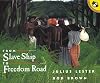
In a visually and emotionally provocative picture book for mature older children and young adults, Julius Lester provides text to go with twenty-two powerful, boldly coloured oil paintings by artist Rod Brown from his exhibit From Slavery to Freedom. Some of Brown’s images are of terrible things—bodies of Africans, who did not survive the Middle Passage, bobbing in the sea; the bleeding welts on a slave’s back; and the silhouette of a hanged slave—and the author uses some charged show more language to accompany these pictures. Lester pushes his readers with probing questions and mental exercises. He asks them to imagine themselves into the experiences of slaves: their transport from West Africa to the New World, their sale at auction, their work in plantation fields and houses, their attempts at running away, participation in the American Civil War, and finally their release from slavery by Lincoln’s 1862 Emancipation Proclamation or by the later arrival of Union soldiers.
Some of Lester’s questions are intended to encourage empathy: “How would I feel if that happened to me?” Some ask readers to look more closely at the paintings and to imagine what the painted figures are thinking or talking about. Still others challenge young people to confront “something more difficult”—for example, what it was like to be “not the victim, but the aggressor.” Lester observes: “We may think that we would never whip someone until their flesh cried blood. But what if you would not be punished for doing it? What if your peers approved and deemed you honorable and good for beating someone?” Regarding the principled white people who assisted fugitive slaves to the northern states or Canada, the author asks: “Would you risk going to jail to help someone you didn’t know? Would you risk losing your freedom to help someone not of your race?”
Thinking about this short, forty-paged book, I find it remarkable how much Lester has managed to pack in. Not only does he cover a great deal of American history, but he also considers larger questions about the importance of stories—those that diminish and those that empower, what it means to be human, and what freedom consists of. “Freedom from slavery was not the same as freedom to do whatever they [slaves] wanted.” It is “a promise we are still learning to keep.” show less
Some of Lester’s questions are intended to encourage empathy: “How would I feel if that happened to me?” Some ask readers to look more closely at the paintings and to imagine what the painted figures are thinking or talking about. Still others challenge young people to confront “something more difficult”—for example, what it was like to be “not the victim, but the aggressor.” Lester observes: “We may think that we would never whip someone until their flesh cried blood. But what if you would not be punished for doing it? What if your peers approved and deemed you honorable and good for beating someone?” Regarding the principled white people who assisted fugitive slaves to the northern states or Canada, the author asks: “Would you risk going to jail to help someone you didn’t know? Would you risk losing your freedom to help someone not of your race?”
Thinking about this short, forty-paged book, I find it remarkable how much Lester has managed to pack in. Not only does he cover a great deal of American history, but he also considers larger questions about the importance of stories—those that diminish and those that empower, what it means to be human, and what freedom consists of. “Freedom from slavery was not the same as freedom to do whatever they [slaves] wanted.” It is “a promise we are still learning to keep.” show less

Author Julius Lester and illustrator Jerry Pinkney join forces in this lovely picture-book retelling of the tall tale of John Henry, the legendary African-American steel driver whose contest with a steam-powered drilling machine has been immortalized in American folk music. Extraordinary from the moment he was born, John Henry amazed the woodland animals, his parents, and the sun and moon themselves. Eventually setting out to make his way in the world, he performed marvelous feats, before show more eventually coming to the mountain in West Virginia where the railroad needed to get through. It was here he triumphed in his race with the machine, only to die in the end...
I have always thought of the story of legendary hero John Henry as being a meditation on humanity and the human spirit - on our strength and weakness, our ability to perform extraordinary deeds, and ultimately, our mortality. Set in a time of increasing mechanization, the story both upholds the idea of the human being as superior to the machine, and undermines it, by highlighting that our great deeds must come at a price, and cannot be sustained forever. Lester's poetic and poignant retelling in this picture-book captures that feeling for me, while Pinkney's gorgeous watercolor illustrations ably bring out the beauty and power of the central figure's story. The artwork here was definitely worthy of the Caldecott Honor it received! I've long been aware of this retelling, and am glad to have finally picked it up and read it. I will have to seek out the one from Ezra Jack Keats, and see how it compared. Recommended to all young tall-tale lovers, as well as to fellow Pinkney fans. show less
I have always thought of the story of legendary hero John Henry as being a meditation on humanity and the human spirit - on our strength and weakness, our ability to perform extraordinary deeds, and ultimately, our mortality. Set in a time of increasing mechanization, the story both upholds the idea of the human being as superior to the machine, and undermines it, by highlighting that our great deeds must come at a price, and cannot be sustained forever. Lester's poetic and poignant retelling in this picture-book captures that feeling for me, while Pinkney's gorgeous watercolor illustrations ably bring out the beauty and power of the central figure's story. The artwork here was definitely worthy of the Caldecott Honor it received! I've long been aware of this retelling, and am glad to have finally picked it up and read it. I will have to seek out the one from Ezra Jack Keats, and see how it compared. Recommended to all young tall-tale lovers, as well as to fellow Pinkney fans. show less
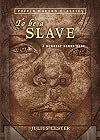
I can't believe this book was published in 1968, won the Newbery in 1969, and none of my teachers in grade 7 and 8 recommended it. It could be such a foundational book for a young teenager. We needed this book.
It's a moving account of slavery collected from the words of people who lived it. The oral histories recorded by the Federal Writers' Project in the 1930s include stories that go back to people who remembered life in Africa before they were kidnapped and sold, usually at secondhand show more but still incredibly vivid. So To Be a Slave is not just history, it's a collection of primary documents. Young people in school could gain an introduction to historiography.
Julius Lester closes with a chapter on life after Emancipation. It didn't get better, for many if not most African Americans. That really drives home how much needed to be done in desegregation and civil rights activism in the 1960s and how much is left to be done today. show less
It's a moving account of slavery collected from the words of people who lived it. The oral histories recorded by the Federal Writers' Project in the 1930s include stories that go back to people who remembered life in Africa before they were kidnapped and sold, usually at secondhand show more but still incredibly vivid. So To Be a Slave is not just history, it's a collection of primary documents. Young people in school could gain an introduction to historiography.
Julius Lester closes with a chapter on life after Emancipation. It didn't get better, for many if not most African Americans. That really drives home how much needed to be done in desegregation and civil rights activism in the 1960s and how much is left to be done today. show less
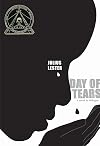
5Q, 4P. Incredibly beautiful and moving short novel about the largest slave auction in history. This book follows Emma, a 12 year old slave girl who takes care of the two children of a plantation owner, as she witnesses the tragedy of having her family, friends, and relations torn away from their homes and sold. The book's narration shifts constantly, allowing for perspectives, flashbacks, and reflections from the plantation owner, his children, the auctioneer, the slaves, Emma's parents, show more and Emma herself. Refreshingly honest and straightforward, the author does not gloss over any of the language or attitudes of the slave owners and former slave owners - there is no glossy ending in which everyone realizes that they were wrong. That said, there is hope. And love. And a great deal of feeling portrayed through a very short novel. show less
Lists
Awards


You May Also Like


Associated Authors
Statistics
- Works
- 56
- Also by
- 10
- Members
- 11,086
- Popularity
- #2,126
- Rating
- 4.0
- Reviews
- 504
- ISBNs
- 295
- Languages
- 7
- Favorited
- 5