
Elizabeth Alexander (1) (1962–)
Author of The Light of the World: A Memoir
For other authors named Elizabeth Alexander, see the disambiguation page.
About the Author
Image credit: CJ Gunther
Works by Elizabeth Alexander
Praise Song for the Day: A Poem for Barack Obama's Presidential Inauguration (2009) 109 copies, 7 reviews
Miss Crandall's School for Young Ladies and Little Misses of Color: Poems (2008) 79 copies, 5 reviews
Associated Works
Whatever Happened to Interracial Love? Stories (2016) — Foreword, some editions — 425 copies, 12 reviews
African American Poetry: 250 Years of Struggle and Song (2020) — Contributor — 237 copies, 4 reviews
Poetry Speaks Expanded: Hear Poets Read Their Own Work from Tennyson to Plath (2007) — Contributor — 158 copies, 2 reviews
In Search of Color Everywhere: A Collection of African-American Poetry (1994) — Contributor — 108 copies
Every Shut Eye Ain't Asleep: An Anthology of Poetry by African Americans Since 1945 (1994) — Contributor — 99 copies
The Poem Is You: 60 Contemporary American Poems and How to Read Them (2016) — Contributor — 78 copies
This Is the Honey: An Anthology of Contemporary Black Poets (2024) — Contributor — 69 copies, 1 review
Angles of Ascent: A Norton Anthology of Contemporary African American Poetry (2013) — Contributor — 49 copies
So We Can Know: Writers of Color on Pregnancy, Loss, Abortion, and Birth (2023) — Contributor — 42 copies
Gathering Ground: A Reader Celebrating Cave Canem's First Decade (2006) — Contributor — 30 copies, 1 review
So Much Things to Say: 100 Poets from the First Ten Years of the Calabash International Literary Festival (2010) — Contributor — 26 copies, 1 review
The Artists' and Writers' Cookbook: A Collection of Stories with Recipes (2016) — Contributor — 19 copies
We Refuse to Be Silent: Women's Voices on Justice for Black Men (2024) — Contributor — 16 copies, 9 reviews
Two Cents: Works on Paper by Jean-Michel Basquiat, Poetry by Kevin Young (1995) — Contributor — 3 copies
Tagged
Common Knowledge
- Birthdate
- 1962-05-30
- Gender
- female
- Education
- Yale University (BA ∙ 1984)
Boston University (MA ∙ 1987)
University of Pennsylvania (PhD ∙ English ∙ 1992) - Occupations
- poet
professor
playwright
essayist - Organizations
- Cave Canem Poetry Workshop
- Awards and honors
- Quantrell Award for Excellence in Undergraduate Teaching (1997)
George Kent Award (1997)
National Endowment for the Arts Fellowship
Pushcart Prize for Poetry (1998 ∙ 2000 ∙ 2001)
John Simon Guggenheim Foundation Fellowship (2002)
Alphonse Fletcher, Sr. Fellowship (2005) (show all 10)
Jackson Prize for Poetry (2007)
Mildred Londa Weisman Fellow (2007-2008)
President Barack Obama Inauguration Poem (2009)
Anisfield-Wolf Book Award for Lifetime Achievement in Poetry (2010) - Agent
- Royce Carlton
- Nationality
- USA
- Birthplace
- Harlem, New York, USA
- Places of residence
- Harlem, Manhattan, New York, New York, USA
Washington, D.C., USA
New Haven, Connecticut, USA - Associated Place (for map)
- USA
Members
Reviews
The Light of the World: A Memoir (Pulitzer Prize in Letters: Biography Finalist) by Elizabeth Alexander
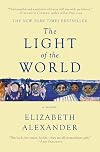
"The Light of the World: a Memoir" is a tough book to categorize, never mind rate. It's about the death of the author's husband, but is not really a work of reportage. When she says that he "never told a lie," it's pretty obvious that she doesn't mean it literally. The author herself is a poet, but this is prose, though the book is built of out what she calls "poet chapters," none of them longer than four or five pages, and many much shorter. Because her artist was a chef and restauranteur, show more it's got some recipes in it, but, well, you get the picture. Heck, I'm not even a complete story: this isn't a therapy memoir, at the end of which the author has moved on, presumably to a place much better than where she started. Alexander doesn't tell us if she remarried after Ficre's death, when or if she became open to dating, or even identify herself as a widow. This is a book about a life, or two lives, or maybe about how two lives were shared. Whatever it is, it's a lovely read.
Alexander insists in her afterword that she began "The Light of the World" so wracked by grief that, when she started writing it, she was just writing word by word, barely able to form or understand the sounds she was trying to record. But none of that confusion shows in the final product, which is measured, lyrical, often extremely insightful, and suffused that Alexander felt for her deceased husband, Ficre. She knows, as all good writers do, that she is writing against time: there are moments in "The Light of the World" where she talks about the keenness of her loss and Ficre's intermittent appearances in her dreams. But I also think that there are some deeper themes here. Ficre is a first-generation American, a polyglot who fell in love with his wife while speaking her fourth language. Alexander, in turn, is a native-born American and a second-generation New Yorker, she knows enough history to be able to feel the pull of her immigrant roots. Theirs is an immigrant story, and their family is, on both sides, a sprawling trans-continental network that has, against all odds, survived the rougher patches of history. Alexander seems aware just how miraculous this survival, which made her and Ficre's love possible, and, sometimes, she seems to want to teach her readers a lesson in gratitude, or at tell them that they should appreciate serendipity when it comes knocking.
Then again, there's a part of me that suspects that she might have wirtten this one just for herself and would have been perfectly happy if it had ended up in her files and never seen the inside of a publisher's office. While the author describes Ficre's grave in "The Light of the World" -- and notes that it's a double plot -- the book is also a monument of sorts to the man himself. Alexander is less interested in casting a critical is also a monument to the man himself. And he does indeed sound like a remarkable individual: a former soldier, chef, and artist, one really does finish this book thinking that he had much more to give us when he died at the age of fifty. After reading this one, I'm sure that many readers will agree that it's a shame that Ficre died so young. But the reason why I think that she wrote "The Light of the World" mostly for herself and her -- let's say it! -- soulmate is that she makes the point that she loved her husband and was loved by him and that that, therefore, as long as she exists, their love exists in the present tense, a permanent part of her self and experience. It's hard to make a more optimistic case for the centrality of love to human experience than that, and the author does it beautifully. Recommended. show less
Alexander insists in her afterword that she began "The Light of the World" so wracked by grief that, when she started writing it, she was just writing word by word, barely able to form or understand the sounds she was trying to record. But none of that confusion shows in the final product, which is measured, lyrical, often extremely insightful, and suffused that Alexander felt for her deceased husband, Ficre. She knows, as all good writers do, that she is writing against time: there are moments in "The Light of the World" where she talks about the keenness of her loss and Ficre's intermittent appearances in her dreams. But I also think that there are some deeper themes here. Ficre is a first-generation American, a polyglot who fell in love with his wife while speaking her fourth language. Alexander, in turn, is a native-born American and a second-generation New Yorker, she knows enough history to be able to feel the pull of her immigrant roots. Theirs is an immigrant story, and their family is, on both sides, a sprawling trans-continental network that has, against all odds, survived the rougher patches of history. Alexander seems aware just how miraculous this survival, which made her and Ficre's love possible, and, sometimes, she seems to want to teach her readers a lesson in gratitude, or at tell them that they should appreciate serendipity when it comes knocking.
Then again, there's a part of me that suspects that she might have wirtten this one just for herself and would have been perfectly happy if it had ended up in her files and never seen the inside of a publisher's office. While the author describes Ficre's grave in "The Light of the World" -- and notes that it's a double plot -- the book is also a monument of sorts to the man himself. Alexander is less interested in casting a critical is also a monument to the man himself. And he does indeed sound like a remarkable individual: a former soldier, chef, and artist, one really does finish this book thinking that he had much more to give us when he died at the age of fifty. After reading this one, I'm sure that many readers will agree that it's a shame that Ficre died so young. But the reason why I think that she wrote "The Light of the World" mostly for herself and her -- let's say it! -- soulmate is that she makes the point that she loved her husband and was loved by him and that that, therefore, as long as she exists, their love exists in the present tense, a permanent part of her self and experience. It's hard to make a more optimistic case for the centrality of love to human experience than that, and the author does it beautifully. Recommended. show less
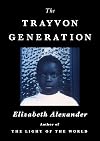
It would be hard for me to be critical of this book, but fortunately, I do not need to be. I listened to it in audiobook form and progressed through it quickly. It reads like a series of sermons – jeremiads of sorts – admonishing us to value human life in every form. As alluded to in the title, they focus on concerns about race. As an American white man, I am systemically complicit and privileged in this situation even though I take personal efforts to promote human worth. Elizabeth show more Alexander shows me ways where I and we can do better.
In my personal time, I mentor a black young man in high school, and he is like a son to me. I wonder what his future might be. I try to keep him involved in good things (like school, football, and volunteering), but also am worried about social forces against him – forces that did not fight against me. He can overcome, I sincerely believe, but it requires more, focused effort. By identifying these forces and giving voice to their resistance, Alexander makes me a better mentor.
Alexander, herself a mother of two black men, was a professor at Yale University and is now president of the prestigious Mellon Foundation. Her words are eloquent, informed, and honest. She points out details that quietly contribute to racism’s hold on American society, all the way down to images on a historic painting. While I’m not sure representing such as a part of our collective past is implicitly wrong, what’s clearly wrong is that these ideas, rooted in white supremacy, still feature prominently in American society. We must continue to undo them.
For me personally, the first step, a recurring step, is listening. Too many white people like to imaging America is a colorblind society. We’ve made progress, yes, but we’ve got a ways to go. Listening to others’ struggles and being willing to advocate for them are things that I want to do, regardless of their skin color. Empathy makes me a better human; it makes humans a better species. Well-articulated essays, like Alexander’s here, help us in that quest. Though the night can be long and doubt can be strong, her words give me hope that we shall indeed overcome. show less
In my personal time, I mentor a black young man in high school, and he is like a son to me. I wonder what his future might be. I try to keep him involved in good things (like school, football, and volunteering), but also am worried about social forces against him – forces that did not fight against me. He can overcome, I sincerely believe, but it requires more, focused effort. By identifying these forces and giving voice to their resistance, Alexander makes me a better mentor.
Alexander, herself a mother of two black men, was a professor at Yale University and is now president of the prestigious Mellon Foundation. Her words are eloquent, informed, and honest. She points out details that quietly contribute to racism’s hold on American society, all the way down to images on a historic painting. While I’m not sure representing such as a part of our collective past is implicitly wrong, what’s clearly wrong is that these ideas, rooted in white supremacy, still feature prominently in American society. We must continue to undo them.
For me personally, the first step, a recurring step, is listening. Too many white people like to imaging America is a colorblind society. We’ve made progress, yes, but we’ve got a ways to go. Listening to others’ struggles and being willing to advocate for them are things that I want to do, regardless of their skin color. Empathy makes me a better human; it makes humans a better species. Well-articulated essays, like Alexander’s here, help us in that quest. Though the night can be long and doubt can be strong, her words give me hope that we shall indeed overcome. show less
The Light of the World: A Memoir (Pulitzer Prize in Letters: Biography Finalist) by Elizabeth Alexander
The most beautiful love story I have ever read. This book is a memoir of Alexander's late husband who died suddenly just after his 50th birthday. I am still surprised that my primary emotion when reading was not grief over Ficre's death, but happiness over knowing that such a man existed, that he found the perfect partner for him, and that they lived that experience with joy and vigor and generosity.
This may go without saying, but Alexander's writing is simply perfect.
This may go without saying, but Alexander's writing is simply perfect.
The Light of the World: A Memoir (Pulitzer Prize in Letters: Biography Finalist) by Elizabeth Alexander
Although it is difficult to believe that any marriage could be as perfect as that of the author and her late husband Ficre Ghebreyesus, the reader can willingly suspend belief in order to absorb her message of the need to live in each moment appreciatively and slowly. Alexander, a Black poet and academic, and Ficre, an African from Eritrea, master of seven languages, chef, painter, poet, meet as it truly was destiny, and live for fifteen years together with their sons in Hamden, CT, in the show more midst of a divine garden he makes of their yard, with plants and flowers from all over the world. A particularly endearing passage is Elizabeth practicing how to pronounce Fiche's name by listening and reciting it while playing back his first voice mail message. They are beloved by friends and neighbors and are well on their way towards their goals of launching their sons and moving to NYC when Fiche dies of a sudden heart attack on a treadmill in their basement. The family’s loss, the impact on their wider family and community, and her slow recovery are entwined with her memories and her dreams of Fiche sending her loving messages. This gentle, sad, glowing retelling of their luck in love is so touching and maybe, for those who have lost a spouse, comforting balm to reread again and again. show less
Lists
Awards


You May Also Like


Associated Authors
Statistics
- Works
- 19
- Also by
- 33
- Members
- 1,582
- Popularity
- #16,313
- Rating
- 4.1
- Reviews
- 49
- ISBNs
- 50
- Languages
- 1
- Favorited
- 1