
Tracy K. Smith
Author of Life on Mars: Poems
About the Author
Tracy K. Smith is the author of three previous books of poetry, including Life on Mars, winner of the Pulitzer Prize; Duende, winner of the James Laughlin Award; and The Body's Question, winner of the Cave Canem Poetry Prize. She is also the editor of an anthology, American Journal: Fifty Poems for show more Our Time, and the author of a memoir, Ordinary Light, which was a finalist for the National Book Award. In 2017, Smith was appointed Poet Laureate of the United States. She teaches at Princeton University. show less
Image credit: Tina Chang
Works by Tracy K. Smith
There's a Revolution Outside, My Love: Letters from a Crisis (2021) — Editor; Contributor — 55 copies
Associated Works
African American Poetry: 250 Years of Struggle and Song (2020) — Contributor — 237 copies, 4 reviews
The Universe in Verse: 15 Portals to Wonder through Science and Poetry (2024) — Contributor — 163 copies, 8 reviews
This Is the Honey: An Anthology of Contemporary Black Poets (2024) — Contributor — 69 copies, 1 review
Gathering Ground: A Reader Celebrating Cave Canem's First Decade (2006) — Contributor — 30 copies, 1 review
When She Named Fire: An Anthology of Contemporary Poetry by American Women (2008) — Contributor — 15 copies
Tagged
Common Knowledge
- Birthdate
- 1972-04-16
- Gender
- female
- Occupations
- poet
- Awards and honors
- Whiting Writers' Award (2005)
Phi Beta Kappa
Poet Laureate Consultant in Poetry to the Library of Congress (2017-2019) - Nationality
- USA
- Birthplace
- Falmouth, Massachusetts, USA
- Places of residence
- Fairfield, California, USA
- Associated Place (for map)
- USA
Members
Reviews
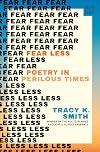
This book quietly and insistently demands that the reader slow down, absorb, contemplate - not rush through in one big gulp like a mystery novel. Smith examines others' poems and her own to help those who enjoy poetry but aren't always sure what a poem "means" discover the true meaning: that poets are seeking more than they are declaring or explaining, asking questions more than answering them. That poems require us to pay attention, encourage us to notice. That they might be different from show more one reading to another, or one reader to another, depending what the reader brings each time.
The final section, Be Ye Not Afraid ("A brief guide to what poems are and how they do what they do") points to the title of the poem, the speaker, imagery, form, and closure. Smith explains poetry-specific vocabulary (e.g. trochee, rising and falling meter, prosody) as she uses it, without condescension and as a tool for understanding how a poem is crafted, and why the author might have made that choice.
Quotes
Ask a poem what it means, and it will reply, Tell me what you noticed. (Falling Awake, 19)
A poem - any poem that slows you down, draws you in and invites you to recognize, wonder, and remember - is a gateway to the inner life: the unique, uncompromised, unincorporated, unmappable territory we each possess and by which...we are connected to all that is. (33-34)
Beyond literature, beyond works of art, poems are acts of attention. (49)
To be drawn back into the world after a period of intense bereavement was, for me, a matter of becoming acquainted with the ways my own suffering connected me to others. The time it takes for loss to sink in. The first morning you wake up not to the shock of remembering that someone you love has died, but knowing this as familiar and incontrovertible fact. (Any Small Thing Can Save You, 59)
Group allegiance, while promising a sense of safety and acceptance in community, also functions as a harbor against individual accountability. (66)
Language is the engine for our sense of the possible, and poetry fosters a productive impatience with the notion that things as they are cannot or must not be made to change. (80)
After all, a large part of the consolation of poetry as an art form stems from the fact that poems emerge not from what poets have already mastered, but from the lessons and realizations they are compelled to reckon and struggle with - sometimes over and over again throughout the span of a life. (Who Are You?, 85)
I believe that an equation must exist in which Language + Time = Clarity. (96)
...the utmost hope of a poem, which is to foster for its reader the freedom to envision another way of being in the world - or another world in which to be. (110)
In every life, aren't there questions, upsets, and delights it is neither sufficient to feel once and let go, nor to live through and process on your own? We don't just want to tell our stories, after all, we want reassurance that they matter and make sense. We want help living as and with ourselves. (Be ye not afraid, 121)
Does childhood end? Yes. And no. [John] Yau's poem reminds us that it surfaces again and again in a life, familiar and strange, through the fragments and figments of memory. (135)
Poets live in a perpetual and ongoing conversation: invoking and responding to their predecessors, inspiring and activating literary offspring, and even circling back to revise and reinvent themselves via alternate forms, new subject matter, and ever-evolving values. (143)
Awe is...the aim toward which a poet's voice, via their poems, is pitched. (145)
Poetry is a place writers go not to deposit meaning, but to seek it out. (final sentence, 151) show less
The final section, Be Ye Not Afraid ("A brief guide to what poems are and how they do what they do") points to the title of the poem, the speaker, imagery, form, and closure. Smith explains poetry-specific vocabulary (e.g. trochee, rising and falling meter, prosody) as she uses it, without condescension and as a tool for understanding how a poem is crafted, and why the author might have made that choice.
Quotes
Ask a poem what it means, and it will reply, Tell me what you noticed. (Falling Awake, 19)
A poem - any poem that slows you down, draws you in and invites you to recognize, wonder, and remember - is a gateway to the inner life: the unique, uncompromised, unincorporated, unmappable territory we each possess and by which...we are connected to all that is. (33-34)
Beyond literature, beyond works of art, poems are acts of attention. (49)
To be drawn back into the world after a period of intense bereavement was, for me, a matter of becoming acquainted with the ways my own suffering connected me to others. The time it takes for loss to sink in. The first morning you wake up not to the shock of remembering that someone you love has died, but knowing this as familiar and incontrovertible fact. (Any Small Thing Can Save You, 59)
Group allegiance, while promising a sense of safety and acceptance in community, also functions as a harbor against individual accountability. (66)
Language is the engine for our sense of the possible, and poetry fosters a productive impatience with the notion that things as they are cannot or must not be made to change. (80)
After all, a large part of the consolation of poetry as an art form stems from the fact that poems emerge not from what poets have already mastered, but from the lessons and realizations they are compelled to reckon and struggle with - sometimes over and over again throughout the span of a life. (Who Are You?, 85)
I believe that an equation must exist in which Language + Time = Clarity. (96)
...the utmost hope of a poem, which is to foster for its reader the freedom to envision another way of being in the world - or another world in which to be. (110)
In every life, aren't there questions, upsets, and delights it is neither sufficient to feel once and let go, nor to live through and process on your own? We don't just want to tell our stories, after all, we want reassurance that they matter and make sense. We want help living as and with ourselves. (Be ye not afraid, 121)
Does childhood end? Yes. And no. [John] Yau's poem reminds us that it surfaces again and again in a life, familiar and strange, through the fragments and figments of memory. (135)
Poets live in a perpetual and ongoing conversation: invoking and responding to their predecessors, inspiring and activating literary offspring, and even circling back to revise and reinvent themselves via alternate forms, new subject matter, and ever-evolving values. (143)
Awe is...the aim toward which a poet's voice, via their poems, is pitched. (145)
Poetry is a place writers go not to deposit meaning, but to seek it out. (final sentence, 151) show less
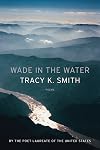
This is the best book yet from our poet laureate [[Tracy K. Smith]], even better than her Pulitzer Prize-winning [Life on Mars]. Trumpsters will want to avoid it, as she burns the pages with tales of racism and dismay with the current regime.
The worst in us having taken over
And broken the rest utterly down.
(From "An Old Story).
They plundered her youth, then moved on.
These awful, awful men. The ones
Whose wealth is a kind of filth.
(From "The World is Your Beautiful Younger Sister"). Her show more amazing "Angels" poem, with two "grizzled" angels in "leather biker gear", is one you're going to want to read.. This book also features a number of found poems based on heavily researched letters and other documents from African-American Civil War soldiers and their families (complete with original spellings).
From, "I Will Tell You the Truth About This":
Mr abarham lincon
I wont to know sir if you please
whether I can have my son relest
from the arme he is all the subport
I have now his father is Dead
and his brother that wase all
the help I had he has been wonded
twise he has not had nothing to send me yet
now I am old and my head is blossaming
for the grave and if you do I hope
the lord will bless you and me
tha say that you will simpethise
with the poor he be long to the
eight rigmat colard troops
he is a sarjent
mart welcom is his name
Some poems are wonders from her childhood, including this one, "Urban Youth", that ends with her learning to ride a bike:
But it was you and Dad and Mike teaching me to ride,
Running along beside until you didn't have to hold on.
Who was afraid? The hedge thrummed with bees
That only sang. Every happy thing I've known,
You held, or ran alongside not having to hold.
****
This is a beautifully composed book; I loved it. show less
The worst in us having taken over
And broken the rest utterly down.
(From "An Old Story).
They plundered her youth, then moved on.
These awful, awful men. The ones
Whose wealth is a kind of filth.
(From "The World is Your Beautiful Younger Sister"). Her show more amazing "Angels" poem, with two "grizzled" angels in "leather biker gear", is one you're going to want to read.. This book also features a number of found poems based on heavily researched letters and other documents from African-American Civil War soldiers and their families (complete with original spellings).
From, "I Will Tell You the Truth About This":
Mr abarham lincon
I wont to know sir if you please
whether I can have my son relest
from the arme he is all the subport
I have now his father is Dead
and his brother that wase all
the help I had he has been wonded
twise he has not had nothing to send me yet
now I am old and my head is blossaming
for the grave and if you do I hope
the lord will bless you and me
tha say that you will simpethise
with the poor he be long to the
eight rigmat colard troops
he is a sarjent
mart welcom is his name
Some poems are wonders from her childhood, including this one, "Urban Youth", that ends with her learning to ride a bike:
But it was you and Dad and Mike teaching me to ride,
Running along beside until you didn't have to hold on.
Who was afraid? The hedge thrummed with bees
That only sang. Every happy thing I've known,
You held, or ran alongside not having to hold.
****
This is a beautifully composed book; I loved it. show less
What I mean is, I don’t always understand the poems I admire. Sometimes poems operate by a logic that eludes me, the way dreams often do. from Fear Less by Tracy K. Smith
“You don’t always have to understand it,” Tracy K. Smith assures us about poetry. Let the poem take you on a journey. It will lead you to notice something, feel something, understand something. A poem might save your life or open your eyes to startling new insights. Don’t be afraid of poetry.
Smith leads readers show more into understanding poetry that moves her, drawing from poems classic and contemporary. She tells us her reactions and insights to the poem and considers how the poem’s structure and words and images work to create her reaction. She discusses how poetry addresses significant personal and cultural issues.
Smith was six when she read Old Hogan’s Goat, which appeared in my earliest piano book lesson as Bill Grogan’s Goat. It is a humorous story of a goat who eats six red shirts and is tied to the railroad track for punishment, but coughing up the shirts flags down the train just in time. And yet out of this slight comedic lyric, Smith finds deeper meaning about “power, surrender, repentance,(…)reconciliation.”
It is stunning to read the depths Smith draws from the poems. And yet, in the end, I do love the way a poem cleaves my heart, a precious flame, mystical, even if I don’t understand it deeply.
Thanks to the publisher for a free book through NetGalley. show less
“You don’t always have to understand it,” Tracy K. Smith assures us about poetry. Let the poem take you on a journey. It will lead you to notice something, feel something, understand something. A poem might save your life or open your eyes to startling new insights. Don’t be afraid of poetry.
Smith leads readers show more into understanding poetry that moves her, drawing from poems classic and contemporary. She tells us her reactions and insights to the poem and considers how the poem’s structure and words and images work to create her reaction. She discusses how poetry addresses significant personal and cultural issues.
Smith was six when she read Old Hogan’s Goat, which appeared in my earliest piano book lesson as Bill Grogan’s Goat. It is a humorous story of a goat who eats six red shirts and is tied to the railroad track for punishment, but coughing up the shirts flags down the train just in time. And yet out of this slight comedic lyric, Smith finds deeper meaning about “power, surrender, repentance,(…)reconciliation.”
It is stunning to read the depths Smith draws from the poems. And yet, in the end, I do love the way a poem cleaves my heart, a precious flame, mystical, even if I don’t understand it deeply.
Thanks to the publisher for a free book through NetGalley. show less
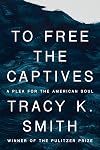
I claim these people and admit their claim upon me.
from To Free the Captives by Tracy K. Smith
“Communion across the mortal divide,” Smith calls it. The link backwards through time to all who came before, those connected by blood, and those connected by common experience and history.
There is strength in this connection, and a circle of family that transcends family.
I have felt that connection. I have traced my ancestors back centuries. To a man persecuted for his Anabaptist faith, show more imprisoned and his goods confiscated, his family turned out of their home. To the Swiss Brethren minister, an early settler in the Shenandoah Valley, who was scalped and killed, along with his wife and several children; luckily, my distant grandmother escaped.
Smith traces her ancestors back to the Middle Passage, to slavery, to Sunflower, Alabama where he father was born. Hers were Freed people–not Free–for there is a difference between born to freedom and being granted freedom. Freedom granted can be taken away.
Smith shares her family history and her own story in this luminous memoir. She struggles with the past and shares her concerns for the future awaiting her sons. She responds to the murder of black youth and wonders about America’s future.
This hauntingly beautiful and moving memoir offers revelation and hope for the future.
Thanks to the publisher for a free book. show less
from To Free the Captives by Tracy K. Smith
“Communion across the mortal divide,” Smith calls it. The link backwards through time to all who came before, those connected by blood, and those connected by common experience and history.
There is strength in this connection, and a circle of family that transcends family.
I have felt that connection. I have traced my ancestors back centuries. To a man persecuted for his Anabaptist faith, show more imprisoned and his goods confiscated, his family turned out of their home. To the Swiss Brethren minister, an early settler in the Shenandoah Valley, who was scalped and killed, along with his wife and several children; luckily, my distant grandmother escaped.
Smith traces her ancestors back to the Middle Passage, to slavery, to Sunflower, Alabama where he father was born. Hers were Freed people–not Free–for there is a difference between born to freedom and being granted freedom. Freedom granted can be taken away.
Smith shares her family history and her own story in this luminous memoir. She struggles with the past and shares her concerns for the future awaiting her sons. She responds to the murder of black youth and wonders about America’s future.
This hauntingly beautiful and moving memoir offers revelation and hope for the future.
Thanks to the publisher for a free book. show less
Lists
Awards


You May Also Like


Associated Authors
Statistics
- Works
- 18
- Also by
- 19
- Members
- 2,206
- Popularity
- #11,624
- Rating
- 4.2
- Reviews
- 57
- ISBNs
- 52
- Languages
- 1
- Favorited
- 4