
Natasha Trethewey
Author of Memorial Drive: A Daughter's Memoir
About the Author
Natasha Trethewey was the Poet Jaureate Consultant in Poetry to the Library of Congress, 2012-14. She is the author of four collections of poetry: Thrall, Domestic Work, Bellocq's Ophelia, and Native Cuard, for which she was awarded the Pulitzer Prize. She is the Robert W. Woodruff Professor of show more English and Creative Writing at Emory University. show less
Image credit: Courtesy of the Pulitzer Prizes.
Works by Natasha Trethewey
White Lies 1 copy
Associated Works
The Fire This Time: A New Generation Speaks about Race (2016) — Contributor — 1,028 copies, 32 reviews
African American Poetry: 250 Years of Struggle and Song (2020) — Contributor — 237 copies, 4 reviews
New Daughters of Africa: An International Anthology of Writing by Women of African Descent (2019) — Contributor — 116 copies, 1 review
This Is the Honey: An Anthology of Contemporary Black Poets (2024) — Contributor — 69 copies, 1 review
Bullets Into Bells: Poets and Citizens Respond to Gun Violence (2017) — Contributor — 68 copies, 3 reviews
Angles of Ascent: A Norton Anthology of Contemporary African American Poetry (2013) — Contributor — 48 copies
Gathering Ground: A Reader Celebrating Cave Canem's First Decade (2006) — Contributor — 30 copies, 1 review
So Much Things to Say: 100 Poets from the First Ten Years of the Calabash International Literary Festival (2010) — Contributor — 26 copies, 1 review
When She Named Fire: An Anthology of Contemporary Poetry by American Women (2008) — Contributor — 15 copies
Two Worlds Walking: Short Stories, Essays, and Poetry by Writers of Mixed Heritages (1996) — Contributor — 9 copies
Tagged
Common Knowledge
- Canonical name
- Trethewey, Natasha
- Birthdate
- 1966-04-12
- Gender
- female
- Education
- University of Georgia (BA|English)
Hollins University (MA ∙ English and Creative Writing)
University of Massachusetts (MFA ∙ Poetry) - Occupations
- poet
professor - Organizations
- Fellowship of Southern Writers (2009)
Dark Room Collective
Auburn University (professor)
Emory University (professor) - Awards and honors
- Poet Laureate Consultant in Poetry to the Library of Congress (2012-2014)
Poet Laureate of Mississippi (2012)
Rockefeller Foundation fellowship (2004)
Guggenheim fellowship (2003)
Lillian Smith Book Award
Bunting Fellowship (show all 10)
National Endowment for the Arts fellowships
Honorary doctorate, Hollins University (2010)
Honorary degree, Delta State University
Georgia Writers Hall of Fame - Nationality
- USA
- Birthplace
- Gulfport, Mississippi, USA
- Places of residence
- Gulfport, Mississippi, USA
Atlanta, Georgia, USA
Athens, Georgia, USA
Decatur, Georgia, USA
Evanston, Illinois, USA - Associated Place (for map)
- Georgia, USA
Members
Reviews
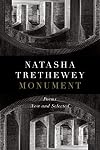
I am getting a head start on reading for National Poetry Month with this retrospective volume of Natasha Trethewey's poetry. She is one of my favorite poets, and I don't say that lightly, because I find most poetry makes the simple hard to understand merely by being in verse. Trethewey's poetry is not at all like that. Whether she's reflecting on history as in "Native Guard," delving into her personal history as in "Early Evening, Frankfort, Kentucky" or delving into artwork in one of her show more ekphrastic poems, she has a way of choosing just the right word of phrase to say precisely what she means in a way the reader understands, and occasionally taking one's breath away. Though I've read three of her collections so only some of the poems were truly new to me, they were nonetheless fresh and I occasionally had to reread a couple of times to just to let it fully sink in. A phenomenal collection I highly recommend to anyone. show less
Beyond Katrina: A Meditation on the Mississippi Gulf Coast (Sarah Mills Hodge Fund Publication) by Natasha Trethewey
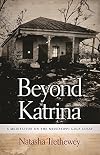
Natasha Trethewey, the newly selected Poet Laureate of the U.S. and current professor of English and Creative Writing at Emory University, wrote this book, a combination of memoir, history and elegy, about her family and other residents of the Mississippi Gulf Coast, which was decimated by Hurricane Katrina in 2005. Although the eye of the storm made landfall in Louisiana, the brunt of the winds and the associated coastal flooding was felt in cities such as Bay St. Louis, Pass Christian, show more Gulfport and Biloxi, Mississippi. Over 90% of these towns were flooded, and nearly all private residences and public buildings suffered moderate to severe damage. At least 235 people were killed in the state as a result, and the region continues to feel the effects of the storm seven years later.
Natasha Trethewey grew up in North Gulfport, a mostly African-American portion of the city, from the mid 1960s to the early 1980s. Although racial segregation and discrimination were formally outlawed by the time of her birth, its effects lingered in the Deep South for many years afterward, as many blacks continued to frequent stores owned by their neighbors and to employ local tradesmen. One of these men was her great-uncle Willie Dixon, known as "Son" to his family and neighbors, who used his earnings from his nightclub to repair, buy and sell rental properties in North Gulfport.
Her younger brother Joe took over the family business after Uncle Son's death, and his story of steady success followed by devastation and tragedy is the central element of this book. Although federal funding was allocated to the residents of central and southern Mississippi, government officials and local politicians diverted much of it to the wealthier residents and the growing tourism and gambling industries, leaving behind many of the region's poorer residents, both black and white. Trethewey describes the mismanagement of the coastal wetland by local developers, and how it contributed to the disastrous flooding. People employed as service workers by the gambling industry and in construction suffered mightily, as they lost their jobs and their homes in less than 48 hours. Many got their jobs back, but property owners increased their rents substantially, leaving many of them unable to pay their bills. Local businessmen, particularly in North Gulfport, were also adversely affected, due to ordinances that permitted the city to take over their land if their owners decided to rebuild their damaged properties.
Trethewey occasionally refers to an unforgettable quote by fellow Southern writer Flannery O'Connor to describe the feelings she and her fellow Mississippians shared in the aftermath of Katrina: "Where you came from is gone. Where you thought you were going to never was there. And where you are is no good unless you can get away from it." She also uses her own formidable skill as a poet to tell the stories of those whose lives have been ruined by the storm, such as Tamara Jones in her poem Believer:
She closes the book on a hopeful note, despite the serious trouble her brother finds himself in, and the reader is left with the sense that the survivors of Katrina will fight back against the odds and reclaim their livelihood and the heritage that defines the proud state of Mississippi.
Beyond Katrina is a powerful testament and statement by this uniquely gifted writer, whose talent will now receive wider attention in her new position as America's poet laureate. I look forward to her upcoming poetry collection Thrall, which will explore her relationship with her white father, a professor of poetry at Hollins College, and her experiences as an interracial child and young woman. show less
Natasha Trethewey grew up in North Gulfport, a mostly African-American portion of the city, from the mid 1960s to the early 1980s. Although racial segregation and discrimination were formally outlawed by the time of her birth, its effects lingered in the Deep South for many years afterward, as many blacks continued to frequent stores owned by their neighbors and to employ local tradesmen. One of these men was her great-uncle Willie Dixon, known as "Son" to his family and neighbors, who used his earnings from his nightclub to repair, buy and sell rental properties in North Gulfport.
Her younger brother Joe took over the family business after Uncle Son's death, and his story of steady success followed by devastation and tragedy is the central element of this book. Although federal funding was allocated to the residents of central and southern Mississippi, government officials and local politicians diverted much of it to the wealthier residents and the growing tourism and gambling industries, leaving behind many of the region's poorer residents, both black and white. Trethewey describes the mismanagement of the coastal wetland by local developers, and how it contributed to the disastrous flooding. People employed as service workers by the gambling industry and in construction suffered mightily, as they lost their jobs and their homes in less than 48 hours. Many got their jobs back, but property owners increased their rents substantially, leaving many of them unable to pay their bills. Local businessmen, particularly in North Gulfport, were also adversely affected, due to ordinances that permitted the city to take over their land if their owners decided to rebuild their damaged properties.
Trethewey occasionally refers to an unforgettable quote by fellow Southern writer Flannery O'Connor to describe the feelings she and her fellow Mississippians shared in the aftermath of Katrina: "Where you came from is gone. Where you thought you were going to never was there. And where you are is no good unless you can get away from it." She also uses her own formidable skill as a poet to tell the stories of those whose lives have been ruined by the storm, such as Tamara Jones in her poem Believer:
The house is in need of repair, but is—
for now, she says—still hers. After the storm,
she laid hands on what she could reclaim:
the iron table and chairs etched with rust,
the dresser laced with mold. Four years gone,
she's still rebuilding the shed out back
and sorting through boxes in the kitchen—
a lifetime of bills and receipts, deeds
and warranties, notices spread on the table,
a barrage of red ink: PAST DUE. Now,
the house is a museum of everything.
she can't let go: a pile of photographs—
fused and peeling—water stains blurring
the handwritten names of people she can't recall;
a drawer crowded with funeral programs
and church fans, rubber bands and paper sleeves
for pennies, nickels, and dimes. What stops me
is the stack of tithing envelopes. Reading my face,
she must know I can't see why—even now—
she tithes, why she keeps giving to the church.
First seek the kingdom of God, she tells me,
and the rest will follow—says it twice
as if to make a talisman of her words.
She closes the book on a hopeful note, despite the serious trouble her brother finds himself in, and the reader is left with the sense that the survivors of Katrina will fight back against the odds and reclaim their livelihood and the heritage that defines the proud state of Mississippi.
Beyond Katrina is a powerful testament and statement by this uniquely gifted writer, whose talent will now receive wider attention in her new position as America's poet laureate. I look forward to her upcoming poetry collection Thrall, which will explore her relationship with her white father, a professor of poetry at Hollins College, and her experiences as an interracial child and young woman. show less
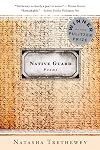
The title of Natasha Trethewey's Native Guard refers to the Lousiana Native Guards, a black regiment fighting for the Union in the Civil War. As explained in historical notes at the end, in one incident black Union soldiers and officers were fired on by white Union soldiers, and black dead on the battlefield were ignored by white Union soldiers because of their color.
Much of the collection deals with remembering and forgetting. A Native Guard's journal in the title poem begins in November, show more 1862:
"Truth be told, I do not want to forget anything of my former life: the landscape's
song of bondage - dirge in the river's throat
where it churns into the Gulf, wind in trees
choked with vines."
Along the way, he realizes to some extent tables have turned:
"We know it is our duty now to keep
white men as prisoners - rebel soldiers,
would-be masters. We're all bondsmen here, each
to the other. Freedom has gotten them captivity."
The narrator knows that for anyone in that war, freedom could become captivity, and the Native Guard remained on uncertain ground. It turns out his journal is an "official duty", and he is told "it's best to spare most detail, but I know there are things which must be accounted for." At the end of it all will be the dead on the field, and, though he does not want to forget, the dead will be forgotten.
So much is forgotten in our lives, in our history. In the first section, she mourns the loss of her mother, and thinks about the loss of family history that attends that personal loss. In the horrifying "What is Evidence", the evidence is
"Not the fleeting bruises she'd cover with make-up . . . nor the quiver
in the voice she'd steady, leaning
into a pot of bones on the stove."
In the rhythmic, formal poem "Myth", she deals with the irony of her dead mother reappearing in her dreams:
"The Erebus [god of darkness] I keep you in - still trying -
I make between my slumber and my waking.
It's as if you slipped through some rift, a hollow.
I was asleep while you were dying."
The second section deals predominantly with racism, with Nina Simone's "Everybody knows about Mississippi" as its epitaph. When a child reads the sign "Greenwood Library for Negroes", all she can say to slow-moving history is, "you are late". Yet that literacy is critical throughout this collection, with one soldier, for example, giving mixed-race officer Francis Dumas a tip of the hat for having "taught me to read and write," while at the same time making us think of mixed-race author Alexander Dumas, who lived such a different life.
The third section has the poet reflecting on growing up as a mixed-race child. How her parents broke Missouri miscegenation laws, the shame she now feels because as a little girl she said nothing when taught in school that before the war slaves were "happy . . . The slaves were clothed, fed and better off under a master's care." She constantly questions her parents "why and why and why" , and comes home from school to ask them the meaning of "peckerwood and nigger lover, half-breed and zebra." Oh my.
This Pulitzer Prize winner is bravely written, and often heart-breaking. It reminds us once more about how much should not be forgotten, and the devastating damage we can inflict on each other. show less
Much of the collection deals with remembering and forgetting. A Native Guard's journal in the title poem begins in November, show more 1862:
"Truth be told, I do not want to forget anything of my former life: the landscape's
song of bondage - dirge in the river's throat
where it churns into the Gulf, wind in trees
choked with vines."
Along the way, he realizes to some extent tables have turned:
"We know it is our duty now to keep
white men as prisoners - rebel soldiers,
would-be masters. We're all bondsmen here, each
to the other. Freedom has gotten them captivity."
The narrator knows that for anyone in that war, freedom could become captivity, and the Native Guard remained on uncertain ground. It turns out his journal is an "official duty", and he is told "it's best to spare most detail, but I know there are things which must be accounted for." At the end of it all will be the dead on the field, and, though he does not want to forget, the dead will be forgotten.
So much is forgotten in our lives, in our history. In the first section, she mourns the loss of her mother, and thinks about the loss of family history that attends that personal loss. In the horrifying "What is Evidence", the evidence is
"Not the fleeting bruises she'd cover with make-up . . . nor the quiver
in the voice she'd steady, leaning
into a pot of bones on the stove."
In the rhythmic, formal poem "Myth", she deals with the irony of her dead mother reappearing in her dreams:
"The Erebus [god of darkness] I keep you in - still trying -
I make between my slumber and my waking.
It's as if you slipped through some rift, a hollow.
I was asleep while you were dying."
The second section deals predominantly with racism, with Nina Simone's "Everybody knows about Mississippi" as its epitaph. When a child reads the sign "Greenwood Library for Negroes", all she can say to slow-moving history is, "you are late". Yet that literacy is critical throughout this collection, with one soldier, for example, giving mixed-race officer Francis Dumas a tip of the hat for having "taught me to read and write," while at the same time making us think of mixed-race author Alexander Dumas, who lived such a different life.
The third section has the poet reflecting on growing up as a mixed-race child. How her parents broke Missouri miscegenation laws, the shame she now feels because as a little girl she said nothing when taught in school that before the war slaves were "happy . . . The slaves were clothed, fed and better off under a master's care." She constantly questions her parents "why and why and why" , and comes home from school to ask them the meaning of "peckerwood and nigger lover, half-breed and zebra." Oh my.
This Pulitzer Prize winner is bravely written, and often heart-breaking. It reminds us once more about how much should not be forgotten, and the devastating damage we can inflict on each other. show less
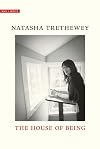
Real Rating: 4.8* of five
The Publisher Says: An exquisite meditation on the geographies we inherit and the metaphors we inhabit, from Pulitzer Prize winner and nineteenth U.S. poet laureate Natasha Trethewey
In a shotgun house in Gulfport, Mississippi, at the crossroads of Highway 49, the legendary highway of the Blues, and Jefferson Street, Natasha Trethewey learned to read and write. Before the land was a crossroads, however, it was a a farming settlement where, after the Civil War, a group show more of formerly enslaved women, men, and children made a new home.
In this intimate and searching meditation, Trethewey revisits the geography of her childhood to trace the origins of her writing life, born of the need to create new metaphors to inhabit “so that my story would not be determined for me.” She recalls the markers of history and culture that dotted the horizons of her the Confederate flags proudly flown throughout Mississippi; her gradual understanding of her own identity as the child of a Black mother and a white father; and her grandmother’s collages lining the hallway, offering glimpses of the world as it could be. With the clarity of a prophet and the grace of a poet, Trethewey offers up a vision of writing as of our own lives and the stories of the vanished, forgotten, and erased.
I RECEIVED A DRC FROM THE PUBLISHER VIA NETGALLEY. THANK YOU.
My Review: Her mother sang her John Brown's Body as a means of soothing the Chernobyl-level burn of racism as the mixed-"race" (how I hate that we still use that horrible, divisive pseudoscientific calumny by default!) family drove past confederate battle flags! (Frequently, then, in her home state of Mississippi...it's on their state flag.) Now, how horrifying an image is that, when that damn dirge that starts with the words "John Brown's body lies a-moldering in the grave" is soothing?! This is the absolute most powerful statement of the horrors the convulsively dying Jim Crow system of the US South inflicted on people of color (another digression: This locution is deeply uncomfortable to white people like me who, in the 1960s, were loudly excoriated for calling African-Americans either "black" or "colored" in the South).
Returning to my scheduled review: Poet Trethewey was unique, then, from birth forward. She was the product of miscegenation (that horrifying term I'm glad I need to define) as her parents were not legally married in her home state until Loving v. Virginia was decided a year after she was born. Her Black matrilineal line was stuffed with women who had embodied what can only be called triumphs of the will, and all the merrier to say that when I know that this application of that phrase will horrify Nazi true believers. The influence of her poet/professor papa is no doubt there somewhere, but Poet Trethewey does not work on one cylinder, she fires on all of 'em.
I can imagine some astute observers wondering what the devil is going on here. Mudge HATES poetry!some are thinking. Some are quite correct. I loathe the experience of reading poetry the same way I loathe the experience of riding the bus. It's crammed with stuff I don't want to know about, it's uncomfortably tight to sit in and in no way offers me enough room or seats designed for my spatial dimensions, it sways and janks and judders over each crack in the road, and the air conditioning almost never works until it suddenly blasts January-on-the-Siberian-steppe gales for a few seconds.
That does not mean I am insensible to its influence on most people. I see it, I get it, I am not of that group but they are quite clearly expressing their approval. And, lest we lose sight of this, the book is Poet Trethewey's *writing about writing*; that is always interesting. As I suspect all good writing must be, the life led by the child-poet became the matter of the adult; in her experiences of racism, white supremacy, and Southern culture, she speaks with a voice that reaches deep into the National Conversation of the US as well as into the emotional cores of many, many, many people.
At under 100pp, this is an afternoon's read for me. It was a pleasure to read...if you've read Memorial Drive, her memoir, you'll know that Poet Trethewey is gifted in prose writing, and if you haven't what is wrong with you?!...and measures her life against her need to write, like a learner sounding out words in a new language. The essay is part of Yale University Press's terrific series of writerly essays. I have only one cavil to report. I felt the origin of the essay as a lecture rather more than I would have liked. I put it down to the poet's innate aurality of expression. I ended up needing to read passages aloud to understand what was being said, and that was also the only way I felt I *got* the Southernness of the Trethewey household. (This also got me very dark glowers from my roommate who is hostile to things literary.)
Hardly a sin, but for this reader a discomfort I could've done without. So can I recommend it to you? Absolutely, and I do. I think anyone interested in writers as entities who transmute life into Art, people intrigued by the shocking dichotomies of Southern culture, and women who batten on reading the success and happiness of their fellows, will all be especially gruntled. I hope men who wonder what hell the fuss about this poetry thing is will give it a read, too, as well as any and all people of color looking to gladden themselves on the success of their own. show less
The Publisher Says: An exquisite meditation on the geographies we inherit and the metaphors we inhabit, from Pulitzer Prize winner and nineteenth U.S. poet laureate Natasha Trethewey
In a shotgun house in Gulfport, Mississippi, at the crossroads of Highway 49, the legendary highway of the Blues, and Jefferson Street, Natasha Trethewey learned to read and write. Before the land was a crossroads, however, it was a a farming settlement where, after the Civil War, a group show more of formerly enslaved women, men, and children made a new home.
In this intimate and searching meditation, Trethewey revisits the geography of her childhood to trace the origins of her writing life, born of the need to create new metaphors to inhabit “so that my story would not be determined for me.” She recalls the markers of history and culture that dotted the horizons of her the Confederate flags proudly flown throughout Mississippi; her gradual understanding of her own identity as the child of a Black mother and a white father; and her grandmother’s collages lining the hallway, offering glimpses of the world as it could be. With the clarity of a prophet and the grace of a poet, Trethewey offers up a vision of writing as of our own lives and the stories of the vanished, forgotten, and erased.
I RECEIVED A DRC FROM THE PUBLISHER VIA NETGALLEY. THANK YOU.
My Review: Her mother sang her John Brown's Body as a means of soothing the Chernobyl-level burn of racism as the mixed-"race" (how I hate that we still use that horrible, divisive pseudoscientific calumny by default!) family drove past confederate battle flags! (Frequently, then, in her home state of Mississippi...it's on their state flag.) Now, how horrifying an image is that, when that damn dirge that starts with the words "John Brown's body lies a-moldering in the grave" is soothing?! This is the absolute most powerful statement of the horrors the convulsively dying Jim Crow system of the US South inflicted on people of color (another digression: This locution is deeply uncomfortable to white people like me who, in the 1960s, were loudly excoriated for calling African-Americans either "black" or "colored" in the South).
Returning to my scheduled review: Poet Trethewey was unique, then, from birth forward. She was the product of miscegenation (that horrifying term I'm glad I need to define) as her parents were not legally married in her home state until Loving v. Virginia was decided a year after she was born. Her Black matrilineal line was stuffed with women who had embodied what can only be called triumphs of the will, and all the merrier to say that when I know that this application of that phrase will horrify Nazi true believers. The influence of her poet/professor papa is no doubt there somewhere, but Poet Trethewey does not work on one cylinder, she fires on all of 'em.
I can imagine some astute observers wondering what the devil is going on here. Mudge HATES poetry!some are thinking. Some are quite correct. I loathe the experience of reading poetry the same way I loathe the experience of riding the bus. It's crammed with stuff I don't want to know about, it's uncomfortably tight to sit in and in no way offers me enough room or seats designed for my spatial dimensions, it sways and janks and judders over each crack in the road, and the air conditioning almost never works until it suddenly blasts January-on-the-Siberian-steppe gales for a few seconds.
That does not mean I am insensible to its influence on most people. I see it, I get it, I am not of that group but they are quite clearly expressing their approval. And, lest we lose sight of this, the book is Poet Trethewey's *writing about writing*; that is always interesting. As I suspect all good writing must be, the life led by the child-poet became the matter of the adult; in her experiences of racism, white supremacy, and Southern culture, she speaks with a voice that reaches deep into the National Conversation of the US as well as into the emotional cores of many, many, many people.
At under 100pp, this is an afternoon's read for me. It was a pleasure to read...if you've read Memorial Drive, her memoir, you'll know that Poet Trethewey is gifted in prose writing, and if you haven't what is wrong with you?!...and measures her life against her need to write, like a learner sounding out words in a new language. The essay is part of Yale University Press's terrific series of writerly essays. I have only one cavil to report. I felt the origin of the essay as a lecture rather more than I would have liked. I put it down to the poet's innate aurality of expression. I ended up needing to read passages aloud to understand what was being said, and that was also the only way I felt I *got* the Southernness of the Trethewey household. (This also got me very dark glowers from my roommate who is hostile to things literary.)
Hardly a sin, but for this reader a discomfort I could've done without. So can I recommend it to you? Absolutely, and I do. I think anyone interested in writers as entities who transmute life into Art, people intrigued by the shocking dichotomies of Southern culture, and women who batten on reading the success and happiness of their fellows, will all be especially gruntled. I hope men who wonder what hell the fuss about this poetry thing is will give it a read, too, as well as any and all people of color looking to gladden themselves on the success of their own. show less
Lists
Awards


You May Also Like


Associated Authors
Statistics
- Works
- 13
- Also by
- 30
- Members
- 2,239
- Popularity
- #11,457
- Rating
- 4.2
- Reviews
- 82
- ISBNs
- 47
- Languages
- 4
- Favorited
- 4

