

Claudia Rankine
Author of Citizen: An American Lyric
About the Author
Claudia Rankine was born in Jamaica in 1963. She received a B.A. in English from Williams College and a M.F.A. in poetry from Columbia University. She is the author of several collections of poetry including Don't Let Me Be Lonely, Plot, and The End of the Alphabet. Nothing in Nature is Private won show more the Cleveland State Poetry Prize and Citizen: An American Lyric won the 2015 Forward Prize for Best Collection. She has edited numerous anthologies including American Women Poets in the Twenty-First Century: Where Lyric Meets Language and American Poets in the Twenty-First Century: The New Poetics. She is currently the Henry G. Lee Professor of English at Pomona College. She won a 2015 Forward Prize for Poetry which carried a monetary award of $21,570. (Bowker Author Biography) show less
Series
Works by Claudia Rankine
The Racial Imaginary: Writers on Race in the Life of the Mind (2015) — Editor — 60 copies, 2 reviews
Eleven More American Women Poets in the 21st Century: Poetics Across North America (2012) — Editor — 12 copies
Rankine, Claudia Archive 1 copy
Sound & Fury/ Blunt Object 1 copy
Cidadã: uma lírica americana 1 copy
Associated Works
The Fire This Time: A New Generation Speaks about Race (2016) — Contributor — 1,027 copies, 32 reviews
African American Poetry: 250 Years of Struggle and Song (2020) — Contributor — 235 copies, 4 reviews
New Daughters of Africa: An International Anthology of Writing by Women of African Descent (2019) — Contributor — 115 copies, 1 review
The Poem Is You: 60 Contemporary American Poems and How to Read Them (2016) — Contributor — 78 copies
This Is the Honey: An Anthology of Contemporary Black Poets (2024) — Contributor — 69 copies, 1 review
So Much Things to Say: 100 Poets from the First Ten Years of the Calabash International Literary Festival (2010) — Contributor — 26 copies, 1 review
Bodies Built for Game: The Prairie Schooner Anthology of Contemporary Sports Writing (2019) — Contributor — 7 copies
Tagged
Common Knowledge
- Birthdate
- 1963
- Gender
- female
- Education
- Williams College
Columbia University - Occupations
- poet
playwright - Awards and honors
- Fellowship of the Academy of American Poets (2005)
- Agent
- Frances Coady
- Nationality
- Jamaica
USA - Places of residence
- Kingston, Jamaica
New York, New York, USA - Map Location
- USA
Members
Reviews
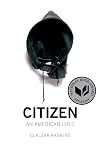
"The world out there insisting on this only half concerns you. What happens to you doesn't belong to you, only half concerns you. It's not yours. Not yours only."
A part of me feels like I shouldn't even review this book.
I don't need to. There are enough white opinions on pieces like Rankine's to last a thousand lifetimes.
But I want you to read it.
Claudia Rankine's book is activism and love and compassion at its best. This piece is organic, it flows like blood and sweat and tears flow. show more Rankine incorporates a variety of mediums, poetry, essays, photos, artwork and it feels cohesive and comprehensive. She tackles racial micro-aggressions in the most eloquent, the most simple way.
But I don't have to tell you that.
I want you to hear it from her, in her voice.
Her voice is powerful. It's a cry, a whisper, a shout, a scream, and all I can say is that I hear her. I feel that voice.
And I want you to feel it, too.
(P.S. I will say it's definitely worth buying a hard copy of this book because reading it on an e-reader doesn't give you the full view of the artworks, but that's just my personal opinion.) show less
A part of me feels like I shouldn't even review this book.
I don't need to. There are enough white opinions on pieces like Rankine's to last a thousand lifetimes.
But I want you to read it.
Claudia Rankine's book is activism and love and compassion at its best. This piece is organic, it flows like blood and sweat and tears flow. show more Rankine incorporates a variety of mediums, poetry, essays, photos, artwork and it feels cohesive and comprehensive. She tackles racial micro-aggressions in the most eloquent, the most simple way.
But I don't have to tell you that.
I want you to hear it from her, in her voice.
Her voice is powerful. It's a cry, a whisper, a shout, a scream, and all I can say is that I hear her. I feel that voice.
And I want you to feel it, too.
(P.S. I will say it's definitely worth buying a hard copy of this book because reading it on an e-reader doesn't give you the full view of the artworks, but that's just my personal opinion.) show less
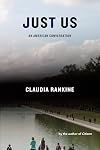
Despite agreeing with most everything in the book, I never fully engaged with it, and I suspect the distracting format played a part in that. Oddly, the text of the book is printed only on the right-hand page of each two-page spread. The left-hand page is reserved for photos, graphs, fact checks, notes on the text's sources, or, many times, it's just blank. The photos sometimes seemed a bit too random or dull, with a chapter about air travel offering bland shots out a plane window or show more passengers sitting in airports and another about hair giving way too many close-ups of dyed-blond locks. Still, at a certain point in the book, I found myself anticipating the left page more than the right, with its tantalizing social media posts and the original sources taking me down mental side roads more interesting than the occasionally too deeply introspective and too poetic main narrative. show less
I read this immediately after reading the chapter on the KKK in Eric Foner's Reconstruction: America's Unfinished Revolution 1863-1877, and this was an excellent follow-up to that despair. Not that Just Us is reassuring, exactly, or soothing, at all. It is more "the progress we have yet to make" than "the progress we have made," but still.
Maybe it's that this is something I can do something about? Not something removed from me by 150 years of history, but something I can engage with now. show more Because this book is a call to engage with whiteness.
While Rankine doesn't engage (exactly) the "look at all the white people behaving badly in this book, I do not do those things, look at how much closer I am to good already," she DOES directly engage the other big white response to books/workshops/etc. on race: "look, I took the white emotional roller coaster, I felt big things, and it was big work and I have DONE SOMETHING and I can rest now."
If there is a central thesis to this book it is that there is no one big action we can take and all be done with racism now. That it never should be about making people comfortable (especially white people), because it is inherently messy. There is no knowing/understanding/addressing it entire. That it's being able to exist in the conversation in discomfort, to do the close reading without knowing the answers, or even where the answers may take us. That there can't be one answer, but only done one by one, poem by poem, text by text, person by person. show less
Maybe it's that this is something I can do something about? Not something removed from me by 150 years of history, but something I can engage with now. show more Because this book is a call to engage with whiteness.
While Rankine doesn't engage (exactly) the "look at all the white people behaving badly in this book, I do not do those things, look at how much closer I am to good already," she DOES directly engage the other big white response to books/workshops/etc. on race: "look, I took the white emotional roller coaster, I felt big things, and it was big work and I have DONE SOMETHING and I can rest now."
If there is a central thesis to this book it is that there is no one big action we can take and all be done with racism now. That it never should be about making people comfortable (especially white people), because it is inherently messy. There is no knowing/understanding/addressing it entire. That it's being able to exist in the conversation in discomfort, to do the close reading without knowing the answers, or even where the answers may take us. That there can't be one answer, but only done one by one, poem by poem, text by text, person by person. show less
https://www.nytimes.com/2019/07/17/magazine/white-men-privilege.html
*
A powerful work of prose poetry and imagery exploring what it is to be black in America today. The most memorable parts for me were the short scenes of casual, thoughtless racism - white people cutting in line ("I didn't see you there"), using inappropriate slang, not wanting the seat next to a black person on a train or bus or plane. The section on Serena Williams' reaction to several blatantly unfair calls at the US Open show more was also memorable. (See also: Too Fat, Too Slutty, Too Loud.)
Quotes
...this type of anger: the anger built up through experience and the quotidian struggles against dehumanization every brown or black person lives simply because of skin color...
You begin to think...that this other kind of anger is really a type of knowledge: the type that both clarifies and disappoints. It responds to insult and attempted erasure simply by asserting presence, and the energy required to present, to react, to assert is accompanied by a visceral disappointment: a disappointment in the sense that no amount of visibility will alter the ways in which one is perceived. (24)
Perhaps this is how racism feels no matter the context - randomly the rules everyone else gets to play by no longer apply to you, and to call this out....is to be called insane, crass, crazy. (re: Serena Williams, 30)
The world is wrong. You can't put the past behind you. It's buried in you; it's turned your flesh into its own cupboard. Not everything remembered is useful but it all comes from the world to be stored in you. (63)
How difficult is it for one body to feel the injustice wheeled at another? (116)
The distance between you and him is thrown into relief: bodies moving through the same life differently. (117)
That man who is forced each day to snatch his manhood, his identity, out of the fire of human cruelty that rages to destroy it... (re: Zidane, 126)
because white men can't
police their imagination
black men are dying (135)
The worst injury is feeling you don't belong so much
to you-- (146) show less
*
A powerful work of prose poetry and imagery exploring what it is to be black in America today. The most memorable parts for me were the short scenes of casual, thoughtless racism - white people cutting in line ("I didn't see you there"), using inappropriate slang, not wanting the seat next to a black person on a train or bus or plane. The section on Serena Williams' reaction to several blatantly unfair calls at the US Open show more was also memorable. (See also: Too Fat, Too Slutty, Too Loud.)
Quotes
...this type of anger: the anger built up through experience and the quotidian struggles against dehumanization every brown or black person lives simply because of skin color...
You begin to think...that this other kind of anger is really a type of knowledge: the type that both clarifies and disappoints. It responds to insult and attempted erasure simply by asserting presence, and the energy required to present, to react, to assert is accompanied by a visceral disappointment: a disappointment in the sense that no amount of visibility will alter the ways in which one is perceived. (24)
Perhaps this is how racism feels no matter the context - randomly the rules everyone else gets to play by no longer apply to you, and to call this out....is to be called insane, crass, crazy. (re: Serena Williams, 30)
The world is wrong. You can't put the past behind you. It's buried in you; it's turned your flesh into its own cupboard. Not everything remembered is useful but it all comes from the world to be stored in you. (63)
How difficult is it for one body to feel the injustice wheeled at another? (116)
The distance between you and him is thrown into relief: bodies moving through the same life differently. (117)
That man who is forced each day to snatch his manhood, his identity, out of the fire of human cruelty that rages to destroy it... (re: Zidane, 126)
because white men can't
police their imagination
black men are dying (135)
The worst injury is feeling you don't belong so much
to you-- (146) show less
Lists
Awards


You May Also Like


Associated Authors
Statistics
- Works
- 24
- Also by
- 15
- Members
- 4,043
- Popularity
- #6,224
- Rating
- 4.2
- Reviews
- 97
- ISBNs
- 74
- Languages
- 9
- Favorited
- 6