
Paisley Rekdal
Author of The Night My Mother Met Bruce Lee: Observations on Not Fitting In
About the Author
Paisley Rekdal teaches at the University of Wyoming & is the author of "The Night My Mother Met Bruce Lee." (Bowker Author Biography) Paisley Rekdal was born and raised in Seattle, Washington. She has received Fulbright and Hopwood awards, and she has published poems and essays in Poetry Northwest show more and The Sonora Review, among other periodicals. A book of her poetry, A Crash of Rhinos, will be published this year by the University of Georgia Press. Rekdal lives in Laramie, Wyoming, and teaches poetry at the University of Wyoming. (Bowker Author Biography) show less
Image credit: Marion Ettlinger
Works by Paisley Rekdal
Associated Works
Indelible in the Hippocampus: Writings from the Me Too Movement (2019) — Contributor — 36 copies, 1 review
When She Named Fire: An Anthology of Contemporary Poetry by American Women (2008) — Contributor — 15 copies
Tagged
Common Knowledge
- Gender
- female
- Nationality
- USA
- Places of residence
- Seattle, Washington, USA
Salt Lake City, Utah, USA - Associated Place (for map)
- USA
Members
Reviews
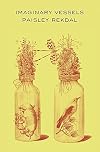
The ambition of this collection didn't strike me until three-quarters of the way through the text. Rekdal's fourth section of the book, "Shooting the Skulls: A Wartime Devotional," is a fascinating blend of the inspiration of excavation, bringing memory into conversation with the imagined voices of catalogued but nameless bones. Her second part, "Go West," too, shows an impressive display of poetic form and capturing a diversity of perspectives on Mae West. "Imaginary Vessels" brings to show more light the meaning we imbue in artifacts and what they can also draw out of the individual regardless of their location in place or history. show less
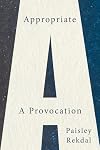
Interesting reflections on cultural/racial “appropriation” in fiction writing and how the complexities defeat any attempt to sum them up. There is harmful cultural appropriation—such works “traffic in stereotypes that link bodily and cultural difference with innate physical and mental characteristics. They are works that ask us not just to perceive a character’s racial difference but to see how those external characteristics stand in metaphorically for more profound interior show more difference.” But you can’t just “avoid stereotyping” and call it a day, given all the other considerations involved in imagining a person in their fullness and imagining a world around them (in which, if you’re doing any kind of realism, race and culture matter to that world).
Rekda also suggests that writing and reading with empathy should not stand it for the “harder task of working for social change.” Also, empathy to Rekda seems often to be offered by its proponents as a precursor to color-blindness, as if the end goal was a world where “bodily and cultural difference might be something we should finally ignore.” If we focus too much on empathy, we will end up conflating “the underrepresented community with its marginalization and pain. These in turn risk becoming the community’s authenticating narratives, both for readers outside and within the community. Because if writers outside a marginalized community imagine its trauma poorly, writers from within the community will be spurred to respond, to correct the record.” Importantly, Rekda frames this feedback loop as also driven by what publishers/the literary marketplace recognizes as “authentic.” (Rekda also connects this to transcultural/racial hoaxes, who regularly “choose the experience of being traumatized,” suggesting “they see the condition of being a person of color or a woman as itself traumatic.” But the fakes are only making literal what the rest of the culture rewards: white understandings of others’ identities are primary. “[F]akes are inevitable when we fetishize difference without working to understand it, or to sensitively represent it in our histories.”)
I found this particularly provocative: “[o]ne obvious but little practiced way to write about the trauma of racism, say, would be for a White writer to imagine the position of the racist. Why not write about slavery from the slaver’s perspective? Remarkably few writers have done this, perhaps because it is more appealing to imagine yourself as the victim rather than the perpetrator of violence, perhaps because the White writer fears that the audience would do to her what it tends to do to the writer of color, which is to collapse the identity of the narrator with that of the author.” show less
Rekda also suggests that writing and reading with empathy should not stand it for the “harder task of working for social change.” Also, empathy to Rekda seems often to be offered by its proponents as a precursor to color-blindness, as if the end goal was a world where “bodily and cultural difference might be something we should finally ignore.” If we focus too much on empathy, we will end up conflating “the underrepresented community with its marginalization and pain. These in turn risk becoming the community’s authenticating narratives, both for readers outside and within the community. Because if writers outside a marginalized community imagine its trauma poorly, writers from within the community will be spurred to respond, to correct the record.” Importantly, Rekda frames this feedback loop as also driven by what publishers/the literary marketplace recognizes as “authentic.” (Rekda also connects this to transcultural/racial hoaxes, who regularly “choose the experience of being traumatized,” suggesting “they see the condition of being a person of color or a woman as itself traumatic.” But the fakes are only making literal what the rest of the culture rewards: white understandings of others’ identities are primary. “[F]akes are inevitable when we fetishize difference without working to understand it, or to sensitively represent it in our histories.”)
I found this particularly provocative: “[o]ne obvious but little practiced way to write about the trauma of racism, say, would be for a White writer to imagine the position of the racist. Why not write about slavery from the slaver’s perspective? Remarkably few writers have done this, perhaps because it is more appealing to imagine yourself as the victim rather than the perpetrator of violence, perhaps because the White writer fears that the audience would do to her what it tends to do to the writer of color, which is to collapse the identity of the narrator with that of the author.” show less
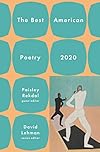
About all I want to say about this book is that if this is the best American poetry offers, I'll be reading British poetry or older poetry from now on. Very few poems instilled a sense of calmness and peace. Few dealt with themes of beauty, peacefulness, the sea, flowers, birds, etc. Too much of the content was stressful, and to call some of it poetry stretches the definition. I received an advance review copy through Edelweiss. While the publisher appreciates reviews, they are not required.
Cooper Canyon Press is an independent, non-profit small press located in Port Townsend, Washington. Since 1972 they have specialized in poetry.
Although they have been around since 1972, they are new to me and I'm so excited I found them. I have always loved poetry, and so far have read two of their many many titles.
I highly recommend you check out any of their many titles. Amazing.
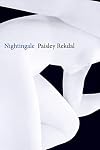
Nightingale by Paisley Rekdal. 2019.
Rekdal has taken the myths central to Ovids 'Metamorphoses' and connects it show more to our lives today. These poems are intense and thought provoking. It encompasses how the human spirit and character can overcome terrible human events.
A mother begins her treatment for cancer as her daughter begins transitioning into a son.
A woman falls in love with her ex-husdands dog.
A quadriplegic woman ponders her changed sex life.
These poems feature transformation, overcoming huge odds and finding the beauty of life in every situation. show less
Although they have been around since 1972, they are new to me and I'm so excited I found them. I have always loved poetry, and so far have read two of their many many titles.
I highly recommend you check out any of their many titles. Amazing.
Nightingale by Paisley Rekdal. 2019.
Rekdal has taken the myths central to Ovids 'Metamorphoses' and connects it show more to our lives today. These poems are intense and thought provoking. It encompasses how the human spirit and character can overcome terrible human events.
A mother begins her treatment for cancer as her daughter begins transitioning into a son.
A woman falls in love with her ex-husdands dog.
A quadriplegic woman ponders her changed sex life.
These poems feature transformation, overcoming huge odds and finding the beauty of life in every situation. show less
Lists
Wishlist (1)
Awards


You May Also Like


Associated Authors
Statistics
- Works
- 13
- Also by
- 13
- Members
- 509
- Popularity
- #48,720
- Rating
- 3.8
- Reviews
- 13
- ISBNs
- 28
- Favorited
- 1