
Brenda Shaughnessy
Author of Human Dark with Sugar
About the Author
Image credit: Poet Brenda Shaughnessy at the 2019 Texas Book Festival in Austin, Texas, United States. By Larry D. Moore, CC BY-SA 4.0, https://commons.wikimedia.org/w/index.php?curid=84758036
Works by Brenda Shaughnessy
Associated Works
Nepantla: An Anthology Dedicated to Queer Poets of Color (2018) — Contributor — 126 copies, 2 reviews
You Don't Have to Be Everything: Poems for Girls Becoming Themselves (2021) — Contributor — 86 copies, 2 reviews
The Poem Is You: 60 Contemporary American Poems and How to Read Them (2016) — Contributor — 78 copies
Tagged
Common Knowledge
- Birthdate
- 1970-03-21
- Gender
- female
- Education
- University of California
Columbia University - Occupations
- Poetry Editor
teacher - Birthplace
- Okinawa, Japan
- Places of residence
- California, USA
Brooklyn, New York, USA - Associated Place (for map)
- USA
Members
Reviews
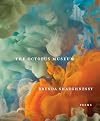
I'd put this book on my want-to-read list so long ago that I couldn't remember anything about why I had wanted it. But I was scrolling the list while putting together a book order and the cover caught my eye — so I finally ordered it to find out.
I still don't remember where I'd heard of this, but everything about the title and premise fo the collection is such a direct hit to my interests: humans have fucked up so badly that the cephalopods have taken over — and these poems are exhibits show more in a museum of how/why we lost the right to govern ourselves. Filled with a parent's anxiety about environmental destruction, police brutality, consumer capitalism, all the hurts and injustices in this world we bring our children into. It's also full of longing — for opportunities missed, for moments romanticized by nostalgia, for children to have all the good stuff, for there to be no tradeoffs.
I quite loved this. show less
I still don't remember where I'd heard of this, but everything about the title and premise fo the collection is such a direct hit to my interests: humans have fucked up so badly that the cephalopods have taken over — and these poems are exhibits show more in a museum of how/why we lost the right to govern ourselves. Filled with a parent's anxiety about environmental destruction, police brutality, consumer capitalism, all the hurts and injustices in this world we bring our children into. It's also full of longing — for opportunities missed, for moments romanticized by nostalgia, for children to have all the good stuff, for there to be no tradeoffs.
I quite loved this. show less
A poem’s job is to be beautiful.
A poem’s job is not just to teach, but to make a reader eager to show up for class every day.
A poem’s truth should be at once stunningly obvious and blindingly original.
A poem should make us happy to slow down and savor in a world of fast-food writing.
Reading a poem should only be work in the sense that some people are lucky enough to have jobs they love so much they’d do them for free.
Reading a poem should be the kind of workout that makes you feel show more shaky but strong afterward, as triumphant as if you’d discovered new muscles in your own body.
I looked for Our Andromeda at the library because I stumbled across one poem from it, fell in love, and needed to see if this was the real thing or just a one-night stand.
Definitely the real thing.
Liking poems or poets doesn’t imply a moral imperative to adore every poem in the world, or even every poem by a poet you love. Some of the poems in this collection don’t work for me. “Card 0: The Fool,” for instance – inspired by the Tarot card. It seemed too flippant, bawdy and grotesque for the sake of it.
Other poems in the Tarot series aren’t bad, but seem like missed opportunities, such as “Card 20: Judgment,” which I present here in its entirety:
What did the stand of pines say
to the herd of elephants
wearing swimsuits
and carrying large suitcases?
“Nice trunks!”
Cute, but – why? Why this response to this card? (If you’re not familiar with it, an angel blows a horn; below him, human figures rise from their graves, naked, arms raised in adoration.) Why this flippancy in the face of the end of excuse-making and the beginning of eternity?
So there are these few unsatisfying ventures. And then there’s the whole rest of the book, which hits it out of the park when it comes to the criterion listed above.
Here’s the end of “Vanity”:
Like murders in books, but with reverse
precision, how anyone becomes herself
is a mystery. A miracle. A myth.
And here’s a particularly wonderful passage from “My Water Children”:
Often, as a child, when I did
something wrong and got away
with it, I thought a ghost
or spirit or a kind of assistant
god (not the Real God, who was
too busy for the souls of children
and it turns out that is true)
would bleed through to me
from the skin of the other world,
cut by my misdeed or sin,
and catch me.
And, of course, there’s the poem I went in search of in the first place, “I Wish I Had More Sisters.” I’d like to include the whole thing, but I might break Goodreads. So here’s just a bunch of it, including the beginning and the very end:
I wish I had more sisters,
enough to fight with and still
have plenty more to confess to,
embellishing the fight so that I
look like I’m right and then turn
all my sisters, one by one, against
my sister. One sister will be so bad
the rest of us will have a purpose
in bringing her back to where
it’s good (with us) and we’ll feel
useful, and she will feel loved.
Then another sister
will have a tragedy, and again,
we will unite in our grief, judging
her much less than we did the bad
sister.
...
My sisters will seem like a bunch
of alternate me, all the ways
I could have gone. I could see
how things pan out without
having to do the things myself.
...
There would be both more and less
of me to have to bear. None of us
would be forced to be stronger
than we could be. Each of us could
be all of us. The pretty one.
The smart one. The bitter one.
The unaccountably-happy-
for-no-reason one. I could be,
for example, the hopeless
one, and the next day my sister
would take my place, and I would
hold her up until my arms gave way
and another sister would relieve me.
Which brings me to the last job poetry should perform:
Reading a poem should leave even a non-writer feeling that she could write a poem; that she should write a poem; that poetry is not the domain of the precious; that life and poetry are really just thirst and water. show less
A poem’s job is not just to teach, but to make a reader eager to show up for class every day.
A poem’s truth should be at once stunningly obvious and blindingly original.
A poem should make us happy to slow down and savor in a world of fast-food writing.
Reading a poem should only be work in the sense that some people are lucky enough to have jobs they love so much they’d do them for free.
Reading a poem should be the kind of workout that makes you feel show more shaky but strong afterward, as triumphant as if you’d discovered new muscles in your own body.
I looked for Our Andromeda at the library because I stumbled across one poem from it, fell in love, and needed to see if this was the real thing or just a one-night stand.
Definitely the real thing.
Liking poems or poets doesn’t imply a moral imperative to adore every poem in the world, or even every poem by a poet you love. Some of the poems in this collection don’t work for me. “Card 0: The Fool,” for instance – inspired by the Tarot card. It seemed too flippant, bawdy and grotesque for the sake of it.
Other poems in the Tarot series aren’t bad, but seem like missed opportunities, such as “Card 20: Judgment,” which I present here in its entirety:
What did the stand of pines say
to the herd of elephants
wearing swimsuits
and carrying large suitcases?
“Nice trunks!”
Cute, but – why? Why this response to this card? (If you’re not familiar with it, an angel blows a horn; below him, human figures rise from their graves, naked, arms raised in adoration.) Why this flippancy in the face of the end of excuse-making and the beginning of eternity?
So there are these few unsatisfying ventures. And then there’s the whole rest of the book, which hits it out of the park when it comes to the criterion listed above.
Here’s the end of “Vanity”:
Like murders in books, but with reverse
precision, how anyone becomes herself
is a mystery. A miracle. A myth.
And here’s a particularly wonderful passage from “My Water Children”:
Often, as a child, when I did
something wrong and got away
with it, I thought a ghost
or spirit or a kind of assistant
god (not the Real God, who was
too busy for the souls of children
and it turns out that is true)
would bleed through to me
from the skin of the other world,
cut by my misdeed or sin,
and catch me.
And, of course, there’s the poem I went in search of in the first place, “I Wish I Had More Sisters.” I’d like to include the whole thing, but I might break Goodreads. So here’s just a bunch of it, including the beginning and the very end:
I wish I had more sisters,
enough to fight with and still
have plenty more to confess to,
embellishing the fight so that I
look like I’m right and then turn
all my sisters, one by one, against
my sister. One sister will be so bad
the rest of us will have a purpose
in bringing her back to where
it’s good (with us) and we’ll feel
useful, and she will feel loved.
Then another sister
will have a tragedy, and again,
we will unite in our grief, judging
her much less than we did the bad
sister.
...
My sisters will seem like a bunch
of alternate me, all the ways
I could have gone. I could see
how things pan out without
having to do the things myself.
...
There would be both more and less
of me to have to bear. None of us
would be forced to be stronger
than we could be. Each of us could
be all of us. The pretty one.
The smart one. The bitter one.
The unaccountably-happy-
for-no-reason one. I could be,
for example, the hopeless
one, and the next day my sister
would take my place, and I would
hold her up until my arms gave way
and another sister would relieve me.
Which brings me to the last job poetry should perform:
Reading a poem should leave even a non-writer feeling that she could write a poem; that she should write a poem; that poetry is not the domain of the precious; that life and poetry are really just thirst and water. show less
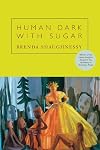
The poetry in this volume is tentative with sound, touching an association and then backing away. That does not mean it is not aware of sound; for example: consider the word "snownova," a kind of explosion by slow suffocation. One thing she does occasionally does stylistically is take a rhyme or a word, then slowly spin it round: end, mind, band, hard, understand. Stick, stuck, sticking. Fire, form, first, fraud, fair. Beauty, boozy, daisy.
The poems include themes of the body, food, sleep, show more and romantic completion. I find that I prefer the ones where she uses a more personal narrative touch and a more spare style; some of her extended analogies seem a little ungrounded to me. I prefer "You Too, Not Just Me" to "Replaceable Until You're Not." However, she has some lovely surprises in her phrasing. I also really liked her sequenced prose poem "This Loved Body," and many prose poems leave me cold, so this is saying something.
"The message is: /there is never enough/,
though we celebrate the hoax of boundlessness.
Celestial bodies, like our own, perish as if they'd scrimped
on light because they had to pay for it,
and no longer could. And froze like so many little match girls.
That's the brutal truth about the heavens."
--from "Spring in Space: A Lecture"
I think there is a great deal of passion in this book and I will be very interested to see what number three contains. Highly recommended, especially if you like Lisel Mueller, Adrienne Rich, and maybe E.E. Cummings. show less
The poems include themes of the body, food, sleep, show more and romantic completion. I find that I prefer the ones where she uses a more personal narrative touch and a more spare style; some of her extended analogies seem a little ungrounded to me. I prefer "You Too, Not Just Me" to "Replaceable Until You're Not." However, she has some lovely surprises in her phrasing. I also really liked her sequenced prose poem "This Loved Body," and many prose poems leave me cold, so this is saying something.
"The message is: /there is never enough/,
though we celebrate the hoax of boundlessness.
Celestial bodies, like our own, perish as if they'd scrimped
on light because they had to pay for it,
and no longer could. And froze like so many little match girls.
That's the brutal truth about the heavens."
--from "Spring in Space: A Lecture"
I think there is a great deal of passion in this book and I will be very interested to see what number three contains. Highly recommended, especially if you like Lisel Mueller, Adrienne Rich, and maybe E.E. Cummings. show less
Gorgeous unique language, line by line and poem by poem. It's free verse and yet it falls into comforting familiar rhythms and never sounds false or forced. The subjects are wide ranging, really an extraordinary mix of different varieties of perfectly observed moments. The book itself is gorgeous too, a largish hardcover that's such a treat to hold (and to smell), with an ink-in-water jacket photo that seems just right for the poems inside--not completely random, and yet open to allowing a show more beautiful chaos in. show less
Lists
Awards


You May Also Like


Associated Authors
Statistics
- Works
- 10
- Also by
- 11
- Members
- 521
- Popularity
- #47,686
- Rating
- 3.9
- Reviews
- 17
- ISBNs
- 19
- Favorited
- 1