
C. D. Wright (1949–2016)
Author of Steal Away: Selected and New Poems
About the Author
C. D. Wright was born in Mountain Home, Arkansas on January 6, 1949. She attended Memphis State University and the University of Arkansas. Her collections of poetry include Cooling Time and One with Others, which won the Lenore Marshall Poetry Prize and the National Book Critics Circle Award. Her show more works also won the Whiting Award and the Lannan Literary Award. She won a MacArthur genius award and a Guggenheim fellowship. She was a writing professor at Brown University. She died suddenly on January 12, 2016 at the age of 67. (Bowker Author Biography) show less
Image credit: Photo by Forrest Gander
Works by C. D. Wright
Associated Works
Poetry Speaks Expanded: Hear Poets Read Their Own Work from Tennyson to Plath (2007) — Contributor — 158 copies, 2 reviews
The Poem Is You: 60 Contemporary American Poems and How to Read Them (2016) — Contributor — 78 copies
The Arcadia Project: North American Postmodern Pastoral (New Series) (2012) — Contributor — 28 copies
Eleven More American Women Poets in the 21st Century: Poetics Across North America (2012) — Contributor — 12 copies
Poetry East : number twenty & twenty-one fall 1986 : poetics — Contributor — 1 copy
Tagged
Common Knowledge
- Legal name
- Wright, Carolyn Delores
- Birthdate
- 1949-01-06
- Date of death
- 2016-01-12
- Gender
- female
- Education
- Memphis State University (BA|French)
University of Arkansas (MFA) - Occupations
- poet
- Organizations
- San Francisco State University
Brown University
Academy of American Poets - Awards and honors
- Lannan Literary Award ( [1999])
Whiting Writers' Award (1989)
MacArthur Fellowship (2004)
Robert Creeley Award
Donald Justice Award for Poetry (2013)
National Book Critics Circle Award (Poetry ∙ 2010) - Relationships
- Gander, Forrest (spouse)
- Cause of death
- thrombosis
- Nationality
- USA
- Birthplace
- Mountain Home, Arkansas, USA
- Places of residence
- Mountain Home, Arkansas, USA
Providence, Rhode Island, USA - Place of death
- Barrington, Rhode Island, USA
- Associated Place (for map)
- Rhode Island, USA
Members
Reviews
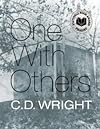
The setting for this outstanding poetry collection, which won the 2010 National Book Critics Circle Award for Poetry, is Forrest City, Arkansas, a small Delta town with nearly equal numbers of black and white residents, who lived in separate and very unequal conditions in 1969. Schools remained segregated, despite the passage of the Brown vs. Board of Education Supreme Court decision 15 years earlier, and although black residents were not formally excluded from white-owned establishments and show more neighborhoods, they knew that they were putting their lives at risk if they dared to anger any white person in town.
In March of that year, a school teacher at an all-black school in Forrest City was fired due to his participation in the town's fledgling civil rights movement, which included encouraging his students to engage in peaceful protests. The students, who were tired of attending classes in a decrepit building and having to use torn textbooks discarded by students at the all-white school, responded by nearly destroying the hated building and its contents. The local police, headed by a virulently racist sheriff, beat and arrested the youths, herded them into an empty swimming pool, and threatened to kill them en masse before they were eventually released.
Tension mounted in the broiling summer of 1969, as members of the John Birch Society stirred up extreme racial hatred amongst the town's white residents; most blacks cowed publicly, while a smaller number engaged in limited protests, and community leaders sought to organize a substantial protest movement. Help was requested from a group in nearby Memphis known as the Invaders, which became prominent in the 1968 Memphis sanitation workers' strike that led to Dr. Martin Luther King's assassination on April 4. The Invaders were led by Lance "Sweet Willie Wine" Watson, a former hustler turned community activist and self appointed Messiah, and the group was portrayed as a group of dangerous, violent militants by the white media in Memphis. The group set off on a four day march from West Memphis, Arkansas to Little Rock, Arkansas, which included a stop in Forrest City. Local white officials there learned about the march, and a group of whites awaited their arrival.
C.D. Wright, who grew up in Arkansas and was a young woman in 1969, describes the events that took place in Forrest City that year, mainly through the eyes of her friend and mentor 'V', a white resident of the town who crossed over and supported the marchers, but also through interviews with other residents and information obtained from newspaper clippings. Wright expertly weaves these stories into a unique poetic narrative that brings the story to light and compellingly portrays the town's oppressive atmosphere and its black and white residents, none better than V:
She woke up in a housebound rage, my friend V. Changed diapers. Played poker. Drank bourbon. Played duplicate bridge, made casseroles, grape salad, macaroni and cheese. Played cards with the priest. Made an argument for school uniforms, but the parents were concerned the children would be indistinguishable. She was thinking: affordable, uniforms. You can distinguish them, she argued, by their shoes. It was a mind on fire, a body confined.
And, on the other side of Division, a whole other population in year-round lockdown.
A girl that knew all Dante once
Live{d} to bear children to a dunce.
{Yeats she knew well enough to wield as a weapon. It would pop out when she was put out. Over the ironing board. Over cards. Some years the Big Tree Catholic foursome would all be pregnant at once, playing bridge, their cards propped up on distended stomachs. Laughing their bourbon-logged heads off.}
She had a brain like the Reading Room in the old British Museum. She could have donned fingerless gloves and written Das Kapital while hexagons of snowflakes tumbled by the windowpanes. She could have made it up whole cloth. She could have sewn the cotton out of her own life. While the Thames froze over.
She loved: Words. Cats. Long-playing records. Laughter. Men.
Alcohol. Cigarettes. The supernatural. It makes for a carnal list. Pointless to rank. Five in diapers at once—a stench, she claimed, she never got used to.
One with Others is easily one of the best poetry collections I've ever read, one whose terrifying beauty deserves to be widely appreciated and savored. show less
In March of that year, a school teacher at an all-black school in Forrest City was fired due to his participation in the town's fledgling civil rights movement, which included encouraging his students to engage in peaceful protests. The students, who were tired of attending classes in a decrepit building and having to use torn textbooks discarded by students at the all-white school, responded by nearly destroying the hated building and its contents. The local police, headed by a virulently racist sheriff, beat and arrested the youths, herded them into an empty swimming pool, and threatened to kill them en masse before they were eventually released.
Tension mounted in the broiling summer of 1969, as members of the John Birch Society stirred up extreme racial hatred amongst the town's white residents; most blacks cowed publicly, while a smaller number engaged in limited protests, and community leaders sought to organize a substantial protest movement. Help was requested from a group in nearby Memphis known as the Invaders, which became prominent in the 1968 Memphis sanitation workers' strike that led to Dr. Martin Luther King's assassination on April 4. The Invaders were led by Lance "Sweet Willie Wine" Watson, a former hustler turned community activist and self appointed Messiah, and the group was portrayed as a group of dangerous, violent militants by the white media in Memphis. The group set off on a four day march from West Memphis, Arkansas to Little Rock, Arkansas, which included a stop in Forrest City. Local white officials there learned about the march, and a group of whites awaited their arrival.
C.D. Wright, who grew up in Arkansas and was a young woman in 1969, describes the events that took place in Forrest City that year, mainly through the eyes of her friend and mentor 'V', a white resident of the town who crossed over and supported the marchers, but also through interviews with other residents and information obtained from newspaper clippings. Wright expertly weaves these stories into a unique poetic narrative that brings the story to light and compellingly portrays the town's oppressive atmosphere and its black and white residents, none better than V:
She woke up in a housebound rage, my friend V. Changed diapers. Played poker. Drank bourbon. Played duplicate bridge, made casseroles, grape salad, macaroni and cheese. Played cards with the priest. Made an argument for school uniforms, but the parents were concerned the children would be indistinguishable. She was thinking: affordable, uniforms. You can distinguish them, she argued, by their shoes. It was a mind on fire, a body confined.
And, on the other side of Division, a whole other population in year-round lockdown.
A girl that knew all Dante once
Live{d} to bear children to a dunce.
{Yeats she knew well enough to wield as a weapon. It would pop out when she was put out. Over the ironing board. Over cards. Some years the Big Tree Catholic foursome would all be pregnant at once, playing bridge, their cards propped up on distended stomachs. Laughing their bourbon-logged heads off.}
She had a brain like the Reading Room in the old British Museum. She could have donned fingerless gloves and written Das Kapital while hexagons of snowflakes tumbled by the windowpanes. She could have made it up whole cloth. She could have sewn the cotton out of her own life. While the Thames froze over.
She loved: Words. Cats. Long-playing records. Laughter. Men.
Alcohol. Cigarettes. The supernatural. It makes for a carnal list. Pointless to rank. Five in diapers at once—a stench, she claimed, she never got used to.
One with Others is easily one of the best poetry collections I've ever read, one whose terrifying beauty deserves to be widely appreciated and savored. show less
Wright was/is a remarkably observant poet, almost writing in the Imagist School style, but with quirkier word play. "The man next to the monument must have broken/ away from her. Perhaps years/ before. That the bond had been carnal is obvious./ He said he was just out clearing his head./ They followed the walk of pollarded pear trees. His tone/ distant but not disinterested..." And there is a lovely pull out poem (three pages, folded, to be read vertically) called "From the Obscure Lives of show more Poets" that reads like a contemporary Whitman elegiac catalog of poetic types. (Brian) show less
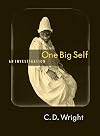
I met C.D. Wright at the recent Beall Poetry Festival at Baylor University. I bought this book because Copper Canyon Press published it, and they maintain high quality in the printing and selection of poetry. My first look at this book was disappointing. I thought a collection of random sayings, thoughts, and images from three prisons in Louisiana would not appeal to me. Today is a lazy, rainy Saturday, and the arthritis throbs in my knee, so I decided to read it. I am glad I did.
My taste show more for poetry usually runs as follows: short, structured (at least a little), and with a tendency toward the humorous. This long poem had none of these characteristics. Nonetheless, I found it absorbing and thought provoking. Wright’s aim was to match personalities and desires of the men and women in these three prisons. She has done a marvelous job.
Once I started reading, I could not stop – except for the occasional pause to re-read a line or two that deserved an extra moment of savoring. This really is poetry at it best – the collection of images, the words from the inmates, the signs on the walls, all came together to draw the reader inside. A sense of claustrophobia and the relentless monotony of their lives came out in Wright’s words. The next item on the agenda is to try and find Deborah Luster’s book of photos from the trip Wright made with her to visit these prisons. One Big Self wants me to read more of Wright’s work. 5 stars.
--Jim, 5/16/09 show less
My taste show more for poetry usually runs as follows: short, structured (at least a little), and with a tendency toward the humorous. This long poem had none of these characteristics. Nonetheless, I found it absorbing and thought provoking. Wright’s aim was to match personalities and desires of the men and women in these three prisons. She has done a marvelous job.
Once I started reading, I could not stop – except for the occasional pause to re-read a line or two that deserved an extra moment of savoring. This really is poetry at it best – the collection of images, the words from the inmates, the signs on the walls, all came together to draw the reader inside. A sense of claustrophobia and the relentless monotony of their lives came out in Wright’s words. The next item on the agenda is to try and find Deborah Luster’s book of photos from the trip Wright made with her to visit these prisons. One Big Self wants me to read more of Wright’s work. 5 stars.
--Jim, 5/16/09 show less
I love C.D. Wright, and I'm not afraid to say it. For over twenty years, she's been at the forefront of verse, form, and language.
Steal Away collects selected verse from 1982 until the present, showcasing her early whit and play with form and language, her movements marrying narrative and image, and her perfection of the list poem. She changes form and style as easily as you or I might our socks. Her partnering of line to form, her use of punctuation as line break and line break as show more punctuation, and space as breath, are the building blocks of her work. The things many poets struggle to combine in their own poetry kitchens, C.D. Wright wields with ease and grace.
Her subjects are as varied as her approaches. In one poem she may weave the day to day of motherhood as a literal laundry list, and in another may confront the body politic with a series of periodless prose blocks. She muses on seasons and urban streetscapes in semi-traditional line and meter on one page, only to then launch into twenty pages of post-surrealist Oppenesque lines which using no space and changing twenty aesthetic approaches across the entire span.
The reason I myself love C.D. Wright, is because I can see in her the poetic ingredients that I love to reach back into for my own work; Language Poetry, New York School, Black Mountain, Surrealism, Modernism, Imagism (not to mention a political feminism so subtle as to be screaming), she is the culmination of 20th century American poetry. This book is a must read for anyone writing today, one of the pivotal benchmarks for we younger poets as we look to write our way into the next century. show less
Steal Away collects selected verse from 1982 until the present, showcasing her early whit and play with form and language, her movements marrying narrative and image, and her perfection of the list poem. She changes form and style as easily as you or I might our socks. Her partnering of line to form, her use of punctuation as line break and line break as show more punctuation, and space as breath, are the building blocks of her work. The things many poets struggle to combine in their own poetry kitchens, C.D. Wright wields with ease and grace.
Her subjects are as varied as her approaches. In one poem she may weave the day to day of motherhood as a literal laundry list, and in another may confront the body politic with a series of periodless prose blocks. She muses on seasons and urban streetscapes in semi-traditional line and meter on one page, only to then launch into twenty pages of post-surrealist Oppenesque lines which using no space and changing twenty aesthetic approaches across the entire span.
The reason I myself love C.D. Wright, is because I can see in her the poetic ingredients that I love to reach back into for my own work; Language Poetry, New York School, Black Mountain, Surrealism, Modernism, Imagism (not to mention a political feminism so subtle as to be screaming), she is the culmination of 20th century American poetry. This book is a must read for anyone writing today, one of the pivotal benchmarks for we younger poets as we look to write our way into the next century. show less
Lists
Awards


You May Also Like


Associated Authors
Statistics
- Works
- 27
- Also by
- 12
- Members
- 985
- Popularity
- #26,139
- Rating
- 4.0
- Reviews
- 8
- ISBNs
- 45
- Languages
- 2
- Favorited
- 3
