
Jericho Brown
Author of The Tradition
About the Author
Works by Jericho Brown
Some Instructions 1 copy
Associated Works
Four Hundred Souls: A Community History of African America, 1619-2019 (2021) — Contributor — 1,174 copies, 25 reviews
The Fire This Time: A New Generation Speaks about Race (2016) — Contributor — 1,032 copies, 32 reviews
African American Poetry: 250 Years of Struggle and Song (2020) — Contributor — 238 copies, 4 reviews
The BreakBeat Poets: New American Poetry in the Age of Hip-Hop (2015) — Contributor — 208 copies, 2 reviews
Nepantla: An Anthology Dedicated to Queer Poets of Color (2018) — Contributor — 125 copies, 2 reviews
The Best American Poetry 2014 (The Best American Poetry series) (2014) — Cover artist — 89 copies, 1 review
This Is the Honey: An Anthology of Contemporary Black Poets (2024) — Contributor — 70 copies, 1 review
Bullets Into Bells: Poets and Citizens Respond to Gun Violence (2017) — Contributor — 69 copies, 3 reviews
Angles of Ascent: A Norton Anthology of Contemporary African American Poetry (2013) — Contributor — 48 copies
Gathering Ground: A Reader Celebrating Cave Canem's First Decade (2006) — Contributor — 30 copies, 1 review
Collective Brightness: LGBTIQ Poets on Faith, Religion & Spirituality (2011) — Contributor — 14 copies
Tagged
Common Knowledge
- Birthdate
- 1976
- Gender
- male
- Education
- Dillard University (BA)
University of New Orleans (MFA)
University of Houston (PhD) - Occupations
- poet
professor - Organizations
- University of Houston
University of San Diego
Emory University, Creative Writing Program (director) - Awards and honors
- Whiting Award (2009)
National Endowment for the Arts fellowship (Poetry, 2011)
Guggenheim Fellowship (2016)
Fellowship of the Academy of American Poets (2022)
MacArthur Fellowship (2024) - Nationality
- USA
- Birthplace
- Shreveport, Louisiana, USA
- Places of residence
- Shreveport, Louisiana, USA
- Map Location
- USA
Members
Reviews
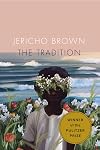
Jericho Brown's collection has the ability to be both mesmerizing with it's tightly packed lines and painful. But the thought that keeps recurring with each read is that there's a lot of love in these poems. Not the overly sentimental love. Critical, honest, at times harsh.
In Brown's 'Duplex' that begins the third section he owns this intent: 'I begin with love, hoping to end there / I don't want to leave a messy corpse.' A kind of brutal honesty that wants the person, place, thing the poem show more is confronting - to be there tomorrow - knowing in the present culture of fear and its violent offspring - that is not a given.
Nothing, whether it's lovers, family, community, faith, escapes this critical eye - something Brown ties together in 'Stake' when he asks 'How / old will I get in a nation / that believes we can grow out / of a grave' (43). For the poems' harshness they carry with them an undercurrent of hope that is never far away, but a current that requires digging beneath the false mythologies in order to find it. Important, essential collection. show less
In Brown's 'Duplex' that begins the third section he owns this intent: 'I begin with love, hoping to end there / I don't want to leave a messy corpse.' A kind of brutal honesty that wants the person, place, thing the poem show more is confronting - to be there tomorrow - knowing in the present culture of fear and its violent offspring - that is not a given.
Nothing, whether it's lovers, family, community, faith, escapes this critical eye - something Brown ties together in 'Stake' when he asks 'How / old will I get in a nation / that believes we can grow out / of a grave' (43). For the poems' harshness they carry with them an undercurrent of hope that is never far away, but a current that requires digging beneath the false mythologies in order to find it. Important, essential collection. show less
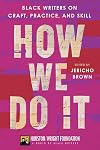
How We Do It: Black Writers on Craft, Practice, and Skill, edited by Jericho Brown, is a fascinating collection of advice and pointers that stops short, thankfully, of the many books that make writing sound like simply following steps. This volume, while highlighting the many steps that are essential to writing, have as much or more to do with the subtle aspects of those steps and the important element of the writer's mindset.
This will be a valuable addition to any writer's library, show more especially those of color or, frankly, any other writer who feels they are or have been marginalized. This is about finding how best to express oneself, not in a lock step approach but in one that looks inward as much as backward to already published writers. Knowing what to do is great, knowing how to adapt that knowledge to what you want to express is even better. And that is where this book makes its largest contribution.
If you're not a writer, or if, like me, you write mostly for yourself, this is still a useful book since it helps readers better understand what goes into a writer's choices. Knowing that allows a reader to better do their part in making the story both the writer's and the reader's.
I enjoyed every essay in the book, but the one I think really spoke to me was Curdella Forbes' essay on kinship. While definitely speaking to the craft of writing, and by extension reading, it also touches on our everyday interactions in the world. I found it to be both a wonderful expression of an empowering perspective and a more open-minded and -hearted way to understand people in general.
Highly recommended for both writers as well as readers who want to be more active in their engagement with books, from novels to poetry and memoirs.
Reviewed from a copy made available by the publisher via NetGalley. show less
This will be a valuable addition to any writer's library, show more especially those of color or, frankly, any other writer who feels they are or have been marginalized. This is about finding how best to express oneself, not in a lock step approach but in one that looks inward as much as backward to already published writers. Knowing what to do is great, knowing how to adapt that knowledge to what you want to express is even better. And that is where this book makes its largest contribution.
If you're not a writer, or if, like me, you write mostly for yourself, this is still a useful book since it helps readers better understand what goes into a writer's choices. Knowing that allows a reader to better do their part in making the story both the writer's and the reader's.
I enjoyed every essay in the book, but the one I think really spoke to me was Curdella Forbes' essay on kinship. While definitely speaking to the craft of writing, and by extension reading, it also touches on our everyday interactions in the world. I found it to be both a wonderful expression of an empowering perspective and a more open-minded and -hearted way to understand people in general.
Highly recommended for both writers as well as readers who want to be more active in their engagement with books, from novels to poetry and memoirs.
Reviewed from a copy made available by the publisher via NetGalley. show less
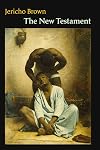
The New Testament by Jericho Brown surprised me with its vivid starkness and unrelenting honesty. As I read Brown's poems, I felt visceral reactions from my head to my toes. I wanted to reach out and comfort the inhabitants of his poems at times and at others I felt tempted to give them a good shake. Brown's lyrical prose jumped off the page and created images that felt at once irreverent and holy. The New Testament certainly gives its own testimony to the life and culture that Brown knows show more and understands while offering readers a tiny glimpse into that world. show less
1 Corinthians 13:11
When I was a child, I spoke as a child.
I even had a child's disease. I ran
From the Doberman like all children
On my street, but old men called me
Special. The Doberman caught up,
Chewed my right knee. Limp now
In two places, I carried a child's Bible
Like a football under the arm that didn't
Ache. I was never alone. I owned
My brother's shame of me. I loved
The words thou and thee. Both meant
My tongue in front of my teeth.
Both meant a someone speaking to me.
So what if I itched. So show more what if I couldn't
Breathe. I climbed the cyclone fence
Like children on my street and went
First when old men asked for a boy
To pray or to read. Some had it worse -
Nobody whipped me with a water hose
Or a phone cord or a leash. Old men
Said I'd grow into my face, and I did. show less
When I was a child, I spoke as a child.
I even had a child's disease. I ran
From the Doberman like all children
On my street, but old men called me
Special. The Doberman caught up,
Chewed my right knee. Limp now
In two places, I carried a child's Bible
Like a football under the arm that didn't
Ache. I was never alone. I owned
My brother's shame of me. I loved
The words thou and thee. Both meant
My tongue in front of my teeth.
Both meant a someone speaking to me.
So what if I itched. So show more what if I couldn't
Breathe. I climbed the cyclone fence
Like children on my street and went
First when old men asked for a boy
To pray or to read. Some had it worse -
Nobody whipped me with a water hose
Or a phone cord or a leash. Old men
Said I'd grow into my face, and I did. show less
Lists
Awards


You May Also Like


Associated Authors
Statistics
- Works
- 6
- Also by
- 33
- Members
- 950
- Popularity
- #27,087
- Rating
- 4.1
- Reviews
- 22
- ISBNs
- 27
- Languages
- 3
- Favorited
- 1
