

Ocean Vuong
Author of On Earth We're Briefly Gorgeous
About the Author
Image credit: Ocean Vuong, 2019
Works by Ocean Vuong
Sống 1 copy
地上で僕らはつかの間きらめく 1 copy
Associated Works
The BreakBeat Poets: New American Poetry in the Age of Hip-Hop (2015) — Contributor — 207 copies, 2 reviews
Nepantla: An Anthology Dedicated to Queer Poets of Color (2018) — Contributor — 124 copies, 2 reviews
Ink Knows No Borders: Poems of the Immigrant and Refugee Experience (2019) — Contributor — 89 copies, 1 review
Bullets Into Bells: Poets and Citizens Respond to Gun Violence (2017) — Contributor — 68 copies, 3 reviews
Tagged
Common Knowledge
- Canonical name
- Vuong, Ocean
- Legal name
- Vương Quốc Vinh
- Birthdate
- 1988-10-14
- Gender
- male
- Education
- Université de New York (M.A., MFA, Maîtrise en beaux-Arts)
Brooklyn College, City University de New York (B.A., Anglais)
Université Pace, New-Yok (Passage, Marketing)
Glastonbury High School, Glastonbury, Connecticut - Occupations
- poet
editor
novelist - Organizations
- Université du Massachusetts, Amherst (Professeur agrégé, MFA)
- Awards and honors
- MacArthur Fellowship (2019)
- Nationality
- Vietnam (birth)
USA - Birthplace
- Saigon, Vietnam
- Places of residence
- Hartford, Connecticut, USA
New York, New York, USA - Associated Place (for map)
- USA
Members
Reviews

Just so no one is even momentarily mislead by what I'm going to write next, I found The Emperor of Gladness to be an absolutely marvelous novel.
You know that sort of novel full of quirky, misfit characters who band together somehow, in a music group, say, or at a workplace, or in a bar. They are poor, probably, and/or otherwise outsiders. Their lives are hard, and they probably have some stronger outside force arrayed against them: an evil landlord or building developer, or a relative with show more power of attorney who just doesn't understand, or maybe the medical industry, but none of that matters in the end, because they have each other and their quirky humor and positive outlooks on life. There might be some good writing, but overall the novel provides a feel good cartoon of a story, even if the ending's not all that happy. Over the years, my patience for such novels has been worn down to a stubble.
The Emperor of Gladness could have been that, because what I've just described is the basic framework. But Ocean Vuong is such a good writer, his ability to infuse this archetype with depth and breadth so acute, that this novel instead becomes a moving and memorable testimony of friendship and continued struggle against the headwinds of poverty, diminished expectations and disappointment with one's own choices. In the first few pages, 19-year-old Hai, the son of Vietnamese immigrants, addicted to pharmaceuticals, stands on a bridge over a freezing river and prepares to jump. He has already dropped out of college in New York City and returned in abject embarrassment to his mother in East Gladness, Connecticut, a gray, shrinking industrial town several miles outside of Hartford. Now his mother thinks he is in Boston studying in a medical program, though in truth he has never left East Gladness, so although he misses her, he can only speak with her on the phone, pretending to be in another city. But while he is looking down at the water, he is hailed from the window of a house on the far shore by an old woman who somehow convinces not to jump but instead to finish crossing the bridge so that she can warm him up with a blanket and give him a meal. She is Drazina, an immigrant from Lithuania who ran from Stalin's army at the end of World War 2 with her husband, now dead, and who now lives alone in the family house at the end of what is now mostly an abandoned and crumbling block of houses that dead ends at the riverbank. She offers him a room and he essentially becomes her caretaker. Soon, he prevails upon his cousin, Sony, to help him get a job at a nearby HomeMarket, a chain restaurant that specializes in rotisserie chicken and mac and cheese. The staff of this restaurant, a band of misfits in one way or another, will become his surrogate family. Again, this is all within the first several pages, so no real spoilers.
Well, you can see, perhaps, the potential for preciousness here. But Vuong's extreme talent in accurately depicting the claustrophobic humiliations of poverty and restrictions of class, and the strength of human aspiration and hope in the face of these factors, renders his character portrayals intensely human and their setting entirely recognizable. Also, since we feel we're in the real world rather than a feel good comedy, we are never sure of happy or longterm outcomes. Here's an overlong (sorry 'bout that!) quote to give you an idea of Vuong's writing:
___________________________________
There's a way an old Connecticut town feels when you pass through it at night. Hollowed out, blasted yet styled into a potent aftermath, all of it touched by an inexplicable beauty, like the outside has suddenly become one huge living room. And you feel you can sit down underneath the sincere light of a streetlamp and no one would bother you, no one would tell you to leave, because they know you're staying for a reason. That you're bound by your debts, by blood or sweat and the cars sprayed silver with hoarfrost along streets named after white millionaires no one remembers. How boring, he thought, to be yet another boy wanting to rid himself of the hometown dust clinging to his clothes, setting out like a spark flung from his mother's cigarette. He floated through the empty streets, eyes watering from the icy wind. He passed houses filled with warm light and imagined the people inside, his head growing blurry with the thought of them huddled in their tiny parlors full of furniture and voices breaking through the raiment light of TV commercials, the news, its endless reel of abjection, their bodies kept, for now, from the intolerance of daylight and its procession of work and misgivings. He imagined all the boys he wanted to know lying sleepless in their cramped and cluttered rooms, the curling posters and chipped trophies, the endless cords to defunct video game consoles, all of it once the feeble altar of teenage triumphs, now the detritus of adolescence.
_________________________________________
This is a novel built much more strongly on character and setting than on plot. And yet, as we're pulled along by the writing, we relatively quickly come to care about these people, and to want to know what will become of them. And, to be clear, it is definitely not all as bleak as the excerpt I've provided above might suggest. There is, in fact, quite a bit of humor. This novel gets a rare five stars from me. show less
You know that sort of novel full of quirky, misfit characters who band together somehow, in a music group, say, or at a workplace, or in a bar. They are poor, probably, and/or otherwise outsiders. Their lives are hard, and they probably have some stronger outside force arrayed against them: an evil landlord or building developer, or a relative with show more power of attorney who just doesn't understand, or maybe the medical industry, but none of that matters in the end, because they have each other and their quirky humor and positive outlooks on life. There might be some good writing, but overall the novel provides a feel good cartoon of a story, even if the ending's not all that happy. Over the years, my patience for such novels has been worn down to a stubble.
The Emperor of Gladness could have been that, because what I've just described is the basic framework. But Ocean Vuong is such a good writer, his ability to infuse this archetype with depth and breadth so acute, that this novel instead becomes a moving and memorable testimony of friendship and continued struggle against the headwinds of poverty, diminished expectations and disappointment with one's own choices. In the first few pages, 19-year-old Hai, the son of Vietnamese immigrants, addicted to pharmaceuticals, stands on a bridge over a freezing river and prepares to jump. He has already dropped out of college in New York City and returned in abject embarrassment to his mother in East Gladness, Connecticut, a gray, shrinking industrial town several miles outside of Hartford. Now his mother thinks he is in Boston studying in a medical program, though in truth he has never left East Gladness, so although he misses her, he can only speak with her on the phone, pretending to be in another city. But while he is looking down at the water, he is hailed from the window of a house on the far shore by an old woman who somehow convinces not to jump but instead to finish crossing the bridge so that she can warm him up with a blanket and give him a meal. She is Drazina, an immigrant from Lithuania who ran from Stalin's army at the end of World War 2 with her husband, now dead, and who now lives alone in the family house at the end of what is now mostly an abandoned and crumbling block of houses that dead ends at the riverbank. She offers him a room and he essentially becomes her caretaker. Soon, he prevails upon his cousin, Sony, to help him get a job at a nearby HomeMarket, a chain restaurant that specializes in rotisserie chicken and mac and cheese. The staff of this restaurant, a band of misfits in one way or another, will become his surrogate family. Again, this is all within the first several pages, so no real spoilers.
Well, you can see, perhaps, the potential for preciousness here. But Vuong's extreme talent in accurately depicting the claustrophobic humiliations of poverty and restrictions of class, and the strength of human aspiration and hope in the face of these factors, renders his character portrayals intensely human and their setting entirely recognizable. Also, since we feel we're in the real world rather than a feel good comedy, we are never sure of happy or longterm outcomes. Here's an overlong (sorry 'bout that!) quote to give you an idea of Vuong's writing:
___________________________________
There's a way an old Connecticut town feels when you pass through it at night. Hollowed out, blasted yet styled into a potent aftermath, all of it touched by an inexplicable beauty, like the outside has suddenly become one huge living room. And you feel you can sit down underneath the sincere light of a streetlamp and no one would bother you, no one would tell you to leave, because they know you're staying for a reason. That you're bound by your debts, by blood or sweat and the cars sprayed silver with hoarfrost along streets named after white millionaires no one remembers. How boring, he thought, to be yet another boy wanting to rid himself of the hometown dust clinging to his clothes, setting out like a spark flung from his mother's cigarette. He floated through the empty streets, eyes watering from the icy wind. He passed houses filled with warm light and imagined the people inside, his head growing blurry with the thought of them huddled in their tiny parlors full of furniture and voices breaking through the raiment light of TV commercials, the news, its endless reel of abjection, their bodies kept, for now, from the intolerance of daylight and its procession of work and misgivings. He imagined all the boys he wanted to know lying sleepless in their cramped and cluttered rooms, the curling posters and chipped trophies, the endless cords to defunct video game consoles, all of it once the feeble altar of teenage triumphs, now the detritus of adolescence.
_________________________________________
This is a novel built much more strongly on character and setting than on plot. And yet, as we're pulled along by the writing, we relatively quickly come to care about these people, and to want to know what will become of them. And, to be clear, it is definitely not all as bleak as the excerpt I've provided above might suggest. There is, in fact, quite a bit of humor. This novel gets a rare five stars from me. show less
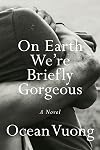
The narrator, Little Dog, doesn't shy away from the uncomfortable parts of life: his, his friend's, his mother's. He also doesn't shy away from the beautiful parts of those same lives: it goes together, the beautiful and the uncomfortable.
The novel is imagist more than event-centred, a portrait of Little Dog's place in community and family. While there is a story, the pieces are told separately and lovingly gathered together, some not quite fitting with the others, hovering around the edges show more like a jigsaw puzzle partway assembled. In the end the picture comes clear, how each piece fits in with the others, and also separates from them, the corners and curves not quite matching. Maybe they matched better, at one time, and maybe some never did fit comfortably with the others. So a story, but more character driven than plot driven, with our understanding unfolding more than events being revealed or leading to an end.
It is tempting to read it as autobiographical. It's unclear how much is Vuong's intention, this invitation to map specifics from his novel to details of his life story, and how much that broad suggestion is lazy marketing. I tried to remind myself regularly, Vuong never says he is Little Dog. Though listening to some interviews (On Being pod, others), the parallels are clear between certain features of his life and Little Dog's life. Still, an author writing from personal experience is not the same as writing an autobiography. I hesitate to draw any conclusions about the meaning of the book as biography, or to make assumptions about Vuong's life based on the book. show less
The novel is imagist more than event-centred, a portrait of Little Dog's place in community and family. While there is a story, the pieces are told separately and lovingly gathered together, some not quite fitting with the others, hovering around the edges show more like a jigsaw puzzle partway assembled. In the end the picture comes clear, how each piece fits in with the others, and also separates from them, the corners and curves not quite matching. Maybe they matched better, at one time, and maybe some never did fit comfortably with the others. So a story, but more character driven than plot driven, with our understanding unfolding more than events being revealed or leading to an end.
It is tempting to read it as autobiographical. It's unclear how much is Vuong's intention, this invitation to map specifics from his novel to details of his life story, and how much that broad suggestion is lazy marketing. I tried to remind myself regularly, Vuong never says he is Little Dog. Though listening to some interviews (On Being pod, others), the parallels are clear between certain features of his life and Little Dog's life. Still, an author writing from personal experience is not the same as writing an autobiography. I hesitate to draw any conclusions about the meaning of the book as biography, or to make assumptions about Vuong's life based on the book. show less
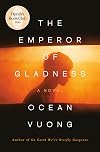
The Emperor of Gladness is a stunning meditation on memory, grief, and identity, woven together in Ocean Vuong’s unmistakably lyrical voice. With this collection, Vuong continues to expand the boundaries of poetry and narrative, delivering not just beautifully crafted lines but a deeply human story that unfolds gently, like a whispered confession.
Though written in verse, the book carries the momentum of a novel, with interconnected poems that trace the emotional terrain of a central show more speaker whose voice feels both autobiographical and mythic. This speaker, tender, observant, and wounded, navigates the complexities of being a queer son, a lover, a survivor of war's aftermath, and a seeker of joy in a world shaped by pain.
The supporting characters, though never overtly named in a traditional narrative sense, are deeply present: a mother whose quiet strength anchors the speaker, a father lost in silence or absence, lovers who flicker in and out like moments of tenderness and escape. Each relationship is painted with emotional precision, never relying on exposition, but revealed through gesture, memory, and metaphor.
Vuong's genius lies in how he builds an atmosphere more than a plot. There’s a sense of time folding in on itself, past and present coexisting in the speaker’s reckoning with family, war, intimacy, and the fragile pursuit of joy. The emotional arcs develop quietly, often achingly, and by the end, the reader feels as though they’ve traveled not just through someone’s life, but through their soul.
This is a book for readers who love language that sings but also cuts deep. It is at once intimate and expansive, specific and universal. The Emperor of Gladness is not only a masterclass in poetic form but also a deeply affecting, character-driven work that lingers in the heart and mind long after the final page.
Ocean Vuong has once again given us a collection that feels like a prayer for beauty, for healing, and for the quiet triumph of choosing tenderness in a world that so often demands hardness.
Thank you!
Nicole show less
Though written in verse, the book carries the momentum of a novel, with interconnected poems that trace the emotional terrain of a central show more speaker whose voice feels both autobiographical and mythic. This speaker, tender, observant, and wounded, navigates the complexities of being a queer son, a lover, a survivor of war's aftermath, and a seeker of joy in a world shaped by pain.
The supporting characters, though never overtly named in a traditional narrative sense, are deeply present: a mother whose quiet strength anchors the speaker, a father lost in silence or absence, lovers who flicker in and out like moments of tenderness and escape. Each relationship is painted with emotional precision, never relying on exposition, but revealed through gesture, memory, and metaphor.
Vuong's genius lies in how he builds an atmosphere more than a plot. There’s a sense of time folding in on itself, past and present coexisting in the speaker’s reckoning with family, war, intimacy, and the fragile pursuit of joy. The emotional arcs develop quietly, often achingly, and by the end, the reader feels as though they’ve traveled not just through someone’s life, but through their soul.
This is a book for readers who love language that sings but also cuts deep. It is at once intimate and expansive, specific and universal. The Emperor of Gladness is not only a masterclass in poetic form but also a deeply affecting, character-driven work that lingers in the heart and mind long after the final page.
Ocean Vuong has once again given us a collection that feels like a prayer for beauty, for healing, and for the quiet triumph of choosing tenderness in a world that so often demands hardness.
Thank you!
Nicole show less
When does a war end? When can I say your name and have it mean only your name and not what you left behind?
A beautiful, intimate look at lives lived despite violence. So intimate that I felt intrusive many times just reading it. Memory is so fickle, and yet so potentially destructive. Memory is also, as what the narrator called it, a second chance, one which we have the power to control, if only for ourselves, if only in our minds.
How rarely we are encouraged to pause and reflect on what has show more happened to us. How scarcely we are given space to check ourselves for damages as the storm continues on. Maybe I should take heed and take stock of my life while in this enforced pause. show less
A beautiful, intimate look at lives lived despite violence. So intimate that I felt intrusive many times just reading it. Memory is so fickle, and yet so potentially destructive. Memory is also, as what the narrator called it, a second chance, one which we have the power to control, if only for ourselves, if only in our minds.
How rarely we are encouraged to pause and reflect on what has show more happened to us. How scarcely we are given space to check ourselves for damages as the storm continues on. Maybe I should take heed and take stock of my life while in this enforced pause. show less
Lists
Read in 2021 (1)
Five star books (1)
Read in 2020 (1)
2010s (1)
Indie Next Picks (1)
Take Four Books (1)
AP Lit (1)
Awards


You May Also Like


Associated Authors
Statistics
- Works
- 13
- Also by
- 15
- Members
- 9,543
- Popularity
- #2,521
- Rating
- 3.9
- Reviews
- 253
- ISBNs
- 111
- Languages
- 18
- Favorited
- 6

