
Richard Siken
Author of Crush
About the Author
Image credit: Credit: David Shankbone, 2006, New York City
Works by Richard Siken
Associated Works
Firsts: 100 Years of Yale Younger Poets (Yale Series of Younger Poets) (2019) — Contributor — 15 copies
Tagged
Common Knowledge
- Birthdate
- 1967
- Gender
- male
- Nationality
- USA
- Places of residence
- Tucson, Arizona, USA
- Associated Place (for map)
- Arizona, USA
Members
Reviews
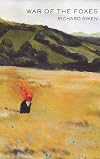
Siken's second poetry collection, War of the Foxes, is a much subdued, much quiet collection. Where Crush is mostly rough, obsessed, and eager to encapsulate the lover with its ravaging arms, War of the Foxes drinks up the lover through glances and stares from afar frequently with a brush and canvas at hand; the encapsulation happens every time, every chance art inspires and devastates. Often portrays the painter and their subject in myriad of spaces and touches, entwining bodies and bodies show more separated, each poem in this collection observes and loves. The palette is an iridescence of homosexual devotion, affection, and frustration. It tries to recognise its own self in the act of loving, even in the mere thought of a particular someone, and its unusual personification of birds as if to free itself through its flight as desire weighs it down in its mental battlefield. This yearns at a distance, that in itself is a kind of warfare. The result then is abstract ("What does this love amount to?", Siken asks), we are all unrecognisable in the state of loving and unloving; painting is a collaboration between the painter and their subject.
When we paint a beloved, see the beloved, do we genuinely capture who they are or are our biases create and smudge them with our own perception? Do we love an ideal and an idol? When do we love what's real and what's really there?
Siken absolutely resonates with the utmost struggle of immortalising the beloved through art but as is with Crush, somehow it can be stifling. A pleonasm of afflicting emotions and contradicting utterances coat some of the poems. Where there should be moments to breathe, take a break, put the brush down and return to the canvas much later on, this instead laboriously refines and alters the portraits again and again to its own dissatisfaction. Its want of perfection dangerous. Nonetheless I was very much moved by a lot of poems here compared to Crush, three of them even tugged a tear down my eyes and another two which I can't forget: Portrait of Fryderyk in Shifting Light, Landscape with Black Coats in Snow, Self-Portrait Against Red Wallpaper, Three Proofs, and Dots Everywhere.
Some excerpts I loved:
"Color bleeds, so make it work for you.
Gravity pulls, so make it work for you. Rubbing
your feet at night or clutching your stomach in the
morning. It was illegible—no single line of sight,
too many angles of approach, smoke in the distance.
It made no sense. When you have nothing to say,
set something on fire. A blurry landscape is useless."
— from Landscape with Fruit Rot and Millipede
"I would like to say something
about grace and the brown corduroy thrift store coat
I bought for eight-fifty when you told me my
paintings were empty. Never finish a war without
starting another. I've seen your true face: the back
of your head. If you were walking away, keep walking."
— from Birds Hover the Trampled Field
"I put my sadness in a box. The box went soft and wet and weak at the bottom. I
called it Thursday. Today is Sunday. The town is empty."
— from The Field of Rooms and Halls
"Everyone needs a place. It shouldn't be inside of someone else."
— from Detail of the Woods
"What’s the difference between me and the world?
Compartmentalization. The world doesn’t know
what to do with my love. Because it isn’t used to
being loved. It’s a framework problem. Disheartening?
Obviously. I hope it’s love. I’m trying really hard
to make it love. I said no more severity. I said it severely
and slept through all my appointments. I clawed
my way into the light but the light is just as scary.
I’d rather quit. I’d rather be sad. It’s too much work.
Admirable? Not really. I hate my friends. And when
I hate my friends I’ve failed myself, failed to share
my compassion."
— from Self-Portrait Against Red Wallpaper show less
When we paint a beloved, see the beloved, do we genuinely capture who they are or are our biases create and smudge them with our own perception? Do we love an ideal and an idol? When do we love what's real and what's really there?
Siken absolutely resonates with the utmost struggle of immortalising the beloved through art but as is with Crush, somehow it can be stifling. A pleonasm of afflicting emotions and contradicting utterances coat some of the poems. Where there should be moments to breathe, take a break, put the brush down and return to the canvas much later on, this instead laboriously refines and alters the portraits again and again to its own dissatisfaction. Its want of perfection dangerous. Nonetheless I was very much moved by a lot of poems here compared to Crush, three of them even tugged a tear down my eyes and another two which I can't forget: Portrait of Fryderyk in Shifting Light, Landscape with Black Coats in Snow, Self-Portrait Against Red Wallpaper, Three Proofs, and Dots Everywhere.
Some excerpts I loved:
"Color bleeds, so make it work for you.
Gravity pulls, so make it work for you. Rubbing
your feet at night or clutching your stomach in the
morning. It was illegible—no single line of sight,
too many angles of approach, smoke in the distance.
It made no sense. When you have nothing to say,
set something on fire. A blurry landscape is useless."
— from Landscape with Fruit Rot and Millipede
"I would like to say something
about grace and the brown corduroy thrift store coat
I bought for eight-fifty when you told me my
paintings were empty. Never finish a war without
starting another. I've seen your true face: the back
of your head. If you were walking away, keep walking."
— from Birds Hover the Trampled Field
"I put my sadness in a box. The box went soft and wet and weak at the bottom. I
called it Thursday. Today is Sunday. The town is empty."
— from The Field of Rooms and Halls
"Everyone needs a place. It shouldn't be inside of someone else."
— from Detail of the Woods
"What’s the difference between me and the world?
Compartmentalization. The world doesn’t know
what to do with my love. Because it isn’t used to
being loved. It’s a framework problem. Disheartening?
Obviously. I hope it’s love. I’m trying really hard
to make it love. I said no more severity. I said it severely
and slept through all my appointments. I clawed
my way into the light but the light is just as scary.
I’d rather quit. I’d rather be sad. It’s too much work.
Admirable? Not really. I hate my friends. And when
I hate my friends I’ve failed myself, failed to share
my compassion."
— from Self-Portrait Against Red Wallpaper show less
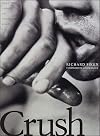
Reading Crush is like the feeling of pulling a rubber band off your wrist that's been on for hours. There's an ache that is familiar and unnatural and continues to loop around and around in these poems. The poems sprawl, sometimes lingering on a scene either violent or delicate, but all contribute to an intensity that leaves a mark.
What is *THIS*? A poetry collection that I loved to bits and clutched to my chest? If you've been following my thread for a long time, you know that I don't generally get on terribly well with poetry, but this one, man. It is so good, and so heartbreaking, and so, like, beautifully, unbearably *attentive* to detail and nuance of moment and emotion. Just. Read it. But, be aware, it will wreck you.
Poetry should be like a mortal wound. Painful, messy, and ultimately fatal.
Siken's writing is raw, like gnawing on a torn-off limb is raw. Every piece in this collection feels a little like a first draft, too. Not in the way that it feels unfinished, or messy, or like it needs polish; but in the way that it feels as though what Siken has to say couldn't be said any other way, with any other combination of words.
This kind of manic, despondent energy propels even the very longest of these show more poems along with devastating force. Siken's mastery over misery, over lust, over love, may extend no further than translating it into verse. And thank whatever erotic and miserable god is responsible, because if Richard Siken was happy, we wouldn't have wound up with Crush. show less
Siken's writing is raw, like gnawing on a torn-off limb is raw. Every piece in this collection feels a little like a first draft, too. Not in the way that it feels unfinished, or messy, or like it needs polish; but in the way that it feels as though what Siken has to say couldn't be said any other way, with any other combination of words.
This kind of manic, despondent energy propels even the very longest of these show more poems along with devastating force. Siken's mastery over misery, over lust, over love, may extend no further than translating it into verse. And thank whatever erotic and miserable god is responsible, because if Richard Siken was happy, we wouldn't have wound up with Crush. show less
Lists
Awards


You May Also Like


Associated Authors
Statistics
- Works
- 5
- Also by
- 9
- Members
- 1,530
- Popularity
- #16,819
- Rating
- 4.3
- Reviews
- 50
- ISBNs
- 16
- Languages
- 3
- Favorited
- 14