

Carl Phillips (1) (1959–)
Author of Then the War: And Selected Poems, 2007-2020
For other authors named Carl Phillips, see the disambiguation page.
About the Author
Carl Phillips is the author of four books of poems, including "Pastoral" & "From the Devotions", a finalist for the National Book Award. He is an associate professor of English & of African & Afro-American Studies at Washington University in St. Louis. (Bowker Author Biography)
Image credit: By David Shankbone - Own work, CC BY 2.5, https://commons.wikimedia.org/w/index.php?curid=1702926
Works by Carl Phillips
Associated Works
The Vintage Book of Contemporary American Poetry (1990) — Contributor, some editions — 856 copies, 3 reviews
Boys Like Us: Gay Writers Tell Their Coming Out Stories (1996) — Contributor — 426 copies, 2 reviews
African American Poetry: 250 Years of Struggle and Song (2020) — Contributor — 235 copies, 4 reviews
Nepantla: An Anthology Dedicated to Queer Poets of Color (2018) — Contributor — 124 copies, 2 reviews
Freedom in This Village: Twenty-Five Years of Black Gay Men's Writing (2005) — Contributor — 91 copies, 2 reviews
Buzz Words: Poems About Insects (Everyman's Library Pocket Poets Series) (2021) — Contributor — 56 copies
Orpheus and Company: Contemporary Poems on Greek Mythology (1999) — Contributor — 52 copies, 1 review
Angles of Ascent: A Norton Anthology of Contemporary African American Poetry (2013) — Contributor — 48 copies
Collective Brightness: LGBTIQ Poets on Faith, Religion & Spirituality (2011) — Contributor — 14 copies
Tagged
Common Knowledge
- Canonical name
- Phillips, Carl
- Birthdate
- 1959
- Gender
- male
- Occupations
- professor of English
poet - Organizations
- Washington University in St. Louis
- Awards and honors
- Fellowship of the Academy of American Poets (2006)
American Academy of Arts and Letters Academy Award ( [2001])
Kenyon Review Award for Literary Achievement (2013) - Nationality
- USA
- Birthplace
- Everett, Washington, USA
- Associated Place (for map)
- USA
Members
Reviews
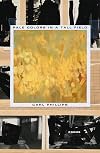
Phillips is a poet of long discursive lines and an ability to describe the human predicament in philosophical and interesting associations, often to do with nature and landscapes - particularly here, horses, bees, and the sea. In the title poem of this new collection he associates the problem of memory, what we remember that we wouldn't if we got to choose what we remember, with horses long tamed being freed and unexpectedly re-entering a past state of being, suggesting there's a kind of show more violence to it. "There's so much I'd rather not remember, that to be asked to do so can seem a cruelty, almost" is a sentiment most readers can likely identify with - the memories bringing back what was lost, what could have been, but wasn't.
On a first reading my favorite of these poems is "On Being Asked To Be More Specific When It Comes To Longing", a poem about either love or existential meaning, maybe both. In the poem, the speaker comes into a meadow of silverrod plants, "each stem briefly an angled argument against despair, then only weeds by a better name again", and stumbles through the twilight, his actions "like taking a horsewhip to a swarm of bees, that they might more easily disperse", until finally he comes to a sort of revelation "from the smudged edge of all that seemed to be left of what we'd called belief, once", seeing the human body "made out of a ruin a light" used to both find ourselves and each other, for "when afraid, what is faith, but to make a gift of yourself - give; and you shall receive", he concludes, quoting from the gospel of Luke.
But there's so much more; a Phillips collection always rewards continuous returns, letting the waves wash over and break, and recede, and wash over and break, and recede... a rhythmical pattern within that is deeply true. show less
On a first reading my favorite of these poems is "On Being Asked To Be More Specific When It Comes To Longing", a poem about either love or existential meaning, maybe both. In the poem, the speaker comes into a meadow of silverrod plants, "each stem briefly an angled argument against despair, then only weeds by a better name again", and stumbles through the twilight, his actions "like taking a horsewhip to a swarm of bees, that they might more easily disperse", until finally he comes to a sort of revelation "from the smudged edge of all that seemed to be left of what we'd called belief, once", seeing the human body "made out of a ruin a light" used to both find ourselves and each other, for "when afraid, what is faith, but to make a gift of yourself - give; and you shall receive", he concludes, quoting from the gospel of Luke.
But there's so much more; a Phillips collection always rewards continuous returns, letting the waves wash over and break, and recede, and wash over and break, and recede... a rhythmical pattern within that is deeply true. show less
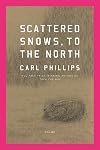
I received an advance copy via NetGalley.
This poetry book makes for a brief, contemplative read as Phillips addresses nature, the human condition, and a wide array of emotions. I hadn’t read him before now; while I cannot say that every poem resounded within my body like a plucked harp string, there were verses that made me gasp and whisper “Wow” to myself as I reread the lines as if I could absorb those select syllables of genius. A few of my favorites were:
"...how / forgiveness might show more look / in the face, say, if it had a face, and forgiveness / were real..."
"...The ospreys / slept in their nests, presumably: for omens / also need sleep; indeed, the best ones can sleep for / years, uninterrupted."
"... I could see my face, / tilted there, like a solar eclipse viewed indirectly, / which / is the proper way, in a basin of water..." show less
This poetry book makes for a brief, contemplative read as Phillips addresses nature, the human condition, and a wide array of emotions. I hadn’t read him before now; while I cannot say that every poem resounded within my body like a plucked harp string, there were verses that made me gasp and whisper “Wow” to myself as I reread the lines as if I could absorb those select syllables of genius. A few of my favorites were:
"...how / forgiveness might show more look / in the face, say, if it had a face, and forgiveness / were real..."
"...The ospreys / slept in their nests, presumably: for omens / also need sleep; indeed, the best ones can sleep for / years, uninterrupted."
"... I could see my face, / tilted there, like a solar eclipse viewed indirectly, / which / is the proper way, in a basin of water..." show less
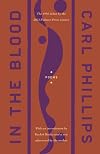
That’s still why I write–to save myself, with the hope that the poems, if only as proof that we’re together in this, might incidentally rescue a few others. from In the Blood by Carl Phillips
The Afterword by Carl Phillips in this, the reprinting of his first book of poetry, is immensely moving, the story of how he came to write poetry and how it saved him. He wrote for himself, feeling they were “intensely private,” their acceptance an affirmation he never expected.
Phillips show more starting writing the poems in 1986 during a difficult time in his life, and a difficult time to be queer in America. I was working at a religious publishing house at the time, friends with a young man who was struggling with his sexual orientation, passing as straight. I was also friends with another young gay man, not open but not secret either. A woman told me she was afraid to use the telephone–all land lines then–after he had used it, fearful of AIDS.
I can imagine the impact that these moving, revealing, poems must have had at the time of their publication.
The book includes an Introduction by Rachel Hadas written in 1991/
Thanks to Farrar, Straus and Giroux for a free book through NetGalley. show less
The Afterword by Carl Phillips in this, the reprinting of his first book of poetry, is immensely moving, the story of how he came to write poetry and how it saved him. He wrote for himself, feeling they were “intensely private,” their acceptance an affirmation he never expected.
Phillips show more starting writing the poems in 1986 during a difficult time in his life, and a difficult time to be queer in America. I was working at a religious publishing house at the time, friends with a young man who was struggling with his sexual orientation, passing as straight. I was also friends with another young gay man, not open but not secret either. A woman told me she was afraid to use the telephone–all land lines then–after he had used it, fearful of AIDS.
I can imagine the impact that these moving, revealing, poems must have had at the time of their publication.
The book includes an Introduction by Rachel Hadas written in 1991/
Thanks to Farrar, Straus and Giroux for a free book through NetGalley. show less
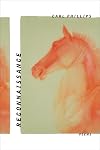
It's difficult to review a book which you feel, in my case at least, that you've failed in a way. These poems are beautiful, with intimacy, loneliness, heartbreak and survival at their core. I missed some parts of it, and I don't think it's the writer's fault. It's just that, as embarrassing as it is to admit, I might lack whatever reader experience—not life inexperience, but reading inexperience in that I'm a relatively new reader of poems in a serious way, and these poems might have show more resonated with deeper meaning otherwise. I did read this to completion, and it is a wonderful collection despite the gaps in my knowledge, but just can't help feeling I've unfortunately missed a lot. I'll try to come back to these poems and the writer later, hopefully I'll have learned more by then. show less
Lists
Poetry (1)
Awards


You May Also Like


Associated Authors
Statistics
- Works
- 24
- Also by
- 32
- Members
- 1,033
- Popularity
- #24,927
- Rating
- 3.8
- Reviews
- 14
- ISBNs
- 60
- Favorited
- 2