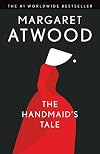
This really irked me to no end but I get it, you know? Speculative fiction just be like that sometimes. I really don't like this, in the sense that I didn't enjoy it. But I did feel other things – anxiety, rage, disappointment, and all the other sickening emotions one might feel.
That said, this particular rating isn't a mark of my enjoyment, it's more of a measure of the book's indispensability.
That said, this particular rating isn't a mark of my enjoyment, it's more of a measure of the book's indispensability.
Silage Choppers and Snake Spirits: The Lives and Struggles of Two Americans in Modern China by Dao-yuan Chou

Chou narrated the lives and struggles of Joan Hinton and Sid Engst the way the two probably would have wanted it - with thorough criticism and self-criticism. They were painted not simply against the backdrop of a newly socialist China at first and how the country struggled to keep its proletarian ideology later, but as two characters who reacted to and acted in the political situation they were facing. Personal stories interspersed with historical lessons which did well in guiding the reader through the political situation at the time. I especially liked the fact that I got to learn a lot about China - before and after the revolution, and before and after the capitalist roaders won.

Reading this taught me one thing: Even your favorite author can write boring books. The first half felt like a loosely connected series of misadventures in a winter wasteland (I swear Ursula has a thing for winter adventures), and the second half was some sort of mind game that ends with the author trolling the reader. Well, I'm still glad I read it once.
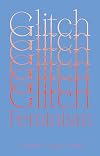
Requires so much background information that I felt most of the book that the author is just saying words without meaning anything. A me problem again, but every statement was so far removed from my personal lived experience that I couldn't even take what it was saying seriously.
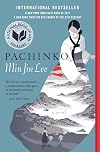
Life's a game of chance, but it doesn't hurt to know the rules.
I admit I had a hard time getting into this book at first, but it picked up around the second part until a pivotal moment in the third part, where it fizzled out again. Regardless, I still admire the book's depth which, while not perfect, was impressive for its scope. I don't read a lot of historical fiction but from what I have read I know it's hard to achieve a nuanced portrait of the era being represented without falling under the historian's fallacy. I could see the genuine attempt here of understanding events and decisions as they were being made and I appreciate that.
The book is not without its faults - several characters introduced then left too hastily without closure, time jumps that skip over "uneventful" years, important topics that are mentioned once then never revisited. Though I suppose one could argue the book just imitates life, in that sense.
However I'm willing to look past all that because at heart this is a story about home and family, about surviving amidst it all. History may have failed us but it doesn't matter as we're still here and it can't erase us.
I admit I had a hard time getting into this book at first, but it picked up around the second part until a pivotal moment in the third part, where it fizzled out again. Regardless, I still admire the book's depth which, while not perfect, was impressive for its scope. I don't read a lot of historical fiction but from what I have read I know it's hard to achieve a nuanced portrait of the era being represented without falling under the historian's fallacy. I could see the genuine attempt here of understanding events and decisions as they were being made and I appreciate that.
The book is not without its faults - several characters introduced then left too hastily without closure, time jumps that skip over "uneventful" years, important topics that are mentioned once then never revisited. Though I suppose one could argue the book just imitates life, in that sense.
However I'm willing to look past all that because at heart this is a story about home and family, about surviving amidst it all. History may have failed us but it doesn't matter as we're still here and it can't erase us.
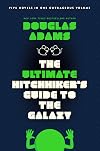
I made the mistake of reading all five books one after the other. Near the end of the third book it started feeling like a chore (too many things that don't make sense in language that's trying a bit too hard to be clever). My reaction proved to be too soon, though, cause I straight up fell in love with the mundanity of the fourth book. The fifth one felt it had a lot going on, and I was worried a few chapters near the end cause too many subplots were happening simultaneously, and then bam!, it just... ends. So bleak. So sad. I need to read Eoin Colfer's reversal book. For Zark's sake.
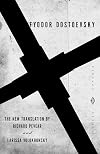
Dostoyevsky set out to portray a "positively beautiful man" in The Idiot. Unfortunately in our society, such a character can only end up one way.
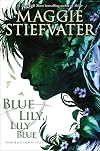
3.5
Invested in these characters so much that I don't even care what happens with the plot as long as the gang stays intact!! Glendower who? Bro I just wanna see if my ship will sail
Invested in these characters so much that I don't even care what happens with the plot as long as the gang stays intact!! Glendower who? Bro I just wanna see if my ship will sail
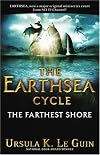
It was pretty underwhelming. I don't have much to say about the topic of Death, I agree with most of what Le Guin was trying to say, that it's a necessary and natural counterpart to Life. So the philosophical parts were a bit boring for me.
What I did like about this, is how Ged is slowly and slowly becoming like a supporting actor in his own book. So unusual, to see the hero turn old, and in the third book in a series of six at that. I wonder what the next book will be about, if it's true thatGed has lost his magery.
"He's done with doing. He goes home."
What I did like about this, is how Ged is slowly and slowly becoming like a supporting actor in his own book. So unusual, to see the hero turn old, and in the third book in a series of six at that. I wonder what the next book will be about, if it's true that
"He's done with doing. He goes home."
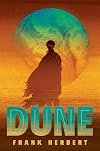
An epic piece of imagination. I really loved the worldbuilding. The characters are good too, although there are times they can be too dramatic. This might be an unpopular opinion but my favorite parts are the excerpts from Princess Irulan's writings. In fact I wish I was reading them instead. No offense, Frank.
2.5
This is so long, and for what?? The characters were fine, Aomame and Tengo are likable enough. I adored Tamaru. Good descriptions, good emotions, but overall it's just too romantic, and too boring.
This is so long, and for what?? The characters were fine, Aomame and Tengo are likable enough. I adored Tamaru. Good descriptions, good emotions, but overall it's just too romantic, and too boring.
I feel like it could have been good, were it under 300 pages long. It started out strong but just drags and drags and drags to no discernible end. This probably wasn't a good choice for the only Stephen King book I might ever read but oh well
2.5
This was fine. Not what I expected. Where was the stars part? The destiny of Earthseed is to take root among the stars, but all we ever saw was Earth. Earth in all its damage and poverty. Not far from what we witness even today. I guess I would have liked a more utopian take. Or at least a society on its way to utopia, farther up the way.
This was fine. Not what I expected. Where was the stars part? The destiny of Earthseed is to take root among the stars, but all we ever saw was Earth. Earth in all its damage and poverty. Not far from what we witness even today. I guess I would have liked a more utopian take. Or at least a society on its way to utopia, farther up the way.
This book had no plot - seriously. It could work as a character study of a gender non-conforming person. From the few analyses I've read that's why the work is deemed a classic today. But as a novel, I judged it poorly. For all the sophistication in Orlando's upbringing and thoughts, I couldn't find one thing to relate to. I just don't think this was for me
Immensely enjoyed the first half more than the second half. There is something between the politically-driven context setting and character introductions in the first half versus the plot-driven young adult-ish boat adventure in the second half that just doesn't make sense to me. That said, I like Malcolm. He's a good character so far.
3.5
A little bit of everything from Kafka: short stories, aphorisms, flash fiction, the mini travelogues he loves so much. The first part of this collection (Four Stories) was considerably better than the latter parts, with two of them (A Hunger Artist and Josefine the Singer) being two of the most poignant, albeit opposite, takes on artistry I have ever read. In the latter parts I liked A Country Doctor and A Report to an Academy.
A little bit of everything from Kafka: short stories, aphorisms, flash fiction, the mini travelogues he loves so much. The first part of this collection (Four Stories) was considerably better than the latter parts, with two of them (A Hunger Artist and Josefine the Singer) being two of the most poignant, albeit opposite, takes on artistry I have ever read. In the latter parts I liked A Country Doctor and A Report to an Academy.
I've never read anything similar to Borges. Several of the works here are written as official reports documenting alternate worlds or realities. Even the ones that are in traditional story format border on uncanny territory, almost but not quite like the world we live in. It's so surreal and confusing to read but also curiosity-inducing. I probably don't understand half of what he is trying to say as I'm reading but the joy is also in analyzing and trying to make sense of it.
My favorites: The Garden of Forking Paths, The Library of Babel, and Tlön, Uqbar, Orbis Tertius
My favorites: The Garden of Forking Paths, The Library of Babel, and Tlön, Uqbar, Orbis Tertius
Most of the stories and poems in this are not memorable, though they are short enough to not make me regret reading them. Sometimes it seems Russian literature is some of the most profound things I've ever read, and other times it completely escapes me, like this book.
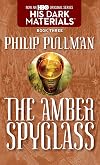
All the atoms that were them, they’ve gone into the air and the wind and the trees and the earth and all the living things. They’ll never vanish. They’re just part of everything.
Fourteen year-old me obssessed over this idea of death: to die, finally belonging not just to something, but to everything. (P.S. This is probably the most subjective 5 stars I have and will ever give - forgive me)
Fourteen year-old me obssessed over this idea of death: to die, finally belonging not just to something, but to everything. (P.S. This is probably the most subjective 5 stars I have and will ever give - forgive me)
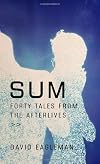
Forty meditations on a question which will never have a definitive answer: what happens to us after we die?
A lot of the stories seemed throwaway-ish, but there are also those which can be a starting point for further contemplation. Nothing revolutionary but still neat. Some of the stories I liked: Metamorphosis, Mary, Circle of Friends, Mirrors, Subjunctive
A lot of the stories seemed throwaway-ish, but there are also those which can be a starting point for further contemplation. Nothing revolutionary but still neat. Some of the stories I liked: Metamorphosis, Mary, Circle of Friends, Mirrors, Subjunctive
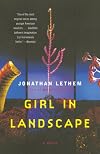
Less about settling into another planet than it is about human connections and intentions, especially when faced with the alien and unknown.
Lethem's prose made me want to go to the Planet of the Archbuilders. See the Archbuilders, or what's left of them at least. See the ruins. The first third of the book, describing ozoneless Earth, was enjoyable as well.
I guess the only criticism I have is how the ending didn't feel all that satisfying. I don't know how it could have been though.
Lethem's prose made me want to go to the Planet of the Archbuilders. See the Archbuilders, or what's left of them at least. See the ruins. The first third of the book, describing ozoneless Earth, was enjoyable as well.
I guess the only criticism I have is how the ending didn't feel all that satisfying. I don't know how it could have been though.
3.5
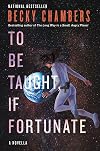
A home can only exist in a moment. Something both found and made. Always temporary, in the grand scheme of things, but vital all the same.
This was so cozy!
A home can only exist in a moment. Something both found and made. Always temporary, in the grand scheme of things, but vital all the same.
This was so cozy!
3.5
For those who want some Earthsea lore. We discover why women are not allowed to be wizards, why wizards are celibate, the root of some traditions in Roke and why it's time to change them.
The Finder - About the foundation of Roke and the important role that women played in it.
Darkrose and Diamond - It's about wizards having to give up love for magic. About anyone having to give up something for something else. An ode against single-heartedness. We each of us contain multitudes.
The Bones of the Earth - This is my favorite cause it's about Ogion On the High Marsh - It's when someone is powerless that they discover who they can be.
Dragonfly - Bridge between Tehanu and The Other Wind. A story about, well, you'll find out.
For those who want some Earthsea lore. We discover why women are not allowed to be wizards, why wizards are celibate, the root of some traditions in Roke and why it's time to change them.
The Finder - About the foundation of Roke and the important role that women played in it.
Darkrose and Diamond - It's about wizards having to give up love for magic. About anyone having to give up something for something else. An ode against single-heartedness. We each of us contain multitudes.
The Bones of the Earth - This is my favorite cause it's about Ogion On the High Marsh - It's when someone is powerless that they discover who they can be.
Dragonfly - Bridge between Tehanu and The Other Wind. A story about, well, you'll find out.
1 star for me, oof. Reasons not in order:
• There's only so much that mental illness and trauma can excuse idk. I'm not saying he's evil or a bad person for the things he's done, but everyone has to be responsible for their own actions at some point. Having trauma doesn't excuse anyone from being an asshole
• The original title "disqualified as a human being" just reveals the perspective of Yozo which i just can't sympathize with. By putting himself down he's also putting down other people with mental health problems as not human beings. Which is an incredibly narrow and self-centered worldview. Like grow up. Other people exist and have feelings too ya know.
• It reads like the author has not met a woman in his entire life
• There's only so much that mental illness and trauma can excuse idk. I'm not saying he's evil or a bad person for the things he's done, but everyone has to be responsible for their own actions at some point. Having trauma doesn't excuse anyone from being an asshole
• The original title "disqualified as a human being" just reveals the perspective of Yozo which i just can't sympathize with. By putting himself down he's also putting down other people with mental health problems as not human beings. Which is an incredibly narrow and self-centered worldview. Like grow up. Other people exist and have feelings too ya know.
• It reads like the author has not met a woman in his entire life
It's a little unappealing for me. I don't think I'm the target audience for this because I, fortunately, have never lost someone in that way before. Maybe it's the style too. The narration is oversimplified that it makes the narrative seem oversimplified too, to the point that they resemble caricatures of grief instead of realistic characters. Anyway, this is a me problem; other people might like it.
This was interesting, definitely. The main story happens in just a day as the titular Clarissa Dalloway is preparing to host a party at her place. The narration doesn't focus solely on her though; we witness the days of other people and, in extension, their lives. The main conflict is whether or not Clarissa will remain in her current life as the wife of a conservative politician, hosting parties and attending to trivialities, or be true to herself and be the adventurous, free-spirited woman she always was. The problem is she's already 52 years old with a husband, a teenage daughter, and a life that she has gotten used too somehow or other.
I just wish the writing style wasn't so dense. The stream of consciousness narrative was hard to get into. If your attention drifts for even a few lines you wouldn't be able to understand the topic transitions and be forced to reread entire passages.
I just wish the writing style wasn't so dense. The stream of consciousness narrative was hard to get into. If your attention drifts for even a few lines you wouldn't be able to understand the topic transitions and be forced to reread entire passages.
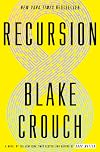
The premise was interesting, but towards the end it became just a little bit preachy. And I still don't like Blake Crouch's writing style.


I can't imagine not being able to read and write :omg: The way the disease took away from Rye and Obsidian what each valued the most, the way that they were left to envy the other who had what they wanted. The world is so bleak. Sometimes it's a wonder why we carry on, but we do, we live.
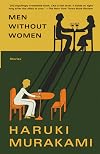
Drive My Car - 4/5
Yesterday - 4/5
An Independent Organ - 1/5
Scheherazade - 3/5
Kino - 3/5
Samsa in Love - 3/5
Men Without Women - 1/5
I don't think I can think about this separately from Ryusuke Hamaguchi's Drive My Car which combines three of the stories in this collection (DMC, Scheherazade, Kino) and spectacularly adds into it. On the other hand, two of the stories (Organ, MWM) feel eerily similar to Murakami's own 1Q84 that it almost seems like self-plagiarism.
Still, it has those signature Murakami moments which make you feel seen while narrating the oddest circumstances. Nothing beats that.
Yesterday - 4/5
An Independent Organ - 1/5
Scheherazade - 3/5
Kino - 3/5
Samsa in Love - 3/5
Men Without Women - 1/5
I don't think I can think about this separately from Ryusuke Hamaguchi's Drive My Car which combines three of the stories in this collection (DMC, Scheherazade, Kino) and spectacularly adds into it. On the other hand, two of the stories (Organ, MWM) feel eerily similar to Murakami's own 1Q84 that it almost seems like self-plagiarism.
Still, it has those signature Murakami moments which make you feel seen while narrating the oddest circumstances. Nothing beats that.