
Loree Griffin Burns
Author of Tracking Trash: Flotsam, Jetsam, and the Science of Ocean Motion
About the Author
Image credit: Image credit: Carter Hasegawa
Works by Loree Griffin Burns
Citizen Scientists: Be a Part of Scientific Discovery from Your Own Backyard (2012) 160 copies, 25 reviews
Handle With Care: An Unusual Butterfly Journey (Nonfiction - Grades Prek-4) (Junior Library Guild Selection) (2014) 103 copies, 8 reviews
Tagged
Common Knowledge
- Canonical name
- Burns, Loree Griffin
- Birthdate
- 20th Century
- Gender
- female
- Nationality
- USA
- Associated Place (for map)
- USA
Members
Reviews
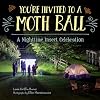
Perhaps you’ve seen moths before. Perhaps you’ve seen them fluttering around a porch light at night or (gulp) in your closet or pantry. Perhaps you think of them as the duller, less pretty cousin of the butterfly. You’ve probably never seen moths as portrayed by the stunning photography in this picture book. Burns speaks directly to the reader, inviting them to a nighttime “moth ball” and explaining that it is “a special kind of party…we’re honoring a spectacular insect.” show more The book then acts as both a how-to guide for setting up your moth viewing evening and an introduction to moths as insects. With some adult assistance, children can use this book to set up their own evening of moth viewing, complete with ultraviolet light, sheet, and moth bait made from bananas and brown sugar and learn how to gently observe moths late into the night. Harasimowicz’s photography shines throughout: in the backmatter, she discusses the difficulties of making photos outside at night and goes into detail about both close-up moth photos and larger scenes which will be of interest to budding photographers. Most children don’t need an excuse to stay up late, but a moth ball is a compelling reason for people of all ages. (Not up for setting up your own moth ball? The book mentions that many nature centers hold moth-watching events during National Moth Week in July.) show less
I've really liked the other work that Loree Griffin Burns has done; Hive Detectives and Handle with Care. However, this fell short of my expectations.
The narrative opens with the emotional discovery of two teens boys that a wide swathe of trees has been cut. Why? They were infested with Asian longhorned beetles. The first chapter describes the beetle and its life cycle, which destroys trees. "To save trees, we have to kill the beetle, but to eliminate the beetle, we have to kill a lot of show more trees."
The next chapter explains how the beetle came to infest the US and the history of the six infestations that have been found - so far. Clint McFarland and Mike Bohne are part of the team of scientists and foresters trying to stop the infestation and the following chapter moves into their current efforts to eradicate the most recent beetle infestation in Worcester, MA. Unfortunately, it wasn't just the town that was infested - the beetles had moved to a small, wild forest nearby. The final chapter discuses the effects of tree cutting and the continued spread of the beetle and re-posits the original question "Was cutting those trees the right thing to do?"
An author's note explains that Loree Griffin Burns experienced the beetle infestation in her town and this book grew out of her experiences with how the beetles were handled. She doesn't entirely agree with Clint McFarland on his solutions for the ALB infestation, but supports continuing dialogue and research into the problem. Back matter includes sources to learn more, including books, movies, and websites, glossary, bibliography, acknowledgements, and index.
This departs from the usual model of the Scientists in the Field because it doesn't really focus on any of the characters involved and I think that's why I felt so disconnected from the story. The sources say that the book is primarily based on interviews conducted by the author over the course of three years with additional research, but I didn't get the feeling of seeing into the lives and passions of the scientists. Although this is obviously a very personal issue for the author, she didn't explain her own involvement until that final author's note and this left the whole book feeling very impersonal.
Verdict: I really wanted to like this one, but I just couldn't connect with it. The older Scientists in the Field title, Science Warriors is still a better choice in my opinion. If your budget is large enough, or if invasive species is a topic of interest to your patrons, you could have both, but if you can only have one go with Science Warriors.
ISBN: 9780547792675; Published 2014 by Houghton Mifflin Harcourt; Borrowed from another library in my consortium show less
The narrative opens with the emotional discovery of two teens boys that a wide swathe of trees has been cut. Why? They were infested with Asian longhorned beetles. The first chapter describes the beetle and its life cycle, which destroys trees. "To save trees, we have to kill the beetle, but to eliminate the beetle, we have to kill a lot of show more trees."
The next chapter explains how the beetle came to infest the US and the history of the six infestations that have been found - so far. Clint McFarland and Mike Bohne are part of the team of scientists and foresters trying to stop the infestation and the following chapter moves into their current efforts to eradicate the most recent beetle infestation in Worcester, MA. Unfortunately, it wasn't just the town that was infested - the beetles had moved to a small, wild forest nearby. The final chapter discuses the effects of tree cutting and the continued spread of the beetle and re-posits the original question "Was cutting those trees the right thing to do?"
An author's note explains that Loree Griffin Burns experienced the beetle infestation in her town and this book grew out of her experiences with how the beetles were handled. She doesn't entirely agree with Clint McFarland on his solutions for the ALB infestation, but supports continuing dialogue and research into the problem. Back matter includes sources to learn more, including books, movies, and websites, glossary, bibliography, acknowledgements, and index.
This departs from the usual model of the Scientists in the Field because it doesn't really focus on any of the characters involved and I think that's why I felt so disconnected from the story. The sources say that the book is primarily based on interviews conducted by the author over the course of three years with additional research, but I didn't get the feeling of seeing into the lives and passions of the scientists. Although this is obviously a very personal issue for the author, she didn't explain her own involvement until that final author's note and this left the whole book feeling very impersonal.
Verdict: I really wanted to like this one, but I just couldn't connect with it. The older Scientists in the Field title, Science Warriors is still a better choice in my opinion. If your budget is large enough, or if invasive species is a topic of interest to your patrons, you could have both, but if you can only have one go with Science Warriors.
ISBN: 9780547792675; Published 2014 by Houghton Mifflin Harcourt; Borrowed from another library in my consortium show less
Tracking Trash: Flotsam, Jetsam, and the Science of Ocean Motion (Scientists in the Field Series) by Loree Griffin Burns
This book is a perfect example of what I love about juvenile nonfiction: it takes an interesting topic, takes the unnecessary complexity out of it, and presents it with great visuals. This book takes the scientific studies of Dr. Curtis Ebbesmeyer and shows its importance in the world today. Curt’s studies analyzed the currents in the ocean, using opportunistic evidence: the spilling of sneakers and rubber toys by cargo ships. He tracked trash in the ocean and was able to analyze surface show more currents in the Pacific Ocean. In 1990, a cargo ship coming from Korea spilled 21 containers of sneakers. By collecting data from beachcombers who found the sneakers, Curt was able to learn a lot about ocean currents and create a computer program called OSCURS to predict drift. A similar thing happened with rubber bathroom toys.
To help understanding and interest, the book is full of charts, maps, and photos. The middle of the book goes into the floating garbage dump in the middle of the Pacific Ocean that is about the size of Alaska! Did you know that?! Using special trawls scientists are able to collect samples of the garbage patch. Unfortunately, plastic soaks up pollutants, and it is not good when sea creatures or birds eat it. There are also huge bunches of garbage like this that get tangled together in discarded fishing nets. They call them “ghost nets,” and they entrap anything in their path and wreak havoc on the coral reefs. I can’t say enough about books like these—it should be required reading for all kids. show less
To help understanding and interest, the book is full of charts, maps, and photos. The middle of the book goes into the floating garbage dump in the middle of the Pacific Ocean that is about the size of Alaska! Did you know that?! Using special trawls scientists are able to collect samples of the garbage patch. Unfortunately, plastic soaks up pollutants, and it is not good when sea creatures or birds eat it. There are also huge bunches of garbage like this that get tangled together in discarded fishing nets. They call them “ghost nets,” and they entrap anything in their path and wreak havoc on the coral reefs. I can’t say enough about books like these—it should be required reading for all kids. show less
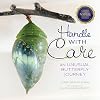
This stunningly photographed book is an unusual look at a butterfly's life. Instead of focusing on the life cycle of an individual butterfly, it focuses on the farming, raising, and packaging of pupas on butterfly farms.
The description of the caterpillars' life and transformation is woven into the narrative of their journey from Costa Rica to Boston. There's additional information on life cycles, the associated vocabulary, a glossary, and further reading. As I've come to expect from a show more Scientists in the Field author, the local/native workers are given equal, if not more, face time and their role in the process is emphasized.
The photographs are simply gorgeous from the intricate details in close up butterfly photos to rows of iridescent green pupae. Harasimowicz could definitely give Nic Bishop a run for his money.
My one reservation about this book, and why it's not sitting on my shelf right now, is that it's published by Milbrook. If you're not familiar with Milbrook, they do not offer a wide variety of bindings - library bound is often their only option. Is this book awesome? Yes. Is it $20 worth of awesome? Well...I am really trying to get away from expensive, library bound nonfiction. A hardcover usually suffices for our amount of circulation. Sure, it might fall apart in about five years - but that's about the shelf life of most nonfiction anyways.
Verdict: Clear, concise writing about an unusual aspect of butterflies; beautiful photography; excellent additional research information. But I still can't decide if I really need another butterfly book at this price. I expect I will go on taking it on and off the list for some time to come.
ISBN: 9780761393429; Published 2014 by Milbrook; Borrowed from another library in my consortium show less
The description of the caterpillars' life and transformation is woven into the narrative of their journey from Costa Rica to Boston. There's additional information on life cycles, the associated vocabulary, a glossary, and further reading. As I've come to expect from a show more Scientists in the Field author, the local/native workers are given equal, if not more, face time and their role in the process is emphasized.
The photographs are simply gorgeous from the intricate details in close up butterfly photos to rows of iridescent green pupae. Harasimowicz could definitely give Nic Bishop a run for his money.
My one reservation about this book, and why it's not sitting on my shelf right now, is that it's published by Milbrook. If you're not familiar with Milbrook, they do not offer a wide variety of bindings - library bound is often their only option. Is this book awesome? Yes. Is it $20 worth of awesome? Well...I am really trying to get away from expensive, library bound nonfiction. A hardcover usually suffices for our amount of circulation. Sure, it might fall apart in about five years - but that's about the shelf life of most nonfiction anyways.
Verdict: Clear, concise writing about an unusual aspect of butterflies; beautiful photography; excellent additional research information. But I still can't decide if I really need another butterfly book at this price. I expect I will go on taking it on and off the list for some time to come.
ISBN: 9780761393429; Published 2014 by Milbrook; Borrowed from another library in my consortium show less
Lists
Awards


Tracking Trash: Flotsam, Jetsam, and the Science of Ocean Motion (Finalist – Middle Grades Science Book – 2008)
The Hive Detectives: Chronicle of a Honey Bee Catastrophe (Winner – Middle Grades Science Book – 2011)
Handle With Care: An Unusual Butterfly Journey (Nonfiction - Grades Prek-4) (Junior Library Guild Selection) (Finalist – Middle Grades Science Book – 2015)
Citizen Scientists: Be a Part of Scientific Discovery from Your Own Backyard (Winner – Hands-On Science Book – 2013)


You May Also Like


Statistics
- Works
- 11
- Members
- 1,444
- Popularity
- #17,805
- Rating
- 4.2
- Reviews
- 122
- ISBNs
- 46
- Languages
- 1

