
Pamela S. Turner
Author of Samurai Rising: The Epic Life of Minamoto Yoshitsune
About the Author
Pamela S. Turner is the author of Hachiko: The True Story of a Loyal Dog and Gorilla Doctors: Saving Endangered Great Apes, an ALA Notable book. She lives in Oakland, California.
Works by Pamela S. Turner
A Life in the Wild: George Schaller's Struggle to Save the Last Great Beasts (2008) 65 copies, 3 reviews
Tagged
Common Knowledge
- Canonical name
- Turner, Pamela S.
- Legal name
- Turner, Pamela S.
- Gender
- female
- Education
- University of California, Irvine (BA|Social Science)
University of California, Berkeley (Masters|Public Health) - Occupations
- author
- Nationality
- USA
- Places of residence
- Oakland, California, USA
Newberg, Oregon, USA - Associated Place (for map)
- USA
Members
Reviews
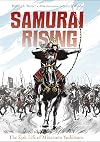
Initially I thought this was a graphic novel, for some reason. It is not, although the illustrations are spectacular. Great, fast paced and fascinating biography of Minamoto Yoshitsune. I like the somewhat lighthearted tone, the slightly snarky asides, and the well written biographical aspects. Given that I find medieval Japan to be an utterly foreign landscape, it was an excellent primer. It also feels like a story that is all horrific violence for the sake of honor and pride -- the more we show more change, the more remains the same. show less
A bloody good history lesson for kids who don't usually love the subject.
(Full disclosure: I received a free electronic ARC for review through NetGalley.)
Minamoto Yoshitsune should not have been a samurai. But his story is legend in this real-life Game of Thrones.
This epic tale of warriors and bravery, rebellion and revenge, reads like a novel, but this is the true story of the greatest samurai in Japanese history.
When Yoshitsune was just a baby, his father went to war with a rival samurai show more family—and lost. His father was killed, his mother captured, and his brothers sent away. Yoshitsune was raised in his enemy’s household until he was sent away to live in a monastery. He grew up skinny and small. Not the warrior type. But he did inherit his family pride and when the time came for the Minamoto to rise up against their enemy once again, Yoshitsune was there. His daring feats, such as storming a fortress by riding on horseback down the side of a cliff and his glorious victory at sea, secured Yoshitsune’s place in history and his story is still being told centuries later.
(Synopsis via Goodreads.)
###
So this is a first: I do not remember requesting an ARC of this book. I suspect the wishbone button is at play here but, since NetGalley doesn't have a way of tracking wishes, who knows? It was a stressful summer and fall, and I may have done all sorts of crazy things on the internet that I don't remember.
Which is my roundabout way of saying that, despite the abundance of katanas and severed heads, Samurai Rising isn't the sort of book I normally gravitate to. I don't read a ton of middle grade, and military history mostly bores me to tears. (I'd call Samurai Rising equal parts biography and military history/strategy. But since Yoshitsune is mostly known for his inspired military leadership, that tips the scales more heavily toward the latter.) Though I did skim some of the more strategy-heavy battle scenes (the lack of maps in the ARC made them even more difficult for me to envision), overall I was pleasantly surprised: Samurai Rising is a rather engaging read.
Rife with political intrigue, shifting loyalties, and back-stabbing, Samurai Rising often reads like a centuries-old soap opera. Danger comes not just from rival samurai bloodlines (such as the warring Minamoto and Taira clans that take center stage here), but from within one's own family as well: nephews are hired to assassinate their uncles, brothers betray brothers, and parents may murder their own children to (re)claim power. Ironically, among Yoshitsune's small band of closest friends, there was not a single Minamoto to be found; and, despite all he did to help his half-brother Yoritomo ascend to power, Yoshitsune was cast aside - similar to how the Emperor treated their father decades before.
Yoshitsune's is the ultimate underdog story. After his father's defeat, then-baby Yoshitsune's life was spared, but on the condition that he be raised as a monk, far away from the politics of Kyoto. Consequently, he didn't begin his samurai training until he was fifteen, when he fled his impending religious vows and the life of tedium and anonymity they promised. By comparison, most samurai were finishing up a decade's worth of training at this age and would be considered war-ready, or nearly so. Likewise, as a member of the opposition force, Yoshitsune often fought with smaller armies and in disadvantageous conditions - such as the famed cliffside attack on the Taira fortress at Ichi-no-Tani. Yet he always managed to rally his men to victory.
(Until he didn't. If you're already familiar with Japanese history, you probably know how Yoshitsune's story ends. I'm not, and it came as a huge surprise. Nearly 40% of this book is comprised of back matter, a fact not immediately obvious in the ARC owing to the lack of a TOC. Thus I didn't realize I'd reached the end until the last page. To say that I didn't see it coming is an understatement.)
Even so, it's disconcerting to see Yoshitsune positioned as the unequivocal hero. In their quest for power and riches, the samurai and monarchy consistently trample on those belonging to lower social classes. As they rampaged across the countryside, samurai ransacked homes, stole food and livestock to feed their armies, and kidnapped peasants to serve them - all while demanding taxes to fund a lifestyle at turns lavish and bloodthirsty. Turner reports that Yoshitsune was a little more humane than most, yet this didn't stop him from setting fire to trees, fields - and even the homes of commoners - in order to light a midnight attack on the Taira:
For a warrior Yoshitsune was unusually civilized in his dealings with common people. He made sure that his warriors behaved well in Kyoto - no thievery or bullying happened on his watch. Yet he remained a samurai. Samurai didn't see themselves as protectors of the common people; a peasant had no more "rights" than an ox. So the fires were lit.
Meticulously researched, Turner bases much of her narrative on two sources: The Tale of the Heike, as translated by Helen McCullough and Royall Tyler, and the Azuma kagami (Mirror of Eastern Japan). Yoshitsune "is clearly one of the Heike's heroes," which could also explain the bias. That, and no one wants to root for Goliath.
Given the age and general sketchiness of the original texts, it's no surprise that Turner's retelling sometimes lacks depth and emotion; centuries dead and buried, their voices gone with them, Turner is often left to speculate about her subjects' motivations, feelings, and innermost desires. What we're left with is the who, what, when, and where, but the whys are a little harder to come by.
In this vein, women are predictably absent from the story - save for Yoshitsune's lover Shizuka, who's an all-around bad-ass. (Turner describes her as the bravest character in the whole darn book, and I'd be hard-pressed to disagree.) In her copious Author's Notes, Turner includes a section on the status of women, which I appreciate; but I would've liked to have learned even more about Yoritomo's widow, Hōjō Masako, who had her own son Yoriie strangled in order to prevent him allying with political factions she opposed. As Turner so wryly points out:
Minamoto rule of Japan ended on this fratricidal note. In Yoritomo had left a strong and loyal brother alive to protect his heirs, would history have turned out differently? [...]
The Hōjō family was - wait for it! - a minor branch of the Taira.
Still, Samurai Rising is an excellent choice for kids who aren't too keen on history - but might be swayed with a little action and bloodshed.
http://www.easyvegan.info/2016/02/03/samurai-rising-the-epic-life-of-minamoto-yo... show less
(Full disclosure: I received a free electronic ARC for review through NetGalley.)
Minamoto Yoshitsune should not have been a samurai. But his story is legend in this real-life Game of Thrones.
This epic tale of warriors and bravery, rebellion and revenge, reads like a novel, but this is the true story of the greatest samurai in Japanese history.
When Yoshitsune was just a baby, his father went to war with a rival samurai show more family—and lost. His father was killed, his mother captured, and his brothers sent away. Yoshitsune was raised in his enemy’s household until he was sent away to live in a monastery. He grew up skinny and small. Not the warrior type. But he did inherit his family pride and when the time came for the Minamoto to rise up against their enemy once again, Yoshitsune was there. His daring feats, such as storming a fortress by riding on horseback down the side of a cliff and his glorious victory at sea, secured Yoshitsune’s place in history and his story is still being told centuries later.
(Synopsis via Goodreads.)
###
So this is a first: I do not remember requesting an ARC of this book. I suspect the wishbone button is at play here but, since NetGalley doesn't have a way of tracking wishes, who knows? It was a stressful summer and fall, and I may have done all sorts of crazy things on the internet that I don't remember.
Which is my roundabout way of saying that, despite the abundance of katanas and severed heads, Samurai Rising isn't the sort of book I normally gravitate to. I don't read a ton of middle grade, and military history mostly bores me to tears. (I'd call Samurai Rising equal parts biography and military history/strategy. But since Yoshitsune is mostly known for his inspired military leadership, that tips the scales more heavily toward the latter.) Though I did skim some of the more strategy-heavy battle scenes (the lack of maps in the ARC made them even more difficult for me to envision), overall I was pleasantly surprised: Samurai Rising is a rather engaging read.
Rife with political intrigue, shifting loyalties, and back-stabbing, Samurai Rising often reads like a centuries-old soap opera. Danger comes not just from rival samurai bloodlines (such as the warring Minamoto and Taira clans that take center stage here), but from within one's own family as well: nephews are hired to assassinate their uncles, brothers betray brothers, and parents may murder their own children to (re)claim power. Ironically, among Yoshitsune's small band of closest friends, there was not a single Minamoto to be found; and, despite all he did to help his half-brother Yoritomo ascend to power, Yoshitsune was cast aside - similar to how the Emperor treated their father decades before.
Yoshitsune's is the ultimate underdog story. After his father's defeat, then-baby Yoshitsune's life was spared, but on the condition that he be raised as a monk, far away from the politics of Kyoto. Consequently, he didn't begin his samurai training until he was fifteen, when he fled his impending religious vows and the life of tedium and anonymity they promised. By comparison, most samurai were finishing up a decade's worth of training at this age and would be considered war-ready, or nearly so. Likewise, as a member of the opposition force, Yoshitsune often fought with smaller armies and in disadvantageous conditions - such as the famed cliffside attack on the Taira fortress at Ichi-no-Tani. Yet he always managed to rally his men to victory.
(Until he didn't. If you're already familiar with Japanese history, you probably know how Yoshitsune's story ends. I'm not, and it came as a huge surprise. Nearly 40% of this book is comprised of back matter, a fact not immediately obvious in the ARC owing to the lack of a TOC. Thus I didn't realize I'd reached the end until the last page. To say that I didn't see it coming is an understatement.)
Even so, it's disconcerting to see Yoshitsune positioned as the unequivocal hero. In their quest for power and riches, the samurai and monarchy consistently trample on those belonging to lower social classes. As they rampaged across the countryside, samurai ransacked homes, stole food and livestock to feed their armies, and kidnapped peasants to serve them - all while demanding taxes to fund a lifestyle at turns lavish and bloodthirsty. Turner reports that Yoshitsune was a little more humane than most, yet this didn't stop him from setting fire to trees, fields - and even the homes of commoners - in order to light a midnight attack on the Taira:
For a warrior Yoshitsune was unusually civilized in his dealings with common people. He made sure that his warriors behaved well in Kyoto - no thievery or bullying happened on his watch. Yet he remained a samurai. Samurai didn't see themselves as protectors of the common people; a peasant had no more "rights" than an ox. So the fires were lit.
Meticulously researched, Turner bases much of her narrative on two sources: The Tale of the Heike, as translated by Helen McCullough and Royall Tyler, and the Azuma kagami (Mirror of Eastern Japan). Yoshitsune "is clearly one of the Heike's heroes," which could also explain the bias. That, and no one wants to root for Goliath.
Given the age and general sketchiness of the original texts, it's no surprise that Turner's retelling sometimes lacks depth and emotion; centuries dead and buried, their voices gone with them, Turner is often left to speculate about her subjects' motivations, feelings, and innermost desires. What we're left with is the who, what, when, and where, but the whys are a little harder to come by.
In this vein, women are predictably absent from the story - save for Yoshitsune's lover Shizuka, who's an all-around bad-ass. (Turner describes her as the bravest character in the whole darn book, and I'd be hard-pressed to disagree.) In her copious Author's Notes, Turner includes a section on the status of women, which I appreciate; but I would've liked to have learned even more about Yoritomo's widow, Hōjō Masako, who had her own son Yoriie strangled in order to prevent him allying with political factions she opposed. As Turner so wryly points out:
Minamoto rule of Japan ended on this fratricidal note. In Yoritomo had left a strong and loyal brother alive to protect his heirs, would history have turned out differently? [...]
The Hōjō family was - wait for it! - a minor branch of the Taira.
Still, Samurai Rising is an excellent choice for kids who aren't too keen on history - but might be swayed with a little action and bloodshed.
http://www.easyvegan.info/2016/02/03/samurai-rising-the-epic-life-of-minamoto-yo... show less
Yoshitsune Minamoto’s life was the stuff of legends, the ideal to which all later samurai would measure themselves. His “inheritance arrived early. They boy could not yet walk when his father left him a lost war, a shattered family, and a bitter enemy.” Sent by his father’s beheader to a Buddhist temple to be raised by monks he eventually escaped north to be taken in by a wealth noble and there trained as a warrior, and commander. Furious, fast and famously brave he specialized in show more the surprise attack coming down at his enemies from mountain heights and across supposedly impassible bodies of water. Ultimately defeated and fleeing into exile, he fought on to the last, and then committed ritual suicide rather than surrender to his enemies.
Turner’s well documented biography of the iconic samurai presents a wealth of information presented in a lively style accessible to twenty-first century youth. For example, to describe fighting style of the samurai she writes of these medieval oriental knights:
"Large scale tactics maneuvers weren’t part of their playbook. In fact, if history’s great fighters were gathered together, Yoshitsune’s men would find a lot more in common with fiercely independent Comanches than disciplined Roman legionnaires."
And as rivals in war sneered and insulted each other before a battle, the author notes, “Trash talk, it seems, is not a modern invention.” show less
Turner’s well documented biography of the iconic samurai presents a wealth of information presented in a lively style accessible to twenty-first century youth. For example, to describe fighting style of the samurai she writes of these medieval oriental knights:
"Large scale tactics maneuvers weren’t part of their playbook. In fact, if history’s great fighters were gathered together, Yoshitsune’s men would find a lot more in common with fiercely independent Comanches than disciplined Roman legionnaires."
And as rivals in war sneered and insulted each other before a battle, the author notes, “Trash talk, it seems, is not a modern invention.” show less
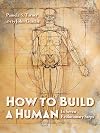
The table of contents alerts the reader to the fact that this is a book with a sense of humor ("We Stand Up," "We Smash Rocks," "We Get Swelled Heads," "We Take A Hike," "We Invent Barbecue," "We Start Talking (And Never Shut Up)," "We Become Storytellers"), but it's also a fantastically clear and informative story of human evolution. Photos, illustrations, and maps throughout provide helpful visual aids, and footnotes are usually funny.
Back matter: author's notes, glossary, time line, a show more more complete list of the hominin family, recommended books and websites, acknowledgments, sources, bibliography, image credits, index
Quotes
Remember: natural selection works upon whatever is around. A trait doesn't have to be perfect or optimal to be passed on. It just has to be a little but better than what came before. If evolution had a motto, it would be Yeah. Good enough. (14)
Evolution is a journey, not a destination. It produces different outcomes in different places because different environments select for different traits. (28)
...just because one species evolves from another doesn't necessarily mean the first species goes extinct. (speciation, 45)
Teaching is a way of pooling knowledge and benefiting from other people's experiences. Through teaching, we speed up learning of essential information. Through teaching, we avoid constantly reinventing the wheel.
Teaching is surprisingly rare in nature. The scientific definition of teaching is strict: the teacher must vary their behavior in a way that benefits the learner but costs the teacher. (55)
An innovation wont make much of an impact if it isn't shared. An innovation that isn't shared can't be improved upon by others, either. (65)
In everyday conversation "I have a theory" means "I'm guessing." ...In science, though, "theory" has a more formal meaning. A theory is a well-tested, widely accepted explanation for a whole constellation of facts, observations, and data. (70)
We humans can communicate anything we can think of. We do this by combining a large vocabulary of words with a set of rules (grammar). Grammar allows us to manipulate words to produce an infinite variety of meanings. (77)
Human births are unusually difficult - more difficult than the births of any other mammal. (82)
As everyone knows, families are complicated. (100)
One thing is clear: Moving and mixing is what humans do. It makes us who we are. (104)
Here's a handy rule about evolution: weird things happen on islands. (106)
Collective brainpower is less about the size of our brains than the way we connect our brains together through communication and cooperation. (108)
Through stories we work out what matters. Through stories we share values and tell a collective tale about who we are and how we came to be. We are more likely to trust those who share our values. Trust enhances cooperation, and cooperation enhances survival. (110)
Through stories we can experience a person living an entirely different life. Through stories we can experience a vast range of challenging situations and intense emotions without actually suffering from them. The best stories broaden our horizons, deepen our thinking, and spark our compassion. The best stories help us make better real-world decisions. (111) show less
Back matter: author's notes, glossary, time line, a show more more complete list of the hominin family, recommended books and websites, acknowledgments, sources, bibliography, image credits, index
Quotes
Remember: natural selection works upon whatever is around. A trait doesn't have to be perfect or optimal to be passed on. It just has to be a little but better than what came before. If evolution had a motto, it would be Yeah. Good enough. (14)
Evolution is a journey, not a destination. It produces different outcomes in different places because different environments select for different traits. (28)
...just because one species evolves from another doesn't necessarily mean the first species goes extinct. (speciation, 45)
Teaching is a way of pooling knowledge and benefiting from other people's experiences. Through teaching, we speed up learning of essential information. Through teaching, we avoid constantly reinventing the wheel.
Teaching is surprisingly rare in nature. The scientific definition of teaching is strict: the teacher must vary their behavior in a way that benefits the learner but costs the teacher. (55)
An innovation wont make much of an impact if it isn't shared. An innovation that isn't shared can't be improved upon by others, either. (65)
In everyday conversation "I have a theory" means "I'm guessing." ...In science, though, "theory" has a more formal meaning. A theory is a well-tested, widely accepted explanation for a whole constellation of facts, observations, and data. (70)
We humans can communicate anything we can think of. We do this by combining a large vocabulary of words with a set of rules (grammar). Grammar allows us to manipulate words to produce an infinite variety of meanings. (77)
Human births are unusually difficult - more difficult than the births of any other mammal. (82)
As everyone knows, families are complicated. (100)
One thing is clear: Moving and mixing is what humans do. It makes us who we are. (104)
Here's a handy rule about evolution: weird things happen on islands. (106)
Collective brainpower is less about the size of our brains than the way we connect our brains together through communication and cooperation. (108)
Through stories we work out what matters. Through stories we share values and tell a collective tale about who we are and how we came to be. We are more likely to trust those who share our values. Trust enhances cooperation, and cooperation enhances survival. (110)
Through stories we can experience a person living an entirely different life. Through stories we can experience a vast range of challenging situations and intense emotions without actually suffering from them. The best stories broaden our horizons, deepen our thinking, and spark our compassion. The best stories help us make better real-world decisions. (111) show less
Lists
Awards


How to Build a Human: In Seven Evolutionary Steps (Science, Technology, and the Natural World – 2023)


Samurai Rising: The Epic Life of Minamoto Yoshitsune (Twelve to Fourteen, Information Books, History – 2017)
Crow Smarts: Inside the Brain of the World's Brightest Bird (*Nine to Twelve, Information Books, STEM (Science, Technology, Engineering, and Mathematics) – 2017)


You May Also Like


Associated Authors
Statistics
- Works
- 14
- Members
- 1,780
- Popularity
- #14,465
- Rating
- 4.1
- Reviews
- 154
- ISBNs
- 66
- Languages
- 1