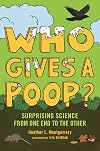
Only Montgomery could start out a book about poop by talking about dissecting the tongue of a roadkilled coyote and end with a philosophical reflection on the disposal of human sewage and bias in science. In other words, it doesn't get much better than this!
This is less a straight-forward narrative and more the following of Montgomery's scientific curiosity as she expands from her interest in roadkill and local science to investigate more about the inner workings of the world. She interviews people in a small town where train cars of human sewage have been left, helps with a wide variety of poop-related research, and pauses frequently along the way to reflect, consider, and take every opportunity for learning more. She becomes discouraged by the seeming futility of science and the sometimes devastating effects of disease; she interviews doctors at opposite ends of the spectrum on the usefulness of parasitic (or are they symbiotic?) internal worms, dissects more roadkill, learns about the possible connections between bacterial infections and internal parasites, and researches the legality of fecal transplants (yeah, it's exactly what it sounds like).
In the end, she returns to the site of her early investigations into the abandoned cars of sewage and finally gets an interview with the manager of the landfill they're headed for. She's got a different viewpoint than when she started, and in thoughtful, beautiful prose she considers the symbiosis of the world and the need for show more considering our own biases in conducting research.
There appears to be one typo on page 149, where she references the landfill owner pointing at a game trail but doesn't say what the animal is that he sees. The author's note talks about her own bias and includes a teachable moment on reading and researching science. There are poop experiments to try out yourself, more fun facts about poop, a goofy and informative list of "wonderful waste words" and then detailed notes about the research on each chapter. She mentions that the detailed list of works cited can be found on her website. There are also acknowledgements and and an index.
Verdict: Of course you'll want to hand this to kids who delight in poop, roadkill, and all things gross and gruesome in the science world, but also encourage readers interested in science, those concerned about the environment, and pretty much everyone. Because everyone poops.
ISBN: 9781547603473; Published September 2020 by Bloomsbury; Purchased for the library show less
This is less a straight-forward narrative and more the following of Montgomery's scientific curiosity as she expands from her interest in roadkill and local science to investigate more about the inner workings of the world. She interviews people in a small town where train cars of human sewage have been left, helps with a wide variety of poop-related research, and pauses frequently along the way to reflect, consider, and take every opportunity for learning more. She becomes discouraged by the seeming futility of science and the sometimes devastating effects of disease; she interviews doctors at opposite ends of the spectrum on the usefulness of parasitic (or are they symbiotic?) internal worms, dissects more roadkill, learns about the possible connections between bacterial infections and internal parasites, and researches the legality of fecal transplants (yeah, it's exactly what it sounds like).
In the end, she returns to the site of her early investigations into the abandoned cars of sewage and finally gets an interview with the manager of the landfill they're headed for. She's got a different viewpoint than when she started, and in thoughtful, beautiful prose she considers the symbiosis of the world and the need for show more considering our own biases in conducting research.
There appears to be one typo on page 149, where she references the landfill owner pointing at a game trail but doesn't say what the animal is that he sees. The author's note talks about her own bias and includes a teachable moment on reading and researching science. There are poop experiments to try out yourself, more fun facts about poop, a goofy and informative list of "wonderful waste words" and then detailed notes about the research on each chapter. She mentions that the detailed list of works cited can be found on her website. There are also acknowledgements and and an index.
Verdict: Of course you'll want to hand this to kids who delight in poop, roadkill, and all things gross and gruesome in the science world, but also encourage readers interested in science, those concerned about the environment, and pretty much everyone. Because everyone poops.
ISBN: 9781547603473; Published September 2020 by Bloomsbury; Purchased for the library show less
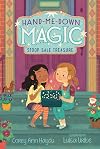
Del (short for Delfina) is so excited that her cousin Alma is coming to live in their apartment building. They are best friends and it will be wonderful to have even more family together! The minute Alma shows up, Del is ready to show her the wonderful treasures in the second-hand shop on the bottom floor, the neighborhood, and everything!
Alma loves her cousin and is thrilled to be living in the same building. At the same time, she is a little shyer than Del and misses her big bedroom, living by a lake, and having a little more peace and quiet. On top of that, Del is always talking about magic and Alma just doesn't see it. She starts to feel like she doesn't belong in her family at all - and Del doesn't help, always telling her what she's doing wrong and how to change.
When Del discovers "magic" earrings and seems to have nothing but good luck, Alma loses her temper and instead of apologizing, she does something awful. Now she feels even worse! But with the loving help of Abuelita, the two cousins make up their fight and learn to be kinder to each other. Del realizes that Alma doesn't need to be told what to do all the time - but she does need to hear that she belongs with her family, even if she is different.
Black and white illustrations are scattered throughout the story, but the cover portrays Del with dark hair and brown skin and Alma with light brown hair and light skin. Spanish is sprinkled throughout the story and a consistent them is that of family - how they fit show more together even when people do things differently or think differently. The apartment houses an extended family - the shop on the first floor, Abuelita on the second, Del and her family on the third, TiTi Rosa and her little girl Evie on the fourth, and Alma has just moved onto the top, fifth floor. Some casual references imply that at least some of the family have a background in Puerto Rico.
Verdict: This is a simple and sweet beginning chapter book, with just a hint of magic, and a wonderful depiction of a loving and multi-ethnic family.
ISBN: 9780062878250; Published June 2020 by Katherine Tegen Books; Borrowed from another library in my consortium show less
Alma loves her cousin and is thrilled to be living in the same building. At the same time, she is a little shyer than Del and misses her big bedroom, living by a lake, and having a little more peace and quiet. On top of that, Del is always talking about magic and Alma just doesn't see it. She starts to feel like she doesn't belong in her family at all - and Del doesn't help, always telling her what she's doing wrong and how to change.
When Del discovers "magic" earrings and seems to have nothing but good luck, Alma loses her temper and instead of apologizing, she does something awful. Now she feels even worse! But with the loving help of Abuelita, the two cousins make up their fight and learn to be kinder to each other. Del realizes that Alma doesn't need to be told what to do all the time - but she does need to hear that she belongs with her family, even if she is different.
Black and white illustrations are scattered throughout the story, but the cover portrays Del with dark hair and brown skin and Alma with light brown hair and light skin. Spanish is sprinkled throughout the story and a consistent them is that of family - how they fit show more together even when people do things differently or think differently. The apartment houses an extended family - the shop on the first floor, Abuelita on the second, Del and her family on the third, TiTi Rosa and her little girl Evie on the fourth, and Alma has just moved onto the top, fifth floor. Some casual references imply that at least some of the family have a background in Puerto Rico.
Verdict: This is a simple and sweet beginning chapter book, with just a hint of magic, and a wonderful depiction of a loving and multi-ethnic family.
ISBN: 9780062878250; Published June 2020 by Katherine Tegen Books; Borrowed from another library in my consortium show less
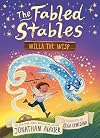
Auggie lives alone on an island, where he cares for magical beasts in the Fabled Stables. As the story opens, he's lonely with no one to be his friend or play with him. He tries to make friends with Fen, a magical Stick-in-the-Mud, who can turn into any tool that Auggie needs, but Fen is too grumpy. He tries to make friends with Miss Bundt, a purple-skinned woman with tattoos who is the closest thing to a mother he has, but she's busy working on projects for Professor Cake, the man who collects all the magical things on the island.
Auggie's loneliness is interrupted when the stable explodes with another space for a creature called a wisp - and this creature is in trouble! Auggie bravely goes through a magic portal to rescue the wisp from nasty hunters and, after some exciting and dangerous adventures, finds he has a real friend at last.
The chapter book is illustrated with colorful art, both full page spreads and spot art, in a style similar to Princess in Black, although it's a little more text-heavy and is at a more challenging reading level. The art shows Auggie as a brown-haired, tanned boy in old-fashioned pants, suspenders, and leather shoes. The villains wear medieval-style clothing and Miss Bundt a floor-length, plain white dress with short sleeves and an apron.
Although there are several things left unexplained in the story - why didn't Auggie make friends with the other magical creatures? What's different about Wisp that she can be a friend when the others can't? show more Why do the magical creatures even have genders? Wisp if literally a wisp of moonlight. Fen is a magical stick, but gets a male pronoun. Wisp is at first damaged and in pain from the iron collar she is forced to wear, but then seems fine with it? Most of these minor issues won't matter to young readers though. They'll enjoy the magical creatures and adventures and be eager to find out what happens to Wisp and Auggie next.
Verdict: Hand to fans of Beasts of Olympus and Princess in Black and other beginning chapter readers who like fantasy stories and will enjoy the plentiful art.
ISBN: 9781419742699; Published October 2020 by Abrams; Borrowed from another library in my consortium show less
Auggie's loneliness is interrupted when the stable explodes with another space for a creature called a wisp - and this creature is in trouble! Auggie bravely goes through a magic portal to rescue the wisp from nasty hunters and, after some exciting and dangerous adventures, finds he has a real friend at last.
The chapter book is illustrated with colorful art, both full page spreads and spot art, in a style similar to Princess in Black, although it's a little more text-heavy and is at a more challenging reading level. The art shows Auggie as a brown-haired, tanned boy in old-fashioned pants, suspenders, and leather shoes. The villains wear medieval-style clothing and Miss Bundt a floor-length, plain white dress with short sleeves and an apron.
Although there are several things left unexplained in the story - why didn't Auggie make friends with the other magical creatures? What's different about Wisp that she can be a friend when the others can't? show more Why do the magical creatures even have genders? Wisp if literally a wisp of moonlight. Fen is a magical stick, but gets a male pronoun. Wisp is at first damaged and in pain from the iron collar she is forced to wear, but then seems fine with it? Most of these minor issues won't matter to young readers though. They'll enjoy the magical creatures and adventures and be eager to find out what happens to Wisp and Auggie next.
Verdict: Hand to fans of Beasts of Olympus and Princess in Black and other beginning chapter readers who like fantasy stories and will enjoy the plentiful art.
ISBN: 9781419742699; Published October 2020 by Abrams; Borrowed from another library in my consortium show less
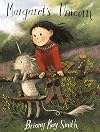
I'm not really a fan of unicorns, but I have a lot of kids who are - they like "pretty" unicorns, not so much the humorous ones though. I am a fan of Briony May Smith's rustic, cozy and fantastical art, which I first encountered in Imelda and the goblin king. So put Smith and unicorns together and I am there!
Margaret, a sturdy little girl with flyaway brown hair, plaid skirt, and cozy red sweater, narrates the story of the magical events of one year. In the autumn she moves to a new home "in the mountains" with her parents and goes out to explore on her first day. There she sees a herd of magical unicorns in the clouds and finds a dappled grey unicorn colt, complete with long, silky tail, left behind.
With the help of her grandmother and parents, Margaret cares for her magical new friend. She comes to love the beauty of the mountains and makes new friends there, but her unicorn is always with her. When spring comes and the unicorns return, Margaret sadly lets her friend go, back to his herd. She sees him once more time, the following year, when he is grown and stops briefly to see her then goes back to his herd. She tells her friend, Abbie, "That was an old friend." and the two happily return to Margaret's new home.
This is a little lengthy for a storytime read-aloud, but unicorn fans and those who love heartwarming, magical stories will be delighted by the beauty of nature and the unicorns in this joyful story of friendship and new experiences.
Verdict: A must-have for your show more elementary unicorn fans, it also makes a lovely read-aloud for older listeners.
ISBN: 9781984896537; Published September 2020 by Schwartz and Wade Books; Purchased for the library show less
Margaret, a sturdy little girl with flyaway brown hair, plaid skirt, and cozy red sweater, narrates the story of the magical events of one year. In the autumn she moves to a new home "in the mountains" with her parents and goes out to explore on her first day. There she sees a herd of magical unicorns in the clouds and finds a dappled grey unicorn colt, complete with long, silky tail, left behind.
With the help of her grandmother and parents, Margaret cares for her magical new friend. She comes to love the beauty of the mountains and makes new friends there, but her unicorn is always with her. When spring comes and the unicorns return, Margaret sadly lets her friend go, back to his herd. She sees him once more time, the following year, when he is grown and stops briefly to see her then goes back to his herd. She tells her friend, Abbie, "That was an old friend." and the two happily return to Margaret's new home.
This is a little lengthy for a storytime read-aloud, but unicorn fans and those who love heartwarming, magical stories will be delighted by the beauty of nature and the unicorns in this joyful story of friendship and new experiences.
Verdict: A must-have for your show more elementary unicorn fans, it also makes a lovely read-aloud for older listeners.
ISBN: 9781984896537; Published September 2020 by Schwartz and Wade Books; Purchased for the library show less
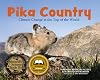
Pikas are adorable. Let's just get that out of the way. They look like guinea-pig sized rodents at first glance, but a closer look shows their resemblance to rabbits, their relatives. They live high in the mountains and spend their days collecting green stuff to make hay.
Some new things I learned about pikas, that made me like them even more, was that they don't seek out the sun - it's too hot for them! They are crepuscular, coming out in the early morning and late evening. They also look adorable with a mouthful of green stuff. Although that's not really a new fact.
After introducing the general behavior and habits of the pika, Patent explains how they are affected by climate change and how that in turn affects other alpine animals. The complex relationship between pine trees, pikas, and all the way up to bears is carefully shown, as well as the current and projected effects of climate change, from damaging insects to shrinking habitat. The text is arranged in short paragraphs, interspersed with photographs and illustrations.
There is a more in-depth explanation of climate change and a glossary in the back, as well as the ubiquitous "what you can do" suggestions. These really annoy me - show me a kid who has a say in whether or not their family flies somewhere! Many kids don't have access to "delicious and healthy vegetarian and vegan options." Turning off lights is about as effective as writing songs and poems. Anyways, I really find these things annoying, but they seem show more to be de rigueur in any books referencing climate change now.
Verdict: I've only seen one book on pikas and it's old, so this is a nice addition, despite the hackneyed environmental suggestions and lack of sources. Especially of interest to kids living in areas near or on mountains.
ISBN: 9781970039023; Published September 2020 by Web of Life Children's Books; Borrowed from another library in my consortium show less
Some new things I learned about pikas, that made me like them even more, was that they don't seek out the sun - it's too hot for them! They are crepuscular, coming out in the early morning and late evening. They also look adorable with a mouthful of green stuff. Although that's not really a new fact.
After introducing the general behavior and habits of the pika, Patent explains how they are affected by climate change and how that in turn affects other alpine animals. The complex relationship between pine trees, pikas, and all the way up to bears is carefully shown, as well as the current and projected effects of climate change, from damaging insects to shrinking habitat. The text is arranged in short paragraphs, interspersed with photographs and illustrations.
There is a more in-depth explanation of climate change and a glossary in the back, as well as the ubiquitous "what you can do" suggestions. These really annoy me - show me a kid who has a say in whether or not their family flies somewhere! Many kids don't have access to "delicious and healthy vegetarian and vegan options." Turning off lights is about as effective as writing songs and poems. Anyways, I really find these things annoying, but they seem show more to be de rigueur in any books referencing climate change now.
Verdict: I've only seen one book on pikas and it's old, so this is a nice addition, despite the hackneyed environmental suggestions and lack of sources. Especially of interest to kids living in areas near or on mountains.
ISBN: 9781970039023; Published September 2020 by Web of Life Children's Books; Borrowed from another library in my consortium show less
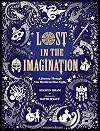
I knew this was unlikely to be the kind of thing one added to a library - it's from Candlewick Studio, which created the Ology books and is categorized as a gift book. I just wanted to read it, it looked so cool!
It opens with a note to the reader, saying that Candlewick Studio was given a collection of notes, stories, and drawings by Emily Furness, niece of "the late prize-winning theoretical physicist and professor Dawn Gable." The framing story is that Dawn Gable, estranged from her brother due to her obsession with science and neglect of the magic they shared as a child, is gifted a book by her niece and nephew on her birthday. Annoyed, she tosses it into the fire where, instead of burning, it glows and somehow produces a dragon-like creature named Hyllvar, who claims to be a descendant of Nidhogg.
Against her better judgment, Dawn accompanies the dragon through nine magical worlds, each described in magical detail in her collected papers and stories, and although she is at first frightened and angry, she eventually comes to appreciate the magic and beauty of the worlds she is privileged to visit. The story ends with a note from Professor Dawn D. Gable, talking about the wonders of magic and how her magical journey changed her life. On the last page, a newspaper clipping recognizes "Maria Knowles" for winning a literary prize for fantasy established by Dawn Gable, who also wrote fantasy novels under the pseudonym of Hyllvar Hunt.
The pages of this oversized volume are show more rimmed in dark blues, making the sketches and images stand out strikingly from the page. There are sketches of Hyllvar's strange machine, notes of adventures, and then the worlds themselves. Each "world" has a page introducing it, with a detailed sketch of the area, a larger artistic picture, and then a drawing of Gable's encounters and adventures there. She travels to the lost city of Kor, an ancient ruin in Uganda, where she encounters "Princess Ayesha" who has magical powers and dwells in the Fire of Eternal Youth and Beauty. The next world is imaginary, Mecanopolis, where all life has become extinct and sentient machines have created their own utopia. Frightened of being trapped in their museum of humans, Gable flees and finds herself next in Camelot. An intricate drawing of the Round Table and descriptions of its knights are included here. She next visits Hyllvar's own world, Wyvern Abbey and the Dimskye Mountains where dragons, wyverns, griffons, unicorns, chimeras, and many other dangerous "monsters" dwell. Here Hyllvar leaves her, telling her she must make the choice to continue her journey with the machine alone.
Notes on Kor
She then visits Atlantis, as seen through Captain Nemo's submarine, and escapes just in time to enter the worlds of Swift's imagination, Lilliput and Laputa. The last two worlds she visited are drawn from myth, Buyan, the first island, from Slavic mythology where she sees a variety of mythological creatures and deities, from a gamayun to Koschei the deathless and Valhalla in Asgard. As she enters Valhalla, the machine fails and she makes a leap of faith to trust Hyllvar to carry her to the ninth world. There she admits to a traumatic childhood experience when her brother nearly fell to his death from a roller coaster. In her final letter, opening herself up to imagination and magic again, there is a background that features artifacts from each of the worlds she has visited.
I didn't care for the framing story. I don't know that kids will particularly relate to the idea of a middle-aged woman who has lost her capacity for imagination and frankly it irritated me. To paraphrase Justine Larbalestier, there's no moral superiority in reading fiction. From an adult perspective, to castigate a woman trying to succeed in the sciences, a heavily male-dominated profession, for not enjoying magic and fantasy like she did as a child is just... wrong. You can be a perfectly wonderful person and still not want to celebrate your birthday, travel to magical worlds and nearly get killed, or somehow manage to become a prize-winning physicist, write a series of wildly popular fantasy novels, and yet still be called "professor" rather than "doctor" which jumped out at me. Ahem.
However! Frankly, I doubt that most kids will even bother to read the framing story and if they do will quickly forget it. The important thing here is the lovingly detailed drawings of various imaginary and mythical worlds and this is what fantasy fans are going to be absorbed in. How I wish this book had been around when I had an Atlantis-obsessed fan! Kids can spend hours absorbed in the details of the worlds and will doubtless be inspired to draw, write, and create their own worlds, made-up or based on other stories they've read.
Verdict: Unlike the Ology books, there are no little pieces to be lost, but as a gift book this is both a little oversized (13" high) and with a fragile spine and paper-over-board construction. While it would do fine in a library, it will probably be quickly read to pieces. Ideally, it would be a gift to any fantasy fan who loves imagining and creating worlds. Pair with books on creating your own fantasy maps or suggest to a fan of RPG and you're sure to have a happy reader.
ISBN: 9781536210736; Published October 2020 by Candlewick Studio; Review copy provided by publisher; Donated to the library as a prize. show less
It opens with a note to the reader, saying that Candlewick Studio was given a collection of notes, stories, and drawings by Emily Furness, niece of "the late prize-winning theoretical physicist and professor Dawn Gable." The framing story is that Dawn Gable, estranged from her brother due to her obsession with science and neglect of the magic they shared as a child, is gifted a book by her niece and nephew on her birthday. Annoyed, she tosses it into the fire where, instead of burning, it glows and somehow produces a dragon-like creature named Hyllvar, who claims to be a descendant of Nidhogg.
Against her better judgment, Dawn accompanies the dragon through nine magical worlds, each described in magical detail in her collected papers and stories, and although she is at first frightened and angry, she eventually comes to appreciate the magic and beauty of the worlds she is privileged to visit. The story ends with a note from Professor Dawn D. Gable, talking about the wonders of magic and how her magical journey changed her life. On the last page, a newspaper clipping recognizes "Maria Knowles" for winning a literary prize for fantasy established by Dawn Gable, who also wrote fantasy novels under the pseudonym of Hyllvar Hunt.
The pages of this oversized volume are show more rimmed in dark blues, making the sketches and images stand out strikingly from the page. There are sketches of Hyllvar's strange machine, notes of adventures, and then the worlds themselves. Each "world" has a page introducing it, with a detailed sketch of the area, a larger artistic picture, and then a drawing of Gable's encounters and adventures there. She travels to the lost city of Kor, an ancient ruin in Uganda, where she encounters "Princess Ayesha" who has magical powers and dwells in the Fire of Eternal Youth and Beauty. The next world is imaginary, Mecanopolis, where all life has become extinct and sentient machines have created their own utopia. Frightened of being trapped in their museum of humans, Gable flees and finds herself next in Camelot. An intricate drawing of the Round Table and descriptions of its knights are included here. She next visits Hyllvar's own world, Wyvern Abbey and the Dimskye Mountains where dragons, wyverns, griffons, unicorns, chimeras, and many other dangerous "monsters" dwell. Here Hyllvar leaves her, telling her she must make the choice to continue her journey with the machine alone.
Notes on Kor
She then visits Atlantis, as seen through Captain Nemo's submarine, and escapes just in time to enter the worlds of Swift's imagination, Lilliput and Laputa. The last two worlds she visited are drawn from myth, Buyan, the first island, from Slavic mythology where she sees a variety of mythological creatures and deities, from a gamayun to Koschei the deathless and Valhalla in Asgard. As she enters Valhalla, the machine fails and she makes a leap of faith to trust Hyllvar to carry her to the ninth world. There she admits to a traumatic childhood experience when her brother nearly fell to his death from a roller coaster. In her final letter, opening herself up to imagination and magic again, there is a background that features artifacts from each of the worlds she has visited.
I didn't care for the framing story. I don't know that kids will particularly relate to the idea of a middle-aged woman who has lost her capacity for imagination and frankly it irritated me. To paraphrase Justine Larbalestier, there's no moral superiority in reading fiction. From an adult perspective, to castigate a woman trying to succeed in the sciences, a heavily male-dominated profession, for not enjoying magic and fantasy like she did as a child is just... wrong. You can be a perfectly wonderful person and still not want to celebrate your birthday, travel to magical worlds and nearly get killed, or somehow manage to become a prize-winning physicist, write a series of wildly popular fantasy novels, and yet still be called "professor" rather than "doctor" which jumped out at me. Ahem.
However! Frankly, I doubt that most kids will even bother to read the framing story and if they do will quickly forget it. The important thing here is the lovingly detailed drawings of various imaginary and mythical worlds and this is what fantasy fans are going to be absorbed in. How I wish this book had been around when I had an Atlantis-obsessed fan! Kids can spend hours absorbed in the details of the worlds and will doubtless be inspired to draw, write, and create their own worlds, made-up or based on other stories they've read.
Verdict: Unlike the Ology books, there are no little pieces to be lost, but as a gift book this is both a little oversized (13" high) and with a fragile spine and paper-over-board construction. While it would do fine in a library, it will probably be quickly read to pieces. Ideally, it would be a gift to any fantasy fan who loves imagining and creating worlds. Pair with books on creating your own fantasy maps or suggest to a fan of RPG and you're sure to have a happy reader.
ISBN: 9781536210736; Published October 2020 by Candlewick Studio; Review copy provided by publisher; Donated to the library as a prize. show less
This is technically a picture book, but it's so... fragile that it's not something I'd add to a library, hence why I'm posting it at this weird time, as I clean out my stash of books for review.
Julia Donaldson, a popular picture book creator from the UK, offers a simple, rhyming text that counts up the babies of a variety of creatures. It follows a simple formula, "This (creature) has... x babies" then a brief couplet describing their actions, followed by "Who has more babies than that?" The text is not particularly memorable and is often difficult to read, on dark backgrounds. As a nonfiction fan, I also have to point out that, like all these counting books, they are generally not even remotely accurate as to the number of babies these animals have. However, the real point here isn't the text, but the art.
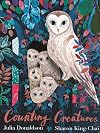
Sharon King-Chai's art and paper engineering is exquisite. Lush, vibrant colors crowd the pages while delicately cut lift the flaps expand the book. The cardboard cover itself has die cut shapes, revealing a clutch of owlets and some flashes of color later in the book. There are also foil overleaves scattered throughout to add some shine. The bat's wing lifts to reveal her baby and a delicately paper cut stand of trees flips open at the endpages to show a peaceful meadow scene. A pile of blazing orange, yellow, and pink leaves lifts in sequence to reveal a huddle of mouse babies, and there are peepholes through trees, glimpses behind bushes, and more. At the end of the show more book, readers discover even more to find, when they learn that the spider's babies are scattered throughout the book.
This is a beautiful book, but there is simply no way it's going to last in any library collection. While some of the delicate flaps can be reinforced at their hinge, there's no way to reinforce the die-cut pages and many of them have multiple peep-holes. The binding itself feels light and flimsy, a thin scrape of paper over cardboard with a fragile spine.
Verdict: This is lovely, but because the text can be difficult to decipher and the flaps fragile, it's unlikely to last even if used only in a professional storytime collection. Save this one for a special gift for a very careful little person - or for the collection of an adult who appreciates beautiful picture books.
ISBN: 9780593324530; Published November 2020 by Dial/Penguin; Review copy provided by publisher; Donated to the library as a prize book show less
Julia Donaldson, a popular picture book creator from the UK, offers a simple, rhyming text that counts up the babies of a variety of creatures. It follows a simple formula, "This (creature) has... x babies" then a brief couplet describing their actions, followed by "Who has more babies than that?" The text is not particularly memorable and is often difficult to read, on dark backgrounds. As a nonfiction fan, I also have to point out that, like all these counting books, they are generally not even remotely accurate as to the number of babies these animals have. However, the real point here isn't the text, but the art.
Sharon King-Chai's art and paper engineering is exquisite. Lush, vibrant colors crowd the pages while delicately cut lift the flaps expand the book. The cardboard cover itself has die cut shapes, revealing a clutch of owlets and some flashes of color later in the book. There are also foil overleaves scattered throughout to add some shine. The bat's wing lifts to reveal her baby and a delicately paper cut stand of trees flips open at the endpages to show a peaceful meadow scene. A pile of blazing orange, yellow, and pink leaves lifts in sequence to reveal a huddle of mouse babies, and there are peepholes through trees, glimpses behind bushes, and more. At the end of the show more book, readers discover even more to find, when they learn that the spider's babies are scattered throughout the book.
This is a beautiful book, but there is simply no way it's going to last in any library collection. While some of the delicate flaps can be reinforced at their hinge, there's no way to reinforce the die-cut pages and many of them have multiple peep-holes. The binding itself feels light and flimsy, a thin scrape of paper over cardboard with a fragile spine.
Verdict: This is lovely, but because the text can be difficult to decipher and the flaps fragile, it's unlikely to last even if used only in a professional storytime collection. Save this one for a special gift for a very careful little person - or for the collection of an adult who appreciates beautiful picture books.
ISBN: 9780593324530; Published November 2020 by Dial/Penguin; Review copy provided by publisher; Donated to the library as a prize book show less
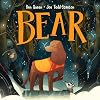
I enjoy Todd-Stanton's fantastical art in his picture-book length graphic novels, and I was interested to see this new book he created in conjunction with Ben Queen.
Bear has a special job. His siblings are K-9 workers, but he's a guide dog for the blind. He's well-trained and dedicated to his job, taking care of Patrick. Patrick is twenty-eight, repairs vending machines, and likes to read. He's also blind. He applied for a guide dog to make him more efficient in his work, and he and Bear bonded from the first day they met. They're the perfect team, until something terrifying happens to Bear - a sudden black patch blocks out the light and he's lost and panicked.
Patrick calls Meg, who runs the organization that trained Bear, and the two are worried about Bear's health and make plans to get him checked out immediately. But Bear is confused and terrified. If he can't do his job, will they take him away from Patrick? If he can't do his job, is he still special? He falls easy prey to the malicious story told to him by Uncle, the leader of the raccoon band hiding under the house, and runs to the woods to find magic to heal him.
Bear's quest leads him to new friends, family, and many revelations about himself and his senses. He learns that he is more than his job and that Patrick needs him no matter what. He also makes friends with a different kind of bear and the two travel together through the woods, town, and city.
As Bear's sometimes frightening, sometimes beautiful journey show more progresses, Patrick and Meg bond as they search for Bear and learn about each other.
Finally, there is a happy conclusion for all; Bear is able to resume his job, but he has gained the self-confidence and knowledge to allow him to consider himself worthy whether or not he gains his sight. Patrick and Meg have gained a new understanding of each other and a deep friendship, and the raccoons, well, they are raccoons!
Queen talks in the end about some of the more philosophical and scientific background to the ideas of sight, perspective, and mental pictures and mentions that he consulted blind individuals for accuracy.
Verdict: This is a beautiful, intense story but I'm not sure exactly who the audience is. If you have fans of graphic novels like Mouse Guard, that would be the best bet. It's fine for younger kids, although there are scary moments there is minimal blood and it's more atmospheric than graphic terror. The philosophical tone and reflection may appeal more to introspective readers though, who are likely to be older.
ISBN: 9781684155316; Published August 2020 by Archaia; Borrowed from another library in my consortium show less
Bear has a special job. His siblings are K-9 workers, but he's a guide dog for the blind. He's well-trained and dedicated to his job, taking care of Patrick. Patrick is twenty-eight, repairs vending machines, and likes to read. He's also blind. He applied for a guide dog to make him more efficient in his work, and he and Bear bonded from the first day they met. They're the perfect team, until something terrifying happens to Bear - a sudden black patch blocks out the light and he's lost and panicked.
Patrick calls Meg, who runs the organization that trained Bear, and the two are worried about Bear's health and make plans to get him checked out immediately. But Bear is confused and terrified. If he can't do his job, will they take him away from Patrick? If he can't do his job, is he still special? He falls easy prey to the malicious story told to him by Uncle, the leader of the raccoon band hiding under the house, and runs to the woods to find magic to heal him.
Bear's quest leads him to new friends, family, and many revelations about himself and his senses. He learns that he is more than his job and that Patrick needs him no matter what. He also makes friends with a different kind of bear and the two travel together through the woods, town, and city.
As Bear's sometimes frightening, sometimes beautiful journey show more progresses, Patrick and Meg bond as they search for Bear and learn about each other.
Finally, there is a happy conclusion for all; Bear is able to resume his job, but he has gained the self-confidence and knowledge to allow him to consider himself worthy whether or not he gains his sight. Patrick and Meg have gained a new understanding of each other and a deep friendship, and the raccoons, well, they are raccoons!
Queen talks in the end about some of the more philosophical and scientific background to the ideas of sight, perspective, and mental pictures and mentions that he consulted blind individuals for accuracy.
Verdict: This is a beautiful, intense story but I'm not sure exactly who the audience is. If you have fans of graphic novels like Mouse Guard, that would be the best bet. It's fine for younger kids, although there are scary moments there is minimal blood and it's more atmospheric than graphic terror. The philosophical tone and reflection may appeal more to introspective readers though, who are likely to be older.
ISBN: 9781684155316; Published August 2020 by Archaia; Borrowed from another library in my consortium show less
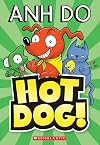
I didn't care for the author's WeirDO series, but this one, while equally silly, was a little more to my taste.
In the first chapter, we meet Hotdog, a long dachshund, who wakes up one morning with a "very stuffy nose." He then talks about the things he can and can't do, as a very short, very long dog, and his plans for kite-flying with his friends. In the next chapter we meet his friends, Lizzie the lizard, who's a chameleon and good at blending into things and Kevin, a plump and extremely relaxed cat, who is frequently dressed up by his humans. When a small baby bird falls on Kevin's head, the friends are in a quandary. The baby bird is too small to fly, Hotdog can't climb a tree, Kevin is wearing an awkward cow suit (and he's too relaxed to climb anyways) and Lizzie is extremely brave - except about heights.
Hijinks ensue as the three quirky friends try to track down Winston's mom and get him back home. The ensuing adventures include poopy diapers, a treacherous lake journey, and a disastrous farm trip. However, all ends well, and the three have a new friend and lots of new adventures to look forward to.
This is not a graphic novel per say, it's what is usually called an illustrated chapter book. There are some speech bubbles and copious illustrations, but the book is not primarily told through the art. The art is two-toned in green and gray and shows cartoonish animals, as well as highlighted green words, exclamations, and a certain emphasis on poop.
Verdict: It's a show more rather scattered story, with digressions and threads that are dropped and picked up chapters later, but the characters are nice, if a bit scatty, and the overall tone is humorous and upbeat. Kids who like nonsense and lots of pictures will enjoy this - hand it to fans of Stinkbomb and Ketchup-Face, Bad Guys, Beaver Brothers, Ricky Ricotta, and Branches like Kung Pow Chicken.
ISBN: 9781338587203; Published May 2020 by Scholastic; Borrowed from another library in my consortium show less
In the first chapter, we meet Hotdog, a long dachshund, who wakes up one morning with a "very stuffy nose." He then talks about the things he can and can't do, as a very short, very long dog, and his plans for kite-flying with his friends. In the next chapter we meet his friends, Lizzie the lizard, who's a chameleon and good at blending into things and Kevin, a plump and extremely relaxed cat, who is frequently dressed up by his humans. When a small baby bird falls on Kevin's head, the friends are in a quandary. The baby bird is too small to fly, Hotdog can't climb a tree, Kevin is wearing an awkward cow suit (and he's too relaxed to climb anyways) and Lizzie is extremely brave - except about heights.
Hijinks ensue as the three quirky friends try to track down Winston's mom and get him back home. The ensuing adventures include poopy diapers, a treacherous lake journey, and a disastrous farm trip. However, all ends well, and the three have a new friend and lots of new adventures to look forward to.
This is not a graphic novel per say, it's what is usually called an illustrated chapter book. There are some speech bubbles and copious illustrations, but the book is not primarily told through the art. The art is two-toned in green and gray and shows cartoonish animals, as well as highlighted green words, exclamations, and a certain emphasis on poop.
Verdict: It's a show more rather scattered story, with digressions and threads that are dropped and picked up chapters later, but the characters are nice, if a bit scatty, and the overall tone is humorous and upbeat. Kids who like nonsense and lots of pictures will enjoy this - hand it to fans of Stinkbomb and Ketchup-Face, Bad Guys, Beaver Brothers, Ricky Ricotta, and Branches like Kung Pow Chicken.
ISBN: 9781338587203; Published May 2020 by Scholastic; Borrowed from another library in my consortium show less
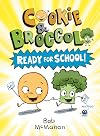
I freely admit that I don't really "get" the obsession with talking food. However, it's a real thing that kids love - we recently read some of Terry Border's books in book club and there's been a whole slew of titles in this vein this year.
This latest series introduces two opposites - shy Broccoli and extrovert Cookie - who meet up on the first day of school. In four short chapters and an epilogue, the two meet, have some initial confusion and disagreement, and eventually make a whole group of friends, banding together to make each other better. Along the way, they get the vegetables and baked goods together, play a joke on a talking rock, and form a shy friends club.
The art mainly features yellow Cookie and green Broccoli, both with big cartoon eyes, but Cookie with a large, generous mouth (with teeth) and Broccoli with a smaller mouth, suited to their quieter nature. There's lots of wacky text in large fonts and with silly decorations, especially when the two start making silly noises. There's not a lot of detail, but in some panels which include other creatures there are a lot of silly jokes in their speech bubbles (a waffle says they're too shy to talk to their Belgian cousin) and a cynical blueberry occasionally interjects wry commentary.
As I said, I personally am not a huge fan of the talking food thing. What do they eat for lunch? What happens when they start rotting or crumbling? I find it difficult to suspend my disbelief. At least the author didn't assign show more genders to the food, which I appreciate. I also didn't care for the implication that Broccoli needs to be "fixed" because they're shy - although Cookie suggests that Broccoli can help them by "stopping me when I get too loud and silly." there's no actual signs that this is a thing that happens. However, most of these are really adult concerns, not things that will jump out at kids.
Verdict: This is a fun beginning chapter graphic novel series that will appeal to fans of Terry Border, Charise Mericle Harper, and Elephant and Piggie. Librarians looking to bolster their beginning chapter book offerings in the graphic novel realm will want to be sure to get this new series.
ISBN: 9780593109076; Published July 2020 by Dial; Borrowed from another library in my consortium show less
This latest series introduces two opposites - shy Broccoli and extrovert Cookie - who meet up on the first day of school. In four short chapters and an epilogue, the two meet, have some initial confusion and disagreement, and eventually make a whole group of friends, banding together to make each other better. Along the way, they get the vegetables and baked goods together, play a joke on a talking rock, and form a shy friends club.
The art mainly features yellow Cookie and green Broccoli, both with big cartoon eyes, but Cookie with a large, generous mouth (with teeth) and Broccoli with a smaller mouth, suited to their quieter nature. There's lots of wacky text in large fonts and with silly decorations, especially when the two start making silly noises. There's not a lot of detail, but in some panels which include other creatures there are a lot of silly jokes in their speech bubbles (a waffle says they're too shy to talk to their Belgian cousin) and a cynical blueberry occasionally interjects wry commentary.
As I said, I personally am not a huge fan of the talking food thing. What do they eat for lunch? What happens when they start rotting or crumbling? I find it difficult to suspend my disbelief. At least the author didn't assign show more genders to the food, which I appreciate. I also didn't care for the implication that Broccoli needs to be "fixed" because they're shy - although Cookie suggests that Broccoli can help them by "stopping me when I get too loud and silly." there's no actual signs that this is a thing that happens. However, most of these are really adult concerns, not things that will jump out at kids.
Verdict: This is a fun beginning chapter graphic novel series that will appeal to fans of Terry Border, Charise Mericle Harper, and Elephant and Piggie. Librarians looking to bolster their beginning chapter book offerings in the graphic novel realm will want to be sure to get this new series.
ISBN: 9780593109076; Published July 2020 by Dial; Borrowed from another library in my consortium show less
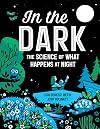
This is a really interesting book, grouping together what might seem a lot of disparate subjects with the common theme of night.
It starts with a brief introduction of all the exciting things that happen at night, and then jumps into the science of sleep. There's a brief comic strip telling the story of a teenager who broke a world record for staying awake - and why that world record no longer exists! With colorful charts, graphs, and blocky chunks of colors, readers will learn about different kinds of sleep, what your brain does while you're sleeping, dreams, and more.
The next section tackles nocturnal creatures and how they adapt to life at night. Bonus, it also includes a definition of crepuscular, one of my favorite words! Readers learn about night vision, echolocation, and how different animals sleep. There's a section on light pollution, and then the book moves on to plants. This was really fascinating. It talks about how plants "sleep" and I learned a new word, nyctinasty!
The last section features the night sky and covers the auroras, the light of stars and planets, and ends with "last thoughts before bed" summarizing the book. Back matter includes a glossary, sources, and an index.
Verdict: A unique and intriguing offering the succinctly covers a subject not often seen in children's literature. Recommended for middle grade nonfiction buffs who like science.
ISBN: 9781525301094; Published September 2020 by Kids Can Press; Borrowed from another library in my consortium
It starts with a brief introduction of all the exciting things that happen at night, and then jumps into the science of sleep. There's a brief comic strip telling the story of a teenager who broke a world record for staying awake - and why that world record no longer exists! With colorful charts, graphs, and blocky chunks of colors, readers will learn about different kinds of sleep, what your brain does while you're sleeping, dreams, and more.
The next section tackles nocturnal creatures and how they adapt to life at night. Bonus, it also includes a definition of crepuscular, one of my favorite words! Readers learn about night vision, echolocation, and how different animals sleep. There's a section on light pollution, and then the book moves on to plants. This was really fascinating. It talks about how plants "sleep" and I learned a new word, nyctinasty!
The last section features the night sky and covers the auroras, the light of stars and planets, and ends with "last thoughts before bed" summarizing the book. Back matter includes a glossary, sources, and an index.
Verdict: A unique and intriguing offering the succinctly covers a subject not often seen in children's literature. Recommended for middle grade nonfiction buffs who like science.
ISBN: 9781525301094; Published September 2020 by Kids Can Press; Borrowed from another library in my consortium
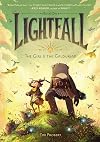
This gorgeous graphic novel series opener is blurbed by Kazu Kibuishi, and this is most apposite for it is sure to appeal to Amulet fans.
Lizard-like creatures play in a cave and awaken something terrible... and the story begins. Bea and her cat Nimm live a happy and peaceful life with their adopted grandfather, the Pig Wizard. But then Bea meets Cad, member of the long-lost race of Galdurians, and her adopted grandfather disappears. Strange signs and creatures are seen, and they begin a dangerous and seemingly hopeless journey to find the Pig Wizard and save the last of the lights that keep their world from being plunged into darkness and overtaken by the evil shadows that threaten it.
Bea is scared and worried, Cad seemingly indifferent to the dangers that surround them. They struggle to understand each other and to face the many dangers in their journeys through increasingly unstable lands. The story ends on a note of tragedy, but with hope for the future and a repayment of kindness from a mysterious creature.
This has lovely, otherworldly illustrations. Soft, glowing lights show strange creatures, from humans to anthropomorphic animals, that populate a world with no natural light. Readers will be drawn in by the excellent world-building, the growing camaraderie between the mismatched characters, and the exciting plot.
Verdict: This isn't particularly ground-breaking, but it's excellently done, both in text and art, and if you have readers desperate for the next Kazu show more Kibuishi (which, by the way, has no projected pub date as of now) they will devour this new series. And then, of course, be desperate for the sequel to this one! So it's a self-defeating cycle really.
ISBN: 9780062990464; Published September 2020 by HarperAlley; Purchased for the library show less
Lizard-like creatures play in a cave and awaken something terrible... and the story begins. Bea and her cat Nimm live a happy and peaceful life with their adopted grandfather, the Pig Wizard. But then Bea meets Cad, member of the long-lost race of Galdurians, and her adopted grandfather disappears. Strange signs and creatures are seen, and they begin a dangerous and seemingly hopeless journey to find the Pig Wizard and save the last of the lights that keep their world from being plunged into darkness and overtaken by the evil shadows that threaten it.
Bea is scared and worried, Cad seemingly indifferent to the dangers that surround them. They struggle to understand each other and to face the many dangers in their journeys through increasingly unstable lands. The story ends on a note of tragedy, but with hope for the future and a repayment of kindness from a mysterious creature.
This has lovely, otherworldly illustrations. Soft, glowing lights show strange creatures, from humans to anthropomorphic animals, that populate a world with no natural light. Readers will be drawn in by the excellent world-building, the growing camaraderie between the mismatched characters, and the exciting plot.
Verdict: This isn't particularly ground-breaking, but it's excellently done, both in text and art, and if you have readers desperate for the next Kazu show more Kibuishi (which, by the way, has no projected pub date as of now) they will devour this new series. And then, of course, be desperate for the sequel to this one! So it's a self-defeating cycle really.
ISBN: 9780062990464; Published September 2020 by HarperAlley; Purchased for the library show less
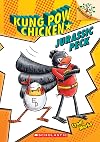
Kung Pow Chicken was one of the earliest Branches series, published in 2014, and a popular choice for many of my transitional readers. There were lots of disappointed kids when I told them it looked like the series had ended a few years later in 2016. However, I was delighted to see another one pop out this summer!
Gordon Blue, after falling into the classic vat of toxic waste, now has the ability to become Kung Pow Chicken! In the first four books, he acquired a sidekick, Egg Drop (aka Benny, his little brother) and a sometimes partner, superhero Beak Girl (his best friend Annie Beakly, unknown to Gordon). With the aid of Gordon's Uncle Quack and his various gadgets, they all fight crime together.
In this new adventure, a trip to the museum goes wrong when Uncle Quack makes a mistake and accidentally sends the heroes back in time. However, it turns out that's just where they need to be, since the sinister scientist at the museum, Dr. Strangebok, is up to no good in dinosaur times! Will Kung Pow Chicken admit he needs help and work with Beak Girl and Egg Drop to save the day, and the dinosaurs, from Dr. Strangebok?
Colorful pictures look like colored pencil drawings and have a stick-figure, child drawing effect. Puns and sound effects abound, speech bubbles, although in a smaller font and somewhat wordy, have an accessible reading level. If you use a leveling system, this will come in higher because of the made-up words (Fowladelphia) and dinosaur terms, but most readers show more will breeze right through them.
Verdict: Time to promote this series again! The original fans are teenagers now, but a whole new generation can discover egg-related puns. Recommend to fans of Lunch Lady, Inspector Flytrap, and other goofy and colorful graphic mysteries.
ISBN: 9781338596649; Published September 2020 by Scholastic; Purchased for the library show less
Gordon Blue, after falling into the classic vat of toxic waste, now has the ability to become Kung Pow Chicken! In the first four books, he acquired a sidekick, Egg Drop (aka Benny, his little brother) and a sometimes partner, superhero Beak Girl (his best friend Annie Beakly, unknown to Gordon). With the aid of Gordon's Uncle Quack and his various gadgets, they all fight crime together.
In this new adventure, a trip to the museum goes wrong when Uncle Quack makes a mistake and accidentally sends the heroes back in time. However, it turns out that's just where they need to be, since the sinister scientist at the museum, Dr. Strangebok, is up to no good in dinosaur times! Will Kung Pow Chicken admit he needs help and work with Beak Girl and Egg Drop to save the day, and the dinosaurs, from Dr. Strangebok?
Colorful pictures look like colored pencil drawings and have a stick-figure, child drawing effect. Puns and sound effects abound, speech bubbles, although in a smaller font and somewhat wordy, have an accessible reading level. If you use a leveling system, this will come in higher because of the made-up words (Fowladelphia) and dinosaur terms, but most readers show more will breeze right through them.
Verdict: Time to promote this series again! The original fans are teenagers now, but a whole new generation can discover egg-related puns. Recommend to fans of Lunch Lady, Inspector Flytrap, and other goofy and colorful graphic mysteries.
ISBN: 9781338596649; Published September 2020 by Scholastic; Purchased for the library show less

I loved this sensitive and funny picture book on so many levels.
It's the story of Alfred, a possum, who freezes and plays dead at the slightest hint of danger. He's a very nervous possum. A series of humorous illustrations show Alfred frozen in his desk at school, whilst swimming, and of course whenever he tries to make friends. Then one day, while looking for a book, he meets Sofia. Sofia is an armadillo and when she is scared (which is pretty much always) she curls up. Cue a frozen Alfred and curled up Sofia.
Once the two have slowly unfrozen and uncurled, they realize how much they have in common and with patience and understanding begin to become friends. As they gradually relax and come out of their shells (ha ha) they realize that there are other animals who feel anxious too and they can help them. They befriend fainting goats, hedgehogs, skunks, and an octopus and with kindness and understanding, the world becomes a better place for everyone.
Scratchy illustrations show a hairy armadillo, untidy possum, and a plethora of nervous and seemingly uncongenial animals slowly learning to be friends and explore the world together.
A note from the author explains the difference between truth and imagination, talking about some of the animals included and their real-life behavior, and gently urges readers "...wild animals can't control their behavior. But people can, and sharing kindness and patience can change things for the better." The glossary includes a sketch of each show more nervous animal and their defensive reactions.
As a nonfiction fan, I love that Reinhardt is so clear on the differences between real and imaginary, especially in animal behavior. I like that the anxious animals are not magically "fixed" and a lot of time and patience are shown in the process of them making changes in their behavior. Finally, the book is funny without poking fun at the creatures and one can picture Alfred and Sofia laughing over the book themselves.
Verdict: A kind and gentle story that would make a funny read-aloud as well as a good addition for social-emotional learning.
ISBN: 9781328782700; Published July 2020 by Clarion; Borrowed from another library in my consortium show less
It's the story of Alfred, a possum, who freezes and plays dead at the slightest hint of danger. He's a very nervous possum. A series of humorous illustrations show Alfred frozen in his desk at school, whilst swimming, and of course whenever he tries to make friends. Then one day, while looking for a book, he meets Sofia. Sofia is an armadillo and when she is scared (which is pretty much always) she curls up. Cue a frozen Alfred and curled up Sofia.
Once the two have slowly unfrozen and uncurled, they realize how much they have in common and with patience and understanding begin to become friends. As they gradually relax and come out of their shells (ha ha) they realize that there are other animals who feel anxious too and they can help them. They befriend fainting goats, hedgehogs, skunks, and an octopus and with kindness and understanding, the world becomes a better place for everyone.
Scratchy illustrations show a hairy armadillo, untidy possum, and a plethora of nervous and seemingly uncongenial animals slowly learning to be friends and explore the world together.
A note from the author explains the difference between truth and imagination, talking about some of the animals included and their real-life behavior, and gently urges readers "...wild animals can't control their behavior. But people can, and sharing kindness and patience can change things for the better." The glossary includes a sketch of each show more nervous animal and their defensive reactions.
As a nonfiction fan, I love that Reinhardt is so clear on the differences between real and imaginary, especially in animal behavior. I like that the anxious animals are not magically "fixed" and a lot of time and patience are shown in the process of them making changes in their behavior. Finally, the book is funny without poking fun at the creatures and one can picture Alfred and Sofia laughing over the book themselves.
Verdict: A kind and gentle story that would make a funny read-aloud as well as a good addition for social-emotional learning.
ISBN: 9781328782700; Published July 2020 by Clarion; Borrowed from another library in my consortium show less
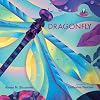
This is another title from Albert Whitman's new nonfiction series, Imagine This. Speaking in first person, a dragonfly narrates the life of its species and their unique adaptations and abilities. Additional information is included in smaller type and more dense paragraphs. There's a final author's note and short list of resources.
The main text is simple enough to read aloud, and combined with the stunning, jewel-colored illustrations, this cries out for a dragonfly storytime! Readers will see vibrant orange dragonfly nymphs, hovering below the soft green-blue of a pond, learn about the dragonflies' significance as a sign of fresh, clean water, and see a vibrant explosion of colors and markings as the dragonflies speed across the page.
While younger children may not sit still for reading the book from beginning to end, the bold type can be easily adapted to pick out a few sentences to focus on on each page, and I can think of a myriad of accompanying activities. In appropriate weather, nature walks to look for dragonflies and observe the types of pools that can support them, showing the wide health of the environment, would be a great active project. Even more fun, although more time-consuming and potentially expensive, would be creating appropriate water habitats for these amazing creatures - or cleaning up and improving an existing pond to support them.
For indoor crafts, use the dragonflies' streamlined bodies as designs for flying airplanes or colorful bugs made out of show more pipe cleaners and tissue paper and suspended from wire or string. Paint jewel-toned dragonflies on scraps of plastic or acrylic, or use a computer program to mimic their flying abilities and learn simple coding.
Verdict: Brilliant illustrations and informative, adaptable text will make this an excellent addition to your elementary books on insects.
ISBN: 9780807558218; Published September 2020 by Albert Whitman; Borrowed from another library in my consortium show less
The main text is simple enough to read aloud, and combined with the stunning, jewel-colored illustrations, this cries out for a dragonfly storytime! Readers will see vibrant orange dragonfly nymphs, hovering below the soft green-blue of a pond, learn about the dragonflies' significance as a sign of fresh, clean water, and see a vibrant explosion of colors and markings as the dragonflies speed across the page.
While younger children may not sit still for reading the book from beginning to end, the bold type can be easily adapted to pick out a few sentences to focus on on each page, and I can think of a myriad of accompanying activities. In appropriate weather, nature walks to look for dragonflies and observe the types of pools that can support them, showing the wide health of the environment, would be a great active project. Even more fun, although more time-consuming and potentially expensive, would be creating appropriate water habitats for these amazing creatures - or cleaning up and improving an existing pond to support them.
For indoor crafts, use the dragonflies' streamlined bodies as designs for flying airplanes or colorful bugs made out of show more pipe cleaners and tissue paper and suspended from wire or string. Paint jewel-toned dragonflies on scraps of plastic or acrylic, or use a computer program to mimic their flying abilities and learn simple coding.
Verdict: Brilliant illustrations and informative, adaptable text will make this an excellent addition to your elementary books on insects.
ISBN: 9780807558218; Published September 2020 by Albert Whitman; Borrowed from another library in my consortium show less
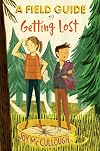
Sutton is all about the facts. She is currently immersed in issues with coding a robot and doesn't care for emotional interruptions into her ordered life. But even she has to admit, just to herself, that she's a little disappointed her mom, who's a scientist in the Antarctic, won't be home for her tenth birthday. Add in her dad's increased interest in the woman he's been dating and she's feels... off.
Luis spends his time immersed in stories, writing and reading about brave deeds and fantastical adventures. Too bad he's never likely to have any of his own, considering his life-threatening allergies, fear of dogs, and his mom's constant worries about him.
Two kids who are more unlike each other could hardly be imagined, but their parents are serious about a relationship and they'll have to make the best of it. Luis is willing to reach out to Sutton and their first "family date" is to a fantasy and science fiction museum. Sutton tries - she really does - but she just doesn't understand fantasy and she's more and more uncomfortable. Her dad gets upset with what he sees as her not trying and now she feels like she's losing her dad too.
Sutton and Luis are both very nervous about the next "family date" they're going on, especially since it involves a hike in the outdoors. Sutton has to give up her tablet, Luis has to brave bees and dogs. And then they get lost. Together. Can them make it alone - and maybe find some common ground after all?
It was nice to see two very different show more kids finding some common ground and handling big changes in their lives. Their parents love them both and are really trying to do the best for their kids, but sometimes they just don't get it. However, this was just a bit too... out there for my audience. It felt out of touch to me as an adult and I think it will to many of my kids as well. Sutton's dad is a professional musician and her mom is a scientist who researches penguins. They divorced so her mom could pursue her career. Luis' dad is dead and was an immigrant from Guatemala, where he and his mom visit frequently. They live in Seattle. I am... very skeptical about a professional musician being able to afford the kind of lifestyle Martin and Sutton have. In Seattle. Regardless, in my small Midwest town, this is just as much of a different world as another country. Even more so perhaps, as it depicts families that are at least financially stable, in a very urban and diverse environment, with parents who, while they sometimes misstep, are extremely emotionally mature and show excellent parenting. This just... isn't the major experience of the kids I see. These are privileged kids and I frankly found the descriptions of a blended family to be unrealistic at best.
Verdict: Objectively, I'd agree that this is well-written. I can see teachers using it in a class and discussing the diverse characters, metaphors and symbolism, and how the characters navigate change. It has universally positive reviews. However, I think the only kids who would read it would be reading it almost as a fantasy and not as something they'd relate to personally. There's nothing wrong with this, but I wish there were more realistic books about kids dealing with divorce and blended families that my audience could actually relate to.
ISBN: 9781534438491; Published April 2020 by Atheneum; Review copy provided by publisher show less
Luis spends his time immersed in stories, writing and reading about brave deeds and fantastical adventures. Too bad he's never likely to have any of his own, considering his life-threatening allergies, fear of dogs, and his mom's constant worries about him.
Two kids who are more unlike each other could hardly be imagined, but their parents are serious about a relationship and they'll have to make the best of it. Luis is willing to reach out to Sutton and their first "family date" is to a fantasy and science fiction museum. Sutton tries - she really does - but she just doesn't understand fantasy and she's more and more uncomfortable. Her dad gets upset with what he sees as her not trying and now she feels like she's losing her dad too.
Sutton and Luis are both very nervous about the next "family date" they're going on, especially since it involves a hike in the outdoors. Sutton has to give up her tablet, Luis has to brave bees and dogs. And then they get lost. Together. Can them make it alone - and maybe find some common ground after all?
It was nice to see two very different show more kids finding some common ground and handling big changes in their lives. Their parents love them both and are really trying to do the best for their kids, but sometimes they just don't get it. However, this was just a bit too... out there for my audience. It felt out of touch to me as an adult and I think it will to many of my kids as well. Sutton's dad is a professional musician and her mom is a scientist who researches penguins. They divorced so her mom could pursue her career. Luis' dad is dead and was an immigrant from Guatemala, where he and his mom visit frequently. They live in Seattle. I am... very skeptical about a professional musician being able to afford the kind of lifestyle Martin and Sutton have. In Seattle. Regardless, in my small Midwest town, this is just as much of a different world as another country. Even more so perhaps, as it depicts families that are at least financially stable, in a very urban and diverse environment, with parents who, while they sometimes misstep, are extremely emotionally mature and show excellent parenting. This just... isn't the major experience of the kids I see. These are privileged kids and I frankly found the descriptions of a blended family to be unrealistic at best.
Verdict: Objectively, I'd agree that this is well-written. I can see teachers using it in a class and discussing the diverse characters, metaphors and symbolism, and how the characters navigate change. It has universally positive reviews. However, I think the only kids who would read it would be reading it almost as a fantasy and not as something they'd relate to personally. There's nothing wrong with this, but I wish there were more realistic books about kids dealing with divorce and blended families that my audience could actually relate to.
ISBN: 9781534438491; Published April 2020 by Atheneum; Review copy provided by publisher show less
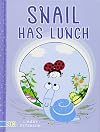
This is a short, heavily illustrated chapter book from the Aladdin Pix line. I believe most of these titles are now being offered in collections - this one can be purchased in a bind-up with the sequel, Snail finds a home. The description says "a new line of illustrated chapter books" but this was originally published in 2016, so I think they moved on to other things when they didn't get as much response as Scholastic's Branches series.
In Snail has lunch, Snail, a blue-shelled creature with long stalks and cartoon eyes, lives in a rusty bucket. He likes it there and refuses to move or explore elsewhere, no matter how much his friend Ladybug tries to coax him out. When the farmer walks off with Snail's rusty bucket, he is forced to explore and finds himself in the wonderful garden Ladybug told him about. Ladybug is there as well and she introduces Snail to new friends, tastes, smells, and ideas. Will Snail find a new home or will he return to his old bucket?
The art is created digitally and is bright, cheerful cartoons. There's not much detail and the simple shapes of the plants, creatures, and farmer are set against a white background. The text is a smaller, lighter font that can sometimes be hard to discern against the bland backgrounds and there are also additional speech bubbles.
I can see why this never took off - it just doesn't have the appeal and layout of Scholastic's Branches series. It's a cute story, but without much substance and the art isn't particularly show more memorable.
Verdict: If you are in need of more easy chapter books, it's an ok additional purchase and the new bind-ups are available in prebound. However, if you just want some gentle garden stories for young readers, Poppy and Sam by Cathon is a more attractive series.
ISBN: 9781481453028; Published 2016 by Aladdin; Borrowed from another library in my consortium show less
In Snail has lunch, Snail, a blue-shelled creature with long stalks and cartoon eyes, lives in a rusty bucket. He likes it there and refuses to move or explore elsewhere, no matter how much his friend Ladybug tries to coax him out. When the farmer walks off with Snail's rusty bucket, he is forced to explore and finds himself in the wonderful garden Ladybug told him about. Ladybug is there as well and she introduces Snail to new friends, tastes, smells, and ideas. Will Snail find a new home or will he return to his old bucket?
The art is created digitally and is bright, cheerful cartoons. There's not much detail and the simple shapes of the plants, creatures, and farmer are set against a white background. The text is a smaller, lighter font that can sometimes be hard to discern against the bland backgrounds and there are also additional speech bubbles.
I can see why this never took off - it just doesn't have the appeal and layout of Scholastic's Branches series. It's a cute story, but without much substance and the art isn't particularly show more memorable.
Verdict: If you are in need of more easy chapter books, it's an ok additional purchase and the new bind-ups are available in prebound. However, if you just want some gentle garden stories for young readers, Poppy and Sam by Cathon is a more attractive series.
ISBN: 9781481453028; Published 2016 by Aladdin; Borrowed from another library in my consortium show less
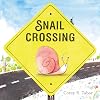
There's often a bit of a gulf between some of the more... inspirational.... type of books teachers want for their classrooms and what I'd prefer to purchase for my general library population. So when I find a book that hits both levels, it's a happy, happy thing.
Corey R. Tabor, creator of the delightful Fox picture books and easy readers, is branching out into a new character - a snail! Soft, swirling watercolors with dabs of bright colors introduce Snail, a sweet pink creature with a blue slime trail and a plan - travel across the road to reach a field of lovely green cabbages. Snail slowly works across the road - nothing is going to stop him! Not a car, a group of rude ants, or a rainstorm. In fact, Snail being the kind creature he is, he invites the ants to take shelter in his shell during the rain and they have a very nice tea party.
After his little break, he's ready to tackle the road again, avoiding hungry crows, and finally makes it... only to make the depressing discovery that he's right back where he started! Does Snail have the determination to make the long journey all over again - or is there another way?
The themes of determination, resilience, and kindness resound throughout this book, as Snail makes his way towards his goal and finds some unexpected friends along the way. The soft watercolors and gentle humor make this a sweet storytime read and it has a timeless feel that will appeal to kids and adults alike.
Verdict: A nice choice for starting conversations show more about resilience, determination, and kindness to others as well as a fun story with delightful details to inspect. Recommended.
ISBN: 9780062878007; Published February 2020 by Balzer & Bray; Borrowed from another library in my consortium show less
Corey R. Tabor, creator of the delightful Fox picture books and easy readers, is branching out into a new character - a snail! Soft, swirling watercolors with dabs of bright colors introduce Snail, a sweet pink creature with a blue slime trail and a plan - travel across the road to reach a field of lovely green cabbages. Snail slowly works across the road - nothing is going to stop him! Not a car, a group of rude ants, or a rainstorm. In fact, Snail being the kind creature he is, he invites the ants to take shelter in his shell during the rain and they have a very nice tea party.
After his little break, he's ready to tackle the road again, avoiding hungry crows, and finally makes it... only to make the depressing discovery that he's right back where he started! Does Snail have the determination to make the long journey all over again - or is there another way?
The themes of determination, resilience, and kindness resound throughout this book, as Snail makes his way towards his goal and finds some unexpected friends along the way. The soft watercolors and gentle humor make this a sweet storytime read and it has a timeless feel that will appeal to kids and adults alike.
Verdict: A nice choice for starting conversations show more about resilience, determination, and kindness to others as well as a fun story with delightful details to inspect. Recommended.
ISBN: 9780062878007; Published February 2020 by Balzer & Bray; Borrowed from another library in my consortium show less
Drew Shenemen has written a couple quite funny picture books and now he turns his cartoonist's pen to dinosaurs. A T-Rex with a fluffy mane of feathers peers at the title, saying "that's a relief." but is warned by a plump white chicken with massive wattles, "You should probably read the book first."
A simple time line of dinosaurs follows, illustrated by bug-eyed dinosaurs, including the maned T-rex and with Shenemen's dry delivery. Readers follow the brief, humorous text as the Cretaceous period ends and a frantic red, chicken-like bird dashes through the fires of disaster shrieking "Somebody call 911! Wait... Somebody invent 911!"
These smaller, more adaptable animals survive and dinosaurs continue to exist - as birds! The story expands into an exploration of birds, their relationship to dinosaurs, and their current ubiquity. The book ends with a spread mixing dinosaurs with fantastic feathered details, eye to eye with modern birds. There is a timeline of avian history, from early birds in the Jurassic to modern birds. At the end, we see the fluffy T-rex and plump chicken for one last joke.
This isn't a research book, although it uses precise terms and titles and includes a lot of information. It's not a read-aloud, especially for younger kids, because of the lengthier text. However, it's just perfect for a class read-aloud or a one-on-one discussion with dinosaur fans who can sit still for the longer, more complex text, nicely broken up by the humorous cartoons and show more asides. My only quibble is the small, light font used for the text which makes it a little difficult to read.
Verdict: A strong addition to your intermediate dinosaur offerings, sure to be popular with elementary age kids especially.
ISBN: 9780062972347; Published October 2020 by HarperCollins; Purchased for the library show less
A simple time line of dinosaurs follows, illustrated by bug-eyed dinosaurs, including the maned T-rex and with Shenemen's dry delivery. Readers follow the brief, humorous text as the Cretaceous period ends and a frantic red, chicken-like bird dashes through the fires of disaster shrieking "Somebody call 911! Wait... Somebody invent 911!"
These smaller, more adaptable animals survive and dinosaurs continue to exist - as birds! The story expands into an exploration of birds, their relationship to dinosaurs, and their current ubiquity. The book ends with a spread mixing dinosaurs with fantastic feathered details, eye to eye with modern birds. There is a timeline of avian history, from early birds in the Jurassic to modern birds. At the end, we see the fluffy T-rex and plump chicken for one last joke.
This isn't a research book, although it uses precise terms and titles and includes a lot of information. It's not a read-aloud, especially for younger kids, because of the lengthier text. However, it's just perfect for a class read-aloud or a one-on-one discussion with dinosaur fans who can sit still for the longer, more complex text, nicely broken up by the humorous cartoons and show more asides. My only quibble is the small, light font used for the text which makes it a little difficult to read.
Verdict: A strong addition to your intermediate dinosaur offerings, sure to be popular with elementary age kids especially.
ISBN: 9780062972347; Published October 2020 by HarperCollins; Purchased for the library show less
Lekha Divekar lives in a small, Midwestern town and has always divided herself into two people. The kid she is at school, where she ignores the teasing, tries to hide the fact that she's the only Indian-American in the whole school, and basically keeps her head down all the time. At home, she's free to love Bollywood and enjoy her own culture.
When a new girl, Avantika, moves in across the street and attends Lekha's school, she's thrilled. Finally, she won't be the only Desi (Indian living abroad) in her school. But Avantika isn't at all what she expected. She's not Americanized and doesn't try to be. She's got an accent, she stands up to the bullies, and instead of hiding in the background with Lekha, she draws them both into the spotlight. Lekha's school difficulties are made even worse when prejudice against immigrants skyrockets and a local senator starts stirring up violence against them.
Lekha is running up against trouble in all quarters. She gets pressure, racism, and bullying from the girls on swim team, her mother is too scared to leave the house, and her best friend's "help" just makes things worse, when he publicizes the xenophobia her family is experiencing. Even time spent with her Desi friends and relatives isn't comfortable anymore, as she starts to realize they have their own prejudices and microaggressions against recent immigrants like Avantika.
Lekha has to make some difficult decisions and figure out how to reconcile the different parts of herself, her show more culture, and her friends before she can find her voice and start to move forward with her family, relationships, and her dreams.
This is kind of what I was talking about with Gillian McDunn's new book, The Queen Bea and Me. Like that book, this is also pitch-perfect for the angst and friendship troubles of middle school. However, it has an added dimension of diversity and Lekha's unique perspective and experiences. There are some hopeful signs near the end, regarding the prejudice Lekha's family has suffered - one neighbor who was previously a supporter of the xenophobic senator remembers the prejudice suffered by his own Sicilian immigrant ancestors and supports the family and one of the girls who has been harassing Lekha (the girl's mom lost her job in a factory due to "immigrants taking all the jobs") is rescued from a breakdown on the highway by Lekha's family and they come to be better friends and learn their prejudices are unrealistic.
This last feels... wrong. It's just wrong that people have to get to know people who are different to realize that they're not evil. But it's realistic. Harper and her mom may well still support Senator Winters. They may well still be racist and xenophobic, arguing that "those people" aren't like the "nice Indians" they know. But it's a small step in the right direction. Lekha is still shy. She still makes mistakes and missteps, and she recognizes that she has her own prejudices to overcome. But she's taken a big step in combining the two different sides of her life, is more comfortable with herself as an Indian-American, and has started to stand up for herself.
Verdict: This has all the friendship angst that middle schoolers know so well, but with some thoughtful and relevant commentary on current events. I think this will resonate with minority students, as well as offer more perspective to majority students on how they treat other kids and their own role as allies and what that means. There's also humor and plenty of middle school embarrassment and worries for all kids to relate to.
ISBN: 9781534439382; Published June 2020 by Aladdin; Review copy provided by publisher; Donated to the library show less
When a new girl, Avantika, moves in across the street and attends Lekha's school, she's thrilled. Finally, she won't be the only Desi (Indian living abroad) in her school. But Avantika isn't at all what she expected. She's not Americanized and doesn't try to be. She's got an accent, she stands up to the bullies, and instead of hiding in the background with Lekha, she draws them both into the spotlight. Lekha's school difficulties are made even worse when prejudice against immigrants skyrockets and a local senator starts stirring up violence against them.
Lekha is running up against trouble in all quarters. She gets pressure, racism, and bullying from the girls on swim team, her mother is too scared to leave the house, and her best friend's "help" just makes things worse, when he publicizes the xenophobia her family is experiencing. Even time spent with her Desi friends and relatives isn't comfortable anymore, as she starts to realize they have their own prejudices and microaggressions against recent immigrants like Avantika.
Lekha has to make some difficult decisions and figure out how to reconcile the different parts of herself, her show more culture, and her friends before she can find her voice and start to move forward with her family, relationships, and her dreams.
This is kind of what I was talking about with Gillian McDunn's new book, The Queen Bea and Me. Like that book, this is also pitch-perfect for the angst and friendship troubles of middle school. However, it has an added dimension of diversity and Lekha's unique perspective and experiences. There are some hopeful signs near the end, regarding the prejudice Lekha's family has suffered - one neighbor who was previously a supporter of the xenophobic senator remembers the prejudice suffered by his own Sicilian immigrant ancestors and supports the family and one of the girls who has been harassing Lekha (the girl's mom lost her job in a factory due to "immigrants taking all the jobs") is rescued from a breakdown on the highway by Lekha's family and they come to be better friends and learn their prejudices are unrealistic.
This last feels... wrong. It's just wrong that people have to get to know people who are different to realize that they're not evil. But it's realistic. Harper and her mom may well still support Senator Winters. They may well still be racist and xenophobic, arguing that "those people" aren't like the "nice Indians" they know. But it's a small step in the right direction. Lekha is still shy. She still makes mistakes and missteps, and she recognizes that she has her own prejudices to overcome. But she's taken a big step in combining the two different sides of her life, is more comfortable with herself as an Indian-American, and has started to stand up for herself.
Verdict: This has all the friendship angst that middle schoolers know so well, but with some thoughtful and relevant commentary on current events. I think this will resonate with minority students, as well as offer more perspective to majority students on how they treat other kids and their own role as allies and what that means. There's also humor and plenty of middle school embarrassment and worries for all kids to relate to.
ISBN: 9781534439382; Published June 2020 by Aladdin; Review copy provided by publisher; Donated to the library show less
Pigeons! Pigeons are inherently funny and this new graphic blend, beginning chapter series is no exception.
The first mystery begins with a question. Which one of these creatures is a pigeon? Is it the strutting rooster? The bouncing, carrot-munching rabbit? The bug-eyed caterpillar on a pile of leaves? Yes, Yes, and No! (but the pile of leaves hides a pigeon!) and that pigeon is Rock, a master of disguise. Rock Pigeon, a sleek gray bird with bulging eyes and a predilection for nature, loves to dress up as other animals, but the animals on the farm where he lives don't appreciate it. In fact, they're always telling him "Real pigeons should do pigeon things!" But Rock doesn't listen and one day, a strange, elderly pigeon, Grandpouter Pigeon, shows up and wants to recruit Rock for a crime-fighting squad of pigeons!
Rock jumps right into his first mystery, the mystery of the missing bread crumbs, and meets the other recruits, each with their own super power. Frillback pigeon has beautifully curly feathers and she also has super-strength. Tumbler pigeon, with a twisty neck, can do the most amazing twists in the air and she's flexible on the ground too! Homey, (short for Homing Pigeon) has a big, blocky head and he can find anything. Together, they face dangers and finally solve the mystery. Rock's doubts and fears dissolve and he knows he is a Real Pigeon now, and Real Pigeons Fight Crime!
Their next adventure features Tumbler's friends, the bats, and a mysterious bat trapper. show more It also features way too many meetings in garbage cans, at least in Rock's opinion. Having solved the first two cases, the Real Pigeons must face a team-up of their villains, Jungle Crow and MegaBat at a food fair. Can they save the food? And the people? And will Rock be able to conquer the final frontier in disguises - pretending to be a person?
Black and white cartoons fill the pages. There are few traditional panels, but no more than a few sentences of a text at a time. Most dialogue is shown with a few quick lines to connect it to the speaker, rather than speech balloons. The pigeons are goofily drawn, with bulgy eyes and wacky body types. Readers will need to be fairly fluent to follow the numerous exclamations and silly plots, but the text itself is fairly simple with short sentences and only a few more complex words. I would say this is a bit more difficult than Bad Guys, but not quite as challenging as Dragonbreath, both of which it would make a nice read-alike for.
Verdict: If, like me, you have Bad Guy fans who just can't get enough of those goofy characters but whose parents don't want them to read the more crude humor of Pilkey and who aren't ready for the more challenging Dragonbreath books, these silly mysteries are the perfect challenge, with just a little more text, plenty of art, and only a little potty humor. The designation of two of the team as female is a nice touch, as very few books include funny female characters. My only complaint is they're not available in paperback, so I could put them into my juvenile series collection and will need to put them in the regular juvenile fiction. I probably won't have the budget to purchase them this year, but I can't wait to get them next year!
ISBN: 9780593119426; Published January 2020 by Random House; Borrowed from another library in my consortium; Purchased for the library show less
The first mystery begins with a question. Which one of these creatures is a pigeon? Is it the strutting rooster? The bouncing, carrot-munching rabbit? The bug-eyed caterpillar on a pile of leaves? Yes, Yes, and No! (but the pile of leaves hides a pigeon!) and that pigeon is Rock, a master of disguise. Rock Pigeon, a sleek gray bird with bulging eyes and a predilection for nature, loves to dress up as other animals, but the animals on the farm where he lives don't appreciate it. In fact, they're always telling him "Real pigeons should do pigeon things!" But Rock doesn't listen and one day, a strange, elderly pigeon, Grandpouter Pigeon, shows up and wants to recruit Rock for a crime-fighting squad of pigeons!
Rock jumps right into his first mystery, the mystery of the missing bread crumbs, and meets the other recruits, each with their own super power. Frillback pigeon has beautifully curly feathers and she also has super-strength. Tumbler pigeon, with a twisty neck, can do the most amazing twists in the air and she's flexible on the ground too! Homey, (short for Homing Pigeon) has a big, blocky head and he can find anything. Together, they face dangers and finally solve the mystery. Rock's doubts and fears dissolve and he knows he is a Real Pigeon now, and Real Pigeons Fight Crime!
Their next adventure features Tumbler's friends, the bats, and a mysterious bat trapper. show more It also features way too many meetings in garbage cans, at least in Rock's opinion. Having solved the first two cases, the Real Pigeons must face a team-up of their villains, Jungle Crow and MegaBat at a food fair. Can they save the food? And the people? And will Rock be able to conquer the final frontier in disguises - pretending to be a person?
Black and white cartoons fill the pages. There are few traditional panels, but no more than a few sentences of a text at a time. Most dialogue is shown with a few quick lines to connect it to the speaker, rather than speech balloons. The pigeons are goofily drawn, with bulgy eyes and wacky body types. Readers will need to be fairly fluent to follow the numerous exclamations and silly plots, but the text itself is fairly simple with short sentences and only a few more complex words. I would say this is a bit more difficult than Bad Guys, but not quite as challenging as Dragonbreath, both of which it would make a nice read-alike for.
Verdict: If, like me, you have Bad Guy fans who just can't get enough of those goofy characters but whose parents don't want them to read the more crude humor of Pilkey and who aren't ready for the more challenging Dragonbreath books, these silly mysteries are the perfect challenge, with just a little more text, plenty of art, and only a little potty humor. The designation of two of the team as female is a nice touch, as very few books include funny female characters. My only complaint is they're not available in paperback, so I could put them into my juvenile series collection and will need to put them in the regular juvenile fiction. I probably won't have the budget to purchase them this year, but I can't wait to get them next year!
ISBN: 9780593119426; Published January 2020 by Random House; Borrowed from another library in my consortium; Purchased for the library show less
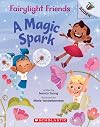
This newest series for the Acorn line produces lots of flighty fairy fun. Acorn is Scholastic's easy reader chapter book line. They are fully illustrated, sometimes in traditional comic book format, but more often just with speech bubbles and some explanatory text. The reading level is usually intermediate, similar to Frog and Toad or Henry and Mudge. However, they do include both dialogue and exposition.
They're formatted in a small size, a little larger than a Beatrix Potter book, and give kids the feeling of reading a "real" chapter book. I actually put them in with my beginning chapter books, because I feel that they'd be lost on the easy reader shelves.
This book introduces three fairies; Ruby, with brown skin and dark brown, curly hair, likes to draw and create. Iris, with tanned skin, blue hair, and stripy leggings under her shorts, is athletic and loves to fly fast. Pip is quieter than the girls, with blonde hair and fair skin, and he likes to garden.
The three friends go to school with Miss Goldwing, brown-skinned with her hair in a tied back afro, who teaches them all the fairy skills they need, tiptoeing and magicking along with them in green slacks and a gold sweater. In three short stories, the friends discover their magic powers and then join together in creating a party for Miss Goldwing.
Verdict: This is fluff - cheerful, colorful fluff, but definitely fluff. It's more diverse than a lot of fairy offerings though and I'd much rather hand this to readers show more wanting fairy/magic easy readers than, say, Pinkalicious. I'd purchase the Princess Truly books from Acorn first though and get these if you have funds left.
ISBN: 9781338596526; Published September 2020 by Scholastic; Purchased for the library show less
They're formatted in a small size, a little larger than a Beatrix Potter book, and give kids the feeling of reading a "real" chapter book. I actually put them in with my beginning chapter books, because I feel that they'd be lost on the easy reader shelves.
This book introduces three fairies; Ruby, with brown skin and dark brown, curly hair, likes to draw and create. Iris, with tanned skin, blue hair, and stripy leggings under her shorts, is athletic and loves to fly fast. Pip is quieter than the girls, with blonde hair and fair skin, and he likes to garden.
The three friends go to school with Miss Goldwing, brown-skinned with her hair in a tied back afro, who teaches them all the fairy skills they need, tiptoeing and magicking along with them in green slacks and a gold sweater. In three short stories, the friends discover their magic powers and then join together in creating a party for Miss Goldwing.
Verdict: This is fluff - cheerful, colorful fluff, but definitely fluff. It's more diverse than a lot of fairy offerings though and I'd much rather hand this to readers show more wanting fairy/magic easy readers than, say, Pinkalicious. I'd purchase the Princess Truly books from Acorn first though and get these if you have funds left.
ISBN: 9781338596526; Published September 2020 by Scholastic; Purchased for the library show less
Pearl, a cheery little girl in polka-dot shoes and overalls, has built several birdfeeders and is excited to get started on birdwatching. But, as any bird lover might expect, she gets a very strange, furry bird - a squirrel. Frustrated, she tries to bar the mischievous gray squirrel from the peanuts in her teacup birdfeeder, but no matter how cleverly she works, the squirrel keeps getting in and snatching those peanuts!
Finally, she puts all her efforts into an elaborate obstacle course, but of course the squirrel defeats it easily. Then Pearl realizes that it's actually a mama squirrel feeding her babies, and decides to feed both squirrels AND the birds, giving the mama squirrel lots of opportunities for teaching her kits how to navigate the obstacle course.
Back matter includes "some squirrelly facts." This book first caught my eye because, well, I might have a little... thing going on with the squirrels in my yard. However, I would like to point out that it is not ONE squirrel, but at least seven, with more coming and going, and they do not have the courtesy to only eat from the feeder I set up just for them, in company with the rapidly-expanding chipmunk population they get into everything. So it's not exactly a realistic story - there would have been a lot more than one squirrel, unless it was tough enough to fight off the other squirrels (yes, I've had to clean squirrel blood off my feeders) and after she emptied the teacup in 3 seconds flat, she would have cleaned show more out the other feeders!
Ahem.
I admit that squirrels ARE cute and clever and fun to watch, and this is a sweet and silly story that shows two girls, human and squirrel, using their ingenuity to the fullest!
Verdict: However you feel about squirrels, this story will make you giggle and maybe even get kids creating some of their own obstacle courses for the squirrels in their backyards!
ISBN: 9780823442515; Published August 2020 by Margaret G. Ferguson; Borrowed from another library in my consortium show less
Finally, she puts all her efforts into an elaborate obstacle course, but of course the squirrel defeats it easily. Then Pearl realizes that it's actually a mama squirrel feeding her babies, and decides to feed both squirrels AND the birds, giving the mama squirrel lots of opportunities for teaching her kits how to navigate the obstacle course.
Back matter includes "some squirrelly facts." This book first caught my eye because, well, I might have a little... thing going on with the squirrels in my yard. However, I would like to point out that it is not ONE squirrel, but at least seven, with more coming and going, and they do not have the courtesy to only eat from the feeder I set up just for them, in company with the rapidly-expanding chipmunk population they get into everything. So it's not exactly a realistic story - there would have been a lot more than one squirrel, unless it was tough enough to fight off the other squirrels (yes, I've had to clean squirrel blood off my feeders) and after she emptied the teacup in 3 seconds flat, she would have cleaned show more out the other feeders!
Ahem.
I admit that squirrels ARE cute and clever and fun to watch, and this is a sweet and silly story that shows two girls, human and squirrel, using their ingenuity to the fullest!
Verdict: However you feel about squirrels, this story will make you giggle and maybe even get kids creating some of their own obstacle courses for the squirrels in their backyards!
ISBN: 9780823442515; Published August 2020 by Margaret G. Ferguson; Borrowed from another library in my consortium show less
While National Geographic is pretty much the top dog in the browsing nonfiction world, now and then I find another publisher has popped out something really eye-catching and this collection of animal facts, arranged around the theme of "weird names" from Workman, is definitely a top pic for this year.
An introduction clearly and succinctly explains the importance of naming, how animals are named, and the difference between scientific and common names. The animals are organized rather subjectively into funny, magical, fierce, delicious, and just plain weird names. Within each chapter, there are 2-3 pages per animal, explaining their scientific and common name and a variety of interesting facts about the animal. Some are accompanied by photographs, but most include drawings. The backgrounds are bold colors, with an inset detailing the species, habitat, and an additional fact about the animal.
Readers will learn about the striped pyjama squid, ba humbug, fried egg jellyfish, lionhead rabbit, chicken turtle, and, of course, the screaming hairy armadillo. There are several collective spreads that go into more detail on a particular group of animals like peacock spiders, wasps, or animals of Madagascar.
Back matter includes more interesting animal name trivia, instructions on how to discover and name an organism yourself, a funny common name generator, glossary, handful of websites for further reading, and a note on conservation.
Verdict: This is an ideal book to teach kids about show more scientific nomenclature, as well as a fun browsing title and would also make a nice gift for kids who like to learn interesting facts and share them. Just be prepared to google lots of photographs of creatures like the yeti crab and vampire squid!
ISBN: 9781523508112; Published September 2020 by Workman; Purchased for the library show less
An introduction clearly and succinctly explains the importance of naming, how animals are named, and the difference between scientific and common names. The animals are organized rather subjectively into funny, magical, fierce, delicious, and just plain weird names. Within each chapter, there are 2-3 pages per animal, explaining their scientific and common name and a variety of interesting facts about the animal. Some are accompanied by photographs, but most include drawings. The backgrounds are bold colors, with an inset detailing the species, habitat, and an additional fact about the animal.
Readers will learn about the striped pyjama squid, ba humbug, fried egg jellyfish, lionhead rabbit, chicken turtle, and, of course, the screaming hairy armadillo. There are several collective spreads that go into more detail on a particular group of animals like peacock spiders, wasps, or animals of Madagascar.
Back matter includes more interesting animal name trivia, instructions on how to discover and name an organism yourself, a funny common name generator, glossary, handful of websites for further reading, and a note on conservation.
Verdict: This is an ideal book to teach kids about show more scientific nomenclature, as well as a fun browsing title and would also make a nice gift for kids who like to learn interesting facts and share them. Just be prepared to google lots of photographs of creatures like the yeti crab and vampire squid!
ISBN: 9781523508112; Published September 2020 by Workman; Purchased for the library show less
Meg has been friends with Beatrix (Bea) since kindergarten. She has some anxiety issues and in their small town there's limited opportunities to meet other people anyways, so it's always been easier to just go along with Bea. But they started middle school last year and Bea is... not so nice. She's always been a bit bossy, but she's taken to giving Meg the silent treatment and freezing her out of their friend group whenever she doesn't agree or go along with Bea's ideas as enthusiastically as Bea wants.
Now the two are growing even farther apart. Bea is absorbed in dance and in her desire to move to modern and contemporary styles, rather than the classical ballet her mom prefers. Meg wants to pursue her love of science and has been accepted into a special 7th grade science class. But it will mean not taking dance with Bea. Then a new girl moves to town. She's weird and quirky, has bee hives (Meg is terrified of bees) and is an immediate target for Bea and her overbearing, bullying mother. Meg is sort of interested in being friends with Hazel, but Bea makes it clear that if she "chooses" Hazel over her, Meg's social life is over.
Things get even more complicated when Bea's mother starts a campaign to get Hazel's bees banned and Meg finds herself doing a science project about bees with Hazel. Meg's parents don't seem to understand what's happening - and Meg's mother in particular has her own issues with Bea's overbearing mother. There are many stumbles as Meg struggles to show more make her own choices and be her own person apart from her friends, but eventually she finds herself in a happier and more mentally healthy place in her life and ready to move forward.
I have mixed feelings about this sophomore effort from McDunn. It's true that McDunn is just a really good writer. This is spot-on about the angst and feelings and roiling worries about friendship in middle school. It's also very realistic about the handful of overbearing people who can take over in a small town and run things to suit their own narrow-minded ideas. There were many spots where I wanted to stop and say something was stereotypical, like the "quirky" new girl coming in with free and easy ways who wakes up the locals. But McDunn is such a good writer and she always tips things away from the stereotype to add a different aspect. Part of the plot of Meg's emotional growth involves her standing up not just to Bea but also to Hazel, who starts out as bossy as Bea, but in different ways. I'd say the bee aspects of the plot were an unnecessary complication and the town council meeting was very unrealistic, but small towns can - and do - devolve into endless complications over minor details like this and people are incredibly ignorant about bees. I had a whole outdoor program screaming about being stung by "bees" when they were hornets the whole time. I even caught one in a clear plastic bin to show them the difference and they STILL say "remember that time we were at the park and got stung by bees" *headdesk*.
Verdict: I think, ultimately, I would say that McDunn's skillful writing keeps this from devolving into stereotypes, but that there are so many similar books this just doesn't stand out as much as her debut novel. I'd recommend for middle school and upper elementary if you have a lot of kids who like this type of friendship-focused, more serious story, but otherwise I'd look more towards diversifying my collection with different offerings.
ISBN: 9781681197517; Published March 2020 by Bloomsbury; ARC provided by publisher; Currently testing on a sixth grader show less
Now the two are growing even farther apart. Bea is absorbed in dance and in her desire to move to modern and contemporary styles, rather than the classical ballet her mom prefers. Meg wants to pursue her love of science and has been accepted into a special 7th grade science class. But it will mean not taking dance with Bea. Then a new girl moves to town. She's weird and quirky, has bee hives (Meg is terrified of bees) and is an immediate target for Bea and her overbearing, bullying mother. Meg is sort of interested in being friends with Hazel, but Bea makes it clear that if she "chooses" Hazel over her, Meg's social life is over.
Things get even more complicated when Bea's mother starts a campaign to get Hazel's bees banned and Meg finds herself doing a science project about bees with Hazel. Meg's parents don't seem to understand what's happening - and Meg's mother in particular has her own issues with Bea's overbearing mother. There are many stumbles as Meg struggles to show more make her own choices and be her own person apart from her friends, but eventually she finds herself in a happier and more mentally healthy place in her life and ready to move forward.
I have mixed feelings about this sophomore effort from McDunn. It's true that McDunn is just a really good writer. This is spot-on about the angst and feelings and roiling worries about friendship in middle school. It's also very realistic about the handful of overbearing people who can take over in a small town and run things to suit their own narrow-minded ideas. There were many spots where I wanted to stop and say something was stereotypical, like the "quirky" new girl coming in with free and easy ways who wakes up the locals. But McDunn is such a good writer and she always tips things away from the stereotype to add a different aspect. Part of the plot of Meg's emotional growth involves her standing up not just to Bea but also to Hazel, who starts out as bossy as Bea, but in different ways. I'd say the bee aspects of the plot were an unnecessary complication and the town council meeting was very unrealistic, but small towns can - and do - devolve into endless complications over minor details like this and people are incredibly ignorant about bees. I had a whole outdoor program screaming about being stung by "bees" when they were hornets the whole time. I even caught one in a clear plastic bin to show them the difference and they STILL say "remember that time we were at the park and got stung by bees" *headdesk*.
Verdict: I think, ultimately, I would say that McDunn's skillful writing keeps this from devolving into stereotypes, but that there are so many similar books this just doesn't stand out as much as her debut novel. I'd recommend for middle school and upper elementary if you have a lot of kids who like this type of friendship-focused, more serious story, but otherwise I'd look more towards diversifying my collection with different offerings.
ISBN: 9781681197517; Published March 2020 by Bloomsbury; ARC provided by publisher; Currently testing on a sixth grader show less
Epic! is an ebook and audiobook provider, primarily used by schools. They've started producing some of their own books, via Andrews McMeel (they are probably familiar to most librarians as the publishers of comic collections and series like Phoebe and her Unicorn and Big Nate).
I looked at two samples from their early chapter books. The first, Problem at the playground, is a little mermaid mystery. Violet, the daughter of the mayor of Aquamarina, and her best friend Wally the narwhal, are excited to see the new playground. But all the screws are gone and the playground is destroyed, much to the disappointment of the crowd and the the leader of the engineers, Ms. Rivet Rogers. Violet and her friends investigate the mystery and solve it, finding the real culprit after suspecting prankster Gill Sharkfin, a mischievous merboy. Colorful digital illustrations show a variety of merpeople with skin colors ranging from brown to purple. There are short sections afterwards, talking about the science of engineering and some of the sea creatures mentioned. The text is fairly simple and the font large - about on par with Kitty Princess, Critter Club, and other beginning chapter books.
The secret of shadow lake is a slightly higher reading level - closer to Magic Tree house. It features Norm, a Bigfoot boy who is not happy about having to attend Camp Moonlight after having gone through a growth spurt that has made him uncomfortably tall as well as other hormonal changes. He feels better show more when he meets up with some other oddball campers; Oliver, a small and nervous human (the only one at camp), Hazel, a hyperactive jackalope, and Wisp, a small fairy with one small wing who can't fly well. They decide to work together to overcome their individual difficulties and pass their canoe test, but there's a cartoonish villain lurking in the background, eager to kidnap Norm for his museum! This had more fully fleshed-out characters, albeit somewhat cartoonishly portrayed, but the lengthier text gives more room for detail of course. The illustrations are fewer and more cartoonish than the mermaid story.
Both series are available in paperback and hardcover, which I assume to be paper over board because of the price point. However, the books I borrowed from another library had a slightly different ISBN than the hardcover. The covers felt and looked like a prebound copy, but the joints of the binding were already separating and I didn't see any indication of who had done the binding. It's too small a library to have full cataloging either, so that will remain a mystery!
Verdict: If you need more fill-in beginning chapter series, both are acceptable. There are plenty of better books out there, but if you're going for quantity, these are attractive, humorous, and have nice hooks that will grab kids.
Problem at the playground: ISBN: 9781524855475; Published October 2019
Secret of shadow lake: ISBN: 9781524855468; Published October 2019 show less
I looked at two samples from their early chapter books. The first, Problem at the playground, is a little mermaid mystery. Violet, the daughter of the mayor of Aquamarina, and her best friend Wally the narwhal, are excited to see the new playground. But all the screws are gone and the playground is destroyed, much to the disappointment of the crowd and the the leader of the engineers, Ms. Rivet Rogers. Violet and her friends investigate the mystery and solve it, finding the real culprit after suspecting prankster Gill Sharkfin, a mischievous merboy. Colorful digital illustrations show a variety of merpeople with skin colors ranging from brown to purple. There are short sections afterwards, talking about the science of engineering and some of the sea creatures mentioned. The text is fairly simple and the font large - about on par with Kitty Princess, Critter Club, and other beginning chapter books.
The secret of shadow lake is a slightly higher reading level - closer to Magic Tree house. It features Norm, a Bigfoot boy who is not happy about having to attend Camp Moonlight after having gone through a growth spurt that has made him uncomfortably tall as well as other hormonal changes. He feels better show more when he meets up with some other oddball campers; Oliver, a small and nervous human (the only one at camp), Hazel, a hyperactive jackalope, and Wisp, a small fairy with one small wing who can't fly well. They decide to work together to overcome their individual difficulties and pass their canoe test, but there's a cartoonish villain lurking in the background, eager to kidnap Norm for his museum! This had more fully fleshed-out characters, albeit somewhat cartoonishly portrayed, but the lengthier text gives more room for detail of course. The illustrations are fewer and more cartoonish than the mermaid story.
Both series are available in paperback and hardcover, which I assume to be paper over board because of the price point. However, the books I borrowed from another library had a slightly different ISBN than the hardcover. The covers felt and looked like a prebound copy, but the joints of the binding were already separating and I didn't see any indication of who had done the binding. It's too small a library to have full cataloging either, so that will remain a mystery!
Verdict: If you need more fill-in beginning chapter series, both are acceptable. There are plenty of better books out there, but if you're going for quantity, these are attractive, humorous, and have nice hooks that will grab kids.
Problem at the playground: ISBN: 9781524855475; Published October 2019
Secret of shadow lake: ISBN: 9781524855468; Published October 2019 show less
Epic! is an ebook and audiobook provider, primarily used by schools. They've started producing some of their own books, via Andrews McMeel (they are probably familiar to most librarians as the publishers of comic collections and series like Phoebe and her Unicorn and Big Nate).
I looked at two samples from their early chapter books. The first, Problem at the playground, is a little mermaid mystery. Violet, the daughter of the mayor of Aquamarina, and her best friend Wally the narwhal, are excited to see the new playground. But all the screws are gone and the playground is destroyed, much to the disappointment of the crowd and the the leader of the engineers, Ms. Rivet Rogers. Violet and her friends investigate the mystery and solve it, finding the real culprit after suspecting prankster Gill Sharkfin, a mischievous merboy. Colorful digital illustrations show a variety of merpeople with skin colors ranging from brown to purple. There are short sections afterwards, talking about the science of engineering and some of the sea creatures mentioned. The text is fairly simple and the font large - about on par with Kitty Princess, Critter Club, and other beginning chapter books.
The secret of shadow lake is a slightly higher reading level - closer to Magic Tree house. It features Norm, a Bigfoot boy who is not happy about having to attend Camp Moonlight after having gone through a growth spurt that has made him uncomfortably tall as well as other hormonal changes. He feels better show more when he meets up with some other oddball campers; Oliver, a small and nervous human (the only one at camp), Hazel, a hyperactive jackalope, and Wisp, a small fairy with one small wing who can't fly well. They decide to work together to overcome their individual difficulties and pass their canoe test, but there's a cartoonish villain lurking in the background, eager to kidnap Norm for his museum! This had more fully fleshed-out characters, albeit somewhat cartoonishly portrayed, but the lengthier text gives more room for detail of course. The illustrations are fewer and more cartoonish than the mermaid story.
Both series are available in paperback and hardcover, which I assume to be paper over board because of the price point. However, the books I borrowed from another library had a slightly different ISBN than the hardcover. The covers felt and looked like a prebound copy, but the joints of the binding were already separating and I didn't see any indication of who had done the binding. It's too small a library to have full cataloging either, so that will remain a mystery!
Verdict: If you need more fill-in beginning chapter series, both are acceptable. There are plenty of better books out there, but if you're going for quantity, these are attractive, humorous, and have nice hooks that will grab kids.
Problem at the playground: ISBN: 9781524855475; Published October 2019
Secret of shadow lake: ISBN: 9781524855468; Published October 2019 show less
I looked at two samples from their early chapter books. The first, Problem at the playground, is a little mermaid mystery. Violet, the daughter of the mayor of Aquamarina, and her best friend Wally the narwhal, are excited to see the new playground. But all the screws are gone and the playground is destroyed, much to the disappointment of the crowd and the the leader of the engineers, Ms. Rivet Rogers. Violet and her friends investigate the mystery and solve it, finding the real culprit after suspecting prankster Gill Sharkfin, a mischievous merboy. Colorful digital illustrations show a variety of merpeople with skin colors ranging from brown to purple. There are short sections afterwards, talking about the science of engineering and some of the sea creatures mentioned. The text is fairly simple and the font large - about on par with Kitty Princess, Critter Club, and other beginning chapter books.
The secret of shadow lake is a slightly higher reading level - closer to Magic Tree house. It features Norm, a Bigfoot boy who is not happy about having to attend Camp Moonlight after having gone through a growth spurt that has made him uncomfortably tall as well as other hormonal changes. He feels better show more when he meets up with some other oddball campers; Oliver, a small and nervous human (the only one at camp), Hazel, a hyperactive jackalope, and Wisp, a small fairy with one small wing who can't fly well. They decide to work together to overcome their individual difficulties and pass their canoe test, but there's a cartoonish villain lurking in the background, eager to kidnap Norm for his museum! This had more fully fleshed-out characters, albeit somewhat cartoonishly portrayed, but the lengthier text gives more room for detail of course. The illustrations are fewer and more cartoonish than the mermaid story.
Both series are available in paperback and hardcover, which I assume to be paper over board because of the price point. However, the books I borrowed from another library had a slightly different ISBN than the hardcover. The covers felt and looked like a prebound copy, but the joints of the binding were already separating and I didn't see any indication of who had done the binding. It's too small a library to have full cataloging either, so that will remain a mystery!
Verdict: If you need more fill-in beginning chapter series, both are acceptable. There are plenty of better books out there, but if you're going for quantity, these are attractive, humorous, and have nice hooks that will grab kids.
Problem at the playground: ISBN: 9781524855475; Published October 2019
Secret of shadow lake: ISBN: 9781524855468; Published October 2019 show less
Although they are award-winning, Fenske's Fox easy readers are generally not my favorites. They're just a little too mean-spirited for my taste, although the kids find them hilarious. I prefer the squirrels and Crabby. However, I was still excited to see a new book in the series.
I actually rather liked this one more than some of the others. Fox has got a stuffed fox toy and sets out to trick pig in three chapters and some bouncy rhymes. Unfortunately, Fox's tricks always backfire, with painful results. Finally, with Fox sporting a black eye, bruises, scratches, and a bandage, he decides he has had enough fun for one day and to put his stuffed fox friend away, back in the box!
Fans of the series characters will recognize the sneaky but eventually regretful fox and the guileless pig, who helpfully goes along with all the "fun" with their good "friend" fox, with disastrous results - for Fox!
The one thing that I really do not like about this book is that the publisher has completely changed the layout and binding. The simple panels and speech bubbles (Fox has bubbles, Pig has squares) are squeezed from an easy reader format, 9x6 inches with an option for hardcover, library-bound, and paperback, down to 7x5 inches with only a paperback and a paper-over-board hardcover. They appear to have moved the series from Penguin Young Readers to Penguin Workshop and are rebranding it as an easy-to-read book to "build a bridge between beginning and confident young readers" rather than a show more traditional easy reader. However, it's basically the same reading level as the previous books (if you use lexiles, it's about 20 points higher). If this is meant to be a new series, a la Scholastic's Acorn and Branches books, the publisher did a very poor job and I highly doubt that they will see anything close to the success of those lines. Hopefully Scholastic will purchase the rest of the rights to Fenske's work and put them into their own, reader-friendly format.
Verdict: I really hate this binding. I hate that the text and art is squished down into a tinier format, making it difficult to read. I hate that it's a cheap binding and won't hold up to the many, many circs I expect to get out of my easy readers. I hate that it will not match the rest of the series - or any other easy readers. In short, while the story itself is fine and I actually like it better than previous books with these characters, I am really unhappy with what the publisher has done with the format and as far as I'm concerned this is now a novelty item I wouldn't add to a library collection.
ISBN: 9780593382561; Published September 2020 by Penguin Workshop; Review copy provided by the publisher; Donated to library prize books show less
I actually rather liked this one more than some of the others. Fox has got a stuffed fox toy and sets out to trick pig in three chapters and some bouncy rhymes. Unfortunately, Fox's tricks always backfire, with painful results. Finally, with Fox sporting a black eye, bruises, scratches, and a bandage, he decides he has had enough fun for one day and to put his stuffed fox friend away, back in the box!
Fans of the series characters will recognize the sneaky but eventually regretful fox and the guileless pig, who helpfully goes along with all the "fun" with their good "friend" fox, with disastrous results - for Fox!
The one thing that I really do not like about this book is that the publisher has completely changed the layout and binding. The simple panels and speech bubbles (Fox has bubbles, Pig has squares) are squeezed from an easy reader format, 9x6 inches with an option for hardcover, library-bound, and paperback, down to 7x5 inches with only a paperback and a paper-over-board hardcover. They appear to have moved the series from Penguin Young Readers to Penguin Workshop and are rebranding it as an easy-to-read book to "build a bridge between beginning and confident young readers" rather than a show more traditional easy reader. However, it's basically the same reading level as the previous books (if you use lexiles, it's about 20 points higher). If this is meant to be a new series, a la Scholastic's Acorn and Branches books, the publisher did a very poor job and I highly doubt that they will see anything close to the success of those lines. Hopefully Scholastic will purchase the rest of the rights to Fenske's work and put them into their own, reader-friendly format.
Verdict: I really hate this binding. I hate that the text and art is squished down into a tinier format, making it difficult to read. I hate that it's a cheap binding and won't hold up to the many, many circs I expect to get out of my easy readers. I hate that it will not match the rest of the series - or any other easy readers. In short, while the story itself is fine and I actually like it better than previous books with these characters, I am really unhappy with what the publisher has done with the format and as far as I'm concerned this is now a novelty item I wouldn't add to a library collection.
ISBN: 9780593382561; Published September 2020 by Penguin Workshop; Review copy provided by the publisher; Donated to library prize books show less
Although they are award-winning, Fenske's Fox easy readers are generally not my favorites. They're just a little too mean-spirited for my taste, although the kids find them hilarious. I prefer the squirrels and Crabby. However, I was still excited to see a new book in the series.
I actually rather liked this one more than some of the others. Fox has got a stuffed fox toy and sets out to trick pig in three chapters and some bouncy rhymes. Unfortunately, Fox's tricks always backfire, with painful results. Finally, with Fox sporting a black eye, bruises, scratches, and a bandage, he decides he has had enough fun for one day and to put his stuffed fox friend away, back in the box!
Fans of the series characters will recognize the sneaky but eventually regretful fox and the guileless pig, who helpfully goes along with all the "fun" with their good "friend" fox, with disastrous results - for Fox!
The one thing that I really do not like about this book is that the publisher has completely changed the layout and binding. The simple panels and speech bubbles (Fox has bubbles, Pig has squares) are squeezed from an easy reader format, 9x6 inches with an option for hardcover, library-bound, and paperback, down to 7x5 inches with only a paperback and a paper-over-board hardcover. They appear to have moved the series from Penguin Young Readers to Penguin Workshop and are rebranding it as an easy-to-read book to "build a bridge between beginning and confident young readers" rather than a show more traditional easy reader. However, it's basically the same reading level as the previous books (if you use lexiles, it's about 20 points higher). If this is meant to be a new series, a la Scholastic's Acorn and Branches books, the publisher did a very poor job and I highly doubt that they will see anything close to the success of those lines. Hopefully Scholastic will purchase the rest of the rights to Fenske's work and put them into their own, reader-friendly format.
Verdict: I really hate this binding. I hate that the text and art is squished down into a tinier format, making it difficult to read. I hate that it's a cheap binding and won't hold up to the many, many circs I expect to get out of my easy readers. I hate that it will not match the rest of the series - or any other easy readers. In short, while the story itself is fine and I actually like it better than previous books with these characters, I am really unhappy with what the publisher has done with the format and as far as I'm concerned this is now a novelty item I wouldn't add to a library collection.
ISBN: 9780593382561; Published September 2020 by Penguin Workshop; Review copy provided by the publisher; Donated to library prize books show less
I actually rather liked this one more than some of the others. Fox has got a stuffed fox toy and sets out to trick pig in three chapters and some bouncy rhymes. Unfortunately, Fox's tricks always backfire, with painful results. Finally, with Fox sporting a black eye, bruises, scratches, and a bandage, he decides he has had enough fun for one day and to put his stuffed fox friend away, back in the box!
Fans of the series characters will recognize the sneaky but eventually regretful fox and the guileless pig, who helpfully goes along with all the "fun" with their good "friend" fox, with disastrous results - for Fox!
The one thing that I really do not like about this book is that the publisher has completely changed the layout and binding. The simple panels and speech bubbles (Fox has bubbles, Pig has squares) are squeezed from an easy reader format, 9x6 inches with an option for hardcover, library-bound, and paperback, down to 7x5 inches with only a paperback and a paper-over-board hardcover. They appear to have moved the series from Penguin Young Readers to Penguin Workshop and are rebranding it as an easy-to-read book to "build a bridge between beginning and confident young readers" rather than a show more traditional easy reader. However, it's basically the same reading level as the previous books (if you use lexiles, it's about 20 points higher). If this is meant to be a new series, a la Scholastic's Acorn and Branches books, the publisher did a very poor job and I highly doubt that they will see anything close to the success of those lines. Hopefully Scholastic will purchase the rest of the rights to Fenske's work and put them into their own, reader-friendly format.
Verdict: I really hate this binding. I hate that the text and art is squished down into a tinier format, making it difficult to read. I hate that it's a cheap binding and won't hold up to the many, many circs I expect to get out of my easy readers. I hate that it will not match the rest of the series - or any other easy readers. In short, while the story itself is fine and I actually like it better than previous books with these characters, I am really unhappy with what the publisher has done with the format and as far as I'm concerned this is now a novelty item I wouldn't add to a library collection.
ISBN: 9780593382561; Published September 2020 by Penguin Workshop; Review copy provided by the publisher; Donated to library prize books show less
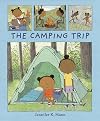
This is purely a guess, but I feel like there are a lot more books showing kids in urban or completely rural areas than there are showing kids in suburbs or small towns. And there really aren't many showing a typical camping trip. There especially aren't many showing kids of color in the outdoors. So I was on this book right away when I first heard of it.
Ernestine is very excited to go camping with her cousin Samantha and her aunt Jackie. She gets a sleeping bag and the other basic things she needs and they set off on a trip out of the city. With the car packed, they drive out of the city and set out on a long journey to Cedar Tree Campground. There they see trees, make their first attempt at putting up a tent, and Ernestine has her first experience of swimming in a lake, not a swimming pool. Ernestine also goes on her first hike and finds out it's a lot harder than walking on the sidewalk to school! The weekend goes on this way, with all sorts of new experiences, from finding a banana slug to eating tofu hot dogs. Ernestine has her first experience of sleeping outside (scary but wonderful) and finally conquers her fears of the lake. She says goodbye to her aunt and cousin and is reunited with her dad, happy to be home but already looking forward to going camping next year.
Ernestine and her family are all Black. She appears to live solely with her father while Samantha lives with her mother. She's a city kid and is definitely nervous about some of the new experiences she show more faces, but she's willing to try and her cousin and aunt are kind and helpful, comforting and not pushing her as she tries new things.
The art is drawn mostly in panels, with some separate illustrations of supplies, Ernestine ready with her backpack, and other little vignettes. The art was drawn in pencil and then colored in digitally and collaged, giving a fun depth to the pictures, especially of the natural areas.
Verdict: This is a great book for kids who have never been camping before or those who want to revisit a fun family experience. It's long for a storytime read-aloud, but would be great to read with an elementary school class or one-on-one. It also fills a gap, showing warm family relationships and outdoor experiences in a Black family. Highly recommended.
ISBN: 9781536207361; Published April 2020 by Candlewick; Purchased for the library show less
Ernestine is very excited to go camping with her cousin Samantha and her aunt Jackie. She gets a sleeping bag and the other basic things she needs and they set off on a trip out of the city. With the car packed, they drive out of the city and set out on a long journey to Cedar Tree Campground. There they see trees, make their first attempt at putting up a tent, and Ernestine has her first experience of swimming in a lake, not a swimming pool. Ernestine also goes on her first hike and finds out it's a lot harder than walking on the sidewalk to school! The weekend goes on this way, with all sorts of new experiences, from finding a banana slug to eating tofu hot dogs. Ernestine has her first experience of sleeping outside (scary but wonderful) and finally conquers her fears of the lake. She says goodbye to her aunt and cousin and is reunited with her dad, happy to be home but already looking forward to going camping next year.
Ernestine and her family are all Black. She appears to live solely with her father while Samantha lives with her mother. She's a city kid and is definitely nervous about some of the new experiences she show more faces, but she's willing to try and her cousin and aunt are kind and helpful, comforting and not pushing her as she tries new things.
The art is drawn mostly in panels, with some separate illustrations of supplies, Ernestine ready with her backpack, and other little vignettes. The art was drawn in pencil and then colored in digitally and collaged, giving a fun depth to the pictures, especially of the natural areas.
Verdict: This is a great book for kids who have never been camping before or those who want to revisit a fun family experience. It's long for a storytime read-aloud, but would be great to read with an elementary school class or one-on-one. It also fills a gap, showing warm family relationships and outdoor experiences in a Black family. Highly recommended.
ISBN: 9781536207361; Published April 2020 by Candlewick; Purchased for the library show less