

Ruth B. McDowell
Author of Piecing: Expanding the Basics
About the Author
Works by Ruth B. McDowell
Ruth B. McDowell's Piecing Workshop: Step-by-Step Visual Guide Indispensable Reference for Quilters Bonus Projects (2007) 121 copies, 3 reviews
Ruth B. McDowell's Design Workshop: Turn Your Inspiration into an Artfully Pieced Quilt (2007) 106 copies, 2 reviews
Tagged
Common Knowledge
- Canonical name
- McDowell, Ruth B.
- Birthdate
- 1945-06-08
- Gender
- female
- Education
- Massachusetts Institute of Technology (BS | Art and Design | 1967)
- Occupations
- illustrator
quilt artist (1972- ) - Places of residence
- Colrain, Massachusetts, USA
- Associated Place (for map)
- Massachusetts, USA
Members
Reviews
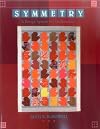
In this book Ruth McDowell discusses the fundamentals of symmetry and its application to design in general and for use by quilters. She began to explore the subject and the 17 symmetries of a plane a decade before after investigating Martin Buerger's 1978 book, [Elementary Crystallography].
In the book she gives examples of all 17 symmetries and how they might be applied to quilting. Many of the symmetries are inherent in quilting, but several had not been used before. She has instructions show more for the 17 different quilts made to illustration each symmetry.
I was tickled with her inspiration here as in high school chemistry I did an extensive project on crystallography, and was quite fascinated with the subject at the time - the scientific underpinnings of beautiful objects. This is the reason I have enjoyed McDowell's books because her books always discuss the design fundamentals behind making beautiful objects, which really enables one to explore these in their own work. show less
In the book she gives examples of all 17 symmetries and how they might be applied to quilting. Many of the symmetries are inherent in quilting, but several had not been used before. She has instructions show more for the 17 different quilts made to illustration each symmetry.
I was tickled with her inspiration here as in high school chemistry I did an extensive project on crystallography, and was quite fascinated with the subject at the time - the scientific underpinnings of beautiful objects. This is the reason I have enjoyed McDowell's books because her books always discuss the design fundamentals behind making beautiful objects, which really enables one to explore these in their own work. show less
Ruth B. McDowell's Design Workshop: Turn Your Inspiration into an Artfully Pieced Quilt by Ruth B. McDowell
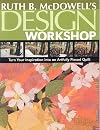
I love [a:Ruth McDowell|145093|Ruth B. McDowell|http://www.goodreads.com/images/nophoto/nophoto-U-50x66.jpg]'s books and have most of the books she has written. My favorites are [b:Piecing:Expanding the Basics|2031035|Piecing Expanding the Basics|Ruth McDowell|http://ecx.images-amazon.com/images/I/5163FRV444L._SL75_.jpg|2035690] and [b:Art & Inspiration: Ruth B. McDowell|1324424|Ruth B. McDowell's Design Workshop Turn Your Inspiration into an Artfully Pieced Quilt|Ruth B. show more McDowell|http://photo.goodreads.com/books/1182762519s/1324424.jpg|1313834].
McDowell's information is always good. I have to say that, initially, I was disappointed in this book. It seemed to be, mostly, a rehash of the Piecing book, which is one of my bibles, so I know it very well.
After sticking with the book (rather than abandoning it) I found a few good sections. Around page 50, McDowell discusses thinking through a different way of piecing her Muir Woods quilt, which she had done a couple of times before. I really like it when quiltmakers discuss their process and I am pleased to see that McDowell is working in a series.
One section is about using fabric. [a:Ruth McDowell|145093|Ruth B. McDowell|http://www.goodreads.com/images/nophoto/nophoto-U-50x66.jpg] has a lot of little gems about, which could be considered good ideas and rules to live by, including using and choosing fabric. This section has some commonalities with [a:Lorraine Torrence|698329|Lorraine Torrence|http://www.goodreads.com/images/nophoto/nophoto-U-50x66.jpg]'s advice to "make visual decisions visually." I think this is an interesting section because McDowell gives insight, again, into her process.
McDowell makes a comment [on page 61:] that making a quilt is not taking a photo. YAY!! Finally, an author has the guts to come out and just say it. She follows that up with more advice on using fabric in landscapes.
I particularly like the "Flamingo Demonstration". She really makes a good point about how foreground pieces can blend in to the background if you don't take care to separate the foreground (in this case flamingos) pieces from the background pieces. McDowell says "regardless of your intentions you must be honest with yourself about what you really see." It is a reminder to me that if I think "oh, this choice will be ok", it means that I have been lazy and it will probably NOT be ok.
[a:Ruth McDowell|145093|Ruth B. McDowell|http://www.goodreads.com/images/nophoto/nophoto-U-50x66.jpg] has an excellent discussion of background fabrics and creating backgrounds, and especially creating light backgrounds. She talks about including what different scales and motifs adds to and takes away from a background.
Another thought about backgrounds that Ms. McDowell discusses is about balancing colors in a quilt. The backgrounds can be unrealistic if the fabrics are the right colors. She says that it is more important to balance the colors in a quilt than make a realistic quilt. She reminds us again that the readers are not taking photographs.
[a:Ruth McDowell|145093|Ruth B. McDowell|http://www.goodreads.com/images/nophoto/nophoto-U-50x66.jpg] is a thoughtful quiltmaker. She really thinks about all aspects of the quilts. After thoroughly discussing the foreground and background, the main portion of the quilt, McDowell launches into an excellent discussion of borders. You might think that borders are easy - just slap on a long piece of fabric and you are done, but McDowell shows how borders can add to the entire piece. She shows what a border is and how the border are part of the piece.
I really like the buffalo quilt on page 82. I am not a big fan of buffalo, necessarily, but [a:Ruth McDowell|145093|Ruth B. McDowell|http://www.goodreads.com/images/nophoto/nophoto-U-50x66.jpg] completes the composition by using a non-border border. The border in this quilt is so subtle that you don't even know it is a border. I love the fact that the quilt has a border, but it doesn't scream border at me.
The book has an obligatory section on quilting, batting and binding. Fortunately, [a:Ruth McDowell|145093|Ruth B. McDowell|http://www.goodreads.com/images/nophoto/nophoto-U-50x66.jpg] doesn't try to teach people how to quilt, choose batting or bind a quilt in 3 pages or less. She makes this section her own by telling the reader what she does rather than trying to teach everything there was to know about quilting, binding, and batting.
I was also pleased to see a disclaimer saying that the fabrics may not be available.
Finally, this book has an index. Indexes are fabulous in any book with sections you might want to refer to later. show less
McDowell's information is always good. I have to say that, initially, I was disappointed in this book. It seemed to be, mostly, a rehash of the Piecing book, which is one of my bibles, so I know it very well.
After sticking with the book (rather than abandoning it) I found a few good sections. Around page 50, McDowell discusses thinking through a different way of piecing her Muir Woods quilt, which she had done a couple of times before. I really like it when quiltmakers discuss their process and I am pleased to see that McDowell is working in a series.
One section is about using fabric. [a:Ruth McDowell|145093|Ruth B. McDowell|http://www.goodreads.com/images/nophoto/nophoto-U-50x66.jpg] has a lot of little gems about, which could be considered good ideas and rules to live by, including using and choosing fabric. This section has some commonalities with [a:Lorraine Torrence|698329|Lorraine Torrence|http://www.goodreads.com/images/nophoto/nophoto-U-50x66.jpg]'s advice to "make visual decisions visually." I think this is an interesting section because McDowell gives insight, again, into her process.
McDowell makes a comment [on page 61:] that making a quilt is not taking a photo. YAY!! Finally, an author has the guts to come out and just say it. She follows that up with more advice on using fabric in landscapes.
I particularly like the "Flamingo Demonstration". She really makes a good point about how foreground pieces can blend in to the background if you don't take care to separate the foreground (in this case flamingos) pieces from the background pieces. McDowell says "regardless of your intentions you must be honest with yourself about what you really see." It is a reminder to me that if I think "oh, this choice will be ok", it means that I have been lazy and it will probably NOT be ok.
[a:Ruth McDowell|145093|Ruth B. McDowell|http://www.goodreads.com/images/nophoto/nophoto-U-50x66.jpg] has an excellent discussion of background fabrics and creating backgrounds, and especially creating light backgrounds. She talks about including what different scales and motifs adds to and takes away from a background.
Another thought about backgrounds that Ms. McDowell discusses is about balancing colors in a quilt. The backgrounds can be unrealistic if the fabrics are the right colors. She says that it is more important to balance the colors in a quilt than make a realistic quilt. She reminds us again that the readers are not taking photographs.
[a:Ruth McDowell|145093|Ruth B. McDowell|http://www.goodreads.com/images/nophoto/nophoto-U-50x66.jpg] is a thoughtful quiltmaker. She really thinks about all aspects of the quilts. After thoroughly discussing the foreground and background, the main portion of the quilt, McDowell launches into an excellent discussion of borders. You might think that borders are easy - just slap on a long piece of fabric and you are done, but McDowell shows how borders can add to the entire piece. She shows what a border is and how the border are part of the piece.
I really like the buffalo quilt on page 82. I am not a big fan of buffalo, necessarily, but [a:Ruth McDowell|145093|Ruth B. McDowell|http://www.goodreads.com/images/nophoto/nophoto-U-50x66.jpg] completes the composition by using a non-border border. The border in this quilt is so subtle that you don't even know it is a border. I love the fact that the quilt has a border, but it doesn't scream border at me.
The book has an obligatory section on quilting, batting and binding. Fortunately, [a:Ruth McDowell|145093|Ruth B. McDowell|http://www.goodreads.com/images/nophoto/nophoto-U-50x66.jpg] doesn't try to teach people how to quilt, choose batting or bind a quilt in 3 pages or less. She makes this section her own by telling the reader what she does rather than trying to teach everything there was to know about quilting, binding, and batting.
I was also pleased to see a disclaimer saying that the fabrics may not be available.
Finally, this book has an index. Indexes are fabulous in any book with sections you might want to refer to later. show less
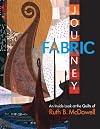
[a:]Ruth McDowell’s [b:Fabric Journey|1324426|Fabric Journey An Inside Look at the Quilts of Ruth B. McDowell|Ruth B. McDowell|http://photo.goodreads.com/books/1182762521s/1324426.jpg|1313836] is another recent acquisition. She is, without a doubt, my favorite quiltmaker. [a:Jane Sassaman|781936|Jane Sassaman|http://www.goodreads.com/images/nophoto/nophoto-U-50x66.jpg] and [a:Judy Martin|21616|Ann M. Martin|http://photo.goodreads.com/authors/1208461887p2/21616.jpg] run a close second, but show more I love Ms. McDowell’s nearly exclusive use of piecing and her nearly exclusive use of commercial fabrics. She really teaches, and demonstrates in her quilts, the extraordinary things that a quiltmaker can do with piecing and celebrates good technique. [b:]Fabric Journey gives insight into several of Ms. McDowell’s quilts. Ms. McDowell discusses several of her quilts, the inspiration, the use of fabric and various piecing techniques. This is not a pattern quilt per se, but the reader can use the descriptions to create their own designs. Again, Ms. McDowell does not condescend to the reader. She gives the impression of assuming that, with practice, anyone can piece the way she does. show less
Ruth McDowell explains techniques for designing and creating art quilts. This is not a pattern book, and probably not for beginners. The author outlines technical and esthetic considerations involved in designing quilts depicting natural elements.
This was intended as the design companion to the author's earlier book, Ruth B. McDowell's Piecing Workshop, but it is so informative that it can stand on its own merits.
This was intended as the design companion to the author's earlier book, Ruth B. McDowell's Piecing Workshop, but it is so informative that it can stand on its own merits.
Awards

You May Also Like


Statistics
- Works
- 14
- Members
- 1,164
- Popularity
- #22,077
- Rating
- 3.9
- Reviews
- 17
- ISBNs
- 16
- Languages
- 1
- Favorited
- 1