
Safiya Sinclair
Author of How to Say Babylon: A Memoir
Works by Safiya Sinclair
Associated Works
African American Poetry: 250 Years of Struggle and Song (2020) — Contributor — 232 copies, 4 reviews
Ink Knows No Borders: Poems of the Immigrant and Refugee Experience (2019) — Contributor — 87 copies, 1 review
This Is the Honey: An Anthology of Contemporary Black Poets (2024) — Contributor — 66 copies, 1 review
Tagged
Common Knowledge
- Canonical name
- Sinclair, Safiya
- Birthdate
- 1984
- Gender
- female
- Occupations
- poet
- Organizations
- University of Southern California
- Nationality
- Jamaica
- Birthplace
- Montego Bay, Jamaica
- Places of residence
- Los Angeles, California, USA
- Associated Place (for map)
- Jamaica
Members
Reviews
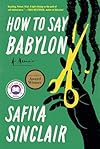
The Rastafarian movement aspired to free black people to take pride in being themselves in an petulant world. Unfortunately, as Safiya Sinclair here portrays, those ideals themselves sometimes led to oppressive circumstances, especially towards women and towards the curious-at-heart. She grew up in Jamaica to a musician-father who tried to seclude his family from the rest of the world (termed “Babylon”). He pressed education, but the determination and exposures Sinclair learned in school show more pushed her to fight against his patriarchal structures. She did so in earnest, and this eventually led her to study and work in the United States (termed “Foreign”). It also led her to break with the strictures of her upbringing, though this remains a part of her.
As an adult, Sinclair is an acclaimed, well-awarded poet, and that love for images and expression carries through in this book. She evoked deep emotional responses from me while I read this book, especially around themes of patriarchal control. The middle of the book can be depressing with ubiquitous hardships, but in the conclusion, she teaches us how to heal. Though always eloquent, I didn’t find in my reading that this book was any good – until the end. And that’s just how great books are.
Indeed, though about the Rastafarian religion, her insights transcend this one group and pierce deeply into the human condition. We are all born with fathers and mothers. They shape us. They mold us… even when we don’t like it. In this memoir, Sinclair teaches us what it means to truly be ourselves. Her peace with herself despite an utterly hostile world shows us how to find our peace with ourselves when we reach safety.
Warning: This book does contain abuse, emotional violence, and physical violence. It certainly triggered many memories buried in me. I’m not sure any reader can work through this narrative unmoved. Therein lies its power. By plumbing the depths of how our experiences molded us, they show us afresh what it means to be human and what our human hearts truly speak. Sinclair transforms us all from being the abused, perhaps on the way towards abusing others, into exquisite poets. That sense of healing and personal confidence is why you should read this book and continue through these hard words. show less
As an adult, Sinclair is an acclaimed, well-awarded poet, and that love for images and expression carries through in this book. She evoked deep emotional responses from me while I read this book, especially around themes of patriarchal control. The middle of the book can be depressing with ubiquitous hardships, but in the conclusion, she teaches us how to heal. Though always eloquent, I didn’t find in my reading that this book was any good – until the end. And that’s just how great books are.
Indeed, though about the Rastafarian religion, her insights transcend this one group and pierce deeply into the human condition. We are all born with fathers and mothers. They shape us. They mold us… even when we don’t like it. In this memoir, Sinclair teaches us what it means to truly be ourselves. Her peace with herself despite an utterly hostile world shows us how to find our peace with ourselves when we reach safety.
Warning: This book does contain abuse, emotional violence, and physical violence. It certainly triggered many memories buried in me. I’m not sure any reader can work through this narrative unmoved. Therein lies its power. By plumbing the depths of how our experiences molded us, they show us afresh what it means to be human and what our human hearts truly speak. Sinclair transforms us all from being the abused, perhaps on the way towards abusing others, into exquisite poets. That sense of healing and personal confidence is why you should read this book and continue through these hard words. show less
How To Say Babylon: A Jamaican memoir ― the inspiring memoir shortlisted for the Women’s Prize for Non-Fiction 2024 by Safiya Sinclair
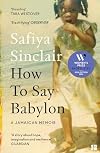
I will never look at dreadlocks the same way again. The author’s father is Rastafarian in Jamaica and raised his family to follow his strictures—his own interpretation of being a Rasta. While young, life was fine as a Rasta with its concomitant dreadlocks, but as the author matured, the father’s rules became increasingly harsher. Rastafarianism is a misogynistic and ascetic religion, for women. The author literally had to escape this life, and cutting her dreadlocks (see the cover) off show more was among the final acts of defiance and separation from this life-deadening religion. The author is one of Jamaica’s star poets, and this is her memoir. Highly recommended. show less
This was moving, raw, painful, and ultimately so redemptive and beautiful as we see love survive in the most hostile of conditions. Orthodox forms of almost every religion turn women into slaves. and Rastafari is no different. For a movement based on the rejection of colonial enslavement, it is a bit surprising that half the population so comfortably consigns the other half to a life of slavery for their pleasure. Thankfully Safiya Sinclair broke those bonds and soared and shared her show more family's story in the most beautiful prose imaginable. I feel grateful to have read this. show less

Safiya Sinclair is an accomplished poet and author of the collection Cannibal. Her memoir is an intimate look inside the Jamaican Rastafarian community, providing both a history of the movement and an account of her family's practice. The writing moves between an almost unemotional recitation to beautifully lyrical. I knew nothing about Jamaican Rasta beyond Bob Marley, so I learned a lot.
Safiya's father was thrown out of his family and became a Rasta man as a way to find his place in the show more world. Although he hated Babylon, the white world which colonized and ruined everything it touched, he earned his living playing reggae for the tourists that stayed in the resorts that ring the island. As time passed and his career dissolved, his obsession with the purity of his daughters became manic and violent. Safiya and her sisters had always been treated differently than their brother, but now they were isolated and abused. Safiya's mother protected them as best she could, but she herself was under her husband's control. Eventually education and for Safiya, poetry, became their way out of an increasingly small world. show less
Safiya's father was thrown out of his family and became a Rasta man as a way to find his place in the show more world. Although he hated Babylon, the white world which colonized and ruined everything it touched, he earned his living playing reggae for the tourists that stayed in the resorts that ring the island. As time passed and his career dissolved, his obsession with the purity of his daughters became manic and violent. Safiya and her sisters had always been treated differently than their brother, but now they were isolated and abused. Safiya's mother protected them as best she could, but she herself was under her husband's control. Eventually education and for Safiya, poetry, became their way out of an increasingly small world. show less
Lists
Awards


You May Also Like
Associated Authors
Statistics
- Works
- 3
- Also by
- 4
- Members
- 652
- Popularity
- #38,720
- Rating
- 4.4
- Reviews
- 35
- ISBNs
- 26
- Languages
- 3
- Favorited
- 1