
Chris Panatier
Author of The Phlebotomist
Works by Chris Panatier
Associated Works
Tagged
Common Knowledge
- Birthdate
- 20th century
- Gender
- male
- Occupations
- trial attorney
fiction writer
artist
painter
illustrator - Agent
- Hannah Fergesen
- Places of residence
- Dallas, Texas, USA
- Associated Place (for map)
- Texas, USA
Members
Reviews
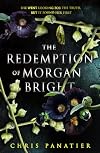
For roughly 83% of this book, I thought it was excellent.
The Redemption of Morgan Bright begins as a smart, unsettling psychological novel set in a modern-day asylum. Morgan presents with clear symptoms of dissociative disorder, and the narrative does something genuinely interesting: it refuses to tell us whether Morgan, Charlotte, or some other unseen self is the “primary” personality. The book invites the reader to sit inside that uncertainty.
Strange, sometimes unbelievable things show more happen at Hollybrook, but they feel intentionally unbelievable. The narrator is unreliable. Her grasp of time, space, and causality is suspect. Diagrams don’t quite make sense. Injuries don’t quite add up. At first, all of this feels like careful craft rather than sloppiness—evidence that we are experiencing the world through a fractured mind rather than being handed objective truth.
That tension is the book’s great strength. For most of the novel, it functions as a genuine brain twister, forcing the reader to constantly reassess Morgan, Charlotte, and the institution itself. Is this psychosis? Dissociation? Institutional abuse filtered through an unreliable narrator? The ambiguity is productive and unsettling, and the writing supports it well.
Then comes the ending.
Instead of trusting the psychological framework it spent most of the book building, the novel pivots hard into a literal supernatural explanation. Hollybrook is revealed to sit on “cursed” land, and the staff are using it to force women to give birth to dead relatives. These children grow rapidly—or unevenly—to the age at which they died. Women are reduced to vessels. The asylum’s horrors are no longer institutional or psychological, but metaphysical.
This is not the ending the book promised.
The shift doesn’t deepen the story—it replaces it. Ambiguity collapses into lore. Psychological horror gives way to mythology. Even worse, the explanation arrives via a massive exposition dump, delivered by the least trustworthy authority figure in the book, which undercuts both plausibility and theme. The asylum itself simply vanishes, neatly absolving the institution of consequence.
What’s frustrating is that the book didn’t need this. A psychological or ambiguous ending—one that left the reader unsure what was real—would have been far more consistent, more ethical, and more powerful. The insistence on literal cursed land, spirit rebirth, and childbirth-as-resolution actively undermines the intelligence of what came before.
This is a well-written novel with a strong, compelling core. The early and middle sections are thoughtful, challenging, and genuinely engaging. But the final act turns away from its own strengths and embraces an explanation that feels both narratively and conceptually wrong.
A strong book that loses its nerve at the end.
For me, that lands it solidly in the three-star range—a frustrating near-miss rather than a success. show less
The Redemption of Morgan Bright begins as a smart, unsettling psychological novel set in a modern-day asylum. Morgan presents with clear symptoms of dissociative disorder, and the narrative does something genuinely interesting: it refuses to tell us whether Morgan, Charlotte, or some other unseen self is the “primary” personality. The book invites the reader to sit inside that uncertainty.
Strange, sometimes unbelievable things show more happen at Hollybrook, but they feel intentionally unbelievable. The narrator is unreliable. Her grasp of time, space, and causality is suspect. Diagrams don’t quite make sense. Injuries don’t quite add up. At first, all of this feels like careful craft rather than sloppiness—evidence that we are experiencing the world through a fractured mind rather than being handed objective truth.
That tension is the book’s great strength. For most of the novel, it functions as a genuine brain twister, forcing the reader to constantly reassess Morgan, Charlotte, and the institution itself. Is this psychosis? Dissociation? Institutional abuse filtered through an unreliable narrator? The ambiguity is productive and unsettling, and the writing supports it well.
Then comes the ending.
Instead of trusting the psychological framework it spent most of the book building, the novel pivots hard into a literal supernatural explanation. Hollybrook is revealed to sit on “cursed” land, and the staff are using it to force women to give birth to dead relatives. These children grow rapidly—or unevenly—to the age at which they died. Women are reduced to vessels. The asylum’s horrors are no longer institutional or psychological, but metaphysical.
This is not the ending the book promised.
The shift doesn’t deepen the story—it replaces it. Ambiguity collapses into lore. Psychological horror gives way to mythology. Even worse, the explanation arrives via a massive exposition dump, delivered by the least trustworthy authority figure in the book, which undercuts both plausibility and theme. The asylum itself simply vanishes, neatly absolving the institution of consequence.
What’s frustrating is that the book didn’t need this. A psychological or ambiguous ending—one that left the reader unsure what was real—would have been far more consistent, more ethical, and more powerful. The insistence on literal cursed land, spirit rebirth, and childbirth-as-resolution actively undermines the intelligence of what came before.
This is a well-written novel with a strong, compelling core. The early and middle sections are thoughtful, challenging, and genuinely engaging. But the final act turns away from its own strengths and embraces an explanation that feels both narratively and conceptually wrong.
A strong book that loses its nerve at the end.
For me, that lands it solidly in the three-star range—a frustrating near-miss rather than a success. show less
This book was a wild ride from start to finish! If you're into creepy asylum settings like I am, you’ll feel right at home here. (Well, okay, you’d definitely NOT want Hollyhock to be your actual home, but you get the point!). The asylum isn't just a backdrop—-it feels like its own character, with its eerie routines, unsettling staff, and the constant sense that something is terribly off. I couldn't put it down, even when I should have been sleeping instead of freaking myself out show more before bed. I had to stop a few times, but I always came back for more.
I genuinely had no idea where this story was going for most of the book. I’m a sucker for mysteries that keep me guessing, and this one certainly delivered. There’s something satisfying about a book that doesn’t hand you all the answers and lets you stay in the dark for a while. I’m a fan of psychological horror, and the story played with identity and reality in a way that hit all the right notes for me.
However, the ending left me feeling a little let down. There were a number of loose threads left untied and the pacing felt off -- like at least 50 pages could have been trimmed from the final third without losing anything. The tension that had been building sort of fizzled, which was a bit of a letdown considering how strong the rest of the book was.
If you’re into medical horror and mental health themes like I am, this book is going to be right up your alley. The way it explored women’s mental health, particularly the institutional control of female bodies, was both fascinating and disturbing. I loved how Panatier blended these themes into the horror without being too heavy-handed about it (well, at least until the Afterword).
Overall, this is a gripping read, despite a few pacing issues and unanswered questions. It’s the kind of book that will stick with me because of its atmosphere, themes, and the unsettling feeling it leaves behind. I’m glad I picked this one up and would recommend it to anyone who loves a good, creepy psychological horror with layers to unpack. show less
I genuinely had no idea where this story was going for most of the book. I’m a sucker for mysteries that keep me guessing, and this one certainly delivered. There’s something satisfying about a book that doesn’t hand you all the answers and lets you stay in the dark for a while. I’m a fan of psychological horror, and the story played with identity and reality in a way that hit all the right notes for me.
However, the ending left me feeling a little let down. There were a number of loose threads left untied and the pacing felt off -- like at least 50 pages could have been trimmed from the final third without losing anything. The tension that had been building sort of fizzled, which was a bit of a letdown considering how strong the rest of the book was.
If you’re into medical horror and mental health themes like I am, this book is going to be right up your alley. The way it explored women’s mental health, particularly the institutional control of female bodies, was both fascinating and disturbing. I loved how Panatier blended these themes into the horror without being too heavy-handed about it (well, at least until the Afterword).
Overall, this is a gripping read, despite a few pacing issues and unanswered questions. It’s the kind of book that will stick with me because of its atmosphere, themes, and the unsettling feeling it leaves behind. I’m glad I picked this one up and would recommend it to anyone who loves a good, creepy psychological horror with layers to unpack. show less
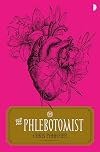
To call this novel ‘surprising’ would be a massive understatement: what began as a story set in a dystopian future soon turned into something else, something very unexpected - and this sudden twist ended up enhancing my enjoyment of the story, to which I happily sacrificed some sleep just to see where it would lead me in the end.
War-torn Earth of the near-future is in a sorry state indeed: after the first bomb, named Chrysalis with a notable display of gallows humor, many others fell, show more unleashing destruction and death. The people now living in the Grey Zones, the ones where radioactive contamination struck more heavily, are in constant need of blood to survive and, if lucky, to recover, therefore a national program of blood donations has been instituted, driven by Patriot, an organization that coordinates the distribution of blood to the needy.
Blood donation has become mandatory: according to Patriot’s newscasts, each day there is a quota to be filled so that the needy people in the Grey Zones can be saved, and every adult must contribute. To implement the scheme, wages and food distribution are linked to blood donation so, in short, citizens can either supply their quota, or go hungry. What’s worse, the value of an individual’s blood depends on its type: the O group being at the top of the chain, since they are universal donors, and the AB negatives finding themselves at the very bottom, given the diminished demand for their blood. In other words, if type O citizens can live a moderately comfortable life, AB-negs exist on the very threshold of starvation.
Willa Wallace is a phlebotomist, working in one of the many blood-donation centers where citizens go to fulfill their “civic duty”, her only focus that of providing for her grandson Isaiah, the only surviving member of Willa’s family after her daughter died from anaemia due to far too many blood donations. One day, however, something brings her out of her self-imposed shell: the fall of a blood-carrying drone leads her to a momentous discovery that will forever change her life, as well as her knowledge and perception of the world.
And no, I’m not going to tell you what this discovery is, because this is the huge twist I mentioned at the beginning and it’s only right and proper that you find out on your own… ;-)
Plot being off-limits, I can concentrate on the characters, starting with Willa: she is a… narrative exception, in that she’s in her sixties and a grandmother, as far from “hero material” as one could imagine, which makes her transformation into a rule-breaker and a warrior quite surprising but at the same time very believable, because she gets there by degrees, arriving at such changes from the sum of her experiences, her wisdom and the care-giving core at the basis of her personality and chosen work. It’s this last element, the compulsion to keep her grandson (and later on other children) safe that transforms her from nondescript older citizen into a determined, and sometimes ruthless, fighter - and I loved to see Willa literally take up arms and show no mercy to those who wanted to harm her own.
Grandma Willa is not the only compelling character in The Phlebotomist, though, because she is flanked by two other wonderful figures: Lock (short from her nickname “The Locksmith”), a middle-aged ex marine who fights Patriot’s influence from several underground locations, and who teams with Willa once the grim reality of their world is revealed. I loved Lock’s devil-may-care attitude in the direst of situations, and the way she always seems ready to provide a technical solution to their problems - or an explosive one. And finally there is Kathy, a teenager the two women have rescued from an appalling situation, a girl who had to grow beyond her years and is not afraid of fighting and killing, but still shows some heart-breaking frailties. This triumvirate of women of different ages, from different walks of life, is the true heart of the story and the force that drives it to the end.
There is another character I want to mention, one who complements this very unusual group and one I felt for very strongly: Everard, one of Lock’s associates and the main caregiver for a group of orphaned children that the outlaws are trying to raise despite many difficulties. Again I can’t say any more about his story-arc because of spoilers, except that it touched me deeply and showed in no uncertain terms how hideously cruel this world is.
The world in which this cast of characters moves is both terrible and intriguing: humanity always found ways to fracture itself into separate groups, to establish various levels of classification and worth, and here it’s the very essence of life that creates these differences - blood is blood, it’s the substance running in the veins of every human being on Earth, and yet this dystopian society has found a way of using it to create breaches inside society, sometimes pitting humans against each other, because in Willa’s world blood muggings are a dire reality. There is no authorial comment about this situation, but it’s far too easy to extrapolate one from the story, and to have to acknowledge the sad truth that we are still unable to go past more or less artificial ways of classifying ourselves within a system of values…
Unless I’m mistaken, The Phlebotomist is its author’s debut novel: with such an impressive start I can only look forward to read more of his works soon, especially if he will choose to return to this world - the ending is an open one, and that hopefully leaves room enough for a sequel.
Highly recommended. show less
War-torn Earth of the near-future is in a sorry state indeed: after the first bomb, named Chrysalis with a notable display of gallows humor, many others fell, show more unleashing destruction and death. The people now living in the Grey Zones, the ones where radioactive contamination struck more heavily, are in constant need of blood to survive and, if lucky, to recover, therefore a national program of blood donations has been instituted, driven by Patriot, an organization that coordinates the distribution of blood to the needy.
Blood donation has become mandatory: according to Patriot’s newscasts, each day there is a quota to be filled so that the needy people in the Grey Zones can be saved, and every adult must contribute. To implement the scheme, wages and food distribution are linked to blood donation so, in short, citizens can either supply their quota, or go hungry. What’s worse, the value of an individual’s blood depends on its type: the O group being at the top of the chain, since they are universal donors, and the AB negatives finding themselves at the very bottom, given the diminished demand for their blood. In other words, if type O citizens can live a moderately comfortable life, AB-negs exist on the very threshold of starvation.
Willa Wallace is a phlebotomist, working in one of the many blood-donation centers where citizens go to fulfill their “civic duty”, her only focus that of providing for her grandson Isaiah, the only surviving member of Willa’s family after her daughter died from anaemia due to far too many blood donations. One day, however, something brings her out of her self-imposed shell: the fall of a blood-carrying drone leads her to a momentous discovery that will forever change her life, as well as her knowledge and perception of the world.
And no, I’m not going to tell you what this discovery is, because this is the huge twist I mentioned at the beginning and it’s only right and proper that you find out on your own… ;-)
Plot being off-limits, I can concentrate on the characters, starting with Willa: she is a… narrative exception, in that she’s in her sixties and a grandmother, as far from “hero material” as one could imagine, which makes her transformation into a rule-breaker and a warrior quite surprising but at the same time very believable, because she gets there by degrees, arriving at such changes from the sum of her experiences, her wisdom and the care-giving core at the basis of her personality and chosen work. It’s this last element, the compulsion to keep her grandson (and later on other children) safe that transforms her from nondescript older citizen into a determined, and sometimes ruthless, fighter - and I loved to see Willa literally take up arms and show no mercy to those who wanted to harm her own.
Grandma Willa is not the only compelling character in The Phlebotomist, though, because she is flanked by two other wonderful figures: Lock (short from her nickname “The Locksmith”), a middle-aged ex marine who fights Patriot’s influence from several underground locations, and who teams with Willa once the grim reality of their world is revealed. I loved Lock’s devil-may-care attitude in the direst of situations, and the way she always seems ready to provide a technical solution to their problems - or an explosive one. And finally there is Kathy, a teenager the two women have rescued from an appalling situation, a girl who had to grow beyond her years and is not afraid of fighting and killing, but still shows some heart-breaking frailties. This triumvirate of women of different ages, from different walks of life, is the true heart of the story and the force that drives it to the end.
There is another character I want to mention, one who complements this very unusual group and one I felt for very strongly: Everard, one of Lock’s associates and the main caregiver for a group of orphaned children that the outlaws are trying to raise despite many difficulties. Again I can’t say any more about his story-arc because of spoilers, except that it touched me deeply and showed in no uncertain terms how hideously cruel this world is.
The world in which this cast of characters moves is both terrible and intriguing: humanity always found ways to fracture itself into separate groups, to establish various levels of classification and worth, and here it’s the very essence of life that creates these differences - blood is blood, it’s the substance running in the veins of every human being on Earth, and yet this dystopian society has found a way of using it to create breaches inside society, sometimes pitting humans against each other, because in Willa’s world blood muggings are a dire reality. There is no authorial comment about this situation, but it’s far too easy to extrapolate one from the story, and to have to acknowledge the sad truth that we are still unable to go past more or less artificial ways of classifying ourselves within a system of values…
Unless I’m mistaken, The Phlebotomist is its author’s debut novel: with such an impressive start I can only look forward to read more of his works soon, especially if he will choose to return to this world - the ending is an open one, and that hopefully leaves room enough for a sequel.
Highly recommended. show less
Through skillful storytelling, Chris Panatier blends elements of psychological horror and mystery in “The Redemption of Morgan Bright,” creating an immersive and unsettling world of psychiatric care gone awry.
The story follows Morgan Bright, who sets on a dangerous journey to uncover the truth behind her sister Hadleigh’s mysterious injuries and subsequent escape from Hollyhock Asylum. With the help of her friend Darius, Morgan infiltrates the asylum under false identities, delving show more into its dark secrets and confronting the horrors lurking within its walls.
Panatier’s narrative is intricately woven, alternating between standard prose and epistolary content such as police interviews, articles, and texts, which add depth to the story’s unfolding mysteries. Through these diverse perspectives, readers are drawn deeper into the intricate web of relationships and secrets that drive the narrative forward.
At the heart of the story lies the complex dynamic between Morgan and Hadleigh, fraught with bitterness and heartbreak, as well as the enigmatic relationship between Morgan and her alter ego, Charlotte. Panatier masterfully blurs the lines between reality and illusion, leaving readers questioning the true nature of the protagonist’s identity.
Set against the backdrop of Hollyhock Asylum, a relic of the past with its antiquated and sinister practices, the novel explores themes of manipulation, control, and the blurred boundaries between sanity and madness. Panatier’s descriptions are so vivid, they give you the creeps and stick with you even after you finish the book.
“The Redemption of Morgan Bright” is a thought-provoking exploration of grief, guilt, and love, navigating through the darkest recesses of the human psyche. While the narrative may feel choppy at times... read more at https://medium.com/hooked-on-books/from-grief-to-madness-exploring-the-depths-of.... show less
The story follows Morgan Bright, who sets on a dangerous journey to uncover the truth behind her sister Hadleigh’s mysterious injuries and subsequent escape from Hollyhock Asylum. With the help of her friend Darius, Morgan infiltrates the asylum under false identities, delving show more into its dark secrets and confronting the horrors lurking within its walls.
Panatier’s narrative is intricately woven, alternating between standard prose and epistolary content such as police interviews, articles, and texts, which add depth to the story’s unfolding mysteries. Through these diverse perspectives, readers are drawn deeper into the intricate web of relationships and secrets that drive the narrative forward.
At the heart of the story lies the complex dynamic between Morgan and Hadleigh, fraught with bitterness and heartbreak, as well as the enigmatic relationship between Morgan and her alter ego, Charlotte. Panatier masterfully blurs the lines between reality and illusion, leaving readers questioning the true nature of the protagonist’s identity.
Set against the backdrop of Hollyhock Asylum, a relic of the past with its antiquated and sinister practices, the novel explores themes of manipulation, control, and the blurred boundaries between sanity and madness. Panatier’s descriptions are so vivid, they give you the creeps and stick with you even after you finish the book.
“The Redemption of Morgan Bright” is a thought-provoking exploration of grief, guilt, and love, navigating through the darkest recesses of the human psyche. While the narrative may feel choppy at times... read more at https://medium.com/hooked-on-books/from-grief-to-madness-exploring-the-depths-of.... show less
Lists
You May Also Like
Associated Authors
Statistics
- Works
- 5
- Also by
- 3
- Members
- 234
- Popularity
- #96,590
- Rating
- 3.7
- Reviews
- 8
- ISBNs
- 12
- Favorited
- 1