
Yoojin Grace Wuertz
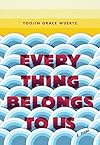
Author of Everything Belongs to Us
About the Author
Image credit: from author's webpage
Works by Yoojin Grace Wuertz
Tagged
Common Knowledge
- Birthdate
- 1980
- Gender
- female
- Education
- Yale University (BA, English)
New York University (MFA) - Nationality
- South Korea (birth)
USA - Birthplace
- Seoul, South Korea
- Places of residence
- Paramus, New Jersey, USA
Ridgefield Park, New Jersey, USA
Princeton, New Jersey, USA - Map Location
- USA
Members
Reviews
Originally posted on Tales to Tide You Over
I’ve reviewed books that have uncommon narrative styles before, but this is the first time I found myself lost in cultural differences, not just between my culture and theirs but within their culture and the different social strata. No, this is not a criticism. It was fascinating to catch myself having expectations because of the seemingly traditional narrative approach only to have them turned upside down.
Basically, Everything Belongs to Us is a show more small story, or rather a collection of small stories, that became a deep dive into the culture of South Korea starting around 1978, long enough for a new generation to grow up after the Korean War. This is critical because of the consequences and impact the war left behind in both the physical world and the social structures while the main characters have neither experienced the time before nor the war itself.
The economic disparity, the focus on education and children as the guardians of the future, and the political rhetoric is presented in a matter-of-fact manner that begs you to reflect on what you’re seeing. This is not a simple story despite being shown through often uncritical eyes because it reveals the tradeoffs and consequences both within families and the larger picture. It shows the path to radicalization, but also the conflict and social strata within the radical movements and society as a whole.
It’s not a happy story, though it has its moments, and the cultural differences are never clearer than when a ghost appears but does not transform the book into a paranormal fantasy. It’s another fact of life in their culture. No one questions this as out of the ordinary.
The novel offers a fascinating look at the various reactions to wealth, poverty, honor, and survival through the eyes of young people struggling for control over their own existence beyond the demands of tradition and parents. At the same time, the main characters are trying to meet those expectations, creating the paradoxical conflict in which, to some degree, they are both the rescuer and the jailer of their futures. This is true for everyone except Jisun who is a perpetual rebel and experimenter. Even this is a commentary on social status and wealth as her very willingness sets her apart from those she most wants to connect with. She is unable to see how her giving up advantages does not make her the same as those who never had them in the first place.
While not a single character made it through the book without doing something or making a choice that repelled me, none of the main figures lost my interest, not even Sunam who tried hard to do so from the very start. There’s a large cast with many main characters and time jumps into the past that are subtle and easy to miss, but though I was disoriented at times and had trouble figuring out the who and when for a little bit, I was never lost.
The novel offers a glimpse into their world followed up with a summary and where these people are in modern times, having survived complicated childhoods. It shows the culture with both strengths and shadows, the impact of interaction with foreigners near and far, and the unwieldy balance between respect for a benefactor and spite because the aid has been necessary. It also shows the changes in the meaning of patriotism and honor between generations. While focusing on these young characters, it manages to paint a picture that spans much farther than I had imagined, from bridges mined with explosives in case North Korea invades to families putting all their hopes and dreams into the one child able to compete academically, which has far reaching consequences because they never look to see what their focus has created.
It’s not an easy read, though in some ways it’s all too easy, but I think the book does a good job of bringing another reality into my view, many layered, and both familiar and alien all at once. It was worth the time spent within its pages.
P.S. I received this title from the publisher through NetGalley in return for an honest review. show less
I’ve reviewed books that have uncommon narrative styles before, but this is the first time I found myself lost in cultural differences, not just between my culture and theirs but within their culture and the different social strata. No, this is not a criticism. It was fascinating to catch myself having expectations because of the seemingly traditional narrative approach only to have them turned upside down.
Basically, Everything Belongs to Us is a show more small story, or rather a collection of small stories, that became a deep dive into the culture of South Korea starting around 1978, long enough for a new generation to grow up after the Korean War. This is critical because of the consequences and impact the war left behind in both the physical world and the social structures while the main characters have neither experienced the time before nor the war itself.
The economic disparity, the focus on education and children as the guardians of the future, and the political rhetoric is presented in a matter-of-fact manner that begs you to reflect on what you’re seeing. This is not a simple story despite being shown through often uncritical eyes because it reveals the tradeoffs and consequences both within families and the larger picture. It shows the path to radicalization, but also the conflict and social strata within the radical movements and society as a whole.
It’s not a happy story, though it has its moments, and the cultural differences are never clearer than when a ghost appears but does not transform the book into a paranormal fantasy. It’s another fact of life in their culture. No one questions this as out of the ordinary.
The novel offers a fascinating look at the various reactions to wealth, poverty, honor, and survival through the eyes of young people struggling for control over their own existence beyond the demands of tradition and parents. At the same time, the main characters are trying to meet those expectations, creating the paradoxical conflict in which, to some degree, they are both the rescuer and the jailer of their futures. This is true for everyone except Jisun who is a perpetual rebel and experimenter. Even this is a commentary on social status and wealth as her very willingness sets her apart from those she most wants to connect with. She is unable to see how her giving up advantages does not make her the same as those who never had them in the first place.
While not a single character made it through the book without doing something or making a choice that repelled me, none of the main figures lost my interest, not even Sunam who tried hard to do so from the very start. There’s a large cast with many main characters and time jumps into the past that are subtle and easy to miss, but though I was disoriented at times and had trouble figuring out the who and when for a little bit, I was never lost.
The novel offers a glimpse into their world followed up with a summary and where these people are in modern times, having survived complicated childhoods. It shows the culture with both strengths and shadows, the impact of interaction with foreigners near and far, and the unwieldy balance between respect for a benefactor and spite because the aid has been necessary. It also shows the changes in the meaning of patriotism and honor between generations. While focusing on these young characters, it manages to paint a picture that spans much farther than I had imagined, from bridges mined with explosives in case North Korea invades to families putting all their hopes and dreams into the one child able to compete academically, which has far reaching consequences because they never look to see what their focus has created.
It’s not an easy read, though in some ways it’s all too easy, but I think the book does a good job of bringing another reality into my view, many layered, and both familiar and alien all at once. It was worth the time spent within its pages.
P.S. I received this title from the publisher through NetGalley in return for an honest review. show less
When I received this book from NetGalley to read and review, I was excited. I spent over a year in South Korea, a bit before the time frame of this book, but still, I felt it would help me remember my days there, while providing me a good picture of the lives of young South Koreans. In the book, we encounter three main characters. Jisun, the wealthy daughter of a tycoon, is a rebel, trying to distance herself from the life she has led through her activism while a student. Namin, daughter show more from a poor Korean family, who takes her studies seriously and is trying to raise her family out of their impoverished lives. Sunam just wants to gain access to an upper crust social club, the Circle, with little care for much else. He is the character I never felt I could imagine being my friend or liking. This story follows these young Koreans through this tumultuous time in South Korea. While the author does develop the two female characters well enough for them to grow on me and to get me to like them as students and future professionals in this society, I never really felt them become a part of me as book characters often do. As for Sunam, I had difficulty just accepting who he was and his place in the story.
The story starts off slowly and only really gained my full attention after reading a good portion. After finishing the book, I wondered what I was supposed to have learned from this glimpse into the lives of these young people. The book did give me a feel for life in South Korea during this time, but I felt as if I needed more. I enjoyed reading about an area with which I was somewhat familiar since I had spent some months there, but I nevertheless came away wondering about South Korea and the book’s message. The writing was good, though I did not think it was as even as it could have been throughout. The book does give a good idea to the reader about life in South Korea during that time frame. Thus, it will be of interest to the reader looking for this or something a bit different. For me, however, the book just did not do it. It was good, but not a book I will remember very much now that I have finished it. show less
The story starts off slowly and only really gained my full attention after reading a good portion. After finishing the book, I wondered what I was supposed to have learned from this glimpse into the lives of these young people. The book did give me a feel for life in South Korea during this time, but I felt as if I needed more. I enjoyed reading about an area with which I was somewhat familiar since I had spent some months there, but I nevertheless came away wondering about South Korea and the book’s message. The writing was good, though I did not think it was as even as it could have been throughout. The book does give a good idea to the reader about life in South Korea during that time frame. Thus, it will be of interest to the reader looking for this or something a bit different. For me, however, the book just did not do it. It was good, but not a book I will remember very much now that I have finished it. show less
1978 Seoul, a generation after the Korean War, and President Park Chung Hee is in power. Factory workers are striking and three students meet at Seoul National University. Sunam is a protégé of Juno, his link to a prestigious club that calls itself The Circle. Namin also aspires admission to this club and hopes to become its first female member. Jisun, a longtime friend of Namin, is the daughter of a rich and powerful Seoul businessman, and more interested in her work in the Urban show more Industrial Mission with unions, factory workers and church groups than she is in coursework.
Everything Belongs to Us closely follows these three as they make choices for themselves and deals with others to ensure their individual futures. There’s a quote towards the end of the book that aptly sums this up, “…now he’d know what it meant to be trapped between his conscience and his pride. It was never as black and white as he thought, the decisions of love and duty.”
Yooojin Grace Wuertz has written a book with a lot of promise. Her female characters, Namin and Jisun, are stronger than Sunam, her male character. Individuals at the beginning of the book, such as Juno, Min, and Peter Lowell, who play a rather prominent role at first seem to disappear in later chapters, as does Jisun’s fervent desire to help the poor and working class. This said, I still enjoyed the book and would recommend it as an introduction to the rather recent and exciting collection of Korean fiction focused on this period of time. show less
Everything Belongs to Us closely follows these three as they make choices for themselves and deals with others to ensure their individual futures. There’s a quote towards the end of the book that aptly sums this up, “…now he’d know what it meant to be trapped between his conscience and his pride. It was never as black and white as he thought, the decisions of love and duty.”
Yooojin Grace Wuertz has written a book with a lot of promise. Her female characters, Namin and Jisun, are stronger than Sunam, her male character. Individuals at the beginning of the book, such as Juno, Min, and Peter Lowell, who play a rather prominent role at first seem to disappear in later chapters, as does Jisun’s fervent desire to help the poor and working class. This said, I still enjoyed the book and would recommend it as an introduction to the rather recent and exciting collection of Korean fiction focused on this period of time. show less
The three young people in this book come of age in 1970's Korea. Each comes from families that represent a different level of the economic ladder. They are also quite different in personalities and connect to each other through mutual need and sometimes questionable loyalties. Although I know little about Korean life and politics, I'm pretty sure that the author does. She writes convincingly about the challenges of growing up in post-war Korea and creates real characters with flaws and show more weaknesses that balance their strengths.
Life's challenges seem to be a focal point in this book. Each of the main characters is successful in the end, but they pay a price. While the setting is Korea, the struggles and difficulties could occur to young people anywhere. The hopes and dreams of youth can make it seem that everything belongs to them.
Growing up has a way of changing that and turning those dreams inside out. Those who adapt are better suited to future happiness, but everyone has to deal with it in their own way. These characters don't always behave or respond in the way that I as a reader would expect, but I could related to their inadequacies and disappointments.
I enjoyed "Everything Belongs to Us" and recommend it to readers who enjoy a book that portrays real life and challenges them to see things from different angles. I learned a bit about Korea and it's history, yet also enjoyed a story that could have taken place in any setting. The ending isn't neat and tidy, but then again, neither is life. Ultimately everything doesn't really belong to us, but we survive in spite of it.
I thank NetGalley and the publisher for the opportunity to read and review this title. show less
Life's challenges seem to be a focal point in this book. Each of the main characters is successful in the end, but they pay a price. While the setting is Korea, the struggles and difficulties could occur to young people anywhere. The hopes and dreams of youth can make it seem that everything belongs to them.
Growing up has a way of changing that and turning those dreams inside out. Those who adapt are better suited to future happiness, but everyone has to deal with it in their own way. These characters don't always behave or respond in the way that I as a reader would expect, but I could related to their inadequacies and disappointments.
I enjoyed "Everything Belongs to Us" and recommend it to readers who enjoy a book that portrays real life and challenges them to see things from different angles. I learned a bit about Korea and it's history, yet also enjoyed a story that could have taken place in any setting. The ending isn't neat and tidy, but then again, neither is life. Ultimately everything doesn't really belong to us, but we survive in spite of it.
I thank NetGalley and the publisher for the opportunity to read and review this title. show less
Lists
Awards

Statistics
- Works
- 1
- Members
- 128
- Popularity
- #157,244
- Rating
- 3.2
- Reviews
- 15
- ISBNs
- 4