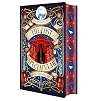
As Noon explains to Noam, “…A good way to think of it is this is the process of loss turning into story. Something like this would have happened in your imagination whether or not you made it here—it’s all just the stories we tell ourselves to keep the idea of someone alive…” And what better way to keep the story alive of the loss of a love that never quite realized than in an invitation-only spectacular filled with lost things and a museum where each floor’s theme is dedicated to a curator’s love.
Using umbrellas, items always being lost, the author, Zoé Duhaime, has created a book or is it an illusion where the two main characters, Noon and Munro, childhood friends, are driven apart by a slight and spend the next several years dropping in and out of one another’s lives, and in the case of Noon, I do mean dropping. She travels through books and enters Munro’s space, removing shoes, a sofa, a coffee pot. Whatever suits her fancy. In a less spectacular way Munro lifts her most prized possession, her father’s fountain pen. I’ll leave the rest to you, should you want to escape reality for 288 pages.
I, for one, found the idea fantastical, in a way both magical and bizarre. I loved the way Duhaime used books and authors as a way of travel, but I was so often lost, yes, LOST, in the sheer volume of words and fantasy that I felt like I was hallucinating and just wanted the book to end. I’m not exactly sure what I read.
Using umbrellas, items always being lost, the author, Zoé Duhaime, has created a book or is it an illusion where the two main characters, Noon and Munro, childhood friends, are driven apart by a slight and spend the next several years dropping in and out of one another’s lives, and in the case of Noon, I do mean dropping. She travels through books and enters Munro’s space, removing shoes, a sofa, a coffee pot. Whatever suits her fancy. In a less spectacular way Munro lifts her most prized possession, her father’s fountain pen. I’ll leave the rest to you, should you want to escape reality for 288 pages.
I, for one, found the idea fantastical, in a way both magical and bizarre. I loved the way Duhaime used books and authors as a way of travel, but I was so often lost, yes, LOST, in the sheer volume of words and fantasy that I felt like I was hallucinating and just wanted the book to end. I’m not exactly sure what I read.
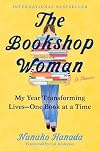
An ode to those who work in bookshops, to those who own them, be they large booksellers or those lovely little neighborhood indie shops, and to readers who visit them, this book deserves more than one read. It can be an inspiration for someone in search of a life change, also. For me it was an introduction to the Japanese book scene, refreshingly quirky, and heartbreakingly tender. Happily, it was also a source of book recommendations for me. My first book arrives tomorrow.
As the author, Nanako Hanada, says in her book, “You’re wonderful and this book is wonderful; therefore I’m recommending this wonderful book to wonderful you.”
Thanks to Net Gallery for the opportunity to read and review this book.
As the author, Nanako Hanada, says in her book, “You’re wonderful and this book is wonderful; therefore I’m recommending this wonderful book to wonderful you.”
Thanks to Net Gallery for the opportunity to read and review this book.
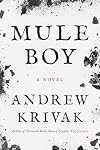
This book is so beautiful I want to hold it close, yet share it with others. A combination of the realistic and the philosophical, darkness and light, Andrew Krivak’s Mule Boy is a novel I feel I’ve been waiting for a long time.
 This review was written for LibraryThing Early Reviewers.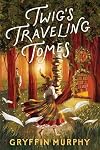
There have been several novels written about magical bookshops where books or booksellers respond to their customers’ needs, suggesting just the right books for them. “Twig’s Traveling Tomes” is such a book. Or so I thought and that’s what actually caught my attention. Who wouldn’t want to visit such a shop? The story is peopled with all manner of interesting characters - a witch without a broom, a rogue thief, a wizard searching for a missing grimoire, to name a few.
The plot is fun and there is plenty of action-packed magic, but marred by what I can only call an excess of swarmy and tiresome attempts at courtship and romance - sighs, lingering glances, Everett’s persistent hands-on manner, and Louella’s falls into his chest. I almost quit reading several times, but I’m not only a dogged reader, but a committed one. I was disappointed. I expected both more from the book and from Louella and Everett.
Thanks to NetGallery for the ARC of this book.
The plot is fun and there is plenty of action-packed magic, but marred by what I can only call an excess of swarmy and tiresome attempts at courtship and romance - sighs, lingering glances, Everett’s persistent hands-on manner, and Louella’s falls into his chest. I almost quit reading several times, but I’m not only a dogged reader, but a committed one. I was disappointed. I expected both more from the book and from Louella and Everett.
Thanks to NetGallery for the ARC of this book.
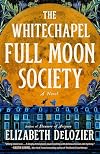
From the moment Caroline Foster first entered the residence on 212 Old Montague Street in Whitechapel and felt the eyes of the residents on her, I was hooked. This was going to be my kind of book. And it was.
A penniless young woman in search of her brother and a final mysterious letter from him convince her to seek employment at the boardinghouse, The Whitechapel Full Moon Society, where he last lived, and try to solve the secrets surrounding his disappearance. The odd assortment of residents and the conditions of her employment only add intrigue.
“..you are never, under any circumstances, to enter the east wing of the second floor.
…Lastly, and most importantly. One night per month we host a…a supper party. You will help me serve dinner, then immediately retire to your room. You will lock your door and not open it until the following morning after the sun has risen."
The characters are interesting and all play a part, no matter how small, in the story. In fact, they add to it and give it a flavor that might otherwise have been missed.
Finally, I’d be remiss if I didn’t mention the Whitechapel murders, primarily because aside from Caroline’s search for her brother Charlie, the boardinghouse is in Whitechapel and there is much mention of the murders and the search for Jack the Ripper. The author Elizabeth DeLozier has conducted research into these 19th century murders and also recommends Hallie Rubenhold’s nonfiction book The Five: The Untold Lives of the Women show more Killed by Jack the Ripper, which I’ve read. While DeLozier does make clear she has taken liberties in writing her fiction book, she has also taken great pains to portray the true nature of the Ripper’s victims, instead of the sensational descriptions in the press at the time and also today.
I am now anxious to read Ms. DeLozier’s previous book, Eleanore of Avignon.
Thanks to NetGallery for providing me with an advance copy of this book. show less
A penniless young woman in search of her brother and a final mysterious letter from him convince her to seek employment at the boardinghouse, The Whitechapel Full Moon Society, where he last lived, and try to solve the secrets surrounding his disappearance. The odd assortment of residents and the conditions of her employment only add intrigue.
“..you are never, under any circumstances, to enter the east wing of the second floor.
…Lastly, and most importantly. One night per month we host a…a supper party. You will help me serve dinner, then immediately retire to your room. You will lock your door and not open it until the following morning after the sun has risen."
The characters are interesting and all play a part, no matter how small, in the story. In fact, they add to it and give it a flavor that might otherwise have been missed.
Finally, I’d be remiss if I didn’t mention the Whitechapel murders, primarily because aside from Caroline’s search for her brother Charlie, the boardinghouse is in Whitechapel and there is much mention of the murders and the search for Jack the Ripper. The author Elizabeth DeLozier has conducted research into these 19th century murders and also recommends Hallie Rubenhold’s nonfiction book The Five: The Untold Lives of the Women show more Killed by Jack the Ripper, which I’ve read. While DeLozier does make clear she has taken liberties in writing her fiction book, she has also taken great pains to portray the true nature of the Ripper’s victims, instead of the sensational descriptions in the press at the time and also today.
I am now anxious to read Ms. DeLozier’s previous book, Eleanore of Avignon.
Thanks to NetGallery for providing me with an advance copy of this book. show less
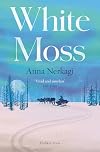
A poetic and atmospheric introduction to the Nenets’ culture. At times it was a bit difficult for me to understand and therefore, it warrants a second reading. A spiritual and human book, celebrating the natural world. The conflict between tradition and the individual.
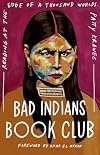
I really struggled with this book and in part, I wonder if it’s because I hadn’t listened to the podcasts first. Some of the things echoed what I read in Hood Feminism by Mikki Kendall, a book I read a year ago, one that really opened my eyes to how marginalized feminists weren’t included in the Women’s Movement of the 1960s/1970s. Patty Krawec’s book addresses how marginalized writers’ (Bad Indians) books offer a different and more inclusive way than what the dominant culture provides. I simply wish I would have found the book more accessible.
This review was written for LibraryThing Early Reviewers.
I’m a big fan of the Akashic noir series, but this edition simply didn’t work for me. It took forever to read it because I kept putting it aside to read something else. The stories didn’t do much for me and were more bizarre than noir. Perhaps the next in the series will be better.
This review was written for LibraryThing Early Reviewers.
This book just didn’t work for me. While the story attempted to be humorous and at times even a bit reflective, I more often found the writing to alternate between flat and flip and generally crude. And then the ending left everything hanging.
This review was written for LibraryThing Early Reviewers.
This Akashic anthology has a wide collection of stories that I found representative of the noir genre, different cultures and socioeconomic status. I had several favorites, but a couple standouts were Sakura City and A Significant Action. John Freeman, as editor, did a great job. I’m a fan of this series and Sacramento Noir is a good addition.
This review was written for LibraryThing Early Reviewers.
To borrow the book’s title for this review, these short stories are most definitely north of ordinary. And while I liked almost all of them, I really didn’t love any. If I were to read these again at a later date, I may think differently. I sense each story carried a punch I was just short of feeling.
This review was written for LibraryThing Early Reviewers.Tig by Heather Smith
What a wonderful book to end the year with! It pulls at the heart in so many ways, unique, sad, and beautiful. I think I’ll read it again.
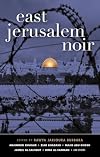
A difficult book to read and I think, given the current political climate and whatever one’s stance is on the situation, a difficult one to objectively review and rate. The editor has put together a compilation of stories filled with anger, sadness, and despair. I feel it my responsibility now to read West Jerusalem Noir and also educate myself on the Six-Day and Yom Kippur Wars. Truly a devastatingly emotional and human topic. I found nothing noir-ish about this book to justify its inclusion in this normally excellent collection.
This review was written for LibraryThing Early Reviewers.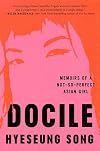
There are many books about first generation immigrants to the United States and Docile is one of these. The main difference I found is that in Hyeseung Song’s memoir, she not only lays open her struggles as a Korean in America with parents of decidedly rigid ideas of success for her, but later her very painful mental health crises. I often found myself losing patience with her in her marriage with Nate and had to remind myself that I was reading a real account of someone’s mental health experiences and not a novel and when one is struggling with these very real issues, there’s no room for consideration for others in one’s life. Her pain came across very real on the page. So why a 3 rating? I felt a disconnect, other than with the mental health sections, that I simply couldn’t get passed.
This review was written for LibraryThing Early Reviewers.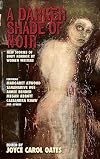
A very eclectic selection of stories. For the most past I really enjoyed this anthology, finding particular delight (perhaps a poor choice of words for this particular sub genre) in several. “Frank Jones” by Aimee Bender actually made me laugh, Lisa Lim’s “Dancing with Mirrors” I found incredibly sad, and those by Margaret Atwood, Valerie Martin, Elizabeth Hand, and Sheila Kohler particularly good.
This review was written for LibraryThing Early Reviewers.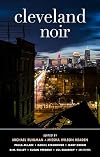
Finally. I’ve been waiting for a Cleveland collection and it was everything I hoped it would be. Many of these stories caught the spirit of the city where I live. For instance, Cleveland is a baseball town and there’s “The Sweet Partner,” a very good noir story. Another very Cleveland story is “Tremonster.” It sent chills up my spine and I was reading it in the daylight. “Bitter” was one of the best stories about revenge I’ve read in a long time, “Sugar Daddy” was very good, and although I figured out “Bus Stop,” it was still one I really liked. These are just a few of the excellent selections included in Cleveland Noir and it was worth waiting for. It’s definitely a 5 star read.
This review was written for LibraryThing Early Reviewers.The Rye Bread Marriage: How I Found Happiness with a Partner I’ll Never Understand by Michaele Weissman
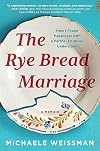
“Something fundamental in my thinking shifted when I understood that I, too, was a pain in the ass and that my point of view was only one point of view…That he was as real to himself as I was to me.” This sums up “marriage” in the title of The Rye Bread Marriage. I felt John had more reason to be a pain in the ass than Michaele. To me, what Lina, the guide, told Michaele in Vilnius was true, “I think you acted like a spoiled American brat.” I often found myself becoming extremely angry and disappointed at/with both of them, but then each would do something for which they were exonerated. One could say if the author provided such a reaction from me, she was doing a good job. John’s history was a section of the book that was incredibly sad and I think explained a lot of his behavior. I didn’t really see what explained Michaele’s at times, but then she was put in difficult situations. The tie-in of how rye bread was so important to him and to the Latvian people was most interesting and to me, a major foundation of the book. The information about rye flour was a bit too long and scientific, and could have been shortened or dummied down. Otherwise, I really liked the book and thought it provided a good view of Latvian history during WWII and also, an example of how two people from entirely different backgrounds and mindsets can survive in a marriage. Plus I ordered rye bread from John’s bakery, Black Rooster, and we’re thoroughly enjoying it.
This review was written for LibraryThing Early Reviewers.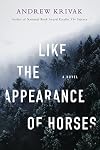
Not having known that Like the Appearance of Horses was part of a trilogy, I was still pleased to discover it worked so brilliantly as a standalone. That said, I now own The Sojourn and The Signal Flame because the Vinich family won’t let me go. This family saga of men and women, fathers and sons, that spans three wars not only encompasses love and honor, but duty to country and culture. I loved the story and the language. What a beautiful book.
Their appearance is like the appearance of horses, and like war horses, so they run.’ - Joel 2:4
Their appearance is like the appearance of horses, and like war horses, so they run.’ - Joel 2:4
This review was written for LibraryThing Early Reviewers.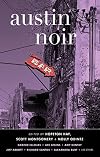
Austin Noir is another book in the Akashic Noir series that I've read and really liked. The introduction really grabbed me. Yes, I've always heard that if you want to move to Texas, move to Austin. The editors' introduction, appropriately titled "We Hear Dallas Is Nice," offered me a new and seemingly honest perspective. It also offered a one or two sentence description of each neighborhood. This was very helpful. All in all, a short but great way to begin my literary tour of Austin.
Some of my favorites stories:
Part I - Ace Atkins' "Stunts: So real I felt I was watching an actual Western.
Amanda Moore's "Reflections": Quite the surprise ending.
Jeff Abbott's "The Good Neighbor": Wow! What a story! I don't know what to believe, but the ending was creepy.
Part II - Loved every story in this section. The best part of the entire book.
Part III - Amy Gentry's "Stitches": This one's a reread for sure. A great story.
A solid short story collection.
Some of my favorites stories:
Part I - Ace Atkins' "Stunts: So real I felt I was watching an actual Western.
Amanda Moore's "Reflections": Quite the surprise ending.
Jeff Abbott's "The Good Neighbor": Wow! What a story! I don't know what to believe, but the ending was creepy.
Part II - Loved every story in this section. The best part of the entire book.
Part III - Amy Gentry's "Stitches": This one's a reread for sure. A great story.
A solid short story collection.
This review was written for LibraryThing Early Reviewers.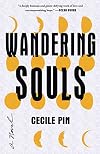
Wandering Souls differs from the other Vietnam books I've read in that it focuses on the refugees' escape from Vietnam, their life in the camps, and also, although briefly, how they were treated if they returned to Vietnam. I've read books about the American Japanese internment in camps during WWII, but this was a piece of history I was missing. Also, I couldn't help make a comparison between how they were treated and how the migrants from Mexico and Central America are treated in the detention camps of today. Particularly poignant to me were the sections with Dao's narrative, a sibling who didn't survive the exodus from Vietnam to Hong Kong. He is as tortured as his siblings, Anh, Thanh, and Minh, who survived. All experience loss, grief, and anger. My only issues with this wonderful debut novel were the sections with the American soldiers (although they do provide a solution for the book's title) and the final section, the one with the writer who is drafting a story based on Anh and her life. I felt the first, when they appeared, interrupted the story's flow, and the last didn't quite fit. I look forward to this author's next novel and wouldn't hesitate to recommend it to others.
This review was written for LibraryThing Early Reviewers.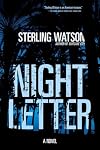
Who is Sterling Watson and why have I never heard of his books before now? Travis is a young man with many layers and his philosophical musings make up a good portion of this wonderful book. One of my favorite lines in Night Letter was early on, “I think Florida gets the crazies, good and bad, because it’s the last place you can go in one direction and still be American. California gets them, too. It’s the last place west, but it’s the same kind of crazy.” Fortunately, Travis has some good kind of crazies in his life, Mrs. Reddick, the Widow, for one. Emil is another. Although he doesn’t quality as a crazy in my book, he definitely is a good kind of human. My big wish is that the journey ends in a good way for both Travis and Dawnell because they both deserve a good ending. And now that I’ve read a Sterling Watson book, it won’t be my last.
This review was written for LibraryThing Early Reviewers.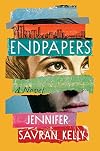
There’s so much about this book that’s thought provoking and mind enhancing. Gender fluidity, the Lavender Scare, the history of bookbinding, the story of Abraham and Lot, and the politics of street art. Dawn Levit, through the able hands of author Jennifer Savran Kelly, shepherds us through all of this and more. Endpapers is piercingly honest, moving, and at the conclusion, hopeful.
This review was written for LibraryThing Early Reviewers.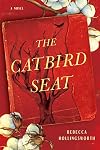
The Catbird Seat is an interesting work of fiction. I appreciated it more for the author’s extensive research on South Carolina history and slavery than the fictional story of Gil Culkin and William Medlin. The connection between the present-day Confederate Flag controversy and Medlin’s journey to the slave market, purchase of Hutto, and subsequent fraught journey home seemed lost among all of the facts Ms. Hollingsworth presented. One thought I did have is that in writing this book, the author might be confronting her own feelings around her Southern upbringing and heritage and in effect, offering readers an opportunity to confront their own. While I grew up in the Midwest and had a great grandfather who fought in the Civil War for the North, I admit to having had these rather grand notions of him and other Northern soldiers fighting for the cause of freedom and the abolition of slavery. Alas, my ignorance, corrected by reading this book. For the humble soldier it was more about Southern or Northern pride and for President Lincoln even, preservation of the Union. And as in most wars, the “common” soldier, the one who is wounded or dies, is the pawn of the politician and the rich. In the case of the South in the Civil War, it was the rich planter who needed slavery to exist for cheap labor. My sister-in-law recently moved to Columbia, SC and I plan to recommend this book to her. I think it will prove valuable insight into her newly-adopted city and state. It show more provided insight for me, as well, into the past and present. show less
This review was written for LibraryThing Early Reviewers.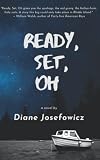
Diane Josefowicz captured the period of the late 60s/early 70s well. This most visible in the character of Primrose, caught so young in a life of marriage and motherhood in a time being replaced by freedom and youthful energy. Tino, also faced with parenthood compounded by the ever-present nightmare of Vietnam, struggles with this new era unfolding as he tries to find where he fits in. I thought the parents were also well portrayed, their expectations for Tino and Primrose and one generation’s disgust and misunderstanding of a younger’s values and actions spot on for the time. I had a lesser connection with the whole Lupo Light/McKee/UFO inclusion confusing and rather silly to me. Given that I was in college during this period, I found Josefowicz’s novel interesting and well researched.
This review was written for LibraryThing Early Reviewers.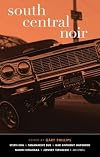
The Akashic Noir series is one of my favorites and South Central Noir is by far one of the best editions I’ve read in quite some time. I would be hard pressed to find a story in this collection that I did not in some way like. Three of my particular favorites were Emory Holmes II’s “The Golden Coffin,” Gar Anthony Haywood’s “All that Glitters,” and Tananarive Due’s “Haint in the Window.” I will definitely look for these authors’ names and others as I add to my reading list.
When I read the books in this Noir series, I always learn from the introductions. The editor of South Central Noir, Gary Phillips, kept his to only a few pages, but he reminded me that all neighborhoods contain elements of “good” and “bad,” people just trying to get by, whatever the means.
When I read the books in this Noir series, I always learn from the introductions. The editor of South Central Noir, Gary Phillips, kept his to only a few pages, but he reminded me that all neighborhoods contain elements of “good” and “bad,” people just trying to get by, whatever the means.
This review was written for LibraryThing Early Reviewers.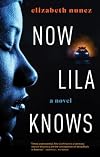
Elizabeth Nunez’s book, Now Lila Knows, was aptly named and I think its content will hopefully open the eyes to those who read it. It is timely and the message important and educational. There are far too many George Floyds and Tamir Rices. There are not enough Elaine McLeans, Terrence Carters, and Gail Coopers. And soothing consciences by hiring visiting professors from outside the United States is not the answer. Lila’s epiphany, if one may call it that, at the end, was well done. The dissimilarities between African Americans and those born in the Caribbean were very enlightening and a subject I’ve not come across in any other book.
That said, I found the writing and the characters to be rather flat and disappointing. For such a demanding subject I could only wish for stronger voices to transmit Nunez’s message. I also was distracted by the Clive/Lila insertion into the story. I found it not only unnecessary, but disturbingly sexist and racist on Clive’s part to consistently comment on Lila’s appearance. He’s supposedly an enlightened white lawyer. I didn’t find him so. For the most part, everything felt rushed. Perhaps if the book had been longer, there would have been more depth and more time for things to be developed. I would have liked more conversations and interactions between the characters both in Vermont and in the Caribbean. More introspection. I’m not questioning the message. I’m commenting on the delivery.
That said, I found the writing and the characters to be rather flat and disappointing. For such a demanding subject I could only wish for stronger voices to transmit Nunez’s message. I also was distracted by the Clive/Lila insertion into the story. I found it not only unnecessary, but disturbingly sexist and racist on Clive’s part to consistently comment on Lila’s appearance. He’s supposedly an enlightened white lawyer. I didn’t find him so. For the most part, everything felt rushed. Perhaps if the book had been longer, there would have been more depth and more time for things to be developed. I would have liked more conversations and interactions between the characters both in Vermont and in the Caribbean. More introspection. I’m not questioning the message. I’m commenting on the delivery.
This review was written for LibraryThing Early Reviewers.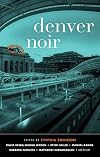
I’ve always looked forward to new publications of Akashic Noir anthologies and when given the opportunity to read Denver Noir, I again was excited. Unfortunately, in this case, I was disappointed. I found the majority of the stories just so-so, not bad, but not particularly memorable either. Of course, there were a few exceptions, Cynthia Swanson’s “Pieces of Everyone, Everywhere,” “Sangre,” by D.L. Cordero, “Ways of Escape,” by Barbara Nickless. The very diverse contributors was a positive note to the selection though and provided me with a view of the city I otherwise wouldn’t have had.
This review was written for LibraryThing Early Reviewers.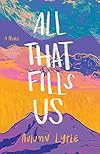
All That Fills Us took me a long time to read. While I’ve read a fair amount of eating disorder fiction and nonfiction, I wasn’t prepared for what I consider triggers in this book. I often found myself having to put the book aside and take deep breaths. I understand this book came from the author’s heart, in the hope it will help others with eating disorders and also serve as a source for those seeking information about this serious and often fatal illness. Mel’s feelings about her weight and body image are painfully very real. You can tell Autumn Lytle has lived this life and as she says in her bio, it is a forever-recovering one.
This review was written for LibraryThing Early Reviewers.Replenishing the Sea of Galilee: A Family Saga across Ethnicity, Place, and Religion: A Novel by Wagih Abu-Rish

This is one of the first times I have not been compelled to read a book to its conclusion. In fact, I found the writing to be so poor and the story to be so incongruous that I couldn’t bring myself to read past the first couple of chapters.The sex scenes alone, bizarre and gratuitous, were enough to have me question why I would want to continue reading. Disappointed, to say the least, because I was interested enough to request this book, I can only say this month’s pick was a bust for me.
This review was written for LibraryThing Early Reviewers.
Such a clever story! My only wish is that Edgar would have appeared earlier in the book. He was a welcome addition and I loved the character. The Council of Animals isn’t my typical fare so I was surprised I liked it so much. I guess that’s testimony for my rating.
This review was written for LibraryThing Early Reviewers.