
Motoyuki Shibata
Author of Monkey Business: New Writing from Japan, Volume 01
About the Author
Series
Works by Motoyuki Shibata
Monkey Business: New Writing from Japan, Volume 03 (2013) — Editor; Translator — 11 copies, 1 review
Monkey Business: New Writing from Japan, Volume 05 (2015) — Editor; Translator — 11 copies, 1 review
MONKEY New Writing from Japan: Volume 6: HORROR — Editor — 4 copies
世界とつながる日本文学:after murakami 1 copy
MONKEY Vol.9 短篇小説のつくり方 1 copy
MONKEY (英語版) Vol.6 HORROR: A MONKEY'S DOZEN — Editor — 1 copy
アホウドリの迷信 現代英語圏異色短篇コレクション — 編訳 — 1 copy
MONKEY vol.22 特集 悪霊の恋人 — Editor — 1 copy
MONKEY vol.16 カバーの一ダース 1 copy
MONKEY vol.20 探偵の一ダース 1 copy
MONKEY vol.10 映画を夢みて 1 copy
MONKEY vol. 31 特集:読書 1 copy
Associated Works
The Art of Hunger: Essays, Prefaces, Interviews, The Red Notebook (1992) — Translator, some editions — 367 copies, 5 reviews
現代詩手帖 2009年 03月号 特集=いま読みたい詩の本100冊 — Contributor — 1 copy
Tagged
Common Knowledge
- Canonical name
- Shibata, Motoyuki
- Birthdate
- 1954
- Gender
- male
- Nationality
- Japan
- Associated Place (for map)
- Japan
Members
Reviews

I have anxiously been awaiting the second volume of the English-language edition of Monkey Business ever since I read the debut issue last year. Japanese readers are lucky--they generally only had to wait a month between issues of the original Monkey Business literary journal. At the moment, the English edition is published annually. Motoyuki Shibata, editor of the Japanese Monkey Business, and Ted Goossen once again serve as the head editors for the 2012 issue of the English Monkey show more Business. They have put together a volume that is even bigger and maybe even better than the first, drawing from at least as early as the November 2008 issue of the Japanese literary journal and including selections from some of the more recent issues as well. Shibata and Goossen don't limit themselves to works found in the original Monkey Business journal, either. A few of the contributions in Monkey Business, Volume 2 are being published for the first time in any language. The English edition of the journal is published with support from the Nippon Foundation.
Monkey Business, Volume 2 collects twenty-two works of short fiction, manga essays, and poetry--eight more selections than were included in the first issue. The second volume begins with "What Do You Wish We Had in Japan Today?," a question that was asked of seventeen creators a month after the March 11th earthquake and tsunami in Japan in 2011. Their responses are a wonderful mix of the serious and fanciful. This is followed by Masatsugu Ono's short story "I Chase the Monkey and the Monkey Flees from Me, the Monkey Chases Me and I Flee from the Monkey." Although it has moments of frequent brilliance, I found it to be a difficult story to read overall. It almost seems like a prose poem, similar to Mieko Kawakami's "A Once-Perfect Day for Bananafish," which is also found in Monkey Business, Volume 2, although the two works vary substantially in feel. Other poetry collected in the second volume includes "Tales in Tanka" by Mina Ishikawa (my personal favorite), "Nowhere" by Stuart Dybek, and Minoru Ozawa's haiku collection "Ghosts and Ghost Paintings" which includes the original Japanese along with the English translation.
Two manga selections are included in this issue of Monkey Business. The Brother and Sister Nishioka return with another manga based on a short story by Franz Kafka, "A Fasting Artist." The second manga is by Fumiko Takano and is based on Lafcadio Hearn's short story "The Futon of Tottori." Takano's work is quite clever and requires some familiarity with Japanese kanji to fully appreciate, although there are plenty of editor's notes included for guidance. I was immensely pleased to discover continuations of Hiromi Kawakami's series of quirky vignettes "People from My Neighborhood" and Sachiko Kishimoto's fictional yet semi-autobiographical "The Forbidden Diary" (neither require having read the first Monkey Business issue to enjoy) as well as another hoodlum short story by Barry Yourgrau, "Medicine." Hideo Furukawa also returns in this volume with the story "Breathing Through Gills."
Other short stories, all of which I enjoyed, include: "Meditations on Green" by Toh Enjoe; "At the Delta" by Rebecca Brown; "Sleepyville" by Mimei Ogawa, first published in 1914, making it the oldest work in Monkey Business, Volume 2; "The Seaside Road" by Tomoka Shibasaki; and "John" by Yoko Hayasuke. Although it's difficult to choose, Keita Jin's "Bridges" was probably my favorite story in this volume although I was also quite fond of Keita Genji's "Mr. English," especially as it is accompanied by the essay "What's Eating Soichirō Mogi" by Naoyuki Ii which examines Genji's work in more detail. One other essay is included in this volume of Monkey Business, "The Great Cycle of Storytelling" by the world-renowned Haruki Murakami. The volume concludes with Comes in a Box's short story "Black Space, The Sound of Rain."
Everyone who worked to put together Monkey Business, Volume 2 has done a wonderful job. What I loved most about the first volume was the wide variety of contributions. This is still true of the second volume. And because it is longer than the first it includes even more variety. Some of the contributions are immediately accessible while others require the reader to put in some effort in order to really appreciate them. Admittedly, it's not always easy reading. The works selected for Monkey Business, Volume 2 are drawn from nearly a century of creative output. While most were originally written in Japanese, a few started out in English. I'm beginning to more easily recognize the contributors' work outside of Monkey Business; the journal has introduced me to creators who I want to follow and that I seek out. With its mix of eccentric fiction, nonfiction, poetry, illustration, and manga, I can't wait for the next volume of Monkey Business to be published.
Experiments in Manga show less
Monkey Business, Volume 2 collects twenty-two works of short fiction, manga essays, and poetry--eight more selections than were included in the first issue. The second volume begins with "What Do You Wish We Had in Japan Today?," a question that was asked of seventeen creators a month after the March 11th earthquake and tsunami in Japan in 2011. Their responses are a wonderful mix of the serious and fanciful. This is followed by Masatsugu Ono's short story "I Chase the Monkey and the Monkey Flees from Me, the Monkey Chases Me and I Flee from the Monkey." Although it has moments of frequent brilliance, I found it to be a difficult story to read overall. It almost seems like a prose poem, similar to Mieko Kawakami's "A Once-Perfect Day for Bananafish," which is also found in Monkey Business, Volume 2, although the two works vary substantially in feel. Other poetry collected in the second volume includes "Tales in Tanka" by Mina Ishikawa (my personal favorite), "Nowhere" by Stuart Dybek, and Minoru Ozawa's haiku collection "Ghosts and Ghost Paintings" which includes the original Japanese along with the English translation.
Two manga selections are included in this issue of Monkey Business. The Brother and Sister Nishioka return with another manga based on a short story by Franz Kafka, "A Fasting Artist." The second manga is by Fumiko Takano and is based on Lafcadio Hearn's short story "The Futon of Tottori." Takano's work is quite clever and requires some familiarity with Japanese kanji to fully appreciate, although there are plenty of editor's notes included for guidance. I was immensely pleased to discover continuations of Hiromi Kawakami's series of quirky vignettes "People from My Neighborhood" and Sachiko Kishimoto's fictional yet semi-autobiographical "The Forbidden Diary" (neither require having read the first Monkey Business issue to enjoy) as well as another hoodlum short story by Barry Yourgrau, "Medicine." Hideo Furukawa also returns in this volume with the story "Breathing Through Gills."
Other short stories, all of which I enjoyed, include: "Meditations on Green" by Toh Enjoe; "At the Delta" by Rebecca Brown; "Sleepyville" by Mimei Ogawa, first published in 1914, making it the oldest work in Monkey Business, Volume 2; "The Seaside Road" by Tomoka Shibasaki; and "John" by Yoko Hayasuke. Although it's difficult to choose, Keita Jin's "Bridges" was probably my favorite story in this volume although I was also quite fond of Keita Genji's "Mr. English," especially as it is accompanied by the essay "What's Eating Soichirō Mogi" by Naoyuki Ii which examines Genji's work in more detail. One other essay is included in this volume of Monkey Business, "The Great Cycle of Storytelling" by the world-renowned Haruki Murakami. The volume concludes with Comes in a Box's short story "Black Space, The Sound of Rain."
Everyone who worked to put together Monkey Business, Volume 2 has done a wonderful job. What I loved most about the first volume was the wide variety of contributions. This is still true of the second volume. And because it is longer than the first it includes even more variety. Some of the contributions are immediately accessible while others require the reader to put in some effort in order to really appreciate them. Admittedly, it's not always easy reading. The works selected for Monkey Business, Volume 2 are drawn from nearly a century of creative output. While most were originally written in Japanese, a few started out in English. I'm beginning to more easily recognize the contributors' work outside of Monkey Business; the journal has introduced me to creators who I want to follow and that I seek out. With its mix of eccentric fiction, nonfiction, poetry, illustration, and manga, I can't wait for the next volume of Monkey Business to be published.
Experiments in Manga show less
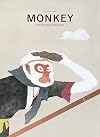
A glorious anthology of stories, poems and non-fiction from a selection of famous and lesser-known Japanese writers (and some non-Japanese authors, too), mostly based around the theme of travel. I suspect this would be even better in a physical copy, with its stunning artwork and just a feeling that this is something to return to again and again, to pick a favourite story or picture and just revel in it.
Top marks to Monkey for this, their 2nd annual collection. I'm already chomping at the show more bit for next year's. 4.5 stars in ebook format, and because this is probably my last review of 2021, let's go out with a bang and give it 5 stars. A must-read, and must-have, for anyone with an interest in Japanese literature and culture. show less
Top marks to Monkey for this, their 2nd annual collection. I'm already chomping at the show more bit for next year's. 4.5 stars in ebook format, and because this is probably my last review of 2021, let's go out with a bang and give it 5 stars. A must-read, and must-have, for anyone with an interest in Japanese literature and culture. show less

This beefy periodical is worth the Kindle Edition price. I only wish the printed copies weren't so scarce. Tending toward experimental writing, it offers enough solid storytelling to appeal to most adventurous readers. As soon as I get my hands on the other volumes I plan to cherish them all.
In this volume you will find a charming essay from Haruki Murakami.
A sublime ghost story from Mieko Kawakami.
A fun story from Hiromi Kawakami.
Random poems and interesting tidbits from Kelly Link, Charles show more Simic, Stuart Dybek and others. I'm not a fan of Toh EnJoe, Gen'ichiro Takahashi, or Hideo Furukawa, but they are crossing the translational divide, and slowly but surely on their way to becoming popular.
This and the other several volumes are the first place to look if you're constantly trying to find new translations of these authors. show less
In this volume you will find a charming essay from Haruki Murakami.
A sublime ghost story from Mieko Kawakami.
A fun story from Hiromi Kawakami.
Random poems and interesting tidbits from Kelly Link, Charles show more Simic, Stuart Dybek and others. I'm not a fan of Toh EnJoe, Gen'ichiro Takahashi, or Hideo Furukawa, but they are crossing the translational divide, and slowly but surely on their way to becoming popular.
This and the other several volumes are the first place to look if you're constantly trying to find new translations of these authors. show less

The original Monkey Business was a Japanese literary journal was published between 2008 and 2011. 2011 also saw the launch of Monkey Business: New Writing from Japan, the English-language, international edition of the journal. Edited by Motoyuki Shibata, who was also heavily involved with the original Monkey Business, and Ted Goossen, the English-language Monkey Business is released annually and collects a variety of fiction, poetry, nonfiction, essays, and manga. The selections found in the show more fourth volume of the journal, published in 2014, come from a range of sources, including but not limited to the original Monkey Business and its followup journal Monkey (launched in 2013). In addition to works that had previously been published, some of the contributions selected were specifically commissioned for the fourth issue. I've been reading and enjoying the international edition of Monkey Business since its beginning and always look forward to the newest volume.
The fourth issue of the international edition of Monkey Business collects twenty-three works, mostly short stories, contributed by creators from Japan, the United Kingdom, and the United States. The earliest work was originally published in 1845 while the most recent contributions were released for the first time in this particular volume. Quite a few of the artists and authors are returning to Monkey Business, including some of my personal favorites. I'm always glad to see more of Toh Enjoe's work translated and I was not at all disappointed with his bizarre short story "A Record of My Grandmother." I've also become rather fond of Keita Jin's short stories and very much enjoyed "The Girl Behind the Register Blows Bubbles." Some selections like Hiromi Kawakai's "People from My Neighborhood" and Sachiko Kishimoto's "The Forbidden Diary" are continuations from previous volumes of Monkey Business. I particularly look forward to reading those authors from one issue to the next. I also really enjoyed Masatsuga Ono's short story, "The Man Who Turned Into a Buoy." This actually surprised me a bit as I usually struggle with Ono's work. Another favorite was Gen’ichirō Takahashi very strange story "Demon Beasts."
Other returnees to Monkey Business include Stuart Dybek with the short story "Naked," Hideo Furukawa with "The Bears of Mount Nametoko," Yoko Hayasuke with "Eri's Physics," Mina Ishikawa with "The Lighthouse on the Desk" (which is a collection of tanka poems), Mieko Kawakami with the story "The Little Girl Blows Up Her Pee Anxiety, My Heart Races," Taki Monma with "White Socks," and Richard Powers with "The Global Distributed Self-Mirroring Subterranean Soul-Sharing Picture Show," a fascinating essay about Haruki Murakami's fiction and brain science. The two manga contributions included in the fourth volume of Monkey Business are also from artists who have been a part of the journal in the past. Brother and Sister Nishioka adapt Bruno Schulz' story "Tailors' Dummies" (it's nice to see them branch out from works by Franz Kafka) and Fumiko Takano illustrates a highly abstract adaptation of "The Little Match-Girl" by Hans Christian Anderson. A translation of Anderson's original story is also included, which is particularly helpful for those readers who are not familiar with it when trying to make narrative sense of Takano's rendition.
While it's wonderful to see so many returning creators to Monkey Business, I also greatly appreciate that the journal always includes someone or something new. "Everybody's Got Something to Hide Except Me and My Monkey", the fourth volume's opening work by Craft Ebbing & Co., is probably the most unusual--a series of photographs of an art piece with accompanying narration. Of all the newcomers to this issue of Monkey Business, I particularly enjoyed Brian Evenson's short story "The Punish" and the tangentially related "A Message to My Japanese Readers," a collection of short essays by Evenson and three other authors (Laird Hunt, Denis Johnson, and Salvador Plascencia). Other short stories from authors new to the journal include Doppo Kunikida's "Unforgettable People," Kenji Miyazawa's "The Restaurant of Many Orders" (previously I had only read examples of his poetry), David Peace's "After Ryūnosuke, Before Ryūnosuke" and Hyakken Uchida's "The Sarasate Disk." Overall, I don't feel that the fourth volume was quite as diverse as previous issues of Monkey Business. However, it's still a solid collection. Many of the stories tend toward the slightly strange, bizarre, and absurd, but that's a sort of fiction that I happen to enjoy.
Experiments in Manga show less
The fourth issue of the international edition of Monkey Business collects twenty-three works, mostly short stories, contributed by creators from Japan, the United Kingdom, and the United States. The earliest work was originally published in 1845 while the most recent contributions were released for the first time in this particular volume. Quite a few of the artists and authors are returning to Monkey Business, including some of my personal favorites. I'm always glad to see more of Toh Enjoe's work translated and I was not at all disappointed with his bizarre short story "A Record of My Grandmother." I've also become rather fond of Keita Jin's short stories and very much enjoyed "The Girl Behind the Register Blows Bubbles." Some selections like Hiromi Kawakai's "People from My Neighborhood" and Sachiko Kishimoto's "The Forbidden Diary" are continuations from previous volumes of Monkey Business. I particularly look forward to reading those authors from one issue to the next. I also really enjoyed Masatsuga Ono's short story, "The Man Who Turned Into a Buoy." This actually surprised me a bit as I usually struggle with Ono's work. Another favorite was Gen’ichirō Takahashi very strange story "Demon Beasts."
Other returnees to Monkey Business include Stuart Dybek with the short story "Naked," Hideo Furukawa with "The Bears of Mount Nametoko," Yoko Hayasuke with "Eri's Physics," Mina Ishikawa with "The Lighthouse on the Desk" (which is a collection of tanka poems), Mieko Kawakami with the story "The Little Girl Blows Up Her Pee Anxiety, My Heart Races," Taki Monma with "White Socks," and Richard Powers with "The Global Distributed Self-Mirroring Subterranean Soul-Sharing Picture Show," a fascinating essay about Haruki Murakami's fiction and brain science. The two manga contributions included in the fourth volume of Monkey Business are also from artists who have been a part of the journal in the past. Brother and Sister Nishioka adapt Bruno Schulz' story "Tailors' Dummies" (it's nice to see them branch out from works by Franz Kafka) and Fumiko Takano illustrates a highly abstract adaptation of "The Little Match-Girl" by Hans Christian Anderson. A translation of Anderson's original story is also included, which is particularly helpful for those readers who are not familiar with it when trying to make narrative sense of Takano's rendition.
While it's wonderful to see so many returning creators to Monkey Business, I also greatly appreciate that the journal always includes someone or something new. "Everybody's Got Something to Hide Except Me and My Monkey", the fourth volume's opening work by Craft Ebbing & Co., is probably the most unusual--a series of photographs of an art piece with accompanying narration. Of all the newcomers to this issue of Monkey Business, I particularly enjoyed Brian Evenson's short story "The Punish" and the tangentially related "A Message to My Japanese Readers," a collection of short essays by Evenson and three other authors (Laird Hunt, Denis Johnson, and Salvador Plascencia). Other short stories from authors new to the journal include Doppo Kunikida's "Unforgettable People," Kenji Miyazawa's "The Restaurant of Many Orders" (previously I had only read examples of his poetry), David Peace's "After Ryūnosuke, Before Ryūnosuke" and Hyakken Uchida's "The Sarasate Disk." Overall, I don't feel that the fourth volume was quite as diverse as previous issues of Monkey Business. However, it's still a solid collection. Many of the stories tend toward the slightly strange, bizarre, and absurd, but that's a sort of fiction that I happen to enjoy.
Experiments in Manga show less
You May Also Like
Associated Authors
Statistics
- Works
- 45
- Also by
- 8
- Members
- 154
- Popularity
- #135,794
- Rating
- 4.0
- Reviews
- 6
- ISBNs
- 37
- Languages
- 1