
Braden R. Allenby
Author of The Techno-Human Condition
About the Author
Braden Allenby is Professor of Civil and Environmental Engineering and Professor of Law at Arizona State University.
Works by Braden R. Allenby
Tagged
Common Knowledge
- Birthdate
- 1950-12-29
- Gender
- male
- Nationality
- USA
- Birthplace
- Highland Park, Illinois, USA
- Associated Place (for map)
- Illinois, USA
Members
Reviews
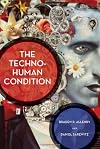
Disclosure time: Sarewitz and Allenby are two of my favorite professors, and I generally believe that they're very smart. That said...
The Techno-Human Condition starts by examining transhumanism, the belief that human being can and should improve their bodies using technology, and the common arguments for and against it. Allenby and Sarewitz soon drop the idea, as both sides hold flawed and simplistic views about technology and its ability to solve problems. They advance a theory of Level I, show more II, and III technologies. Level I technologies imply a simple cause-and-effect relationship: cars allow you to get from Point A to B easily. Level II, technosocial systems, have more complex effects: many cars create traffic and a lack of parking. Level III, Earth systems, are almost unknowable in their implications: cars redesign cities and ways of life, create foreign entanglements in pursuit of gas, and change the composition of the atmosphere with unknown effects.
Coping with Level III technological conditions is the aim of the book. Allenby and Sarewitz propose flexibility and options above all else. Since the effects of technology are prima facia unknowable, we must be ready to change direction at any moment, not to forestall debate, and to always be prepared to reflexively examine our values. This is an ambitious program, and its ambition and ambiguity weakens its real-world relevance--people with simple solutions will always implement their plans faster than those with more complex ideas. But it also might be the only way to survival. show less
The Techno-Human Condition starts by examining transhumanism, the belief that human being can and should improve their bodies using technology, and the common arguments for and against it. Allenby and Sarewitz soon drop the idea, as both sides hold flawed and simplistic views about technology and its ability to solve problems. They advance a theory of Level I, show more II, and III technologies. Level I technologies imply a simple cause-and-effect relationship: cars allow you to get from Point A to B easily. Level II, technosocial systems, have more complex effects: many cars create traffic and a lack of parking. Level III, Earth systems, are almost unknowable in their implications: cars redesign cities and ways of life, create foreign entanglements in pursuit of gas, and change the composition of the atmosphere with unknown effects.
Coping with Level III technological conditions is the aim of the book. Allenby and Sarewitz propose flexibility and options above all else. Since the effects of technology are prima facia unknowable, we must be ready to change direction at any moment, not to forestall debate, and to always be prepared to reflexively examine our values. This is an ambitious program, and its ambition and ambiguity weakens its real-world relevance--people with simple solutions will always implement their plans faster than those with more complex ideas. But it also might be the only way to survival. show less

Reconstructing Earth is a manifesto for a new science and a new policy, Earth Systems Engineering and Management. Allenby calls for a recognition of the inseparability of technological and natural systems, and a holistic, data-driven, and self-reflective approach towards their management. Narrow environmentalism, focused mainly on protecting single species or habitats against human encroachment and restoring nature to a pristine prehuman state, is impossible. Rather, we need engagement, show more recognizing the complexity and value-driven challenges associated with managing earth systems at global levels.
In format, this work is a collection of columns from Green Business Letter, organized thematically with some connecting frontsmatter for each chapter. This means that the big ideas are mainly in the gaps, and that certain points are repeated a bit too often, but also that the book is interesting and readable. The annotated bibliographies that close each chapter are invaluable. Reconstructing Earth has added at least two dozen books to my Amazon queue.
((Disclosure: I'm somehow affiliated with Allenby in an academic sense. Agent provocateur, maybe?)) show less
In format, this work is a collection of columns from Green Business Letter, organized thematically with some connecting frontsmatter for each chapter. This means that the big ideas are mainly in the gaps, and that certain points are repeated a bit too often, but also that the book is interesting and readable. The annotated bibliographies that close each chapter are invaluable. Reconstructing Earth has added at least two dozen books to my Amazon queue.
((Disclosure: I'm somehow affiliated with Allenby in an academic sense. Agent provocateur, maybe?)) show less
An interesting examination of the roles of technology in the human condition, and an application of these roles to the movement of transhumanism.
As discussed in Michael's review, the authors classify technology into three groups, based upon their effects and levels of social implications. The authors also discuss the role of technology in war, and debate the meaning of 'progress'. Transhumanism does have its intellectual roots in modern technology, but also in the philosophy of the show more Enlightenment, and ambiguities which arise from transhumanism must also be considered in this past context.
A thoughtful addition to current debates. show less
As discussed in Michael's review, the authors classify technology into three groups, based upon their effects and levels of social implications. The authors also discuss the role of technology in war, and debate the meaning of 'progress'. Transhumanism does have its intellectual roots in modern technology, but also in the philosophy of the show more Enlightenment, and ambiguities which arise from transhumanism must also be considered in this past context.
A thoughtful addition to current debates. show less
You May Also Like
Associated Authors
Statistics
- Works
- 6
- Members
- 89
- Popularity
- #207,491
- Rating
- 3.9
- Reviews
- 3
- ISBNs
- 17