
Will Clarke
Author of Lord Vishnu's Love Handles: A Spy Novel (Sort Of)
About the Author
Image credit: Photograph by Sigrid Estrada
Works by Will Clarke
Associated Works
Who Can Save Us Now? Brand-New Superheroes and Their Amazing (Short) Stories (2008) — Contributor — 160 copies, 7 reviews
When I Was a Loser: True Stories of (Barely) Surviving High School (2007) — Contributor — 38 copies, 2 reviews
Tagged
Common Knowledge
- Gender
- male
Members
Reviews
CONTEMPORARY FICTION
Will Clarke
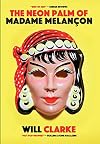
The Neon Palm of Madame Melançon
Middle Finger Press
Hardcover, 978-0-9726-5883-6 (also available as an e-book); 354 pgs., $29.99
July 19, 2017
“There are no coincidences, only the chess moves of an unseen hand.”
—Madame Melançon
Duke Melançon left New Orleans for Houston (“a world that wasn’t ruled by tarot cards and Aleister Crowley’s incantations”) as soon as he could, embarrassed by his family, especially his mother, the titular Madame show more Melançon, queen of “Nawlins” fortune-tellers, adviser to politicians and the mob, among others. Duke is a corporate attorney for Mandala Worldwide, an oil company whose Sub-Ocean Brightside well has just exploded in the Gulf of Mexico, killing dozens of workers and spilling millions of barrels of crude into the waters off Louisiana. Duke returns to New Orleans to rescue Mandala’s reputation and revenue, but when he gets there he must also deal with another urgent catastrophe: Madame Melançon has chased a calico cat (“basically text messages sent from the devil”) out of her kitchen with a broom, running down the street after the bad omen, and disappeared without a trace.
The Neon Palm of Madame Melançon is the new novel from Dallas’s Will Clarke, whom Rolling Stone has dubbed a “hot pop prophet.” This book is published by Middle Finger Press (“hand-crafted fiction written for titans of industry, Bilderbergs, and oligarchs”), a Dunning-Kruger Company. In psychology, the Dunning-Kruger effect is “a cognitive bias wherein persons of low ability suffer from illusory superiority, mistakenly assessing their cognitive ability as greater than it is.” Seriously, to get the full sublime effect go to www.middlefinger.press.
Duke’s first-person narration is fast-paced and wholly entertaining. The seventh son of a seventh son, he is a cynical nonbeliever in his mother’s powers. As clues are uncovered in a sort of demented scavenger hunt, and a preponderance of the evidence shows that it may be Duke’s fated responsibility to save the world from the soulless future of the Great Unseen Hand, a crisis of conscience forces him to reconsider his career, his choice of employer, his feelings about his family, and whether he can count himself a good person.
Clarke reminds me of Thomas Pynchon. His colorful characters include a Kurt Vonnegut impersonator (or is he?); a Loup Garou (or is he?); Duke’s uncle, a pot-smoking priest called “Uncle Father”; and Duke’s sister LaLa, who dresses as successful celebrities (Pink, Annie Lennox), hoping to trick the fates into bestowing the luck of the rich and famous upon her. Clarke is equally skilled at sweet family scenes with Duke and his wife and little boys, and slapstick scenes involving a plague of raccoons. Dialogue is smart and engaging, with a Cajun accent.
There are footnotes, doodles, and chapter titles such as “Turn to Page 5 of Dracula!” and “Cab Smells Like SpaghettiOs and Febreze.” Clarke is having a very good time, but he’s also very serious about climate change and the environmental future of the only home we have. In the words of maybe-Vonnegut: “Wake up, you moron! The planet is dying as we speak. Whatever made you think that money was worth this? You can’t breathe it you know!”
The Neon Palm of Madame Melançon is a smart, ultimately hopeful mystery of science and magical realism, a loving evocation of “all this broken beauty” of New Orleans, and a riotous, rollicking ride with a message. One person’s witch is another person’s scientist. And vice versa.
Originally published in Lone Star Literary Life. show less
Will Clarke
The Neon Palm of Madame Melançon
Middle Finger Press
Hardcover, 978-0-9726-5883-6 (also available as an e-book); 354 pgs., $29.99
July 19, 2017
“There are no coincidences, only the chess moves of an unseen hand.”
—Madame Melançon
Duke Melançon left New Orleans for Houston (“a world that wasn’t ruled by tarot cards and Aleister Crowley’s incantations”) as soon as he could, embarrassed by his family, especially his mother, the titular Madame show more Melançon, queen of “Nawlins” fortune-tellers, adviser to politicians and the mob, among others. Duke is a corporate attorney for Mandala Worldwide, an oil company whose Sub-Ocean Brightside well has just exploded in the Gulf of Mexico, killing dozens of workers and spilling millions of barrels of crude into the waters off Louisiana. Duke returns to New Orleans to rescue Mandala’s reputation and revenue, but when he gets there he must also deal with another urgent catastrophe: Madame Melançon has chased a calico cat (“basically text messages sent from the devil”) out of her kitchen with a broom, running down the street after the bad omen, and disappeared without a trace.
The Neon Palm of Madame Melançon is the new novel from Dallas’s Will Clarke, whom Rolling Stone has dubbed a “hot pop prophet.” This book is published by Middle Finger Press (“hand-crafted fiction written for titans of industry, Bilderbergs, and oligarchs”), a Dunning-Kruger Company. In psychology, the Dunning-Kruger effect is “a cognitive bias wherein persons of low ability suffer from illusory superiority, mistakenly assessing their cognitive ability as greater than it is.” Seriously, to get the full sublime effect go to www.middlefinger.press.
Duke’s first-person narration is fast-paced and wholly entertaining. The seventh son of a seventh son, he is a cynical nonbeliever in his mother’s powers. As clues are uncovered in a sort of demented scavenger hunt, and a preponderance of the evidence shows that it may be Duke’s fated responsibility to save the world from the soulless future of the Great Unseen Hand, a crisis of conscience forces him to reconsider his career, his choice of employer, his feelings about his family, and whether he can count himself a good person.
Clarke reminds me of Thomas Pynchon. His colorful characters include a Kurt Vonnegut impersonator (or is he?); a Loup Garou (or is he?); Duke’s uncle, a pot-smoking priest called “Uncle Father”; and Duke’s sister LaLa, who dresses as successful celebrities (Pink, Annie Lennox), hoping to trick the fates into bestowing the luck of the rich and famous upon her. Clarke is equally skilled at sweet family scenes with Duke and his wife and little boys, and slapstick scenes involving a plague of raccoons. Dialogue is smart and engaging, with a Cajun accent.
There are footnotes, doodles, and chapter titles such as “Turn to Page 5 of Dracula!” and “Cab Smells Like SpaghettiOs and Febreze.” Clarke is having a very good time, but he’s also very serious about climate change and the environmental future of the only home we have. In the words of maybe-Vonnegut: “Wake up, you moron! The planet is dying as we speak. Whatever made you think that money was worth this? You can’t breathe it you know!”
The Neon Palm of Madame Melançon is a smart, ultimately hopeful mystery of science and magical realism, a loving evocation of “all this broken beauty” of New Orleans, and a riotous, rollicking ride with a message. One person’s witch is another person’s scientist. And vice versa.
Originally published in Lone Star Literary Life. show less
If you enjoy Christopher Moore's books, you'll enjoy this: it's not as laugh-out-loud as Moore, but I had a big grin on my face much of the time while reading it, in between those times when I was horrified by the events of the novel. The ghost story part isn't horrifying; it's the college fraternity part that is.
LSU fratboy Conrad, recently murdered by fraternity supremo Ryan -- a sadistic sociopath who, who knows, if left unchecked might one day become President of the United States -- show more is a ghost who cannot leave this mortal coil entirely behind: dead Conrad wants revenge against Ryan and he also wants a general release of others from the extraordinarily violent hazing the fraternity inflicts upon its pledges. Oh, and if it were only possible, he'd like babe girlfriend Ashley back . . . though an extended dalliance with Ryan's babe girlfriend Maggie would be pretty okay, too. Trouble is, the only people who can detect Conrad's presence are the elderly cook Etta and the evangelical born-again student Sarah Jane . . . and occasionally the good-natured Jolly-Green-Giant-like fratboy pledge Tucker, into whose body Conrad can plunge for a brief burst of possession should Tucker get sufficient drunk.
The Worthy is a great romp with serious undertones. I'd buy it like a shot if I hadn't already bought it . . . or is it Conrad who's already bought it, hm? show less
"Lord Vishu's Love Handles," written in the present tense using a wacky first-person narrator whose every other word seems to be of the four-letter variety, springs from an utterly absurd premise, uses cliched phrases when it wants to, and resists any attempt to pigeonhole it into a particular genre. Will Clarke's complete disregard for literary convention goes along way toward explaining why this entertaining work was spurned by traditional publishers until it proved its marketability by show more developing a cult readership as a self-published novel under the aptly-named "Middlefinger Press."
Our hero is Travis Anderson, an alcoholic suburbanite whose obsession over his wife's possible infidelity and growing uneasiness with his psychic abilities drive him into financial ruin and make him easy prey for recruitment by a shadowy arm of the government that covets his unusual remote viewing skills. What follows is a series of darkly comical adventures in which Travis is forced to reexamine his comfortable, yuppie-fat-inducing lifestyle in the context of the Hindu religion, pit his talents against a rogue remote viewer who fancies himself as the second coming of Rasputin, and save the day in one of the most outrageous climax scenes imaginable.
This book made me laugh harder than anything I've read since Carl Hiaasen's "Skinny Dip," all the while reinforcing some good old fashioned values, like the sanctity of all living things, the evils of jealousy and materialism, and the importance of family. We can only hope that Paramount exercises its option rights and that the film remains true to Clarke's offbeat vision.
-Kevin Joseph, author of "The Champion Maker" show less
Our hero is Travis Anderson, an alcoholic suburbanite whose obsession over his wife's possible infidelity and growing uneasiness with his psychic abilities drive him into financial ruin and make him easy prey for recruitment by a shadowy arm of the government that covets his unusual remote viewing skills. What follows is a series of darkly comical adventures in which Travis is forced to reexamine his comfortable, yuppie-fat-inducing lifestyle in the context of the Hindu religion, pit his talents against a rogue remote viewer who fancies himself as the second coming of Rasputin, and save the day in one of the most outrageous climax scenes imaginable.
This book made me laugh harder than anything I've read since Carl Hiaasen's "Skinny Dip," all the while reinforcing some good old fashioned values, like the sanctity of all living things, the evils of jealousy and materialism, and the importance of family. We can only hope that Paramount exercises its option rights and that the film remains true to Clarke's offbeat vision.
-Kevin Joseph, author of "The Champion Maker" show less
Will Clarke has taken two well-trodden premises, a tale of college fraternity hijinks and a narrator from beyond the grave, and grafted them together in a refreshingly original and fun way.
Our disembodied narrator is one Conrad Avery Sutton III, newly initiated brother in LSU's Gamma Chi fraternity. Born into money and committed to the pursuit of frat boy hedonism, the living version of Conrad doesn't sound too likeable. But as a spirit floating about the LSU campus, where he is able to show more narrate from a first-person omniscient point of view, Conrad entertains with his quirky wit and evokes instant sympathy for his plight. You see, Conrad was struck down at the height of his youth, thrown down a flight of stairs by a psychopath named Ryan Hutchins, who masquerades as Gamma Chi's golden boy president and manages to avoid all suspicion for the murder. So who can fault him for shadowing Ryan and waiting for his opportunity to seek vengeance?
In Hamlet-esque fashion, vengeance becomes a rather drawn-out and deliberate pursuit for Conrad's spirit, who bides his time while following the next crop of Gamma Chis through the grueling pledging and initiation rites. One particular pledge, an earnest farm boy whom Conrad is able to possess when inebriated, becomes the physical medium through which Conrad is able to act.
Throw in a Bible-thumping coed, an eccentric fraternity cook who's able to speak with the dead, and an unlikely bond that forms between Ryan's beautiful girlfriend and the possessed farm boy, and you have a savory jambalaya that's sure to entertain. The story is also laced with some touching themes, most notably the longing for the touch and feel of the material world expressed by a spirit who was unfairly sundered from his body at a time when he was so vital and alive.
-Kevin Joseph, author of "The Champion Maker" show less
Our disembodied narrator is one Conrad Avery Sutton III, newly initiated brother in LSU's Gamma Chi fraternity. Born into money and committed to the pursuit of frat boy hedonism, the living version of Conrad doesn't sound too likeable. But as a spirit floating about the LSU campus, where he is able to show more narrate from a first-person omniscient point of view, Conrad entertains with his quirky wit and evokes instant sympathy for his plight. You see, Conrad was struck down at the height of his youth, thrown down a flight of stairs by a psychopath named Ryan Hutchins, who masquerades as Gamma Chi's golden boy president and manages to avoid all suspicion for the murder. So who can fault him for shadowing Ryan and waiting for his opportunity to seek vengeance?
In Hamlet-esque fashion, vengeance becomes a rather drawn-out and deliberate pursuit for Conrad's spirit, who bides his time while following the next crop of Gamma Chis through the grueling pledging and initiation rites. One particular pledge, an earnest farm boy whom Conrad is able to possess when inebriated, becomes the physical medium through which Conrad is able to act.
Throw in a Bible-thumping coed, an eccentric fraternity cook who's able to speak with the dead, and an unlikely bond that forms between Ryan's beautiful girlfriend and the possessed farm boy, and you have a savory jambalaya that's sure to entertain. The story is also laced with some touching themes, most notably the longing for the touch and feel of the material world expressed by a spirit who was unfairly sundered from his body at a time when he was so vital and alive.
-Kevin Joseph, author of "The Champion Maker" show less
Lists
to get (1)
Awards

You May Also Like


Associated Authors
Statistics
- Works
- 8
- Also by
- 5
- Members
- 321
- Popularity
- #73,714
- Rating
- 3.4
- Reviews
- 16
- ISBNs
- 22
- Favorited
- 2