
Chuck Palahniuk
Author of Fight Club
About the Author
Chuck Palahniuk was born in Pasco, Washington on February 21, 1962. He received a BA in journalism from the University of Oregon in 1986. Before becoming a full-time author, he worked as a journalist and as a diesel mechanic. He has written numerous novels including Survivor, Invisible Monsters, show more Lullaby, Diary, Haunted, Rant, Snuff, Pygmy, Tell-All, Damned, Doomed, Beautiful You, and Make Something Up: Stories You Can't Unread. Fight Club was made into a film by director David Fincher and Choke was made into a film by director Clark Gregg. He is also the author of Fugitives and Refugees, a nonfiction profile of Portland, Oregon, and the nonfiction collection Stranger Than Fiction. (Bowker Author Biography) show less
Series
Works by Chuck Palahniuk
Consider This: Moments in My Writing Life after Which Everything Was Different (2020) 373 copies, 11 reviews
Long Division: Stories of Social Decay, Societal Collapse, and Bad Manners — Contributor — 10 copies
36 Craft Essays 8 copies
Tell-All / Pygmy / Snuff / Rant 7 copies
The Love Theme of Sybil and William 4 copies
Exodus: A Story from Haunted 3 copies
Negative Reinforcement 3 copies
Tour Stories 2 copies
Survivor / Choke / Diary: A Novel 2 copies
Galleria 2 copies
Inducción por shock 1 copy
Hot Potting 1 copy
Задуха 1 copy
Non per sempre ma per ora 1 copy
Den přizpůsobení 1 copy
Кто всё расскажет 1 copy
The Invention of Sound 1 copy
Tieni presente che 1 copy
Tour Stories Volume II 1 copy
Potępieni 1 copy
Monkey Think, Monkey Do 1 copy
Neredzamie briesmoņi 1 copy
Беглецы и бродяги 1 copy
Associated Works
My Bookstore: Writers Celebrate Their Favorite Places to Browse, Read, and Shop (2012) — Contributor — 621 copies, 16 reviews
The Year's Best Fantasy & Horror 2006: 19th Annual Collection (2006) — Contributor — 244 copies, 4 reviews
The Year's Best Fantasy and Horror: Eighteenth Annual Collection (2005) — Contributor — 231 copies, 5 reviews
The Ecco Anthology of Contemporary American Short Fiction (2008) — Contributor — 140 copies, 2 reviews
You Do Not Talk About Fight Club: I Am Jack's Completely Unauthorized Essay Collection (2008) — Foreword — 79 copies, 2 reviews
Nightmare Magazine, October 2015 - Queers Destroy Horror! Special Issue (2015) — Contributor — 59 copies, 4 reviews
Qualia Nous: Vol. 2 — Contributor — 2 copies
Tagged
Common Knowledge
- Canonical name
- Palahniuk, Chuck
- Legal name
- Palahniuk, Charles Michael
- Birthdate
- 1962-02-21
- Gender
- male
- Education
- University of Oregon (School of Journalism | 1986)
- Occupations
- novelist
journalist
essayist
mechanic
intern (National Public Radio) - Organizations
- National Public Radio member station KLCC (intern)
Freightliner (diesel mechanic)
Cacophony Society - Awards and honors
- Oregon Book Award for Best Novel (1997)
Oregon Book Award for Best Novel nominee (1999)
Bram Stoker Award for Best Novel nominee (2002 | 2005) - Agent
- Dan Kirschen and Sloan Harris (ICM Partners)
- Nationality
- USA (birth)
- Birthplace
- Pasco, Washington, USA
- Places of residence
- Pasco, Washington, USA (birth)
Burbank, Washington, USA
Eastern Washington, USA
Eugene, Oregon, USA
Portland, Oregon, USA
Vancouver, Washington, USA - Associated Place (for map)
- USA
Members
Discussions
Choke in Someone explain it to me... (October 2019)
Fight Club in 1001 Books to read before you die (June 2008)
Palahniuk's Reinvention of Horror in Thing(amabrarian)s That Go Bump in the Night (February 2008)
Reviews
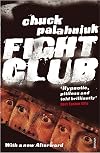
It was quite an experience reading this at my white collar job on a grainy pdf at the corner of my desktop. Fight Club as a book is a wholly different experience than the film, and a much better one in my opinion - this review can't help but compare the two.
Pahlahnuik's writing is at once vivid, obscure, lucid, strict, expressive. The movie felt very politically charge and reflective, the book feels more grounded while retaining that sharp, dreamlike feeling. I came away feeling uneasy yet show more stagnated. Film loves to serve up catharsis in between the stimulation of loud music, sex, celebrities, flashes and bangs - taking away from what I believe is the core of this story. The confusion, the hopelessness, the feeling of breathing stale air, the humanity.
Decades have passed since the static we face was described, and the longer Fight Club feels relevant, the more it feels like the shock is coming, coming, coming but will never arrive. Don't read it for pure entertainment, and you'll come away with more. show less
Pahlahnuik's writing is at once vivid, obscure, lucid, strict, expressive. The movie felt very politically charge and reflective, the book feels more grounded while retaining that sharp, dreamlike feeling. I came away feeling uneasy yet show more stagnated. Film loves to serve up catharsis in between the stimulation of loud music, sex, celebrities, flashes and bangs - taking away from what I believe is the core of this story. The confusion, the hopelessness, the feeling of breathing stale air, the humanity.
Decades have passed since the static we face was described, and the longer Fight Club feels relevant, the more it feels like the shock is coming, coming, coming but will never arrive. Don't read it for pure entertainment, and you'll come away with more. show less
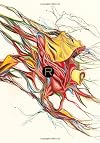
After finishing this book, I am unable to determine whether I should attempt to find meaning in that gonzo world view and series of events or if I should just rinse my mouth and double check that my pets have their vaccinations up to date. I can’t tell if I’ve just handled violence and depravity in the words and images of an auteur or a master of pulp. So the rating reflects that.
I’m a little unsettled in thinking that the book is baiting me to search for meaning to distract me from show more the recognition that I did enjoy the book for what it was. The details about rabies, about rare coins, about urban demolition derby, about foreign objects in food, about snakes and vermin and feral dogs and poisonous spiders all seem so oddly specific that they must stand for things like virality and control culture, desensitization and the search for authentic experience, fear of the unknown and unseen, or a human psychological obsession with self-destruction. But does it all mean that or is it, as Freud is wrongly thought to have said, that sometimes a cigar is just a cigar?
I suppose that the safe ground here is to examine the book as a book and appreciate the narrative structure of an oral history. That’s not new of course, and after having read oral histories before, I would say that this book isn’t even really a good example of an oral history. Even if it were, I’m not sure why the subject of the book calls for narrative type. Studs Terkel chose oral history to capture WWII and the Great Depression because (I think) those events are so enormous and multifaceted that no one or limited set of perspectives captures them. So what is that structure doing here, capturing a wacky story about grotesquery, sexual violence, and time travel? And here I am … back looking at a narrative device that has me thinking, surely the author wants me to see something in this story. show less
I’m a little unsettled in thinking that the book is baiting me to search for meaning to distract me from show more the recognition that I did enjoy the book for what it was. The details about rabies, about rare coins, about urban demolition derby, about foreign objects in food, about snakes and vermin and feral dogs and poisonous spiders all seem so oddly specific that they must stand for things like virality and control culture, desensitization and the search for authentic experience, fear of the unknown and unseen, or a human psychological obsession with self-destruction. But does it all mean that or is it, as Freud is wrongly thought to have said, that sometimes a cigar is just a cigar?
I suppose that the safe ground here is to examine the book as a book and appreciate the narrative structure of an oral history. That’s not new of course, and after having read oral histories before, I would say that this book isn’t even really a good example of an oral history. Even if it were, I’m not sure why the subject of the book calls for narrative type. Studs Terkel chose oral history to capture WWII and the Great Depression because (I think) those events are so enormous and multifaceted that no one or limited set of perspectives captures them. So what is that structure doing here, capturing a wacky story about grotesquery, sexual violence, and time travel? And here I am … back looking at a narrative device that has me thinking, surely the author wants me to see something in this story. show less
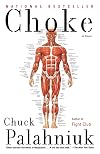
A novel about sex addicts. See also: DUH. See also: Sure Thing. See also: Bestseller. "So fine," we think: this must have been easy. How could you lose? And then you begin reading. Try this: draw a cross in the margin every time Christianity is referenced. Draw a (|) every time Palahniuk references a butt. A "Ha" for every joke; a "Nice" for every brilliantly turned phrase; the character's name every time someone new is introduced; an "F" every time characters F---; and a null symbol every show more time Palahniuk illuminates Nothing. The margins will be filled. You'll end up with a freakin' flip book movie. Somewhere, Hemingway is smiling. Instead of Hail Marys, the young Victor Mancini must have been assigned recitations of "Our nada which art in nada..." The novel's title is your first clue that everything is exactly as it looks and nothing at all as it appears, simultaneously. Everything has so many levels of meaning that half the audience is laughing, half the audience is crying and the other half (yeah, I don't know how he does it) is vomiting in the aisles. Orifices. There are more orifices in this book than you can shake a stick at (and that's in there too). One moment you're recalling the witches from Macbeth: "Fair is foul, and foul is fair." The next, you're humming five different Rolling Stones songs. All the while perusing the warning label on a tube of KY Jelly. There is legend, myth, faith, history, psychology, prophecy and some geology for good measure. If you're one day visited by aliens who want to read one book and understand what it means to be human, smile and hand them "Choke." show less
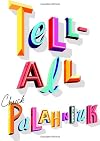
There are a few authors in the world that cause me to make a goal of reading everything they put to paper, or whatever medium they choose. Stephen King, Mark Danielewski and Dave Eggers are some of the top of my list, but included with them is a man who seemingly strives to be known as one of the most twisted and demented minds in the contemporary literary canon, Chuck Palahniuk. His written success was already on the path to fame and infamy, but the spotlight firmly became implanted on his show more typewriter after the release of the film version of one of his most famous stories, Fight Club. People began diving head first into his sordid tales of depravity, violence and regression of human tendencies to their most primal and animalistic. Palahniuk has mastered a way of detailing believably the worst choices people make every day and their sometimes grotesque ramifications. So, with a slightly nervous and queasy stomach, I took his newest tome off the shelf at my local bookstore and came home to test my nerves on Tell-All.
Tell-All is the story of a classic beauty from the golden age of Hollywood named Katherine Kenton and her relationships with her fans, her lovers and most importantly with her personal assistant, Hazie Coogan. Katherine and Hazie have been together since nearly the beginning of Katherine’s lunar career and Hazie has been the glue that held it all together, the captain that steered the glittering jewel in the tumultuous seas of Hollywood and the artist who used Katherine to not only create a star, but a mold a living legend. Now, a new young buck has slithered into Katherine’s life and Hazie must once again pick up the invisible shield and defend her creation from anyone or anything that would seek to tear her down off her pedestal.
The first thing I should warn returning Palahniuk readers of is this: this is not Fight Club, nor is this Haunted (which personally I don’t think will ever be topped for sheer shock and awe value), this new fable is more along the lines of Rant and Invisible Monsters (another highly underrated book). The violence is quiet here, a slow boil, and things aren’t always what they seem. Yet the twist of the story does reveal itself a tad too early for my tastes. In some cases, like many Hitchcock films, the twist was known to the audience from the beginning and the fun was watching the players stumble around it unknowingly, but here it happens to act more as a weight dragging down the tempo of the story.
What doesn’t falter is Palahniuk’s deviant ability to reach inside the characters and bring out their most wicked and base needs. Even though many, if not all, of the inhabitants of Tell-All and his other stories are deeply flawed people, he peels them down layer by layer with an almost meditative quality rendering each and every one recognizably human in the end. Hazie reflects that person in us all, the one who always stood by while their friend or family member soaked up the spotlight, in some cases, even the sun itself. Being forever relegated to the sidelines can darken a person, gray out their normally bright demeanor and inevitably tip their moral compass due south. Yet the choice is always there, as it is with Hazie, whether to protect the prize by keeping it away from all personal harm or protecting the image of the prize by destroying it before it is tarnished by time and heartfelt folly.
Palahniuk also continues to perfect his personal style of over-detailing brand names and creating a nearly encyclopedic rhythm to his prose with his incredibly verbose and seemingly heavily-sponsored descriptions. No one just wears earrings in this book, they wear Cartier chandelier earrings. He improves on this literary fingerprint in Tell-All by adding an excessive amount on name dropping, rolling out star after star of the silver screen (mainly from the time when the screens were still made of actual silver). For people who don’t know classic Hollywood legends, it can feel a touch redundant and meaningless, but there is a reason behind the madness and you can always rely on the fact that his research of whatever topic has brought him the very tidbit of information you just glossed over.
While this is not close to my favorite of his career, Tell-All certainly fills a stomach momentarily void of sordid stories. Yet, as always with writers like him, I found myself thinking on the last page, “What could he possibly come up with next to shock me?” I have no doubt he will find a way to answer that question, post haste. show less
Tell-All is the story of a classic beauty from the golden age of Hollywood named Katherine Kenton and her relationships with her fans, her lovers and most importantly with her personal assistant, Hazie Coogan. Katherine and Hazie have been together since nearly the beginning of Katherine’s lunar career and Hazie has been the glue that held it all together, the captain that steered the glittering jewel in the tumultuous seas of Hollywood and the artist who used Katherine to not only create a star, but a mold a living legend. Now, a new young buck has slithered into Katherine’s life and Hazie must once again pick up the invisible shield and defend her creation from anyone or anything that would seek to tear her down off her pedestal.
The first thing I should warn returning Palahniuk readers of is this: this is not Fight Club, nor is this Haunted (which personally I don’t think will ever be topped for sheer shock and awe value), this new fable is more along the lines of Rant and Invisible Monsters (another highly underrated book). The violence is quiet here, a slow boil, and things aren’t always what they seem. Yet the twist of the story does reveal itself a tad too early for my tastes. In some cases, like many Hitchcock films, the twist was known to the audience from the beginning and the fun was watching the players stumble around it unknowingly, but here it happens to act more as a weight dragging down the tempo of the story.
What doesn’t falter is Palahniuk’s deviant ability to reach inside the characters and bring out their most wicked and base needs. Even though many, if not all, of the inhabitants of Tell-All and his other stories are deeply flawed people, he peels them down layer by layer with an almost meditative quality rendering each and every one recognizably human in the end. Hazie reflects that person in us all, the one who always stood by while their friend or family member soaked up the spotlight, in some cases, even the sun itself. Being forever relegated to the sidelines can darken a person, gray out their normally bright demeanor and inevitably tip their moral compass due south. Yet the choice is always there, as it is with Hazie, whether to protect the prize by keeping it away from all personal harm or protecting the image of the prize by destroying it before it is tarnished by time and heartfelt folly.
Palahniuk also continues to perfect his personal style of over-detailing brand names and creating a nearly encyclopedic rhythm to his prose with his incredibly verbose and seemingly heavily-sponsored descriptions. No one just wears earrings in this book, they wear Cartier chandelier earrings. He improves on this literary fingerprint in Tell-All by adding an excessive amount on name dropping, rolling out star after star of the silver screen (mainly from the time when the screens were still made of actual silver). For people who don’t know classic Hollywood legends, it can feel a touch redundant and meaningless, but there is a reason behind the madness and you can always rely on the fact that his research of whatever topic has brought him the very tidbit of information you just glossed over.
While this is not close to my favorite of his career, Tell-All certainly fills a stomach momentarily void of sordid stories. Yet, as always with writers like him, I found myself thinking on the last page, “What could he possibly come up with next to shock me?” I have no doubt he will find a way to answer that question, post haste. show less
Lists
Books I've Read (1)
Fiction For Men (1)
Existentialism (1)
100 Hemskaste (1)
B-B to Get (1)
First Novels (1)
Cult Classics (1)
Page Turners (1)
Five star books (1)
Guilty Pleasures (1)
Stuff from Bard (1)
1990s (2)
To Read (2)
Unread books (2)
Best Satire (3)
Gimmicks (1)
Magic Realism (1)
music to my eyes (1)
Overdue Podcast (1)
Metafiction (1)
Writing (1)
Awards


You May Also Like


Associated Authors
Statistics
- Works
- 101
- Also by
- 18
- Members
- 104,147
- Popularity
- #87
- Rating
- 3.8
- Reviews
- 1,775
- ISBNs
- 903
- Languages
- 28
- Favorited
- 656


