

Mark Z. Danielewski
Author of House of Leaves
About the Author
Mark Z. Danielewski is the author of House of Leaves, The Whalestoe Letters, Only Revolutions, The Fifty Year Sword, and The Familiar. (Bowker Author Biography)
Image credit: Photo (c) Marion Ettlinger
Series
Works by Mark Z. Danielewski
There's A Place For You 2 copies
House of Leaves Pilot — Author — 1 copy
Clip 4 1 copy
House of Leaves: Teleplays 1 copy
House of Leaves pilot script 1 copy
Tagged
Common Knowledge
- Canonical name
- Danielewski, Mark Z.
- Birthdate
- 1966-03-05
- Gender
- male
- Education
- Yale University (English Literature)
University of South Carolina (School of Cinema-Television) - Occupations
- author
- Relationships
- Danielewski, Tad (father)
Poe (sister) - Short biography
- Mark Z. Danielewski was born in 1966. House of Leaves is his debut.
- Nationality
- USA
- Birthplace
- New York, New York, USA
- Places of residence
- New York, New York, USA
Los Angeles, California, USA
Paris, Île-de-France, France - Associated Place (for map)
- USA
Members
Discussions
House of leaves Mark Z. Danielewski in Thing(amabrarian)s That Go Bump in the Night (January 2009)
House of Leaves in Someone explain it to me... (March 2008)
Reviews
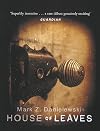
House of Leaves is quite easily the most stunning book I’ve had the pleasure to read so far. The prose is full of design acrobatics that left me speechless at times. The interwoven stories were sublimely presented. And the ending sent me spiraling down endless stairs of despair because it was over. It’s a book written by a voracious reader for voracious readers.
I felt the central character in the stories was the house itself. Up, down, left, right, sideways, upside down—the house show more doesn’t respect the laws of physics, instead choosing to bend and twist and make something of its own creation. It’s an empty canvas—a place that represents nothingness yet says so much about the human condition. It’s not a classical monster but is something far more insidious than that.
The other (obvious) protagonists include Navidson, Zampano, and Jonny, all of whom are fleshed out quite a bit. Navidson’s story contains the right kind of horror—ominous, bitter, and sharp. Zampano’s “pseudo-academic hogwash” can be difficult to read at times, but ultimately redeems itself through terrifyingly fictional insight into a fictional movie. Jonny’s represents a slow descent into loneliness and madness without any redemption in sight.
No, you won’t need a Master’s degree in Art, Architecture, Film Criticism, Literature, or any other subjects to read and appreciate this book. No, you won’t need to tear your hair out over close readings. No, you won’t lose your mind over this beautiful book.
Yes, you will have a good time. Yes, you will ask questions, the answers of which only you will know. Yes, you will marvel at the beauty of the layout and typography. Yes, you will wonder why you hadn’t read it earlier.
But most importantly, you will experience something truly special. And that’s all that counts in this godforsaken world. show less
I felt the central character in the stories was the house itself. Up, down, left, right, sideways, upside down—the house show more doesn’t respect the laws of physics, instead choosing to bend and twist and make something of its own creation. It’s an empty canvas—a place that represents nothingness yet says so much about the human condition. It’s not a classical monster but is something far more insidious than that.
The other (obvious) protagonists include Navidson, Zampano, and Jonny, all of whom are fleshed out quite a bit. Navidson’s story contains the right kind of horror—ominous, bitter, and sharp. Zampano’s “pseudo-academic hogwash” can be difficult to read at times, but ultimately redeems itself through terrifyingly fictional insight into a fictional movie. Jonny’s represents a slow descent into loneliness and madness without any redemption in sight.
No, you won’t need a Master’s degree in Art, Architecture, Film Criticism, Literature, or any other subjects to read and appreciate this book. No, you won’t need to tear your hair out over close readings. No, you won’t lose your mind over this beautiful book.
Yes, you will have a good time. Yes, you will ask questions, the answers of which only you will know. Yes, you will marvel at the beauty of the layout and typography. Yes, you will wonder why you hadn’t read it earlier.
But most importantly, you will experience something truly special. And that’s all that counts in this godforsaken world. show less
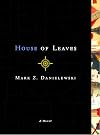
Do the words meta, post-modern, or experimental make you cringe when used to describe books? Then turn back now. I feel the need to say that up front because many people seem to go into this book expecting a horror novel and wind up wasting their money. Just take a look at the genres that goodreads lists this as. Horror, fiction, fantasy, and mystery. With inapt labels like that, it's easy to see how people could get the wrong idea.
This is not a horror novel, nor is it a mystery novel or a show more fantasy novel. This book is, among many other things, a personal story about the author's parents presented as experimental literary fiction that's thinly veiled as a horror novel. Confused? Good, stay that way for now, and don't think too hard about what I just said. I'm not that into horror novels, and I generally like post-modern and experimental stuff, and I knew what I was getting into when I bought this. Know what you're getting into, that's all I'm trying to say.
Here's the basic concept as clear and concise as I can tell it. There are essentially three narrators that will be addressing you, the reader.
1) Zampano, an old blind man
2) Johnny Truant, a thirty-something druggie
3) The "editors"
Johnny's friend, Lude, knows Zampano because he lives in the same apartment building. The old man, ominously, tells Lude he's going to die soon, and does. After the body is gone, Lude and Johnny sneak into the apartment to take a look around at Zampano's things. They find a crazy manuscript, which Johnny takes home with him.
The manuscript is a non-fiction book/dissertation about a documentary called "The Navidson Record." The Navidson Record is about a famous photojournalist named Will Navidson and his family moving into a new house that is bigger on the inside. When I say non-fiction, I mean it. It reads like a textbook. On every page there are footnotes about other articles and other books that reference this documentary that, by all accounts, doesn't exist (I'll get to this in a second).
It starts out simple at first. After the family returns home from vacation they notice a hallway on the second floor connecting two bedrooms that wasn't there before. They track down a blueprint of the building and see that there is a space between the walls, although it's not supposed to be a finished hallway with doors. Okay, no big deal, maybe they didn't notice the doors before, it's a new house after all and they had just moved in before going on vacation. Then comes the realization that measuring the house through that hallway results in an extra inch that shouldn't exist, and that can't be explained. Then a new door appears, on the first floor this time, that should lead to an empty back yard but instead leads to a long, dark hallway that extends into an endless labyrinth of cavernous, thousand-foot rooms that leads to god knows where and contains god knows what, and the exploration of this door is the main focus of the documentary.
So Johnny finds this manuscript, reads it, edits it, adds his own footnotes relating to research he's done on Zampano's life and the manuscript contents (translations of foreign phrases, for instance), but also personal tangents about his own life and stream of consciousness ramblings. In the prologue where he explains how he found the manuscript, he also says that The Navidson Record doesn't actually exist. Johnny's editors also appear in footnotes and in the first say they have never met Johnny Truant in person, only communicating via letters and rare phone calls. Weird, right?
What follows is 528 pages of an interwoven, multi-layered story. On the one hand, you have Zampano's non-fiction book about this fictitious documentary, which simmers as a slow-paced "found-footage" horror novel that can be unsettling, thought-provoking, but is likely to disappoint hardcore horror fans looking for adrenaline-pumping scares.
Then you have Johnny's story, told through long footnotes, which is more vague and slow to reveal itself, but the basic idea is that although he knows the manuscript is fiction, the act of reading it causes him to lose his marbles. Whether the manuscript or Johnny's brain chemistry is to blame is up to the reader. Whether Johnny is even telling the truth is up to the reader. And, to be honest, Johnny's parts can sometimes be hard to read because he's just pitiable and depressing and the stream of consciousness prose can wear down your focus. It gets Joyce-esque at times, though only for short stretches, because Danielewski is a nice man who wants you to have a good time, unlike Joyce, who hates you and hates fun. Then the "story" part ends, and you have 130 pages of appendices (which you should read) which include things like:
Zampano's writings which are not a part of The Navidson Record
The obituary of Johnny's dad
Childhood letters from Johnny's crazy, institutionalized, long dead mother
Poems
So what does it all mean?
Well, it means a clever and perhaps over-educated man named Mark Danielewski decided to write a novel that experiments with the format of the novel, that pushes the boundaries of what a novel can be and what it can do. While much of it could quite fairly be called a gimmick, and it won't be redefining how all novels are written going forward, it's a gimmick that works, that is unique, that is stimulating, that is discussion-worthy, that makes the world more interesting by existing, and isn't that what good art is supposed to do? It is an unmitigated success at being singular, and because it is singular it will inspire intense love and intense hatred from different people.
It means that while there are answers, you will have to work for them. I mean this both figuratively and literally. On the literal side, there is a letter in the appendices that is written in a simple code, which you will have to translate into a coherent message with pen and paper. And that's a code that is plainly said to be a code. There are other codes that are truly hidden.
Many sections have weird, cluttered layouts that make the act of reading them hard, and make tracking down the right footnote a scavenger hunt. You'll be presented with footnotes that make no sense until you realize the text is broken up over several pages and presented backwards. There are a lot of elements to the story, little throwaway lines and facts that you need to remember, or write down. How did Johnny's dad die. How did Navidson's dad die. Stuff like that. While it's not absolutely necessary, I'd recommend having a notebook handy starting on page one. I have an amazing memory, took notes here and there, and still wish I'd taken more. Like I said, this book is work. It's fun work though, depending on your tastes and personality. I'm an INTP and I loved it. Your mileage may vary.
On the figurative side, the book still won't hold your hand and spell out what it all means in flashing neon. That's up to you to figure out by gathering all the evidence together and deconstructing the book on several different levels by asking yourself what's true and what isn't, what matters and what doesn't, what's literal and what's figurative, what's the metanarrative, what's the subtext. Ultimately it's up to you to decide when you're satisfied with your answer.
While this is nowhere near as open to interpretation as most books you'd label as post-modern or modernist, it is still open to interpretation compared to a typical novel, which isn't open to interpretation at all. There are no easy answers, no definitive answers, but there are satisfying answers that I firmly believe are more or less what the author intended, if you're willing to put in the effort to discover them and have a flexible mind that delights in abstract concepts. Alternatively there are, of course, existing breakdowns of it on the internet that you can turn to for some help, although none I've read have gone far enough into speculation. They present facts and evidence, point out what's true or not, but none of them have drawn the kind of final conclusion that I've drawn. That's how it should be. You should decide for yourself. If none of this sounds like fun to you, I recommend giving this one a pass. show less
This is not a horror novel, nor is it a mystery novel or a show more fantasy novel. This book is, among many other things, a personal story about the author's parents presented as experimental literary fiction that's thinly veiled as a horror novel. Confused? Good, stay that way for now, and don't think too hard about what I just said. I'm not that into horror novels, and I generally like post-modern and experimental stuff, and I knew what I was getting into when I bought this. Know what you're getting into, that's all I'm trying to say.
Here's the basic concept as clear and concise as I can tell it. There are essentially three narrators that will be addressing you, the reader.
1) Zampano, an old blind man
2) Johnny Truant, a thirty-something druggie
3) The "editors"
Johnny's friend, Lude, knows Zampano because he lives in the same apartment building. The old man, ominously, tells Lude he's going to die soon, and does. After the body is gone, Lude and Johnny sneak into the apartment to take a look around at Zampano's things. They find a crazy manuscript, which Johnny takes home with him.
The manuscript is a non-fiction book/dissertation about a documentary called "The Navidson Record." The Navidson Record is about a famous photojournalist named Will Navidson and his family moving into a new house that is bigger on the inside. When I say non-fiction, I mean it. It reads like a textbook. On every page there are footnotes about other articles and other books that reference this documentary that, by all accounts, doesn't exist (I'll get to this in a second).
It starts out simple at first. After the family returns home from vacation they notice a hallway on the second floor connecting two bedrooms that wasn't there before. They track down a blueprint of the building and see that there is a space between the walls, although it's not supposed to be a finished hallway with doors. Okay, no big deal, maybe they didn't notice the doors before, it's a new house after all and they had just moved in before going on vacation. Then comes the realization that measuring the house through that hallway results in an extra inch that shouldn't exist, and that can't be explained. Then a new door appears, on the first floor this time, that should lead to an empty back yard but instead leads to a long, dark hallway that extends into an endless labyrinth of cavernous, thousand-foot rooms that leads to god knows where and contains god knows what, and the exploration of this door is the main focus of the documentary.
So Johnny finds this manuscript, reads it, edits it, adds his own footnotes relating to research he's done on Zampano's life and the manuscript contents (translations of foreign phrases, for instance), but also personal tangents about his own life and stream of consciousness ramblings. In the prologue where he explains how he found the manuscript, he also says that The Navidson Record doesn't actually exist. Johnny's editors also appear in footnotes and in the first say they have never met Johnny Truant in person, only communicating via letters and rare phone calls. Weird, right?
What follows is 528 pages of an interwoven, multi-layered story. On the one hand, you have Zampano's non-fiction book about this fictitious documentary, which simmers as a slow-paced "found-footage" horror novel that can be unsettling, thought-provoking, but is likely to disappoint hardcore horror fans looking for adrenaline-pumping scares.
Then you have Johnny's story, told through long footnotes, which is more vague and slow to reveal itself, but the basic idea is that although he knows the manuscript is fiction, the act of reading it causes him to lose his marbles. Whether the manuscript or Johnny's brain chemistry is to blame is up to the reader. Whether Johnny is even telling the truth is up to the reader. And, to be honest, Johnny's parts can sometimes be hard to read because he's just pitiable and depressing and the stream of consciousness prose can wear down your focus. It gets Joyce-esque at times, though only for short stretches, because Danielewski is a nice man who wants you to have a good time, unlike Joyce, who hates you and hates fun. Then the "story" part ends, and you have 130 pages of appendices (which you should read) which include things like:
Zampano's writings which are not a part of The Navidson Record
The obituary of Johnny's dad
Childhood letters from Johnny's crazy, institutionalized, long dead mother
Poems
So what does it all mean?
Well, it means a clever and perhaps over-educated man named Mark Danielewski decided to write a novel that experiments with the format of the novel, that pushes the boundaries of what a novel can be and what it can do. While much of it could quite fairly be called a gimmick, and it won't be redefining how all novels are written going forward, it's a gimmick that works, that is unique, that is stimulating, that is discussion-worthy, that makes the world more interesting by existing, and isn't that what good art is supposed to do? It is an unmitigated success at being singular, and because it is singular it will inspire intense love and intense hatred from different people.
It means that while there are answers, you will have to work for them. I mean this both figuratively and literally. On the literal side, there is a letter in the appendices that is written in a simple code, which you will have to translate into a coherent message with pen and paper. And that's a code that is plainly said to be a code. There are other codes that are truly hidden.
Many sections have weird, cluttered layouts that make the act of reading them hard, and make tracking down the right footnote a scavenger hunt. You'll be presented with footnotes that make no sense until you realize the text is broken up over several pages and presented backwards. There are a lot of elements to the story, little throwaway lines and facts that you need to remember, or write down. How did Johnny's dad die. How did Navidson's dad die. Stuff like that. While it's not absolutely necessary, I'd recommend having a notebook handy starting on page one. I have an amazing memory, took notes here and there, and still wish I'd taken more. Like I said, this book is work. It's fun work though, depending on your tastes and personality. I'm an INTP and I loved it. Your mileage may vary.
On the figurative side, the book still won't hold your hand and spell out what it all means in flashing neon. That's up to you to figure out by gathering all the evidence together and deconstructing the book on several different levels by asking yourself what's true and what isn't, what matters and what doesn't, what's literal and what's figurative, what's the metanarrative, what's the subtext. Ultimately it's up to you to decide when you're satisfied with your answer.
While this is nowhere near as open to interpretation as most books you'd label as post-modern or modernist, it is still open to interpretation compared to a typical novel, which isn't open to interpretation at all. There are no easy answers, no definitive answers, but there are satisfying answers that I firmly believe are more or less what the author intended, if you're willing to put in the effort to discover them and have a flexible mind that delights in abstract concepts. Alternatively there are, of course, existing breakdowns of it on the internet that you can turn to for some help, although none I've read have gone far enough into speculation. They present facts and evidence, point out what's true or not, but none of them have drawn the kind of final conclusion that I've drawn. That's how it should be. You should decide for yourself. If none of this sounds like fun to you, I recommend giving this one a pass. show less
This is one of those books that make you work, but in a fun, claustrophobic kind of way. It's a story within a story within a story, a punk rock palimpsest. There's a lot to take out of this, but on the surface level, it's a horror story told by a guy who's not all that well-put together, relayed through another guy who is equally imbalanced. It is also a story about a haunted house and a dysfunctional family.
A kind of cult following has come out of this book, something a simple google show more search can confirm. There is a lot of re-readability in this book (I've read it twice) in part because of the hidden codes and messages within it and the weird overlapping storylines. The author's sister Poe created a CD that is meant as a kind of response and accompaniment to the book, and a separate offshoot, [b:The Whalestoe Letters|40153|The Whalestoe Letters|Mark Z. Danielewski|http://photo.goodreads.com/books/1320486089s/40153.jpg|2813846], also includes some letters not mentioned in the appendices (yes there is more than one appendix). The reader should know, also, that the bibliographic notations (yes there are footnotes) and the index (yes there's that too) are not wholly accurate, nor are any of the 'real' names used in the book.
Gamers and horror movie fans will appreciate this book for varying reasons, as will fans of postmodern metafiction in general. A colleague/friend of mine, Dan, is writing about this book for his dissertation - it is a dense enough book for several of them. At the same time, it can be read lightly and enjoyed. I would get a hold of the full-color edition if you can find it (yes, there are different colors).
Aside from all the horror and terror, it is ultimately a book that demands we notice it as a book; Dan mentioned that the cover flap (at least for the US version) doesn't fold over the pages of the book. Like the house itself, the book's insides are bigger than the outside. ;) It is at times annoying clever to see all the bells and whistles hidden (and some not so hidden) here, but Danielewski makes up for that by telling several good and often compelling stories, and some (I believe deliberately) farcical and equally entertaining ones as well. show less
A kind of cult following has come out of this book, something a simple google show more search can confirm. There is a lot of re-readability in this book (I've read it twice) in part because of the hidden codes and messages within it and the weird overlapping storylines. The author's sister Poe created a CD that is meant as a kind of response and accompaniment to the book, and a separate offshoot, [b:The Whalestoe Letters|40153|The Whalestoe Letters|Mark Z. Danielewski|http://photo.goodreads.com/books/1320486089s/40153.jpg|2813846], also includes some letters not mentioned in the appendices (yes there is more than one appendix). The reader should know, also, that the bibliographic notations (yes there are footnotes) and the index (yes there's that too) are not wholly accurate, nor are any of the 'real' names used in the book.
Gamers and horror movie fans will appreciate this book for varying reasons, as will fans of postmodern metafiction in general. A colleague/friend of mine, Dan, is writing about this book for his dissertation - it is a dense enough book for several of them. At the same time, it can be read lightly and enjoyed. I would get a hold of the full-color edition if you can find it (yes, there are different colors).
Aside from all the horror and terror, it is ultimately a book that demands we notice it as a book; Dan mentioned that the cover flap (at least for the US version) doesn't fold over the pages of the book. Like the house itself, the book's insides are bigger than the outside. ;) It is at times annoying clever to see all the bells and whistles hidden (and some not so hidden) here, but Danielewski makes up for that by telling several good and often compelling stories, and some (I believe deliberately) farcical and equally entertaining ones as well. show less
I’m not sure how to review this book, if it can even be called a book. More like a puzzle? Or a labyrinth? Anyway, I loved it for sure but it is with mixed feelings. This book is fascinating, pretentious, a page turner, sometimes boring, terrifying, heart warming, and unlike anything else I’ve read. Pretty sure I could read this 50 times and never catch everything in it. If you want a book that will have you, with a pen and paper, trying to decipher Morse code or trying to work out a show more hidden message, holding the book upside down and using a mirror to read backwards passages- finally thinking you understand what’s happening only to be second guessing everything by the end, then this is a novel for you. show less
Lists
2010s (4)
Cult Classics (1)
Five star books (1)
Elegant Prose (1)
Best Satire (1)
Which house? (1)
Romans (1)
Metafiction (1)
top 100 (1)
To Read - Horror (1)
A Novel Cure (1)
Overdue Podcast (1)
Unread books (2)
Gimmicks (2)
First Novels (1)
Magic Realism (1)
TBR Insta (1)
BBC Big Read (1)
00 (1)
Awards


You May Also Like


Associated Authors
Statistics
- Works
- 16
- Members
- 24,991
- Popularity
- #844
- Rating
- 4.0
- Reviews
- 553
- ISBNs
- 81
- Languages
- 10
- Favorited
- 105


