
Steven Hall (1) (1975–)
Author of The Raw Shark Texts
For other authors named Steven Hall, see the disambiguation page.
About the Author
Image credit: Walnut Whippet
Works by Steven Hall
Associated Works
The Unwritten Vol. 03: Dead Man's Knock (2011) — Introduction, some editions — 552 copies, 30 reviews
Coming Attractions: An Anthology of American Poets in Their Twenties (1980) — Contributor — 8 copies
Tagged
Common Knowledge
Members
Discussions
YA book with secret chapters online in Name that Book (June 2016)
Reviews

"since his death my Granddad had become more a collection of scenes than a real man to me." (79)
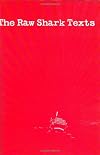
When I was assigned to teach The Modern Novel, I wanted to teach a novel about being a book-- in the physical sense. Novels are often books, of course, but in this electronic age they don't have to be. My students were pretty split on the far-out ideas Hall advances in The Raw Shark Texts-- some thought the book was baffling in the extreme, others thought it was the coolest thing they'd ever read. show more I'm okay with such a contradiction.
We read the book in the context of what N. Katherine Hayles in Writing Machines calls the "technotext": "When a literary work interrogates the inscription technology that produces it." (An "inscription technology" is a device that initiates material changes that can be read as marks, e.g., print books, computers, telegraphy, video and film, basically any technology that produces interpretable, linguistic information.) When a print book calls attention to the fact that it is a print book, it is a technotext, and Hayles argues that you should look at technotexts not just to see what the text "means," but how that meaning interacts with the material form of the text. (Hayles has actually written about The Raw Shark Texts herself, but ended up going in a different direction than what I'm going to do with her ideas here.)
The Raw Shark Texts is preoccupied with inscription technologies and how we're remediated through them: there's the quotation I opened this review with, but also: the idea that when a person dies, they leave an afterimage in the machinery they set up to run their life, which slowly runs down and dies itself (101); "I think we’re going to wear away from the world, just like the writing wears off old gravestones in the aisles of churches" (229); the narrator, Eric, reading the guidebook of Clio, a woman he supposedly had a relationship with but doesn't remember (266); Eric's admission that the journal we're reading is incomplete: they were never that witty or cool, Clio wasn’t always sexy, and all he has now is stories: "well edited tall tales with us in the starring roles," as the characters in the journal aren’t the two of them but actors regurgitating Hollywood clichés (412-13). And of course The Raw Shark Texts itself is a life remediated through an inscription technology: we only know what happened to Eric Sanderson because we have this book to tell us.
The book ends ambiguously. Did Eric die? Was anything Eric experienced even real? My students wanted to say "no" to the latter question, that he was hallucinating to cope with grief, but I reject that interpretation on the grounds of it not being very interesting. As for the first question, I think it depends on what you mean by "die." As the book emphasizes over and over again, we are the marks we make on the world. We are the scrapbooks, the gravestone inscriptions, the journals, the stories we wrote down about ourselves. Eric Sanderson didn't die fighting the conceptual shark, and we know this because we're holding Eric Sanderson in our hands. The Raw Shark Texts records his very existence. He is the sum of the inscription technologies used to mark his place in the world, much as we all are. The postcard at the end of the book-- another inscription technology-- shows that he continues to exist, that he hasn't worn away from the world yet. show less
When I was assigned to teach The Modern Novel, I wanted to teach a novel about being a book-- in the physical sense. Novels are often books, of course, but in this electronic age they don't have to be. My students were pretty split on the far-out ideas Hall advances in The Raw Shark Texts-- some thought the book was baffling in the extreme, others thought it was the coolest thing they'd ever read. show more I'm okay with such a contradiction.
We read the book in the context of what N. Katherine Hayles in Writing Machines calls the "technotext": "When a literary work interrogates the inscription technology that produces it." (An "inscription technology" is a device that initiates material changes that can be read as marks, e.g., print books, computers, telegraphy, video and film, basically any technology that produces interpretable, linguistic information.) When a print book calls attention to the fact that it is a print book, it is a technotext, and Hayles argues that you should look at technotexts not just to see what the text "means," but how that meaning interacts with the material form of the text. (Hayles has actually written about The Raw Shark Texts herself, but ended up going in a different direction than what I'm going to do with her ideas here.)
The Raw Shark Texts is preoccupied with inscription technologies and how we're remediated through them: there's the quotation I opened this review with, but also: the idea that when a person dies, they leave an afterimage in the machinery they set up to run their life, which slowly runs down and dies itself (101); "I think we’re going to wear away from the world, just like the writing wears off old gravestones in the aisles of churches" (229); the narrator, Eric, reading the guidebook of Clio, a woman he supposedly had a relationship with but doesn't remember (266); Eric's admission that the journal we're reading is incomplete: they were never that witty or cool, Clio wasn’t always sexy, and all he has now is stories: "well edited tall tales with us in the starring roles," as the characters in the journal aren’t the two of them but actors regurgitating Hollywood clichés (412-13). And of course The Raw Shark Texts itself is a life remediated through an inscription technology: we only know what happened to Eric Sanderson because we have this book to tell us.
The book ends ambiguously. Did Eric die? Was anything Eric experienced even real? My students wanted to say "no" to the latter question, that he was hallucinating to cope with grief, but I reject that interpretation on the grounds of it not being very interesting. As for the first question, I think it depends on what you mean by "die." As the book emphasizes over and over again, we are the marks we make on the world. We are the scrapbooks, the gravestone inscriptions, the journals, the stories we wrote down about ourselves. Eric Sanderson didn't die fighting the conceptual shark, and we know this because we're holding Eric Sanderson in our hands. The Raw Shark Texts records his very existence. He is the sum of the inscription technologies used to mark his place in the world, much as we all are. The postcard at the end of the book-- another inscription technology-- shows that he continues to exist, that he hasn't worn away from the world yet. show less
Oh, the promise this novel held. The sheer possibility of greatness.
Too bad Hall couldn't bring it home.
I absolutely devoured the first half of this story. I was on board for the full ride, happily nodding along as it got weirder and weirder. Theoretical memory-devouring sharks? Sure.
And the characters where amazing. Clio, in particular. I could feel myself completely understanding why Eric loved her. Hell, I was falling in love with her myself.
I was onboard for the whole search for show more Fidorous. Yup, I was good for the full ride. And this is where I will simply warn you about the serious SPOILER I'm about to drop. Honestly, if you haven't read the book and plan to, stop now, because I'm going to officially kill the second half of the book.
You've been warned.
Somewhere just past the middle, Hall veered distressingly away from all that promise, all that possibility. I am never more disappointed than when a theoretical model is set up, a strange, hard to grasp yet somehow workable idea, a feat of overwhelming imagination, is presented, then, for the purposes of story, the author diverts to a banal real-world model. That's exactly what Hall did.
Seriously. The last 200-ish pages of this novel (including 60 pages of typography illustrated shark to, you know, made it edgy) is about the last 45 minutes of the movie version of Jaws .
No. Seriously.
He couldn't even be bothered to change anything up. It's like he didn't know what the hell to do, so he just turned on the TV, saw a rerun of a movie and thought, hell, yeah, I can steal that!
I have rarely felt so cheated by a book as I feel with this one. Hall? You're a smart guy and a good writer (the ONLY reason you got two stars instead of one), but you committed an unpardonable sin here: You fucked over your readers.
Leave this one to die. It'll only be good when it's floating belly up in the tank. show less
Too bad Hall couldn't bring it home.
I absolutely devoured the first half of this story. I was on board for the full ride, happily nodding along as it got weirder and weirder. Theoretical memory-devouring sharks? Sure.
And the characters where amazing. Clio, in particular. I could feel myself completely understanding why Eric loved her. Hell, I was falling in love with her myself.
I was onboard for the whole search for show more Fidorous. Yup, I was good for the full ride. And this is where I will simply warn you about the serious SPOILER I'm about to drop. Honestly, if you haven't read the book and plan to, stop now, because I'm going to officially kill the second half of the book.
You've been warned.
Somewhere just past the middle, Hall veered distressingly away from all that promise, all that possibility. I am never more disappointed than when a theoretical model is set up, a strange, hard to grasp yet somehow workable idea, a feat of overwhelming imagination, is presented, then, for the purposes of story, the author diverts to a banal real-world model. That's exactly what Hall did.
Seriously. The last 200-ish pages of this novel (including 60 pages of typography illustrated shark to, you know, made it edgy) is about the last 45 minutes of the movie version of Jaws .
No. Seriously.
He couldn't even be bothered to change anything up. It's like he didn't know what the hell to do, so he just turned on the TV, saw a rerun of a movie and thought, hell, yeah, I can steal that!
I have rarely felt so cheated by a book as I feel with this one. Hall? You're a smart guy and a good writer (the ONLY reason you got two stars instead of one), but you committed an unpardonable sin here: You fucked over your readers.
Leave this one to die. It'll only be good when it's floating belly up in the tank. show less
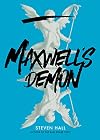
I almost DNF’d this because I was very close to hating it and had decided to do myself the favor of stopping. But the next day curiosity got the best of me, so I picked Maxwell's Demon up again and forced myself to speed through the remaining 100 or so pages. Forced is a key word, and yes, I skimmed. So now that it's done, my final take is I can’t with this book.
For one, post-modern, meta-fiction, typographical trickery is not my thing. Like many others, I was reminded of House of show more Leaves, but this book is sprinkled with far less of the typographical word play than that book, for which I am grateful. I'd almost consider Hall’s usage a tolerable amount, except that some of it was so tiny that my middle-aged eyes determined he didn't want me to read those parts, and I didn't.
Second, the physics stuff was interesting to me as were the philosophical musings and the bible apocrypha, but the mysteries contained in the polaroid, Dracula's Castle, Imogen's whereabouts and other things frustrated me because I did not find them interesting enough to cast about lost in Hall's game.
Third, he takes too long to tell the story, dancing around it and dangling bits without enough forward progression. I got much more curious when Stanley arrives in Owthorne in search of Andrew Black, but this is also where things more aggressively start to fall apart.
Last, from that point on, there's an unfair amount of having to suspend your disbelief that ratchets up in the final acts, and in which everything is revealed to be first one thing, then another thing, and then yet another thing until you realize this thing was never going anywhere at all. I like a good twist, but it has to follow some sort of logic otherwise it's just another M. Night Shyamalan, and I'm not a fan of that. show less
For one, post-modern, meta-fiction, typographical trickery is not my thing. Like many others, I was reminded of House of show more Leaves, but this book is sprinkled with far less of the typographical word play than that book, for which I am grateful. I'd almost consider Hall’s usage a tolerable amount, except that some of it was so tiny that my middle-aged eyes determined he didn't want me to read those parts, and I didn't.
Second, the physics stuff was interesting to me as were the philosophical musings and the bible apocrypha, but the mysteries contained in the polaroid, Dracula's Castle, Imogen's whereabouts and other things frustrated me because I did not find them interesting enough to cast about lost in Hall's game.
Third, he takes too long to tell the story, dancing around it and dangling bits without enough forward progression. I got much more curious when Stanley arrives in Owthorne in search of Andrew Black, but this is also where things more aggressively start to fall apart.
Last, from that point on, there's an unfair amount of having to suspend your disbelief that ratchets up in the final acts, and in which everything is revealed to be first one thing, then another thing, and then yet another thing until you realize this thing was never going anywhere at all. I like a good twist, but it has to follow some sort of logic otherwise it's just another M. Night Shyamalan, and I'm not a fan of that. show less
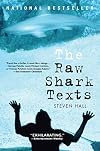
I was initially going to say that this book is the lazier person's "House of Leaves" - but that sounds more critical and dismissive than my actual experience of reading it. The Raw Shark Texts is a novel about, I suppose, loss, at the highest level - it chronicles one man's crumbling apart from within following the death of his girlfriend in an accident in the Greek Isles. But very close to that highest level is some exploration of language and its relationship to meaning; how connected show more words are to actual things, and what can happen in the absence of that connection. The author explores these ideas overtly, creating a narrative about "unspaces" and the use of actual words to build things that are experienced as real.
I found some of the story unconvincing - these are ideas that appeal to me greatly, and to many of my favorite writers. Indeed, Hall seems to have similar tastes - there are quotes from Murakami, Calvino, and others throughout the pages. But there is something lacking here - I think perhaps Hall's theory is unclear, and so it comes confusedly through the pages. His ideas are wonderful, but I think he needs more work to flesh them out clearly. Ambiguity can enhance a book when skillfully deployed, but the gaps here often seem less intentional.
Despite this, I enjoyed the book a great deal, and I believe fans of Eco particularly, as well as Danielewski and Murakami - and Stephenson and Eco - would enjoy it as well. It's clever and interesting, and the narrator is reasonably compelling and appealing. show less
I found some of the story unconvincing - these are ideas that appeal to me greatly, and to many of my favorite writers. Indeed, Hall seems to have similar tastes - there are quotes from Murakami, Calvino, and others throughout the pages. But there is something lacking here - I think perhaps Hall's theory is unclear, and so it comes confusedly through the pages. His ideas are wonderful, but I think he needs more work to flesh them out clearly. Ambiguity can enhance a book when skillfully deployed, but the gaps here often seem less intentional.
Despite this, I enjoyed the book a great deal, and I believe fans of Eco particularly, as well as Danielewski and Murakami - and Stephenson and Eco - would enjoy it as well. It's clever and interesting, and the narrator is reasonably compelling and appealing. show less
Lists
Wyrd as Folk (1)
to get (1)
Awards


You May Also Like


Associated Authors
Statistics
- Works
- 5
- Also by
- 7
- Members
- 3,097
- Popularity
- #8,245
- Rating
- 3.8
- Reviews
- 129
- ISBNs
- 66
- Languages
- 15