
Scarlett Thomas
Author of The End of Mr. Y
About the Author
Scarlett Thomas was born in London in 1972. Her novels include The Seed Collectors, PopCo, The End of Mr.Y which was longlisted for the Orange Broadband Prize for Fiction 2007, and Our Tragic Universe. She teaches creative writing at the University of Kent.
Image credit: 3:AM Magazine
Series
Works by Scarlett Thomas
Associated Works
Significant Objects: 100 Extraordinary Stories about Ordinary Things (2012) — Contributor — 65 copies, 1 review
The Tomorrow Project Anthology: Bestselling Authors Describe Daily Life in the Future (2011) — Contributor — 21 copies
Tagged
Common Knowledge
- Other names
- Czerniak, Gaby
- Birthdate
- 1972
- Gender
- female
- Education
- University of East London
- Occupations
- novelist
creative writing teacher - Short biography
- Scarlett Thomas, born in London in 1972, author of the novels Bright Young Things, Going Out, PopCo, The End of Mr. Y, and Our Tragic Universe. Scarlett’s work has been translated into more than 20 languages, and she has been longlisted for the Orange Prize, and shortlisted for the South African Boeke Prize. In 2001 she was included in the Independent on Sunday's list of the UK's 20 best young writers, and in 2002 she won an Elle Style Award for the novel Going Out. She has written short fiction and articles for various anthologies and publications, including Nature Magazine, the Guardian and the Independent on Sunday. She has also had stories broadcast on BBC Radio 4. She currently lives in Kent, UK, where she teaches Creative Writing. In her spare time she is studying for an MSc in Ethnobotany. She is currently working on her ninth novel, The Seed Collectors.
- Nationality
- UK
- Birthplace
- London, England, UK
- Places of residence
- Kent, England, UK
- Associated Place (for map)
- England, UK
Members
Reviews
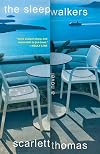
This novel consists as a bundle of papers collected at a boutique hotel on a Greek island. The first section is a letter, written by Evelyn to her husband, Richard, on their honeymoon. In it, she explains why she is leaving him, going back through their relationship, but with the most detail on the events of the past days. It's compelling--and sets the reader up for a she said/he said dissection of a relationship, an impression enforced by the second section beginning with a letter written show more by Richard about their relationship, but that's not what Thomas is doing here, or not all that she is doing here. There's also the hotel owner, about whom the couple react to strongly, but very differently. In this novel, what is happening is happening, but so is a lot of other things, events and perspectives on the same events.
Thomas is a skilled writer and she's managed to pull off a novel that begins as one thing and ends as another. It's best to go into this novel knowing as little as possible about it. All I will say is that the novel is both a portrayal of the sexual dynamics between a newly married couple and something else entirely. show less
Thomas is a skilled writer and she's managed to pull off a novel that begins as one thing and ends as another. It's best to go into this novel knowing as little as possible about it. All I will say is that the novel is both a portrayal of the sexual dynamics between a newly married couple and something else entirely. show less
I would suggest that anyone reading this book will come away with strong views on what the author was trying to do with this novel, and I’m sure many of us will be wrong, or will have only identified a few of the things Thomas was attempting, or will have spotted things in the book that Thomas never knew were there. It is a book with many layers, angles, concepts and convolutions, and as such is open to multiple interpretations.
Let’s start with the literary elements. Firstly, the show more protagonist, Meg, is an author with delusions of literary grandeur. She keeps body and soul together by writing Science Fiction novels and giving writing retreats to people who wish to write as ghost-writers for a series her publisher, Orb Books (amazingly close to Orbit), promotes in the name of a non-existent author. Apart from a £1,000 advance she received several years ago for her literary novel, which she has never managed to write, all her income is derived from her Science Fiction writing and the writers’ retreats she runs.
Despite her all but total financial dependency on Science Fiction she is a literary snob who looks down on genre fiction, even to the extent that when someone speaks to her about taking up the TV rights for some of her novels she queries whether or not the programmes could be made and no mention of her name be involved lest she be associated with Science Fiction.
The book shares an attribute with many of the older Science Fiction novels, which is often highlighted by critics as a deficiency; it is the info-dump; the dialogue between characters which is used to explain the science or other technical details. In Our Tragic Universe the info-dump is used to explain some literary theory which is critical to the story, such as the concept of a story-less story.
Scarlett Thomas has, whether intentionally or not, emulated Brecht’s approach to drama. He wanted the play goer to be always aware of the play being a play, and used techniques like having the Stage Manager working visibly on stage. Thomas has presented the reader with literary theory about the structure of novels while telling the story and letting the reader see the structure of the novel theoretically while reading it.
Apart from the literary contortions, Thomas treats us to a glimpse into the lives of people in a sleepy part of England where we find people who have, in many cases, pretentions well above their income, or for whom money doesn’t appear to be difficult to come by. Into this world of retirees, craft-shop proprietors, wineshop owners, and academics, we add a few infidelities and arguments over the value of various literary viewpoints, and we have people pondering the value of the relationships they have been in for many years and looking at their options.
I enjoyed reading this book. I’m sure I have merely scraped the surface of what the author put into it, but it was entertaining and gave me a few interesting pointers in relation to literary theory that I intend following up.
While I did not find Our Tragic Universe a book I would recommend to everyone it was sufficiently entertaining that I will be happy to soon read the other Scarlett Thomas novel in my library, The End of Mr. Y.
I think Our Tragic Universe would be a great book for a reading group to use for one of their reads. It will certainly provide much to talk about. show less
Let’s start with the literary elements. Firstly, the show more protagonist, Meg, is an author with delusions of literary grandeur. She keeps body and soul together by writing Science Fiction novels and giving writing retreats to people who wish to write as ghost-writers for a series her publisher, Orb Books (amazingly close to Orbit), promotes in the name of a non-existent author. Apart from a £1,000 advance she received several years ago for her literary novel, which she has never managed to write, all her income is derived from her Science Fiction writing and the writers’ retreats she runs.
Despite her all but total financial dependency on Science Fiction she is a literary snob who looks down on genre fiction, even to the extent that when someone speaks to her about taking up the TV rights for some of her novels she queries whether or not the programmes could be made and no mention of her name be involved lest she be associated with Science Fiction.
The book shares an attribute with many of the older Science Fiction novels, which is often highlighted by critics as a deficiency; it is the info-dump; the dialogue between characters which is used to explain the science or other technical details. In Our Tragic Universe the info-dump is used to explain some literary theory which is critical to the story, such as the concept of a story-less story.
Scarlett Thomas has, whether intentionally or not, emulated Brecht’s approach to drama. He wanted the play goer to be always aware of the play being a play, and used techniques like having the Stage Manager working visibly on stage. Thomas has presented the reader with literary theory about the structure of novels while telling the story and letting the reader see the structure of the novel theoretically while reading it.
Apart from the literary contortions, Thomas treats us to a glimpse into the lives of people in a sleepy part of England where we find people who have, in many cases, pretentions well above their income, or for whom money doesn’t appear to be difficult to come by. Into this world of retirees, craft-shop proprietors, wineshop owners, and academics, we add a few infidelities and arguments over the value of various literary viewpoints, and we have people pondering the value of the relationships they have been in for many years and looking at their options.
I enjoyed reading this book. I’m sure I have merely scraped the surface of what the author put into it, but it was entertaining and gave me a few interesting pointers in relation to literary theory that I intend following up.
While I did not find Our Tragic Universe a book I would recommend to everyone it was sufficiently entertaining that I will be happy to soon read the other Scarlett Thomas novel in my library, The End of Mr. Y.
I think Our Tragic Universe would be a great book for a reading group to use for one of their reads. It will certainly provide much to talk about. show less
 This review was written for LibraryThing Early Reviewers.
A strange, beautifully written, "What am I reading?" book.
A sort of modern-day "Picnic At Hanging Rock" but with eating disorders, trendy-but-hollow therapists and social media.
To enjoy "Oligarchy" I had to repress my urge to tag and classify, set aside the trope library that was unlocked by a blurb that spoke of the daughter of a Russian oligarch arriving at an English all-girl boarding school and then having one of her new friends "mysteriously vanish". The tropes were irrelevant and show more distracting. The blurb was inaccurate and perhaps deliberately misleading.
Fortunately, I found Scarlett Thomas' writing style and her narration compelling. My curiosity was charmed out of its basked like a cobra in thrawl to a flute.
At the half-way mark, I still had no firm grasp of what the book was about although by then I knew the things it wasn't: a thriller or a mystery or a typical coming-of-age at school story. I didn't mind this. The book felt like being in a dream. The thrust of the narrative came not from "then this happened" but from the evolving perceptions of a fifteen-year-old girl who is bright but whose grasp of the world is slight and semi-magical.
"Oligarchy", is a story about how the malleability of inchoate young girls can be exploited by a powerful few to shape them, figuratively and physically. It's a dark, often unpleasant story, soaked in the hormones and ignorance and group pressure that pervade this third-rate private school, where the lives of the girls are shaped by arbitrary rules and punishments and governed by the shadowy agendas of fathers and headmasters.
The story is told through the eyes of Natasha, a credible fifteen-year-old girl, who has been plucked from poverty in Russia by har newly-discovered oligarch father and dropped into a private school where she is supposed to become someone new.
I was impressed at how authentically adolescent Natasha's point of view was. Sometimes she understands things she should not. Sometimes she surrenders to ideas and behaviours that she knows are fake or wrong. She is always trying to plan who she should be and how she should fit in but often lacks the knowledge or experience to plan well. Natasha's analysis of the world, like those of the girls around her, is a pungent blend of fact, fantasy and magical thinking that heightens their awareness while keeping them vulnerable.
The private school is repulsive, a monument to decay, neglect and meaningless traditions. It is, in part, a metaphor for how those with power over them see the girls: as things to be sequestered, controlled and shaped rather than protected, developed and loved.
The relationship between the girls and food dominates the book. They obsess about diets, adopting them as a collective, collaborative ritual, design to keep them safe by making them desirable. There is a lot about eating disorders; w they manifest, how their caused by a pressure to be perfect and sustained through a social media culture on Instagram and Youtube that elevates anorexia as "Thinspiration".
This is disturbing in its own right but it is made more so by the veneer of concern and the faux science of the anti-anorexia campaigns the school launches. The trendy-five-years-ago-but-still-unchanged therapists are some of the most repugnant adults in the book.
All of this is set against a background of darker threats from the adult world: unexplained deaths in the school that the girls are forbidden to discuss, the odd agenda of the teachers and the headmaster and the shadowy activities of the Russian oligarchs in "Londongrad".
Oddly, the person who treats Natasha with the most compassion is her aunt, a solitary, body-conscious woman running her own cyber-security/hacking business. Her advice to Natasha is mainly always to ensure that she has more than one path available to her.
This is a book of experiences as well as ideas. It's not a comfortable read but it is a fascinating one. show less
A sort of modern-day "Picnic At Hanging Rock" but with eating disorders, trendy-but-hollow therapists and social media.
To enjoy "Oligarchy" I had to repress my urge to tag and classify, set aside the trope library that was unlocked by a blurb that spoke of the daughter of a Russian oligarch arriving at an English all-girl boarding school and then having one of her new friends "mysteriously vanish". The tropes were irrelevant and show more distracting. The blurb was inaccurate and perhaps deliberately misleading.
Fortunately, I found Scarlett Thomas' writing style and her narration compelling. My curiosity was charmed out of its basked like a cobra in thrawl to a flute.
At the half-way mark, I still had no firm grasp of what the book was about although by then I knew the things it wasn't: a thriller or a mystery or a typical coming-of-age at school story. I didn't mind this. The book felt like being in a dream. The thrust of the narrative came not from "then this happened" but from the evolving perceptions of a fifteen-year-old girl who is bright but whose grasp of the world is slight and semi-magical.
"Oligarchy", is a story about how the malleability of inchoate young girls can be exploited by a powerful few to shape them, figuratively and physically. It's a dark, often unpleasant story, soaked in the hormones and ignorance and group pressure that pervade this third-rate private school, where the lives of the girls are shaped by arbitrary rules and punishments and governed by the shadowy agendas of fathers and headmasters.
The story is told through the eyes of Natasha, a credible fifteen-year-old girl, who has been plucked from poverty in Russia by har newly-discovered oligarch father and dropped into a private school where she is supposed to become someone new.
I was impressed at how authentically adolescent Natasha's point of view was. Sometimes she understands things she should not. Sometimes she surrenders to ideas and behaviours that she knows are fake or wrong. She is always trying to plan who she should be and how she should fit in but often lacks the knowledge or experience to plan well. Natasha's analysis of the world, like those of the girls around her, is a pungent blend of fact, fantasy and magical thinking that heightens their awareness while keeping them vulnerable.
The private school is repulsive, a monument to decay, neglect and meaningless traditions. It is, in part, a metaphor for how those with power over them see the girls: as things to be sequestered, controlled and shaped rather than protected, developed and loved.
The relationship between the girls and food dominates the book. They obsess about diets, adopting them as a collective, collaborative ritual, design to keep them safe by making them desirable. There is a lot about eating disorders; w they manifest, how their caused by a pressure to be perfect and sustained through a social media culture on Instagram and Youtube that elevates anorexia as "Thinspiration".
This is disturbing in its own right but it is made more so by the veneer of concern and the faux science of the anti-anorexia campaigns the school launches. The trendy-five-years-ago-but-still-unchanged therapists are some of the most repugnant adults in the book.
All of this is set against a background of darker threats from the adult world: unexplained deaths in the school that the girls are forbidden to discuss, the odd agenda of the teachers and the headmaster and the shadowy activities of the Russian oligarchs in "Londongrad".
Oddly, the person who treats Natasha with the most compassion is her aunt, a solitary, body-conscious woman running her own cyber-security/hacking business. Her advice to Natasha is mainly always to ensure that she has more than one path available to her.
This is a book of experiences as well as ideas. It's not a comfortable read but it is a fascinating one. show less
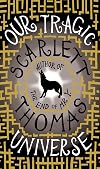
Okay, so the blurb sounded good. The picture was interesting. The cover called the author "a master of illusion". All of that was misleading. What sounded like a mysterious and fun romp was actually a slow moving, rambling, disjointed mess of Gen-X angst. The characters were all embroiled in messes of their own making, and whined a great deal, while insisting that they weren't going to do things they didn't like or want to do, and not doing any of the things they did like or want to do. show more There was not one sympathetic character (except the dog), and the pretentious prattling really doesn't belong in fiction (or much of anywhere else). The main redeeming thing about this book is the refusal of the protagonist (an author who spends most of her day slouching around life, sits and writes for minutes at a time, then deletes almost all of what she writes and moans because she can't finish her novel) to buy into the ridiculous ideas being proposed by most of the other characters. Myriad plot lines are introduced for about three pages, and then just sort of drift off. If the goal of the author is to do what her protagonist wants to do and write a storyless story, she has failed. There is a story here - it just isn't a good one. Selfish, indulgent, pretentious, and boring. show less
Lists
At the Library (1)
A Novel Cure (1)
Awards


You May Also Like


Associated Authors
Statistics
- Works
- 23
- Also by
- 5
- Members
- 6,266
- Popularity
- #3,913
- Rating
- 3.6
- Reviews
- 285
- ISBNs
- 221
- Languages
- 15
- Favorited
- 32

