
Jasper Fforde
Author of The Eyre Affair
About the Author
He worked for many years in the film industry as a camera technician. He was raised in England, he lives & works in Wales. (Publisher Provided) Author Jasper Fforde was born on January 11, 1961 in London, England. He spent numerous years as a focus puller in the film industry, where he worked on show more films such as Quills, Golden Eye, and Entrapment. His first novel, The Eyre Affair, was published in 2001. He is the author of the Thursday Next, Nursery Crime and Dragonslayer series and the novel Shades of Gray. In 2004, he won the Wodehouse Prize for comic fiction for The Well of Lost Plots. In 2013, his title The Last Dragonslayer made The New York Times best seller list. (Bowker Author Biography) show less
Series
Works by Jasper Fforde
Shades of Grey: The Gordini Protocols 57 copies
Shades of Grey: Painting by Numbers 53 copies
The Thursday Next Collection 1-3: The Eyre Affair, Lost in a Good Book, The Well of Lost Plots (Thursday Next Books) (2013) 26 copies, 1 review
[Undetermined Books] 11 copies
The Button Guy [short story] 4 copies
Shuttle [short story] 1 copy
Associated Works
Tagged
Common Knowledge
- Birthdate
- 1961-01-11
- Gender
- male
- Education
- Dartington Hall School
- Occupations
- writer
- Awards and honors
- Waterstones 25 Authors for the Future (2007)
- Agent
- Will Francis (Janklow & Nesbit Associates)
- Relationships
- Fforde, Desmond (cousin)
Fforde, Katie (cousin-in-law) - Nationality
- UK
- Birthplace
- London, Middlesex, England, UK
- Places of residence
- London, Middlesex, England, UK
Wales, UK - Map Location
- England, UK
Members
Discussions
Nora's Jasper Fforde reread/catch up in Fforde Ffans (January 31)
Red Side Story - February 6th 2024 in Fforde Ffans (June 2024)
The Woman Who Died a Lot in Fforde Ffans (February 2013)
Shades of Grey in Fforde Ffans (March 2012)
Fforde Ffebruary general discussion thread in The 12 in 12 Category Challenge (February 2012)
One of Our Thursdays is Missing in Fforde Ffans (July 2011)
The Fourth Bear in Fforde Ffans (June 2011)
One of Our Thursdays is Missing by Jasper Fforde (reviewed by readafew) in Reviews reviewed (April 2011)
***Group Read: The Eyre Affair in 75 Books Challenge for 2010 (December 2010)
Book Discussion: The Eyre Affair ~CAUTION ~ Contains SPOILERS in The Green Dragon (May 2010)
Book Discussion: The Eyre Affair - SPOILER FREE Thread in The Green Dragon (March 2009)
First Among Sequels Discussion Thread in Fforde Ffans (September 2008)
Did you read [Jane Eyre] before or after [The Eyre Affair]? in Fforde Ffans (May 2008)
TN First Among Sequels: Hardcover or Paperback? in Fforde Ffans (November 2007)
Summary of "First Among Sequels" in Fforde Ffans (April 2007)
Reviews
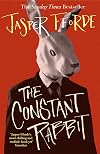
Fforde, Jasper. The Constant Rabbit. Viking, 2020.
In The Constant Rabbit, a standalone novel, Jasper Fforde employs a gimmick like the one he used in the Nursery Crimes novels. Here the uplift trope has a darker, sharper satirical edge. In 1965, all the rabbits, foxes, and weasels in the UK magically become uplifted into sentient bipeds of human size or a little larger. (Think Jimmy Stewart’s drinking buddy, Harvey, and you won’t be far off.” They suffer all the travails of a new show more immigrant culture. Humans treat them with a wide range of hypocrisy and prejudices based on species and social class. Hate groups like “TwoLegsGood” harass them. Fascist laws are passed to prevent such crimes as burrowing, and the government plans a massive involuntary relocation project called the “Rehoming.” Our protagonist is a librarian who becomes a “spotter” for a special police squad to control rabbit crime. He lives in a middle-class neighborhood that is thrown into turmoil when a rabbit family moves in next door. The novel is by turns hilarious, scary, and moving. The world of the novel is wonderfully detailed and consistent, and its satirical purpose is always clear. As one character explains, “Perhaps that’s what satire does—not change things wholesale but nudge the collective consciousness in s direction that favors justice and equality” (“Bouncing with Constance"). Indeed, 4 stars. show less
In The Constant Rabbit, a standalone novel, Jasper Fforde employs a gimmick like the one he used in the Nursery Crimes novels. Here the uplift trope has a darker, sharper satirical edge. In 1965, all the rabbits, foxes, and weasels in the UK magically become uplifted into sentient bipeds of human size or a little larger. (Think Jimmy Stewart’s drinking buddy, Harvey, and you won’t be far off.” They suffer all the travails of a new show more immigrant culture. Humans treat them with a wide range of hypocrisy and prejudices based on species and social class. Hate groups like “TwoLegsGood” harass them. Fascist laws are passed to prevent such crimes as burrowing, and the government plans a massive involuntary relocation project called the “Rehoming.” Our protagonist is a librarian who becomes a “spotter” for a special police squad to control rabbit crime. He lives in a middle-class neighborhood that is thrown into turmoil when a rabbit family moves in next door. The novel is by turns hilarious, scary, and moving. The world of the novel is wonderfully detailed and consistent, and its satirical purpose is always clear. As one character explains, “Perhaps that’s what satire does—not change things wholesale but nudge the collective consciousness in s direction that favors justice and equality” (“Bouncing with Constance"). Indeed, 4 stars. show less
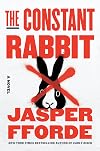
I've been a fan of Jasper Fforde's works for many years and there are some things I've come to expect. 1) Elements of the fantastical in an otherwise ordinary world and 2) the characters in the story live under autocratic world in a dystopia. The fantastical element of this book is that an unexplained event caused rabbits to take on human forms. The dystopia is that the British government has fallen under control of rightwing extremists who use fear to discriminate against the show more anthropomorphized rabbits. The dystopia is in effect the Britain of UKIP and Brexit (or the United States of Tea Party and Trump) and the metaphor isn't even slightly nuanced.
The story is told from the perspective of Peter Knox, a human who is especially skilled in distinguish among rabbits and thus works as a Spotter for a draconian government organization Rabbit Compliance Taskforce. Knox represents the the liberal person who is sympathetic to the cause of the oppressed but doesn't want to get involved. In the novel, a rabbit family moves in next door to Knox including Constance, a rabbit Knox was acquainted with in college to whom he maintains an attraction. Over the course of the novel Knox is drawn into the rabbit resistance at the same time the government advances its plan to suppress the rabbits once and for all.
What I love about Fforde's novels is that when he creates an alternate universe he always dives in deep into the detail about how the universe works. The universe of anthropomorphic rabbits is no exception. Fforde does a great job creating the culture and everyday life of the rabbit world that seems true to their species and their magical transformation. I particularly like a scene late in the novel when a rabbit lawyer is able to find loopholes in case against Knox in order to have the charges dropped.
This may not be my favorite Fforde novel but it is still a very good one. And if heavy-handed analogies to current events are not your thing, be warned that this book is full of them. But I believe it still works as an effective commentary and satire.
Favorite Passages:
The story is told from the perspective of Peter Knox, a human who is especially skilled in distinguish among rabbits and thus works as a Spotter for a draconian government organization Rabbit Compliance Taskforce. Knox represents the the liberal person who is sympathetic to the cause of the oppressed but doesn't want to get involved. In the novel, a rabbit family moves in next door to Knox including Constance, a rabbit Knox was acquainted with in college to whom he maintains an attraction. Over the course of the novel Knox is drawn into the rabbit resistance at the same time the government advances its plan to suppress the rabbits once and for all.
What I love about Fforde's novels is that when he creates an alternate universe he always dives in deep into the detail about how the universe works. The universe of anthropomorphic rabbits is no exception. Fforde does a great job creating the culture and everyday life of the rabbit world that seems true to their species and their magical transformation. I particularly like a scene late in the novel when a rabbit lawyer is able to find loopholes in case against Knox in order to have the charges dropped.
This may not be my favorite Fforde novel but it is still a very good one. And if heavy-handed analogies to current events are not your thing, be warned that this book is full of them. But I believe it still works as an effective commentary and satire.
Favorite Passages:
Somebody once said that the library is actually the dominant life form on the planet. Humans simply exist as the reproductive means to achieve more libraries.show less
‘I fully appreciate what you’re saying, Peter,’ he said, which was Mallett shorthand for ‘I would utterly reject what you’re saying if I were listening, which I’m not’, ‘and all I want to do is raise awareness,’ which was, again, Mr Mallett’s shorthand for ‘I think I’ll stir up a whole heap of trouble and hope that in the ensuing scrum I’ll get what I want but not be held accountable for it’. He went on: ‘We must remain utterly vigilant at all times, and I’ll be honest, Peter, I didn’t have you pegged as a friend to rabbits.’
‘And don’t say you’re not personally responsible,’ continued Mr Ffoxe, ‘because you are. Your tacit support of the status quo is proof of your complicity, your shrugging indifference a favourable vote in support of keeping things exactly as they are. I’m not the murderer, Knox, you are – you and all your pathetic little naked primate cousins with their silly hairstyles and gangly limbs and overdeveloped sense of entitlement and self-serving delusion.’
While most humans are wired to be reasonably decent, a few are wired to be utter shits – and they do tend to tip the balance.’
‘Perhaps that’s what satire does – not change things wholesale but nudge the collective consciousness in a direction that favours justice and equality.
The bears in Oregon generally kept to themselves, but had recently been given Second Amendment rights, so were legally allowed to shoot hunters in self-defence – and did so quite frequently, much to the annoyance of hunters, who considered it ‘manifestly unfair’ because the bears, now suitably armed, were actually better hunters than they were.
The way we see it, London is just one massive money-laundering scheme attached to an impressive public transport system and a few museums, of which even the most honest has more stolen goods than a lock-up garage in Worcester rented by a guy I know called Chalky.’
‘Humans have a very clear idea about how to behave, and on many occasions actually do. But it’s sometimes disheartening that correct action is drowned out by endless chitter-chatter, designed not to find a way forward but to justify petty jealousies and illogically held prejudices. If you’re going to talk, try to make it relevant, useful and progressive rather than simply distracting and time-wasting nonsense, intended only to justify the untenable and postpone the real dialogue that needs to happen.’

No one writes like Jasper Fforde. He has the ability to take the absurd & present it in a way that his version of an alternate society seems completely normal. So when you open this book & find yourself in an England where the neighbours are 6 ft. talking rabbits, you merely shrug & think “Oh, right. Forgot that happened.”
That would be the Spontaneous Anthropomorphic Event, an unexplained aligning of elements that resulted in walking/talking rabbits joining society (along with a few show more other small mammals but please don’t mention the bees). Sure, there are small differences. They tend to settle disputes with duels & have a thing for dandelion brandy (“the diabolical 3-way love child of methanol, crack cocaine & U-Boat fuel”)
The MC & narrator is Peter Knox, a (human) single dad who works for the Rabbit Compliance Taskforce. Although the bunnies are technically integrated, they are subject to slightly different rules. Most live “within the fence”, approved colonies with restricted movement. But some live in town. Peter is one of the few who can actually tell them apart & it’s his job to identify any who have broken laws.
By now, this set-up should have you thinking about real life historical parallels. Now lets add in a prime minister with a secret agenda to transport all rabbits to a government facility in Wales. It’s called the Mega-Warren & PM Nigel Smethwick publicly promotes it as a wonderful place for the furballs to socialize & feel safe. But his party (UK Anti-rabbit Party or UKARP) are avid supporters of segregation. His character is portrayed as a hilariously inept idiot surrounded by henchmen & scary PR people.
Peter’s trouble begins when he bumps into Connie, a stunning bunny he knew in university. His old crush is alive & well & as he gets swept up in her life, he’ll be forced to choose sides as tensions rise.
It’s an entertaining story that can be enjoyed on a couple of levels. On the surface it’s fun, witty satire. Fforde loads it with great characters, ridiculous government acronyms & plenty of that painfully polite British gift for understatement that borders on subversive. But if you look a little deeper, there are thinly veiled jabs at issues that sadly, are prevalent in real life. Fake news, racism, xenophobia & the need for those in power to portray anyone who thinks or looks differently as being “other”.
Dialogue is dryly funny & there are many comic moments that make this a great read, especially during a time when we could all use a good laugh. If you enjoy this, I highly recommend his series featuring Thursday Next, Literary Detective extraordinaire. show less
That would be the Spontaneous Anthropomorphic Event, an unexplained aligning of elements that resulted in walking/talking rabbits joining society (along with a few show more other small mammals but please don’t mention the bees). Sure, there are small differences. They tend to settle disputes with duels & have a thing for dandelion brandy (“the diabolical 3-way love child of methanol, crack cocaine & U-Boat fuel”)
The MC & narrator is Peter Knox, a (human) single dad who works for the Rabbit Compliance Taskforce. Although the bunnies are technically integrated, they are subject to slightly different rules. Most live “within the fence”, approved colonies with restricted movement. But some live in town. Peter is one of the few who can actually tell them apart & it’s his job to identify any who have broken laws.
By now, this set-up should have you thinking about real life historical parallels. Now lets add in a prime minister with a secret agenda to transport all rabbits to a government facility in Wales. It’s called the Mega-Warren & PM Nigel Smethwick publicly promotes it as a wonderful place for the furballs to socialize & feel safe. But his party (UK Anti-rabbit Party or UKARP) are avid supporters of segregation. His character is portrayed as a hilariously inept idiot surrounded by henchmen & scary PR people.
Peter’s trouble begins when he bumps into Connie, a stunning bunny he knew in university. His old crush is alive & well & as he gets swept up in her life, he’ll be forced to choose sides as tensions rise.
It’s an entertaining story that can be enjoyed on a couple of levels. On the surface it’s fun, witty satire. Fforde loads it with great characters, ridiculous government acronyms & plenty of that painfully polite British gift for understatement that borders on subversive. But if you look a little deeper, there are thinly veiled jabs at issues that sadly, are prevalent in real life. Fake news, racism, xenophobia & the need for those in power to portray anyone who thinks or looks differently as being “other”.
Dialogue is dryly funny & there are many comic moments that make this a great read, especially during a time when we could all use a good laugh. If you enjoy this, I highly recommend his series featuring Thursday Next, Literary Detective extraordinaire. show less

Eddie Russett travels with his chromaticologist father (a doctor who treats patients by showing them swatches of particular colors) across the country to East Carmine, a semi-rural village where things are a bit weirder than Eddie is used to. He’s left behind his rich almost-half-fiancée Constance Oxblood but is confident he can earn some merits and do well on his eyesight exam and return to her. Throwing a wrench into his plans is Jane, a grey who can hardly see any color, who is show more beautiful, rebellious, and a stone-cold bitch (whom Eddie immediately falls in love with). Eddie gets wrapped up in the schemes of these people who don’t always follow the color hierarchy the way they’re supposed to. The high-color prefects are horribly corrupt, and the greys are smart and have rich (figuratively) lives, nothing really makes any sense, and the scales start to fall from his eyes. He can’t decide whether to go back to his old life or forge a new path outside of the color wheel, until he visits the abandoned city of High Saffron and learns things he can’t unknow.
This is almost a perfect, poignant dystopian story about authoritarianism, disability rights, and how fascists use complex social hierarchies to distract people from rising up against them, but it’s too chaotic and absurd for that. And yet, the chaos and absurdity somehow make it better than perfect. Nothing maps perfectly onto our world, nor any of the things that influence it, like the board game Risk or Albert Munsell (not really a horrible despot, as far as I can tell!). Everything is absurd, without real logic, and therefore there can be no gaps in logic.
My favorite absurdities:
-looking at a certain color green gets you high
-spoons are precious because they were left off the list of goods to manufacture
-librarians are deeply valued, but books keep getting banned to the point that there are more librarians than books
-for entertainment everyone listens to people tapping gossip or stories on the radiator pipes in morse code
I only have the smallest quibble with the story, which is the sense of time. The whole book takes place over 4 days, and several times there are 4 or 5 dramatic events in a row, and then everyone eats lunch. But the absurdity fills in all logic holes - maybe days in this world are much longer than ours?
Is this my favorite book ever? It might be. It just really tickles me in all the right ways. show less
This is almost a perfect, poignant dystopian story about authoritarianism, disability rights, and how fascists use complex social hierarchies to distract people from rising up against them, but it’s too chaotic and absurd for that. And yet, the chaos and absurdity somehow make it better than perfect. Nothing maps perfectly onto our world, nor any of the things that influence it, like the board game Risk or Albert Munsell (not really a horrible despot, as far as I can tell!). Everything is absurd, without real logic, and therefore there can be no gaps in logic.
My favorite absurdities:
-looking at a certain color green gets you high
-spoons are precious because they were left off the list of goods to manufacture
-librarians are deeply valued, but books keep getting banned to the point that there are more librarians than books
-for entertainment everyone listens to people tapping gossip or stories on the radiator pipes in morse code
I only have the smallest quibble with the story, which is the sense of time. The whole book takes place over 4 days, and several times there are 4 or 5 dramatic events in a row, and then everyone eats lunch. But the absurdity fills in all logic holes - maybe days in this world are much longer than ours?
Is this my favorite book ever? It might be. It just really tickles me in all the right ways. show less
Lists
Magic Realism (1)
Best Satire (1)
At the Library (1)
Book Hoppers (1)
Best Dystopias (1)
Best Audiobooks (1)
Books About Boys (1)
First Novels (1)
Food Fiction (1)
Favorite Series (1)
Great Audiobooks (1)
Page Turners (1)
Ambleside Books (1)
Metafiction (3)
Carole's List (3)
Unread books (3)
Funny Books (5)
al.vick-series (2)
Parallel Novels (1)
Murder Mysteries (1)
Overdue Podcast (1)
Favourite Books (2)
To Read (2)
Awards


You May Also Like


Associated Authors
Statistics
- Works
- 39
- Also by
- 4
- Members
- 74,788
- Popularity
- #169
- Rating
- 4.0
- Reviews
- 2,621
- ISBNs
- 494
- Languages
- 16
- Favorited
- 693


