
Nick Harkaway
Author of The Gone-Away World
About the Author
Series
Works by Nick Harkaway
The Taper Man 1 copy
Associated Works
The Year's Best Science Fiction: Thirty-Third Annual Collection (2016) — Contributor — 190 copies, 2 reviews
The Hitchhiker's Guide to the Galaxy: The Nearly Definitive Edition (2014) — some editions — 97 copies
Solaris Rising 2: The New Solaris Book of Science Fiction (2013) — Contributor — 75 copies, 6 reviews
Sunspot Jungle: Volume Two: The Ever Expanding Universe of Fantasy and Science Fiction (2018) — Contributor — 22 copies
Tagged
Common Knowledge
- Legal name
- Cornwell, Nicholas
- Other names
- Harkaway, Nick (pseudonym)
Truhen, Aidan (pseudonym)
Cornwell, Nick - Birthdate
- 1972
- Gender
- male
- Education
- University of Cambridge (Clare College)
University College School, London, England, UK - Occupations
- novelist
- Awards and honors
- Guest of Honour, Phoenix Convention 7 (2010)
- Agent
- Patrick Walsh
- Relationships
- Le Carré, John (father)
- Nationality
- UK
- Birthplace
- Cornwall, England, UK
- Places of residence
- Cornwall, England, UK
London, England, UK - Associated Place (for map)
- England, UK
Members
Reviews

What style! An archetype of noir fiction. A cynical smart-ass P.I., a woman (a couple of them, actually), the seamy underbelly of the city, the rich, powerful, and untouchable—this novel has them all, in a science fictional setting. OK, the P.I.’s heart of gold maybe gleams in the light a little more than it would in a perfect noir, but that’s OK by me. It’s a satisfying mystery that depends on the SFnal plot device, so it’s neither gratuitously SFnal nor gratuitously noir.
I loved show more the writing:
I loved show more the writing:
“There’s something in my throat. Figure it must be rage.show less
“Maurice looks back at me through narrow eyes. He’s full of the same thing, viscous and violent. There’s a lot of fight hormones in this room. A lot of inhalable bad decisions.”
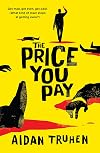
Unsuspecting apartment dweller Jack Price is descending in the elevator when it stops unexpectedly just one floor below his. The doors open and he discovers a multitude of policemen milling around. The little old lady who lives downstairs has been murdered, execution style.
This sets Jack to wondering what the fuck is going on? (First trigger warning; Jack’s language is not that of a Sunday school teacher) “Why would anyone want to murder Didi? How did this happen just the floor below me show more without my knowing? Did they make a mistake and was it me they were after?”
Jack wants answers. You see, Jack is not snow-white when it comes to matters legal. He is discreet but not snow-white. He wonders if this is something to do with his less than legitimate business dealings. Is someone sending him a message? Is someone pissing in his pond? Does he need to take action?
Jack’s asking questions leads to consequences and consequences lead to further consequences. “The Price You Pay” is a murder mystery, an adventure thriller, a raging rampage which builds a respectable body-count. Be warned, this is not a cozy-crime novel; it is a wild adventure that I found very entertaining. I saw a review that described it as “Tarantino on steroids”. I would find it difficult to argue with that.
This is a story that exemplifies, and even paraphrases the saying, “Everyone is a hero in their own story.” The story is about respect, losing face, and fairness.
I have pondered on occasion how Frederick Forsythe’s professional assassin in “The Day of The Jackal” could carry on his business and source the tools of his trade if he were travelling in the modern world of security checks at airports and other methods of surveillance and counter-terrorism measures. Truhen indicates how the Internet and the gig-economy could facilitate such work. Some scary ideas of how today’s mobile, e-commerce, App-enabled world could be abused to facilitate illegal actions with little or no chance of being detected are described.
I thoroughly enjoyed this book and will be reading any further books produced by Aidan Truhen. The book is not for the squeamish but it is a roller-coaster ride with the brakes off. show less
This sets Jack to wondering what the fuck is going on? (First trigger warning; Jack’s language is not that of a Sunday school teacher) “Why would anyone want to murder Didi? How did this happen just the floor below me show more without my knowing? Did they make a mistake and was it me they were after?”
Jack wants answers. You see, Jack is not snow-white when it comes to matters legal. He is discreet but not snow-white. He wonders if this is something to do with his less than legitimate business dealings. Is someone sending him a message? Is someone pissing in his pond? Does he need to take action?
Jack’s asking questions leads to consequences and consequences lead to further consequences. “The Price You Pay” is a murder mystery, an adventure thriller, a raging rampage which builds a respectable body-count. Be warned, this is not a cozy-crime novel; it is a wild adventure that I found very entertaining. I saw a review that described it as “Tarantino on steroids”. I would find it difficult to argue with that.
This is a story that exemplifies, and even paraphrases the saying, “Everyone is a hero in their own story.” The story is about respect, losing face, and fairness.
I have pondered on occasion how Frederick Forsythe’s professional assassin in “The Day of The Jackal” could carry on his business and source the tools of his trade if he were travelling in the modern world of security checks at airports and other methods of surveillance and counter-terrorism measures. Truhen indicates how the Internet and the gig-economy could facilitate such work. Some scary ideas of how today’s mobile, e-commerce, App-enabled world could be abused to facilitate illegal actions with little or no chance of being detected are described.
I thoroughly enjoyed this book and will be reading any further books produced by Aidan Truhen. The book is not for the squeamish but it is a roller-coaster ride with the brakes off. show less

The Blind Giant is Nick Harkaway’s first non-fiction book and it is one of the most thought provoking books I have ever read. As its title suggests it deals with the impact of digital technology on humans, both as individuals and groups of all sizes, couples, families, communities, nations, and beyond. It also discusses the choices open to us and makes the point that we are not innocents adrift in a sea of technology, but that we are complicit in the negative consequences of everything we show more allow to happen. This includes wars in Africa where armed groups clash for control of the mines producing minerals that are essential for the production of virtually all the mobile devices we take for granted in our everyday lives.
But this is no cold treatise containing a lifeless analysis of the mechanics of how modern technology, specifically the Internet, affects us all. It is a hearth-side conversation, probably with a pint of ale to hand, ranging in subject matter from the immediacy of on-line shopping to the toppling of governments in the Middle East.
The book is very up-to-date with inclusion of the social issues surrounding the London riots of 2011 and the Arab Spring that swept away governments in the Middle East, and the role played by the Internet in facilitating both the initiation of these events and the subsequent recovery and stabilization.
Harkaway is inviting debate. In his conversational style he lays out his views and concerns on the disappearance of traditional work rolls and the unintentional consequences of the large, new corporations of the digital age that promote good intentions but, due to their size and reliance on old financial structures, end up doing damage they never intended.
A website has been provided (www.blindgiant.co.uk) for readers to enter into a conversation on the subject matter of each chapter. This is an example of the new immediacy Harkaway demonstrates the Internet has enabled. It is an attempt to encourage debate on the decisions we need to make to minimise the unintentional consequences of not making conscious decisions on how we wish to use the new Internet technology.
This book’s breadth of scope is vast and it deserves to be read, considered, and responded to. If you use the Internet, if you have a smart phone, if you buy things on-line, you have a duty to read this book and enter into the debate on how society should use our new toys so that they don’t destroy the lives of those around us, and then our own. show less
But this is no cold treatise containing a lifeless analysis of the mechanics of how modern technology, specifically the Internet, affects us all. It is a hearth-side conversation, probably with a pint of ale to hand, ranging in subject matter from the immediacy of on-line shopping to the toppling of governments in the Middle East.
The book is very up-to-date with inclusion of the social issues surrounding the London riots of 2011 and the Arab Spring that swept away governments in the Middle East, and the role played by the Internet in facilitating both the initiation of these events and the subsequent recovery and stabilization.
Harkaway is inviting debate. In his conversational style he lays out his views and concerns on the disappearance of traditional work rolls and the unintentional consequences of the large, new corporations of the digital age that promote good intentions but, due to their size and reliance on old financial structures, end up doing damage they never intended.
A website has been provided (www.blindgiant.co.uk) for readers to enter into a conversation on the subject matter of each chapter. This is an example of the new immediacy Harkaway demonstrates the Internet has enabled. It is an attempt to encourage debate on the decisions we need to make to minimise the unintentional consequences of not making conscious decisions on how we wish to use the new Internet technology.
This book’s breadth of scope is vast and it deserves to be read, considered, and responded to. If you use the Internet, if you have a smart phone, if you buy things on-line, you have a duty to read this book and enter into the debate on how society should use our new toys so that they don’t destroy the lives of those around us, and then our own. show less
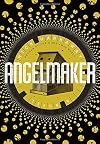
I opened Angelmaker with high expectations. I enjoyed The Gone-Away World a great deal, and admired the blend of characterization, humor, and social commentary with a solid underlying concept. While those elements are in place for Angelmaker, it was a struggle to read until it gained momentum halfway through.
It has been a challenge to figure out why, but I think at heart, the beginning reads a little like a collection of short stories or vignettes, which makes the thriller plotting drag. show more There is an ominous situation; Joe, the clockmaker/restorer of mechanical odds and ends is visited by some very suspicious people. He is unnerved, and resolves to find out more. After phoning a friend, it's quick trip through underground London (literally and figuratively), which segues from the the current situation to three days ago and then deeper into Joe's past. The narrative jumps to Edie, an elderly lady of suspicious skill sets, who earlier had Joe repairing various mechanical oddities. As she leaves the apartment, we are treated to a long walk down Edie's memory lane. It does gestalt together at the end, but quite honestly, it's a bit more patchwork quilt than pointallist painting. The time shifts remind me a little of [b:The Rook|10836728|The Rook (The Checquy Files, #1)|Daniel O'Malley|https://d.gr-assets.com/books/1327619585s/10836728.jpg|15750881], only in that case, O'Malley's time jumps were strictly between the same character, maintained a linear tracking and were therefore significantly more cohesive: two parallel plotlines that dovetailed together. Angelmaker is more like a complicated weaving, but instead of being enraptured, I find myself wandering away.
****
There's some great bits:
"Perhaps unsurprisingly, Ari is reticent on the poison issue. Ari regards cats as lessons in the journey through life. Cats, he explains are divine messengers of patience. Joe, one shoulder still sore from a near miss two weeks ago, says they are Satanic messengers of discord and pruritus. Ari says this is possible, but by the working of the ineffable divinity, even if they are Satanic messengers of discord and pruritus, they are also tutors sent by the Cosmic All.
'They are of themselves,' Ari says, clutching this morning's consignment of organic milk, some of which is leaking through the plastic, 'an opportunity for self-education.'
'In first aid and disease,' mutters Joe Spork.
'And in more spiritual things. The universe teaches us about God, Joseph.'
"Not cats. Or, not that cat.'
'All things are lessons.'
And this is so close to something Grandpa Spork once said that Joe Spork, even after a sleepless night and a bad cat morning, finds himself nodding.
'Thanks, Ari.'
'You are welcome.'
'I still want cat poison.'
'Good! Then we have much to teach one another!'"
******
Does that cat have anything to do with the story? No. Does Ari? Not really. This elaborate conversation exactly demonstrates the fun, the challenge and the problem in Harkaway's writing. Necessary? No. Fun, yes. Convoluted and elaborate? Yes.
Harkaway is very good at the small scale work of combining incongruities to create an absurd whole, which is perhaps why people acclaim Angelmaker as absurdly humorist story. But absurd and thriller are a tricky mix; like a black bean and corn salad (one of my recent attempts), it can be a delightful taste mix. It can also be a mushy mess.
"He has a head shaped almost exactly like a pear. His brain must be squeezed into the narrow place at the top. His cheeks are wide and fatty, so that, if Mr. Cummerbund were a deer or a halibut, they would excite pleasurable anticipation in those fond of rich foods and delicacies."
He does capture elderly dogs well:
"They have long ago settled between them that he is to be disturbed between three and nine only in the direst of emergencies or if there is steak. The steak should be meltingly soft and warmed over in the pan. The emergencies are more exigent: fire, earthquake, rains of frogs, the arrival of a cat in the building."
I notice some readers squirmed at the violence, but I found it usually understated:
"The revolver makes an absolutely huge noise. To her relief, the back of Mr. Biglandry's head stays on, although it's clearly a close-run thing."
He often starts with standard dialog and then sparks it up with absurdist social commentary:
"Mr. Pritchard! What are you doing?... My grandfather is weeping in Heaven, or he would be if there were such a place, which there is not because religion is a mystification contrived by monarchists! Again! Again, and this time do it properly!"
His convoluted writing often conceals clever references:
"From the back of Polly Cradle's car and disguised like Mr. Toad escaping from the clink, Joe Spork stares at his home."
He has an Adams-esque way with thoughts:
"'Well,' Mercer says after a moment, 'that was insane. But apparently it was also a good idea. I find the combination unsettling. Please try not to have any more good ideas until I get to measure them against the possibility that you have gone entirely off your rocker.'"
And pieced in, oh-so-delicately, is some heartfelt philosophy:
"Love causes people to do stupid things. That does not, she realizes now, make them the wrong things."
*****
I like Harkaway's writing, I really do, and yet I'm struck by just how often I was willing to set it down to go to sleep, about the exact opposite my reaction to thrillers and mysteries (which normally falls in the "one more chapter" category). It's a little more like reading bon mots by a philosopher or humorist, and a little less like reading a single yarn from a fine storyteller. Great ideas, challenging philosophy, nice characterization--all good reasons to read it. Gripping, cohesive action? Not so much.
I will note, especially in contrast to a number of other recently read books that pour on the cultural-referencing humor, that Harkaway manages to stay true to the emotion of the book and the family drama at its heart. He also does some interesting things with sexuality, which rather bothered me at first, until I realized he seemed to be turning Edie into a caricature of James Bond.
After finishing, I realized that Harkaway has rewritten The Gone-Away World for a different milieu. Read it if you like more literary, humorist works, likely [b:Breakfast of Champions|4980|Breakfast of Champions|Kurt Vonnegut|https://d.gr-assets.com/books/1327934446s/4980.jpg|2859378], [b:Catch-22|168668|Catch-22|Joseph Heller|https://d.gr-assets.com/books/1359882576s/168668.jpg|814330] or [b:A Confederacy of Dunces|310612|A Confederacy of Dunces|John Kennedy Toole|https://d.gr-assets.com/books/1406092525s/310612.jpg|968084], and not so much if you are looking for a mystery/thriller/steampunk focus. show less
It has been a challenge to figure out why, but I think at heart, the beginning reads a little like a collection of short stories or vignettes, which makes the thriller plotting drag. show more There is an ominous situation; Joe, the clockmaker/restorer of mechanical odds and ends is visited by some very suspicious people. He is unnerved, and resolves to find out more. After phoning a friend, it's quick trip through underground London (literally and figuratively), which segues from the the current situation to three days ago and then deeper into Joe's past. The narrative jumps to Edie, an elderly lady of suspicious skill sets, who earlier had Joe repairing various mechanical oddities. As she leaves the apartment, we are treated to a long walk down Edie's memory lane. It does gestalt together at the end, but quite honestly, it's a bit more patchwork quilt than pointallist painting. The time shifts remind me a little of [b:The Rook|10836728|The Rook (The Checquy Files, #1)|Daniel O'Malley|https://d.gr-assets.com/books/1327619585s/10836728.jpg|15750881], only in that case, O'Malley's time jumps were strictly between the same character, maintained a linear tracking and were therefore significantly more cohesive: two parallel plotlines that dovetailed together. Angelmaker is more like a complicated weaving, but instead of being enraptured, I find myself wandering away.
****
There's some great bits:
"Perhaps unsurprisingly, Ari is reticent on the poison issue. Ari regards cats as lessons in the journey through life. Cats, he explains are divine messengers of patience. Joe, one shoulder still sore from a near miss two weeks ago, says they are Satanic messengers of discord and pruritus. Ari says this is possible, but by the working of the ineffable divinity, even if they are Satanic messengers of discord and pruritus, they are also tutors sent by the Cosmic All.
'They are of themselves,' Ari says, clutching this morning's consignment of organic milk, some of which is leaking through the plastic, 'an opportunity for self-education.'
'In first aid and disease,' mutters Joe Spork.
'And in more spiritual things. The universe teaches us about God, Joseph.'
"Not cats. Or, not that cat.'
'All things are lessons.'
And this is so close to something Grandpa Spork once said that Joe Spork, even after a sleepless night and a bad cat morning, finds himself nodding.
'Thanks, Ari.'
'You are welcome.'
'I still want cat poison.'
'Good! Then we have much to teach one another!'"
******
Does that cat have anything to do with the story? No. Does Ari? Not really. This elaborate conversation exactly demonstrates the fun, the challenge and the problem in Harkaway's writing. Necessary? No. Fun, yes. Convoluted and elaborate? Yes.
Harkaway is very good at the small scale work of combining incongruities to create an absurd whole, which is perhaps why people acclaim Angelmaker as absurdly humorist story. But absurd and thriller are a tricky mix; like a black bean and corn salad (one of my recent attempts), it can be a delightful taste mix. It can also be a mushy mess.
"He has a head shaped almost exactly like a pear. His brain must be squeezed into the narrow place at the top. His cheeks are wide and fatty, so that, if Mr. Cummerbund were a deer or a halibut, they would excite pleasurable anticipation in those fond of rich foods and delicacies."
He does capture elderly dogs well:
"They have long ago settled between them that he is to be disturbed between three and nine only in the direst of emergencies or if there is steak. The steak should be meltingly soft and warmed over in the pan. The emergencies are more exigent: fire, earthquake, rains of frogs, the arrival of a cat in the building."
I notice some readers squirmed at the violence, but I found it usually understated:
"The revolver makes an absolutely huge noise. To her relief, the back of Mr. Biglandry's head stays on, although it's clearly a close-run thing."
He often starts with standard dialog and then sparks it up with absurdist social commentary:
"Mr. Pritchard! What are you doing?... My grandfather is weeping in Heaven, or he would be if there were such a place, which there is not because religion is a mystification contrived by monarchists! Again! Again, and this time do it properly!"
His convoluted writing often conceals clever references:
"From the back of Polly Cradle's car and disguised like Mr. Toad escaping from the clink, Joe Spork stares at his home."
He has an Adams-esque way with thoughts:
"'Well,' Mercer says after a moment, 'that was insane. But apparently it was also a good idea. I find the combination unsettling. Please try not to have any more good ideas until I get to measure them against the possibility that you have gone entirely off your rocker.'"
And pieced in, oh-so-delicately, is some heartfelt philosophy:
"Love causes people to do stupid things. That does not, she realizes now, make them the wrong things."
*****
I like Harkaway's writing, I really do, and yet I'm struck by just how often I was willing to set it down to go to sleep, about the exact opposite my reaction to thrillers and mysteries (which normally falls in the "one more chapter" category). It's a little more like reading bon mots by a philosopher or humorist, and a little less like reading a single yarn from a fine storyteller. Great ideas, challenging philosophy, nice characterization--all good reasons to read it. Gripping, cohesive action? Not so much.
I will note, especially in contrast to a number of other recently read books that pour on the cultural-referencing humor, that Harkaway manages to stay true to the emotion of the book and the family drama at its heart. He also does some interesting things with sexuality, which rather bothered me at first, until I realized he seemed to be turning
After finishing, I realized that Harkaway has rewritten The Gone-Away World for a different milieu. Read it if you like more literary, humorist works, likely [b:Breakfast of Champions|4980|Breakfast of Champions|Kurt Vonnegut|https://d.gr-assets.com/books/1327934446s/4980.jpg|2859378], [b:Catch-22|168668|Catch-22|Joseph Heller|https://d.gr-assets.com/books/1359882576s/168668.jpg|814330] or [b:A Confederacy of Dunces|310612|A Confederacy of Dunces|John Kennedy Toole|https://d.gr-assets.com/books/1406092525s/310612.jpg|968084], and not so much if you are looking for a mystery/thriller/steampunk focus. show less
Lists
Literary SF/F (1)
io9 Book Club (1)
Take Four Books (1)
Awards


You May Also Like


Associated Authors
Statistics
- Works
- 19
- Also by
- 8
- Members
- 6,753
- Popularity
- #3,628
- Rating
- 3.9
- Reviews
- 372
- ISBNs
- 131
- Languages
- 7
- Favorited
- 26