I have a lot of mixed feelings about this one. The first third is amazing, the middle third was a bit of a slog, and the last third was somewhat sloppy, overly predictable, and infuriating (in a way that made you want to keep reading, but still). Perhaps the most jarring part of the entire book is Lucy's dialogue. It just didn't sound like a real child a lot of the time, which took me out of the story. In the end what pushed it from three stars to four is simply that it affected me. However much I intellectualized and criticized and sliced it up every which way the bare truth is that it got to me, it made me feel, and that's gotta count for something. Anyway, this isn't going to be a fully fleshed out review. I'd just like to add to the discussion of the characters and rant a bit.
So some people sympathize with Isabelle, some with Hannah. Some people hate this book, it seems, only because they feel it's written in such a way that you're supposed to sympathize with Isabelle and they don't take her "side". I disagree that the book is written to make you take a particular side, but whatever. My question is this: what the hell is wrong with you people? And what the hell is wrong with all the adults in this book? Why is nobody thinking of the kid? Why is everybody so concerned what these two adult women want and feel? Who cares?
Like, okay, Isabelle made a bad decision to keep a washed up ocean baby that wasn't hers because she had miscarriages and wanted a baby so bad, and show more the father was dead and good common sense said the mother was most likely dead as well, and also because nobody would let people living on a small rock in the ocean adopt a baby formally so she would likely go to an orphanage for no good reason if they reported it and the mother really was dead. An ultimately bad decision, made for (mostly) selfish reasons, but it's not, like, insane or anything. It seemed fairly reasonable in the grand scheme of things. Fuck me, right? Regardless, it wasn't malicious.
ANYWAY. So she made a bad decision but didn't know anyone was hurt by it at first. Then a little girl grows up, and these are the only parents she knows, and it's simply too late to fix things now that they do know the mother is still alive and is suffering. The child's happiness and peace of mind now takes precedence over any adult in the story, full-stop. If you think otherwise, well, I hate to break it to you but you are simply incorrect. I don't give a damn how bad Hannah is hurting, bitch needs to get over it already. Your daughter has grown up without you, that ship has sailed. You knew her fer a few weeks, come on now. You can't rip a child away from their loving home just because the biological mother finds out she's alive all of a sudden and desperately wants her daughter back mostly for her own selfish reasons. That's not how it works (or how it should work, anyway).
I was just as disappointed in Tom, who put his own need to be a "good person" and tell the truth or whatever over a child's happiness and mental health. Good job, dude. Dad of the fucking year. You're an adult! You've been in a war! Handle your goddamn feels, bro. I'd divorce the shit out of you if I was Isabelle. If you can't hide a body and keep a secret for your wife ya'll people ain't meant for each other and you don't really love her. She ain't even ask you to kill nobody! Literally all you had to do was let a bitch be sad so your wife and child can be happy and you couldn't do it. Just let a bitch be sad! A bitch is gonna be sad either way, might as well be the one you don't live with. Common sense! Do you have it?!
And as for the other adults that get tied up in this mess towards the end, well...look, as someone who spent the better part of my childhood with a dead mother and living with my grandparents I can tell you that ripping me from my home and forcing me by power of law to go live with my dad, even though I saw him every summer and he was my dad and mostly a decent guy, would have traumatized me for years. I know this because I've had nightmares about it that I still vividly remember. Violent, sudden change like that is traumatic for kids.
Granted Lucy is much younger than I was and she does eventually fully forget and adapt, but still. It really sickened me to see so many people behave so selfishly and so cavalierly about this child's life and well-being and have so little respect for what she wanted. How the fuck can anybody think it's okay to just take a little girl away from the only parents she knows and force her to live with a complete stranger, biological parent or not? She's so distraught that the town doctor keeps giving her sedatives (which is fucked up on its own). Like, seriously, what the fuck is wrong with you people?! I wanted to burn most of the adults in this town alive for thinking this was even close to an acceptable thing to do to put a child through and just accepting it as the natural thing to do, but most of all Hannah and that doctor. What selfish, delusional pieces of human garbage for seeing what they had done to Lucy and thinking the best course is to just wait it out and let her literally be in shock all day, every day until she's not. Just because it eventually works doesn't excuse it or make them any less terrible people. Well I guess there we have it don't we? I'm "team Isabelle" then, because Hannah is just too damn crazy and selfish and doesn't actually care what's best for the child at all and puts her through hell just so she can be the one to have her. I hated how this story ended. Just rip my heart out and step on it why don't you.
#endrant
Disclaimer:
Now I just want to be clear that my ranting is not any indication that I think these are badly written characters. They are, in fact, the opposite. I was disappointed in Tom. That's not a bad thing. That means he's a well written character that gives me strong, conflicting feelings and that I care enough about to be let down by. Isabelle and Hannah are also good characters. I understand where both are coming from, both have believable motivations and shortcomings, etc. They're all infuriating people, but in a very real way that reminds me of people I actually know. This book succeeds almost entirely on the strength of its (adult) characters and beautifully realized setting. show less
So some people sympathize with Isabelle, some with Hannah. Some people hate this book, it seems, only because they feel it's written in such a way that you're supposed to sympathize with Isabelle and they don't take her "side". I disagree that the book is written to make you take a particular side, but whatever. My question is this: what the hell is wrong with you people? And what the hell is wrong with all the adults in this book? Why is nobody thinking of the kid? Why is everybody so concerned what these two adult women want and feel? Who cares?
Like, okay, Isabelle made a bad decision to keep a washed up ocean baby that wasn't hers because she had miscarriages and wanted a baby so bad, and show more the father was dead and good common sense said the mother was most likely dead as well, and also because nobody would let people living on a small rock in the ocean adopt a baby formally so she would likely go to an orphanage for no good reason if they reported it and the mother really was dead. An ultimately bad decision, made for (mostly) selfish reasons, but it's not, like, insane or anything. It seemed fairly reasonable in the grand scheme of things. Fuck me, right? Regardless, it wasn't malicious.
ANYWAY. So she made a bad decision but didn't know anyone was hurt by it at first. Then a little girl grows up, and these are the only parents she knows, and it's simply too late to fix things now that they do know the mother is still alive and is suffering. The child's happiness and peace of mind now takes precedence over any adult in the story, full-stop. If you think otherwise, well, I hate to break it to you but you are simply incorrect. I don't give a damn how bad Hannah is hurting, bitch needs to get over it already. Your daughter has grown up without you, that ship has sailed. You knew her fer a few weeks, come on now. You can't rip a child away from their loving home just because the biological mother finds out she's alive all of a sudden and desperately wants her daughter back mostly for her own selfish reasons. That's not how it works (or how it should work, anyway).
I was just as disappointed in Tom, who put his own need to be a "good person" and tell the truth or whatever over a child's happiness and mental health. Good job, dude. Dad of the fucking year. You're an adult! You've been in a war! Handle your goddamn feels, bro. I'd divorce the shit out of you if I was Isabelle. If you can't hide a body and keep a secret for your wife ya'll people ain't meant for each other and you don't really love her. She ain't even ask you to kill nobody! Literally all you had to do was let a bitch be sad so your wife and child can be happy and you couldn't do it. Just let a bitch be sad! A bitch is gonna be sad either way, might as well be the one you don't live with. Common sense! Do you have it?!
And as for the other adults that get tied up in this mess towards the end, well...look, as someone who spent the better part of my childhood with a dead mother and living with my grandparents I can tell you that ripping me from my home and forcing me by power of law to go live with my dad, even though I saw him every summer and he was my dad and mostly a decent guy, would have traumatized me for years. I know this because I've had nightmares about it that I still vividly remember. Violent, sudden change like that is traumatic for kids.
Granted Lucy is much younger than I was and she does eventually fully forget and adapt, but still. It really sickened me to see so many people behave so selfishly and so cavalierly about this child's life and well-being and have so little respect for what she wanted. How the fuck can anybody think it's okay to just take a little girl away from the only parents she knows and force her to live with a complete stranger, biological parent or not? She's so distraught that the town doctor keeps giving her sedatives (which is fucked up on its own). Like, seriously, what the fuck is wrong with you people?! I wanted to burn most of the adults in this town alive for thinking this was even close to an acceptable thing to do to put a child through and just accepting it as the natural thing to do, but most of all Hannah and that doctor. What selfish, delusional pieces of human garbage for seeing what they had done to Lucy and thinking the best course is to just wait it out and let her literally be in shock all day, every day until she's not. Just because it eventually works doesn't excuse it or make them any less terrible people. Well I guess there we have it don't we? I'm "team Isabelle" then, because Hannah is just too damn crazy and selfish and doesn't actually care what's best for the child at all and puts her through hell just so she can be the one to have her. I hated how this story ended. Just rip my heart out and step on it why don't you.
#endrant
Disclaimer:
Now I just want to be clear that my ranting is not any indication that I think these are badly written characters. They are, in fact, the opposite. I was disappointed in Tom. That's not a bad thing. That means he's a well written character that gives me strong, conflicting feelings and that I care enough about to be let down by. Isabelle and Hannah are also good characters. I understand where both are coming from, both have believable motivations and shortcomings, etc. They're all infuriating people, but in a very real way that reminds me of people I actually know. This book succeeds almost entirely on the strength of its (adult) characters and beautifully realized setting. show less
Cinder: 390 pages
Scarlet: 452 pages
Cress: 550 pages
Winter: 824 pages
Holy hell Marissa Meyer, is this scifi YA or epic fantasy?! Talk about word-count creep. The pages in this thing are bible thin.
Anyway, what a fantastic end to the series! Definitely the strongest of the core tetralogy (I really liked the prequel side novel, Fairest). Scarlet gets a chance to shine in this book in a way she didn't in the previous books, even the one bearing her name. Her long imprisonment has given her a sardonic sense of humor and a give no fucks attitude and she moves major parts of the plot forward. Her relationship with Wolf finally cements itself before being threatened again in a really interesting way that ends in a not quite happily ever after so much as a, "we'll figure it out." Her relationship with Winter is endlessly entertaining and adorable as well, Scarlet seems to be the only one unwilling to coddle Winter's mental illness and routinely calls her crazy and forces her to achieve more than she thinks she can, but you can tell she truly cares for her at the same time.
Speaking of Winter, man, do I love Winter a whole lot. What a beautiful cinnamon roll of a character. She's crazy, but she's not. She's strong, but fragile. She's principled, but naive. Her choice not to use her Lunar mind control powers and deal with the resulting mental illness was already touching in Cress, but learning the reasons behind her choice make me love her even more. It's a choice based in pacifism, show more philosophy, morality, and free will. As a child she prevented a woman from committing suicide by making her happy, only to have her do it anyway a few days later. Afterwards she found out the woman killed herself because she was being tormented by a thaumaturge and that the torture was prolonged because of Winter's intervention. Winter then realized that nobody is capable of deciding what is good for anyone else, that even a completely altruistic motive doesn't make influencing someone else's thoughts and emotions any less abhorrently wrong. She seems to be the only one that sees the Lunar "gift" for what it truly is--the true antagonist of the series. It's not Levana, it's the gift itself. These are things even Cinder doesn't seem to fully grasp until the end of the book, and even then I don't think she's willing to go far enough to change things. She offers the lock-out device to Earth, but if you really think about it, shouldn't that be something forcibly installed in every Lunar citizen? Extreme? Maybe. Necessary? Absolutely. For a girl that is so sheltered, so naive in so many ways, Winter is secretly the wisest character in the entire series.
Levana plays a larger role in this book than any of the previous three, since this is set on Luna. After reading Fairest I came away loving that we got to see unfiltered Levana, but also glad that it was contained within a side novel because she is more than capable of stealing the show. Meyer does a great job here of letting Levana off the leash but not letting her take over. Long stretches go by where we don't see what she's up to and then suddenly she comes out of left field with a devious plan that makes you seethe with the burning rage of a thousand suns while at the same time admiring her cunning. Gotta love a villain that truly gets your blood boiling. Bitch makes me so mad! Ugh! Be she got hers, lemme tell ya!
There's not a whole let left to say and I'm too full of love for this book to say any of it coherently anyway. I love all of these characters so, so much. It's so rare in fiction that I love all the characters I'm supposed to, rather than just a couple favorites that keep me engaged enough to stay and see the plot unfold. Cinder, Cress, Scarlet, Winter, Iko, Thorne, Wolf, Kai, Jacin. I love them all deeply, and it's bittersweet to see them go. I wish them well. show less
Scarlet: 452 pages
Cress: 550 pages
Winter: 824 pages
Holy hell Marissa Meyer, is this scifi YA or epic fantasy?! Talk about word-count creep. The pages in this thing are bible thin.
Anyway, what a fantastic end to the series! Definitely the strongest of the core tetralogy (I really liked the prequel side novel, Fairest). Scarlet gets a chance to shine in this book in a way she didn't in the previous books, even the one bearing her name. Her long imprisonment has given her a sardonic sense of humor and a give no fucks attitude and she moves major parts of the plot forward. Her relationship with Wolf finally cements itself before being threatened again in a really interesting way that ends in a not quite happily ever after so much as a, "we'll figure it out." Her relationship with Winter is endlessly entertaining and adorable as well, Scarlet seems to be the only one unwilling to coddle Winter's mental illness and routinely calls her crazy and forces her to achieve more than she thinks she can, but you can tell she truly cares for her at the same time.
Speaking of Winter, man, do I love Winter a whole lot. What a beautiful cinnamon roll of a character. She's crazy, but she's not. She's strong, but fragile. She's principled, but naive. Her choice not to use her Lunar mind control powers and deal with the resulting mental illness was already touching in Cress, but learning the reasons behind her choice make me love her even more. It's a choice based in pacifism, show more philosophy, morality, and free will. As a child she prevented a woman from committing suicide by making her happy, only to have her do it anyway a few days later. Afterwards she found out the woman killed herself because she was being tormented by a thaumaturge and that the torture was prolonged because of Winter's intervention. Winter then realized that nobody is capable of deciding what is good for anyone else, that even a completely altruistic motive doesn't make influencing someone else's thoughts and emotions any less abhorrently wrong. She seems to be the only one that sees the Lunar "gift" for what it truly is--the true antagonist of the series. It's not Levana, it's the gift itself. These are things even Cinder doesn't seem to fully grasp until the end of the book, and even then I don't think she's willing to go far enough to change things. She offers the lock-out device to Earth, but if you really think about it, shouldn't that be something forcibly installed in every Lunar citizen? Extreme? Maybe. Necessary? Absolutely. For a girl that is so sheltered, so naive in so many ways, Winter is secretly the wisest character in the entire series.
Levana plays a larger role in this book than any of the previous three, since this is set on Luna. After reading Fairest I came away loving that we got to see unfiltered Levana, but also glad that it was contained within a side novel because she is more than capable of stealing the show. Meyer does a great job here of letting Levana off the leash but not letting her take over. Long stretches go by where we don't see what she's up to and then suddenly she comes out of left field with a devious plan that makes you seethe with the burning rage of a thousand suns while at the same time admiring her cunning. Gotta love a villain that truly gets your blood boiling. Bitch makes me so mad! Ugh! Be she got hers, lemme tell ya!
There's not a whole let left to say and I'm too full of love for this book to say any of it coherently anyway. I love all of these characters so, so much. It's so rare in fiction that I love all the characters I'm supposed to, rather than just a couple favorites that keep me engaged enough to stay and see the plot unfold. Cinder, Cress, Scarlet, Winter, Iko, Thorne, Wolf, Kai, Jacin. I love them all deeply, and it's bittersweet to see them go. I wish them well. show less
This books marks one of those perplexing times when I both enjoy something and am disappointed by it. I have a love/hate relationship going on with Bradbury. I loathed Something Wicked, I liked Halloween Tree well enough, and I really liked Farenheit 451. My complaints are simple, and consistent:
1) Bradbury has overwrought description that drags on far too long and reads more like clunky poetry than good prose. In direct defiance of the pyramid of abstraction, flowery metaphor is the default, and concrete language is a second-class citizen. Metaphor just isn't great as a primary descriptive tool. It's a spice, which some use sparingly and some use liberally, but it can never replace the dish it's being used in. Bradbury, seemingly, wants metaphor to be the entire dish. This was by far at its worst in Something Wicked and it drove me up the walls.
2) Bradbury writes dialogue that comes across as stilted, awkward, and robotic. This does vary somewhat as well. Sometimes it's not bad enough to distract you, very rarely it's pretty good (usually when he's trying at humor), but often it sounds like generic character archetypes are speaking rough-draft television scripts at each other (the boys in Something Wicked were the worst for this).
But my entire opinion up until this point has been formed by reading his novels. I've always heard he's the master of the short story, so I thought maybe these problems would disappear when I finally read one of his collections. They did not show more disappear, but they were toned down (depending on the particular story) and they are more tolerable in this format. I enjoyed this collection, don't get me wrong. Short story collections are hit and miss as a rule, and three stars is a respectable score from me for this format. That said, I, perhaps naively, expected a lot more from the "master" of short stories.
The story Jack-in-the-Box is the only one that I really loved. The Wonderful Death of Dudley Stone is very good, though I wouldn't say I loved it. To me those are the only two standouts. The rest were generally decent, but forgettable. A couple, like Skeleton and The Small Assassin are certainly memorable, but only because of a strikingly unique, almost gimmicky premise, not necessarily because the stories themselves do justice to the premise. You'll never catch me saying Bradbury isn't creative and doesn't have great original ideas, it's the execution I'm not so hot on. That said, the only story I actively disliked was The Lake, which is an accomplishment in itself. It was nice not feeling like I was forcing my way through this book, it held my attention pretty much the entire time and was an easy read, just not a deeply satisfying or memorable one.
This has pretty much proven that Bradbury just isn't really for me. There is a mythological amount of hype and reverence surrounding his work that I've finally accepted I'm just never going to fully understand, and that's okay. With the exception of Something Wicked, I don't hate his work with a burning passion or anything. I probably won't be reading Dandelion Wine or Farewell Summer, because Something Wicked has taught me that Bradbury is at his most insufferable when he's pining for his childhood. On the other hand I'll definitely get around to reading The Martian Chronicles and The Illustrated Man because so far his short stories have at the very least been entertaining. show less
1) Bradbury has overwrought description that drags on far too long and reads more like clunky poetry than good prose. In direct defiance of the pyramid of abstraction, flowery metaphor is the default, and concrete language is a second-class citizen. Metaphor just isn't great as a primary descriptive tool. It's a spice, which some use sparingly and some use liberally, but it can never replace the dish it's being used in. Bradbury, seemingly, wants metaphor to be the entire dish. This was by far at its worst in Something Wicked and it drove me up the walls.
2) Bradbury writes dialogue that comes across as stilted, awkward, and robotic. This does vary somewhat as well. Sometimes it's not bad enough to distract you, very rarely it's pretty good (usually when he's trying at humor), but often it sounds like generic character archetypes are speaking rough-draft television scripts at each other (the boys in Something Wicked were the worst for this).
But my entire opinion up until this point has been formed by reading his novels. I've always heard he's the master of the short story, so I thought maybe these problems would disappear when I finally read one of his collections. They did not show more disappear, but they were toned down (depending on the particular story) and they are more tolerable in this format. I enjoyed this collection, don't get me wrong. Short story collections are hit and miss as a rule, and three stars is a respectable score from me for this format. That said, I, perhaps naively, expected a lot more from the "master" of short stories.
The story Jack-in-the-Box is the only one that I really loved. The Wonderful Death of Dudley Stone is very good, though I wouldn't say I loved it. To me those are the only two standouts. The rest were generally decent, but forgettable. A couple, like Skeleton and The Small Assassin are certainly memorable, but only because of a strikingly unique, almost gimmicky premise, not necessarily because the stories themselves do justice to the premise. You'll never catch me saying Bradbury isn't creative and doesn't have great original ideas, it's the execution I'm not so hot on. That said, the only story I actively disliked was The Lake, which is an accomplishment in itself. It was nice not feeling like I was forcing my way through this book, it held my attention pretty much the entire time and was an easy read, just not a deeply satisfying or memorable one.
This has pretty much proven that Bradbury just isn't really for me. There is a mythological amount of hype and reverence surrounding his work that I've finally accepted I'm just never going to fully understand, and that's okay. With the exception of Something Wicked, I don't hate his work with a burning passion or anything. I probably won't be reading Dandelion Wine or Farewell Summer, because Something Wicked has taught me that Bradbury is at his most insufferable when he's pining for his childhood. On the other hand I'll definitely get around to reading The Martian Chronicles and The Illustrated Man because so far his short stories have at the very least been entertaining. show less
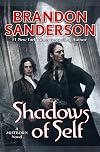
I had a minor quibble with the first book of this new Mistborn trilogy, Alloy of Law, which is that we didn't get much world-building in it. We got little scraps of info that referenced the characters from the previous trilogy, and showed us a little of how the metallic arts would change life in a post-industrial world. Cool things, just not enough for me, and the world felt a little flat and hollow because of it. At least, in comparison to Sanderson's usual efforts.
None of that here. This book goes deep. This book has so many references to the previous trilogy and the characters I love that I was getting teary eyed with nostalgia. You're damn right Vin was the blade when she fought. You tell 'em, TenSoon. Also, TenSoon! He's in it!
Revelations about the current state of the world abound, in a similar way to Hero of Ages. Sazed isn't having the easiest time as the new god of the world it seems. Speaking of Sazed, or should I say Harmony, he makes a much bigger appearance this time around. We got a few words out of him last time when he spoke to Wax as the subtle voice of god, but this time they have a full on, pages long conversation.
Basically, this was everything I wanted the first book to be.
None of that here. This book goes deep. This book has so many references to the previous trilogy and the characters I love that I was getting teary eyed with nostalgia. You're damn right Vin was the blade when she fought. You tell 'em, TenSoon. Also, TenSoon! He's in it!
Revelations about the current state of the world abound, in a similar way to Hero of Ages. Sazed isn't having the easiest time as the new god of the world it seems. Speaking of Sazed, or should I say Harmony, he makes a much bigger appearance this time around. We got a few words out of him last time when he spoke to Wax as the subtle voice of god, but this time they have a full on, pages long conversation.
Basically, this was everything I wanted the first book to be.

This is the worst of all the Narnia books. While I have a strong personal dislike for The Lion, the Witch, and the Wardrobe and rated it two stars as well, I can at least see why others like it. I just found it mind-numbingly boring. This, on the other hand, is hard to like and, more importantly, hard to defend.
It starts out strong, with an ape tricking his donkey friend into wearing a lion pelt that washed into a pond they frequent so that he can pretend to be Aslan and get people to do stuff for him. It's obviously analogous to the Antichrist but I'm fine with that. It's a fascinating part of the Christian myth and makes for good drama and tension.
The second half is where everything falls apart. The Antichrist signals the end times, and as you can imagine that's exactly what happens. Unfortunately it happens rather slowly, and boringly. After much ado about nothing Aslan shows up, kills Narnia, ushers everyone through a magical door into the 'real' Narnia (Heaven) and they live happily ever after, theoretically. Except all the kids actually died in a horrible train accident back in our world and Susan gets to stay behind in the world where her friends are dead because fuck her, am I right?
It's not so much the heavy-handed Christian apologist on the other end of these words that I have a problem with. After all, that's been there from the start and I've been pretty okay with it. It's more that this is the first time I've truly felt that Lewis let his faith worsen his show more storytelling instead of mining the Christian myth for all it's worth. The descriptions of 'Heaven' go on forever and are uninspired, which grinds the pace to a halt. All conflict disappears in the build up to the end times because you know what's going to happen so early, and that none of these struggles in the moment will really mean anything by the end.
Oh, and did I mention that it's got some pretty obvious racist undertones? And that it says Susan is denied Heaven primarily because she's off having sex, basically, and that's wrong and stuff? Like I said, it's pretty hard to defend. Still, I give it two stars instead of one because the book started off simply in the style of a parable with a donkey pretending to be Aslan because of his mean ape friend, and as that it was enjoyable for a short time. Also because it's the end of the series and it brings back all your favorite characters in the end, which does feel a little nostalgic and heart-warming. I may have only gotten around to reading all the books in the last couple of years, but Narnia has technically been a part of my life since I first read Magician's Nephew, Wardrobe, and Silver Chair back in middle school. Even with all the Christian propaganda, it's bittersweet to see it go. show less
It starts out strong, with an ape tricking his donkey friend into wearing a lion pelt that washed into a pond they frequent so that he can pretend to be Aslan and get people to do stuff for him. It's obviously analogous to the Antichrist but I'm fine with that. It's a fascinating part of the Christian myth and makes for good drama and tension.
The second half is where everything falls apart. The Antichrist signals the end times, and as you can imagine that's exactly what happens. Unfortunately it happens rather slowly, and boringly. After much ado about nothing Aslan shows up, kills Narnia, ushers everyone through a magical door into the 'real' Narnia (Heaven) and they live happily ever after, theoretically. Except all the kids actually died in a horrible train accident back in our world and Susan gets to stay behind in the world where her friends are dead because fuck her, am I right?
It's not so much the heavy-handed Christian apologist on the other end of these words that I have a problem with. After all, that's been there from the start and I've been pretty okay with it. It's more that this is the first time I've truly felt that Lewis let his faith worsen his show more storytelling instead of mining the Christian myth for all it's worth. The descriptions of 'Heaven' go on forever and are uninspired, which grinds the pace to a halt. All conflict disappears in the build up to the end times because you know what's going to happen so early, and that none of these struggles in the moment will really mean anything by the end.
Oh, and did I mention that it's got some pretty obvious racist undertones? And that it says Susan is denied Heaven primarily because she's off having sex, basically, and that's wrong and stuff? Like I said, it's pretty hard to defend. Still, I give it two stars instead of one because the book started off simply in the style of a parable with a donkey pretending to be Aslan because of his mean ape friend, and as that it was enjoyable for a short time. Also because it's the end of the series and it brings back all your favorite characters in the end, which does feel a little nostalgic and heart-warming. I may have only gotten around to reading all the books in the last couple of years, but Narnia has technically been a part of my life since I first read Magician's Nephew, Wardrobe, and Silver Chair back in middle school. Even with all the Christian propaganda, it's bittersweet to see it go. show less
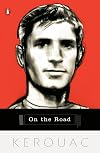
I went in expecting not to like this. My cursory knowledge of the beat generation icons led me to believe they were all pretentious assholes, which definitely seems to be true. What I forgot is that a pretentious asshole can still write a decent book, and that a book doesn't have to be about good or likable people to be engrossing.
Kerouac paints a vivid picture of an America so far removed from me in time that it might as well be a different country. The book is somewhat worth reading for that alone. Beyond that, though, is a remarkably compelling first-person narrator. There's just something about the voice of it that draws you in. A madness, if you will. A lust for life, an insane hedonism, a massively conflated sense of self-importance.
Speaking of madness, Kerouac, apparently, wrote this on a single sheet of paper (he taped them together so he wouldn't have to stop typing) over three weeks while being kept up by coffee, cigarettes, and drugs. He cut and added things here and there after that, but essentially we're reading the result of a three-week outpouring of work based on the extensive notes he took during the journey. It shows. The writing is still rough. Sentences go on for too long and obviously should have been cut into two distinct sentences. Existential tangents blindside you constantly. A lack of focus permeates the whole thing. On the whole I don't mean any of it in a bad way, necessarily. It is, I think, an intrinsic part of the appeal. If this same book show more had been written in a more "put together" way, I would count it as an overall loss. It's raw, ephemeral, like it came from some otherworldly force instead of human hands. It definitely fits his character, at the very least.
Still, there are major problems. Mostly in pacing and any sort of consistent quality. The beginning and end of the book contains solid four star material, and there are similar gems lurking in the middle as well--but there are also some long bits that are two stars at best. I feel like 3/5 is a fair average of my experience, but it was by no means consistently that good the entire way through. Just keep that in mind. You will hit parts that drag and they drag hard. show less
Kerouac paints a vivid picture of an America so far removed from me in time that it might as well be a different country. The book is somewhat worth reading for that alone. Beyond that, though, is a remarkably compelling first-person narrator. There's just something about the voice of it that draws you in. A madness, if you will. A lust for life, an insane hedonism, a massively conflated sense of self-importance.
Speaking of madness, Kerouac, apparently, wrote this on a single sheet of paper (he taped them together so he wouldn't have to stop typing) over three weeks while being kept up by coffee, cigarettes, and drugs. He cut and added things here and there after that, but essentially we're reading the result of a three-week outpouring of work based on the extensive notes he took during the journey. It shows. The writing is still rough. Sentences go on for too long and obviously should have been cut into two distinct sentences. Existential tangents blindside you constantly. A lack of focus permeates the whole thing. On the whole I don't mean any of it in a bad way, necessarily. It is, I think, an intrinsic part of the appeal. If this same book show more had been written in a more "put together" way, I would count it as an overall loss. It's raw, ephemeral, like it came from some otherworldly force instead of human hands. It definitely fits his character, at the very least.
Still, there are major problems. Mostly in pacing and any sort of consistent quality. The beginning and end of the book contains solid four star material, and there are similar gems lurking in the middle as well--but there are also some long bits that are two stars at best. I feel like 3/5 is a fair average of my experience, but it was by no means consistently that good the entire way through. Just keep that in mind. You will hit parts that drag and they drag hard. show less
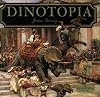
It's a rare treat to read a book and be able to say with confidence that you've never read anything like it before. Children's books are fantastic, magical things that I appreciate for many reasons. I never would have expected one of those reasons to be world-building though. Gurney takes the playful premise of dinosaurs and humans coexisting and, like the best fantasists, goes many layers beyond the obvious implications to create a deep and satisfying world that feels real. His dedication to his world is laudable. He thought of everything, from dino fertilizer to a stunted reproduction rate that explains why the dinos haven't overrun the island in the relative absence of natural predators. Care is given to the culture, economy, ecology, and technology in equal measure.
Add gorgeous (and I mean gorgeous) illustrations on every page and text written convincingly in the style of a naturalist's travel journal and you have a one of a kind classic on your hands. This is one of those books that makes me think I would've fallen in love with reading far earlier than I did, had I been exposed to it as a child. Instead I got gifts of Harry Potter and Goosebumps and was turned off of reading until my late teens. C'est la vie.
Add gorgeous (and I mean gorgeous) illustrations on every page and text written convincingly in the style of a naturalist's travel journal and you have a one of a kind classic on your hands. This is one of those books that makes me think I would've fallen in love with reading far earlier than I did, had I been exposed to it as a child. Instead I got gifts of Harry Potter and Goosebumps and was turned off of reading until my late teens. C'est la vie.
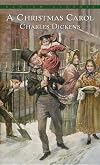
A Christmas Carol is a story I've seen I don't know how many adaptations for. I recently watched the one from Doctor Who, which was excellent, but there are a lot of good ones, and it's a good story. A bit overused and overrated, but good.
This is the first time I read the original story, and I have to say I came away sorely disappointed. This is one of those cases where the best adaptations have something that the original story just doesn't. It seems to me that some of the adaptations give Scrooge a better reason for being a dickhead than the original story did. Here he was lonely and poor as a child, and that's pretty much it. I guess that's reason enough to be a dickhead? Sure, why not. It doesn't help that we fly right through the familiar treks of the story so fast and with no time to breathe that nothing sinks in or carries weight. Scrooge's lonely childhood is summed up in a vague sentence about him being neglected by his friends. How the hell am I supposed to give two shits about his already incredibly generic rough childhood if they don't even stop to focus on the details that make it unique to him?
This is the first time I've read Dickens, and I really do not care for his writing style one bit, which definitely put a damper on any enjoyment I might have had . It rarely evokes emotion or vivid imagery and is just...oddly worded and structured. Here's an example:
I honestly don't understand how someone living today can enjoy a book that's written this way. I'm sure it was great in it's time and everything, but it's just so counter to how prose has evolved since then. It's superfluous, redundant, and overwrought.
The weird thing is, I have no idea if it's just a product of the time, or if it's unique to Dickens. I have thoroughly enjoyed quite a lot of books from the 1800s, ala Sherlock Holmes, H.G. Wells, etc. Those books are a joy to read. They are easy to read. Their prose is clear, and elegant. Sure, they still show some signs of that older style of writing, but it's never a blockade like it is here. It never impedes forward progress, or makes comprehension/immersion any more difficult than reading modern prose would be. Those are from the 1880s or later, however, and this book was written in 1843. Perhaps that 37 year gap holds a much wider difference in prose style than I think it should? I've read plenty of books from the 1950s that seem almost contemporary, but I have no idea if that's a fair comparison. Either way, it's not much fun to read now. Not much fun at all. Bah Humbug! show less
This is the first time I read the original story, and I have to say I came away sorely disappointed. This is one of those cases where the best adaptations have something that the original story just doesn't. It seems to me that some of the adaptations give Scrooge a better reason for being a dickhead than the original story did. Here he was lonely and poor as a child, and that's pretty much it. I guess that's reason enough to be a dickhead? Sure, why not. It doesn't help that we fly right through the familiar treks of the story so fast and with no time to breathe that nothing sinks in or carries weight. Scrooge's lonely childhood is summed up in a vague sentence about him being neglected by his friends. How the hell am I supposed to give two shits about his already incredibly generic rough childhood if they don't even stop to focus on the details that make it unique to him?
This is the first time I've read Dickens, and I really do not care for his writing style one bit, which definitely put a damper on any enjoyment I might have had . It rarely evokes emotion or vivid imagery and is just...oddly worded and structured. Here's an example:
In the struggle, if that can be called a struggle in which the Ghost with no visible resistance on itsshow more
own part was undisturbed by any effort of its adversary, Scrooged observed that its light was burning high and bright; and dimly connecting that with its influence over him, he seized the extinguisher-cap, and by a sudden action pressed it down upon its head.
I honestly don't understand how someone living today can enjoy a book that's written this way. I'm sure it was great in it's time and everything, but it's just so counter to how prose has evolved since then. It's superfluous, redundant, and overwrought.
The weird thing is, I have no idea if it's just a product of the time, or if it's unique to Dickens. I have thoroughly enjoyed quite a lot of books from the 1800s, ala Sherlock Holmes, H.G. Wells, etc. Those books are a joy to read. They are easy to read. Their prose is clear, and elegant. Sure, they still show some signs of that older style of writing, but it's never a blockade like it is here. It never impedes forward progress, or makes comprehension/immersion any more difficult than reading modern prose would be. Those are from the 1880s or later, however, and this book was written in 1843. Perhaps that 37 year gap holds a much wider difference in prose style than I think it should? I've read plenty of books from the 1950s that seem almost contemporary, but I have no idea if that's a fair comparison. Either way, it's not much fun to read now. Not much fun at all. Bah Humbug! show less
As someone who absolutely loved Well's John Cleaver series, I was a little disappointed in this. I did enjoy it, and I read it very quickly, but that's about as far as my praise goes. This is a pretty good take on the lost memories cliché, but it is still a cliché, and one of the most overused ones at that. The core idea of “crazy guy sees things, but some of those things are real,” is truly fantastic, and I'm sure it could have been incorporated into a better story that didn't necessitate a lost memories mystery.
The voice of the main character wasn't as unique and original as it needed to be to depict a person with a mental illness; certainly nowhere near John Cleaver's voice. It's not bad, and commendable given how hard it must be to write something like this, but nothing to tell your friends about. The prose itself was clunky and disjointed. I have to imagine at least some of it was intentional, since it was so much worse than I remember the John Cleaver books being. I suspect it was an attempt to make the narrator seem more crazy, but it just came across as amateurish and gimmicky. I'm sure it's possible to write from a mentally insane viewpoint without using lots of oddly clipped sentences and onomatopoeia.
Most people's main problem with this book is the ending. I didn't have have a problem with it. I saw it coming from farther away than I would have liked, and it's a bit silly, but it is a neat idea all the same. It was pretty good, considering the genre. I show more find that thriller/horror rarely has satisfying endings. It certainly didn't redeem the book, but it didn't condemn it either. The rest of the book had plenty of problems all its' own. All that being said, however, I did enjoy the ride and it's a hell of a page-turner. It may not be one of those books you remember fondly (or at all) after you've finished it, but I'd be genuinely surprised if anyone started reading this and stopped halfway through. show less
The voice of the main character wasn't as unique and original as it needed to be to depict a person with a mental illness; certainly nowhere near John Cleaver's voice. It's not bad, and commendable given how hard it must be to write something like this, but nothing to tell your friends about. The prose itself was clunky and disjointed. I have to imagine at least some of it was intentional, since it was so much worse than I remember the John Cleaver books being. I suspect it was an attempt to make the narrator seem more crazy, but it just came across as amateurish and gimmicky. I'm sure it's possible to write from a mentally insane viewpoint without using lots of oddly clipped sentences and onomatopoeia.
Most people's main problem with this book is the ending. I didn't have have a problem with it. I saw it coming from farther away than I would have liked, and it's a bit silly, but it is a neat idea all the same. It was pretty good, considering the genre. I show more find that thriller/horror rarely has satisfying endings. It certainly didn't redeem the book, but it didn't condemn it either. The rest of the book had plenty of problems all its' own. All that being said, however, I did enjoy the ride and it's a hell of a page-turner. It may not be one of those books you remember fondly (or at all) after you've finished it, but I'd be genuinely surprised if anyone started reading this and stopped halfway through. show less
Overall Rating: 2/5
This is generally unimpressive collection that suffers from the uneven nature that anthologies tend to suffer from, though it has fewer redeeming stories in it than most others I've read. There were some pretty terrible stories here, some decent ones, but only a couple that were truly worth reading.
My main issue with the collection as a whole is that the stories I didn't like generally had a lot of the same problems. They seemed to meander into pointlessness, as if they were written solely to fit the theme of the collection (whether or not that's true) or to show off an exotic setting, instead of entertaining and delighting. Too much emphasis was placed on description, and not enough on character, plot, and thought-provoking messages. Many of the stories ended with cheap twists that had me rolling my eyes or blankly turning to the next story, instead of leaving me with a feeling of poignancy or contemplation.
Such a waste, considering the depth of the well that the theme of this collection offered.
Diana of the Hundred Breasts, by Robert Silverberg (1/5)
A typical, “hardcore skeptic sees something that he can't explain,” type story. Some archaeologist finds a tomb, opens it, and the aforementioned god with many breasts starts roaming the country-side before disappearing into the sky. Maybe it's a god, maybe it's an alien, maybe it was a hallucination brought about by latent chemicals in the tomb. Who knows? A better question is; who cares? Not me, show more that's for sure.
The Face of Sekt, by Storm Constantine (2/5)
An alright story about a living deity who questions her deity status before breaking free of her earthly prison and claiming her true power. Best thing about it was the fantastic descriptions of setting, which made the story have that immersion factor.
The Goddess Danced, by Lois Tilton (4/5)
This is the first story in the collection that struck a chord with me. It’s about a young woman named Meena living in the Middle East and treated, as one might expect, terribly by her father, the blind husband she’s forced to marry (since no man that can see would ever marry, or should I say ‘buy’, a disfigured woman. More on her disfigurement in a second), and pretty much every other man in the story, as well as her mother-in-law. She’s beaten, raped, and a young man melts half her face off with acid for denying his sexual advances (melting most of the skin off her skull). This happens in a society where she was TAUGHT to be virtuous, modest, and abstinent since childhood. Seriously? You either want your women to have sex or you don't. I mean, you shouldn't be controlling them regardless, but if you're going to control them at least have some cultural consistency. It's like teaching my cat that he's not allowed in my lap and then beating him because he won't get in my lap.
Somehow she puts up with all of this abuse and even grows detached to it. That is, until she overhears her step-mother and husband talking about killing her off so that he can marry her fourteen year-old sister instead (which of course her father would be fine with as his wife died giving birth to her and so she’s been dead to him from the moment she was born. Real fantastic human beings in this story, huh?). After overhearing this, she comes into the house screaming that she won’t let them take her little sister and they LIGHT. HER. ON. FIRE. Right there on the spot. Apparently immolation is a common way to get rid of wives you no longer want around, as it’s faster and easier than divorce and can be swept away as a “cooking accident.” Luckily this is a mythology/magic-themed collection and she gets some supernatural retribution at the very end that ties nicely into the subtle foreshadowing that was done throughout the story.
I don't think any short story has ever made me so angry, which is a good thing. Any time a story can make me feel an emotion strongly, even if it’s an unpleasant one, I’d say it’s doing a good job.
The Grotto, by Kathryn Ptacek (1/5)
An overly depressing and boring story about a woman who's going to die of cancer soon. She decides to spend her final days visiting her grandparent's homeland—a small, relatively unremarkable city in Tuscany somewhere. At the end, instead of dying, she...becomes the Etruscan god of death, I guess. Meh.
The Eleventh City, by Gene Wolfe (2/5)
This entire story is basically some writer talking to his editor about something he witnessed while living in Central America and writing about local folklore, and asking whether or not this thing he witnessed counts as folklore since it was a fellow American that told the tale. Much like The Face of Sekt the saving grace was how good the description was, which isn't surprising. Grounding you in a place and tickling your senses are Gene Wolfe's specialties. Unfortunately he still needs to work on making the other aspects of a story interesting.
Heart of Stone, by Lawrence Watt-Evans (5/5)
I'm a sucker for short stories that read like fairy tales that were written a long time ago. This is a fantastic example of that approach to short story writing.
A wizard is chased out of his house by fearful villagers, who leave the place ransacked and empty. Unfortunately the wizard left a young woman of his own creation behind, trapped inside the stone walls like a shadow. She laments in the loneliness of her stone prison for a while before a disreputable man stumbles into the place and discovers her. He takes advantage of her desire for company and conversation and uses her to make money off of folks by telling their fortunes.
Eventually she has enough of his mistreatment, both of her and of gullible villagers, and chases him off, deciding that dealing with the loneliness would be better than dealing with him. Sadly, the villagers, having seen her during the fortune telling sessions, decide to knock the house down to the foundation to make sure she's dead since she's an unholy abomination and all that. She has no idea what's going to happen when they bust down the walls, but she assumes that she'll die. Instead, she becomes a real flesh and blood person for the first time, finally freed from her stone prison and able to go anywhere and experience life and all of its' hardships and wonders. This story is a poster child for the phrase, “a simple tale, told well.” Beautiful stuff.
Cora, by Esther Friesner (2/5)
I'm not even sure how to describe this story. Basically it's about a Manticore, its' owner, the sexual assault he experienced at the hands of his rich aunt, and a young man he falls in love with. Unfortunately their relationship is volatile and, ultimately, fated to end. It's alright for what it is, but written strangely. It's omniscient, and conversations are summed up in that, “Say what now? You don't like this?” sort of way, only showing one person' side of the conversation. I've never been a fan of that. It always comes across as stilted and awkward, and it compresses time in a way that takes you out of the moment entirely.
Ascension, by Yvonne Navarro (3/5)
Like Eleventh City, this is another Mexican/Spanish-themed story that fails to truly grab me. Such a shame, as I really like the idea of that setting and culture and would love to read a story that does it justice. Basically some priest has an affair with a woman he doesn't intend to marry and when she protests he strangles her to death and hides her body in a secret place on the roof of the church. Two centuries pass and she sits there like a statue, dead but still somehow conscious and looking down on the streets of the village. The virgin Mary eventually lets her loose on a descendant of the man who killed her just as he's about to start having an affair with a peasant woman that, I guess, is doomed to end the same way. She kills him and places him on the roof where she used to be, and then goes and turns into a statue outside the church and is worshiped as a miracle.
It's one of the shorter stories in the collection and doesn't do a great job of making you feel the passage of time that this woman endured. In some ways it's powerfully written. I particularly like this passage:
Mud, by Brian McNaughton (1/5)
This story starts with an intriguing idea—that mud is somehow sentient and malevolent and that the horrors of world war I or II (wasn't clear to me one way or the other), which the viewpoint character is fighting in at the time of the story, somehow released it—but it's immediately tossed aside for an action scene with guns and grenades that goes on for far too long and does nothing to establish character or plot. One of my pet peeves is needless action scenes, and I can't think of a more needless action scene than one that happens at the very begging of a story, before I have to chance to attach myself to any of the characters. Here's an excerpt from the end of that action scene to give you an idea of the tone of this story.
Shaped Stones, by Nina Kiriki Hoffman (2/5)
This is a story about three orphaned children during the great depression. The oldest of them, Teru, has some latent magical talent, being able to hide himself and his siblings when necessary by disguising them as rats or shadows, until one day a man sees through his illusions and offers to take care of him and his siblings if he becomes his apprentice. Teru accepts and is led to the man's super rich mansion-tower, full of weird stuff and things, where he begins to learn sorcery.
The man is true to his word . . . until the very last moment, which anybody with half a brain would see coming from the very first scene he's in. He performs a ritual that locks the two younger children in a glass heart (so that they'll be safe forever, as he promised) and forces Teru to give up his innocent heart in exchange for an insatiable thirst for knowledge. Teru turns into a cold intellectual until he figures out that coming into contact with creatures made out of stone (an angel in a cemetery and a black sphinx in a hidden room of the mansion-tower being the only examples) somehow bring his heart and all his feelings flooding back to him, and that's how the story ends.
I enjoyed the story alright up until the end, which made me kind of not like the story as a whole. It offered a mystery that I felt wasn't earned. The weird god Teru's master summoned looked like a stone face, so there's a stone god who has Teru's heart and thus stone creatures make him feel things again? And the strange man seemed to have no deeper motivation than he wanted an apprentice and he was a bit of a dick, which was a letdown. Even though it was obvious from the start that he was going to turn out to be evil, I was still expecting his motives to be cool or interesting in some way, but they were just boring. Such a shame, as the beginning of the story really gets your hopes up.
Wanderlust, by M. Christian (2/5)
A traveling salesman picks up a hula hoop girl to go on his dashboard and draws the attention of some 'goddess of the road' that took notice of his endless traveling and sort of possesses the doll. He only stops when he absolutely needs gas and food. When he does everybody sees in him the most beautiful thing they can imagine and pretty much give him stuff for free. A benefit of the hula hoop god. Unfortunately for him, after not very much time they start to see the most horrific thing they can imagine when they look at him, as the hula hoop doll calls him back to the car, where he can never leave.
Giotto's Window, by Chelsea Quinn Yarbro (3/5)
A pretty decent, “dude is insane, but really he's the only sane one,” type story that evokes Lovecraft without being a direct nod to him. An American living in Italy has a break from reality where he sees everyone, including himself, as monsters with beaks and tentacles and such. His parents hire a psychiatrist to fly in and bring him home, and she winds up seeing what he sees, but tries to ignore it. Probably the most interesting aspect of the story is that the man never says that people are secretly evil or conspiring to do evil. He just maintains that everyone looks like monsters but refuse to see it, but they all seem to act the same as regular people, so is there really a difference?
Masks, by Jack Ketchum and Edward Lee (1/5)
A mythological gang bang story (literally) that goes on for way too long and would be more at home in an erotica collection, complete with a stupid and unearned twist at the end.
At Eventide, by Kathe Koja (3/5)
A story about two people—a predator and his former victim. He finds her in a magazine, as she's become semi-famous by making memory boxes for people. He goes to her isolated workshop with some of her hair, which he had from their encounter years ago, and demands she make a box for him because he's dying. She tells him she can't. That all he has is what he's taken from others and nothing of his own. He doesn't have the energy to do anything about it and leaves, dying later that night in the cold of the desert.
That Glisters Is, by Tanith Lee (3/5)
The life story of a gay man and his lover. The supernatural element is basically the idea that the afterlife is within us, and that certain people share the same “inner world,” and will end up in the same place. show less
This is generally unimpressive collection that suffers from the uneven nature that anthologies tend to suffer from, though it has fewer redeeming stories in it than most others I've read. There were some pretty terrible stories here, some decent ones, but only a couple that were truly worth reading.
My main issue with the collection as a whole is that the stories I didn't like generally had a lot of the same problems. They seemed to meander into pointlessness, as if they were written solely to fit the theme of the collection (whether or not that's true) or to show off an exotic setting, instead of entertaining and delighting. Too much emphasis was placed on description, and not enough on character, plot, and thought-provoking messages. Many of the stories ended with cheap twists that had me rolling my eyes or blankly turning to the next story, instead of leaving me with a feeling of poignancy or contemplation.
Such a waste, considering the depth of the well that the theme of this collection offered.
Diana of the Hundred Breasts, by Robert Silverberg (1/5)
A typical, “hardcore skeptic sees something that he can't explain,” type story. Some archaeologist finds a tomb, opens it, and the aforementioned god with many breasts starts roaming the country-side before disappearing into the sky. Maybe it's a god, maybe it's an alien, maybe it was a hallucination brought about by latent chemicals in the tomb. Who knows? A better question is; who cares? Not me, show more that's for sure.
The Face of Sekt, by Storm Constantine (2/5)
An alright story about a living deity who questions her deity status before breaking free of her earthly prison and claiming her true power. Best thing about it was the fantastic descriptions of setting, which made the story have that immersion factor.
The Goddess Danced, by Lois Tilton (4/5)
This is the first story in the collection that struck a chord with me. It’s about a young woman named Meena living in the Middle East and treated, as one might expect, terribly by her father, the blind husband she’s forced to marry (since no man that can see would ever marry, or should I say ‘buy’, a disfigured woman. More on her disfigurement in a second), and pretty much every other man in the story, as well as her mother-in-law. She’s beaten, raped, and a young man melts half her face off with acid for denying his sexual advances (melting most of the skin off her skull). This happens in a society where she was TAUGHT to be virtuous, modest, and abstinent since childhood. Seriously? You either want your women to have sex or you don't. I mean, you shouldn't be controlling them regardless, but if you're going to control them at least have some cultural consistency. It's like teaching my cat that he's not allowed in my lap and then beating him because he won't get in my lap.
Somehow she puts up with all of this abuse and even grows detached to it. That is, until she overhears her step-mother and husband talking about killing her off so that he can marry her fourteen year-old sister instead (which of course her father would be fine with as his wife died giving birth to her and so she’s been dead to him from the moment she was born. Real fantastic human beings in this story, huh?). After overhearing this, she comes into the house screaming that she won’t let them take her little sister and they LIGHT. HER. ON. FIRE. Right there on the spot. Apparently immolation is a common way to get rid of wives you no longer want around, as it’s faster and easier than divorce and can be swept away as a “cooking accident.” Luckily this is a mythology/magic-themed collection and she gets some supernatural retribution at the very end that ties nicely into the subtle foreshadowing that was done throughout the story.
I don't think any short story has ever made me so angry, which is a good thing. Any time a story can make me feel an emotion strongly, even if it’s an unpleasant one, I’d say it’s doing a good job.
The Grotto, by Kathryn Ptacek (1/5)
An overly depressing and boring story about a woman who's going to die of cancer soon. She decides to spend her final days visiting her grandparent's homeland—a small, relatively unremarkable city in Tuscany somewhere. At the end, instead of dying, she...becomes the Etruscan god of death, I guess. Meh.
The Eleventh City, by Gene Wolfe (2/5)
This entire story is basically some writer talking to his editor about something he witnessed while living in Central America and writing about local folklore, and asking whether or not this thing he witnessed counts as folklore since it was a fellow American that told the tale. Much like The Face of Sekt the saving grace was how good the description was, which isn't surprising. Grounding you in a place and tickling your senses are Gene Wolfe's specialties. Unfortunately he still needs to work on making the other aspects of a story interesting.
Heart of Stone, by Lawrence Watt-Evans (5/5)
I'm a sucker for short stories that read like fairy tales that were written a long time ago. This is a fantastic example of that approach to short story writing.
A wizard is chased out of his house by fearful villagers, who leave the place ransacked and empty. Unfortunately the wizard left a young woman of his own creation behind, trapped inside the stone walls like a shadow. She laments in the loneliness of her stone prison for a while before a disreputable man stumbles into the place and discovers her. He takes advantage of her desire for company and conversation and uses her to make money off of folks by telling their fortunes.
Eventually she has enough of his mistreatment, both of her and of gullible villagers, and chases him off, deciding that dealing with the loneliness would be better than dealing with him. Sadly, the villagers, having seen her during the fortune telling sessions, decide to knock the house down to the foundation to make sure she's dead since she's an unholy abomination and all that. She has no idea what's going to happen when they bust down the walls, but she assumes that she'll die. Instead, she becomes a real flesh and blood person for the first time, finally freed from her stone prison and able to go anywhere and experience life and all of its' hardships and wonders. This story is a poster child for the phrase, “a simple tale, told well.” Beautiful stuff.
Cora, by Esther Friesner (2/5)
I'm not even sure how to describe this story. Basically it's about a Manticore, its' owner, the sexual assault he experienced at the hands of his rich aunt, and a young man he falls in love with. Unfortunately their relationship is volatile and, ultimately, fated to end. It's alright for what it is, but written strangely. It's omniscient, and conversations are summed up in that, “Say what now? You don't like this?” sort of way, only showing one person' side of the conversation. I've never been a fan of that. It always comes across as stilted and awkward, and it compresses time in a way that takes you out of the moment entirely.
Ascension, by Yvonne Navarro (3/5)
Like Eleventh City, this is another Mexican/Spanish-themed story that fails to truly grab me. Such a shame, as I really like the idea of that setting and culture and would love to read a story that does it justice. Basically some priest has an affair with a woman he doesn't intend to marry and when she protests he strangles her to death and hides her body in a secret place on the roof of the church. Two centuries pass and she sits there like a statue, dead but still somehow conscious and looking down on the streets of the village. The virgin Mary eventually lets her loose on a descendant of the man who killed her just as he's about to start having an affair with a peasant woman that, I guess, is doomed to end the same way. She kills him and places him on the roof where she used to be, and then goes and turns into a statue outside the church and is worshiped as a miracle.
It's one of the shorter stories in the collection and doesn't do a great job of making you feel the passage of time that this woman endured. In some ways it's powerfully written. I particularly like this passage:
The descendants of He Who Put Me Here visit the cathedral every Sunday, then again on the holiest of days. Perhaps these regal Spaniards believe this will elevate them to grace, but to my knowing eyes the passage of centuries has not dulled the blood on their hands.Unfortunately that's just not enough to make up for the fact that it feels too short and like it doesn't have any meat on the bone. Also, it is basically a typical 'jilted lover' story and the setting and supernatural elements don't really go far enough to give it a unique identity.
Mud, by Brian McNaughton (1/5)
This story starts with an intriguing idea—that mud is somehow sentient and malevolent and that the horrors of world war I or II (wasn't clear to me one way or the other), which the viewpoint character is fighting in at the time of the story, somehow released it—but it's immediately tossed aside for an action scene with guns and grenades that goes on for far too long and does nothing to establish character or plot. One of my pet peeves is needless action scenes, and I can't think of a more needless action scene than one that happens at the very begging of a story, before I have to chance to attach myself to any of the characters. Here's an excerpt from the end of that action scene to give you an idea of the tone of this story.
“I am Sergeant Miller, great-grandson of Miller the gallows bird, and I must advise you that you should have surrendered before using the last of your ammunition to kill my men.”Seriously? Did I pick up a cheesy military action anthology by mistake? What the heck is going on here? It goes back to the mud thing eventually, which turns out to be related to some god from the Cthulhu mythos that I'm unfamiliar with (I know, I know. I'm a bad Lovecraft fan. I'm working my way through his bibliography. Slowly. I'll get there though). Unfortunately the payoff was nowhere near good enough to be worth the unnecessary, cheesy action I had to wade through at the start, nor the less than stellar writing throughout. I have to give the story credit for one thing though—it taught me a fantastic new word I'd never encountered before—pudendum.
I then blew his head off.
Shaped Stones, by Nina Kiriki Hoffman (2/5)
This is a story about three orphaned children during the great depression. The oldest of them, Teru, has some latent magical talent, being able to hide himself and his siblings when necessary by disguising them as rats or shadows, until one day a man sees through his illusions and offers to take care of him and his siblings if he becomes his apprentice. Teru accepts and is led to the man's super rich mansion-tower, full of weird stuff and things, where he begins to learn sorcery.
The man is true to his word . . . until the very last moment, which anybody with half a brain would see coming from the very first scene he's in. He performs a ritual that locks the two younger children in a glass heart (so that they'll be safe forever, as he promised) and forces Teru to give up his innocent heart in exchange for an insatiable thirst for knowledge. Teru turns into a cold intellectual until he figures out that coming into contact with creatures made out of stone (an angel in a cemetery and a black sphinx in a hidden room of the mansion-tower being the only examples) somehow bring his heart and all his feelings flooding back to him, and that's how the story ends.
I enjoyed the story alright up until the end, which made me kind of not like the story as a whole. It offered a mystery that I felt wasn't earned. The weird god Teru's master summoned looked like a stone face, so there's a stone god who has Teru's heart and thus stone creatures make him feel things again? And the strange man seemed to have no deeper motivation than he wanted an apprentice and he was a bit of a dick, which was a letdown. Even though it was obvious from the start that he was going to turn out to be evil, I was still expecting his motives to be cool or interesting in some way, but they were just boring. Such a shame, as the beginning of the story really gets your hopes up.
Wanderlust, by M. Christian (2/5)
A traveling salesman picks up a hula hoop girl to go on his dashboard and draws the attention of some 'goddess of the road' that took notice of his endless traveling and sort of possesses the doll. He only stops when he absolutely needs gas and food. When he does everybody sees in him the most beautiful thing they can imagine and pretty much give him stuff for free. A benefit of the hula hoop god. Unfortunately for him, after not very much time they start to see the most horrific thing they can imagine when they look at him, as the hula hoop doll calls him back to the car, where he can never leave.
Giotto's Window, by Chelsea Quinn Yarbro (3/5)
A pretty decent, “dude is insane, but really he's the only sane one,” type story that evokes Lovecraft without being a direct nod to him. An American living in Italy has a break from reality where he sees everyone, including himself, as monsters with beaks and tentacles and such. His parents hire a psychiatrist to fly in and bring him home, and she winds up seeing what he sees, but tries to ignore it. Probably the most interesting aspect of the story is that the man never says that people are secretly evil or conspiring to do evil. He just maintains that everyone looks like monsters but refuse to see it, but they all seem to act the same as regular people, so is there really a difference?
Masks, by Jack Ketchum and Edward Lee (1/5)
A mythological gang bang story (literally) that goes on for way too long and would be more at home in an erotica collection, complete with a stupid and unearned twist at the end.
At Eventide, by Kathe Koja (3/5)
A story about two people—a predator and his former victim. He finds her in a magazine, as she's become semi-famous by making memory boxes for people. He goes to her isolated workshop with some of her hair, which he had from their encounter years ago, and demands she make a box for him because he's dying. She tells him she can't. That all he has is what he's taken from others and nothing of his own. He doesn't have the energy to do anything about it and leaves, dying later that night in the cold of the desert.
That Glisters Is, by Tanith Lee (3/5)
The life story of a gay man and his lover. The supernatural element is basically the idea that the afterlife is within us, and that certain people share the same “inner world,” and will end up in the same place. show less
I can't quite put my finger on it, but the first four books of The Last Apprentice were non-stop entertainment for me. I can find no flaws with them, considering the age-group they were written for.
The fifth book brought all that to a halt and, even being a very short kid's book, was a bit of a struggle for me to get through, and the thing is I can't even put my finger on why.
This book brought back more of that intangible element that I loved about the series in the first place, but not enough to warrant a higher rating, seeing as how probably eighty percent of my enjoyment came from the last seventy pages or so. Everything leading up to that felt like a slog.
that being said, it does set up a lot of things and I'm hoping book seven will be better.
The fifth book brought all that to a halt and, even being a very short kid's book, was a bit of a struggle for me to get through, and the thing is I can't even put my finger on why.
This book brought back more of that intangible element that I loved about the series in the first place, but not enough to warrant a higher rating, seeing as how probably eighty percent of my enjoyment came from the last seventy pages or so. Everything leading up to that felt like a slog.
that being said, it does set up a lot of things and I'm hoping book seven will be better.

To the best of my knowledge there have been three Gaiman-written additions to the Sandman universe since the core series was completed, not including the spin-offs. The Dream Hunters, Overture, and Endless Nights. I didn't really care for Dream Hunters, I loved Overture, but this is the one that feels most like the original series. It is classic Sandman in both tone, quality, and art. With the possible exception of Despair and Delirium's stories, you could put these right in with the original series and they wouldn't seem at all out of place. Which makes the fact that I've owned this book for years even stranger. I don't know why it took me so long to get around to it.
Death and Venice (5/5)
A rich count/alchemist seals off his island estate from time so that nobody ever ages or dies and they live the same day and night for eternity. In modern day the count's fortress has been burned down and ravaged by time and all that stands are stone ruins and an old iron gate. A young boy picnics with his family on the island and he meets Death of the Endless, who encourages him to try breaking down the gate, but he can't. Now a grown man serving in the military and on leave, he revisits the island and finds Death once again sitting in front of the gate, which she again encourages him to break. Bigger and stronger, he's able to kick the bars free of their crumbling stone frame, taking them back to 1751 and exposing the count and his supporters to the reality of time and death once show more more.
I absolutely adored this story. It's classic Sandman. It was familiar, comfortable, and deeply satisfying. The perfect way to ease you into a collection. The way it alternates between the count's story and the soldier's story is fantastic. You don't understand how they're related at first, but then it flashes back to the soldier's childhood memory of standing in front of the ruins talking to Death and it clicks. Such a fantastic feeling.
What I've Tasted of Desire (4/5)
In a small village a woman falls in love with a man, winds up desiring him with such intensity that the Desire shows up and has a talk with her. A talk that changes her, makes her more confident, more alluring, more in control, and allows her to win the love of the fickle man she desires and, later, to trick the men who kill him and bring his head to her dinner table by making them desire her enough to wrestle each other naked on the floor until the village men come back from hunting and slaughter the intruders. This is also classic Sandman, perhaps even moreso than the first story. It probably wouldn't have been one of the most memorable were it in the original series though. It's perhaps a little too familiar, and a little too simple. None of those standalone stories from the original series were bad by any means, but there were definitely some that I read and didn't spend much time thinking about afterwards, and I'd put this right in line with those. Very good, but not among the best of the best for me.
The Heart of a Star (5/5)
How could Dream's story be anything but incredible? First of all, there's a tiny framing device where the Sun is telling a story to the Earth about a time he met Dream when he was very young. How goddamn cool is that? Immediately I saw similarities to the newest Sandman comic, Overture. That story is about a star going mad, and Dream winds up talking to anthropomorphized stars, which I thought was clever. Turns out, Gaiman already did the talking star thing over a decade earlier in this story.
Anyway, this story is about Dream bringing his new girlfriend (an ancestor of the guardians of the universe with incomplete control over her green lantern energy) to meet his family at a party/business event where stars and other big players in the universe discuss politics, essentially. A pre-Delirium Delight shows up, and a previous incarnation of Despair talks to Krypton's star, Rao, about the idea of a lone survivor of a world-shattering event that continually mourns his lost home, an allusion to Superman.
When Dream's girlfriend meets the star of her own solar system, it quickly becomes clear that she was only cool with all of this because she didn't truly understand what was happening. She freaks out a bit, but then makes out with and ultimately falls in love with her sun, who has watched over her all her life. It's implied that Desire may have had something to do with it. Dream walks in on them kissing, gets pissy, and leaves the party. This scene has the best quote:
Fifteen Portraits of Despair (3/5)
My least favorite of the collection. It's basically a bunch of quick vignettes of various people in various life situations that cause them despair, or ruminations on the nature of despair as an abstract concept. Not having much text, it's mostly a showcase for the art, which I was just not that into. Cool idea. Execution could have been better.
Going Inside (4/5)
This, along with Despair, make up the two "weird" stories of the collection. The art style is similar at points, having that chaotic, rough sketch, abstract look. It's much better realized, though, and it's mixed in with a couple different styles. The story is a bit hard to follow, which I suppose makes sense for a story about Delirium. Near as I can tell, it's about several mentally ill people being brought together to save Delirium from some kind of struggle she's having within herself. She's retreated so far into her realm of madness due to some kind of hurt she's experienced and only the insane can venture safely in and bring her back out. Her story is paralleled by one of the people who help her, a woman who retreated into a state of catatonia after being assaulted but after saving Delirium she comes out of it, ready to face the world again. Which will be hard seeing as how she's still insane, but hey, it's still better I guess?
On the Peninsula (5/5)
A woman has recurring dreams about various apocalyptic scenarios that start to bleed into her waking life. She agrees to join a top secret archaeological dig that her friend sets her up with because she feels a big change will help get rid of her dreams. The dig is at a peninsula that is unearthing artifacts from the future. Pennies with dates fifty years in the future, high tech ammunition that hasn't been invented yet, time magazines that predict a coming war, etc. Also on the peninsula are Destruction and Delirium, who the woman assumes are hippie tourists. She becomes infatuated with Destruction, but eventually the US government gets wind of the high tech weapons they've found and secures the site, forcing the woman to return home. After she leaves the peninsula explodes in a flash of light, never to be seen again.
Endless Nights (5/5)
I imagine it's very hard to write a story about Destiny. He is the most mysterious of the Endless, and the one with the least personality. Gaiman took one of the only approaches you could and simply wrote a short, powerful vignette about Destiny's nature, about what it means to be him, about what it means to be us in a universe where he exists. There aren't many words. Much like Despair, it's an art showcase, and the art is fantastic. show less
Death and Venice (5/5)
A rich count/alchemist seals off his island estate from time so that nobody ever ages or dies and they live the same day and night for eternity. In modern day the count's fortress has been burned down and ravaged by time and all that stands are stone ruins and an old iron gate. A young boy picnics with his family on the island and he meets Death of the Endless, who encourages him to try breaking down the gate, but he can't. Now a grown man serving in the military and on leave, he revisits the island and finds Death once again sitting in front of the gate, which she again encourages him to break. Bigger and stronger, he's able to kick the bars free of their crumbling stone frame, taking them back to 1751 and exposing the count and his supporters to the reality of time and death once show more more.
I absolutely adored this story. It's classic Sandman. It was familiar, comfortable, and deeply satisfying. The perfect way to ease you into a collection. The way it alternates between the count's story and the soldier's story is fantastic. You don't understand how they're related at first, but then it flashes back to the soldier's childhood memory of standing in front of the ruins talking to Death and it clicks. Such a fantastic feeling.
What I've Tasted of Desire (4/5)
In a small village a woman falls in love with a man, winds up desiring him with such intensity that the Desire shows up and has a talk with her. A talk that changes her, makes her more confident, more alluring, more in control, and allows her to win the love of the fickle man she desires and, later, to trick the men who kill him and bring his head to her dinner table by making them desire her enough to wrestle each other naked on the floor until the village men come back from hunting and slaughter the intruders. This is also classic Sandman, perhaps even moreso than the first story. It probably wouldn't have been one of the most memorable were it in the original series though. It's perhaps a little too familiar, and a little too simple. None of those standalone stories from the original series were bad by any means, but there were definitely some that I read and didn't spend much time thinking about afterwards, and I'd put this right in line with those. Very good, but not among the best of the best for me.
The Heart of a Star (5/5)
How could Dream's story be anything but incredible? First of all, there's a tiny framing device where the Sun is telling a story to the Earth about a time he met Dream when he was very young. How goddamn cool is that? Immediately I saw similarities to the newest Sandman comic, Overture. That story is about a star going mad, and Dream winds up talking to anthropomorphized stars, which I thought was clever. Turns out, Gaiman already did the talking star thing over a decade earlier in this story.
Anyway, this story is about Dream bringing his new girlfriend (an ancestor of the guardians of the universe with incomplete control over her green lantern energy) to meet his family at a party/business event where stars and other big players in the universe discuss politics, essentially. A pre-Delirium Delight shows up, and a previous incarnation of Despair talks to Krypton's star, Rao, about the idea of a lone survivor of a world-shattering event that continually mourns his lost home, an allusion to Superman.
When Dream's girlfriend meets the star of her own solar system, it quickly becomes clear that she was only cool with all of this because she didn't truly understand what was happening. She freaks out a bit, but then makes out with and ultimately falls in love with her sun, who has watched over her all her life. It's implied that Desire may have had something to do with it. Dream walks in on them kissing, gets pissy, and leaves the party. This scene has the best quote:
"I think he saw us."
"Why should that scare you? You are a sun."
"I am a sun, certainly. But he is Dream. They say Death is kinder than he is."
Fifteen Portraits of Despair (3/5)
My least favorite of the collection. It's basically a bunch of quick vignettes of various people in various life situations that cause them despair, or ruminations on the nature of despair as an abstract concept. Not having much text, it's mostly a showcase for the art, which I was just not that into. Cool idea. Execution could have been better.
Going Inside (4/5)
This, along with Despair, make up the two "weird" stories of the collection. The art style is similar at points, having that chaotic, rough sketch, abstract look. It's much better realized, though, and it's mixed in with a couple different styles. The story is a bit hard to follow, which I suppose makes sense for a story about Delirium. Near as I can tell, it's about several mentally ill people being brought together to save Delirium from some kind of struggle she's having within herself. She's retreated so far into her realm of madness due to some kind of hurt she's experienced and only the insane can venture safely in and bring her back out. Her story is paralleled by one of the people who help her, a woman who retreated into a state of catatonia after being assaulted but after saving Delirium she comes out of it, ready to face the world again. Which will be hard seeing as how she's still insane, but hey, it's still better I guess?
On the Peninsula (5/5)
A woman has recurring dreams about various apocalyptic scenarios that start to bleed into her waking life. She agrees to join a top secret archaeological dig that her friend sets her up with because she feels a big change will help get rid of her dreams. The dig is at a peninsula that is unearthing artifacts from the future. Pennies with dates fifty years in the future, high tech ammunition that hasn't been invented yet, time magazines that predict a coming war, etc. Also on the peninsula are Destruction and Delirium, who the woman assumes are hippie tourists. She becomes infatuated with Destruction, but eventually the US government gets wind of the high tech weapons they've found and secures the site, forcing the woman to return home. After she leaves the peninsula explodes in a flash of light, never to be seen again.
Endless Nights (5/5)
I imagine it's very hard to write a story about Destiny. He is the most mysterious of the Endless, and the one with the least personality. Gaiman took one of the only approaches you could and simply wrote a short, powerful vignette about Destiny's nature, about what it means to be him, about what it means to be us in a universe where he exists. There aren't many words. Much like Despair, it's an art showcase, and the art is fantastic. show less
The Dark Talent: Alcatraz vs. the Evil Librarians (Alcatraz Versus the Evil Librarians) by Brandon Sanderson
Not as strong as the previous four books. A couple of the plot twists are kinda lame. The ending is unfairly abrupt and just about the worst cliffhanger I've ever seen. It doesn't help that all the marketing and blog posts surrounding the release of this book led me to believe this really was going to be the last in the series. I went in expecting resolution, not more setup for a finale that is god knows how long away now.
Beyond that, the comedy wasn't quite as on point. It felt more, "let's throw stuff at the wall and see what sticks," than the previous books, which were also full of non-sequitur, but it felt way more thought out. The footnote gag that runs from the start to the end is the quintessential example of this. A couple of them were really clever and got a chuckle out of me, but most of them seemed...not funny, and unnecessary, and like Brandon had read way too much Terry Pratchett recently.
All that said, it's still a Sanderson book and he is nothing if not a diligent craftsman who ticks all the necessary boxes for an engaging page-turner. The aftermath of Alcatraz breaking his family's talents went in an interesting direction that's got me hooked and dying to see where it goes. We get some great family drama between Alcatraz and his parents. It's just not as put-together and it was over a bit too quick and felt rushed. Whether that's a pacing issue or the book literally being shorter than the previous ones, I have no idea.
Beyond that, the comedy wasn't quite as on point. It felt more, "let's throw stuff at the wall and see what sticks," than the previous books, which were also full of non-sequitur, but it felt way more thought out. The footnote gag that runs from the start to the end is the quintessential example of this. A couple of them were really clever and got a chuckle out of me, but most of them seemed...not funny, and unnecessary, and like Brandon had read way too much Terry Pratchett recently.
All that said, it's still a Sanderson book and he is nothing if not a diligent craftsman who ticks all the necessary boxes for an engaging page-turner. The aftermath of Alcatraz breaking his family's talents went in an interesting direction that's got me hooked and dying to see where it goes. We get some great family drama between Alcatraz and his parents. It's just not as put-together and it was over a bit too quick and felt rushed. Whether that's a pacing issue or the book literally being shorter than the previous ones, I have no idea.
Definitely the worst of all the John Cleaver novels. I really wasn't into where the story went and had a hard time pushing through the middle. Far too much time is taken up by John and Brooke hitchhiking around the country with no money and no food. It was interesting at first, but at some point you get the idea, the stage has been set, and showing more scenes of the same thing is just beating a dead horse. Imagine watching Aladdin and instead of one or two scenes to establish how poor he is, him being poor and trying to find food takes up most of the movie. That's what this is like. I found myself bored to tears as no forward progress was made, no new revelations discovered. They were just spinning their wheels doing fuck all and I was stuck in limbo waiting for the story part of this story to finally materialize.
The book does eventually figure its shit out about two thirds of the way through when our protagonists see that someone was gruesomely killed in the small town they expected to find a withered in but didn't, and go back there. Why did they need to leave in the first place? It just adds unnecessary words, nothing important happens between the leaving and the returning. If I were an editor that's one of the first recommendations I would've made. The book is short as it is, but that's no reason to abide pointless words that could've easily been cut. The main focus of the book is clearly this small town, so make it the focus. Replace some of the repetitive homeless show more hitchhiking scenes that don't add anything with more words and more time spent in the town; planning, investigating, doing the John Cleaver thing. I literally can't think of a reason not to have done it that way. It just kinda seems like Wells wrote himself into a corner with the last one and got super thrown off his game and didn't know how to handle it.
So...yeah. Not the best. Bit of a mess, really, especially compared to the rest of the series which is incredibly strong and incredibly consistent. And not that this is a huge deal, but there were also an embarrassing amount of typos and grammatical errors compared to the previous books, which is weird. Read it for the complex relationship between our two main characters, for the strong final third, and to get yourself ready for the next book, which will hopefully be a lot better. show less
The book does eventually figure its shit out about two thirds of the way through when our protagonists see that someone was gruesomely killed in the small town they expected to find a withered in but didn't, and go back there. Why did they need to leave in the first place? It just adds unnecessary words, nothing important happens between the leaving and the returning. If I were an editor that's one of the first recommendations I would've made. The book is short as it is, but that's no reason to abide pointless words that could've easily been cut. The main focus of the book is clearly this small town, so make it the focus. Replace some of the repetitive homeless show more hitchhiking scenes that don't add anything with more words and more time spent in the town; planning, investigating, doing the John Cleaver thing. I literally can't think of a reason not to have done it that way. It just kinda seems like Wells wrote himself into a corner with the last one and got super thrown off his game and didn't know how to handle it.
So...yeah. Not the best. Bit of a mess, really, especially compared to the rest of the series which is incredibly strong and incredibly consistent. And not that this is a huge deal, but there were also an embarrassing amount of typos and grammatical errors compared to the previous books, which is weird. Read it for the complex relationship between our two main characters, for the strong final third, and to get yourself ready for the next book, which will hopefully be a lot better. show less

Early on I was expecting this to be a five-star book for me. The initial setup of the novel, where the brilliantly original setting is introduced, where Kell's past and daily life is dolled out in small bits and pieces, was excellent. Beyond excellent, even. Schwab's prose is punchy, economical, and vivid throughout. I fell hard for her words and her setting, but then the actual plot kicks in, and a lot of the magic fades. Ironic for a book that spends so much time talking about magic. Not that it's a terrible plot and I never really stopped enjoying the book, but it was just a bit simplistic, familiar, and predictable to wow me, and a book that doesn't wow me isn't a five-star book. I was ready for something more complex, and certainly ready for something more original to go with the wildly original setting, and I didn't get it. I've heard people who don't read fantasy much deride it as being nothing but macguffin stories, which isn't really true, but with books like this getting popular you can see how someone might get that impression. The trope is certainly common enough to give someone the wrong idea.
One thing I really liked is that Kell and Lilah don't really have any romantic tension. They're just friends on an adventure together. How refreshing! But other than that, our two main characters don't really go anywhere. They don't have much of an arc and, while enjoyable to read, they are fairly underdeveloped if you examine them too closely. Lilah more than Kell, show more since we at least get a couple of deeper glimpses into Kell's past as the novel progresses. His complicated relationship with the royal family, the things he's done in his youth to protect his step-brother, prince Rhy, etc. Unfortunately they always made me wish I was reading a whole book about that instead. Something more personal, slower paced, with much lower stakes, with more personality and cultural and political flavor to really immerse you in this world and these characters. A magical macguffin/world in peril story is fine for a bit of fun, but I can't help but feel like Schwab wasted her setting on a fairly trite plot that wasn't worthy of it.
Overall a very enjoyable book that didn't quite live up to its potential on the plot and character front, but also a great incentive to get my hands on all of Schwab's other books in the hopes that one of them really knocks it out of the park. Many of the ingredients for a truly top-tier, world-class fantasy novelist are on show here and she's firmly on my radar now. show less
One thing I really liked is that Kell and Lilah don't really have any romantic tension. They're just friends on an adventure together. How refreshing! But other than that, our two main characters don't really go anywhere. They don't have much of an arc and, while enjoyable to read, they are fairly underdeveloped if you examine them too closely. Lilah more than Kell, show more since we at least get a couple of deeper glimpses into Kell's past as the novel progresses. His complicated relationship with the royal family, the things he's done in his youth to protect his step-brother, prince Rhy, etc. Unfortunately they always made me wish I was reading a whole book about that instead. Something more personal, slower paced, with much lower stakes, with more personality and cultural and political flavor to really immerse you in this world and these characters. A magical macguffin/world in peril story is fine for a bit of fun, but I can't help but feel like Schwab wasted her setting on a fairly trite plot that wasn't worthy of it.
Overall a very enjoyable book that didn't quite live up to its potential on the plot and character front, but also a great incentive to get my hands on all of Schwab's other books in the hopes that one of them really knocks it out of the park. Many of the ingredients for a truly top-tier, world-class fantasy novelist are on show here and she's firmly on my radar now. show less
Bland, poorly-written, overwhelmingly stupid fan-fiction disguised as a novel that's clearly supposed to make fantasy nerds cream their pants from all the references but probably only made the author cream his pants while writing it. As a fantasy nerd, I was not impressed. Neat premise, sure, but terrible execution. I can't help but wonder who this is for. It is so poorly written, so pandering, so bland, so generic, so predictable, so stupid, so contrived, so utterly derivative that you'd need to be a kid to get any enjoyment out of it, and this is coming from an adult that reads a lot of kid's books. Not a single aspect of it could be called good writing by any standard.
Characters
The characters have exactly zero personality until the author needs to manufacture drama, and then they get angry with each other for absolutely no reason. Jack (C.S. Lewis) in particular is portrayed as a callous jerk, but only sometimes, when it's convenient and the author needs to add some tension to a boring scene. At the start of the book he really tears into John (Tolkien) for things that are clearly not his fault, and continues to take shots at him throughout the book when you're least expecting it and never for any legitimate reason. What the hell? Why? It's the most contrived crap I've ever read, and totally unnecessary. Like I said, it's manufactured drama. It's fake. It's false. Is this a novel or reality television?
Having fictionalized versions of beloved authors that are kind of show more bland is something I can totally understand. If your prose, world-building, plot, and secondary characters are all fantastic then you can easily get away with bland protagonists, and they're real people, so maybe you don't want to portray them as anything other than stereotypical upstanding Englishmen just to avoid controversy and to be respectful to their memory. But then why turn them into annoying drama queens at the drop of a hat?
It very much seems like the author tried the first method, realized his characters were completely two-dimensional and every other aspect of the book was so terrible that it didn't make up the difference, so he added a bunch of random "flavor" to them in the second draft that straight up doesn't make any sense and comes out of nowhere. Such poor character writing I have scarcely seen in my entire life. If you're a writer yourself this book is almost worth reading just as a crystal clear example of what not to do.
Plot
The plot is just generic magical nonsense. To give you an idea of how much the story cares for logical consistency, the seat of power in the Archipelago of Dreams originally became such not through military might, but because they grow fantastic apples and people really love good produce. As if someone with military might wouldn't just take over your land and your apples... It's said as an off-hand joke, sure, but it's representative of how much the book as a whole cares about having any kind of logical consistency, which is to say it doesn't care at all.
Some more extreme examples of complete logical failings:
The Winter King, the clever and powerful antagonist we're supposed to fear, steals a leather-wrapped book from our protagonists and then immediately sails away and sinks their ship without unwrapping the book to make sure it's the right one, which of course it isn't. I check my bag at McDonald's to make sure they got my order right before leaving and you can't even check to make sure your enemy didn't sneakily hand you the wrong book before sinking their ship and leaving them to drown?! The Winter King clearly has an intellectual disability and needs a legal guardian to look after him, because nobody who's that stupid is capable of looking after themselves. This book is secretly a post-modern meta-commentary about the mental health-care system (I wish).
And this happens right after one of the characters mentions that he purposefully didn't sink their ship when disabling it with cannon-fire because he really needs the book and can't have it sinking to the bottom of the ocean and getting lost forever, which it absolutely would have if the protagonists hadn't been rescued from drowning by a deus ex machina. Speaking of deus ex machinas, they seem to be the main way of moving the plot forward in this book, so get used to that.
The Winter King isn't the only dolt though. Our characters are deliberately trying to destroy the aforementioned book at this point, sailing to the original creator of the book so he can tell them how to destroy it when The Winter King boards their ship. But get this, they can't destroy it because it doesn't burn. Okay, but then why do they take great pains to keep it from getting wet? Have you tried getting it wet? Have you tried ripping the pages into a million pieces and scattering them to the winds? No, of course they haven't. That would make too much sense. The only character that does try to rip it is one of the bad guys, towards the very end of the book. It doesn't work of course, but the fact that it wasn't even tried is ridiculous. Lazy, lazy author.
And if it can't be destroyed, why do they not think to throw it in the damn ocean which, as they just pointed out, would keep it out of The Winter King's hands? Literally things would've been better if our main characters just drowned, because they're so stupid that being alive is a hindrance to the entire world. It all works out in the end, of course, because this book is contrived bullshit, but you get the point. They had a specific goal and would have been more successful as corpses.
A human steward of The Winter King (the character that actually tries ripping the pages) winds up on the sinking ship with our protagonists and the depth of his past treacheries is revealed pretty much right after they're all rescued. They loathe him, distrust him, and debate killing him in cold blood (which is a messed up thing to imagine Tolkien and Lewis debating) and yet instead of doing that, they take him along on their adventure for...some reason that is not explained, and let him walk around freely and unobserved. It backfires immediately (duh) and he runs off with the two magical items they were supposed to protect.
Uhhhh, hey guys? You realize there's a grey area between murdering people you distrust like a freaking psycho killer and letting them just do whatevs, right? Tie the dude up, or have someone watch him at all times, or leave him behind and don't take him along on your super important mission in the first place. How hard is that? I swear, between The Winter King and our "heroes" this book is like watching two village idiots engage in a battle of wits. You just want it to end so the cringe-inducing second-hand embarrassment will go away.
Okay, let's not get too bogged down in specific examples here or I'll be at it all day. You get the idea. It's far too idiotic, poorly written, and generic for adults to enjoy, even adults (like myself) that regularly enjoy books written for children.
Children?
On the other hand, is it even enjoyable for kids? I didn't even know who Charles Williams was, so I know for sure kids don't have a clue. Why is his name some big reveal? Kids won't give a crap. And while I'll easily accept that a kid could be familiar with C.S. Lewis or Tolkien, would they know H.G. Wells or Jules Verne? Do they know what Avalon is? Are they going to be familiar enough with Jason and the Argonauts to recognize the reference to Argo? Do they know who the hell Nemo is, or is the adorable clown fish the only Nemo they know?
Maybe a kid wouldn't notice how utter crap this book is because kids don't know shit and have atrocious taste in entertainment, but the vast majority of the references would be lost on them. And the story often grinds to a halt for the sake of those references, or relies on those references to add context to what's happening or what's being said. The big reveal of The Winter King's true identity is Mordred, for instance, which no kid is going to get. The references seem to be the entire point of the book, and there's really not a ton of action or excitement, so you have to wonder if it would even hold their attention.
This really shouldn't have any audience whatsoever because it seems to please no one, and yet a decent number of people seem to love it anyway. Unabashed, five-star love! From adults! Madness! I won't even begin to try and understand what anyone sees in this masturbatory, self-congratulatory, fan-fic garbage. It's too confusing and I lose faith in the human race with every second that I spend thinking about it. Best just to move on and try to forget. This is the dictionary definition of a one-star book, and that's what it gets from me. show less
Characters
The characters have exactly zero personality until the author needs to manufacture drama, and then they get angry with each other for absolutely no reason. Jack (C.S. Lewis) in particular is portrayed as a callous jerk, but only sometimes, when it's convenient and the author needs to add some tension to a boring scene. At the start of the book he really tears into John (Tolkien) for things that are clearly not his fault, and continues to take shots at him throughout the book when you're least expecting it and never for any legitimate reason. What the hell? Why? It's the most contrived crap I've ever read, and totally unnecessary. Like I said, it's manufactured drama. It's fake. It's false. Is this a novel or reality television?
Having fictionalized versions of beloved authors that are kind of show more bland is something I can totally understand. If your prose, world-building, plot, and secondary characters are all fantastic then you can easily get away with bland protagonists, and they're real people, so maybe you don't want to portray them as anything other than stereotypical upstanding Englishmen just to avoid controversy and to be respectful to their memory. But then why turn them into annoying drama queens at the drop of a hat?
It very much seems like the author tried the first method, realized his characters were completely two-dimensional and every other aspect of the book was so terrible that it didn't make up the difference, so he added a bunch of random "flavor" to them in the second draft that straight up doesn't make any sense and comes out of nowhere. Such poor character writing I have scarcely seen in my entire life. If you're a writer yourself this book is almost worth reading just as a crystal clear example of what not to do.
Plot
The plot is just generic magical nonsense. To give you an idea of how much the story cares for logical consistency, the seat of power in the Archipelago of Dreams originally became such not through military might, but because they grow fantastic apples and people really love good produce. As if someone with military might wouldn't just take over your land and your apples... It's said as an off-hand joke, sure, but it's representative of how much the book as a whole cares about having any kind of logical consistency, which is to say it doesn't care at all.
Some more extreme examples of complete logical failings:
The Winter King, the clever and powerful antagonist we're supposed to fear, steals a leather-wrapped book from our protagonists and then immediately sails away and sinks their ship without unwrapping the book to make sure it's the right one, which of course it isn't. I check my bag at McDonald's to make sure they got my order right before leaving and you can't even check to make sure your enemy didn't sneakily hand you the wrong book before sinking their ship and leaving them to drown?! The Winter King clearly has an intellectual disability and needs a legal guardian to look after him, because nobody who's that stupid is capable of looking after themselves. This book is secretly a post-modern meta-commentary about the mental health-care system (I wish).
And this happens right after one of the characters mentions that he purposefully didn't sink their ship when disabling it with cannon-fire because he really needs the book and can't have it sinking to the bottom of the ocean and getting lost forever, which it absolutely would have if the protagonists hadn't been rescued from drowning by a deus ex machina. Speaking of deus ex machinas, they seem to be the main way of moving the plot forward in this book, so get used to that.
The Winter King isn't the only dolt though. Our characters are deliberately trying to destroy the aforementioned book at this point, sailing to the original creator of the book so he can tell them how to destroy it when The Winter King boards their ship. But get this, they can't destroy it because it doesn't burn. Okay, but then why do they take great pains to keep it from getting wet? Have you tried getting it wet? Have you tried ripping the pages into a million pieces and scattering them to the winds? No, of course they haven't. That would make too much sense. The only character that does try to rip it is one of the bad guys, towards the very end of the book. It doesn't work of course, but the fact that it wasn't even tried is ridiculous. Lazy, lazy author.
And if it can't be destroyed, why do they not think to throw it in the damn ocean which, as they just pointed out, would keep it out of The Winter King's hands? Literally things would've been better if our main characters just drowned, because they're so stupid that being alive is a hindrance to the entire world. It all works out in the end, of course, because this book is contrived bullshit, but you get the point. They had a specific goal and would have been more successful as corpses.
A human steward of The Winter King (the character that actually tries ripping the pages) winds up on the sinking ship with our protagonists and the depth of his past treacheries is revealed pretty much right after they're all rescued. They loathe him, distrust him, and debate killing him in cold blood (which is a messed up thing to imagine Tolkien and Lewis debating) and yet instead of doing that, they take him along on their adventure for...some reason that is not explained, and let him walk around freely and unobserved. It backfires immediately (duh) and he runs off with the two magical items they were supposed to protect.
Uhhhh, hey guys? You realize there's a grey area between murdering people you distrust like a freaking psycho killer and letting them just do whatevs, right? Tie the dude up, or have someone watch him at all times, or leave him behind and don't take him along on your super important mission in the first place. How hard is that? I swear, between The Winter King and our "heroes" this book is like watching two village idiots engage in a battle of wits. You just want it to end so the cringe-inducing second-hand embarrassment will go away.
Okay, let's not get too bogged down in specific examples here or I'll be at it all day. You get the idea. It's far too idiotic, poorly written, and generic for adults to enjoy, even adults (like myself) that regularly enjoy books written for children.
Children?
On the other hand, is it even enjoyable for kids? I didn't even know who Charles Williams was, so I know for sure kids don't have a clue. Why is his name some big reveal? Kids won't give a crap. And while I'll easily accept that a kid could be familiar with C.S. Lewis or Tolkien, would they know H.G. Wells or Jules Verne? Do they know what Avalon is? Are they going to be familiar enough with Jason and the Argonauts to recognize the reference to Argo? Do they know who the hell Nemo is, or is the adorable clown fish the only Nemo they know?
Maybe a kid wouldn't notice how utter crap this book is because kids don't know shit and have atrocious taste in entertainment, but the vast majority of the references would be lost on them. And the story often grinds to a halt for the sake of those references, or relies on those references to add context to what's happening or what's being said. The big reveal of The Winter King's true identity is Mordred, for instance, which no kid is going to get. The references seem to be the entire point of the book, and there's really not a ton of action or excitement, so you have to wonder if it would even hold their attention.
This really shouldn't have any audience whatsoever because it seems to please no one, and yet a decent number of people seem to love it anyway. Unabashed, five-star love! From adults! Madness! I won't even begin to try and understand what anyone sees in this masturbatory, self-congratulatory, fan-fic garbage. It's too confusing and I lose faith in the human race with every second that I spend thinking about it. Best just to move on and try to forget. This is the dictionary definition of a one-star book, and that's what it gets from me. show less
Trigger Warning is Gaiman's third, and most disappointing, collection of short fiction to date. It feels very much like a collection that needed another couple of years to build up material, or to take some of the stories in it through another rewrite or two. Most of the stories are very short, much shorter than is typical of Gaiman. Why is this a problem? Well, Gaiman's strengths are mostly in atmosphere, symbolism, dialogue, character depth, and prose. Things that are already hard to convey in a short story, much less a super short story. The shorter you go, the more the format favors literary experimentation and high-concept ideas rather than any of the things Gaiman is particularly good at. Many of these stories could've had a lot more impact if they had more meat on the bones. More build up, more atmosphere, more time to get to know the characters, etc.
The longest story is The Truth is a Cave in the Black Mountains. Despite having the length I want and then some, I don't think this story is anything special. It's also pretty road-worn at this point. It was already in a Gaiman edited short story collection full of very popular authors, Stories (which is where I originally read it), a standalone illustrated edition, an audio book, and Gaiman traveled around doing readings with an orchestra backing him. Colored me confused, because I don't see what's so special about this story that it deserves being resold again and again in every possible format. It just isn't that show more great.
That's a trend that continues, by the way. Near as I can tell, there's only two completely new stories in here. His previous two collections were pretty much the same way, but taking a quick look at where those stories were first printed, it's a bunch of hard to find print-only anthologies, subscription magazines, horror convention promotional items, etc. A bunch of stuff I've never heard of in my life and that would be hard to track down, basically. Perhaps this is simply a sign of the rise of digital content or of Gaiman's extreme popularity or both, but many of the stories here are easily and/or freely available online and, at least in my opinion, pretty well-known by the average Gaiman fan. At least two stories were for newspapers and can still be found online for free. A Calendar of Tales was a marketing promotion Gaiman did with Blackberry where he took writing prompts from twitter users for every month of the year and wrote a very short piece for it, and that's free as well. It's also pretty terrible, and not something I ever want to read again, so...yay? Glad I have that one tucked away in my shelf for posterity! But yeah, I was annoyed to see so much I'd already read, and very little else in the book smacked me in the face with the kind of wide-eyed wonder that would make up the difference.
Now, let's be honest, Gaiman is never terrible. Unlike so many authors he seems incapable of writing anything that's blatantly stupid or frustrating, and his prose is always pretty good. There's consistency there that's to be admired. But expectations are relative, and I expect a Gaiman story to have a flash of magic, a lasting impression, or at the very least to be about something. Instead it's a struggle to recall the very basics of most of these stories as I look back on the index page, which is rare for me. I can do the same to his previous two collections, which I read years ago now, and be hit with vivid memories. These stories just lack something in comparison. They are ephemeral. If I had to pick one word to describe them it would be, "musings," because that's all they are--ideas that he didn't fully flesh out. If they were posted on his blog for free, they'd be an interesting diversion. As something I paid money for, they leave a lot to be desired. Combine that with the hefty amount of reused material that was popular enough beforehand for me to run across it without even really trying to, and I'm pretty disappointed. Not as disappointed as I was when I bought Fortunately, the Milk or Hansel and Gretel, but still. Gaiman just doesn't consistently hit it out of the park anymore, for whatever reason. I'd say this is still worth it if you're a fan, but temper your expectations, and maybe don't pay full price for it like I did.
Here's the titles of all the stories and the ratings I gave them as I was reading.
Making a Chair (4/5)
A Lunar Labyrinth (3/5)
The Thing About Cassandra (4/5)
Down to a Sunless Sea (2/5)
The Truth is a Cave in the Black Mountains... (2/5)
My Last Landlady (3/5)
Adventure Story (2/5)
Orange (5/5)
A Calendar of Tales (2/5)
The Case of Death and Honey (4/5)
The Man Who Forgot Ray Bradbury (3/5)
Jerusalem (2/5)
Click-Clack the Rattlebag (3/5)
An Invocation of Incuriosity (3/5)
And Weep, Like Alexander (3/5)
Nothing O'Clock (3/5)
Diamonds and Pearls: A Fairy Tale (2/5)
The Return of the Thin White Duke (5/5)
Feminine Endings (4/5)
Observing the Formalities (2/5)
The Sleeper and the Spindle (4/5)
Witch Work (2/5)
In Relig Odhrain (2/5)
Black Dog (5/5) show less
The longest story is The Truth is a Cave in the Black Mountains. Despite having the length I want and then some, I don't think this story is anything special. It's also pretty road-worn at this point. It was already in a Gaiman edited short story collection full of very popular authors, Stories (which is where I originally read it), a standalone illustrated edition, an audio book, and Gaiman traveled around doing readings with an orchestra backing him. Colored me confused, because I don't see what's so special about this story that it deserves being resold again and again in every possible format. It just isn't that show more great.
That's a trend that continues, by the way. Near as I can tell, there's only two completely new stories in here. His previous two collections were pretty much the same way, but taking a quick look at where those stories were first printed, it's a bunch of hard to find print-only anthologies, subscription magazines, horror convention promotional items, etc. A bunch of stuff I've never heard of in my life and that would be hard to track down, basically. Perhaps this is simply a sign of the rise of digital content or of Gaiman's extreme popularity or both, but many of the stories here are easily and/or freely available online and, at least in my opinion, pretty well-known by the average Gaiman fan. At least two stories were for newspapers and can still be found online for free. A Calendar of Tales was a marketing promotion Gaiman did with Blackberry where he took writing prompts from twitter users for every month of the year and wrote a very short piece for it, and that's free as well. It's also pretty terrible, and not something I ever want to read again, so...yay? Glad I have that one tucked away in my shelf for posterity! But yeah, I was annoyed to see so much I'd already read, and very little else in the book smacked me in the face with the kind of wide-eyed wonder that would make up the difference.
Now, let's be honest, Gaiman is never terrible. Unlike so many authors he seems incapable of writing anything that's blatantly stupid or frustrating, and his prose is always pretty good. There's consistency there that's to be admired. But expectations are relative, and I expect a Gaiman story to have a flash of magic, a lasting impression, or at the very least to be about something. Instead it's a struggle to recall the very basics of most of these stories as I look back on the index page, which is rare for me. I can do the same to his previous two collections, which I read years ago now, and be hit with vivid memories. These stories just lack something in comparison. They are ephemeral. If I had to pick one word to describe them it would be, "musings," because that's all they are--ideas that he didn't fully flesh out. If they were posted on his blog for free, they'd be an interesting diversion. As something I paid money for, they leave a lot to be desired. Combine that with the hefty amount of reused material that was popular enough beforehand for me to run across it without even really trying to, and I'm pretty disappointed. Not as disappointed as I was when I bought Fortunately, the Milk or Hansel and Gretel, but still. Gaiman just doesn't consistently hit it out of the park anymore, for whatever reason. I'd say this is still worth it if you're a fan, but temper your expectations, and maybe don't pay full price for it like I did.
Here's the titles of all the stories and the ratings I gave them as I was reading.
Making a Chair (4/5)
A Lunar Labyrinth (3/5)
The Thing About Cassandra (4/5)
Down to a Sunless Sea (2/5)
The Truth is a Cave in the Black Mountains... (2/5)
My Last Landlady (3/5)
Adventure Story (2/5)
Orange (5/5)
A Calendar of Tales (2/5)
The Case of Death and Honey (4/5)
The Man Who Forgot Ray Bradbury (3/5)
Jerusalem (2/5)
Click-Clack the Rattlebag (3/5)
An Invocation of Incuriosity (3/5)
And Weep, Like Alexander (3/5)
Nothing O'Clock (3/5)
Diamonds and Pearls: A Fairy Tale (2/5)
The Return of the Thin White Duke (5/5)
Feminine Endings (4/5)
Observing the Formalities (2/5)
The Sleeper and the Spindle (4/5)
Witch Work (2/5)
In Relig Odhrain (2/5)
Black Dog (5/5) show less
It’s easy to find something to say about a thing you hated, because usually you hated one particular thing or another. It’s also easy to talk about things you liked, because you usually liked one particular thing or another.
I’ve always found it hard to say something about things that I truly, deeply love. Things that have no faults in my mind. Things that don’t have a favorite part, because the whole thing is my favorite part. My favorite books are always the ones I have the least words for, and it never ceases to frustrate me.
But, having finished the four books that are currently out, and having found a new favorite series and author in the process, I felt I needed to say something.
This review covers my thoughts on every book in the series, because for some strange reason that felt like the right way to do this, even though that’s not something I’ve ever seen anyone do before. I’ve been sure to include spoiler tags though, so don’t worry.
The Thief (4.5/5)
The first book is a cute little fantasy story about a thief and an artifact as old as the gods themselves that he’s tasked with stealing in order to gain his freedom after he’s caught bragging about a royal seal he stole right from under a king’s nose.
It draws heavily on Greek mythology and culture, and the setting is directly inspired by Greece, as said by the author herself. It’s an interesting aesthetic that you don’t see a lot in fantasy. It also has a great plot twist at the end that makes you rethink everything you’ve just read.
The Queen of Attolia (5/5)
In book two Megan changes it up. Instead of a first person narration from the point of view of our thief, Gen, it’s switched to third person. This was a smart move, because the second book is deeper and wider than the previous. Focusing on complex political situations between the three countries introduced in the first book and a potential invader from outside their borders.
This results in multiple viewpoint characters such as the queens of Attolia and Eddis, and all are equally interesting. The main character, Gen, suffers the loss of his dominant hand early on and it takes him a while to work through, but his character arc is both magnificent and enthralling. He basically accepts his handicap and the fact that there’s always going to be certain things he can’t do, but realizes that his mind is his greatest asset, and so goes from, “I can steal anything” to, “I can plan anything” and becomes a general and tactician without compare. In the end he comes up with a plan to steal the queen of Attolia herself, right out from under the noses of her guards in her own Megaron. So freaking cool.
In order to provide political stability and stave off the threat of the Mede, Gen gains the queen of Attolia’s hand in marriage, creating an alliance between Atollia and Eddis. He does this first through cunning, then through honest, heartfelt love. It’s a romance that’s unique, complex, and doesn’t feel tacked on as so many romance subplots in books often can.
The King of Attolia (5/5) (Personal Favorite)
I think the thing I like the most about this series is how each book continues Gen’s story, but doesn’t repeat it. The second book completely switches the point of view it’s told in, because that was the only way it could work. That’s how different it was. While the third book isn’t quite that different, it does feel almost like a different genre. Gone is Gen’s angst and military strategies. Instead we get courtroom conspiracies and assassination attempts as a kingdom rejects its new king and the king strains against his new responsibilities, all the while fixing the country’s biggest political issues the only way he knows how—by being clever, ruthless, and a better liar than everyone else.
The most interesting thing about this book is that we, as readers, are mostly viewing events from the point of view of a guard named Costis. Early on he punches Eugenides in the face in a moment of anger and rather than executing him, Gen makes him one of his personal guard.
Costis, of course, doesn’t know that Gen and Attolia really love each other. He doesn’t know Gen isn’t as incompetent (quite the opposite, in fact) as he appears, or that he’s fixing Attolia’s corrupt government in his own, secret way. He finds out slowly, just like us, and the way his view of the king changes over the course of the book is fascinating.
One of my favorite things in fiction is when somebody is underestimated, and then that moment when the person who did the underestimating sees how wrong they truly were. That happens constantly in this book, as Costis and the rest of the Attolians get small glimspes behind the mask of an incompetent, flippant king that they despise and see the real man underneath—the cunning, ruthless, former Queen’s Thief of Eddis. The man who can steal anything, even a queen and a country. Even political stability. Even the hearts and minds of a people who hated him since his first day on the throne.
A Conspiracy of Kings (4/5)
Remember Sophos? That timid kid that joined Gen for his first adventure with the Magus, way back in book one? Yeah, I kind of forgot about him too, seeing as how he made no appearances past the first book, but Megan wanted to make sure we didn’t forget about him for too long. He is the heir to Sounis, after all, which is I guess kind of important.
This book is more similar to the first book in the series in both story and structure than the previous two books were. It’s back to first-person perspective instead of third (technically three small portions of the book at the beginning, middle, and end are written in third), as we, the readers, as well as Gen are told Sophos’ story from his own lips (you may remember some off-hand comments about him disappearing during the last book The King of Attolia. Well now you get to know exactly what happened, starting with his kidnapping, the death of his entire family, and a beating to the face so bad it permanently disfigures him. Yay?).
Unfortunately Sophos is not as interesting as Gen, and I found the beginning of the story (which deals with his kidnap, escape, and time serving as a slave) to be pretty boring. About a hundred pages in things finally start to pick up and from then on it becomes a pretty good book. The first-person switches to third when we catch up to Sophos in the palace of Attolia as he tries to get Gen to agree to help him take back his country. Unfortunately Gen isn’t as helpful as he expected, and he makes him pledge his loyalty to Attolia. But nonetheless he does give him some soldiers, some advice, and sends him on his way. The book then switches back to first-person from Sophos’ perspective again and becomes mostly a military strategy book as Sophos recounts how he managed to win the loyalty of his barons and drive back an army of ten thousand Medes. It was pretty cool, if a bit too drawn out and technical for my taste.
In the end Sophos marries Eddis, thus joining the three countries together so that they can finally be united against a potential Mede invasion (which will probably happen since Sophos shot a Mede ambassador).
All in all it was a solid book. My only major problem with it was that Sophos wasn’t as interesting as Gen, so writing a book from his first-person perspective was, in my opinion, a poor choice. The switches between first and third person were a little jarring as well, and I found myself wishing the entire book was written in third, because that’s what Megan is best at, regardless of who the point of view character is. Ultimately though its worst problem is that it was a follow-up to two flawless, amazing books.
I’ve always found it hard to say something about things that I truly, deeply love. Things that have no faults in my mind. Things that don’t have a favorite part, because the whole thing is my favorite part. My favorite books are always the ones I have the least words for, and it never ceases to frustrate me.
But, having finished the four books that are currently out, and having found a new favorite series and author in the process, I felt I needed to say something.
This review covers my thoughts on every book in the series, because for some strange reason that felt like the right way to do this, even though that’s not something I’ve ever seen anyone do before. I’ve been sure to include spoiler tags though, so don’t worry.
The Thief (4.5/5)
The first book is a cute little fantasy story about a thief and an artifact as old as the gods themselves that he’s tasked with stealing in order to gain his freedom after he’s caught bragging about a royal seal he stole right from under a king’s nose.
It draws heavily on Greek mythology and culture, and the setting is directly inspired by Greece, as said by the author herself. It’s an interesting aesthetic that you don’t see a lot in fantasy. It also has a great plot twist at the end that
The Queen of Attolia (5/5)
In book two Megan changes it up. Instead of a first person narration from the point of view of our thief, Gen, it’s switched to third person. This was a smart move, because the second book is deeper and wider than the previous. Focusing on complex political situations between the three countries introduced in the first book and a potential invader from outside their borders.
This results in multiple viewpoint characters such as the queens of Attolia and Eddis, and all are equally interesting. The main character, Gen, suffers the loss of his dominant hand early on and it takes him a while to work through, but his character arc is both magnificent and enthralling. He basically accepts his handicap and the fact that there’s always going to be certain things he can’t do, but realizes that his mind is his greatest asset, and so goes from, “I can steal anything” to, “I can plan anything” and becomes a general and tactician without compare. In the end he comes up with a plan to steal the queen of Attolia herself, right out from under the noses of her guards in her own Megaron. So freaking cool.
In order to provide political stability and stave off the threat of the Mede, Gen gains the queen of Attolia’s hand in marriage, creating an alliance between Atollia and Eddis. He does this first through cunning, then through honest, heartfelt love. It’s a romance that’s unique, complex, and doesn’t feel tacked on as so many romance subplots in books often can.
The King of Attolia (5/5) (Personal Favorite)
I think the thing I like the most about this series is how each book continues Gen’s story, but doesn’t repeat it. The second book completely switches the point of view it’s told in, because that was the only way it could work. That’s how different it was. While the third book isn’t quite that different, it does feel almost like a different genre. Gone is Gen’s angst and military strategies. Instead we get courtroom conspiracies and assassination attempts as a kingdom rejects its new king and the king strains against his new responsibilities, all the while fixing the country’s biggest political issues the only way he knows how—by being clever, ruthless, and a better liar than everyone else.
The most interesting thing about this book is that we, as readers, are mostly viewing events from the point of view of a guard named Costis. Early on he punches Eugenides in the face in a moment of anger and rather than executing him, Gen makes him one of his personal guard.
Costis, of course, doesn’t know that Gen and Attolia really love each other. He doesn’t know Gen isn’t as incompetent (quite the opposite, in fact) as he appears, or that he’s fixing Attolia’s corrupt government in his own, secret way. He finds out slowly, just like us, and the way his view of the king changes over the course of the book is fascinating.
One of my favorite things in fiction is when somebody is underestimated, and then that moment when the person who did the underestimating sees how wrong they truly were. That happens constantly in this book, as Costis and the rest of the Attolians get small glimspes behind the mask of an incompetent, flippant king that they despise and see the real man underneath—the cunning, ruthless, former Queen’s Thief of Eddis. The man who can steal anything, even a queen and a country. Even political stability. Even the hearts and minds of a people who hated him since his first day on the throne.
A Conspiracy of Kings (4/5)
Remember Sophos? That timid kid that joined Gen for his first adventure with the Magus, way back in book one? Yeah, I kind of forgot about him too, seeing as how he made no appearances past the first book, but Megan wanted to make sure we didn’t forget about him for too long. He is the heir to Sounis, after all, which is I guess kind of important.
This book is more similar to the first book in the series in both story and structure than the previous two books were. It’s back to first-person perspective instead of third (technically three small portions of the book at the beginning, middle, and end are written in third), as we, the readers, as well as Gen are told Sophos’ story from his own lips (you may remember some off-hand comments about him disappearing during the last book The King of Attolia. Well now you get to know exactly what happened, starting with his kidnapping, the death of his entire family, and a beating to the face so bad it permanently disfigures him. Yay?).
Unfortunately Sophos is not as interesting as Gen, and I found the beginning of the story (which deals with his kidnap, escape, and time serving as a slave) to be pretty boring. About a hundred pages in things finally start to pick up and from then on it becomes a pretty good book. The first-person switches to third when we catch up to Sophos in the palace of Attolia as he tries to get Gen to agree to help him take back his country. Unfortunately Gen isn’t as helpful as he expected, and he makes him pledge his loyalty to Attolia. But nonetheless he does give him some soldiers, some advice, and sends him on his way. The book then switches back to first-person from Sophos’ perspective again and becomes mostly a military strategy book as Sophos recounts how he managed to win the loyalty of his barons and drive back an army of ten thousand Medes. It was pretty cool, if a bit too drawn out and technical for my taste.
In the end Sophos marries Eddis, thus joining the three countries together so that they can finally be united against a potential Mede invasion (which will probably happen since Sophos shot a Mede ambassador).
All in all it was a solid book. My only major problem with it was that Sophos wasn’t as interesting as Gen, so writing a book from his first-person perspective was, in my opinion, a poor choice. The switches between first and third person were a little jarring as well, and I found myself wishing the entire book was written in third, because that’s what Megan is best at, regardless of who the point of view character is. Ultimately though its worst problem is that it was a follow-up to two flawless, amazing books.
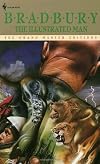
Where Bradbury's The October Country sometimes felt like a gimmick, containing many high-concept stories that can be summed up in a sentence and which lost something once you realized what the gimmick was but still had to finish reading the story, The Illustrated Man digs deeper and seems to have much more to actually say about life and people and hard truths. I wouldn't say the execution is necessarily any better. I still have problems with the pacing, with ridiculously purple prose, with stilted dialogue. Whether this is a better collection than October Country is hard to say, but it's certainly a more thought-provoking one.
The Veldt (5/5)
Although Bradbury's fear of television was misplaced, The Veldt stands as his cleverest and funniest anti-TV propaganda piece.
Kaleidoscope (4/5)
Kaleidoscope is the first Bradbury story that truly unnerved me. It's about astronauts stranded in space with futuristic suits that will keep them alive at least until they need food and water, but they're all just waiting to die and talking to each other over radio. Some messed up stuff, man.
The Other Foot (2/5)
A science fiction reverse-racism what-if story that was probably revolutionary for the time. After all, this book was published in 1951. Jim Crow would be in effect for another 14 years. However, today, it comes across as a farce. The one black man that has misgivings about blanket forgiveness for white oppression and the welcoming of a white stranger from Earth is portrayed as an show more angry black man stereotype.
The black people, once stirred up by our angry black stereotype, act like savages, ready to do to any white man what was done to them and then some. They set up sections in movie theaters at the far back for white people before the rocket even arrives. They were just itching to do some oppressing and segregating. That is, until said white guy finally arrives and teaches them humanity and empathy and they realize the error of their ways and all sing kumbaya together. Ridiculous. My modern rewrite would have them politely telling him that, no, all the white people who destroyed Earth and oppressed us cannot come to Mars and fuck Mars up too. We left to get away from y'all. Here's a bunch of supplies to ease your suffering and start rebuilding the planet you ruined. Take them back with you, stay there, make it work, and we'll reconvene in a hundred years if you're still around.
The Highway (2/5)
A dude in Mexico lives by the side of a highway and sells things to white people driving by. One day a lot more people than usual are driving by, and he finds out it's the result of a nuclear war. Living in a rural area, his life goes on, mostly unaffected. Good atmosphere, not much else.
The Man (3/5)
A rocket ship full of people arrive on a planet and discover a primitive civilization that is unimpressed by their arrival, which irks the captain. He finds out it's because Jesus (who is known by many names and is basically the archetype of all religious myths) had just arrived on the planet, preoccupying everyone's attention. The captain doesn't believe it at first, thinking a rival in another rocket beat him there and pretended to be the Jesus figure. Tensions rise, people from the rocket say they're staying on the planet, the captain eventually sees proof that he was really there and chases off into the stars after him, not realizing he was the mayor of the village the entire time and was right in front of him. It's a cool idea, I guess. I'm a fan of comparative mythology, and this spoke to that a bit.
The Long Rain (3/5)
Venus has been colonized by humans, but not without difficulty. It rains 24/7, enough to slake skin from bones and drive men mad. The only way to survive is to seek shelter in "sun domes," enclosures with a small artificial sun and all the comforts one could want. When a rocket from Earth crash lands, finding a sun dome becomes a priority for the survivors, and not all of them make it. I really enjoyed the atmosphere and imagery in this one. Bradbury did a really good job of painting a visceral picture of this strange setting, but the story was pretty pointless and anticlimactic.
The Rocket Man (5/5)
A fourteen year old boy is our viewpoint character, and the focus of the story is his father who is a rocket ship pilot and is gone most of the time for work, only returning every three months for a short visit. As you can imagine, this strains his relationship with his wife and son. This is Bradbury at his best. Using a futuristic scifi setting to tell simple, relatable stories that aren't that different than what people are dealing with today, and doing it in plain, unobtrusive language.
The Fire Balloons (3/5)
Missionary priests travel to Mars to rid the new planet of sin. The head priest is interested in these floating blue orbs filled with fire that seem to be sentient and must surely have sin they need saving from. Much like the earlier story, The Man, this story plays with the idea that Jesus exists on every planet, in the form of the native inhabitants whether they be Chinese or blue orbs of fire, and attempts to tie all religion together into a shared mythology. Again, it's a cool idea, but it's just a little sloppy and lacks subtlety and nuance. Not to mention that this story has the most purple prose in the entire collection so far.
The Last Night of the World (1/5)
The world is ending. Everybody in the world dreamt it, and nobody is afraid, and everybody is going about their lives like normal, which is...unique, I guess. But it doesn't really say anything about human nature or speak to truths, because that's not how it would actually go down. The shared dream is a vague religious/scifi angle that you could say explains or justifies their un-human-like behavior, which I guess it does, but it's not interesting enough in itself to make up for it. Nobody really spends time talking about the dream or where it came from or anything, so it just seemed like an excuse to have people behaving oddly. I found myself wondering what this story was even about, what it was trying to say, because it seems to say nothing beyond the fact that Bradbury had what he thought was a neat idea and probably wrote this incredibly short four-page story in an hour or two and then didn't really spend too much time thinking about it after that.
The Exiles (3/5)
This is a weird one. Basically it's the year 2100 something and science has overtaken human society to the point that all superstition has been stamped out and fantastical fiction has been outlawed and burned (Bradbury really likes his book burning imagery). Poe, Machen, Blackwood, etc. When this happened, the authors came back from the dead as...gods of some kind, I guess, and took up residence on Mars as ethereal exiles unwanted on Earth who will die for good when their last book has been burned. The story starts with men from Earth making the first trip to Mars. I feel like I can see a clear influence on Neil Gaiman's work here. The themes of gods being created and maintained by human thought. Gods facing the problems of immigration and exile and waning influence on human affairs as superstition and religion become obsolete. Gaiman just does it so much better, with more subtlety, and with cleaner and more elegant prose.
No Particular Night or Morning (1/5)
Some dude on a rocket starts to go space crazy, to the annoyance and frustration of his crew mates. Bradbury uses it as a vehicle for some really weird existentialist philosophizing that started to get downright autobiographical. It really seems like he did some morning free writing and his mind wandered to what it feels like to be an author and how much your stories are actually connected to you as a person and then just slapped a scifi frame story on it. The very definition of navel gazing.
The Fox and the Forest (4/5)
In the year 2155 Earth is a horrible place to live. Nuclear and biological warfare run rampant, every citizen must contribute to the war effort, government overlords, etc. When time travel vacations into the past become a thing, a disillusioned couple tries to extend their 1938 vacation in Mexico indefinitely by going off the grid. Unfortunately there's a division of people called "searchers" who are trained to track down runaways and bring them back to the future. Really cool premise. I've seen it before, but it was handled really well here and for all I know Bradbury invented it.
The Visitor (4/5)
This is a great, "people suck," type story. When people on Earth are stricken by a particular disease that kills within a year, they are sent up to Mars like lepers. The newest arrival has psychic powers and can conjure up any image a person could want, like a walking holodeck. The disease-stricken lepers, half-insane, fight over who gets to use him and his powers.
The Concrete Mixer (1/5)
Martians invade Earth and find a planet that welcomes them with open arms and kills them with kindness and with vice. They drink too much liquor, have too much sex, crash too many cars, etc. The story implies that eventually old fashioned Earth capitalism will invade Mars with shoe polish and titty bars and movie theaters. What a weird a fundamentally stupid idea, and I hate how it's written so much.
Marionettes, Inc. (3/5)
This is essentially a horror story, although one with a futuristic bent. Basically a shady, illegal company makes perfect robot duplicates of people. One man decides to make a duplicate of himself to keep his wife busy while he takes a solo vacation to Rio and it doesn't end well for him.
The City (4/5)
Human explorers find an empty, ancient city that turns out to be a complex mechanical trap created by a species that was driven to extinction by humans twenty thousand years before in a war that the modern day human explorers have long forgotten ever happened. But that won't stop the city from carrying out its duty of revenge.
Zero Hour (3/5)
Another alien invasion story. In this one the invaders whisper to the world's children through dimensional rifts and direct them to build fully functional transporters that will let them invade en masse under the guise of a game that's sweeping the nation and that the parents mostly ignore as kids being kids.
The Rocket (5/5)
What a showstopper! Funny how The Rocket Man and The Rocket are by far the two best stories in this collection, and for much the same reasons. This is why I put up with the hackneyed plots, the stilted dialogue, the purple prose, the overwrought metaphors. Because, sometimes, I get a story like this that makes it all worth it. I love it so much I could cry.
In the age of rockets a poor man and his family have little to their names but a struggling junkyard on the edge of financial ruin. He's saved up some money for necessary new equipment but longs to spend it on a rocket trip for himself instead. Knowing this would be selfish, however, he offers the trip to his wife and kids, and they all wind up drawing straws for it since only one can go. But each time one of them wins they see the sad eyes of the rest of the family and decline. Shortly afterwards he's offered a full-scale, non-functional model rocket made out of aluminum by a business connection. His aluminum furnace is broken so he can't melt it down for scrap and sell it, but he buys it anyway, spending as much money as he would on the ticket. He puts old car engines in the rocket and 3D films of space outside the windows and takes his kids on a trip that they'll never forget. show less
The Veldt (5/5)
Although Bradbury's fear of television was misplaced, The Veldt stands as his cleverest and funniest anti-TV propaganda piece.
Kaleidoscope (4/5)
Kaleidoscope is the first Bradbury story that truly unnerved me. It's about astronauts stranded in space with futuristic suits that will keep them alive at least until they need food and water, but they're all just waiting to die and talking to each other over radio. Some messed up stuff, man.
The Other Foot (2/5)
A science fiction reverse-racism what-if story that was probably revolutionary for the time. After all, this book was published in 1951. Jim Crow would be in effect for another 14 years. However, today, it comes across as a farce. The one black man that has misgivings about blanket forgiveness for white oppression and the welcoming of a white stranger from Earth is portrayed as an show more angry black man stereotype.
The black people, once stirred up by our angry black stereotype, act like savages, ready to do to any white man what was done to them and then some. They set up sections in movie theaters at the far back for white people before the rocket even arrives. They were just itching to do some oppressing and segregating. That is, until said white guy finally arrives and teaches them humanity and empathy and they realize the error of their ways and all sing kumbaya together. Ridiculous. My modern rewrite would have them politely telling him that, no, all the white people who destroyed Earth and oppressed us cannot come to Mars and fuck Mars up too. We left to get away from y'all. Here's a bunch of supplies to ease your suffering and start rebuilding the planet you ruined. Take them back with you, stay there, make it work, and we'll reconvene in a hundred years if you're still around.
The Highway (2/5)
A dude in Mexico lives by the side of a highway and sells things to white people driving by. One day a lot more people than usual are driving by, and he finds out it's the result of a nuclear war. Living in a rural area, his life goes on, mostly unaffected. Good atmosphere, not much else.
The Man (3/5)
A rocket ship full of people arrive on a planet and discover a primitive civilization that is unimpressed by their arrival, which irks the captain. He finds out it's because Jesus (who is known by many names and is basically the archetype of all religious myths) had just arrived on the planet, preoccupying everyone's attention. The captain doesn't believe it at first, thinking a rival in another rocket beat him there and pretended to be the Jesus figure. Tensions rise, people from the rocket say they're staying on the planet, the captain eventually sees proof that he was really there and chases off into the stars after him, not realizing he was the mayor of the village the entire time and was right in front of him. It's a cool idea, I guess. I'm a fan of comparative mythology, and this spoke to that a bit.
The Long Rain (3/5)
Venus has been colonized by humans, but not without difficulty. It rains 24/7, enough to slake skin from bones and drive men mad. The only way to survive is to seek shelter in "sun domes," enclosures with a small artificial sun and all the comforts one could want. When a rocket from Earth crash lands, finding a sun dome becomes a priority for the survivors, and not all of them make it. I really enjoyed the atmosphere and imagery in this one. Bradbury did a really good job of painting a visceral picture of this strange setting, but the story was pretty pointless and anticlimactic.
The Rocket Man (5/5)
A fourteen year old boy is our viewpoint character, and the focus of the story is his father who is a rocket ship pilot and is gone most of the time for work, only returning every three months for a short visit. As you can imagine, this strains his relationship with his wife and son. This is Bradbury at his best. Using a futuristic scifi setting to tell simple, relatable stories that aren't that different than what people are dealing with today, and doing it in plain, unobtrusive language.
The Fire Balloons (3/5)
Missionary priests travel to Mars to rid the new planet of sin. The head priest is interested in these floating blue orbs filled with fire that seem to be sentient and must surely have sin they need saving from. Much like the earlier story, The Man, this story plays with the idea that Jesus exists on every planet, in the form of the native inhabitants whether they be Chinese or blue orbs of fire, and attempts to tie all religion together into a shared mythology. Again, it's a cool idea, but it's just a little sloppy and lacks subtlety and nuance. Not to mention that this story has the most purple prose in the entire collection so far.
The Last Night of the World (1/5)
The world is ending. Everybody in the world dreamt it, and nobody is afraid, and everybody is going about their lives like normal, which is...unique, I guess. But it doesn't really say anything about human nature or speak to truths, because that's not how it would actually go down. The shared dream is a vague religious/scifi angle that you could say explains or justifies their un-human-like behavior, which I guess it does, but it's not interesting enough in itself to make up for it. Nobody really spends time talking about the dream or where it came from or anything, so it just seemed like an excuse to have people behaving oddly. I found myself wondering what this story was even about, what it was trying to say, because it seems to say nothing beyond the fact that Bradbury had what he thought was a neat idea and probably wrote this incredibly short four-page story in an hour or two and then didn't really spend too much time thinking about it after that.
The Exiles (3/5)
This is a weird one. Basically it's the year 2100 something and science has overtaken human society to the point that all superstition has been stamped out and fantastical fiction has been outlawed and burned (Bradbury really likes his book burning imagery). Poe, Machen, Blackwood, etc. When this happened, the authors came back from the dead as...gods of some kind, I guess, and took up residence on Mars as ethereal exiles unwanted on Earth who will die for good when their last book has been burned. The story starts with men from Earth making the first trip to Mars. I feel like I can see a clear influence on Neil Gaiman's work here. The themes of gods being created and maintained by human thought. Gods facing the problems of immigration and exile and waning influence on human affairs as superstition and religion become obsolete. Gaiman just does it so much better, with more subtlety, and with cleaner and more elegant prose.
No Particular Night or Morning (1/5)
Some dude on a rocket starts to go space crazy, to the annoyance and frustration of his crew mates. Bradbury uses it as a vehicle for some really weird existentialist philosophizing that started to get downright autobiographical. It really seems like he did some morning free writing and his mind wandered to what it feels like to be an author and how much your stories are actually connected to you as a person and then just slapped a scifi frame story on it. The very definition of navel gazing.
The Fox and the Forest (4/5)
In the year 2155 Earth is a horrible place to live. Nuclear and biological warfare run rampant, every citizen must contribute to the war effort, government overlords, etc. When time travel vacations into the past become a thing, a disillusioned couple tries to extend their 1938 vacation in Mexico indefinitely by going off the grid. Unfortunately there's a division of people called "searchers" who are trained to track down runaways and bring them back to the future. Really cool premise. I've seen it before, but it was handled really well here and for all I know Bradbury invented it.
The Visitor (4/5)
This is a great, "people suck," type story. When people on Earth are stricken by a particular disease that kills within a year, they are sent up to Mars like lepers. The newest arrival has psychic powers and can conjure up any image a person could want, like a walking holodeck. The disease-stricken lepers, half-insane, fight over who gets to use him and his powers.
The Concrete Mixer (1/5)
Martians invade Earth and find a planet that welcomes them with open arms and kills them with kindness and with vice. They drink too much liquor, have too much sex, crash too many cars, etc. The story implies that eventually old fashioned Earth capitalism will invade Mars with shoe polish and titty bars and movie theaters. What a weird a fundamentally stupid idea, and I hate how it's written so much.
Marionettes, Inc. (3/5)
This is essentially a horror story, although one with a futuristic bent. Basically a shady, illegal company makes perfect robot duplicates of people. One man decides to make a duplicate of himself to keep his wife busy while he takes a solo vacation to Rio and it doesn't end well for him.
The City (4/5)
Human explorers find an empty, ancient city that turns out to be a complex mechanical trap created by a species that was driven to extinction by humans twenty thousand years before in a war that the modern day human explorers have long forgotten ever happened. But that won't stop the city from carrying out its duty of revenge.
Zero Hour (3/5)
Another alien invasion story. In this one the invaders whisper to the world's children through dimensional rifts and direct them to build fully functional transporters that will let them invade en masse under the guise of a game that's sweeping the nation and that the parents mostly ignore as kids being kids.
The Rocket (5/5)
What a showstopper! Funny how The Rocket Man and The Rocket are by far the two best stories in this collection, and for much the same reasons. This is why I put up with the hackneyed plots, the stilted dialogue, the purple prose, the overwrought metaphors. Because, sometimes, I get a story like this that makes it all worth it. I love it so much I could cry.
In the age of rockets a poor man and his family have little to their names but a struggling junkyard on the edge of financial ruin. He's saved up some money for necessary new equipment but longs to spend it on a rocket trip for himself instead. Knowing this would be selfish, however, he offers the trip to his wife and kids, and they all wind up drawing straws for it since only one can go. But each time one of them wins they see the sad eyes of the rest of the family and decline. Shortly afterwards he's offered a full-scale, non-functional model rocket made out of aluminum by a business connection. His aluminum furnace is broken so he can't melt it down for scrap and sell it, but he buys it anyway, spending as much money as he would on the ticket. He puts old car engines in the rocket and 3D films of space outside the windows and takes his kids on a trip that they'll never forget. show less
Do the words meta, post-modern, or experimental make you cringe when used to describe books? Then turn back now. I feel the need to say that up front because many people seem to go into this book expecting a horror novel and wind up wasting their money. Just take a look at the genres that goodreads lists this as. Horror, fiction, fantasy, and mystery. With inapt labels like that, it's easy to see how people could get the wrong idea.
This is not a horror novel, nor is it a mystery novel or a fantasy novel. This book is, among many other things, a personal story about the author's parents presented as experimental literary fiction that's thinly veiled as a horror novel. Confused? Good, stay that way for now, and don't think too hard about what I just said. I'm not that into horror novels, and I generally like post-modern and experimental stuff, and I knew what I was getting into when I bought this. Know what you're getting into, that's all I'm trying to say.
Here's the basic concept as clear and concise as I can tell it. There are essentially three narrators that will be addressing you, the reader.
1) Zampano, an old blind man
2) Johnny Truant, a thirty-something druggie
3) The "editors"
Johnny's friend, Lude, knows Zampano because he lives in the same apartment building. The old man, ominously, tells Lude he's going to die soon, and does. After the body is gone, Lude and Johnny sneak into the apartment to take a look around at Zampano's things. They find a crazy manuscript, show more which Johnny takes home with him.
The manuscript is a non-fiction book/dissertation about a documentary called "The Navidson Record." The Navidson Record is about a famous photojournalist named Will Navidson and his family moving into a new house that is bigger on the inside. When I say non-fiction, I mean it. It reads like a textbook. On every page there are footnotes about other articles and other books that reference this documentary that, by all accounts, doesn't exist (I'll get to this in a second).
It starts out simple at first. After the family returns home from vacation they notice a hallway on the second floor connecting two bedrooms that wasn't there before. They track down a blueprint of the building and see that there is a space between the walls, although it's not supposed to be a finished hallway with doors. Okay, no big deal, maybe they didn't notice the doors before, it's a new house after all and they had just moved in before going on vacation. Then comes the realization that measuring the house through that hallway results in an extra inch that shouldn't exist, and that can't be explained. Then a new door appears, on the first floor this time, that should lead to an empty back yard but instead leads to a long, dark hallway that extends into an endless labyrinth of cavernous, thousand-foot rooms that leads to god knows where and contains god knows what, and the exploration of this door is the main focus of the documentary.
So Johnny finds this manuscript, reads it, edits it, adds his own footnotes relating to research he's done on Zampano's life and the manuscript contents (translations of foreign phrases, for instance), but also personal tangents about his own life and stream of consciousness ramblings. In the prologue where he explains how he found the manuscript, he also says that The Navidson Record doesn't actually exist. Johnny's editors also appear in footnotes and in the first say they have never met Johnny Truant in person, only communicating via letters and rare phone calls. Weird, right?
What follows is 528 pages of an interwoven, multi-layered story. On the one hand, you have Zampano's non-fiction book about this fictitious documentary, which simmers as a slow-paced "found-footage" horror novel that can be unsettling, thought-provoking, but is likely to disappoint hardcore horror fans looking for adrenaline-pumping scares.
Then you have Johnny's story, told through long footnotes, which is more vague and slow to reveal itself, but the basic idea is that although he knows the manuscript is fiction, the act of reading it causes him to lose his marbles. Whether the manuscript or Johnny's brain chemistry is to blame is up to the reader. Whether Johnny is even telling the truth is up to the reader. And, to be honest, Johnny's parts can sometimes be hard to read because he's just pitiable and depressing and the stream of consciousness prose can wear down your focus. It gets Joyce-esque at times, though only for short stretches, because Danielewski is a nice man who wants you to have a good time, unlike Joyce, who hates you and hates fun. Then the "story" part ends, and you have 130 pages of appendices (which you should read) which include things like:
Zampano's writings which are not a part of The Navidson Record
The obituary of Johnny's dad
Childhood letters from Johnny's crazy, institutionalized, long dead mother
Poems
So what does it all mean?
Well, it means a clever and perhaps over-educated man named Mark Danielewski decided to write a novel that experiments with the format of the novel, that pushes the boundaries of what a novel can be and what it can do. While much of it could quite fairly be called a gimmick, and it won't be redefining how all novels are written going forward, it's a gimmick that works, that is unique, that is stimulating, that is discussion-worthy, that makes the world more interesting by existing, and isn't that what good art is supposed to do? It is an unmitigated success at being singular, and because it is singular it will inspire intense love and intense hatred from different people.
It means that while there are answers, you will have to work for them. I mean this both figuratively and literally. On the literal side, there is a letter in the appendices that is written in a simple code, which you will have to translate into a coherent message with pen and paper. And that's a code that is plainly said to be a code. There are other codes that are truly hidden.
Many sections have weird, cluttered layouts that make the act of reading them hard, and make tracking down the right footnote a scavenger hunt. You'll be presented with footnotes that make no sense until you realize the text is broken up over several pages and presented backwards. There are a lot of elements to the story, little throwaway lines and facts that you need to remember, or write down. How did Johnny's dad die. How did Navidson's dad die. Stuff like that. While it's not absolutely necessary, I'd recommend having a notebook handy starting on page one. I have an amazing memory, took notes here and there, and still wish I'd taken more. Like I said, this book is work. It's fun work though, depending on your tastes and personality. I'm an INTP and I loved it. Your mileage may vary.
On the figurative side, the book still won't hold your hand and spell out what it all means in flashing neon. That's up to you to figure out by gathering all the evidence together and deconstructing the book on several different levels by asking yourself what's true and what isn't, what matters and what doesn't, what's literal and what's figurative, what's the metanarrative, what's the subtext. Ultimately it's up to you to decide when you're satisfied with your answer.
While this is nowhere near as open to interpretation as most books you'd label as post-modern or modernist, it is still open to interpretation compared to a typical novel, which isn't open to interpretation at all. There are no easy answers, no definitive answers, but there are satisfying answers that I firmly believe are more or less what the author intended, if you're willing to put in the effort to discover them and have a flexible mind that delights in abstract concepts. Alternatively there are, of course, existing breakdowns of it on the internet that you can turn to for some help, although none I've read have gone far enough into speculation. They present facts and evidence, point out what's true or not, but none of them have drawn the kind of final conclusion that I've drawn. That's how it should be. You should decide for yourself. If none of this sounds like fun to you, I recommend giving this one a pass. show less
This is not a horror novel, nor is it a mystery novel or a fantasy novel. This book is, among many other things, a personal story about the author's parents presented as experimental literary fiction that's thinly veiled as a horror novel. Confused? Good, stay that way for now, and don't think too hard about what I just said. I'm not that into horror novels, and I generally like post-modern and experimental stuff, and I knew what I was getting into when I bought this. Know what you're getting into, that's all I'm trying to say.
Here's the basic concept as clear and concise as I can tell it. There are essentially three narrators that will be addressing you, the reader.
1) Zampano, an old blind man
2) Johnny Truant, a thirty-something druggie
3) The "editors"
Johnny's friend, Lude, knows Zampano because he lives in the same apartment building. The old man, ominously, tells Lude he's going to die soon, and does. After the body is gone, Lude and Johnny sneak into the apartment to take a look around at Zampano's things. They find a crazy manuscript, show more which Johnny takes home with him.
The manuscript is a non-fiction book/dissertation about a documentary called "The Navidson Record." The Navidson Record is about a famous photojournalist named Will Navidson and his family moving into a new house that is bigger on the inside. When I say non-fiction, I mean it. It reads like a textbook. On every page there are footnotes about other articles and other books that reference this documentary that, by all accounts, doesn't exist (I'll get to this in a second).
It starts out simple at first. After the family returns home from vacation they notice a hallway on the second floor connecting two bedrooms that wasn't there before. They track down a blueprint of the building and see that there is a space between the walls, although it's not supposed to be a finished hallway with doors. Okay, no big deal, maybe they didn't notice the doors before, it's a new house after all and they had just moved in before going on vacation. Then comes the realization that measuring the house through that hallway results in an extra inch that shouldn't exist, and that can't be explained. Then a new door appears, on the first floor this time, that should lead to an empty back yard but instead leads to a long, dark hallway that extends into an endless labyrinth of cavernous, thousand-foot rooms that leads to god knows where and contains god knows what, and the exploration of this door is the main focus of the documentary.
So Johnny finds this manuscript, reads it, edits it, adds his own footnotes relating to research he's done on Zampano's life and the manuscript contents (translations of foreign phrases, for instance), but also personal tangents about his own life and stream of consciousness ramblings. In the prologue where he explains how he found the manuscript, he also says that The Navidson Record doesn't actually exist. Johnny's editors also appear in footnotes and in the first say they have never met Johnny Truant in person, only communicating via letters and rare phone calls. Weird, right?
What follows is 528 pages of an interwoven, multi-layered story. On the one hand, you have Zampano's non-fiction book about this fictitious documentary, which simmers as a slow-paced "found-footage" horror novel that can be unsettling, thought-provoking, but is likely to disappoint hardcore horror fans looking for adrenaline-pumping scares.
Then you have Johnny's story, told through long footnotes, which is more vague and slow to reveal itself, but the basic idea is that although he knows the manuscript is fiction, the act of reading it causes him to lose his marbles. Whether the manuscript or Johnny's brain chemistry is to blame is up to the reader. Whether Johnny is even telling the truth is up to the reader. And, to be honest, Johnny's parts can sometimes be hard to read because he's just pitiable and depressing and the stream of consciousness prose can wear down your focus. It gets Joyce-esque at times, though only for short stretches, because Danielewski is a nice man who wants you to have a good time, unlike Joyce, who hates you and hates fun. Then the "story" part ends, and you have 130 pages of appendices (which you should read) which include things like:
Zampano's writings which are not a part of The Navidson Record
The obituary of Johnny's dad
Childhood letters from Johnny's crazy, institutionalized, long dead mother
Poems
So what does it all mean?
Well, it means a clever and perhaps over-educated man named Mark Danielewski decided to write a novel that experiments with the format of the novel, that pushes the boundaries of what a novel can be and what it can do. While much of it could quite fairly be called a gimmick, and it won't be redefining how all novels are written going forward, it's a gimmick that works, that is unique, that is stimulating, that is discussion-worthy, that makes the world more interesting by existing, and isn't that what good art is supposed to do? It is an unmitigated success at being singular, and because it is singular it will inspire intense love and intense hatred from different people.
It means that while there are answers, you will have to work for them. I mean this both figuratively and literally. On the literal side, there is a letter in the appendices that is written in a simple code, which you will have to translate into a coherent message with pen and paper. And that's a code that is plainly said to be a code. There are other codes that are truly hidden.
Many sections have weird, cluttered layouts that make the act of reading them hard, and make tracking down the right footnote a scavenger hunt. You'll be presented with footnotes that make no sense until you realize the text is broken up over several pages and presented backwards. There are a lot of elements to the story, little throwaway lines and facts that you need to remember, or write down. How did Johnny's dad die. How did Navidson's dad die. Stuff like that. While it's not absolutely necessary, I'd recommend having a notebook handy starting on page one. I have an amazing memory, took notes here and there, and still wish I'd taken more. Like I said, this book is work. It's fun work though, depending on your tastes and personality. I'm an INTP and I loved it. Your mileage may vary.
On the figurative side, the book still won't hold your hand and spell out what it all means in flashing neon. That's up to you to figure out by gathering all the evidence together and deconstructing the book on several different levels by asking yourself what's true and what isn't, what matters and what doesn't, what's literal and what's figurative, what's the metanarrative, what's the subtext. Ultimately it's up to you to decide when you're satisfied with your answer.
While this is nowhere near as open to interpretation as most books you'd label as post-modern or modernist, it is still open to interpretation compared to a typical novel, which isn't open to interpretation at all. There are no easy answers, no definitive answers, but there are satisfying answers that I firmly believe are more or less what the author intended, if you're willing to put in the effort to discover them and have a flexible mind that delights in abstract concepts. Alternatively there are, of course, existing breakdowns of it on the internet that you can turn to for some help, although none I've read have gone far enough into speculation. They present facts and evidence, point out what's true or not, but none of them have drawn the kind of final conclusion that I've drawn. That's how it should be. You should decide for yourself. If none of this sounds like fun to you, I recommend giving this one a pass. show less
A long short story/short novella from 1909 that is by far the most prescient piece of fiction I have ever read. Piercingly intelligent and brilliantly written. Vashti's skewed cultural norms ring true in a way that early scifi like this never does, and it reminded me of the really well thought out cultures in modern epic fantasy.
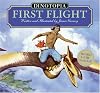
I hate almost everything about this. It's a third as long as the previous books at 50 something pages. It takes place in the far past and focuses on the ancient, technologically advanced "Atlantis" culture, rather than the characters we're already familiar with. I already disliked the Atlantis angle from the previous book, so that's just fantastic. Even the physical quality of the book itself is much poorer than the previous ones, thanks to the inclusion of a stupid fold-out board game in the front that takes up half the book's total thickness, and makes it so that the pages aren't actually attached to the spine, but rather suspended between two sheets of paper glued to each cover. In my used copy (which is otherwise in good condition), these pages are starting to peel away from the covers, leaving me with a loose wobbly mess of a book.
As always, Gurney's art is great (although generally not as inspired here as in the previous books), and it's interesting to see his visual take on an advanced society with robots, flying vehicles, advanced computers, and remote piloted drones. I feel bad giving it one star just because of that, but it's such a major disappointment that I feel I have to. What the hell happened here? How did this series go from a challenging children's book about solid world-building to one that's so pandering it needed to become a third of the length, include a crappy board game, completely remove all the older characters in favor of just a single young show more boy that's more 'identifiable,' and have lots of flashy Star Wars-esque imagery? Did the previous books really sell that badly? This is one of the most egregious cases of "dumbing down" that I have ever seen. show less
As always, Gurney's art is great (although generally not as inspired here as in the previous books), and it's interesting to see his visual take on an advanced society with robots, flying vehicles, advanced computers, and remote piloted drones. I feel bad giving it one star just because of that, but it's such a major disappointment that I feel I have to. What the hell happened here? How did this series go from a challenging children's book about solid world-building to one that's so pandering it needed to become a third of the length, include a crappy board game, completely remove all the older characters in favor of just a single young show more boy that's more 'identifiable,' and have lots of flashy Star Wars-esque imagery? Did the previous books really sell that badly? This is one of the most egregious cases of "dumbing down" that I have ever seen. show less
The 1957 film version is one of the greatest pieces of cinema ever created, and one of my favorite movies. Near as I can tell from memory (I have seen the movie a lot), this is completely identical except for slight differences in the emotional breakdowns of the two least sympathetic jurors.
Juror number 10's breakdown is a bit tamer in the movie. He doesn't say anything about "those people" trying to "breed us out of existence," although the general idea certainly gets across. I like how much farther it goes in the play, it really shows the extent of his overwhelming fear and how it clouds his reasoning.
Juror number 3's breakdown at the very end was one of the most powerful moments to me, and I think it was slightly more effective in the movie. It felt more personal, more cathartic. You really get the sense that he's learned something he can apply to his relationship with his own son. I like to think after the movie ends he tries to reconnect with him, that he's realized his own faults that led to their falling out. The play is anticlimactic in comparison, it's not implied he's had a personal revelation about his relationship with his own son so much as he's just finally admitted not all kids are the same and he's willing to give somebody else's kid another shot at life because maybe that kid isn't as bad as his own. Still, that's no slight against this version. It more than deserves five stars. This is one of those special pieces of fiction that makes the world better show more simply by existing. Legit legendary status. show less
Juror number 10's breakdown is a bit tamer in the movie. He doesn't say anything about "those people" trying to "breed us out of existence," although the general idea certainly gets across. I like how much farther it goes in the play, it really shows the extent of his overwhelming fear and how it clouds his reasoning.
Juror number 3's breakdown at the very end was one of the most powerful moments to me, and I think it was slightly more effective in the movie. It felt more personal, more cathartic. You really get the sense that he's learned something he can apply to his relationship with his own son. I like to think after the movie ends he tries to reconnect with him, that he's realized his own faults that led to their falling out. The play is anticlimactic in comparison, it's not implied he's had a personal revelation about his relationship with his own son so much as he's just finally admitted not all kids are the same and he's willing to give somebody else's kid another shot at life because maybe that kid isn't as bad as his own. Still, that's no slight against this version. It more than deserves five stars. This is one of those special pieces of fiction that makes the world better show more simply by existing. Legit legendary status. show less
I could talk about the quality of the story, but I'm not going to, and that's because so many others seem intent on not talking about the quality of the story. Let my rating speak for itself and I'll use this space to address some people I feel need addressing.
A lot of people seem really peeved that this won a Hugo when it's not a very traditional scifi/fantasy story. I've actually seen reviews where people have said it's a great story, but two stars because it's not really scifi/fantasy and didn't deserve to win a Hugo. Some have called it "magical realism," as a way to delegitimize the win. Last time I checked, magical realism is a subgenre of fantasy, and the Hugo focuses on fantasy as a whole and not a particular subgenre(s) you happen to like.
You're missing the point of scifi and fantasy entirely. Scifi and fantasy are not the tropes that they contain. Having elves and magic makes your story fantasy, but not all fantasy contains elves or magic. Having spaceships and laser guns makes your story scifi, but not all scifi contains spaceships and laser guns. Don't get the genre confused for the tropes, or you're no better than the lit fic snobs that look down on us for reading "lesser" fiction because they think they know exactly what scifi and fantasy is, what it can and can't be.
Here's the real truth. Science fiction and fantasy can do everything that any other genre can do. You will find fantasy and science fiction with the literary styling of the great classic show more literature. You'll find romance every bit as powerful as the great romantic fiction. You'll find mystery, you'll find adventure, you'll find teen problem novels. These two interrelated genres are not limited by what they can contain, in fact they are the only genres that are not limited by what they can contain.
People involved enough in the genre to pay attention to the Hugo awards should know this, should feel this way, should celebrate this strength and variety. If all you will accept as real scifi/fantasy is a particular subgenre(s) with familiar tropes, you don't belong anywhere near the Hugo awards, because you don't get it. show less
A lot of people seem really peeved that this won a Hugo when it's not a very traditional scifi/fantasy story. I've actually seen reviews where people have said it's a great story, but two stars because it's not really scifi/fantasy and didn't deserve to win a Hugo. Some have called it "magical realism," as a way to delegitimize the win. Last time I checked, magical realism is a subgenre of fantasy, and the Hugo focuses on fantasy as a whole and not a particular subgenre(s) you happen to like.
You're missing the point of scifi and fantasy entirely. Scifi and fantasy are not the tropes that they contain. Having elves and magic makes your story fantasy, but not all fantasy contains elves or magic. Having spaceships and laser guns makes your story scifi, but not all scifi contains spaceships and laser guns. Don't get the genre confused for the tropes, or you're no better than the lit fic snobs that look down on us for reading "lesser" fiction because they think they know exactly what scifi and fantasy is, what it can and can't be.
Here's the real truth. Science fiction and fantasy can do everything that any other genre can do. You will find fantasy and science fiction with the literary styling of the great classic show more literature. You'll find romance every bit as powerful as the great romantic fiction. You'll find mystery, you'll find adventure, you'll find teen problem novels. These two interrelated genres are not limited by what they can contain, in fact they are the only genres that are not limited by what they can contain.
People involved enough in the genre to pay attention to the Hugo awards should know this, should feel this way, should celebrate this strength and variety. If all you will accept as real scifi/fantasy is a particular subgenre(s) with familiar tropes, you don't belong anywhere near the Hugo awards, because you don't get it. show less
This book is a curious time capsule. A look at what somebody at the turn of the 17th century might think of as the perfect society, although I'm nowhere near knowledgeable enough to say how common these views really were. Skimming Campanella's wikipedia page tells me he was imprisoned by the Catholic church, but he did have some co-conspirators, so I guess fringe but still around?
Campanella's communist, theocratic, sexist, eugenicist, "utopian" society of philosopher-warrior-artists strikes a modern reader as naive and infantile at best, deeply disgusting at worst, but the depth to which he describes every aspect of this society offers some interest. Unfortunately the material is drier than it needs to be. There are no characters to latch onto, no narrative, nothing about how the narrator felt upon discovering this society, just a long description of how every aspect of it is organized as if a teacher were giving a lecture.
The grand-master he's having a conversation with is completely unnecessary and adds nothing to the conversation except a "do please go on, tell me how they do X," every time the story shifts to a new topic. The book would be better without him, because having him there but doing nothing makes the missed opportunity for real argument and conflict (and thus some actual narrative tension) all the more apparent. It's far too obvious that Campanella is simply preaching his personal philosophy to the reader and the grand-master character could've been an show more excuse to play devil's advocate with a conflicting viewpoint.
For a fun drinking game, take a shot anytime the narrator says, "and so on." If anyone survives the resultant alcohol poisoning and stomach pumping I'd love to hear about it. show less
Campanella's communist, theocratic, sexist, eugenicist, "utopian" society of philosopher-warrior-artists strikes a modern reader as naive and infantile at best, deeply disgusting at worst, but the depth to which he describes every aspect of this society offers some interest. Unfortunately the material is drier than it needs to be. There are no characters to latch onto, no narrative, nothing about how the narrator felt upon discovering this society, just a long description of how every aspect of it is organized as if a teacher were giving a lecture.
The grand-master he's having a conversation with is completely unnecessary and adds nothing to the conversation except a "do please go on, tell me how they do X," every time the story shifts to a new topic. The book would be better without him, because having him there but doing nothing makes the missed opportunity for real argument and conflict (and thus some actual narrative tension) all the more apparent. It's far too obvious that Campanella is simply preaching his personal philosophy to the reader and the grand-master character could've been an show more excuse to play devil's advocate with a conflicting viewpoint.
For a fun drinking game, take a shot anytime the narrator says, "and so on." If anyone survives the resultant alcohol poisoning and stomach pumping I'd love to hear about it. show less
Alloy of Law is the start of Sanderson's most revolutionary idea--to take the Medieval world of his bestselling Mistborn trilogy into the future, step by step, over the course of, as of now, thirteen books. The last trilogy will basically be science fiction set in space. It's incredibly ambitious, and as far as I know it has never been done before. I have confidence that he can pull it off.
As I understand it the original plan did not include the time period of Alloy of Law, instead starting with a second trilogy set in a 1980s society. Alloy of Law started as a short story and grew into a novel, but a much shorter novel than is typical of Sanderson, clocking in at a slim 325 pages. It's a sort of in-between book, introducing the characters that will feature in the new 1800s trilogy that Sanderson decided to write before the 1980s one.
Perhaps because of that I was left wanting in the world-building area. Alloy of Law paints a vague picture of a mid-late 1800s society. I absolutely love the setting, but I just didn't get enough details for my taste. Similarly, Sanderson brings the characters and events of the first trilogy into this new time as legends, religions, etc. He gives little tidbits of the effect allomancy and feruchemy have on a society of this level of advancement. One of my favorites was an off-hand reference to a politician who won by a landslide by emphasizing the fact that he was a coppercloud and thus couldn't be influenced by emotional allomancy.
Again, I show more loved it, but just didn't quite get enough. If this book had been just 50-100 pages longer with more of his typical attention to world-building and a slightly more complex plot, it would be perfect. As it stands, it's just really good.
What it did do though is get me very excited for the upcoming trilogy. The things that work well, work really well. The action is actually aided by the fact that mistborn are no longer a thing. Everything is scaled back, gun-play has been added, and the comparative simplicity works wonders. Now people can either have one allomantic power, one feruchemical power, or one of each. These last are called "Twinborn" and of course the main character, Waxilllium, is one of the more powerful mixtures of these, being able to reduce or enhance his weight with feruchemical iron, and push on metals with allomantic steel. This allows him to do cool stuff like add velocity to his bullets so that low calibur handgun rounds can pierce through thick wood and still kill someone. Or create a bubble of steel-pushing around himself that helps deflect bullets. Or shoot buckshot into a floor and use it to launch himself into the air. It's all incredibly cool.
The side characters are very likeable. Moreso, I would argue, than many of the ones in the original trilogy. Wax's old lawmaker buddy, Wayne, is a sarcastic master of disguise who just wants to fight the bad guys. Marasi is a noblewoman who just wants to become a lawyer and learn about crime-related statistics. Etc.
Like I said, it's a really good book. It just doesn't have enough in it to fully immerse you in this new time period which may as well be a world unto itself since everything is so incredibly different. show less
As I understand it the original plan did not include the time period of Alloy of Law, instead starting with a second trilogy set in a 1980s society. Alloy of Law started as a short story and grew into a novel, but a much shorter novel than is typical of Sanderson, clocking in at a slim 325 pages. It's a sort of in-between book, introducing the characters that will feature in the new 1800s trilogy that Sanderson decided to write before the 1980s one.
Perhaps because of that I was left wanting in the world-building area. Alloy of Law paints a vague picture of a mid-late 1800s society. I absolutely love the setting, but I just didn't get enough details for my taste. Similarly, Sanderson brings the characters and events of the first trilogy into this new time as legends, religions, etc. He gives little tidbits of the effect allomancy and feruchemy have on a society of this level of advancement. One of my favorites was an off-hand reference to a politician who won by a landslide by emphasizing the fact that he was a coppercloud and thus couldn't be influenced by emotional allomancy.
Again, I show more loved it, but just didn't quite get enough. If this book had been just 50-100 pages longer with more of his typical attention to world-building and a slightly more complex plot, it would be perfect. As it stands, it's just really good.
What it did do though is get me very excited for the upcoming trilogy. The things that work well, work really well. The action is actually aided by the fact that mistborn are no longer a thing. Everything is scaled back, gun-play has been added, and the comparative simplicity works wonders. Now people can either have one allomantic power, one feruchemical power, or one of each. These last are called "Twinborn" and of course the main character, Waxilllium, is one of the more powerful mixtures of these, being able to reduce or enhance his weight with feruchemical iron, and push on metals with allomantic steel. This allows him to do cool stuff like add velocity to his bullets so that low calibur handgun rounds can pierce through thick wood and still kill someone. Or create a bubble of steel-pushing around himself that helps deflect bullets. Or shoot buckshot into a floor and use it to launch himself into the air. It's all incredibly cool.
The side characters are very likeable. Moreso, I would argue, than many of the ones in the original trilogy. Wax's old lawmaker buddy, Wayne, is a sarcastic master of disguise who just wants to fight the bad guys. Marasi is a noblewoman who just wants to become a lawyer and learn about crime-related statistics. Etc.
Like I said, it's a really good book. It just doesn't have enough in it to fully immerse you in this new time period which may as well be a world unto itself since everything is so incredibly different. show less

One of Sanderson's strengths, as a self-admitted heavy outliner, are endings. He's claimed as much himself, noting it as a strength of his. It's hard not to agree with him when almost every book I've read by him has a knock out ending. Hard not to agree when the end of the original Mistborn trilogy amazed and astonished. Hard not to agree when that series transitioned into a post industrial period flawlessly. You could practically taste the forethought, the careful planning far in advance that he must've done. The work of a master outliner indeed.
And so, I am left wondering how he took his fantastically fun Reckoners series, by all accounts a much simpler and more manageable YA story compared to his typical complicated epic fantasy tomes, and completely flubbed the ending. This book was a five star book for me pretty much until the very end. Well, maybe a four star book. It is a little sloppier than the previous two, admittedly, but still tons of fun right up until the end, which is downright terrible. I don't even have the energy to go into the whys and critically break it apart, but know that I think there are very objective reasons why it's bad and that it's not a matter of taste. There are plot holes, there are Deus Ex Machinas, there's saccharine heart-string pulling that's completely unearned and falls completely flat as a result. It's a bad ending. It just is. I'm sad, disappointed, and am about to dive right into another book to get my mind off of it.
If you've show more read the first two books, you should still read this one as most of the ride is very enjoyable and you might as well finish the series, but you will be disappointed by the ending unless you have much lower standards than me, or are are so obsessed with Sanderson that you are incapable of thinking critically about his work.
What a disappointing capstone to a great series. Never expected Sanderson to let me down like this. Man... show less
And so, I am left wondering how he took his fantastically fun Reckoners series, by all accounts a much simpler and more manageable YA story compared to his typical complicated epic fantasy tomes, and completely flubbed the ending. This book was a five star book for me pretty much until the very end. Well, maybe a four star book. It is a little sloppier than the previous two, admittedly, but still tons of fun right up until the end, which is downright terrible. I don't even have the energy to go into the whys and critically break it apart, but know that I think there are very objective reasons why it's bad and that it's not a matter of taste. There are plot holes, there are Deus Ex Machinas, there's saccharine heart-string pulling that's completely unearned and falls completely flat as a result. It's a bad ending. It just is. I'm sad, disappointed, and am about to dive right into another book to get my mind off of it.
If you've show more read the first two books, you should still read this one as most of the ride is very enjoyable and you might as well finish the series, but you will be disappointed by the ending unless you have much lower standards than me, or are are so obsessed with Sanderson that you are incapable of thinking critically about his work.
What a disappointing capstone to a great series. Never expected Sanderson to let me down like this. Man... show less
Hyperbole and a Half: Unfortunate Situations, Flawed Coping Mechanisms, Mayhem, and Other Things That Happened by Allie Brosh

Me and my girlfriend have been big fans of Allie's blog for quite a while now. After she stopped updating to start working on her book, we kind of forgot about her blog and stopped checking it. Then one day we stepped into a bookstore and there it was on the shelf. A real thing. She finally, really did it.
Good job girl.
For those of you who don't know, Hyperbole and a Half is one of the funniest things to ever exist. Seriously. Some of the hardest laughter in my entire life was due to this woman's stories and absurd drawings (and maybe a little bit by my girlfriend's live readings, complete with a cute voice for Allie and funny noises for reaction shots and the dogs).
So why only four stars? Well, this is an expensive book. Makes sense. It's full color pages and ink is expensive. I get that. But the book only contains eighteen stories, and some of them, perhaps half, are recycled from Allie's blog, where you can read them for free, and where I had already read them ages ago. I felt like I didn't get my money's worth.
Not only that, but the stories she chose to recycle from the blog were, in my opinion, not the funniest stories she's ever written.
So, if you've never heard of Hyperbole and a Half, definitely pick this up. Allie is a comedic genius who deserves whatever money you can throw at her. But the stories don't stop just because you've hit the back cover. After finishing the book, be sure to head over to her blog. There's more stories to be had. Some of her best, in show more fact. show less
Good job girl.
For those of you who don't know, Hyperbole and a Half is one of the funniest things to ever exist. Seriously. Some of the hardest laughter in my entire life was due to this woman's stories and absurd drawings (and maybe a little bit by my girlfriend's live readings, complete with a cute voice for Allie and funny noises for reaction shots and the dogs).
So why only four stars? Well, this is an expensive book. Makes sense. It's full color pages and ink is expensive. I get that. But the book only contains eighteen stories, and some of them, perhaps half, are recycled from Allie's blog, where you can read them for free, and where I had already read them ages ago. I felt like I didn't get my money's worth.
Not only that, but the stories she chose to recycle from the blog were, in my opinion, not the funniest stories she's ever written.
So, if you've never heard of Hyperbole and a Half, definitely pick this up. Allie is a comedic genius who deserves whatever money you can throw at her. But the stories don't stop just because you've hit the back cover. After finishing the book, be sure to head over to her blog. There's more stories to be had. Some of her best, in show more fact. show less
I was at C2E2, sitting in on a panel that had Simon Green, Mary Robinette Kowal, and some other authors I didn't know. At the time Mary was the only author I had heard of, and Green was just as unknown to me as the rest.
After the panel was over some penguin PR person made an announcement that there would be free books at some booth out on the show floor, and this was one of the books. I, being the thrifty bibliophile that I am, of course wanted all of the free books I could get my hands on, whether I had heard of the authors or not. When I got to the free-books booth Simon Green and the aforementioned PR person were the only people there, and Green was signing things. He offered to sign this book for me and, not knowing or caring who he was and being an impolite jerk, I said, “that's okay.” He just smiled and insisted, bless him, and I let him sign it. It is by far the sloppiest signature I've ever gotten, but that only makes him more endearing. He looked and sounded every bit the raconteur. Old and British; wearing a leather jacket over a waistcoat. Even if I hadn't know him to be an author I'd probably take one look at him and think, “I bet that guy has some stories to tell.”
Anyway, I read some reviews of this book before writing my own, and the general impression I got was that it's not as good as a lot of his other work. I consider that a good thing, because I did genuinely enjoy the hell out of this book, flawed as it is. I'll definitely look into his show more other work at some point. It was unabashed fun, and genuinely one of the funnier books I've read. It was exactly what I needed at the time. Something light with dry humor that didn't take itself even a smidge seriously. It threw in as many pop-culture and mythological references as possible without stopping to worry whether they had any justification for being there. I really liked that. Sorry for dismissing you, Mr. Green. Turns out your books are pretty damn fun. show less
After the panel was over some penguin PR person made an announcement that there would be free books at some booth out on the show floor, and this was one of the books. I, being the thrifty bibliophile that I am, of course wanted all of the free books I could get my hands on, whether I had heard of the authors or not. When I got to the free-books booth Simon Green and the aforementioned PR person were the only people there, and Green was signing things. He offered to sign this book for me and, not knowing or caring who he was and being an impolite jerk, I said, “that's okay.” He just smiled and insisted, bless him, and I let him sign it. It is by far the sloppiest signature I've ever gotten, but that only makes him more endearing. He looked and sounded every bit the raconteur. Old and British; wearing a leather jacket over a waistcoat. Even if I hadn't know him to be an author I'd probably take one look at him and think, “I bet that guy has some stories to tell.”
Anyway, I read some reviews of this book before writing my own, and the general impression I got was that it's not as good as a lot of his other work. I consider that a good thing, because I did genuinely enjoy the hell out of this book, flawed as it is. I'll definitely look into his show more other work at some point. It was unabashed fun, and genuinely one of the funnier books I've read. It was exactly what I needed at the time. Something light with dry humor that didn't take itself even a smidge seriously. It threw in as many pop-culture and mythological references as possible without stopping to worry whether they had any justification for being there. I really liked that. Sorry for dismissing you, Mr. Green. Turns out your books are pretty damn fun. show less