
Carol Bly (1930–2007)
Author of Letters from the Country
About the Author
Carol Bly is the author of many books, including the story collection "My Lord Bag of Rice", the essay collection "Letters from the Country", & a book about writing short fiction, "The Passionate, Accurate Story". Bly currently teaches Ethics-in-Literature at the University of Minnesota. She lives show more in St. Paul, Minnesota. (Bowker Author Biography) show less
Image credit: Photo courtesy of Bly and Loveland Press
Works by Carol Bly
The Passionate, Accurate Story: Making Your Heart's Truth into Literature (1990) 91 copies, 1 review
Associated Works
The Vintage Book of Contemporary American Short Stories (1994) — Contributor — 549 copies, 2 reviews
Tagged
Common Knowledge
- Birthdate
- 1930-04-16
- Date of death
- 2007-12-21
- Gender
- female
- Education
- Wellesley College
University of Minnesota
Abbot Academy - Occupations
- short story writer
teacher - Relationships
- Bly, Robert (husband | divorced)
James, Eloisa (daughter) - Nationality
- USA
- Birthplace
- Duluth, Minnesota, USA
- Places of residence
- Tryon, North Carolina, USA
New York, New York, USA
Boston, Massachusetts, USA
Madison, Minnesota, USA - Place of death
- Oakdale, Minnesota, USA
- Associated Place (for map)
- USA
Members
Reviews

I found this book at a library sale for a quarter, so I didn't really expect much. But I got much much more than my money's worth in reading these essays about the insularity, smugness and sometime cruelty that is often characteristic of small-town living. Bly, who was married to the poet Robert Bly when she was writing these pieces back in the 1970s, does not mince words when she attacks the complacency and indifference that she found in the populace of Madison, Minnesota, particularly when show more it came to literature and the other arts. She lampoons mercilessly the mindless soul-killing non-conversations between "Merv" and "LaVonne" that characterize places like Madison where people learn early to be "nice" and never really talk about things that matter. She also attacks the churches - Lutheran, Episcopalian, Catholic, it doesn't matter - in the way they try to keep the parishioners non-thinking "followers." She decries the educational systems of small-towns that crush the inner life of the students and try to steer them towards vo-tech programs and soul-deadening lives on some assembly line or in a canning factory. But she doesn't simply criticize; she offers suggestions and solutions, like importing writers, musicians and other artists to give presentations. She gives examples of how to encourage children in schools toward lives which value more than just farming, deer-hunting or snowmobiling.
The unique thing about these Letters, are that they were written over 30 years ago, but most of what Bly has to say is still very relevant. She comments on the administration in DC, which was Nixon's back then, but many of the things she says still apply today. This book has been in and out of print with various publishers since its publication and, happily, is back in print again. I think it should be required reading for small-town mayors, administrators and chambers of commerce.
Sadly, Carol Bly died of cancer a few years ago, another shining light in the arts extinguished too soon. I liked these essays well enough that I plan to try some of her fiction soon. Carol Bly was simply a wonderful writer. show less
The unique thing about these Letters, are that they were written over 30 years ago, but most of what Bly has to say is still very relevant. She comments on the administration in DC, which was Nixon's back then, but many of the things she says still apply today. This book has been in and out of print with various publishers since its publication and, happily, is back in print again. I think it should be required reading for small-town mayors, administrators and chambers of commerce.
Sadly, Carol Bly died of cancer a few years ago, another shining light in the arts extinguished too soon. I liked these essays well enough that I plan to try some of her fiction soon. Carol Bly was simply a wonderful writer. show less
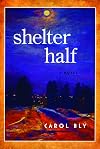
I read Carol Bly's first book, a collection of essays called LETTERS FROM THE COUNTRTY a few years ago. I was so impressed by her writing that I soon ordered two of her books of fiction. I finally got around to reading one of them this week. SHELTER HALF was just so damn good I read the whole thing in just a couple sittings over a couple days time. Bly, who lived most of her life in the small towns of northern Minnesota, knows the area like the back of her hand. She creates characters that show more seem so real, you'd swear you knew these people somewhere. She's got down the close-to-the-chest self-effacing attitudes and speech patterns of the region. I kept trying to think where have I heard this kind of stuff before. All I could come up with was the film FARGO and Garrison Keillor's "Prairie Home Companion" and its archetypal village of Lake Woebegone. Except Bly's story never really descends to outright comedy or farce. It's pretty damn serious in fact. It begins as a kind of murder mystery when an unidentified body is found in a ditch just outside of the village of St. Fursey. The body keeps coming up throughout the novel, but it's not the main focus or thrust of the story. The story is really all about the town and the various 'characters' that people it, from the wealthy patron and third generation of a founding family; to the Episcopal priest (a young woman) who doesn't believe in God); a very practical and pragmatic Bishop who comes to call; a young woman whose husband thoughtlessly allowed their infant son to drown; a former German soldier who fought on the other side in WWII, now a strawberry farmer; a middle-aged woman who bartends at the VFW and loves the casino slots; a car dealer who's just learned he has cancer; a cleaning woman who is habitually battered by her no-good husband ... Ah well, there are a LOT of different characters, and every one gets his/her own chapter, and gradually you see how they all fit together in the microcosmic world of St. Fursey, a town of around a thousand souls.
The storytelling, the writing, the characters, the dialogue - all of it is simply superb. I mean I loved this book! Until the very end. There didn't seem to be one, an ending, I mean. It just seemed to stop. Things didn't get resolved. It was just suddenly done. I tried to see if there was a stuck page or something I'd missed, but nope. It just stopped. I do know that SHELTER HALF was Bly's last book, and her only novel, that she was working on it when she died in 2007 from ovarian cancer. It was published posthumously the following year. I have to guess that she didn't have time to properly finish it. But even so, I was just blown away by her skills as a writer and spinner of tales. I do have another of her books, MY LORD BAG OF RICE: NEW AND COLLECTED STORES , which I plan to read soon. This one? Despite it strangely abrupt ending I will recommend it anyway. The characters are simply outstanding! show less
The storytelling, the writing, the characters, the dialogue - all of it is simply superb. I mean I loved this book! Until the very end. There didn't seem to be one, an ending, I mean. It just seemed to stop. Things didn't get resolved. It was just suddenly done. I tried to see if there was a stuck page or something I'd missed, but nope. It just stopped. I do know that SHELTER HALF was Bly's last book, and her only novel, that she was working on it when she died in 2007 from ovarian cancer. It was published posthumously the following year. I have to guess that she didn't have time to properly finish it. But even so, I was just blown away by her skills as a writer and spinner of tales. I do have another of her books, MY LORD BAG OF RICE: NEW AND COLLECTED STORES , which I plan to read soon. This one? Despite it strangely abrupt ending I will recommend it anyway. The characters are simply outstanding! show less
For many years American infantrymen were issued a "shelter half," which was half of a pup tent. At the end of a day, each soldier had to join up with a buddy so that the two of them could attach their shelter halves and thereby share a single tent. This image sets the theme of cooperation and caring that runs through Carol Bly's only novel, Shelter Half, finished just before her death from cancer in December of 2007. Bly is well-known in Minnesota as a short story writer, essayist, teacher show more and social worker, and to her followers it is no surprise that her novel is a good one.
Shelter Half is a portrait of life in a small town in Northern Minnesota. It is incidentally the story of a murder discovered on its opening page, but it is primarily about people failing or succeeding to live decently with one another. We see the life of the town through the eyes of a number of representative characters, the cop and the rector, the town bully and the town doctor, and a marvelously realized do-gooder who only in the end realizes that he has not done good at all. Bly imagines her world not just once, but as it exists in the minds of each of these characters. The different points of view are held together by the question of the murder, and by other recurring events and projects within the town. This is a novel of great craft and great moral imagination.
Despite the seriousness of Bly's intentions, she is no stranger to wit and humor, as when she describes the woman whose "motionless eyes were like the gun and cannon muzzles of a tank still pointed at you well after its captain or crew had died inside." Or when she says of a certain lying low-life that "his brain-dead waste ran out of his mouth like bad water from a culvert." And many of her chapters are nearly small stories in themselves, with ironic reversals culminating in a rearrangement of a character's attitudes or knowledge.
The novel's most powerful message is that we must recognize evil and act against it if we are to care for one another. Tremendous empathy and moral purpose, not to mention craft and wit, went into this book, and one can only regret that Bly did not turn to novel writing sooner in her life. It is no surprise to her fans that her novel is good, but just how good could not have been anticipated. At a recent memorial event, someone who knew her said that she respected the novel form so much that she hesitated to give it a try. Her hesitation is a loss, but this one, final achievement of her life is a great gift. Shelter Half is published in Duluth, MN by Holy Cow! Press. show less
Shelter Half is a portrait of life in a small town in Northern Minnesota. It is incidentally the story of a murder discovered on its opening page, but it is primarily about people failing or succeeding to live decently with one another. We see the life of the town through the eyes of a number of representative characters, the cop and the rector, the town bully and the town doctor, and a marvelously realized do-gooder who only in the end realizes that he has not done good at all. Bly imagines her world not just once, but as it exists in the minds of each of these characters. The different points of view are held together by the question of the murder, and by other recurring events and projects within the town. This is a novel of great craft and great moral imagination.
Despite the seriousness of Bly's intentions, she is no stranger to wit and humor, as when she describes the woman whose "motionless eyes were like the gun and cannon muzzles of a tank still pointed at you well after its captain or crew had died inside." Or when she says of a certain lying low-life that "his brain-dead waste ran out of his mouth like bad water from a culvert." And many of her chapters are nearly small stories in themselves, with ironic reversals culminating in a rearrangement of a character's attitudes or knowledge.
The novel's most powerful message is that we must recognize evil and act against it if we are to care for one another. Tremendous empathy and moral purpose, not to mention craft and wit, went into this book, and one can only regret that Bly did not turn to novel writing sooner in her life. It is no surprise to her fans that her novel is good, but just how good could not have been anticipated. At a recent memorial event, someone who knew her said that she respected the novel form so much that she hesitated to give it a try. Her hesitation is a loss, but this one, final achievement of her life is a great gift. Shelter Half is published in Duluth, MN by Holy Cow! Press. show less
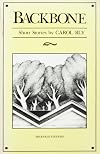
Quirky small-town stories that don't quite work the way short fiction is supposed to, but keep you turning pages nonetheless. I particularly liked the one about the necrophiliac. Masterful use of setting to inform character and narrative.
Lists
Awards


You May Also Like


Associated Authors
Statistics
- Works
- 16
- Also by
- 7
- Members
- 553
- Popularity
- #45,137
- Rating
- 3.7
- Reviews
- 7
- ISBNs
- 24