
Shankari Chandran
Author of Chai Time at Cinnamon Gardens
About the Author
Works by Shankari Chandran
Teehetkiä Kanelilehdossa 1 copy
Tagged
Common Knowledge
Members
Reviews
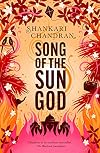
Read Around the World. Sri Lanka
“What we have learned is the size of a fistful of earth; what we haven’t learned is the size of this world.’
Australian author Shankari Chandran is a lawyer and social justice advocate. She was born in London, and raised in Canberra after her parents left Sri Lanka. This is her debut novel, a family saga reaching from the 1930s in Colombo to the 2010s in Sydney. It centres on the Sri Lankan Civil War which lasted from 1983 to 2009, a conflict between the show more majority Sinhalese Sri Lankan government and the Tamil Tigers who wished to establish a Tamil homeland in the North East. This followed multiple violent pogroms by the majority Buddhist Singhalese against the Tamils, the suppression of the Tamil language, the theft of their lands, and the burning of the Jaffa Public Library containing their precious cultural Hindu texts.
The story follows the lives of Rajan and Nala, then their children and grandchildren. Nala is a woman of strength, who fiercely loves her children and will do anything to protect them, even if this includes lies and manipulation. Rajan is a doctor and a man of integrity but few words. His advice to his granddaughter typifies his life ethos. ‘You must do the right thing, Smrithi, whether you want to or not—and you must do it to the best of your ability. That’s all that is asked of us, even though sometimes it seems an impossible task.’
As the country descends into war and chaos the two must decide whether to stay or flee. The choices they make to protect and support their children repercuss through the generations. Priya and Dhara are brought up like sisters, a bond that transcends even the brutal treatment of Dhara at the hands of soldiers, and the love of a child that binds them together and tears at both of their hearts.
Chandran’s writing is evocative and powerful and does not gloss over the brutal realities. On the other hand I also enjoyed her subtle and at times wry humour. “She fiddled with the medallion on her necklace as she sat. It was St Christopher, the Catholic patron of travellers, given to her by Archi. Her grandmother was a devout Hindu who unashamedly prayed to all gods and saints, just in case. Her grandfather overlooked this religious indiscretion on the grounds that Jesus lived with his mother, so he seemed like a good Hindu boy anyway.”
This was a moving story that paints a vibrant picture of Sri Lanka, from the atrocities of the war, to the beauty of the culture, traditions and the stories from the Mahabharata which weave through, paralleling the events in the family and country. My only complaint is that it was possibly too long. But at the heart of all the stories, the cultural traditions and events, is a pervasive and deep love for family. This is definitely a 5 star read.
“Every generation should have the chance to be better and freer than the one before it.” show less
“What we have learned is the size of a fistful of earth; what we haven’t learned is the size of this world.’
Australian author Shankari Chandran is a lawyer and social justice advocate. She was born in London, and raised in Canberra after her parents left Sri Lanka. This is her debut novel, a family saga reaching from the 1930s in Colombo to the 2010s in Sydney. It centres on the Sri Lankan Civil War which lasted from 1983 to 2009, a conflict between the show more majority Sinhalese Sri Lankan government and the Tamil Tigers who wished to establish a Tamil homeland in the North East. This followed multiple violent pogroms by the majority Buddhist Singhalese against the Tamils, the suppression of the Tamil language, the theft of their lands, and the burning of the Jaffa Public Library containing their precious cultural Hindu texts.
The story follows the lives of Rajan and Nala, then their children and grandchildren. Nala is a woman of strength, who fiercely loves her children and will do anything to protect them, even if this includes lies and manipulation. Rajan is a doctor and a man of integrity but few words. His advice to his granddaughter typifies his life ethos. ‘You must do the right thing, Smrithi, whether you want to or not—and you must do it to the best of your ability. That’s all that is asked of us, even though sometimes it seems an impossible task.’
As the country descends into war and chaos the two must decide whether to stay or flee. The choices they make to protect and support their children repercuss through the generations. Priya and Dhara are brought up like sisters, a bond that transcends even the brutal treatment of Dhara at the hands of soldiers, and the love of a child that binds them together and tears at both of their hearts.
Chandran’s writing is evocative and powerful and does not gloss over the brutal realities. On the other hand I also enjoyed her subtle and at times wry humour. “She fiddled with the medallion on her necklace as she sat. It was St Christopher, the Catholic patron of travellers, given to her by Archi. Her grandmother was a devout Hindu who unashamedly prayed to all gods and saints, just in case. Her grandfather overlooked this religious indiscretion on the grounds that Jesus lived with his mother, so he seemed like a good Hindu boy anyway.”
This was a moving story that paints a vibrant picture of Sri Lanka, from the atrocities of the war, to the beauty of the culture, traditions and the stories from the Mahabharata which weave through, paralleling the events in the family and country. My only complaint is that it was possibly too long. But at the heart of all the stories, the cultural traditions and events, is a pervasive and deep love for family. This is definitely a 5 star read.
“Every generation should have the chance to be better and freer than the one before it.” show less

The problem with a good dystopian novel is that it doesn’t feel all that fictional. Instead it is worryingly, frighteningly plausible. So I feel guilty about recommending Shankari Chandran’s THE BARRIER to anyone who wants to sleep at night or believe in the long term future of humankind. But if you’ve already given up on those pursuits or feel you are strong enough to withstand the desire to start carving out your own bunker you should dive in…the book is a helluva ride.
Everything show more about THE BARRIER is designed to be as deliberately unsettling as possible for the reader. First we’re taken to the near future – one most of us are likely to be around for – and provided with an alarming but never laughable history of what has happened between our present day and the year 2040. A combination of disease, war and commercial interests have forever altered the global political and social landscape. The world is essentially broken into two zones or alliances – Western and Eastern – but the masses on both sides of the divide are routinely lied to and abused by their respective leaderships. All in the name of protection.
The book’s protagonist – Noah Williams – is a scientist and Agent for the Western Alliance. When we meet him he is carrying out an interrogation. Something he excels at by using whatever means are necessary, including torture. He is then tasked with the novel’s core quest: to locate and neutralise whoever is attempting to undermine the global regime of compulsory disease vaccination.
In the average thriller there is at least one character who the reader can easily identify as ‘a hero’. Even if he or she kills this is usually done within boundaries that people sitting comfortably in their lounge rooms can find acceptable. Reading THE BARRIER I couldn’t help but think that it has never been more difficult to identify good guys and bad ones. Noah’s human frailties are one thing – he has suffered a personal loss and that grief clearly impacts him. But it is capacity for ruthlessness – which is matched by just about everyone around him – that is more awkwardly jarring. In some of the scenarios depicted in the book it is possible to discern what a more equitable or ‘correct’ course of action might have been, but at other times characters are presented with Sophie’s choice kind of scenarios where the awfulness of each selection is only marginally different. Though this is, I think, the author’s point. With a background in human rights law Shankari Chandran brings a unique perspective to creating genuinely thought-provoking ‘fiction’. I imagine I will forgive her for doing so one day. When the nightmares are under better control.
Most of the novel’s action takes place in Sri Lanka and this unfamiliarity of setting just adds to the overall unsettling sensibility I assume the author was aiming for when writing this novel. It is here we do meet the most traditionally heroic character of the story and Chandran does a great job of juxtaposing this character with the pragmatic brand of evil displayed by most of those around him. This includes the country’s President who is not exactly warm but who nevertheless expresses some of the most memorable sentiments of the book. However harsh they might sound it is impossible not to imagine thoughts like his are driving many world leaders and decision makers already, let alone in the wake of the war and destruction that Chandran posits for our collective, imminent future.
THE BARRIER is not a good-triumphing-over-evil thriller nor a comfortably dismissible work of science fiction. It is at heart a thought experiment in which humankind deals poorly with the challenges presented to it. Choosing rough justice, commercial interests and the wholesale eradication of civil liberties over anything that resembles human rights. There’s no getting around the fact it paints a bleak picture, not least because it highlights just how fragile our collective hold on civility really is, and I cannot honestly recommend to those looking for something light or hope-filled. But if you enjoy books that pose complex “what if…” questions and provide believable if undesirable solutions then find yourself a copy. And perhaps a blanket and a bottle of your favourite tipple. show less
Everything show more about THE BARRIER is designed to be as deliberately unsettling as possible for the reader. First we’re taken to the near future – one most of us are likely to be around for – and provided with an alarming but never laughable history of what has happened between our present day and the year 2040. A combination of disease, war and commercial interests have forever altered the global political and social landscape. The world is essentially broken into two zones or alliances – Western and Eastern – but the masses on both sides of the divide are routinely lied to and abused by their respective leaderships. All in the name of protection.
The book’s protagonist – Noah Williams – is a scientist and Agent for the Western Alliance. When we meet him he is carrying out an interrogation. Something he excels at by using whatever means are necessary, including torture. He is then tasked with the novel’s core quest: to locate and neutralise whoever is attempting to undermine the global regime of compulsory disease vaccination.
In the average thriller there is at least one character who the reader can easily identify as ‘a hero’. Even if he or she kills this is usually done within boundaries that people sitting comfortably in their lounge rooms can find acceptable. Reading THE BARRIER I couldn’t help but think that it has never been more difficult to identify good guys and bad ones. Noah’s human frailties are one thing – he has suffered a personal loss and that grief clearly impacts him. But it is capacity for ruthlessness – which is matched by just about everyone around him – that is more awkwardly jarring. In some of the scenarios depicted in the book it is possible to discern what a more equitable or ‘correct’ course of action might have been, but at other times characters are presented with Sophie’s choice kind of scenarios where the awfulness of each selection is only marginally different. Though this is, I think, the author’s point. With a background in human rights law Shankari Chandran brings a unique perspective to creating genuinely thought-provoking ‘fiction’. I imagine I will forgive her for doing so one day. When the nightmares are under better control.
Most of the novel’s action takes place in Sri Lanka and this unfamiliarity of setting just adds to the overall unsettling sensibility I assume the author was aiming for when writing this novel. It is here we do meet the most traditionally heroic character of the story and Chandran does a great job of juxtaposing this character with the pragmatic brand of evil displayed by most of those around him. This includes the country’s President who is not exactly warm but who nevertheless expresses some of the most memorable sentiments of the book. However harsh they might sound it is impossible not to imagine thoughts like his are driving many world leaders and decision makers already, let alone in the wake of the war and destruction that Chandran posits for our collective, imminent future.
THE BARRIER is not a good-triumphing-over-evil thriller nor a comfortably dismissible work of science fiction. It is at heart a thought experiment in which humankind deals poorly with the challenges presented to it. Choosing rough justice, commercial interests and the wholesale eradication of civil liberties over anything that resembles human rights. There’s no getting around the fact it paints a bleak picture, not least because it highlights just how fragile our collective hold on civility really is, and I cannot honestly recommend to those looking for something light or hope-filled. But if you enjoy books that pose complex “what if…” questions and provide believable if undesirable solutions then find yourself a copy. And perhaps a blanket and a bottle of your favourite tipple. show less
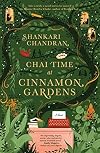
Certainly this is one of those books you can’t judge by its whimsical, twee cover and title.
The book actually unfolds into a tension-filled story loaded with intertwined narratives of generational traumas that connect past to present.
The plight of the Tamil people is writ large across the characters’ story arcs, and a reckoning of white Australian prejudice is presented with a deft hand.
While some of the plot devices felt forced, the overall book is a satisfying read that deals with show more important issues we can all relate to and learn from in modern Australia. show less
The book actually unfolds into a tension-filled story loaded with intertwined narratives of generational traumas that connect past to present.
The plight of the Tamil people is writ large across the characters’ story arcs, and a reckoning of white Australian prejudice is presented with a deft hand.
While some of the plot devices felt forced, the overall book is a satisfying read that deals with show more important issues we can all relate to and learn from in modern Australia. show less

{stand alone; fiction, Sydney, Jaffna, ensemble cast, racism, failing marriage, torture}(2022)
I borrowed this at the end of last year as an e-library book which expired over the busy festive season along with all the rest so I borrowed them all again. It could have come to my attention as a recommendation or maybe I just came across it browsing through Overdrive - I can’t remember - but it appealed to me because it’s about Sri Lankan Tamils living in Sydney. I briefly looked for a show more synopsis before starting to read this book but couldn’t find one so I just dived in. It is told in the third person from multiple points of view which generally works quite well (though I occasionally confused Maya and her daughter).
The story is about a nursing home in the western suburbs of Sydney which is named for a well-known area of Colombo (Cinnamon Gardens). Of the original three owners, two have died and the remaining, Maya, has moved into the home as a resident. I liked Maya's character
The story goes back and forth in time and explains how Maya met her husband Zakhir in Jaffna (in the north of Sri Lanka) but they moved to Sydney after his work was censored and joined their friend Cedric in running the nursing home. It also follows Anji, Nikki, Nikki”s husband Gareth and a carer at the home named Ruben and we see some of Ruben’s past history in Jaffna as well. I found the parts set in Jaffna interesting and informative (but not always comfortable when it dealt with the discrimination and consequences that Tamils suffered before and during the civil war in Sri Lanka).
From the title I was expecting a feel-good story and initially it delivered (though there's no specific 'chai time' in the story). Though I don’t speak Tamil I do understand a few words and I enjoyed seeing them sprinkled through the story (though sometimes I didn’t recognise them in writing at first); unfortunately this aspect will only specifically appeal to a niche audience.
It is well written and started as a 4 star read for me but there is a darker tone threaded through it; there was some torture near the beginning which, though not vicarious, dropped it about a quarter star for me and there were a couple more instances further in. The last third of the book dealt with racist incidents which, with Gareth being involved with local politics, some confidential information is leaked to the press and blown out of proportion. To be perfectly honest I don’t like to read about racism and, as it blindsided me, dropped my rating a bit more.
I found Gareth’s character a bit confusing; I wasn't sure if we were meant to sympathise with him or vilify him and I didn't understand why he did certain things. When I finished the book it felt as though - though the main story arc did have (a rather dramatic) closure - the author had used the story as a platform to raise a few issues at various points which, though they were addressed, were never fully resolved (in the context of the story) so I’m not quite sure where we ended up.
(February 2026)
3.25 stars show less
I borrowed this at the end of last year as an e-library book which expired over the busy festive season along with all the rest so I borrowed them all again. It could have come to my attention as a recommendation or maybe I just came across it browsing through Overdrive - I can’t remember - but it appealed to me because it’s about Sri Lankan Tamils living in Sydney. I briefly looked for a show more synopsis before starting to read this book but couldn’t find one so I just dived in. It is told in the third person from multiple points of view which generally works quite well (though I occasionally confused Maya and her daughter).
The story is about a nursing home in the western suburbs of Sydney which is named for a well-known area of Colombo (Cinnamon Gardens). Of the original three owners, two have died and the remaining, Maya, has moved into the home as a resident. I liked Maya's character
Maya was relieved her deep-fried eggplant curry never had to stand up to the scrutiny of millions of Tamils on Instagram, just that of the constantly dissatisfied Mrs Sivaguru, a former resident of Room 15, God damn her soul to perpetual reincarnation.Though she is still the owner, her daughter Anjali (Anji), who is a doctor, now runs the place which houses elderly people of all ethnicities and religions though the majority are Hindu Tamils - some of whom were acquaintances of Maya’s even before they came to the home. Anji's childhood best friend Nikki (she is not Sri Lankan), also a doctor, also works at the home; her marriage is failing, especially more rapidly after the death of their younger child about 10 months before the story begins.
The story goes back and forth in time and explains how Maya met her husband Zakhir in Jaffna (in the north of Sri Lanka) but they moved to Sydney after his work was censored and joined their friend Cedric in running the nursing home. It also follows Anji, Nikki, Nikki”s husband Gareth and a carer at the home named Ruben and we see some of Ruben’s past history in Jaffna as well. I found the parts set in Jaffna interesting and informative (but not always comfortable when it dealt with the discrimination and consequences that Tamils suffered before and during the civil war in Sri Lanka).
From the title I was expecting a feel-good story and initially it delivered (though there's no specific 'chai time' in the story). Though I don’t speak Tamil I do understand a few words and I enjoyed seeing them sprinkled through the story (though sometimes I didn’t recognise them in writing at first); unfortunately this aspect will only specifically appeal to a niche audience.
In a few hours, the cooks will begin frying onions, curry leaves and green chillies for the breakfast omelette, served with idiyappam, sothi and sambal. Omelette on a bed of steamed rice noodles, topped with milk gravy and a side of freshly grated coconut tossed in chopped chilli. It’s something to wake up for.I liked the glimpses of the residents and their interactions (past and present) with Maya and her family, such as her ongoing niggles with 'that painted racoon Shanthi Segaram down the corridor' or the one resident who manages to go missing every night, somehow evading the home's security measures.
It is well written and started as a 4 star read for me but there is a darker tone threaded through it; there was some torture near the beginning which, though not vicarious, dropped it about a quarter star for me and there were a couple more instances further in. The last third of the book dealt with racist incidents which, with Gareth being involved with local politics, some confidential information is leaked to the press and blown out of proportion. To be perfectly honest I don’t like to read about racism and, as it blindsided me, dropped my rating a bit more.
I found Gareth’s character a bit confusing; I wasn't sure if we were meant to sympathise with him or vilify him and I didn't understand why he did certain things. When I finished the book it felt as though - though the main story arc did have (a rather dramatic) closure - the author had used the story as a platform to raise a few issues at various points which, though they were addressed, were never fully resolved (in the context of the story) so I’m not quite sure where we ended up.
(February 2026)
3.25 stars show less
Awards


Statistics
- Works
- 6
- Members
- 390
- Popularity
- #62,075
- Rating
- 4.0
- Reviews
- 14
- ISBNs
- 32
- Languages
- 1
- Favorited
- 1