
Iasmin Omar Ata
Author of Mis(h)adra
About the Author
Disambiguation Notice:
Ata is non-binary and uses neutral pronouns.
Works by Iasmin Omar Ata
zenith 1 copy
Associated Works
The Alloy Anthology presents: Electrum - An All-Ages Mixed Race Comics Anthology (2019) — Contributor — 9 copies
Tagged
Common Knowledge
- Gender
- non-binary
- Disambiguation notice
- Ata is non-binary and uses neutral pronouns.
Members
Reviews
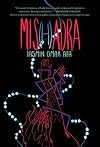
I picked this up by chance at my library's new release stand. It's probably the best graphic novel I've ever read. (And I'm disabled myself, so my review counts as double. Don't worry about the math; just accept it.)
Book content warnings:
in-book ableism
extreme eye strain
eye horror/gore
Isaac Hammoudeh is an Arab-American college student whose epilepsy has him leading a very different life from his peers. Instead of staying up late to binge-watch shows, he's the kid ""nagging"" his roommates show more to keep it quiet so he can make sure to get his eight hours of sleep. He's the dude shouting at the parties outside to shut up, the skipping all his classes and failing all his tests. All this just to avoid extra triggers.
Isaac takes his medication, but nothing works. Work, tests, missed assignments, and even calls from home pile up until everything become to much for him to handle. He has to eventually decide if fighting his own body is worth it.
So, firstly, I'm gonna talk about disability. Because, yeah, I'm disabled. And this graphic novel spoke to me in a HUGE way.
I also have illnesses that -- for lack of a better phrase -- want to kill me, the way epilepsy is described by Isaac in Mis(h)adra. For people like me, this book ... gets really personal in a lot of ways. Firstly, those doctor visits are not exaggerated. Doctors really do treat chronic illness patients like shit. They will dismiss you to the moon and back and will think you're mistreating your drugs pretty much no matter what (ESPECIALLY if you're on an opioid).
Secondly, Isaac's many inner monologues are so relatable it's painful. Jo's no-nonsense attitude and speech near the end can be Really helpful to many disabled people like us. We often feel distanced from everyone, including our loved ones and friends. Hearing that speech in words from one friend to another in this context ... it really helped. Even in fiction. Especially written by a disabled author.
Okay, I'm done with that. Speaking about the actual graphic novel itself...
The composition of this thing is breathtaking. The way panels and colors and characters are laid out on pages are so damn creative. It uses probably the most original way of framing and composition I've ever seen (not that I'm the most Widely-Read person when it comes to graphic novels, but still).
Style falls pretty similar to anime and characters are similarly drawn, but even then there's tons of diversity when it comes to characters and characterization. I looove the way characters are designed. Really, there's lots of diversity here, with Muslim characters and lots of different races depicted (even if there are very few Actual characters). The main two characters are even very different and recognizable from each other--Isaac: thin, hairy, brown; Jo: pudgy, very dark-skinned, two-toned hair.
The story is beautiful and moving. It's a story of strength and self-acceptance. For once, not a story about abled people accepting disabled people. It's about disabled people accepting themselves.
Which is why this novel is so needed right now. Why #ownvoices are so important.
I know this review is really messy, but it's hard to sort out my feelings about it when it made me so emotional. Basically: read it. Just ... read it. show less
Book content warnings:
in-book ableism
extreme eye strain
eye horror/gore
Isaac Hammoudeh is an Arab-American college student whose epilepsy has him leading a very different life from his peers. Instead of staying up late to binge-watch shows, he's the kid ""nagging"" his roommates show more to keep it quiet so he can make sure to get his eight hours of sleep. He's the dude shouting at the parties outside to shut up, the skipping all his classes and failing all his tests. All this just to avoid extra triggers.
Isaac takes his medication, but nothing works. Work, tests, missed assignments, and even calls from home pile up until everything become to much for him to handle. He has to eventually decide if fighting his own body is worth it.
So, firstly, I'm gonna talk about disability. Because, yeah, I'm disabled. And this graphic novel spoke to me in a HUGE way.
I also have illnesses that -- for lack of a better phrase -- want to kill me, the way epilepsy is described by Isaac in Mis(h)adra. For people like me, this book ... gets really personal in a lot of ways. Firstly, those doctor visits are not exaggerated. Doctors really do treat chronic illness patients like shit. They will dismiss you to the moon and back and will think you're mistreating your drugs pretty much no matter what (ESPECIALLY if you're on an opioid).
Secondly, Isaac's many inner monologues are so relatable it's painful. Jo's no-nonsense attitude and speech near the end can be Really helpful to many disabled people like us. We often feel distanced from everyone, including our loved ones and friends. Hearing that speech in words from one friend to another in this context ... it really helped. Even in fiction. Especially written by a disabled author.
Okay, I'm done with that. Speaking about the actual graphic novel itself...
The composition of this thing is breathtaking. The way panels and colors and characters are laid out on pages are so damn creative. It uses probably the most original way of framing and composition I've ever seen (not that I'm the most Widely-Read person when it comes to graphic novels, but still).
Style falls pretty similar to anime and characters are similarly drawn, but even then there's tons of diversity when it comes to characters and characterization. I looove the way characters are designed. Really, there's lots of diversity here, with Muslim characters and lots of different races depicted (even if there are very few Actual characters). The main two characters are even very different and recognizable from each other--Isaac: thin, hairy, brown; Jo: pudgy, very dark-skinned, two-toned hair.
The story is beautiful and moving. It's a story of strength and self-acceptance. For once, not a story about abled people accepting disabled people. It's about disabled people accepting themselves.
Which is why this novel is so needed right now. Why #ownvoices are so important.
I know this review is really messy, but it's hard to sort out my feelings about it when it made me so emotional. Basically: read it. Just ... read it. show less
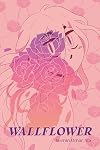
An eighth grade girl who perceives emotions as flowers seeks to piece together the origin of her ability.
Ever since Marlena Haddad can remember, she’s possessed an ability to see flowers that are visible only to her. They appear on herself and on other people to reveal their true feelings. When Marlena was younger, she tried to tell people about the flowers time and again, but no one believed her, leaving her feeling lonely and overwhelmed. When larger-than-life, nonbinary Ashe Lang show more transfers to Marlena’s middle school, Marlena soon learns that they not only see flowers on people too, but there’s also a mysterious connection between their pasts. Marlena hopes that getting to know Ashe will help her unlock the secret of why they share this strange, unwanted burden. But “asking Ashe about the flowers made them snap, somehow,” and now Ashe is actively avoiding her. Marlena’s journey to unlock her past, overcome what seems akin to a form of emotional synesthesia, and find healing drives an interesting plot; however, the adamant refusal by both young people’s parents to provide them with mental health support earlier feels deeply troubling. Ata’s mangalike digital illustrations are visually stunning, especially the beautifully detailed florals and the highly saturated, intensely colored dream sequences during which Marlena’s subconscious works to piece together fragments of a forgotten history. Brown-skinned, pink-haired Marlena is cued as being of Middle Eastern descent, while blue-haired Ashe presents white.
An earnest effort carried by visually impressive graphics. (Graphic fantasy. 8-12)
-Kirkus Review show less
Ever since Marlena Haddad can remember, she’s possessed an ability to see flowers that are visible only to her. They appear on herself and on other people to reveal their true feelings. When Marlena was younger, she tried to tell people about the flowers time and again, but no one believed her, leaving her feeling lonely and overwhelmed. When larger-than-life, nonbinary Ashe Lang show more transfers to Marlena’s middle school, Marlena soon learns that they not only see flowers on people too, but there’s also a mysterious connection between their pasts. Marlena hopes that getting to know Ashe will help her unlock the secret of why they share this strange, unwanted burden. But “asking Ashe about the flowers made them snap, somehow,” and now Ashe is actively avoiding her. Marlena’s journey to unlock her past, overcome what seems akin to a form of emotional synesthesia, and find healing drives an interesting plot; however, the adamant refusal by both young people’s parents to provide them with mental health support earlier feels deeply troubling. Ata’s mangalike digital illustrations are visually stunning, especially the beautifully detailed florals and the highly saturated, intensely colored dream sequences during which Marlena’s subconscious works to piece together fragments of a forgotten history. Brown-skinned, pink-haired Marlena is cued as being of Middle Eastern descent, while blue-haired Ashe presents white.
An earnest effort carried by visually impressive graphics. (Graphic fantasy. 8-12)
-Kirkus Review show less
This was a fairly interesting glimpse into the life of a person struggling with epilepsy. Unfortunately, it made use of the same old cliched structure of a person going off their meds and snowballing toward a full-blown crisis. I read the same thing in [b:Turtles All the Way Down|35504431|Turtles All the Way Down|John Green|https://images.gr-assets.com/books/1503002776s/35504431.jpg|21576687] (OCD) and [b:Calvin|23310675|Calvin|Martine show more Leavitt|https://images.gr-assets.com/books/1421087319s/23310675.jpg|42864801] (schizophrenia) earlier this year. Surely there must be some other way to tell these stories. show less
Thought I'd try a graphic novel. Interesting topic if maybe not compelling story-telling. I really appreciated the art. I've experienced aura (with migraines) and it's terribly difficult to explain, so the seizure artwork in particular interested me.
Awards


You May Also Like
Associated Authors
Statistics
- Works
- 4
- Also by
- 1
- Members
- 120
- Popularity
- #165,355
- Rating
- 3.7
- Reviews
- 8
- ISBNs
- 6