
Cadwell Turnbull
Author of No Gods, No Monsters
Series
Works by Cadwell Turnbull
Other Worlds And This One 1 copy
When The Rains Come Back 1 copy
Shock Of Birth 1 copy
Mediation [short fiction] 1 copy
Associated Works
Asimov's Science Fiction: Vol. 42, No. 5 & 6 [May/June 2018] (2018) — Contributor — 12 copies, 1 review
Asimov's Science Fiction: Vol. 41, No. 7 & 8 [July/August 2017] (2017) — Contributor — 9 copies, 1 review
Asimov's Science Fiction: Vol. 44, No. 9 & 10 [September/October 2020] (2020) — Contributor — 3 copies
Tagged
Common Knowledge
- Birthdate
- 1987
- Gender
- male
- Education
- North Carolina State University (MA, MFA)
Clarion West - Organizations
- Many Worlds (cofounder, member)
- Agent
- Nell Pierce
- Relationships
- Darkly Lem (cofounder)
- Birthplace
- Maryland, USA
- Map Location
- U.S. Virgin Islands
Members
Reviews
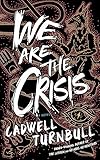
The Publisher Says: In We Are the Crisis—the second book in the Convergence Saga from award-winning author Cadwell Turnbull—humans and monsters come into conflict in a magical and dangerous world as civil rights collide with preternatural forces.
In this highly anticipated sequel, set a few years after No Gods, No Monsters, humanity continues to grapple with the revelation that supernatural beings exist. A werewolf pack investigates the strange disappearances of former members and ends up show more unraveling a greater conspiracy, while back on St. Thomas, a hurricane approaches and a political debate over monster’s rights ignites tensions in the local community.
Meanwhile, New Era—a pro-monster activist group—works to build a network between monsters and humans, but their mission is threatened by hate crimes perpetrated by a human-supremacist group known as the Black Hand. And beneath it all two ancient orders escalate their conflict, revealing dangerous secrets about the gods and the very origins of magic in the universe.
Told backward and forward in time as events escalate and unravel, We Are the Crisis is a brilliant contemporary fantasy that takes readers on an immersive and thrilling journey.
I RECEIVED A DRC FROM THE PUBLISHER VIA EDELWEISS+. THANK YOU.
My Review: I think this series of novels that discuss the sources of Otherness and the artificiality of the idea of a permanent identity deserves all the praise I can heap on it. Using modern culture's delight in cryptids and monsters as real entities, Author Turnbull offers a wise and inclusive look at how identity can be imposed from outside and then used to oppress and persecute the recipient of that imposed "self". Horror fiction is supposed to scare us with the monsters, not FOR them. This subversion of the literary status quo is ideally suited to slide in under the resistant person's radar and make them think again about what a monster is, and who decides what that identity means. This is something that has needed doing since the days of myth...Beowulf is, at the end of the day, about a mother seeking vengeance for the harm done to her child...and what could be more subversive than that?
The very concept of debating rights is absurd on its face. You don't grant rights. Rights are, then they get denied by the controlling elites to serve their own purposes. Granting rights is best framed as removing impediments unjustly placed in the path of those attempting to exercise their natural rights. When that fact comes dangerously close to becoming part of the great mass of people's consciousness, a crisis must be manufactured to distract and re-Other the group that is deemed undesirable by the controlling elites.
The existence of Others is necessary for the forces of control to make the eternally useful and rouinely succesful lie of Us-vs-Them work to absorb the mass of humanity in fighting against those who have the most in common with them so the controlling elites don't have to worry about how they can keep their power, privilege, and prestige intact against the outrage and hatred of those they oppress to serve them, not their own needs.
Political fiction done so well that, unless you already knew it was political, you wouldn't know. For that reason, I encourage you to gift it to your videogame addicted teen boy. Anything we can do to wedge his mind open a wee tiny bit for non-authoritarian thoughts to enter is good. show less
In this highly anticipated sequel, set a few years after No Gods, No Monsters, humanity continues to grapple with the revelation that supernatural beings exist. A werewolf pack investigates the strange disappearances of former members and ends up show more unraveling a greater conspiracy, while back on St. Thomas, a hurricane approaches and a political debate over monster’s rights ignites tensions in the local community.
Meanwhile, New Era—a pro-monster activist group—works to build a network between monsters and humans, but their mission is threatened by hate crimes perpetrated by a human-supremacist group known as the Black Hand. And beneath it all two ancient orders escalate their conflict, revealing dangerous secrets about the gods and the very origins of magic in the universe.
Told backward and forward in time as events escalate and unravel, We Are the Crisis is a brilliant contemporary fantasy that takes readers on an immersive and thrilling journey.
I RECEIVED A DRC FROM THE PUBLISHER VIA EDELWEISS+. THANK YOU.
My Review: I think this series of novels that discuss the sources of Otherness and the artificiality of the idea of a permanent identity deserves all the praise I can heap on it. Using modern culture's delight in cryptids and monsters as real entities, Author Turnbull offers a wise and inclusive look at how identity can be imposed from outside and then used to oppress and persecute the recipient of that imposed "self". Horror fiction is supposed to scare us with the monsters, not FOR them. This subversion of the literary status quo is ideally suited to slide in under the resistant person's radar and make them think again about what a monster is, and who decides what that identity means. This is something that has needed doing since the days of myth...Beowulf is, at the end of the day, about a mother seeking vengeance for the harm done to her child...and what could be more subversive than that?
The very concept of debating rights is absurd on its face. You don't grant rights. Rights are, then they get denied by the controlling elites to serve their own purposes. Granting rights is best framed as removing impediments unjustly placed in the path of those attempting to exercise their natural rights. When that fact comes dangerously close to becoming part of the great mass of people's consciousness, a crisis must be manufactured to distract and re-Other the group that is deemed undesirable by the controlling elites.
The existence of Others is necessary for the forces of control to make the eternally useful and rouinely succesful lie of Us-vs-Them work to absorb the mass of humanity in fighting against those who have the most in common with them so the controlling elites don't have to worry about how they can keep their power, privilege, and prestige intact against the outrage and hatred of those they oppress to serve them, not their own needs.
Political fiction done so well that, unless you already knew it was political, you wouldn't know. For that reason, I encourage you to gift it to your videogame addicted teen boy. Anything we can do to wedge his mind open a wee tiny bit for non-authoritarian thoughts to enter is good. show less
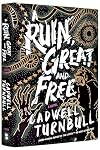
Rating: 4.5* of five
The Publisher Says: From bestselling and award-winning author Cadwell Turnbull comes A Ruin, Great and Free, the stunning conclusion to the popular Convergence Saga.
It has been nearly two years since the anti-monster riots. The inhabitants of Moon have been very fortunate in the intervening months. Inside their hidden monster settlement, they’ve found peace, even as the world outside slips into increasing unrest. Monsters are being hunted everywhere, forced back into show more the shadows they once tried to escape from. Other secret settlements have offered a place to hide, but how long can this half-measure against fear and hatred last?
Over the course of three days, the inhabitants of Moon are tested. The Black Hand continues to search for them and the Cult of the Zsouvox wants to make Moon the last stand in their war against the Order of Asha. This is more than enough to reckon with, but the gods have also placed their sights on Moon—and they bring with them a conflict that may either save or unravel the universe itself.
I RECEIVED A DRC FROM THE PUBLISHER VIA EDELWEISS+. THANK YOU.
My Review: Nothin' like uppin' the stakes in the last book in a series!
Not that anything was ever low-stakes here; but after becoming multiversal, adding heavy conflict among the gods afflicting the timelines, and starting from the baseline of shapeshifters being a real, oppressed minority, one can be forgiven for feeling...overwhelmed...in the toils of the complexification.
It's all big fun, though, if the previous volumes and their events are all on board one's mind. (My reviews might help you decide on whether this read will suit you.) As the storyverse has expanded, the stakes have multiplied and the worldbuilding has grown more ornamental than structural. It's to be expected; no one should start reading the series here because the world won't make enough sense to get the novice reader involved.
For the invested reader, Author Turnbull provides narrative guidance to put together the strands of this multiversal concluding chapter. It is complicated; it requires thought and rewards reflection; it does not hide its political stances. Since I am sympathetic to them I have no issue with that. This entire series needed to exist, to feed queer people the visibility of others without being Othered, to explore the world queerness as baseline identity, all are things that needed to be done. But the fight scene between the werebear and the dragon is the main reason Cadwell Turnbull *had* to start writing this series.
As much as I like Author Turnbull's politics, I read fantasy novels seldom...not the biggest fan of the genre, me...and when I do I want to have real fun, some thrills, and a background of worldbuilding that involves my brain in more than the ordinary tropey elves and suchlike. This series has delivered on each of those desires from giddy-up to whoa. The monsters are just plain folks, as is almost always the case when one gets to know the Othered; same desires, interests, needs, and the differences are vanishingly small when seen against the backdrop of greater familiarity. That makes their monsterness feel endearing to me. It becomes the urban-fantasy marker that does not turn off this less than eager fantasy reader.
I'm pretty sure anyone who reads my reviews can figure out why I approve of the queer representation herein.
A gory meditation on how much hatred costs, how misguided it is, and how gods, mages, multiversal Powers all have aims that barely touch our own so contact (let alone involvement) should be avoided. Grief and loss are the lot of all sentient beings; so spread kindness and acceptance, please.
It won't be in this series but I look forward to Cadwell Turnbull's next book. show less
The Publisher Says: From bestselling and award-winning author Cadwell Turnbull comes A Ruin, Great and Free, the stunning conclusion to the popular Convergence Saga.
It has been nearly two years since the anti-monster riots. The inhabitants of Moon have been very fortunate in the intervening months. Inside their hidden monster settlement, they’ve found peace, even as the world outside slips into increasing unrest. Monsters are being hunted everywhere, forced back into show more the shadows they once tried to escape from. Other secret settlements have offered a place to hide, but how long can this half-measure against fear and hatred last?
Over the course of three days, the inhabitants of Moon are tested. The Black Hand continues to search for them and the Cult of the Zsouvox wants to make Moon the last stand in their war against the Order of Asha. This is more than enough to reckon with, but the gods have also placed their sights on Moon—and they bring with them a conflict that may either save or unravel the universe itself.
I RECEIVED A DRC FROM THE PUBLISHER VIA EDELWEISS+. THANK YOU.
My Review: Nothin' like uppin' the stakes in the last book in a series!
Not that anything was ever low-stakes here; but after becoming multiversal, adding heavy conflict among the gods afflicting the timelines, and starting from the baseline of shapeshifters being a real, oppressed minority, one can be forgiven for feeling...overwhelmed...in the toils of the complexification.
It's all big fun, though, if the previous volumes and their events are all on board one's mind. (My reviews might help you decide on whether this read will suit you.) As the storyverse has expanded, the stakes have multiplied and the worldbuilding has grown more ornamental than structural. It's to be expected; no one should start reading the series here because the world won't make enough sense to get the novice reader involved.
For the invested reader, Author Turnbull provides narrative guidance to put together the strands of this multiversal concluding chapter. It is complicated; it requires thought and rewards reflection; it does not hide its political stances. Since I am sympathetic to them I have no issue with that. This entire series needed to exist, to feed queer people the visibility of others without being Othered, to explore the world queerness as baseline identity, all are things that needed to be done. But the fight scene between the werebear and the dragon is the main reason Cadwell Turnbull *had* to start writing this series.
As much as I like Author Turnbull's politics, I read fantasy novels seldom...not the biggest fan of the genre, me...and when I do I want to have real fun, some thrills, and a background of worldbuilding that involves my brain in more than the ordinary tropey elves and suchlike. This series has delivered on each of those desires from giddy-up to whoa. The monsters are just plain folks, as is almost always the case when one gets to know the Othered; same desires, interests, needs, and the differences are vanishingly small when seen against the backdrop of greater familiarity. That makes their monsterness feel endearing to me. It becomes the urban-fantasy marker that does not turn off this less than eager fantasy reader.
I'm pretty sure anyone who reads my reviews can figure out why I approve of the queer representation herein.
A gory meditation on how much hatred costs, how misguided it is, and how gods, mages, multiversal Powers all have aims that barely touch our own so contact (let alone involvement) should be avoided. Grief and loss are the lot of all sentient beings; so spread kindness and acceptance, please.
It won't be in this series but I look forward to Cadwell Turnbull's next book. show less
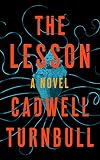
At first this book seems like a simple alien invasion with a little interspecies love gone wrong subplot, set in the author’s native US Virgin Islands. Not an unusual story, but set in an unusual(for sci-fi) place. An alien race called the Ynaa descend on Water Island in a conch-shell shaped ship. They’re not hostile, exactly, but they are touchy in a way that can be dangerous, and they quickly impose a reign of tense, martial superiority over the residents of Charlotte Amalie. The show more islanders have a variety of reactions, of course. Some love the Ynaa, some hate them, and some maintain a wary, distant tolerance. However, everyone’s life is deeply affected by the aggressive, possessive stance the Ynaa take over their corner of Earth, mitigated only by the presence of a centuries old ambassador who’s been living undercover among the humans as a Black woman and has learned to care for the locals. (One human is affected by this much more…personally, than the rest.) The ambassador’s presence doesn’t stave off violence successfully and the book leads to a devastating, scary conclusion that took me completely by surprise given the slow setup. There’s nothing exactly new about this book–a lot of sci-fi deals with social integration and relationships with alien beings and all the ways first contact could possibly go wrong. My first impressions of this book were that the only thing that made it truly special was the setting.
I’m happy to say my first impressions were wrong. By the time we get to the first big death, a lot of layers have been unrolled and continue to be, making this a remarkably culturally literate bit of speculative fiction. It’s more special than it appears at first glance. Inside this alien invasion are themes of generational and historical trauma, colonialism, gendered violence in African diasporic communities, and some very interesting commentary on what it takes for victims to become conquerors–or if that’s even a thing that can really happen.
Despite all of that the novel never feels too heavy and is as entertaining as it is deep. It’s distinctly Caribbean as well, in a very natural way. I liked it and will definitely keep an eye out for whatever Turnbull writes next.
Okay, all of that and still only 4 stars? I have to be honest and say that the writing never quite did it for me. It’s very much what I like to call “MFA style”–large, self-conscious blocks of very deliberate, laborious action spattered with short paragraphs of weirdly purple descriptive prose. It’s competent and the story is well-crafted enough to make it tolerable, but man, loosen up a little next time, will you? I am here for global science fiction entirely and I want more books from Turnbull, but I also want him to unstarch his collar a little bit next time, let the prose flow and the culture shine through so the themes bubble a little longer in the reader’s spirit.
Overall though, I liked this quite a bit, and I’m excited about the wave of diasporic takes on science fiction it’s riding the crest of. It’d be interesting to see a thematic trilogy of books set in the Virgin Islands from this author, kind of like Tade Thomson’s Rosewater series.
If you liked this review, find more like it on my blog, Equal Opportunity Reader. Also follow me onFacebook and Instagram. Peace! show less
I’m happy to say my first impressions were wrong. By the time we get to the first big death, a lot of layers have been unrolled and continue to be, making this a remarkably culturally literate bit of speculative fiction. It’s more special than it appears at first glance. Inside this alien invasion are themes of generational and historical trauma, colonialism, gendered violence in African diasporic communities, and some very interesting commentary on what it takes for victims to become conquerors–or if that’s even a thing that can really happen.
Despite all of that the novel never feels too heavy and is as entertaining as it is deep. It’s distinctly Caribbean as well, in a very natural way. I liked it and will definitely keep an eye out for whatever Turnbull writes next.
Okay, all of that and still only 4 stars? I have to be honest and say that the writing never quite did it for me. It’s very much what I like to call “MFA style”–large, self-conscious blocks of very deliberate, laborious action spattered with short paragraphs of weirdly purple descriptive prose. It’s competent and the story is well-crafted enough to make it tolerable, but man, loosen up a little next time, will you? I am here for global science fiction entirely and I want more books from Turnbull, but I also want him to unstarch his collar a little bit next time, let the prose flow and the culture shine through so the themes bubble a little longer in the reader’s spirit.
Overall though, I liked this quite a bit, and I’m excited about the wave of diasporic takes on science fiction it’s riding the crest of. It’d be interesting to see a thematic trilogy of books set in the Virgin Islands from this author, kind of like Tade Thomson’s Rosewater series.
If you liked this review, find more like it on my blog, Equal Opportunity Reader. Also follow me onFacebook and Instagram. Peace! show less
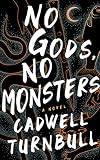
Rating: 4* of five
FINALIST FOR THE 2022 LOCUS AWARD—BEST FANTASY NOVEL! Winners announced 25 June 2022.
FINALIST FOR THE 34th Lambda Literary Award—BEST LGBTQ SPECULATIVE FICTION! Winners announced 11 June 2022.
A NEW YORK PUBLIC LIBRARY 2021 BEST BOOK FOR ADULTS RECOMMENDATION!
The Publisher Says: One October morning, Laina gets the news that her brother was shot and killed by Boston cops. But what looks like a case of police brutality soon reveals something much stranger. Monsters are show more real. And they want everyone to know it.
As creatures from myth and legend come out of the shadows, seeking safety through visibility, their emergence sets off a chain of seemingly unrelated events. Members of a local werewolf pack are threatened into silence. A professor follows a missing friend’s trail of bread crumbs to a mysterious secret society. And a young boy with unique abilities seeks refuge in a pro-monster organization with secrets of its own. Meanwhile, more people start disappearing, suicides and hate crimes increase, and protests erupt globally, both for and against the monsters.
At the center is a mystery no one thinks to ask: Why now? What has frightened the monsters out of the dark?
The world will soon find out.
I GOT THIS BOOK FREE WITH KINDLE CREDITS. SHOP OFTEN! THE REWARDS ARE REAL. (/irony)
My Review: I think the worst part of reading this book was realizing that the monsters, the not-villainous villains of the piece, are me, my friends, my lover, all of us Othered by...so many factors.
A political meeting of anarchists in a collective...votes to include literal monsters...the kind that actually DO eat people...in its aims. This book...its imagination shames me.
I've never, ever once thought, "well, civil rights for werewolves should absolutely be guaranteed."
What is left for me to learn over the remainder of my life never, ever stops expanding. ...Yay...? And before anyone says it, no there are not actually werewolves or any other creatures we call monsters, but there are a LOT of humans I'd unhesitatingly call monsters all over the country where I live. All over the only planet we know of that has life on it. So there's clearly no god, either, because if so they're either weak or malevolent since they can't or won't fix things they broke. The book's title, then, snaps into focus: "NO GODS, NO MASTERS," the anarchist chant goes; now that "monsters" are real and have come out of their socially imposed hiding, it needs refreshing: "NO GODS, NO MONSTERS," or a simple acknowledgment that we are all on this lifeboat in the middle of a deadly environment and had all better get busy saving ourselves and each other from paying the ultimate price. No one above means no one below. And that, somehow, is terrible, bad, threatening...why, exactly? Because monsters are Evil? Because, if no one is In Control, things will be...worse? ("For whom" is left unstated. Obviously things will be worse for the ones who benefit from the way they are now.)
But the truth is, it never turns out that way. Marriage equality didn't turn Society into limp-wristed men in feather boas, or women in plaid shirts and bad haircuts. It resulted in a revolting boom in the wedding industrial complex. A lot of bigots making noise about being asked to bake cakes for people they didn't like much. COVID kills us all (in the USA, a million in two years which is more than the 698,000-plus AIDS has killed in 42), and capitalism couldn't care less about who's zoomin' who as long as the survivors consume consume consume.
The principal problem for me is the story's diffusion of narrative drive among so many characters. I do understand this fits the anarchist genesis of the story. But it plays into a problem that trumps political concerns: How am I supposed to sustain momentum in the read? I was able to make my way through the book but it took me longer than it usually does to finish it...almost a month. For fewer than three hundred pages.
I overcame that issue by remembering this phrase that I've entered into my commonplace book:
Remember the Tiananmen Tank Guy? He is the reason governments work so hard to suppress free media; he is the reason many of us bother to protest in whatever ways we can. He stood alone, but crowds of protestors aren't when he appears in our minds' eyes. This is also why crowds become mobs, and why protest is something that deeply disturbs the Powers That Be.
When cops kill innocent people nowadays, we as a society are almost sure there will be protests. But now there is a complicating factor of monsters, creatures we're afraid of and whose means of making a living is violent by their very nature; they are, by the definitions we've all come to understand and possibly even accept, but certainly internalize, unnatural:
Simon-pure anarchist speak. Like being in a steering committee meeting for any politics at the local level organization. It is, in other words, bedrock truth that this story rests on. It is this meticulous inclusiveness by dint of hard-fought local battles that gives me little moments of happy recognition and pleasurable fellow feeling, of not being alone as I face a hostile-to-me world.
Go with Author Turnbull on the hunt for the truth of Power through these many points of view. Power resisted, power obtained, power flouted and abused...there is all the power any one being or group can ever use in the simplest truth of them all: Mystery exerts power in ways nothing else can hope to equal, still less surpass. show less
FINALIST FOR THE 2022 LOCUS AWARD—BEST FANTASY NOVEL! Winners announced 25 June 2022.
FINALIST FOR THE 34th Lambda Literary Award—BEST LGBTQ SPECULATIVE FICTION! Winners announced 11 June 2022.
A NEW YORK PUBLIC LIBRARY 2021 BEST BOOK FOR ADULTS RECOMMENDATION!
The Publisher Says: One October morning, Laina gets the news that her brother was shot and killed by Boston cops. But what looks like a case of police brutality soon reveals something much stranger. Monsters are show more real. And they want everyone to know it.
As creatures from myth and legend come out of the shadows, seeking safety through visibility, their emergence sets off a chain of seemingly unrelated events. Members of a local werewolf pack are threatened into silence. A professor follows a missing friend’s trail of bread crumbs to a mysterious secret society. And a young boy with unique abilities seeks refuge in a pro-monster organization with secrets of its own. Meanwhile, more people start disappearing, suicides and hate crimes increase, and protests erupt globally, both for and against the monsters.
At the center is a mystery no one thinks to ask: Why now? What has frightened the monsters out of the dark?
The world will soon find out.
I GOT THIS BOOK FREE WITH KINDLE CREDITS. SHOP OFTEN! THE REWARDS ARE REAL. (/irony)
My Review: I think the worst part of reading this book was realizing that the monsters, the not-villainous villains of the piece, are me, my friends, my lover, all of us Othered by...so many factors.
“I’m sorry to do it this way, but I had to be safe,” Melku explains. “I won’t waste any more time. Our collective’s mission is to support the solidarity movement. Often, that has meant supporting marginalized peoples. Some of you are part of the queer and trans community, like me. Many of the most valuable monsters are also a part of these communities, which is why redefining to include them is so important. In that spirit, I think we should extend our support to monsters since it is likely that they’re already in the movement but have chosen to remain silent.”
A political meeting of anarchists in a collective...votes to include literal monsters...the kind that actually DO eat people...in its aims. This book...its imagination shames me.
I've never, ever once thought, "well, civil rights for werewolves should absolutely be guaranteed."
What is left for me to learn over the remainder of my life never, ever stops expanding. ...Yay...? And before anyone says it, no there are not actually werewolves or any other creatures we call monsters, but there are a LOT of humans I'd unhesitatingly call monsters all over the country where I live. All over the only planet we know of that has life on it. So there's clearly no god, either, because if so they're either weak or malevolent since they can't or won't fix things they broke. The book's title, then, snaps into focus: "NO GODS, NO MASTERS," the anarchist chant goes; now that "monsters" are real and have come out of their socially imposed hiding, it needs refreshing: "NO GODS, NO MONSTERS," or a simple acknowledgment that we are all on this lifeboat in the middle of a deadly environment and had all better get busy saving ourselves and each other from paying the ultimate price. No one above means no one below. And that, somehow, is terrible, bad, threatening...why, exactly? Because monsters are Evil? Because, if no one is In Control, things will be...worse? ("For whom" is left unstated. Obviously things will be worse for the ones who benefit from the way they are now.)
But the truth is, it never turns out that way. Marriage equality didn't turn Society into limp-wristed men in feather boas, or women in plaid shirts and bad haircuts. It resulted in a revolting boom in the wedding industrial complex. A lot of bigots making noise about being asked to bake cakes for people they didn't like much. COVID kills us all (in the USA, a million in two years which is more than the 698,000-plus AIDS has killed in 42), and capitalism couldn't care less about who's zoomin' who as long as the survivors consume consume consume.
The principal problem for me is the story's diffusion of narrative drive among so many characters. I do understand this fits the anarchist genesis of the story. But it plays into a problem that trumps political concerns: How am I supposed to sustain momentum in the read? I was able to make my way through the book but it took me longer than it usually does to finish it...almost a month. For fewer than three hundred pages.
I overcame that issue by remembering this phrase that I've entered into my commonplace book:
As he walks with the crowd, he understands what he had forgotten: that a march is not just a voice against violence and trauma, but also a reminder that even in a cause that is stacked against them, no one is alone.
Remember the Tiananmen Tank Guy? He is the reason governments work so hard to suppress free media; he is the reason many of us bother to protest in whatever ways we can. He stood alone, but crowds of protestors aren't when he appears in our minds' eyes. This is also why crowds become mobs, and why protest is something that deeply disturbs the Powers That Be.
When cops kill innocent people nowadays, we as a society are almost sure there will be protests. But now there is a complicating factor of monsters, creatures we're afraid of and whose means of making a living is violent by their very nature; they are, by the definitions we've all come to understand and possibly even accept, but certainly internalize, unnatural:
Near Ridley, a man yells, “No Gods.”
“No monsters,” the crowd chants back.
The chant is an evolution of an anarchist slogan: “No Gods, No Masters,” the original version meaning no human above. It is a call against hierarchy. Ridley assumes the variation means no human above, no human below, or something like it. A call against hierarchy and discrimination.
Simon-pure anarchist speak. Like being in a steering committee meeting for any politics at the local level organization. It is, in other words, bedrock truth that this story rests on. It is this meticulous inclusiveness by dint of hard-fought local battles that gives me little moments of happy recognition and pleasurable fellow feeling, of not being alone as I face a hostile-to-me world.
Go with Author Turnbull on the hunt for the truth of Power through these many points of view. Power resisted, power obtained, power flouted and abused...there is all the power any one being or group can ever use in the simplest truth of them all: Mystery exerts power in ways nothing else can hope to equal, still less surpass. show less
Lists
LGBTQIA Horror (1)
Awards


You May Also Like


Associated Authors
Statistics
- Works
- 9
- Also by
- 19
- Members
- 1,032
- Popularity
- #24,951
- Rating
- 3.6
- Reviews
- 45
- ISBNs
- 49