
Jason A. Josephson-Storm
Author of The Myth of Disenchantment: Magic, Modernity, and the Birth of the Human Sciences
About the Author
Jason A. Josephson-Storm is associate professor in and chair of the Department of Religion at Williams College. He is the author of The Invention of Religion in Japan, also published by the University of Chicago Press.
Works by Jason A. Josephson-Storm
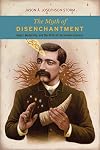
The Myth of Disenchantment: Magic, Modernity, and the Birth of the Human Sciences (2017) 138 copies, 1 review
Tagged
Common Knowledge
- Gender
- male
- Education
- Harvard University (MTS)
Stanford University (PhD | Religious Studies) - Occupations
- professor
- Organizations
- Williams College
Members
Reviews
The Myth of Disenchantment: Magic, Modernity, and the Birth of the Human Sciences by Jason Ananda Josephson Storm
It's not that I took almost an year to finish it but I had such an overwhelming urge to dig a little more into the sources Josephson-Storm has unearthed, that I kept it aside and went about on some of the literary adventures it mentions. Well some might say that these parallel currents of thought in stories of really famous thinkers were already there but I would insist to call it a 'discovery' of sorts because these stories were kind of rewritten by the 'scientific-minded' to exclude show more occultist and fringe elements within psychologies of otherwise 'modern' and 'scientific' thinkers.
But Josephson-Storm doesn't just unearth these fringe indulgences, he loosely knits a whole theory around it in the process. So when so-called identifiers of rupture between mind and nature claim that our age has no myth, they are also weaving a new myth to replace that; when Hegelians argue for a philosophy without religion, they are in fact trying to give old-school mystical rhetoric a semblance of method; and while Weber spoke about disenchantment of the world, he was drawn to Christian mysticism and vacationing with neo-pagans.
After finishing the book one wonders (to paraphrase Josephson-Storm) if it is, in fact, absence of enchantment or an access of it?
The chapter on Weber is kind of a supplementary bonus since it supplies pointers towards fresh interpretations of linkages between rationalization and disenchantment which are often identified as synonyms within the academy. show less
But Josephson-Storm doesn't just unearth these fringe indulgences, he loosely knits a whole theory around it in the process. So when so-called identifiers of rupture between mind and nature claim that our age has no myth, they are also weaving a new myth to replace that; when Hegelians argue for a philosophy without religion, they are in fact trying to give old-school mystical rhetoric a semblance of method; and while Weber spoke about disenchantment of the world, he was drawn to Christian mysticism and vacationing with neo-pagans.
After finishing the book one wonders (to paraphrase Josephson-Storm) if it is, in fact, absence of enchantment or an access of it?
The chapter on Weber is kind of a supplementary bonus since it supplies pointers towards fresh interpretations of linkages between rationalization and disenchantment which are often identified as synonyms within the academy. show less

1st reading:
Jason Ānanda Josephson Storm has given us this ambitious and interesting book about the current state of the humanities and social sciences, about theory, modernism, postmodernism, and what could come next. It’s about values, the interbeing of humans and the environment, about opening discussion beyond anglo-american and other western philosophies, and more. And it’s about how things could be better.
Storm admits his text is dense and academic, written especially for show more academics working in the humanities and social sciences.
He also says it is open for all readers, but still, with no background in social sciences, I had to learn the meaning of about fifty terms. Maybe half of them were special to this book, and the others would be more familiar to his academic readers.
Some terms I still don’t fully understand, but I did learn much from this book. This is one of those books worth a rereading.
I think much in Metamodernism agrees with American Pragmatism.
It looks for differences that make a difference.
It describes communities of scholars seeking better explanations.
Sees knowledge as fallible but open to improvement and growth.
It emphases processes that change with time and place.
Promotes inference to the best explanation, as a good way to reason.
And, its model for signs is based on C S Peirces semiotics.
These are not Storm’s words, but how I understand his meanings.
This is a "big picture" kind of book, promising much, and seems to me, a good start on something worthwhile.
I’m interested to see how Storm’s ideas are received, if they will catch on, be attacked, spark other ideas, change minds, or whatever.
2nd reading:
After looking again at the parts of Storm's Metamodernism that were murky on the first reading, and after learning a bit more social-science lingo, I still feel it has meaning for general readers like me.
It's about things called social-kinds, the kinds of things we as members of society believe, and belong to, and do, and like to talk about. Things like money, governments, corporations, sexism, the economy, our climate, compassion, and so on. It's also about values and ethics, and not leaving them out of learning what is happening and how we might make changes, or not.
What I like most about the book is its ideas about change and process, how things vary at different times, in different places, in different cultures and situations. And so our ideas and opinions about these social kinds need to consider when, where, who and what we are talking about.
Another thing that strikes me about Metamodernism is how it explains the many ways that knowledge, especially knowledge about society and culture, is usually incomplete, often provisional and subject to change. There is much more.
I don't keep many books I've read. I'll hang on to this one.
3rd 'reading' 8 months later
After reviewing my notes and the conclusion section on pages 280-85, I've decided I no longer need to own a copy of this interesting book. I've gotten as much or more out of it as I can expect to. It continues of influence my view of the world, but I don't believe rereading would be helpful. show less
Jason Ānanda Josephson Storm has given us this ambitious and interesting book about the current state of the humanities and social sciences, about theory, modernism, postmodernism, and what could come next. It’s about values, the interbeing of humans and the environment, about opening discussion beyond anglo-american and other western philosophies, and more. And it’s about how things could be better.
Storm admits his text is dense and academic, written especially for show more academics working in the humanities and social sciences.
He also says it is open for all readers, but still, with no background in social sciences, I had to learn the meaning of about fifty terms. Maybe half of them were special to this book, and the others would be more familiar to his academic readers.
Some terms I still don’t fully understand, but I did learn much from this book. This is one of those books worth a rereading.
I think much in Metamodernism agrees with American Pragmatism.
It looks for differences that make a difference.
It describes communities of scholars seeking better explanations.
Sees knowledge as fallible but open to improvement and growth.
It emphases processes that change with time and place.
Promotes inference to the best explanation, as a good way to reason.
And, its model for signs is based on C S Peirces semiotics.
These are not Storm’s words, but how I understand his meanings.
This is a "big picture" kind of book, promising much, and seems to me, a good start on something worthwhile.
I’m interested to see how Storm’s ideas are received, if they will catch on, be attacked, spark other ideas, change minds, or whatever.
2nd reading:
After looking again at the parts of Storm's Metamodernism that were murky on the first reading, and after learning a bit more social-science lingo, I still feel it has meaning for general readers like me.
It's about things called social-kinds, the kinds of things we as members of society believe, and belong to, and do, and like to talk about. Things like money, governments, corporations, sexism, the economy, our climate, compassion, and so on. It's also about values and ethics, and not leaving them out of learning what is happening and how we might make changes, or not.
What I like most about the book is its ideas about change and process, how things vary at different times, in different places, in different cultures and situations. And so our ideas and opinions about these social kinds need to consider when, where, who and what we are talking about.
Another thing that strikes me about Metamodernism is how it explains the many ways that knowledge, especially knowledge about society and culture, is usually incomplete, often provisional and subject to change. There is much more.
I don't keep many books I've read. I'll hang on to this one.
3rd 'reading' 8 months later
After reviewing my notes and the conclusion section on pages 280-85, I've decided I no longer need to own a copy of this interesting book. I've gotten as much or more out of it as I can expect to. It continues of influence my view of the world, but I don't believe rereading would be helpful. show less
Lists
Top 10 2021 (1)
Awards


Statistics
- Works
- 5
- Members
- 251
- Popularity
- #91,085
- Rating
- 3.8
- Reviews
- 2
- ISBNs
- 13
- Languages
- 1